
Minute by Minute A Civic Blueprint for Safe Joyful Infancy in Singapore

EduNanny: Minute by Minute, Building Confidence for Life
Ladies and gentlemen, parents and grandparents, employers and community leaders, good evening. If you give me one minute, I will show you how a minute can change a life. EduNanny was created to honor those seconds with the finest blend of science and heart Singapore can offer. This is a modern, evidence-based childminding movement designed for a fast, beautiful, hardworking city. It is centre-based, home-based, and distance-supported care—available islandwide, Monday to Friday, 7 a.m. to 7 p.m.—with an ultra-low infant ratio of three little ones to each caregiver. It is affordable from $33 per day, with fees payable by CDA/Baby Bonus for eligible families. It is innovation you can see—privacy-respectful CCTV, modern layouts that feel like calm, and daily practice that reads like poetry in motion. It is EduNanny by BUTLER, participating in the ECDA Childminding Pilot as a national social initiative with a maximum employment mandate: dignified jobs for caregivers; dependable support for families; steady beginnings for infants. It is as close as your neighborhood and as steady as your hopes. This article expands that minute into a movement you can apply in your own family and community.
Below you will find five core ideas that sit at the heart of our work—practical, actionable insights to turn everyday care into lifelong confidence for your child.
Pedagogy of the Minute: Observe, Name, Guide
Our daily practice begins with the simplest, most precise actions—made powerful by consistency and respect for the child’s pace.
Observe: Meeting the Child at Their Level
- Begin on the floor with soft eyes and slow hands to notice subtle cues—yawns, stretches, eye contact, and shifts in mood or interest.
- Draw on proven approaches: Montessori for autonomy, Pikler for dignified handling, and Vygotsky for the power of just-right scaffolding.
- Practical tip for families: spend 5–10 minutes each day observing your child during a safe play period. Note three cues you might have missed before, then name and acknowledge them with gentle language.
Name: Translating Feeling into Language
- Offer tiny translations of experience: “You are stretching your fingers. That’s your hand saying hello.”
- Use name-rich language to support emergent speech and self-understanding.
- Practical tip for families: narrate everyday actions during routines (dress, snack, play) to build vocabulary and social connection.
Guide: Purposeful Micro-Encounters
- Structure three-minute cycles of exploration, rest, and re-approach with open-ended objects and safe movement.
- Step in when support is needed, step back to allow independent exploration, and avoid rushing progress.
- Expected outcomes: steady growth in motor control, curiosity, and early communication without pressure.
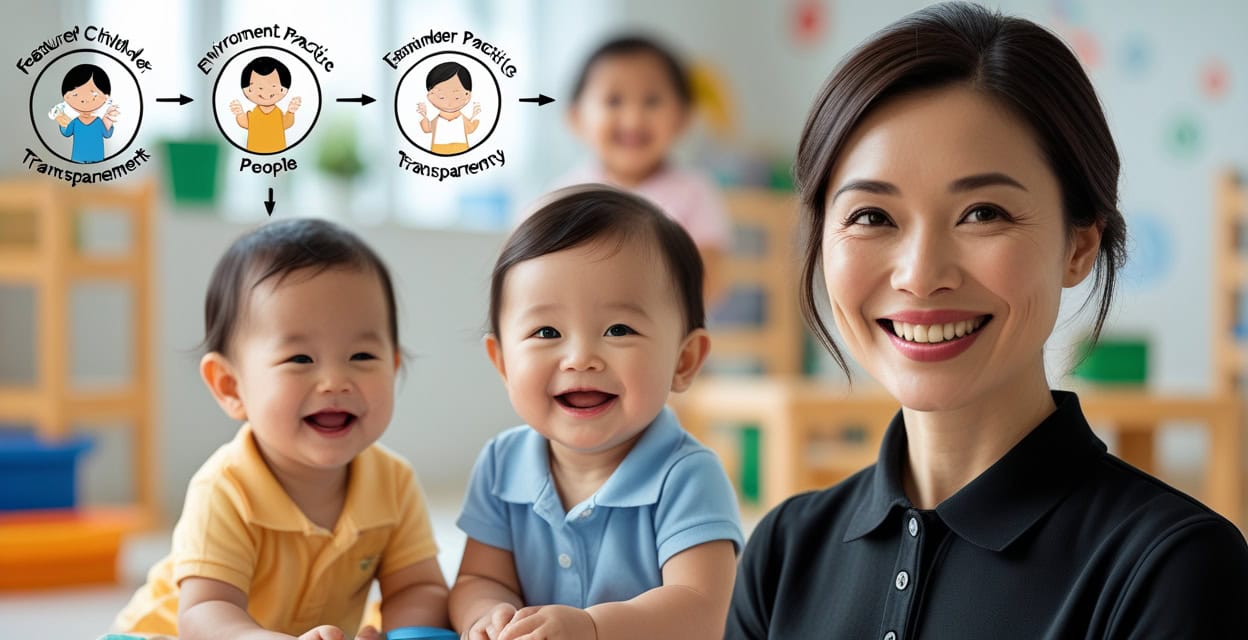
The Four Rings of Safety: Environment, Practice, People, Transparency
Safety is not a policy on a wall; it is the daily rhythm that surrounds, supports, and empowers a child to learn fearlessly.
Environment: Spaces Designed for Babies
- Modern layouts that prioritize babies’ needs: low-glare lighting, non-toxic materials, soft acoustics, ergonomic sleep zones, and pram-friendly flow.
- Hazard-mapped rooms that keep safety visible yet unobtrusive, allowing space for exploration and play.
- Practical tip: assess a caregiver space by looking for clear sightlines, clean surfaces, and materials that invite manipulation without overstimulation.
Practice: Rituals That Build Reliability
- Pre-feed checks, sleep-position confirmations, sanitation protocols, and “pause points” before transitions.
- Emergency rehearsals are conducted with calm and clarity, mirroring skilled preparations used by pilots.
- Practical tip: create a simple transition ritual at home—hand over a favorite object when putting a baby down for a nap to communicate safety and continuity.
People: Caregivers with Heart and Skill
- Carefully selected, deeply trained childminders who are coached in infant CPR, responsive caregiving, and calm de-escalation.
- Hiring for both heart and skill; continuous development to keep empathy and technique sharp.
- Practical tip: ask prospective caregivers about real-life scenarios and request demonstrations of soothing a fussy baby or supporting a first-time caregiver with a question.
Transparency: Open Channels for Peace of Mind
- Privacy-respecting CCTV in shared spaces, secure digital daily logs, and ongoing family communication.
- When parents can see, parents can breathe; visibility fosters trust and collaboration.
- Practical tip: request a simple daily summary from your caregiver with a photo or short note highlighting a key moment of learning or bonding.
Rhythm and Richness: How Development Really Grows
Development flourishes when daily life is predictable, meaningful, and richly sensory without being overwhelming.
Rhythm: Predictable Beats that Support Growth
- Structured days with cycles of sleep, feed, play, cuddle, and rest—adapted to each child’s tempo.
- Consistency reduces stress and creates a secure base for exploration.
Richness: Designing Sensory Diets for Calm Discovery
- Gentle textures, familiar songs, clean smells, and warm narration create a soothing environment for learning.
- Tummy time as a dialogue: narrate movements and invite baby participation to build agency.
Scaffolding, Continuity, and Home Learning
- Meet each child at their edge of confidence; provide just-right challenges that encourage forward movement.
- Distance support extends learning homeward through video debriefs, tele-check-ins, and practical home tips.
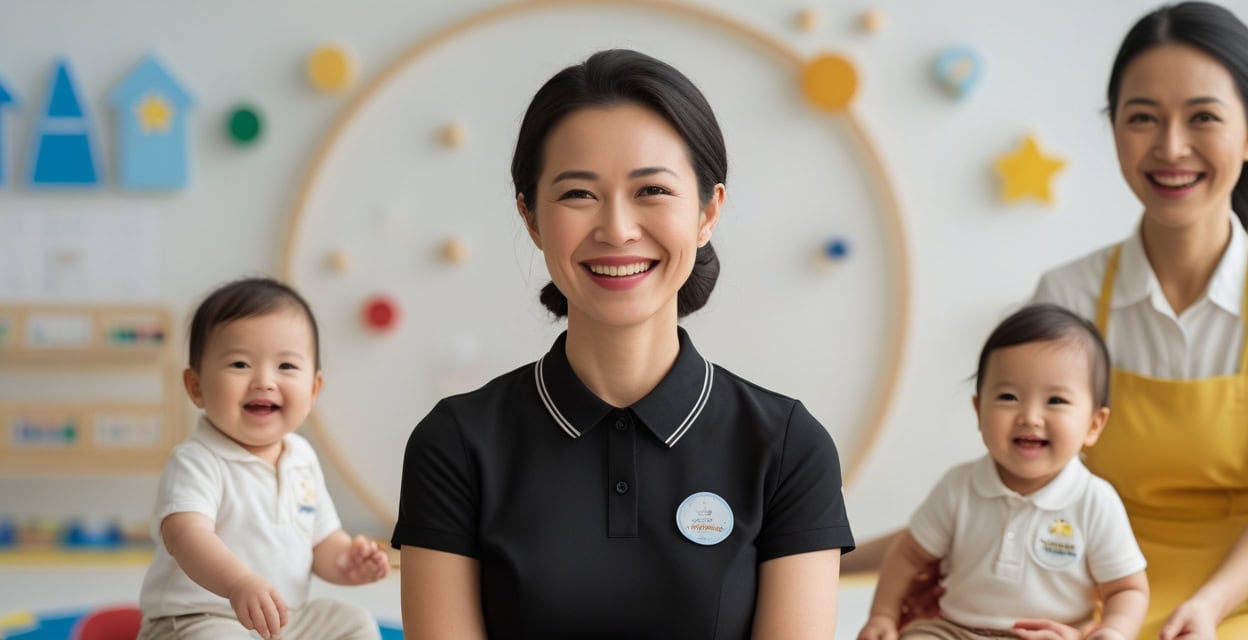
Engineering Joy: The Architecture of Calm, Play, and Belonging
Joy in early childhood comes from an environment that calms the nervous system, supports play as the work of childhood, and builds a sense of belonging.
Calm: Environment That Calibrates the Senses
- Light, sound, and space are tuned to reduce stress and invite focused attention.
- A calm setting allows babies to notice and process the world without being overwhelmed.
Play: The Work of Discovery
- Froebel’s insight that play is the work of childhood informs our use of simple, beautiful materials—rings, scarves, blocks, textures—to spark curiosity.
- Children become authors of their own surprises through hands-on inquiry and guided exploration.
Belonging: Secure Bases for Adventurous Minds
- Bridging objects from home, name-rich greetings, and comfort pathways foster trust and security.
- Community ties: parents are partners in care, receiving daily stories that link classroom life with home life.
Community and Family Partnership
- Open communication with families ensures that care extends beyond the center and into daily life at home.
- Practical tip: create a shared “story of the day” that connects what happened at EduNanny with home routines and conversations.
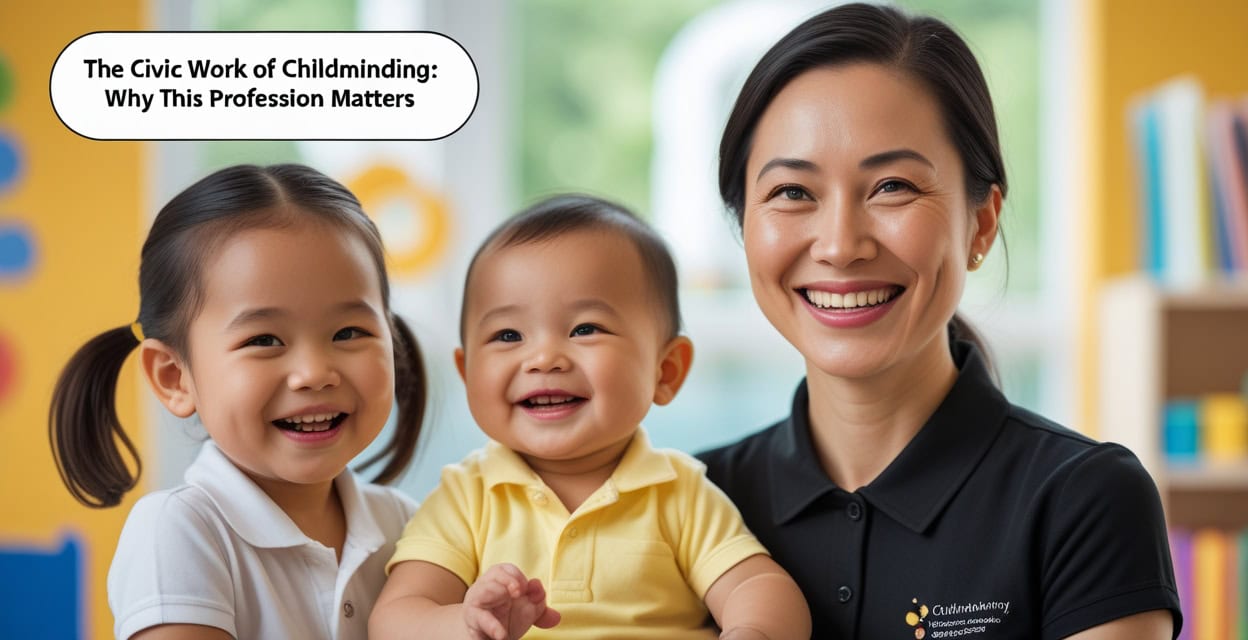
The Civic Work of Childminding: Why This Profession Matters
The care of infants is a civic act: it shapes identities, futures, and the social fabric of a nation. Here are the core aspects that define the field and guide families in choosing care that matter.
Purpose: Caregivers as Professionals
- Childminders guard the beginnings of identity and turn handovers into homecomings.
- The craft deserves dignity, training, and a clear path for progression within the profession.
Dignity: Employment and Training that Elevate the Field
- Maximum employment mandate and ongoing professional development ensure caregivers have meaningful roles and career growth.
- Trust is built when families see caregivers supported by robust training and fair conditions.
Access: Broad, Affordable, Geographically Wise Care
- Centre-based, home-based, and distance options bring quality care within reach for more families.
- Affordable from $33/day, with CDA/Baby Bonus applicable where eligible—supporting families while sustaining high standards.
Productivity: Care as Economic and Social Infrastructure
- Reliable, high-quality care enables parents to work, study, or rest with a clear mind—contributing to families and the nation.
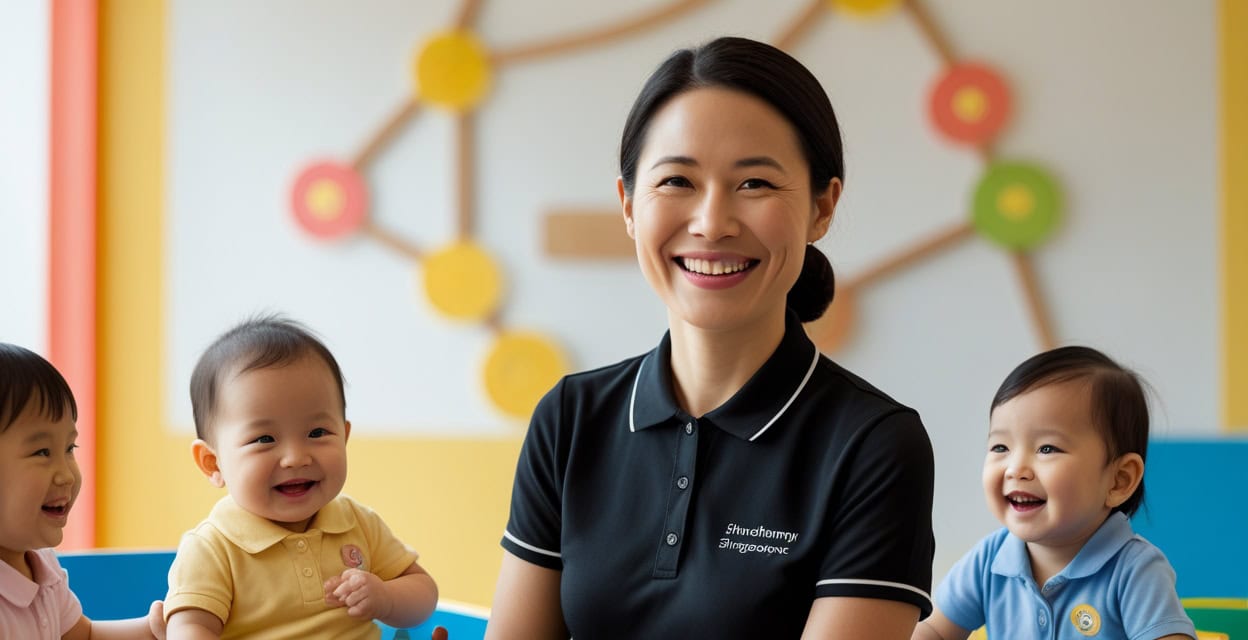
A Day in the Life: A Minute Becomes a Movement
Let’s walk through a representative EduNanny day to show how minute-to-minute caregiving translates into lifelong learning.
- 7:42 a.m. A caregiver kneels to eye level. “Good morning, I’ve been waiting to see you.” Language names feeling before the baby can fully express it: “New place, same cuddle.” A small cloth from home bridges the transition, helping tears pass and connection begin.
- 10:05 a.m. During play, a baby rolls from side to belly. The caregiver narrates, “You turned yourself. Your body knows the way.” This tiny victory plants a quiet flag of agency.
- 1:13 p.m. Before sleep, the ritual begins. “We will place you on your back, your space is ready.” Dim lights, sea-like white noise, and calm breaths guide rest. Safety becomes a pattern, not a policy on paper.
- 4:26 p.m. A short note and a clip to the parent highlight a new sound, a new reach, a new spark. The parent, miles away, feels the economy of trust in real time.
- 6:51 p.m. Handover becomes reunion. Shared observations link today’s play to tomorrow’s at-home routine—“The blue scarf sparked joy; let’s bring a similar effect into home play.”
What makes EduNanny different is not a single invention; it is the way the pieces fit together:
- Excellence and quality you can feel on the first visit.
- Centre-based, home-based, and distance support that meet you where you are.
- Privacy-respecting CCTV and transparent daily logs for peace of mind.
- Modern layouts tuned for infant brains and bodies.
- Ultra-low 1:3 infant ratio that protects attention.
- Monday to Friday, 7 a.m.–7 p.m., islandwide convenience.
- Affordability from $33/day, with fees payable by CDA/Baby Bonus where applicable.
- EduNanny by BUTLER’s participation in the ECDA Childminding Pilot as a national social initiative with a maximum employment mandate—because caring for infants also means caring for caregivers.

In Closing: The Civic Questions of Childminding, Answered
Who does childminding serve? Infants from birth to three, their families, and the employers who depend on parents being fully present at work and at home.
What does great childminding do? It turns routine into development, safety into freedom, and care into confidence. It makes joy ordinary.
When does it matter most? Every day, but especially in the first thousand days—when brains are writing the architecture of trust and the vocabulary of resilience.
Where should it happen? Close enough to feel accessible—centres in communities, licensed home premises across neighborhoods, and distance support that carries guidance into the living room.
How is it delivered? With a 1:3 ratio, trained professionals, transparent systems, modern environments, and family partnership. With excellence, quality, convenience, and affordability in the same sentence.
Why does it matter? Because the future does not arrive at eighteen; it arrives at eight months, gripping your finger and searching your face for an answer that says: You are safe, you are seen, and this world is worth exploring.
EduNanny was built to give that answer—minute after minute, day after day—across Singapore.
If this vision sounds like the childhood you want for your infant and the peace you need for your family, step closer. Tour a centre. Meet a home-based childminder. Try a distance consult. Enrol for a day, a week, a season. Let us help you turn today’s minutes into tomorrow’s momentum.
Because a nation’s future is not only taught in schools; it is cradled, sung to, and gently guided long before. And because your child deserves a beginning that feels like a promise kept.
Thank you. Visit EduNanny.com or Childminding.EduNanny.com to begin.

Conclusion
In summary, EduNanny’s approach centers on five actionable ideas—the Pedagogy of the Minute, the Four Rings of Safety, Rhythm and Richness, Engineering Joy, and the Civic Work of Childminding. These pillars translate into practical daily practices families can adopt, and motivations for caregivers to grow with dignity. The result is a system where every minute counts toward a confident, curious, and resilient child, with clear pathways for home, center, and distance support. If you seek a care model that blends science with heart, that protects safety while inviting exploration, and that links parental peace of mind with professional caregiving, then explore EduNanny further: tour a centre, connect with a home-based caregiver, or start a distance consultation today.
Explore with intent. Build confidence minute by minute.
SEO keywords: [#EduNannySingapore, #EarlyChildhoodCareSingapore, #InfantCare1to3, #ECDAPilot, #FamilySupportSingapore]