How to Listen When Your Child Is Upset With a Friend
EDUNANNY® BY BUTLER · PARENT GUIDE
When your young child is upset with a friend, what can you say before offering advice? Begin with what they have told you, then leave room for the part you have not heard yet.
This guide focuses on everyday disagreements over play and rules. A short exchange can help you check your understanding without deciding in advance how the child feels or how the friendship should end.
Make room before asking for an explanation
If your child begins with a firm statement about a friend, avoid supplying the whole story yourself. “They must have taken your toy” is an explanation the adult has introduced. An open question such as “What happened in the game?” leaves the child space to explain.
When you can give your attention, pause the task in front of you and listen. Use a comfortable position and a tone that invites a reply. You do not need to insist on eye contact, repeat the question quickly or ask for a complete account in one go.
UNICEF’s communication guidance includes attentive listening, understandable language and reflecting a child’s message without judgement. These are general communication principles, rather than a promise that a particular sentence will settle a disagreement.
Words are only part of the exchange. Notice how your child is communicating, including their gestures and body language, without assuming that one expression tells you exactly what they mean.
Reflect the message and let your child correct you
Reflective listening means offering back what you think you heard and checking it. A useful reply stays close to the child’s account. It leaves room for “No, that wasn’t it” instead of treating your first interpretation as the answer.
Raising Children Network’s activity guide for ages three to six suggests open questions, attention to body language and asking a child to help when you have misunderstood. It also notes that how much a child wants to talk can vary.
A fictional conversation about a changed game
The following example is invented for illustration. It does not report a real child’s words, and the sequence is not something your child must complete.
| What the child says | A possible adult reply | Leave room for |
|---|---|---|
| “I’m not joining Ben’s game today.” | A possible adult reply“You don’t want to join that game. What happened?” | Leave room forThe child’s account before you suggest a reason. |
| “They moved the finish line just as I got there.” | A possible adult reply“The finish line changed while you were playing. Have I understood?” | Leave room forA correction or another detail. |
| “Yes. I was cross.” | A possible adult reply“You felt cross when it changed.” | Leave room forThe feeling the child named, without adding a label of your own. |
| “I want the line to stay where we agreed.” | A possible adult reply“Would you like help explaining that, or shall we think about another game?” | Leave room forA practical choice the adult can help with. |
The replies describe and check; they do not decide that the friend is unkind or that the child is jealous. If your child corrects you, try a brief acknowledgement: “I missed that part. Tell me what you meant.” You can revise your understanding without turning the conversation into an argument about your wording.
One question at a time is enough. A child may offer another detail, take a pause or want to move on. You do not need to secure the four answers in the table before responding.
Listen first, then choose one thing you can help with
Once you understand more of the account, ask what would be useful next. You might help your child explain the rule they expected, think of another activity or speak with the adult responsible for the play setting to understand what happened. Keep the step specific rather than promising to fix the whole friendship.
Listening to a feeling does not mean agreeing to every proposed action. A family or play rule can remain clear while you talk. For example, you can acknowledge disappointment and still say that everyone needs a turn with a shared item.
UNICEF’s positive-discipline guidance recommends clear, realistic expectations about behaviour. Here, that means naming the action you are asking for instead of criticising the child as a person.
Some conversations need more context from another adult. Separate what your child said, what you personally saw and what you are asking someone else to clarify. A short request such as “Could you help me understand how the game rules changed?” keeps the follow-up open.
Let the conversation be shorter when it needs to be
A tired child may not want a long conversation. Raising Children Network advises leaving room for different lengths of talk and returning another time when interest changes. You can acknowledge the remark without making your child keep explaining.
If you cannot listen properly at that moment, say what you can offer and follow through. Keep any promise realistic. The next conversation can begin simply: “You mentioned the game earlier. Is there more you want to tell me?”
There is no required ending. Your child does not have to become cheerful, agree to play again or thank you for listening. The immediate aim is to understand a little more and decide whether a next step is needed.
Begin with one open question
At the next everyday disagreement, listen to the first remark, ask what happened and check what you heard before advising. Let your child correct the account, and offer only the help you can actually provide.
Explore more EduNanny parent guides for family routines and shared care.
Sources and image credit
- UNICEF: communication with young children — listening, reflection and respectful language.
- Raising Children Network: talking and listening — open questions, checking understanding and adapting the length of a conversation.
- UNICEF: positive discipline — clear, realistic expectations.
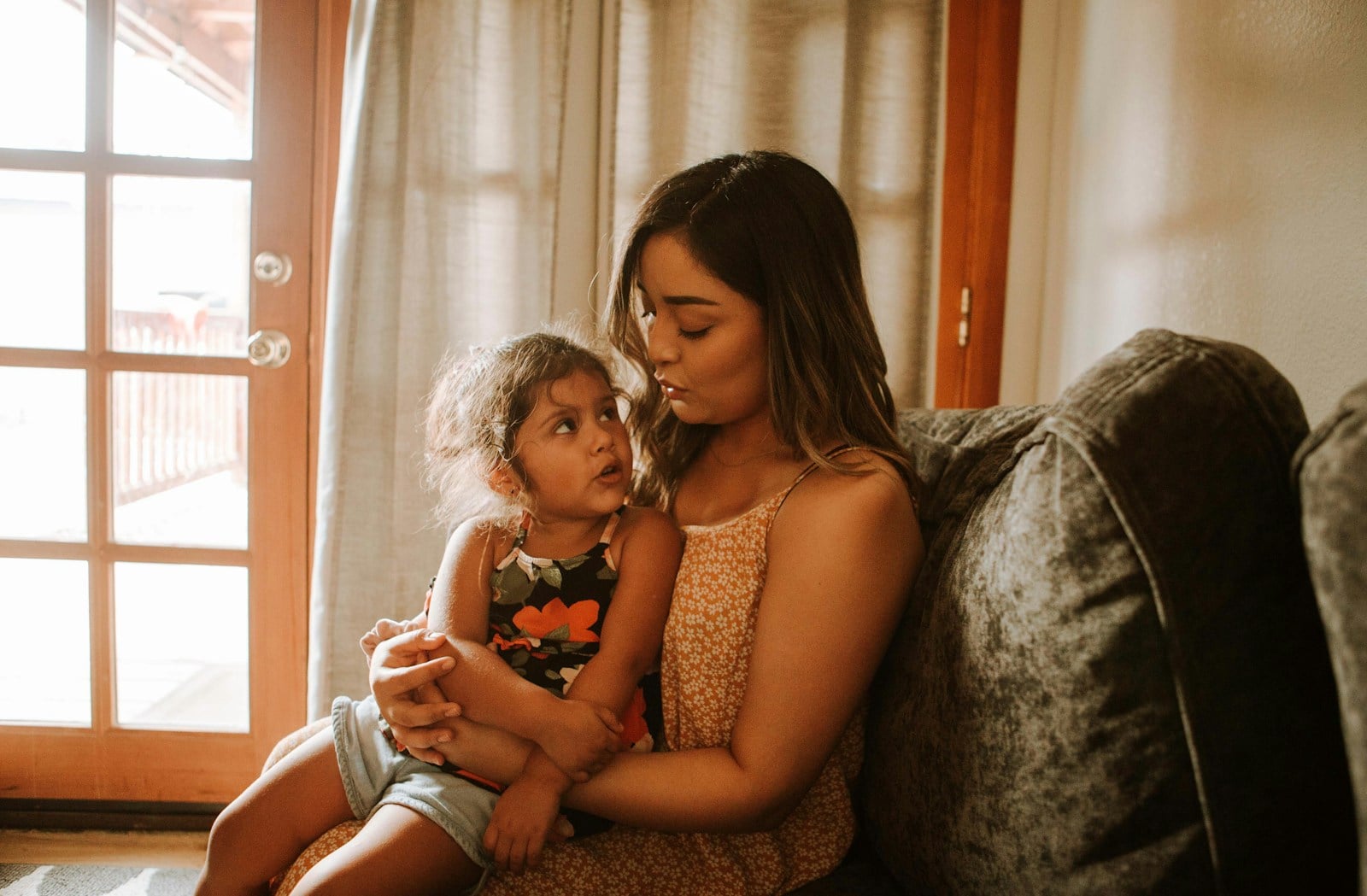
Featured stock photograph by Omar Lopez on Unsplash, used under the Unsplash licence. It illustrates an adult and child sharing time together. It does not depict the fictional disagreement or show EduNanny staff or clients.