How to Read an Infant Development Story Without Turning It into a Promise
An infant development story can bring one ordinary moment into focus, but it is not a timetable or promise. Learn how to interpret the example and ask useful questions about your own baby.
An infant development story may describe an individual observation, such as an infant recognising a familiar object during everyday interaction. It is natural to picture your own child in a similar situation. You may find the detail encouraging, or wonder whether your baby is developing at a different pace.
Look beyond the age label to the specific action described during everyday care. Ask what the infant did, what happened around the action and how the caregiver responded.
One Child’s Moment, Not a Schedule
On its pilot page, EduNanny presents its development stories as individual observations. One account describes an infant recognising a ball and familiar objects during everyday interaction. The page says the examples are neither a typical timetable nor a guaranteed result. It also says the examples do not establish that a care programme caused a milestone. Read EduNanny’s description of these development stories.
The age label in this EduNanny account applies to that particular infant and is not a timetable for another infant. The concrete action can still prompt a useful question: how did the caregiver observe and describe the event within the infant’s routine?
What to Ask About the Story
When you meet a childminder or speak with someone involved in your baby’s care, use the story to ask about your child and everyday care, not just the age. Simple questions can make an observation more meaningful.
- What did the infant do? Ask for a clear description of the observable action, such as moving, looking, reaching or responding to a sound. A specific account is more useful than a broad claim that the baby is “advanced”.
- What happened around the action? In a hypothetical example, you might ask whether the action came after floor play, exploration, rest or interaction. Details of the actual event can help you understand what the caregiver observed.
- How did the child respond to support? Ask what support, if any, the childminder offered to help the infant move, communicate or explore, and how the infant responded at the time.
- What has your baby been doing? Share your own child’s recent actions and ask what the childminder has noticed. This keeps the conversation with your childminder centred on your baby rather than turning one provider account into a comparison.
- How will updates be shared? Agree with the childminder on how feeding, rest, mood and notable moments will be communicated while your baby is in care.
These questions also help you consider what communication looks like in practice. A published story is not evidence that a programme works. It can help you ask whether a caregiver observes carefully, understands your child’s routines and can describe an event without making it mean more than it does.
Keep the distinction between an observation and a promise in view. “One infant was observed taking steps” describes a moment. “The programme will help your child reach a milestone by a particular age” predicts an outcome that the story has not established. If a provider makes a broader claim, it is reasonable to ask what evidence supports it and whether it comes from measured results or a single account.
What the Pilot Can and Cannot Tell You

The Ministry of Social and Family Development says that operators will engage childminders to care for infants, with each childminder caring for between one and three infants at a time. See the Ministry’s pilot announcement.
That figure describes the staffing design and does not establish an individual infant’s developmental result. At EduNanny, we describe care at home or in the community, with each childminder caring for no more than three infants. Our pilot information also describes opportunities for naming familiar objects, singing, floor play, movement and sensory exploration. These details help you understand the care arrangement, but they do not establish what your infant will do next. Review the pilot information.
For parents, the practical distinction is clear. Published development stories can prompt a discussion about everyday care. To understand a service you are considering, look closely at eligibility, fees, staffing, screening, communication and the care arrangement. Keep notes of what your baby has done recently and bring questions for the childminder. Raise any broader concerns with your child’s healthcare professional.
A development story is most helpful when it brings one ordinary moment into clearer focus. Read the reported action, ask what happened and use it to start a conversation about what your baby is doing now. The age label belongs to that individual account, while the questions it prompts can keep the conversation centred on your own child.
Sources and further reading
- EduNanny ECDA Childminding Pilot · EduNanny
- ECDA Appoints Three Operators for New Childminding … · www.msf.gov.sg
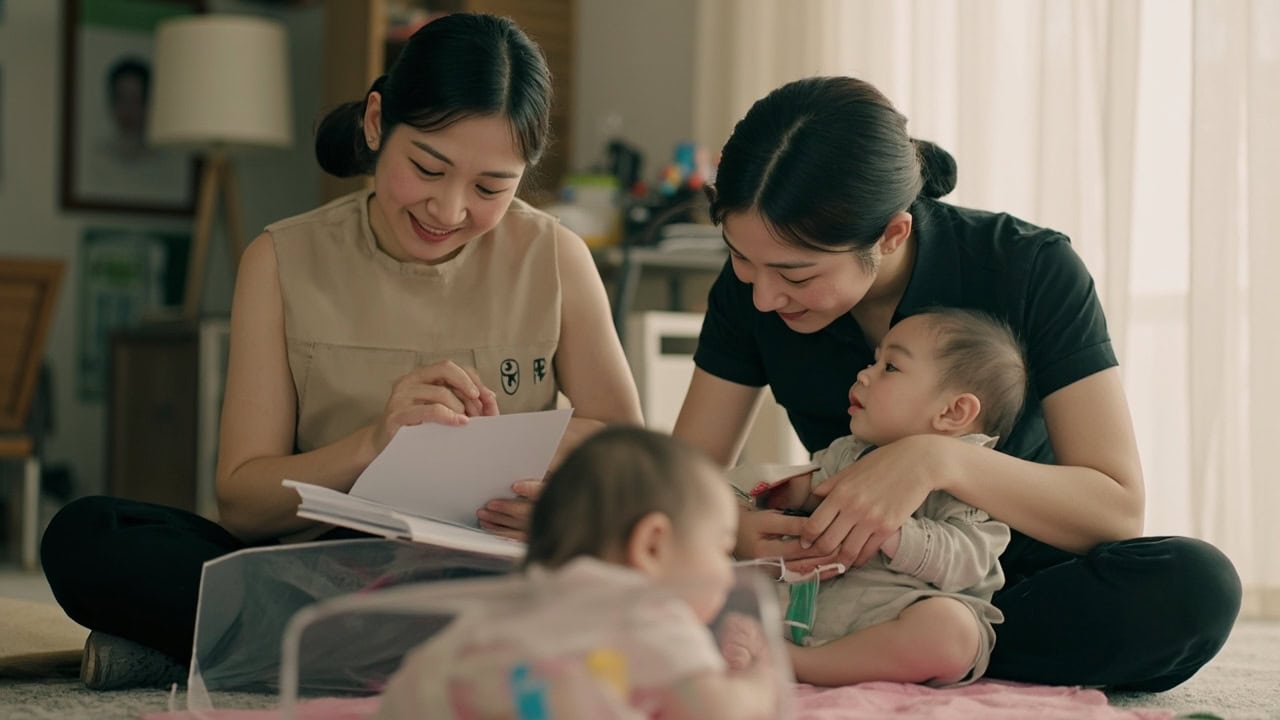
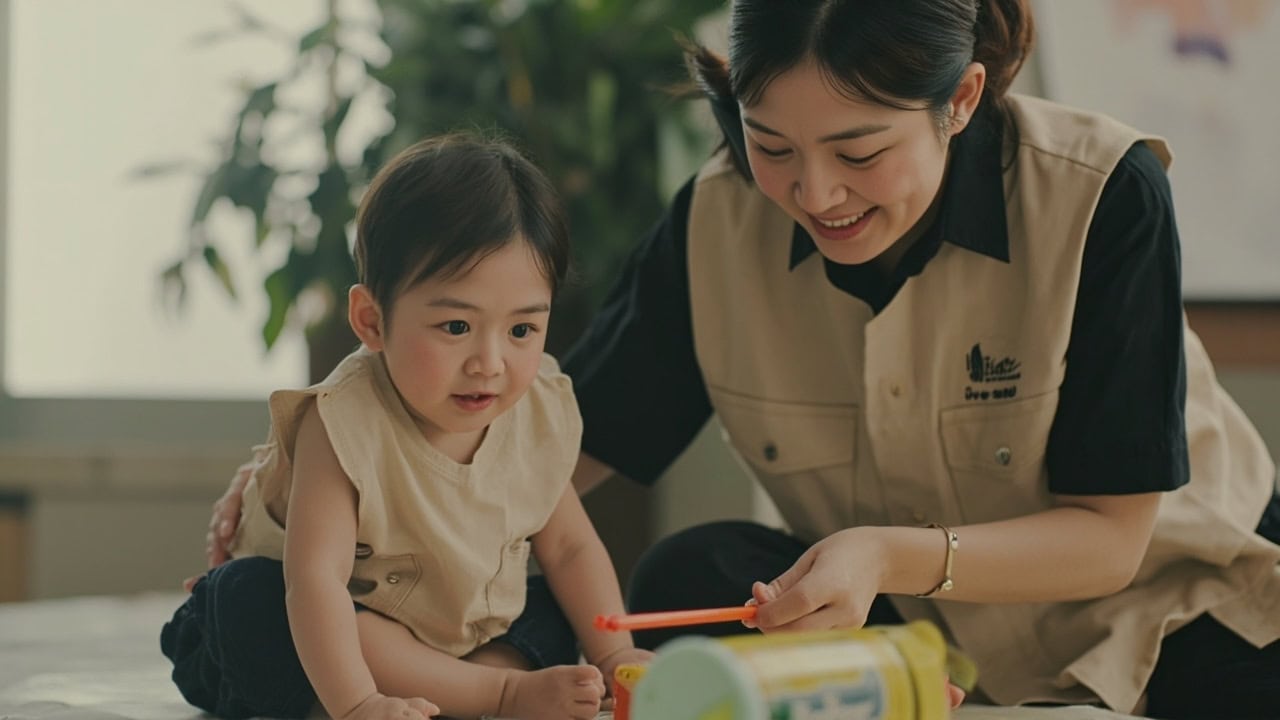
The images in this article were generated with AI for illustration. They do not show actual EduNanny staff, children or facilities.
Every family has different care needs. Speak with EduNanny to discuss care that is right for your child.