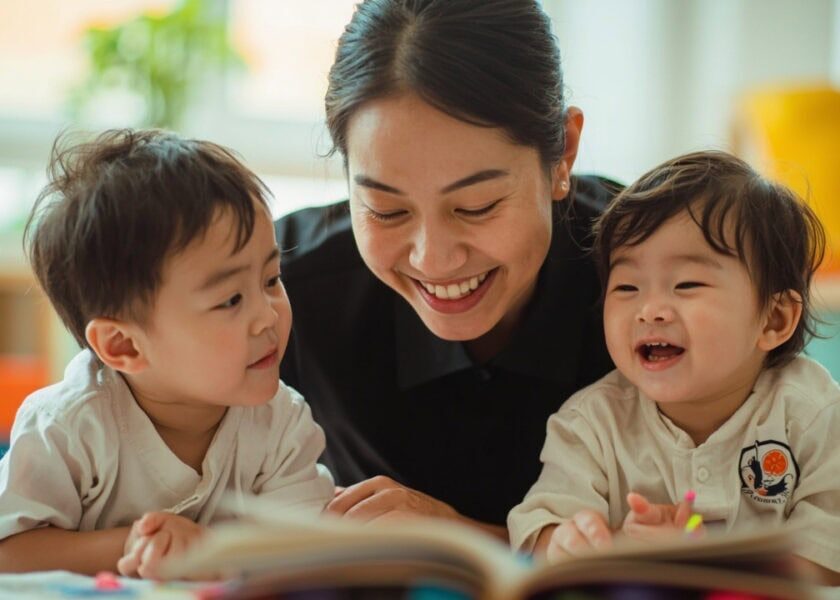
How Listening to Your Childcare Fears Leads to Better Choices in Singapore
Before You Begin Your Search, Read This
There is a moment before every search begins.
It is quiet, and it is heavy. It happens in the kitchen after your baby has finally fallen asleep, or in the back seat of a car during the school run, or at two in the morning when you are too tired to pretend you are not thinking about it. That moment when you finally admit to yourself that you cannot do this alone — that you need help, that someone else will hold your child, and that the thought of that makes your chest tighten in a way you did not expect.
If you are in this moment right now, I want you to know something. That weight you are carrying is not weakness. It is not indecision. It is not a sign that you are unprepared. It is proof that you understand what this decision actually means.
And that understanding is the very first step toward making the right choice.
Understanding the Emotional Weight of This Decision
Every parent in Singapore who begins this search brings something with them. They bring love — that is the foundation, the reason any of this matters. But they also bring something more complex, more layered, and far more human. They bring doubt. They bring guilt. They carry fears they do not always have the words for, and they carry them alone, wondering if anyone else feels this way.
The truth is, almost every parent does.
The moment you decide to look for someone to help care for your child, you cross a threshold that no other decision in your life quite prepares you for. You are not choosing a service provider. You are not selecting a vendor. You are making a choice about who will be present during the hours your child is most vulnerable, most curious, most open to the world. You are deciding whom to trust with the things that cannot be put into a contract or measured in a tour.
When a Singapore parent sits down to look for childcare, they are not just comparing ratios and curricula. They are grappling with a set of fears so specific and so deeply felt that they rarely get named out loud. These fears do not make headlines. They do not appear in parenting forums or in the polished brochures that institutions hand out. But they are there, in every parent who hesitates, who second-guesses, who wakes up in the night and wonders if they are making the right call.
1. The Fear of Trust
You are being asked to hand your child to a stranger. Not a friend, not a relative, not someone who shares your blood or your history. A stranger, who will become familiar over time, but who begins as a stranger. And the weight of that is enormous, because trust is not something you can force. It has to be earned, slowly, through evidence and experience and the accumulation of small moments that prove someone is worthy of it.
2. The Fear of Safety
Not just physical safety — though that is paramount. It is the deeper safety of knowing that your child is not just supervised but protected, not just kept alive but kept secure in every way that matters. In Singapore, where parents work long hours and the pressure to return to work can feel relentless, the anxiety about whether your child is truly safe in someone else’s care is not dramatic. It is reasonable. It is rooted in love.
3. The Fear of Judgment
The fear that wanting or needing help makes you less of a parent. The fear that you will be seen as someone who could not cope, who gave up too easily, who did not sacrifice enough. This fear is culturally specific in ways that Singapore parents know intimately. The messaging around motherhood and fatherhood in Singapore is full of expectations, and admitting that you need support can feel like an admission of failure — even when it is not.
4. The Fear About Development
You have read about the early years. You know that the first thousand days matter in ways that neuroscience is only beginning to articulate. And so you worry — is this person engaging my child in ways that actually support their growth? Are they responding to their cues? Are they helping them learn language, develop trust, build the neurological architecture that will support everything that comes after? The pressure to get this right is immense, because you know you cannot get this time back.
5. The Fear of Invisibility
You will never know exactly what happens when you are not there. There will be a gap between your child’s experience and your understanding of it. You will be, in some essential way, absent from the most important hours of their day. This fear ties all the others together.
Why Your Fears Are Actually Your Greatest Asset
Here is what is so important to understand: these fears are not obstacles to finding good childcare. They are the very thing that will help you find it.
The parent who walks into a childcare search filled with doubt is not a weaker parent than the one who feels confident. They are asking better questions.
Fear of Trust Points You Toward Character
When you are afraid of trust, you do not settle for a caregiver who seems adequate. You look for the signs of genuine reliability, the small evidences of character that no brochure can capture. You notice how someone speaks about your child, whether their eyes light up or their attention wanders. You pay attention to consistency, to the way a caregiver talks about their work, to whether they seem to be doing this because they love it or because it is just a job. Your fear of trust is pointing you toward the questions that reveal character — and character is everything.
Fear of Safety Demands Accountability
When you are afraid of safety, you do not accept vague reassurances. You ask about training, about protocols, about the things that happen when no one is watching. You look for transparency, for openness, for institutions and caregivers who understand that your fear is not paranoia but love in its most protective form. Your concern about safety is asking for accountability — and accountability is something every good childcare arrangement should be able to provide.
Fear of Judgment Reveals Your Commitment
When you are afraid of judgment, you begin to recognize something important: the judgment you fear most often comes from inside, not outside. The voices that tell you that needing help is a failure — those are the hardest voices to silence. But here is what your fear of judgment is actually telling you. It is telling you that you take this role seriously, that you understand the weight of parenthood, that you are not someone who entered into this lightly. And that seriousness, that depth of commitment — that is exactly the kind of attentiveness your child needs. You are not less of a parent for feeling this fear. You are more of one.
Fear About Development Asks for Intentionality
When you are afraid of development, you stop accepting childcare that simply passes time. You look for caregivers who understand developmental stages, who respond to your child’s emerging abilities, who see each day as an opportunity for growth rather than a box to check. Your worry about development is asking for intentionality — and intentionality is the hallmark of care that actually matters.
Fear of Invisibility Asks for Connection
When you are afraid of invisibility — when you worry that you will lose touch with your child’s daily experience — you look for communication, for openness, for a partnership in which you remain a present and informed part of your child’s life even when you are not physically there. Your fear of the unknown is asking for connection — and connection is what makes childcare more than just a service.
Trust, Attention, and What Quality Care Actually Means
There is a skill that Singapore parents develop in this process, often without realizing it. It is the skill of trust — not blind trust, not naive trust, but the kind of trust that is earned through discernment and maintained through ongoing attention.
Trust, in this context, is not a feeling. It is a practice.
It begins with observation. With watching how a caregiver interacts with your child when they think no one is paying close attention. With noticing whether your child responds to this person with familiarity and ease, or with wariness and reserve. With paying attention to the small things — the tone of voice, the way a child’s name is spoken, the way comfort is offered, the way a child’s emerging interests are noticed and built upon.
Trust is also maintained through communication. Through asking questions, and receiving honest answers. Through expecting transparency and receiving it. Through building a relationship with your caregiver that is based on mutual respect, shared investment in your child’s wellbeing, and the kind of ongoing dialogue that keeps you informed without making you feel like an outsider.
The Difference Between Tolerating and Truly Seeing
There is a distinction that every parent eventually learns, usually through experience rather than instruction. It is the distinction between childcare that tolerates your child, and childcare that truly sees them.
Tolerance is passive. It says, this child is present, and I will ensure they come to no harm. It is the minimum standard. It is what you might expect from someone who is watching a child because they are paid to do so, and who considers their job done when the child is fed, changed, and uninjured.
Seeing is different. Seeing is active. It says, this child has a personality, a temperament, a set of preferences and needs that are uniquely theirs. I am not just supervising them. I am learning them. I am attuned to their rhythms, responsive to their cues, invested in their growth and happiness in ways that go far beyond the contractual minimum.
A caregiver who sees your child notices when they are developing a new fascination with stacking blocks. They notice when your child is working through a developmental leap that is making them more clingy or more fractious than usual. They notice when your child’s face lights up at a particular song, or when they are working up the courage to take their first steps, or when they are feeling overwhelmed and need quiet and comfort rather than stimulation.
This kind of attentiveness cannot be mandated. It cannot be produced by a curriculum or enforced by a regulation. It comes from a genuine love of working with young children, from a deep understanding of how they grow and learn, from the kind of patience and presence that turns a job into a vocation.
When you find childcare that truly sees your child, you will know it. Your child will seem happy in ways that are not just circumstantial. They will come home with stories, with language, with evidence that their day was full of engagement and care. They will talk about their caregiver with familiarity and warmth. And you will feel, in your own body, a loosening of the tension you have been carrying — not because all your fears have been resolved, but because you have found someone who shares your investment in your child’s wellbeing.
What Quality Childminding Looks Like in Singapore
In Singapore, parents have a range of pathways available when it comes to childcare. There are centre-based options, with their own structures and resources. There are home-based arrangements, which offer a different kind of intimacy and personalized attention. And there is the ECDA Childminding Pilot, which was designed with a specific understanding of what parents and children actually need — smaller ratios, more individualized care, a setting that feels more like a home than an institution.
Understanding what quality looks like starts with knowing what to look for:
- Small ratios matter. In infant care, numbers genuinely matter. Every baby needs individual attention. Every cry is a form of communication that deserves a response. The foundation of trust is built in the earliest months of life, and that requires space to form genuine connections.
- Disposition over credentials. Training is important, but what matters most is whether a caregiver genuinely loves working with young children. Look for someone whose eyes light up when they talk about their work, not someone who treats it as just a job.
- Developmental understanding as practice. Quality caregivers understand child development not as a credential but as something they bring to every interaction, every feeding, every moment of comfort they offer.
- Communication without surveillance. Parents need to feel included in their child’s day. Visibility is not about monitoring — it is about partnership. You should feel like an informed participant in your child’s life, not an outsider receiving occasional updates.
- Consistency over time. Trust is not built in a single visit. It is built through reliability and the accumulation of days where your child is cared for with attentiveness and warmth.
How EduNanny Responds to Parental Fear
EduNanny Singapore was built on a very clear conviction. We believe that the early years of a child’s life are not just a phase to be gotten through. They are a foundation to be built upon — carefully, attentively, with genuine understanding of how children develop and what they need to flourish.
We know that for parents, this belief is not abstract. It is lived. It is felt in the weight of your responsibility, in the questions you ask, in the sleepless nights you spend worrying about whether you are doing enough, doing right, doing well.
That is why we built what we built.
EduNanny is not just a service. It is a response — a response to the fears I have been describing, to the questions you are asking yourself when you think no one is listening, to the kind of care your child deserves and that you, as a parent, have every right to demand.
Our approach begins with small ratios — because we know that in infant care, numbers matter. Up to three infants in a home-based setting is not just a regulation. It is a recognition that every baby needs individual attention, that every cry is a form of communication that deserves a response, that the foundation of trust is built in the earliest months of life.
Our caregivers are not just trained. They are selected for their disposition, their warmth, their genuine love of this work. They understand child development not as a credential but as a practice — something they bring to every interaction, every feeding, every moment of comfort they offer.
We maintain transparency not because we are required to, but because we understand that parents need to feel included in their child’s day. Where our services include communication measures and appropriate safeguards, we implement them because we know that visibility is not surveillance — it is partnership.
Our fee structures, designed within the framework of the ECDA Childminding Pilot, are built to be accessible — because we believe that quality care should not be a privilege reserved for families with extensive resources. Every child in Singapore deserves attentiveness. Every parent deserves support.
We designed our Monday to Friday care blocks to fit the realities of working life in Singapore, and we structured our approach so that parents can use CDA and Baby Bonus funds where applicable — not as marketing points, but as genuine acknowledgments of the financial realities families face.
Common Questions Parents Ask
What if I feel guilty about needing help?
Guilt is one of the most common emotions Singapore parents experience when considering childcare support. Here is what we want you to know: the fact that you feel guilty means you take this responsibility seriously. It means you understand what you are entrusting to someone else. That conscientiousness is exactly the quality that will help you make a good choice. Guilt is not a sign that you should step back. It is a sign that you are paying attention.
How do I know if a caregiver is truly trustworthy?
Trust cannot be verified instantly, but it can be assessed through observation and conversation. Pay attention to how your child responds — not just on the first visit, but over time. Notice whether the caregiver speaks about children with warmth and specificity. Ask questions that reveal how they handle situations when things are not going smoothly. Trust is built through consistency and honest communication over time.
What if my child seems upset about the transition?
Transitions are hard. Separation anxiety is a normal, healthy sign of your child’s attachment to you. What matters is not whether your child cries at first — that is developmentally expected — but how the caregiver responds to that distress. Look for someone who treats tears as communication rather than inconvenience, who works to build familiarity and security over time.
How do I stay connected to my child’s day?
You should not feel like an outsider to your child’s daily life. Quality care includes parents as partners. Ask potential caregivers about their communication approach. You deserve to know about your child’s meals, naps, milestones, and moments — not as a surveillance measure, but as a parent who wants to remain connected to the hours you cannot be there.
A Message to the Parent in the Middle of This Search
There is something I want to say directly to you, if you are in the middle of this search right now, carrying all of these fears, asking all of these questions.
You are already doing this well.
The fact that you are afraid means you are paying attention. The fact that you doubt means you are taking this seriously. The fact that you lie awake at night thinking about whether you are making the right choice means that you understand the weight of what is at stake — and that understanding is exactly what your child needs in a parent.
You do not need to stop doubting. You need to find the right people to doubt alongside, and to trust that your instincts are pointing you somewhere meaningful.
When you walk into a space and your child reaches for a caregiver with familiarity and warmth, that is not luck. That is your instincts confirming what your eyes have told you.
When you speak with a caregiver and you sense not just competence but genuine care, not just professionalism but authentic investment in your child’s wellbeing, that is not wishful thinking. That is recognition.
When you step back and observe a setting and it feels warm rather than sterile, attentive rather than perfunctory, responsive rather than routinized — that feeling is data. Trust it.
The questions you are asking — they are the right questions. The fears you are carrying — they are pointing you somewhere important. And the love that is driving all of this, the love that makes this so hard and so heavy and so necessary — that love is what good childcare is built on.
There is a moment that comes after the search, after the visits, after the decision. It is the moment when you first leave your child with someone else and walk away. It is the moment when you trust that what you have chosen is worthy of that trust.
That moment is not an ending. It is a beginning. It is the beginning of a relationship between you, your child, and the caregiver who will share in the sacred work of raising them. It is the beginning of ongoing communication, of trust that is built and rebuilt with each passing day, of watching your child flourish in ways that reassure and delight you.
And it is the beginning of something else too. It is the beginning of your own growth as a parent — the recognition that asking for help is not a failure but a strength, that building a village is not a compromise but a wisdom, that the love you feel for your child is large enough to include other caring hands, other attentive hearts, other people who will help you raise this remarkable human being you have brought into the world.
What to Do Next
If you are ready to take the next step in your search, we invite you to learn more about how EduNanny Singapore approaches infant care and childminding. We built our services specifically for parents like you — parents who feel deeply, question thoroughly, and love fiercely.
EduNanny was not created to replace your love for your child. It was created to honor it, to support it, to stand alongside it in the work of raising a child. We are here for the parents who carry this weight seriously, who understand what this decision means, and who deserve support that matches the depth of their commitment.
Welcome. We are glad you are here.
EduNanny Singapore provides home-based infant care and childminding services for families across Singapore. Our caregivers are selected for their warmth, trained in child development, and supported by small ratios that allow genuine attentiveness. Learn how we support Singapore parents through the ECDA Childminding Pilot.