
From Floor to Future The Near Home Infant Care Revolution in Singapore

EduNanny: Building Beginnings Near Home for Singapore’s Infants
Appealing to a national vision, EduNanny transforms infant care from a distant service into a lived, intimate partnership among families, caregivers, and communities. Grounded in science, safety, and tenderness, this model treats the first thousand days as a public trust and brings high-quality care to the doorstep—center-based, home-based, and supported from a distance. The following article expands the speech into actionable insights, practical guidance for parents, and concrete examples drawn from EduNanny’s lived practice in Singapore.

The Kneeling Mind: Eye-Level Presence
Infants learn first through their bodies and immediate experiences. The Kneeling Mind centers on meeting children where they are—at eye level on the floor—to honor their self-construction and their unique tempo of growth.
- Create floor-level environments: Design play spaces with low furniture, soft mats, and safe exploration zones that invite rolling, reaching, and safe climbing. Place mirrors on the floor or low walls to support self-recognition.
- Observe and label: When a child explores a new object, pause, observe cues (gaze, reaching, mouth movements), and label the effort: “You reached for that block—nice reach!” This builds vocabulary and comprehension.
- Build a simple minute-to-minute routine: Notice → Mirror → Extend. For example, a hand reaches for a rattle; pause, name the action, and offer a slightly more challenging toy to support mastery.
- Home application tips: Use limited, high-quality toys that invite multiple actions (grasp, shake, explore texture). Keep a “cue book” for caregivers with common infant cues and corresponding responses.
- Practical sample routine (home setting):
- 7:30–8:00 a.m.: Floor-time exploration with soft mats and safe mirrors
- 8:00–8:20 a.m.: Simple object play (rattles, textured fabrics)
- 8:20–8:40 a.m.: Guided movement prompts (tummy time, supported rolling)
- 8:40–9:00 a.m.: Whispered narration of actions during play
Actionable takeaway for parents: schedule a daily floor-time block with at least one new texture or object per week, narrate actions, and respond to cues with calm, patient pacing rather than rushing to milestones.
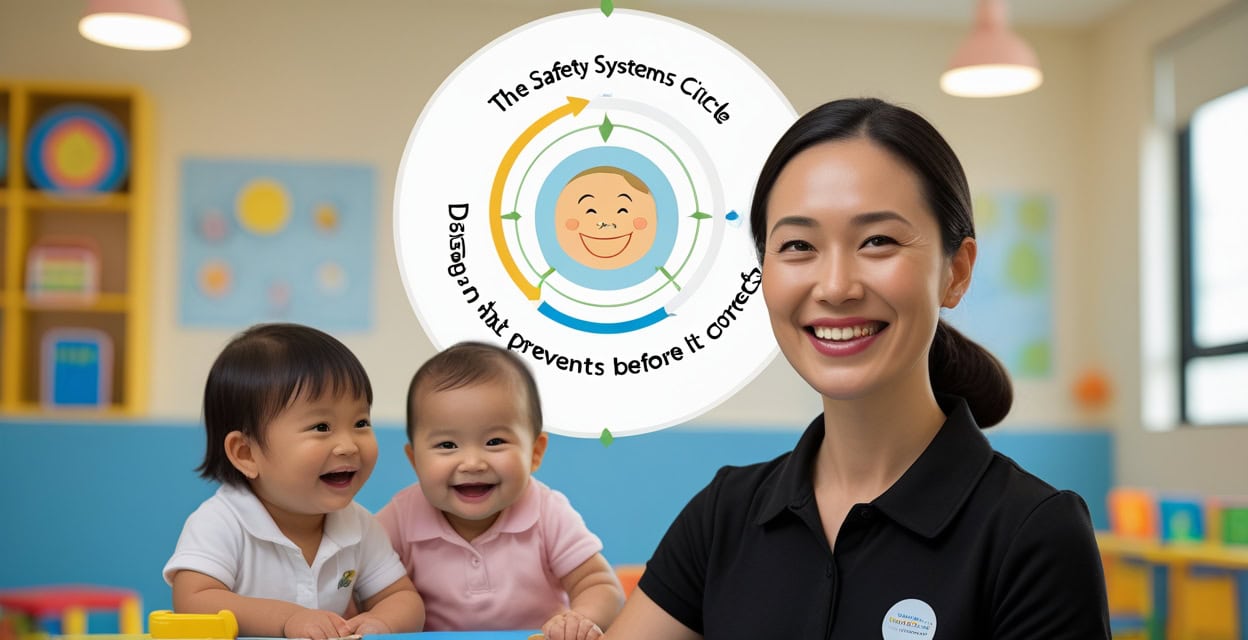
The Safety Systems Circle: Design That Prevents Before It Corrects
Safety is an ecosystem, not a checklist. EduNanny’s approach emphasizes prevention, clear protocols, and a culture of reflective practice that elevates everyone’s safety sense.
- Ultra-low ratios: A 1:3 infant ratio enables caregivers to respond with attunement, reducing overwhelm and supporting secure attachment.
- Room design and equipment: Floor-level zones, rounded edges, soft boundaries, ample ventilation, natural light, separate hygiene spaces, and safe sleep areas that meet evidence-based guidelines.
- Transparent practice: If cameras are used for family visibility, implement consent procedures, robust privacy safeguards, defined access, data retention limits, and a clear debrief protocol to reflect on practice without compromising child dignity.
- Preventive training: Safe sleep, bottle hygiene, choking response, allergen awareness, handling with calm, and crisis de-escalation. Track near-misses with a formal debrief to prevent recurrence.
- Home safety adaptations: Families can implement preventive measures at home—secure heavy furniture, cordless window coverings, cover outlets, store small objects out of reach, and maintain a consistent sleep environment to minimize disruptions.
- Practical home checklist:
- Clear the floor of small hazards and cords
- Use a firm, flat sleep surface with no loose objects
- Establish a predictable feed-play-sleep rhythm with gentle transitions
Actionable takeaway for parents: create a near-miss log at home. Record what almost caused a hazard, how it was prevented, and how to modify routines or layout to prevent recurrence. Use this to drive continuous safety improvements both at home and in care settings.
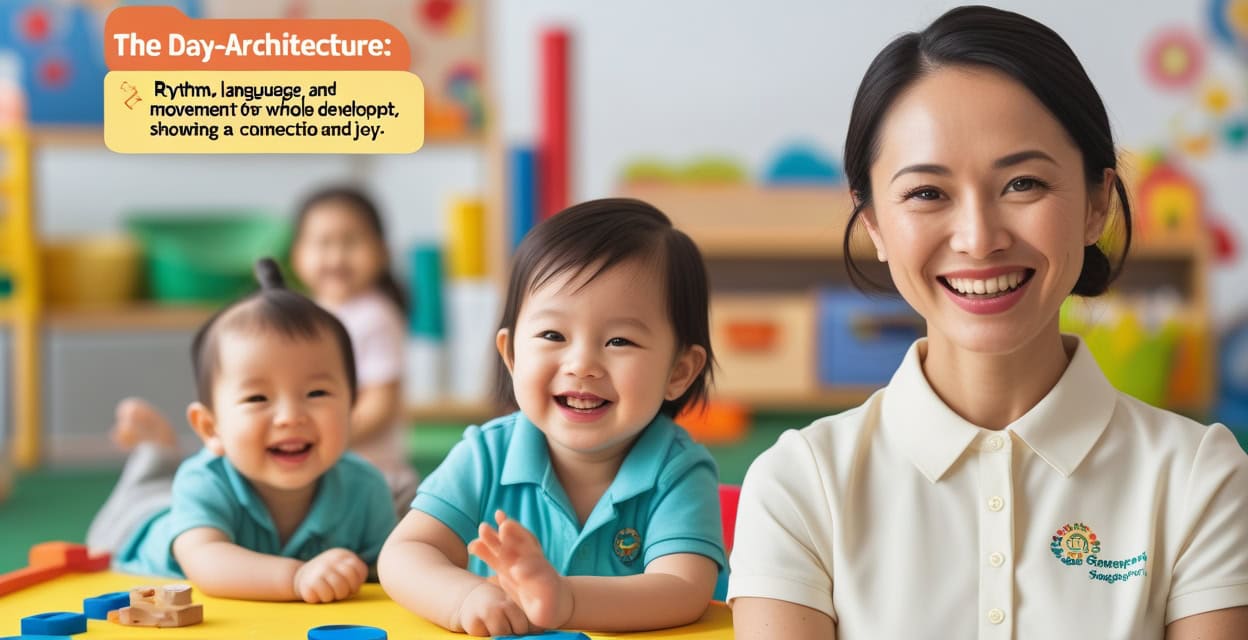
The Day-Architecture: Rhythm, Language, and Movement for Whole Development
Infant brain development thrives on patterned experiences. EduNanny’s Day-Architecture builds a daily scaffold of rhythm, language, and movement to support holistic growth.
- Rhythm: Steady beats and predictable transitions reduce cortisol and support social joy. Arrivals, handovers, feeding, and nap times should follow familiar sequences.
- Language: Adopting “serve-and-return” conversations—short phrases, warm tone, and waiting for baby response—builds early literacy and social competence. Narrate care: “Wiping your hands,” “Soft blanket on your legs.”
- Movement: Movement is cognitive development in action. Include safe floor time, varied textures, and open-ended materials that invite exploration and problem-solving.
- Home implementation tips: Use a simple daily schedule poster at child height, rotate activities weekly, and mask transitions with a comforting routine (e.g., a song during diaper changes).
Sample home day plan (typical weekday):
- 7:00–7:30 a.m.: Arrival, greet with eye contact, calm handover notes
- 7:30–9:00 a.m.: Floor-based play with open-ended materials, language narration
- 9:00–9:30 a.m.: Snack and diaper change
- 9:30–11:00 a.m.: Guided movement and exploration
- 11:00–12:00 p.m.: Nap/quiet time
- 12:00–2:00 p.m.: Afternoon activities, music/reading, social interaction
- 2:00–3:30 p.m.: Outdoor time or sensory play (weather permitting)
- 3:30–5:30 p.m.: Handover preparation, caregiver notes, parent-ready summaries
Practical note for families: record a short daily summary for parents, including key moments, new skills observed, and plans for enhancing next-day learning.

The Joy Index: Belonging as a Daily Metric
Happiness in infancy is a signal of belonging and secure attachment. EduNanny uses a simple, observable set of indicators to tune care in real time.
- Ready bodies: Calm shoulders, steady breathing, comfortable posture
- Eager reach: Initiating touch with materials or people
- Shared smiles: Social engagement and mutual gaze
- Quick recovery: Returns to baseline after slight distress
Actionable application for parents and caregivers:
- Maintain environmental balance: moderate noise, appropriate lighting, and calm voices to support calm bodies.
- Create opportunities for social reciprocity: turn-taking games, peek-a-boo, and responsive mimicry to reinforce joint attention.
- Adjust routines to maintain joy: if the child shows signs of overstimulation, shorten transitions, add quiet time, and offer a comforting object.
Measurement and reflection: families can use a simple “Joy Journal” noting these four signals each day and discuss adjustments during caregiver handovers.

The Civic Calling of Childminders: Purpose, Professionalism, and Partnership
Childminding is not mere supervision; it is a nation-building vocation. EduNanny frames the caregiver role through three concentric commitments and a professional pathway.
- Care-Artist: Mastery of soothing, pacing, and play that shape secure attachment and cognitive readiness.
- Safety Steward: Maintaining safety within a well-designed envelope, knowing when to pause, adjust, or escalate.
- Family Partner: Transparent communication with families through notes, photos, and debriefs that keep parents connected while at work.
Practical guidance for families choosing and working with a caregiver:
- Ask about training in safe sleep, feeding, and emergency responses; request ongoing mentorship programs for staff.
- Request a peek into daily logs, including routine notes, mood indicators, and caregiver reflections.
- Discuss the care philosophy: how the caregiver uses eye-level presence, gentle movement, and attuned language to support learning.
- Inquire about the working conditions that enable dignified, skilled care (reasonable hours, fair pay, professional development).

Real-Life Practice: Everyday EduNanny Moments
What this looks like in practice is a blend of clear routines, transparency, and gentle companionship. Consider this scenario as a model for families and providers alike:
- 7:05 a.m.: A warm greeting at the doorstep, shoes off, a brief accession to the morning routine with a smile and a whispered plan.
- Handover window: Logged notes on sleep hours, feeds, mood, and any notable cues; a secure app view that keeps parents connected without intruding on care rhythm.
- Midday: Quiet sleep in a calm, monitored space with a firm mattress, low light, and safe sleep posture.
- Pick-up: Two-minute debrief focusing on what fascinated the child today, what to try tomorrow, and how to ensure tonight remains unhurried for peaceful sleep.

Ethics of Transparency: Trust, Privacy, and Respect
Transparency is a covenant of trust, not a surveillance culture. EduNanny’s approach to visibility is designed to reassure families while protecting child privacy and dignity.
- Consent and data protection: Parents provide informed consent for visibility tools; data is accessed only by authorized family members and care teams.
- Purposeful footage use: Footage supports family reassurance, supervision, and professional reflection—not spectacle or third-party sharing.
- Clear policies: Public-facing and internal policies specify retention periods, access controls, and mechanisms for redress if privacy concerns arise.
Practical application for families: review any service-level privacy policy; ask how footage is used; ensure a clear process exists for updating consent and removing access when needed.

The Promise Beyond Care: Outcomes for Infants, Families, and Singapore
EduNanny’s long-term impact spans beyond daily care and into a future-ready society.
- For infants: Calm bodies, curious minds, and secure bonds that support lifelong learning.
- For parents: Clarity, partnership, and peace of mind that your child’s day is steady and seen, even while you work.
- For caregivers: Dignified work with professional development, coaching, and a shared language of best practice.
- For Singapore: Stronger early attachment, broader access to high-quality care, and meaningful employment that uplifts families and communities.
Key differentiators include the national standard, the integration of science and practice, and the commitment to a human-scale, community-driven approach that makes care meaningful and attainable for every family.

Conclusion: Begin Small, Begin Near, Begin Well
EduNanny’s philosophy is simple and demanding: begin close to home, begin with the floor, and begin with care that treats every moment as a potential milestone. By combining eye-level presence, preventive design, rhythm and language, belonging as a daily metric, and a civic model of professional caregiving, EduNanny aims to shape a generation of resilient learners and confident families. If tomorrow can be gentler than today, it starts with the choices families make today—to seek attuned care, to partner with educators, and to advocate for access to high-quality infant care across Singapore.
Join the movement that treats infant care not as a service to purchase, but as a shared promise to keep. Street by street. Floor by floor. Hand in hand. Begin well, together.
SEO Keywords: [#EduNannySingapore, #InfantCareSingapore, #EarlyChildhoodDevelopment, #1to3Ratio, #CCTVTransparency]
Ready to Experience Excellence?
Transform Your Family’s Journey
Discover Singapore’s leading infant care and childminding services. Expert guidance for your little one’s first thousand days.