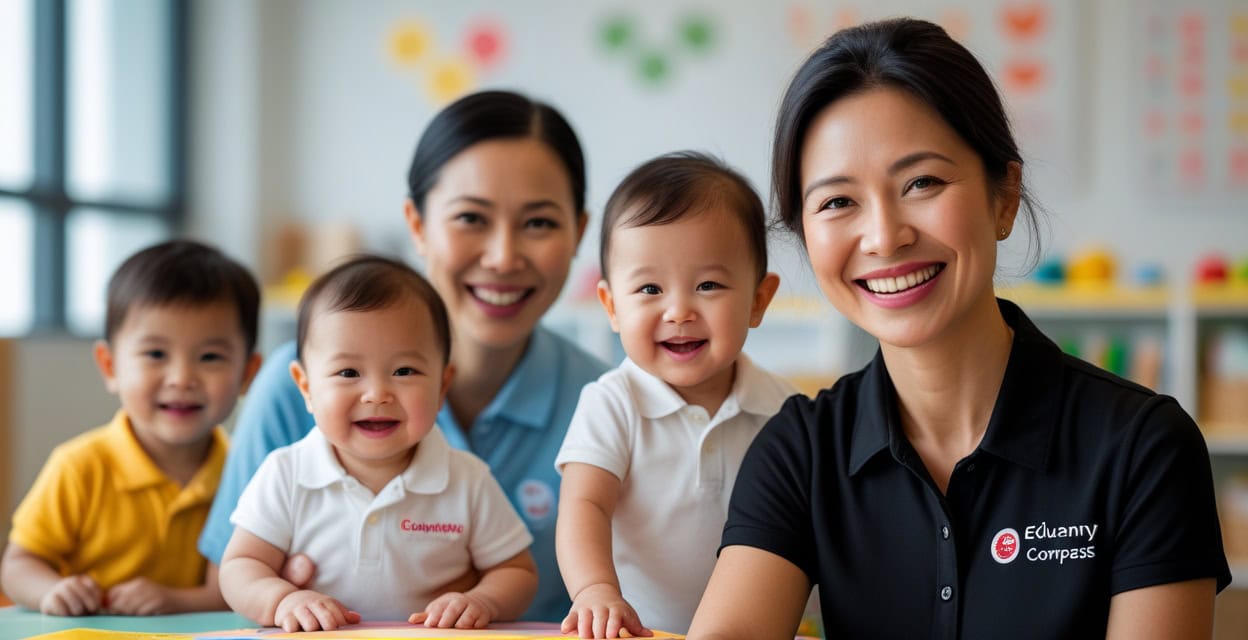
From First Cries to First Confidence EduNanny Compass for Singaporean Children

From First Cries to First Confidence: EduNanny’s Compass for Singapore’s Youngest Citizens
Thank you for gathering to imagine something simple and radical at once: a Singapore where every baby is cradled by steady hands, clear science, and a community that refuses to leave early childhood to chance. This article expands the speech into a practical, editor-quality guide for parents, caregivers, and partners who want to bring EduNanny’s blueprint to life in everyday routines. Here you will find actionable strategies, real-world EduNanny insights, and concrete steps you can apply from day one.

Five Pillars of EduNanny Practice
1) Attachment Architecture: One Caregiver, One Calm Baby, One Island of Trust
Infants grow in relationships, not in schedules. Security is the bridge to curiosity; slow, respectful touch is a curriculum; consistency is the oxygen of a thriving early life. Practical guidance you can use today:
- Primary caregiver model: Each infant is assigned a primary caregiver who coordinates daily routines, feeding, and soothing. Parents should receive a brief daily handover note from the caregiver, highlighting smiles, attempts at new skills, and any calm-down strategies that worked.
- Five-minute arrival ritual: Upon arrival, the caregiver greets the baby by name, makes brief eye contact, and offers a familiar object (a comfort blanket or tiny toy) to ease transition. Parents can observe a predictable sequence to reinforce attachment.
- One-on-one moments: Care activities such as diapering or feeding are treated as dedicated “lessons in love.” Narrate softly, name sensations, and narrate progress to build language and trust.
- Continuity of place: Centres boast calm, uncluttered spaces with clearly labeled zones for feeding, sleeping, and play. For home-based care, ensure a familiar setup with defined “areas” for different activities to minimize transitions that disrupt security.
- Practical tip for parents: Maintain a simple “attachment log” for a week: note which caregiver was primary, the baby’s comfort level during key transitions, and any particularly successful soothing strategies. Share this with the care team to refine routines.
2) Safety as a Love Language: Systems that Let Parents Breathe
Safety is a cultural habit. When safety is visible, love becomes audible. Translate policy into practice with these steps:
- Environment by design: Ensure slip-resistant floors, rounded furniture edges, secured cords and sockets, gated zones, and unobstructed sightlines so caregivers can monitor at a glance.
- Sleep integrity: Use firm, flat mattresses; keep cots free of soft objects; place babies on their backs; maintain appropriate room temperature; implement dimming schedules to signal wind-down times.
- Feeding precision: Document milk handling, temperature checks, and allergen awareness. Train caregivers in paced bottle-feeding and careful introduction to solids to reduce choking risk and support healthy digestion.
- Health and hygiene: Establish consistent handwashing routines, cleaning schedules, and clear criteria for when a child should stay home. Require CPR and infant-first-aid certification for staff.
- Transparent partnership: Real-time CCTV access, daily digital updates, and candid incident reporting with actionable follow-up steps help parents feel informed and secure.
- Practical tip for parents: Create a simple safety checklist for your child’s space at home and at the centre. Review it monthly with your caregiver to catch new hazards and refine routines.
3) Developmental Precision with Joy: Play as the Engine, Observation as the Steering Wheel
Educational insights from Montessori, Piaget, Vygotsky, Froebel, Malaguzzi, and others are distilled into daily rhythms that feel like play and teach with purpose:
- Tummy-time to world-time: Scaffold sensorimotor exploration with gradually increasing complexity—soft toys for reach-and-grasp, mirrors for self-recognition, and gentle obstacles to challenge crawling and fine motor skills.
- Froebel-inspired materials: Provide open-ended, safe, natural textures and loose parts (soft blocks, wooden shapes, fabric scarves) that invite exploration and safe manipulation.
- Malaguzzi’s hundred languages: Integrate music, light play, water play, finger painting, and multilingual everyday songs to support diverse expressive channels.
- Vygotskian scaffolding: Caregivers model, imitate, and extend—support a task just beyond the child’s current capability and fade support as competence grows.
- Observation cycles: Weekly milestone notes, micro-goals, and simple development graphs shared with parents create a transparent, collaborative growth plan.
- Practical tip for parents: Keep a notebook of “one thing your child tried today.” Celebrate tiny advances at home and discuss observed progress with your caregiver to adjust play goals accordingly.
4) The Singapore We Want to Grow: Family, Culture, and Community on Purpose
Culture is competence. EduNanny embeds bilingual exposure, community values, and shared belonging into daily life:
- Centre-based hubs and home-based care: Flexible options that respect family schedules and preferences while maintaining attachment security.
- Distance support: Tele-coaching and virtual sleep and feeding consultations to reach families who need guidance remotely.
- Intergenerational bridges: Short, meaningful interactions with seniors and neighbours to build social warmth and empathy.
- Bilingual/multilingual exposure: Regular rhymes and picture-book read-alouds in English, Malay, Mandarin, and Tamil to seed future confidence and cultural pride.
- Practical tip for parents: Create a weekly family heritage moment—share a song, a story, or a dish from your culture with your child and with the care team to reinforce identity and belonging.
5) Access and Dignity: Quality Must Be Affordable, Available, and Fair
Excellence must be attainable. EduNanny blends high standards with practical access:
- Islandwide options: Centre-based, home-based, and distance-supported care, Monday–Friday, 7am–7pm.
- Affordability: From $33/day with fees payable by CDA/Baby Bonus to ease family budgets.
- National social initiative: A public commitment to the Maximum Employment Mandate—training and dignified work for professional childminders across Singapore.
- Modern spaces and equipment: Layouts and tools that support safe, developmentally appropriate activity (the standard you expect from EduNanny by BUTLER).
- Pathways for growth: Simple onboarding, smooth transitions between care modalities, and clear career progression for caregivers.
- Practical tip for parents: When evaluating a care option, track total monthly cost, not just daily rate—include transport, fees, and any subsidies to compare true affordability and value.
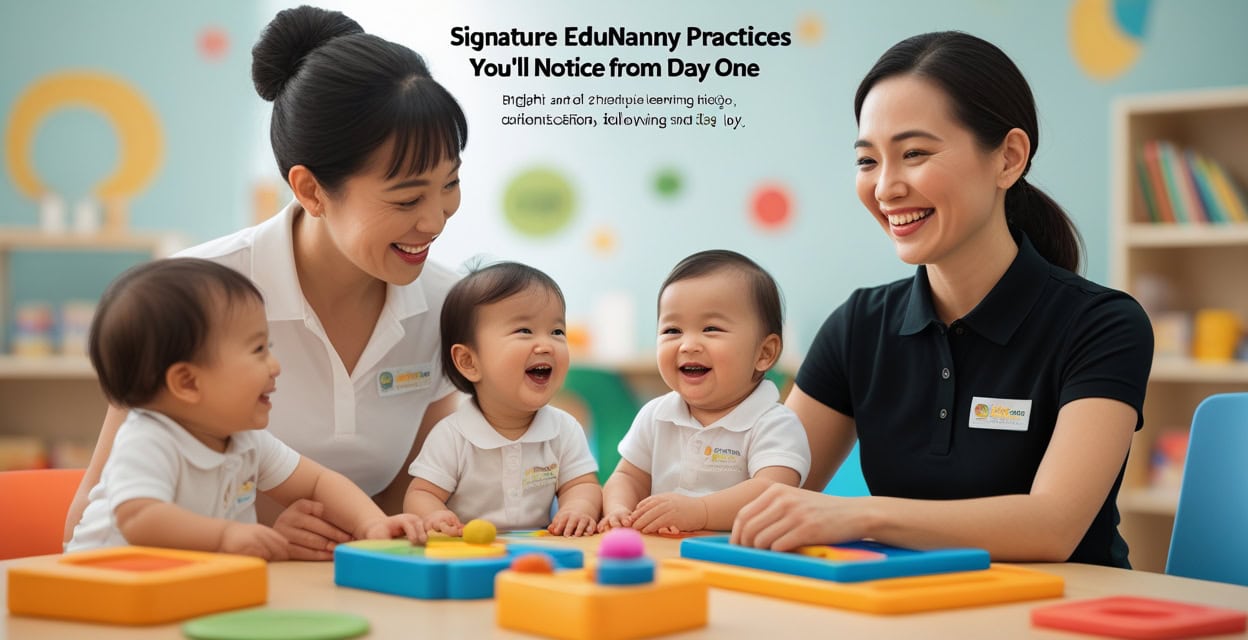
Signature EduNanny Practices You’ll Notice from Day One
- The Four Anchors Routine: Rest, Nourish, Move, Bond—predictable cycles that help infants self-regulate and feel secure.
- The Two-Minute Pause: Before each care act, a micro-moment to meet the child’s eyes, speak their name, and wait for their response. Early consent and agency-building.
- The Tiny Triumphs Log: Caregivers capture one daily observation per infant to celebrate effort—grasping, babbling, rolling—fostering persistence and pride.
- The Open Book Day: Weekly summaries for families—what was tried, what was seen, and what will be adjusted—parents as co-authors in learning journeys.

How Childminding Becomes a Public Good
High-quality childminding extends families, sustains work, and invigorates communities. Excellent childminders act as translators between children’s needs and parents’ realities, bearing witness to small wonders, safeguarding safety, and co-designing daily learning. When childminding is strong, it creates a ripple effect—more families engaged in work, more diverse employment opportunities, and healthier developmental trajectories for the next generation.

Who, What, When, Where, and How Childminding Matters
- Who: Every infant, every working parent, every caregiver seeking meaningful, professional work, every employer who values stable families, and every community aiming for resilience.
- What: Trust-based, science-backed, heart-led childminding that honours attachment, safety, and development through play and responsive care.
- When: From day one—particularly during the early years when neural pathways are planted and habits of calm and curiosity take root.
- Where: In modern centres near daily life, at home with a trained childminder, and via distance guidance when needed.
- How: Through a 1:3 infant ratio; CCTV transparency; safe, modern layouts; trained caregivers; observation-led pedagogy; predictable routines; affordability through CDA/Baby Bonus; and islandwide availability 7am–7pm, Monday–Friday.

The EduNanny Philosophy in One Promise
We believe every baby deserves three certainties each day: someone delighted to see them, a place designed to protect them, and experiences tuned to grow them. When we deliver those certainties—reliably, affordably, and with pride—we shape the temperament of a future citizenry: secure, curious, kind.
Parents, you are not outsourcing love; you are extending it. Caregivers, you are not just minding children; you are building Singapore’s tomorrow, bottle by bottle, nap by nap, laugh by laugh.

Practical Guidance for Parents: Making EduNanny Principles Real at Home
Daily Routines That Support Attachment and Regulation
- Establish a predictable day for your child with a simple rhythm: wake, feed, play, nap, snack, and a short wind-down period before transitions.
- Use a two-minute pause before every interaction to greet your child by name, make eye contact, and invite a response. This builds early communication and consent sense.
- Adopt a “Four Anchors” approach at home: a calm feeding routine, regular rest, safe movement play, and meaningful bonding moments (read alouds, songs, cuddle time).
Partnering with Your Childminder: Clear Communication and Co-Design
- Share daily highlights and concerns in a brief, structured handover—one page with three points: mood, key milestones, and any questions for the next shift.
- Review the Tiny Triumphs Log together each week to celebrate progress and adjust micro-goals.
- Agree on a language plan: what phrases you want used at home versus in the centre to maintain consistency in language development.
Safety Checks You Can Do Today
- Inspect the home environment for hazards: secure furniture, cords out of reach, safe sleep area, and age-appropriate toys.
- Create a simple “emergency plan” with your caregiver, including who to call and how to respond in common scenarios (fever, choking, injury).
- Ensure your childminder’s qualifications are up to date: CPR/infant first aid, basic food handling, and allergy management.
Nutrition, Feeding, and Sleep
- Discuss feeding plans with your caregiver, including paced bottle-feeding techniques and gradual solids introduction tailored to your child’s cues.
- Maintain consistent sleep routines, including nap schedules and age-appropriate sleep wear, to support healthy circadian rhythms.
- Introduce multilingual daily routines (mealtimes with simple songs in multiple languages) to support language development and cultural exposure.
Language and Literacy from Infancy
- Read aloud daily in multiple languages if possible. Point to pictures, name objects, and encourage babbling and vocal imitation.
- Incorporate songs and finger-plays as a core part of playtime to build memory, rhythm, and pronunciation in early years.
Transitions and Transports
- Plan gradual transitions during drop-off times to reduce distress—short, structured handovers and a familiar object can help.
- Discuss with your centre the best drop-off routines if you have a long commute or variable work hours, ensuring continuity of attachment even on busy days.
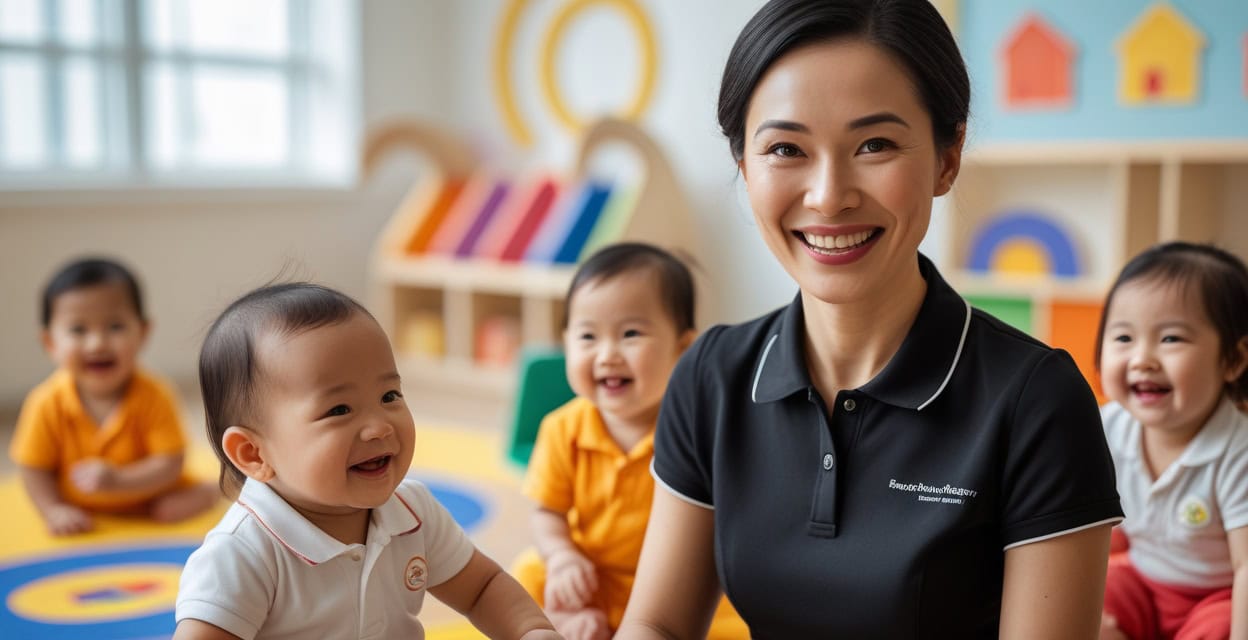
Conclusion: From First Cries to First Confidence
EduNanny’s blueprint for Singaporean early childhood care emphasizes attachment, safety, development, culture, and accessibility. By embracing the Five Pillars, adopting signature practices, and partnering closely with caregivers, families can transform daily routines into powerful engines for growth. The goal is not merely care; it is the deliberate shaping of confident, curious, and compassionate citizens. We invite you to engage with EduNanny—explore centre-based, home-based, and distance options, understand subsidies, and join a community committed to dignity, clarity, and excellence in early childhood.
From first cries to first confidence—we’re here, 7am to 7pm, with a steady hand and a hopeful heart.
To learn more, visit EduNanny.com and Childminding.EduNanny.com. Explore centre-based, home-based, and distance options. Enrolments for our ECDA-aligned Childminding Pilot are open, with islandwide availability and fees payable by CDA/Baby Bonus. Excellence, quality, convenience, and affordability—crafted for Singapore, for your family, and for the future we share.
[#keyword1, #keyword2, #keyword3, #keyword4, #keyword5]