
From Eye Level to a Nation Future, The Quiet Handshake and Near Home Pods Redefining Singapore First Thousand Days

Introduction: Trust Begins in the Quiet Handshake
In infant care, the earliest moments carve out the nature of learning, safety, and belonging. EduNanny’s Singapore model starts with eye-level presence—the first handshake between child, caregiver, and family. This article extends the speech that launched EduNanny, translating its spirit into practical, publishable guidance for parents, caregivers, and communities shaping the first thousand days. Here you will find actionable advice, real-world EduNanny insight, and concrete examples to support early development in homes and neighbourhood centres across Singapore.
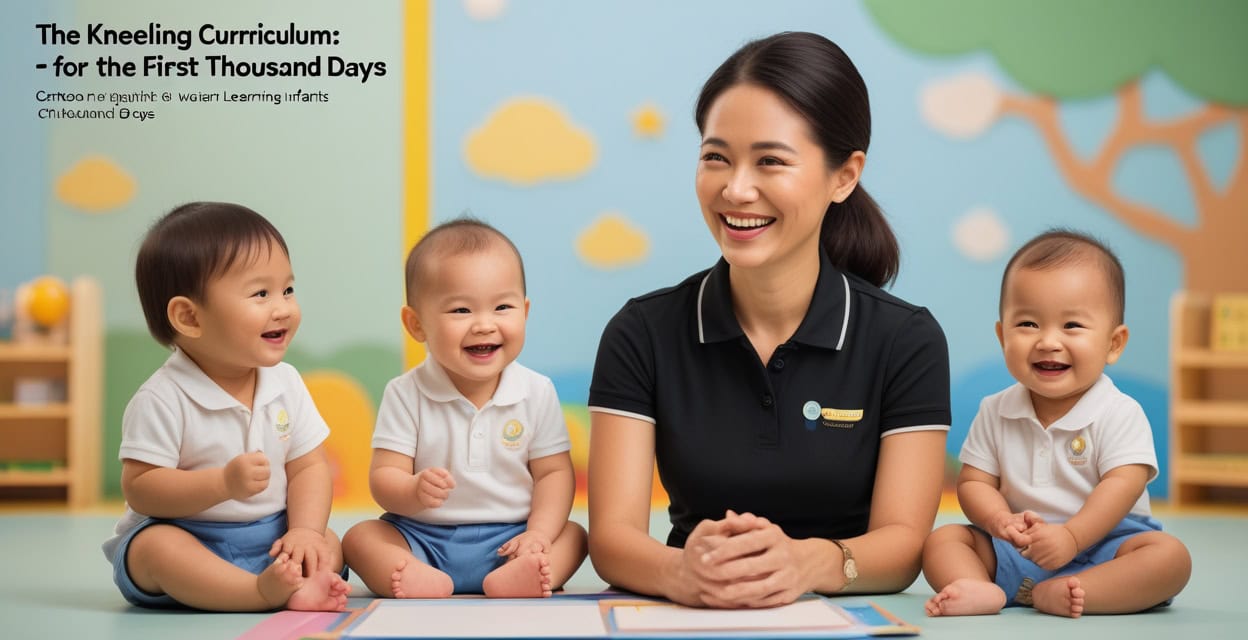
The Kneeling Curriculum: Eye-Level Pedagogy for the First Thousand Days
Infants learn through relationship, and the most meaningful teaching happens when adults meet children on their own level. The kneeling curriculum is both a philosophy and a practical framework for daily care, play, and learning. It foregrounds safety, attunement, and growth as inseparable parts of development.
What this looks like
- Serve-and-return made visible: Narrate when a child points, echo vocalizations, and wait during pauses to encourage initiative.
- Free movement before milestones: Create safe floor spaces for unhurried exploration; celebrate each rollover, crawl, or roll with positive language and ample time.
- Zone of Proximal Development (ZPD): Offer just-right challenges—soft blocks to stack, low mirrors to notice self, age-appropriate rattles—to foster mastery without overwhelm.
- Environment as the third teacher: Low shelves, warm textures, uncluttered spaces, and visual calm that invite curiosity and independent exploration.
- Voice and vocabulary: A “language bath” during routine care—narrating actions, describing sensations, and naming emotions to build early literacy and social cognition.
Practical examples for families and caregivers
- Set up a floor-time zone with a soft mat, a few lightweight, non-noisy toys, and a mirror at eye level. Spend 5–10 minutes daily on floor play that invites reaching, rolling, and tracking movement.
- During diaper changes, describe what you’re doing and use gentle touch to model calm communication. For example, “I’m cleaning your hands now; you’re safe and warm.”
- Introduce simple sign-language-like cues (e.g., “all done,” “more”) paired with spoken words to support first steps toward intentional communication.
- Rotate a small set of sensory materials weekly—fabric swatches, textured balls, and safe water play—to cultivate tactile exploration and cause-and-effect understanding.
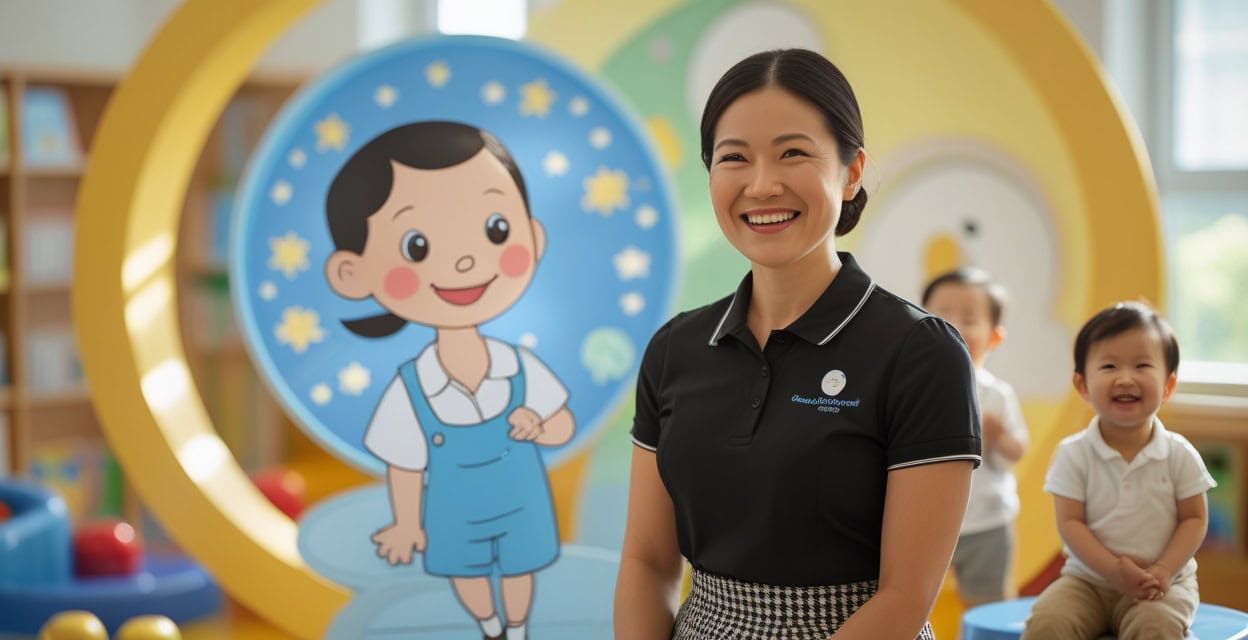
Safety by Design, Safety by Habit: The Ordinary Magic that Prevents the Preventable
Safety is not an event; it’s a choreography. EduNanny designs safety into every routine so curiosity can flourish without unnecessary risk. This is safety as habit—consistent, visible, and teachable.
Our safety architecture
- Safe sleep, always: Clear cot, firm mattress, back-to-sleep position; temperature monitoring; regular sleep checks documented for each infant.
- Cleanliness and hygiene: Color-coded cloths, food-safe sanitization, and hand hygiene before and after every caregiving exchange.
- Choking prevention: Developmentally appropriate textures, seated feeding when possible, active supervision, and staff trained in infant first aid and CPR.
- Hazard sweeps: Daily checks for outlets, cables, cords, furniture stability, and small objects within reach; anchored furniture in all spaces.
- Secure handovers: Verified pickup identity checks and logged transitions to ensure safety during every handoff.
- Privacy-respecting CCTV: Encrypted, parent-facing feeds with strict governance so dignity remains central and feeds are not publicly accessible.
- Evacuation drills: Age-appropriate fire and evacuation practice; weekly reflections emphasize learning over blame.
Actionable safety routines for families
- Ask providers for a written safety checklist and a calendar of drills. Review it quarterly with your caregiver to align on expectations.
- Observe how the space is organized during a visit: Are outlets covered? Are cords tucked away? Is there a clearly defined floor-time zone?
- Request a transparent incident log format: a simple daily or weekly note that records any close calls, injuries, or safety concerns and the response taken.
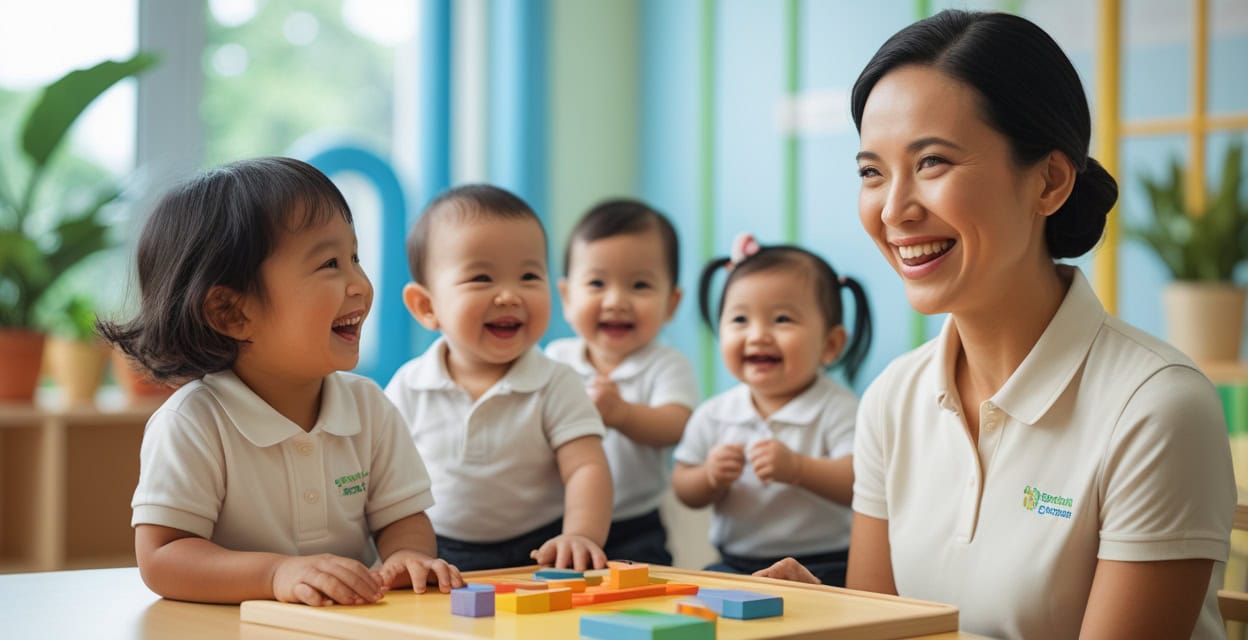
Movement Before Milestones: Development That Honors the Body and the Brain
Motor, language, social, and cognitive development are a single narrative told through body movement and social interaction. EduNanny’s approach values body-first learning and the brain’s need for safe, repeated experiences that build neural connections.
Daily arc of development
- Floor-first learning: Rich opportunities for rolling, crawling, pulling up, and cruising—each movement scaffolds balance, spatial awareness, and attention.
- Hands to heart, hands to world: Materials like grasping rings, nesting cups, and soft cylinders help differentiate shapes, weight, and cause-effect relationships.
- Language woven into care: Describe actions and sensations during routines—“You’re reaching for the red block; it’s soft and warm in your hand.”
- Tiny science experiences: Gentle, safe experiments—water ripples, light through prisms, bells behind cloth—fuel curiosity without overwhelming the senses.
- Individual learning plans: Observation-led plans that adapt to each child’s pace, family input, and developmental markers.
How parents can support movement-rich development at home
- Provide a daily “floor time” window of 10–15 minutes where your baby can explore on a safe, soft surface with a few accessible toys.
- Offer a variety of textures and objects to explore—silk, cotton, silicone chew toys, wooden blocks—with supervision to ensure safety.
- Encourage self-initiated play by placing toys at reachable distances and gradually increasing complexity as the child gains confidence.
- Narrate and extend: When your child manipulates a toy, describe the action and consequence, then pause to allow response and imitation.
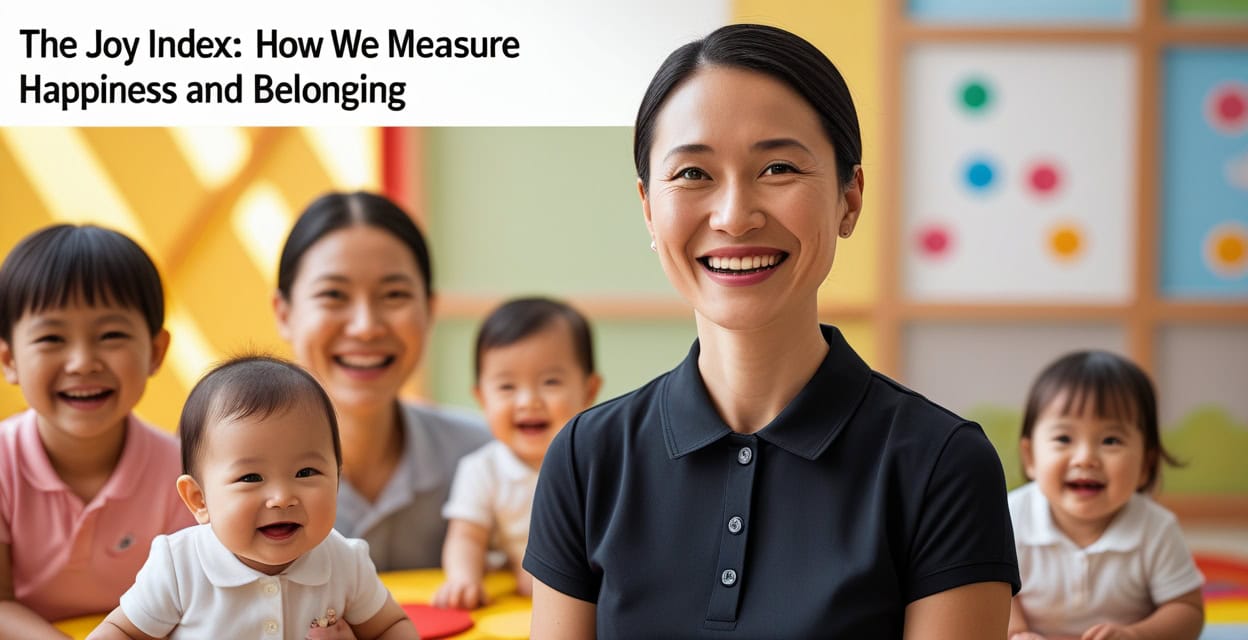
The Joy Index: How We Measure Happiness and Belonging
Happiness in infancy is expressed as secure moments, not a single measurement. The Joy Index blends theoretical guidance from Bowlby and Erikson with practical daily observation to track how trust leads to exploration and growth.
Key indicators of secure moments
- Settling time: Time from distress to calm with attuned caregiving; shorter times signal stronger regulation support.
- Co-regulation cues: Slowed breathing, relaxed shoulders, and sustained eye contact during stress as signs of felt safety.
- Play persistence: Focused engagement with a material or activity over several minutes; signals curiosity and competence.
- Social bids: Gaze, smiles, and cooing that invite interaction and shared joy with caregivers.
- Rest and restoration: Quality naps and consistent feeding rhythms that support growth and mood stability.
How to observe and share Joy Index insights
- Use a simple daily note: “Calm time after handover,” “First smiles during song,” “Focused play with blocks for 6 minutes.”
- Request brief video notes or photo updates that illustrate a moment of attunement, such as eye contact during feed or a caregiver mirroring a sound.
- Ask for plain-language summaries that translate observations into next-step goals for development and family routines.

The Quiet Profession of Nation-Building: Why Childminding Is Civic Work
Great childminding is more than care; it is a professional, civic act. EduNanny elevates caregiving through training, coaching, and clear career pathways that dignify the people who build the foundations of the nation.
Caregiver professionalization in practice
- Professional learning: Ongoing micro-trainings in infant cues, responsive caregiving, safe sleep, play design, and family communication.
- Reflective practice: Weekly debriefs that translate observations into actionable next steps for each child.
- Career pathways: Structured progression from assistant to lead caregiver to mentor, with competency-based recognition and continuing education.
- Maximum Employment Mandate: A model that creates high-quality jobs close to home, supporting families and strengthening communities.
- Family partnership: Co-created routines and cultural practices that honor each household’s rhythm and values.

A Day in the Life: From First Hello to Last Wave
EduNanny envisions a day that is not timed for efficiency but choreographed for regulation, trust, and growth. Below is a representative day that parents and caregivers can adapt to local needs.
Sample daily arc
- 7:00–8:30 a.m.: Unhurried welcomes; breath-matching; eye-level settling; gentle handover notes.
- Morning: Floor exploration, language-rich care moments, individual naps as needed; exposure to natural light and fresh air where possible.
- Midday: Calm feeding with narration; music and humming; soft-light rest period.
- Afternoon: Sensorimotor play; outdoor strolls when feasible; story-sound time; sing-and-sign activities.
- Late day: Wind-down rituals; tidy together; warm goodbyes with a brief parent-facing update on the day’s moments of trust and growth.

Why EduNanny Works for Working Singapore
EduNanny is designed to fit the realities of busy families while lifting the standard of care and professional respect for caregivers. This section translates policy into practical benefits for families, educators, and communities.
Key advantages in practice
- Excellence without compromise: 1:3 infant ratio ensures genuine, eye-level attention that supports early relationship-building.
- Predictability with flexibility: Center-Based and Home-Based options; hours from 7 a.m. to 7 p.m., Monday–Friday; islandwide availability.
- Choice that fits life: Care in neighbourhoods with modern floor-level design for safe movement and familiar surroundings.
- Transparent trust: Privacy-respecting CCTV policies that provide real-time parent access while protecting dignity.
- Affordability and access: Services starting from $33 per day; CDA/Baby Bonus eligibility per prevailing policy.
- Digital ease and connection: Distance updates, tele-check-ins, and learning journals that keep families informed without intrusion.
- National purpose: An ECDA Childminding Pilot that builds talent pipelines and supports a robust, future-ready workforce.

Who, What, When, Where, and How Childminding Matters—A Closing
Who: Every infant, every family, and every caregiver who forms the child’s first circle of security. What: The careful, science-informed noticing of needs and the warm, consistent responses that meet them. When: At the moments when brains are most plastic—the first thousand days. Where: In neighbourhood homes and community centres that families already use. How: Eye-level presence, safety by design, a 1:3 ratio that turns minutes into meaningful relationships, and digital tools that invite participation. Why: Because the first thousand days are childhood itself, and a nation is shaped by the rooms where tiny hands learn safety, language, and the joy of discovery.
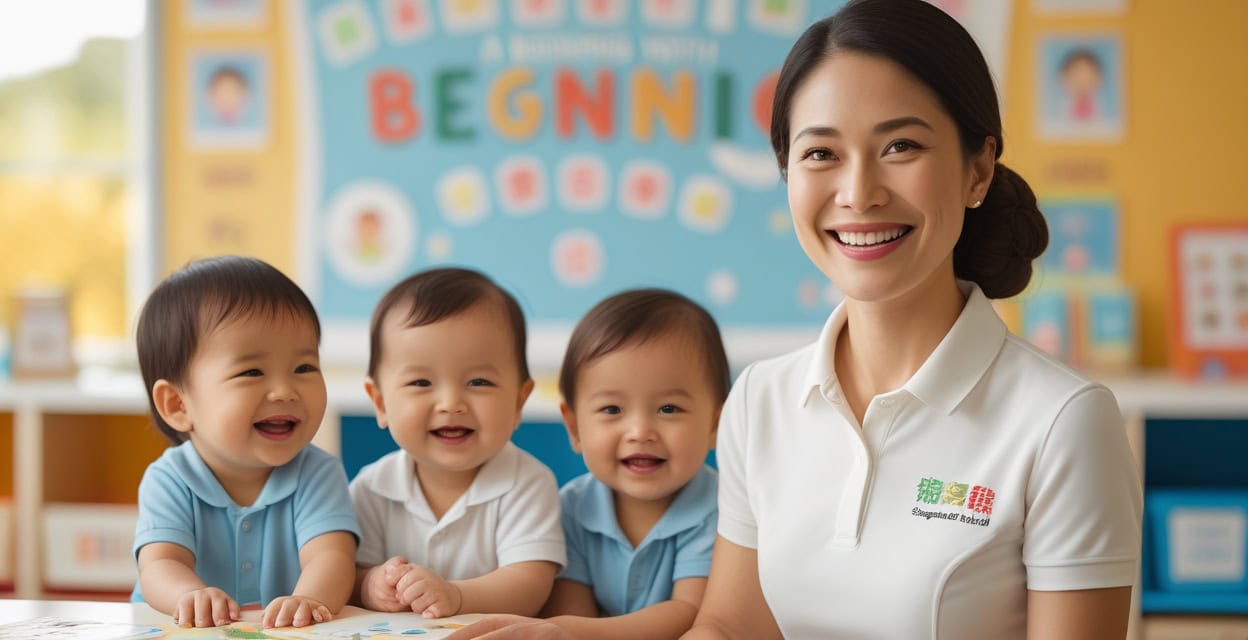
Conclusion: A Beginning Worth Believing In
If you believe that the beginning matters—as parents, as caregivers, as citizens—EduNanny invites you to explore EduNanny.com and Childminding.EduNanny.com. Visit a space near you, observe the kneeling moment, and see how careful design, science, and heart can live together in the ordinary magic of a child’s day. Tomorrow begins with the eyes that meet yours today.
SEO Keywords: [#keyword1, #keyword2, #keyword3, #keyword4, #keyword5]
Ready to Experience Excellence?
Transform Your Family’s Journey
Discover Singapore’s leading infant care and childminding services. Expert guidance for your little one’s first thousand days.