
EduNanny One to Three Infant Pods in Singapore December 2024 to December 2027 A Safe Joyful and Science Driven Pilot

EduNanny Infant Childminding: Safety, Joy, and Science in Singapore’s Early Years
Ladies and gentlemen, parents and grandparents, neighbours and nation‑builders—thank you for gathering with open hearts and high standards. This is a message about an education‑driven approach to infant care, grounded in the traditions of Montessori, Piaget, Vygotsky, Froebel, Malaguzzi, Bowlby, Pikler, Spock, and Erikson. EduNanny’s Infant Childminding Service is designed to write an origin story for Singapore’s youngest citizens—one that marries safety, joy, and science in equal measure.
EduNanny is an ECDA‑appointed operator participating in Singapore’s three‑year Childminding Pilot (1 December 2024 to 31 December 2027). Our mission is precise: to offer an affordable, near‑home, ultra‑low‑ratio option for infants aged 2 to 18 months—one trusted childminder caring for a maximum of three infants—within either a childminder’s home or carefully prepared community spaces. This is a national effort with a family soul: certified and background‑checked childminders, modern layouts, and a culture of care that honours each child’s rhythms and each family’s reality.

What EduNanny Offers: The Three Pillars of Care
Intimacy: The 1:3 Circle of Trust
- In a micro‑pod of three infants, every cue is answered by a known adult through continuous “serve‑and‑return” interactions. A glance, a coo, a reach becomes a meaningful conversation.
- Individual routines stay individualized. Sleep, feeding, and soothing are tailored, not averaged, to honour each child’s tempo.
- Transitions feel human. The same warm voice greets your child, knows your child, and is accountable to your child’s needs.
- Practical tip for families: observe how a caregiver responds to a tired infant during a routine. A calm, predictable response builds secure attachment—an essential foundation for later learning.
The Floor Is the First Classroom: Movement, Materials, and Mastery
- Grounded in Pikler and Montessori principles, EduNanny spaces emphasize safe freedom: uncluttered floor time, soft‑fall mats, and materials sized for tiny hands and genuine agency.
- Progressive motor invitations include low mirrors for body awareness, textured grasping materials, ramps, and safe surfaces for rolling, crawling, and cruising.
- Language and music weave through daily care—responsive narration, transition songs, and rich, face‑to‑face conversation to expand vocabulary and social timing.
- Practical tip for families: request a sample daily plan that shows how floor play integrates with feeding and nap routines to support neurodevelopment and self‑regulation.
Safety as Culture: People, Place, Practice, and Technology
- People: Every EduNanny childminder is certified, trained in infant first aid and food safety, and background‑checked with ECDA oversight. Home care extends checks to all adults with regular access to the premises.
- Place: Hazards are anticipated and mitigated—secure gates, chokable items controlled, safe sleep routines, and hygienic meal prep. We operate a No Sick Child Policy during care hours to protect micro‑pods, with guidance for alternative arrangements and rescheduling.
- Practice: Clear incident reporting, parent agreements, and fast escalation protocols. Regular audits keep standards living, not laminated.
- Technology: CCTV is installed in community spaces as required. For home settings, privacy‑respecting options are offered—focused on caregiving areas during care hours, with consent. Footage is safeguarded, access is governed, and dignity is preserved. Cameras reflect trust, not replace it.
- Practical tip for families: discuss preferred privacy settings and incident communication methods upfront, so you have confidence in how safety and transparency work together.
Joy Is a Daily Rhythm: Secure Caregiving and Early Learning, Seamlessly
- Nourish: Responsive feeding tuned to hunger cues; paced bottle feeds; safe introduction of textures when developmentally ready.
- Rest: Safe sleep practices, calming light management, and responsive settling that supports healthy growth and cortisol regulation.
- Explore: Floor‑based discovery, sensory play, and early social encounters in tiny groups, with outdoor pram walks when feasible.
- Connect: Vygotsky‑inspired scaffolding in micro‑moments—name feelings during diaper changes, expand babble into back‑and‑forth exchanges, celebrate early mastery.
- Share: Simple documentation for parents—photos, notes, nap/feeding logs—so you leave informed, not guessing.
- Practical tip for families: ask for a monthly developmental snapshot that highlights emerging skills and how caregivers scaffold them in everyday moments.
The Public Purpose of Childminding: Families, Work, and Community
- Families: Predictable 5‑hour or 10‑hour blocks that fit working life while respecting family routines and caregiving rituals.
- Work: Expanded access to trusted, affordable care supports a “maximum employment mandate”—enabling more citizens to contribute at work without compromising infant wellbeing.
- Community: Childminders become neighbourhood anchors, offering dignified employment and robust standards. This is a national initiative that recognises care work as skilled work.

Program Structure and Pilot Details
Eligibility and Scope
Singapore Citizen infants aged 2–18 months are eligible and may participate in the ECDA pilot while not concurrently enrolled in ECDA‑licensed infant care centres. The model focuses on ultra‑low ratios and near‑home care settings to maximise secure attachments and day‑to‑day reliability for families.
Hours, Days, and Scheduling
- Half‑day blocks: 5 hours
- Full‑day blocks: 10 hours
- Care windows: 7:00 am to 7:00 pm, Monday to Friday, excluding public holidays
- Flexibility: Choose the number of days per week to suit work patterns and family life
Fees and Subsidies
- Subsidised rates during hours: $16.50 per half day, $33.00 per full day (before GST)
- Funding: CDA (Baby Bonus) monies can be used for subsidised hours
- Affordability: Designed to be accessible for families while maintaining high care standards
Locations and Delivery Model
- Locations: Care occurs at the childminder’s home or in carefully prepared community micro hubs (community spaces)
- Near‑home matching: Islandwide coverage with EduNanny Concierge support to match families to suitable caregivers and spaces
- Roles: One dedicated childminder cares for up to three infants at any time
How the Pilot Works: Practical Realities
- Ratio: 1:3 (one childminder to a maximum of three infants, as required by the pilot)
- Safety protocols are embedded in daily practice—pre‑arranged agreements, incident reporting, and escalation procedures
- Transparency: Privacy‑respecting measures accompany monitoring, with options for families to engage with safety features on community hubs

A Day in the Life with EduNanny: From Arrival to Pick‑Up
Imagine a calm, well‑prepared space greeting your child by name. A caregiver narrates the day, checks in with you, and begins with a gentle, responsive feeding routine. Sleep is protected by predictable routines; exploration is guided by curiosity and safety. Transitions are marked with songs and consistent voices, and caregivers document your child’s day with concise notes that you can read at pick‑up. Here is a typical flow you might experience:
- 7:00–9:00 am: Arrival, name‑calling greetings, and a soft settling routine; milk feeding or breast‑milk feeding as preferred; hands‑on engagement with softly textured toys.
- 9:00–11:00 am: Floor play with a development‑friendly kit of materials; language prompts tied to actions (e.g., “two scoops,” “where is your nose?”); brief outdoor walk if weather permits.
- 11:00 am–12:30 pm: Rest and feeding transition; safe sleep environment maintained; gentle soothing for transitions between activities.
- 12:30–2:30 pm: Active exploration—gross motor practice (tummy time, supported sitting), fine motor play, and early social interaction in small groups.
- 2:30–4:00 pm: Snack and quiet social moments; response to hunger cues; caregiver notes on development and mood.
- 4:00–5:30 pm: Wind‑down activities, sensory experiences, and farewell narration for the day; preparation for the next day with family updates.
Parents receive a concise daily log with highlights, nap and feeding notes, and a few photos or captions that capture a moment of your child’s growth. This continuity supports a sensitive, responsive partnership between family and caregiver.
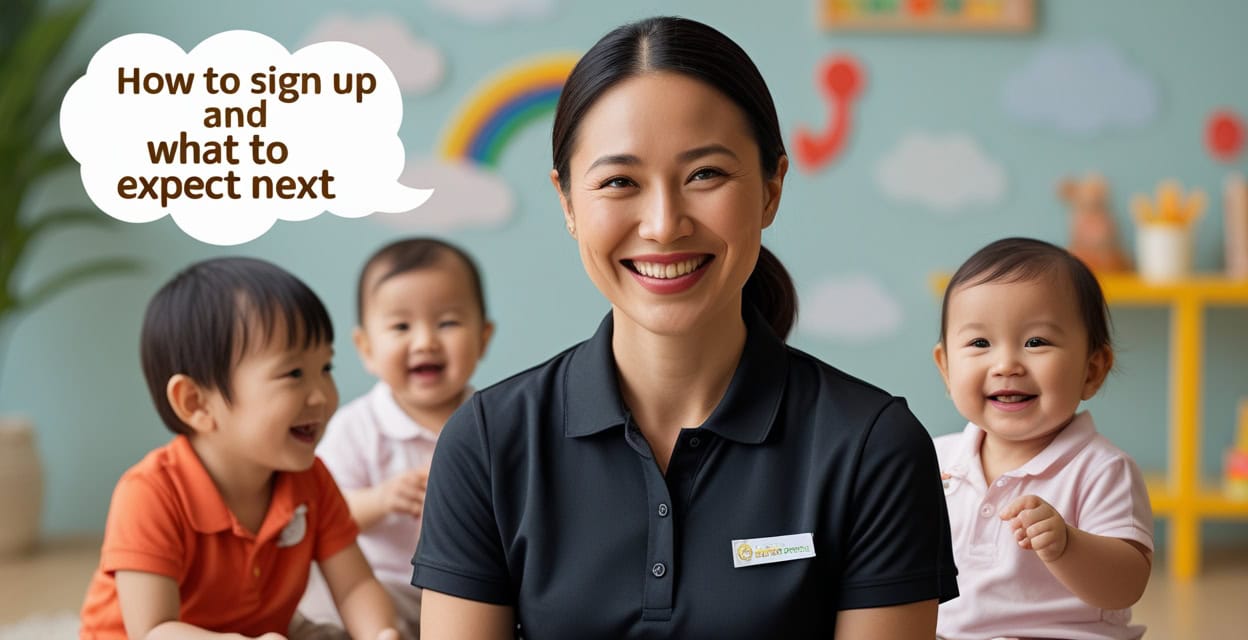
How to Sign Up and What to Expect Next
Step‑by‑Step Onboarding
- Step 1: Visit the sign‑up page to submit your interest and details about your child’s needs.
- Step 2: EduNanny Concierge Team responds to discuss your needs and propose near‑home options (home‑based or community hub).
- Step 3: Schedule a site visit and meet your prospective childminder to assess fit and compatibility.
- Step 4: Enrol, align care plans and schedules, set your start date, and begin the journey with a clear care plan and communication plan.
Note: If you prefer to learn more before signing up, you can visit EduNanny.com and Childminding.EduNanny.com for comprehensive information and resources.

Practical Guidance for Parents: Early Development Insights
As you consider EduNanny, here are evidence‑informed approaches you can apply at home to support your infant’s development between sessions with your caregiver:
- Attachment and routines: Consistency matters more than intensity. A predictable drop‑off routine and goodbye ritual can strengthen secure attachment and ease transitions.
- Language development: Narrate daily activities, name objects, describe actions, and respond to vocalizations. Use responsive back‑and‑forth exchanges even before words emerge.
- Motor development: Promote safe motor exploration with floor time, tummy time, and age‑appropriate grasping toys. Encourage reaching, rolling, and scooting with gentle support.
- Sleep and soothing: Create a safe sleep space, observe sleep cues, and respond calmly to cues. A consistent wind‑down routine helps regulate the infant’s nervous system.
- Nutrition and feeding: Respect hunger cues, pace bottle feeds, and introduce textures when developmentally appropriate. Coordinate with the caregiver to track feeding patterns.
- Screen avoidance: Prioritize sensory rich, real‑world experiences; screens are not appropriate for infants. This supports healthy sensory processing and social connection.
- Documentation: Maintain a simple home journal of milestones, mood, and routines to share with your EduNanny caregiver and to track progress over time.
Home Environment: Practical Set‑Up for Success
- Designate a safe play area with soft surfaces and age‑appropriate materials that invite exploration and autonomy.
- Reduce clutter in the infant’s primary space to support safe exploration and easy supervision.
- Establish a simple daily rhythm at home that mirrors the caregiver’s cadence to reinforce consistency.
- Prepare a go‑to kit of essentials (bibs, change of clothes, spare pacifiers, favorite toys) to support smooth transitions.

FAQ and Common Concerns
- Q: How is safety ensured with ultra‑low ratios?
- A: EduNanny applies rigorous training, background checks, environmental audits, and incident protocols; community hubs include CCTV as required, with privacy‑respecting arrangements for home settings.
- Q: What if my child has special feeding needs or allergies?
- A: Care plans are tailored in collaboration with families; documentation and communication ensure safe handling of allergies and dietary requirements.
- Q: How are transitions during the day managed?
- A: Transitions use consistent voices, predictable routines, and developmentally appropriate cues—minimizing stress and supporting self‑regulation.
- Q: Can I switch between home‑based and centre‑based care?
- A: Yes, options can be explored with the EduNanny Concierge Team to fit family needs and space availability.
- Q: How do subsidies work with CDA and Baby Bonus?
- A: Subsidised hours are eligible for CDA funds; families should consult the latest ECDA guidelines and EduNanny’s Finance Team for precise steps.

Conclusion
The EduNanny philosophy is simple and demanding: presence over hurry, preparation over improvisation, partnership over transaction. By keeping groups tiny, relationships stable, and spaces honest, we invite infants to attach, explore, delight, and become. This is not just care—it is an intentional foundation for character and capability that supports families, workplaces, and communities.
If you are seeking a care model that prioritises safety, warmth, and scientifically informed early learning, EduNanny invites you to begin a chapter worthy of your child’s first story. Let us help you weave safety, joy, and learning into the ordinary days that become your child’s lifelong foundation. I look forward to welcoming you, introducing you to your EduNanny childminder, and starting this transformative journey together.
Ready to explore EduNanny? Remember to visit the sign‑up page and speak with our Concierge Team to find near‑home options that fit your family’s rhythm.
[#keyword1, #keyword2, #keyword3, #keyword4, #keyword5]