
EduNanny and the Near Home Promise 1 to 3 Infant Pods Pilot for Singapore December 2024 to December 2027
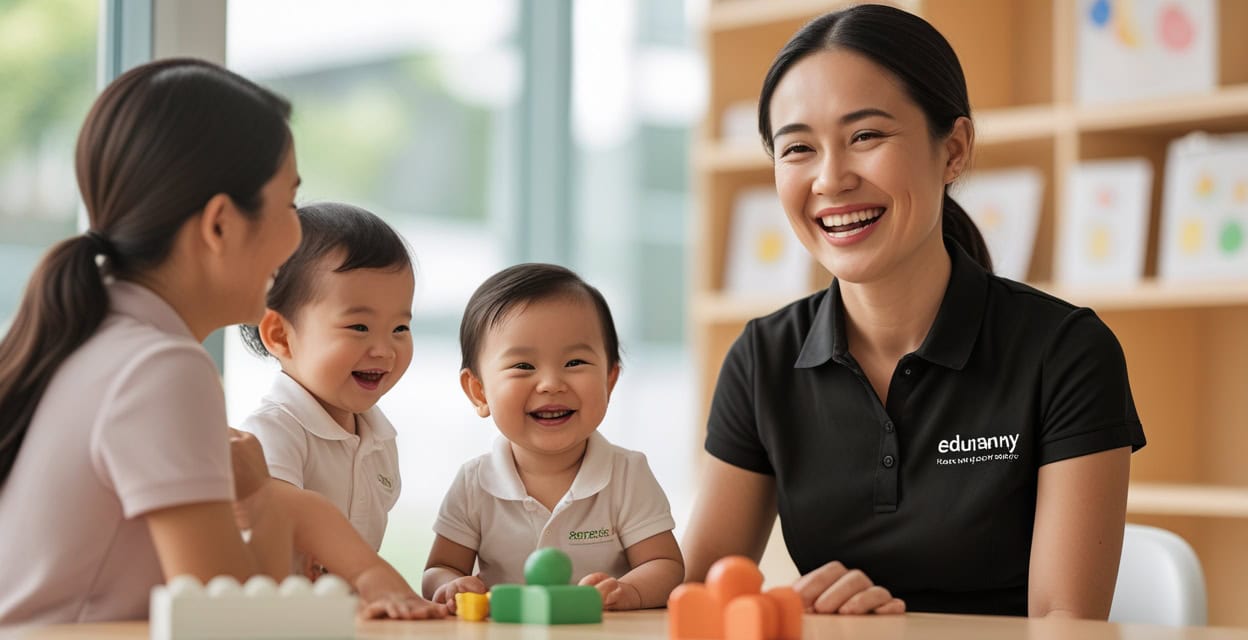
EduNanny: Near‑Home Infant Care for Singapore’s First Thousand Days
In Singapore’s evolving family landscape, EduNanny stands as a practitioner and a promise: the earliest days of life can be safe, joyful, and deeply human. Appointed by ECDA under the national Childminding Pilot (1 December 2024 to 31 December 2027), EduNanny delivers infant care that is near home, deeply personal, and uncompromising on quality. Our belief is simple: when you get the first thousand days right, everything that follows stands taller. This article expands on our model, offers practical guidance for parents, and provides actionable insights for families navigating early childhood care.

Understanding EduNanny’s Model
Ultra‑Low Ratio: The 1:3 Promise
The heartbeat of EduNanny is an excellent 1:3 caregiver‑infant ratio. This is more than a number—it is a commitment to presence. In a 1:3 pod, each infant receives attuned, timely responses, and caregivers can read cues, mirror emotions, and provide sensitive, contingent care. Practically, this means unhurried feeds, face‑to‑face floor time, and predictable daily rhythms that communicate to a child: “You are seen. You are safe. You are cherished.”
- Expect consistent caregiver‑infant pairings within a pod to deepen secure attachments.
- Care plans and routines are tailored to each infant’s temperament and developmental stage.
- Emergent language, social signaling, and early communication flourish in this intimate setting.
Prepared Micro‑Environment
Safety and learning coexist in spaces designed for infants. Whether home‑based or centre/community‑based, EduNanny spaces emphasize calm, low visual clutter, safe sleep zones, abundant natural light, open floor movement, and schema‑friendly materials that invite exploration. Safety is engineered in: hazard mapping, safe sleep practices, food‑safety protocols, daily sanitisation, and infection‑control routines. Our innovation CCTV approach extends transparency for community spaces, while consent‑based caregiving‑area CCTV supports home‑based care during care hours—balancing safety with dignity and privacy.
- Routines become curriculum; caregiving moments become language, motor, and social‑emotional learning.
- Materials are selected to promote curiosity, problem‑solving, and gentle exploration.
- Spaces are designed to minimize risk while maximizing learning opportunities.
The Science of Micro‑Moments
EduNanny coaches childminders to treat everyday interactions as rich, evidence‑based learning opportunities. Examples include:
- Language: Narrated care, responsive cooing, and early bilingual exposure via songs and stories.
- Movement: Free floor play, tummy time, and Pikler‑inspired respectful handling that builds core strength and confidence.
- Emotion: Co‑regulation strategies—soothing voice, gentle pacing, and predictable routines—to reduce stress and foster resilience.
- Play: Open‑ended materials, cause‑and‑effect toys, and music and rhyme to enrich synaptic development.
Each day is observed and documented to inform gentle, responsive scaffolding—meeting children where they are and nudging progress with warmth and wisdom.
The Professional Childminder: A vocation with public purpose
EduNanny childminders are certified, background‑checked, and trained in infant care, safety, and safeguarding. Under ECDA’s pilot, checks include those with regular access to home premises. They are reflective practitioners who participate in daily check‑ins, incident protocols, and ongoing coaching. Their work is family‑oriented: clear handovers, agreed routines, and shared strategies for sleep, feeding, and transition moments. A community of practice supports them, ensuring continuous growth and high standards of care.

What Parents Receive with EduNanny
- Ultra Low Ratio and Ultra Low Density: 1:3 infant pods enable close attention and strong attachment.
- Certified and Background Checked: All EduNanny childminders meet ECDA requirements plus enhanced standards.
- Safety and Transparency: Innovation CCTV in community spaces; consent‑based CCTV for home caregiving areas during care hours.
- No Sick Child Policy: To protect pods, infants with fever or contagious illness rest at home; medical needs managed with parent instructions.
- Modern Layouts and Prepared Environments: Calm, uncluttered spaces designed for safe sleep and purposeful play.
- Near‑Home Convenience: Islandwide options, reducing travel time and stabilising daily routines.
- Affordability under the ECDA Pilot: Half‑day (5 hours) at 16.50 SGD; full‑day (10 hours) at 33.00 SGD before GST; CDA/Baby Bonus accepted.
- Flexibility: Choose days and blocks to fit your work schedule.
- Regular Quality Assurance: Clear incident management, audits, and caregiver coaching.
- Community‑Centered Excellence: A growing network of trained caregivers supporting family life and neighbourhood well‑being.

Four Focal Topics Shaping Practice and Growth
1) Secure Attachment as Curriculum
A calm, consistent caregiver is the core curriculum. Secure attachment underpins lifelong learning. The 1:3 pod makes micro‑moments of eye contact, responsive talk, and contingent support possible throughout the day. Parents gain confidence knowing their child’s needs are understood in real time.
2) Safety by Design, Not by Accident
Safety is designed in from the start. This includes furniture anchoring, cord management, controlled access, emergency readiness, safe sleep, and rigorous food handling. CCTV in community spaces and consent‑based monitoring in home caregiving areas extend trust while protecting dignity and privacy. Regular environment checks and safety drills keep practices current and effective.
3) Joy as a Developmental Need
Joy supports learning. EduNanny crafts a sensory diet—rhythmic music, outdoor experiences when feasible, tactile exploration, warm lighting, and unhurried transitions. Joy reduces stress, enhances curiosity, and fosters healthy neural development.
4) The Childminder’s Purpose in Community
A great childminder acts as a guardian of the commons—protecting infants, stabilising families, and strengthening neighbourhoods. EduNanny supports caregivers with training, peer communities, and clinical guidance so they can serve families with professional vigor, while maintaining personal well‑being and professional growth.
Practical Guidance for Parents: How to Make It Work
Before Enrollment
- Ask for a guided tour of the home‑based pod or the centre/community space. Observe how the environment supports safe sleep, hygiene, and open play.
- Request to meet the dedicated caregiver(s) and review the daily routine to ensure alignment with your child’s needs and your family’s values.
- Clarify the No Sick Child Policy, illness reporting, and the process for administering parent‑provided medications.
- Discuss language exposure plans, including bilingual activities and daily communication style.
During Onboarding
- Provide a concise handover plan that includes your child’s temperament, feeding cues, nap schedule, and any medical considerations.
- Share your preferred routines for sleep, feeding, and soothing strategies, while remaining open to the pod’s professional recommendations.
- Set up a communication channel (daily notes, photos, or a brief video) to stay connected between home and care spaces.
Daily Routines You Can Support at Home
- Establish a simple morning routine that mirrors the pod’s start of day, helping your child transition with less stress.
- Continue language development through narration during play and feeding times; read daily and sing simple songs in your home language.
- Engage in gentle, supervised movement activities at home to reinforce core strength and motor confidence.
- Record milestones and emotional cues, sharing observations during handover times to inform the caregiver’s approach.
Health, Safety, and Privacy
- Understand the No Sick Child Policy and the expectations for keeping a feverish child at home.
- Learn how CCTV is used and the consent process for home caregiving areas, with emphasis on privacy protection.
- Discuss emergency contact protocols and the steps for medical needs or allergies.
Developmental Milestones and Monitoring
- Use regular parent‑teacher‑caregiver updates to track motor, language, social‑emotional, and cognitive milestones.
- Request periodic progress reviews to adjust routines, activities, and caregiver coaching to your child’s evolving needs.
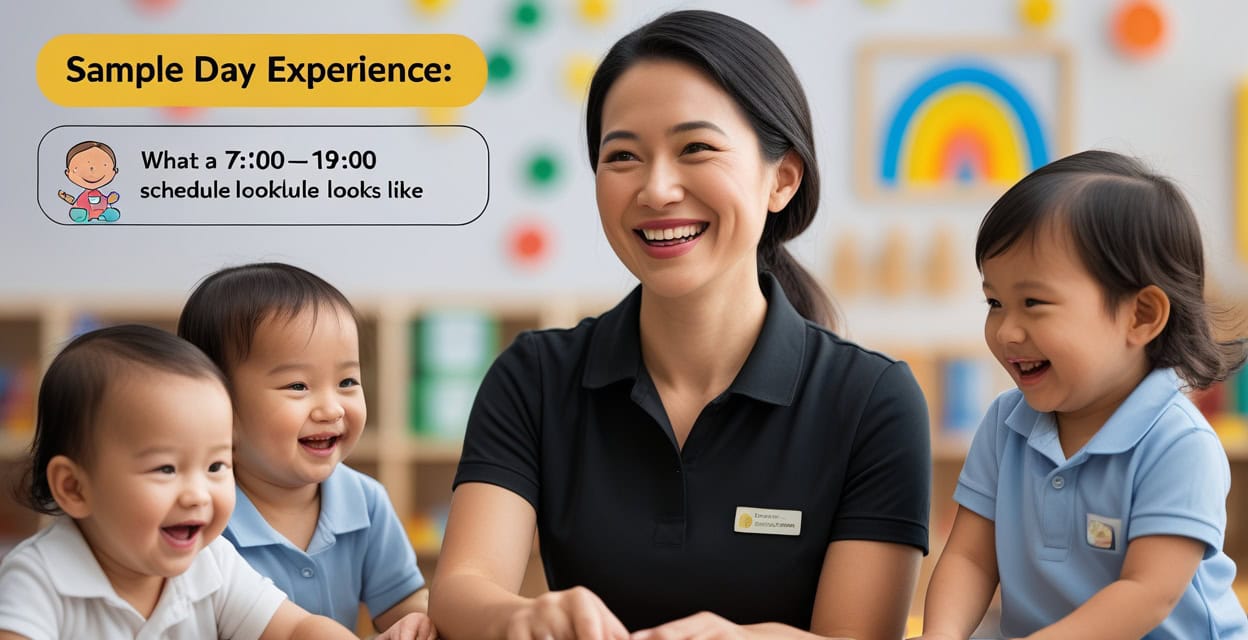
Sample Day Experience: What a 7:00–19:00 Schedule Looks Like
- 7:00–8:00: Arrival, calm settling, diaper change routines, and a warm greeting ceremony with the caregiver.
- 8:00–9:30: Interactive play, language circles, and a snack time with soothing routines.
- 9:30–11:00: Indoor exploration, sensory play, and gross motor activities (catered to each infant’s stage).
- 11:00–12:00: Lunch and safe‑handling practices; caregiver engages in language and social interactions.
- 12:00–14:00: Nap/quiet time with a consistent sleep routine; caregiver documents sleep cues and duration.
- 14:00–15:30: Cognitive play, cause‑and‑effect activities, and a sing‑along or rhyme circle.
- 15:30–17:00: Outdoor time (where feasible), sensory exploration, and cleanup rituals with independence opportunities.
- 17:00–19:00: Gentle transition to home routines, final handover notes, and caregiver share‑out with parents.
Choosing Between Home‑Based and Centre‑Based Options
- Home‑Based: Proximity to home, familiar surroundings, and a strong sense of family‑like belonging. Ideal for parents seeking continuity and a highly personalized approach within a familiar setting.
- Centre‑Based/Community‑Based: Structured environments with wider peer experiences, access to shared resources, and opportunities for social interaction with other infants in a community setting.
- Consider travel time, daily routines, the caregiver’s professional development opportunities, and the alignment of the environment with your family’s values.

Enrollment and What to Expect in the Pilot
- Eligibility: Singapore Citizen infants aged 2 to 18 months; not concurrently enrolled in ECDA‑licensed infant care centres.
- Service Windows: Monday–Friday, 7am–7pm; half‑day (5 hours) or full‑day (10 hours) blocks; excludes public holidays.
- Locations: Islandwide options in home or centre/community spaces, designed for near‑home convenience.
- Pricing and Subsidies: Half‑day SGD 16.50; full‑day SGD 33.00 before GST; CDA/Baby Bonus accepted.
- Quality Assurance: Regular audits, incident management, and ongoing caregiver coaching; transparent policies and consistent supervision.
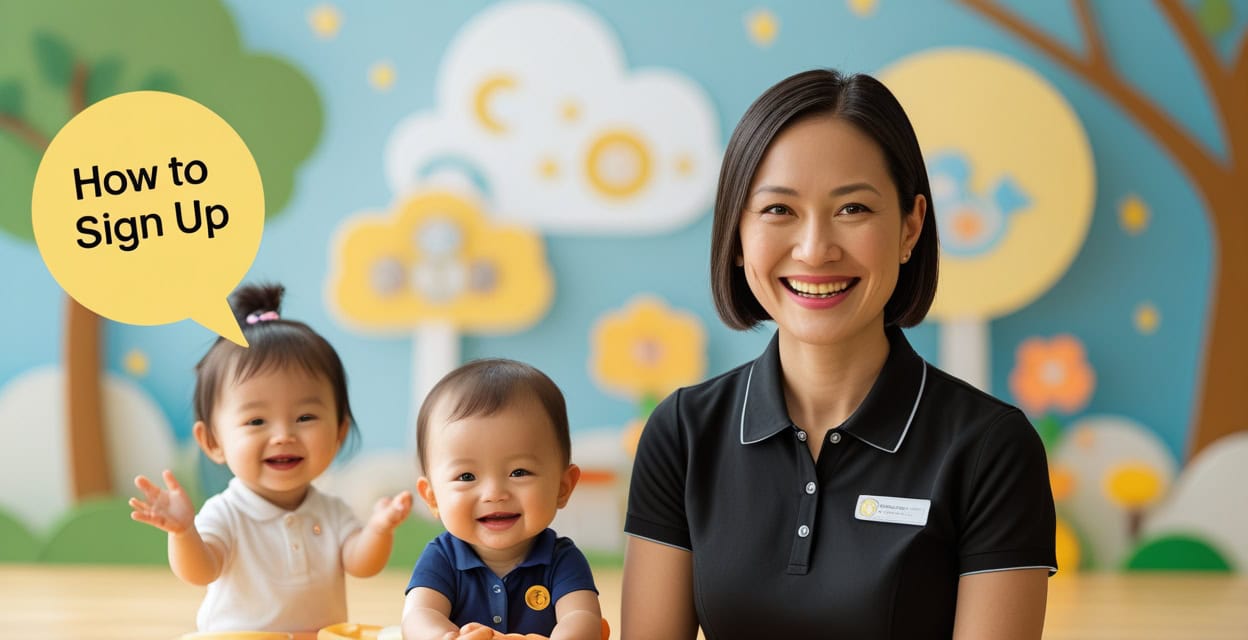
How to Sign Up
Visit the EduNanny ECDA page at the provided link, fill the sign‑up form, and connect with an EduNanny Concierge. You’ll schedule a site visit (home or community space), enrol, and choose your care blocks. The team will prepare a handover plan to welcome your child with care that feels like home:
- Visit https://edunanny.com/edunanny-ecda-childminding-service/ and fill the form.
- Receive a response from the EduNanny Concierge Team.
- Book a site visit (home or community/centre‑based).
- Enrol and select half‑day or full‑day blocks; receive a personalised handover plan.

Conclusion
EduNanny embodies a dual promise: infants deserve intimacy and safety, and families deserve affordability and trust. The smallest ratio can yield the greatest public impact, and proximity is a design principle for secure childhoods and sustainable families. The quiet work of professional childminders—delivered with skill, love, and accountability—contributes to nation‑building in slow, meaningful ways. If you are navigating Singapore’s early‑care landscape, consider how a near‑home, tightly coordinated pod could support your family’s rhythm, reduce stress, and nurture your child’s development from the very first days.
Take the next step today: explore the EduNanny pilot, schedule a visit, and discover how near‑home care with a 1:3 ratio can align with your family values and daily realities. You do not have to choose between closeness and competence—EduNanny provides both, with transparency, safety, and a clear path to joyful growth.
[#EduNanny, #InfantCareSingapore, #EarlyChildhoodDevelopment, #ECDApilot, #NearHomeCare]