
December 2024 to December 2027 EduNanny Near Home 1 to 3 Infant Pods Redefining Singapore’s First Thousand Days

Introduction to EduNanny Infant Childminding
Before the sun fully rises, a quiet kettle hums in a neighbourhood kitchen. A tiny hand grasping a warm bottle signals the start of trust. A childminder eyes the infant at eye level, names the moment, and waits. This is where care begins—in ordinary moments made intentional. EduNanny by BUTLER honors those moments and multiplies them safely, affordably, and near home. This is more than care; it is a deliberate practice rooted in relationships, design, and national purpose.
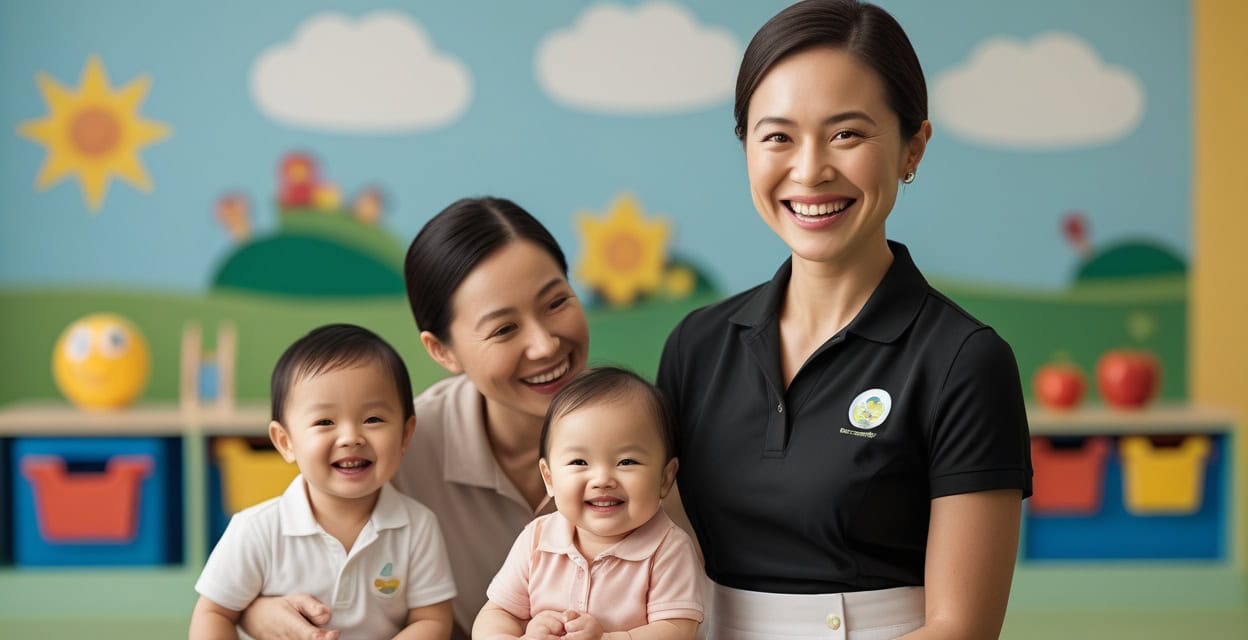
EduNanny is an appointed operator under ECDA’s three‑year Childminding Pilot (1 December 2024 to 31 December 2027). The program aims to make infant care more affordable, safe, and reliable for working families in Singapore. We provide infant childminding for Singapore Citizen infants aged 2 to 18 months, Mondays to Fridays, 7am to 7pm, in half‑day or full‑day blocks. Our model remains intentionally small—ultra‑low density, ultra‑low ratio—so every baby is truly seen: one trained childminder caring for one to three infants at any time, in vetted home‑based settings or thoughtfully designed community hubs close to where families live and work.
What makes EduNanny different is both science and soul:
- A 1:3 infant ratio that enables real attachment, responsive caregiving, and rich language interaction—every day.
- Certified and background‑checked childminders trained in infant first aid, safe sleep, nutrition, and developmental attunement.
- Clean, modern layouts designed for safety, movement, and calm, with clear sightlines and infant‑safe materials.
- CCTV in our community hubs, with opt‑in CCTV for agreed caregiving zones in home‑based settings during service hours to balance transparency and privacy.
- A firm No Sick Child Policy during service hours to protect every pod, guided by public health practices.
- Islandwide access, Monday to Friday, 7am to 7pm, with flexible half‑day (5 hours) or full‑day (10 hours) blocks.
- Affordability as a public promise: from $16.50 for half‑day or $33.00 for full‑day before GST, with fees payable via the Child Development Account (CDA/Baby Bonus) during subsidised hours.

How EduNanny Makes Infant Care and Childminding Great in Singapore
EduNanny was designed to solve five persistent pain points for families: distance, density, cost, trust, and time. By reimagining the care setting and the caregiver’s role, we create environments where infants can thrive and families can breathe easier.
- Distance: Near‑home, near‑work options in community premises and home‑based pods reduce commute stress and increase precious family time.
- Density: Ultra‑low ratios and micro‑pods lower overstimulation and illness exposure while elevating quality, safety, and learning moments.
- Cost: Government‑subsidised hours help keep fees affordable; parents can use CDA funds for eligible hours.
- Trust: Comprehensive background checks (including relevant household members for home settings), mandatory training, environmental audits, and CCTV in hubs foster transparency and confidence.
- Time: 7am–7pm scheduling in 5‑ or 10‑hour blocks aligns with working lives; our Concierge handles onboarding, site visits, and parent support efficiently.
Five Topics that Shape Our Practice
1) Pedagogy of Attunement: The Observe–Name–Respond Loop
The first thousand days are about relationship, not rush. EduNanny’s living curriculum is built on an Observe–Name–Respond loop inspired by Bowlby (secure attachment), Pikler (respectful care and movement), and Vygotsky (guided participation in the child’s zone of proximal development).
- Observe: Caregivers read cues—gaze, gesture, tone—before acting. For example, if an infant looks toward a rattle, the caregiver notes curiosity and plans a shared sonic exploration.
- Name: Narrate the infant’s experience to co‑construct meaning—“You’re curious about that rattle; let’s see what sound it makes.”
- Respond: Scaffold gently—slow movements, paced routines, and choices within the infant’s capability—then gradually widen those choices as competence grows.
Across diapering, feeding, floor time, and rest, this loop keeps care as learning. A 1:3 ratio creates space for responsive conversation, language growth, emotional regulation, and secure attachment. EduNanny blends Montessori’s respect for the child with contemporary neuroscience: repetition builds the brain, and warm, consistent care makes repetition joyful.
2) Safety as Design, Not a Checklist
Safety lives across people, places, and practices—seven rings that interlock to form a resilient system:
- People: ECDA‑conducted background checks on childminders and relevant household members; mandatory infant first aid, safe sleep, hygiene, and food safety training; ongoing coaching.
- Place: Infant‑safe layouts with grounded sockets, anchored furniture, gated zones, cleanable surfaces, and clear sightlines; routine environmental checks.
- Practice: Hygiene protocols, bottle handling SOPs, and safe sleep practices (supine, firm mattress, no loose items).
- Policy: No Sick Child Policy during service hours; clear incident management protocols and parent communication procedures.
- Partnership: CCTV in community hubs; opt‑in CCTV for home zones during service hours; transparent tours and pre‑care agreements.
- Privacy: CCTV use limited to caregiving areas and agreed hours; secure data handling to protect families and childminders.
- Preparedness: Emergency drills, first‑aid kits, allergy plans, and clear escalation pathways.
Safety is a design discipline—quiet, competent, and continuous. Parents can participate by asking for a printed safety design summary, observing a care routine, and requesting a walkthrough of the hub’s safety checks.
3) Developmental Nutrition, Sleep, and Movement: The Daily Architecture
Infants thrive on rhythm, not rigidity. EduNanny’s micro‑pods choreograph a responsive day that balances nourishment, rest, movement, and exploration.
- Feeding: Cue‑based feeding where possible, paced bottle feeding, safe breastmilk handling per SOP, and guided introduction to solids with safe textures and upright posture.
- Sleep: Evidence‑based routines and safe sleep environments that are cool, dark, and calm; respect for individual sleep profiles and patterns.
- Movement: Supervised tummy time, floor play, grasping and rolling opportunities; gentle pram walks when appropriate; sensory invitations that avoid overstimulation.
- Joyful language: Songs, finger plays, and book snuggles; bilingual exposure when family culture calls for it.
- Tracking: Meaningful observations shared with parents—feeding, sleep, diapers, mood, milestones—so progress is personal and relational, not performative.
Actionable tip for parents: request a sample daily rhythm plan and ask how caregivers adapt it for a teething phase, a growth spurt, or a particular sleep challenge. EduNanny’s Concierge can tailor a plan that respects your child’s current cues and family routines.
4) Happiness as a Health Metric
Happiness in infancy is not about perpetual smiles; it’s about a nervous system that returns to calm after stress. Our approach centers on co‑regulation—sharing calm to soothe big feelings—and “unrushed care.” We prioritise human voices, natural light, and unhurried touch, and we purposely reduce loud environments and excessive gear.
- Small groups enable more turn‑taking, more attuned talk, and fewer missed cues.
- Caregivers are trained to read subtle signals and provide timely, gentle responses that support emotional regulation.
- Happiness as a health metric informs daily adjustments—when rooms feel overstimulating, the day is recalibrated toward calmer routines and quieter spaces.
Practical takeaway: parents can observe a calm corner in the hub, listen for reflective caregiver language, and note how distance detectors (eye contact, pacing) help a baby regain calm after a moment of distress. Shared routines of soothing and predictability build lifelong resilience.
5) The Purpose of Childminders: A New Civic Profession
The EduNanny childminder is a trained professional with a public purpose. Through the ECDA Pilot, we align their care with national standards, ongoing mentoring, and a clear career pathway. Our Maximum Employment Mandate signals a broader promise: dignified jobs for local caregivers, community roots for families, and a stronger social fabric for everyone. This is care as nation‑building—quiet, skilled, and close to home.
Actionable guidance for families exploring this pathway:
- Ask about training milestones and ongoing coaching opportunities for a childminder—what skills are emphasized now and what supports exist for professional growth?
- Request transparency on the carer’s career ladder, from entry‑level to advanced roles with mandatory training credits.
- Look for a partner who views your family as part of a community, not a transaction—how are emergencies, health, and milestones communicated?

Key Benefits for Families
- Ultra‑low density, ultra‑low ratio 1:3 pods that prioritize attachment and learning.
- Certified EduNanny childminders with comprehensive background checks and mandatory training.
- CCTV provided in community hubs; opt‑in CCTV for home‑based caregiving zones during service hours.
- No Sick Child Policy during service hours to protect all infants.
- Infant‑safe, clean, modern layouts designed for safety, movement, and calm sensory environments.
- Centre‑style community hubs and home‑based options to suit distance and convenience.
- Islandwide availability, Monday to Friday, 7am–7pm; choose half‑day (5 hours) or full‑day (10 hours).
- Affordability from $16.50 (half‑day) or $33.00 (full‑day) before GST; CDA/Baby Bonus usable for subsidised hours.
- A true National Initiative under ECDA’s Childminding Pilot—part of a broader social commitment to quality, access, and trust.
- EduNanny service excellence: rapid Concierge support, clear communication, and parent partnership.
- Information and updates at EduNanny.com and Childminding.EduNanny.com.

Eligibility and How It Works
Who: Singapore Citizen infants, ages 2 to 18 months.
Where: Vetted childminders’ homes or community premises close to you, islandwide.
What ratio: 1 childminder to 1–3 infants at any time.
When: Monday to Friday, 7am to 7pm, in 5‑hour or 10‑hour subsidised blocks (excluding public holidays).
Fees: $16.50 (half‑day) or $33.00 (full‑day), before GST; CDA usable for subsidised hours.
Note: Infants cannot be concurrently enrolled in ECDA‑licensed infant care centres while on the Pilot.
How to Sign Up
- Visit the EduNanny page at https://edunanny.com/edunanny-ecda-childminding-service/ and fill the short form, or enquire via WhatsApp on the same page.
- The EduNanny Concierge Team will respond, confirm eligibility and needs, and propose nearby options.
- Book a site visit to meet the childminder, view the caregiving environment, and review safety and daily rhythm.
- Confirm your schedule (half‑day or full‑day blocks), complete enrolment, and prepare for a gentle start.

Why Childminding Matters—A Closing Reflection
Who: Infants deserve small circles of steady care; parents deserve partners; childminders deserve professional respect; a nation that understands resilience begins at home.
What: Ultra‑low density, near‑home infant care that is safe, joyful, evidence‑based, and affordable, delivered by trained, background‑checked professionals within a clear national framework.
When: In the precious first thousand days—when brains wire, habits form, and family rhythms find their beat—Monday to Friday, 7am to 7pm, in the hours that help working families thrive.
Where: In carefully prepared home environments and community hubs with modern layouts, hygiene at the forefront, and eyes on what matters most.
How: With a design that places attachment first, safety in every detail, and transparency through CCTV and clear policies—alongside respectful collaboration with parents.
EduNanny’s philosophy is simple and steadfast: presence before performance, safety before speed, dignity in every detail. We believe the future is cradled in small, well‑held moments—bottles and burps, songs and sighs, naps and new words. We believe childminders are civic stewards, families are essential partners, and Singapore’s promise grows strongest when care is close, quality is high, and every infant is truly known.
To every parent weighing options, to every employer who believes in family‑friendly workplaces, and to every caregiver ready to lift our youngest citizens—we welcome you. Let’s build a quieter, kinder, smarter standard of infant care together.
Begin your journey at 1) https://edunanny.com/edunanny-ecda-childminding-service/ and 2) the EduNanny Concierge will take it from there, so you can take a deeper breath.
SEO keywords: [#keyword1, #keyword2, #keyword3, #keyword4, #keyword5]