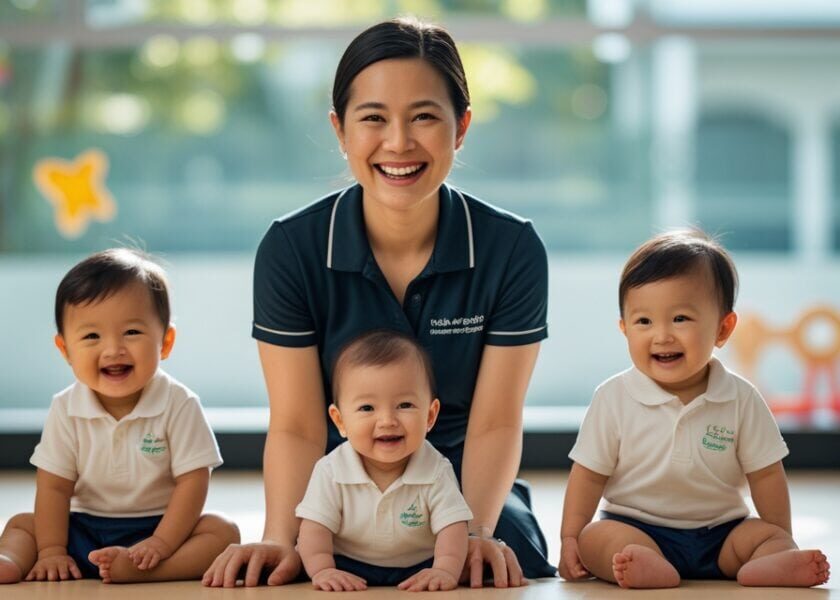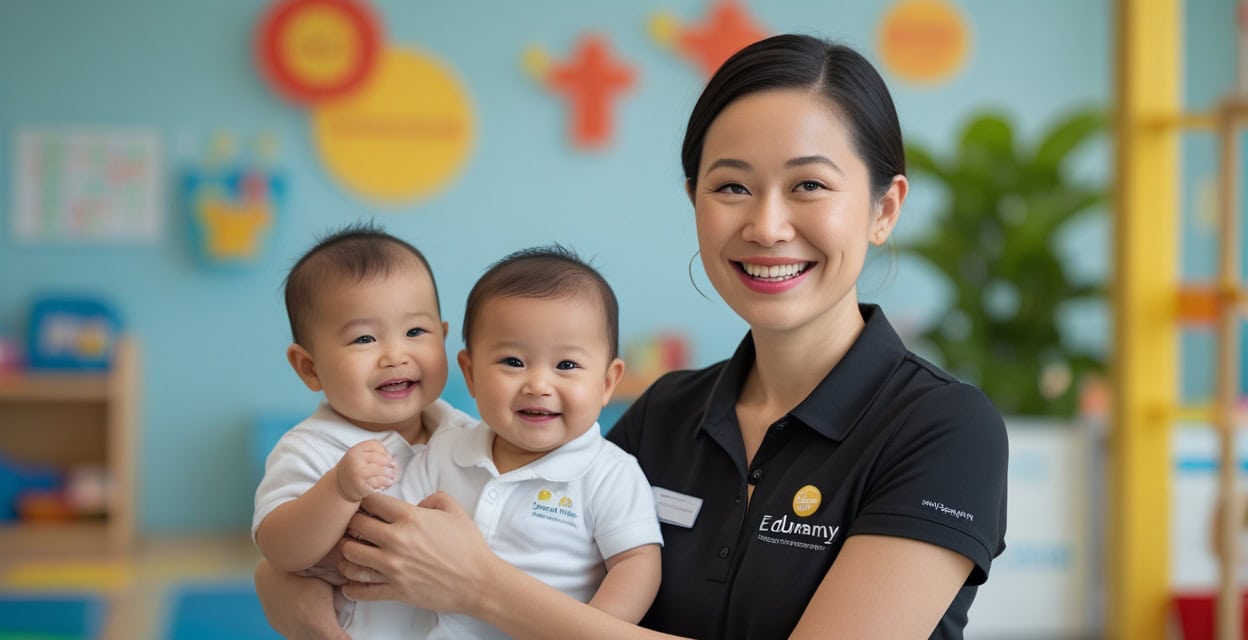
Cradling the Future of Singapore Infants with EduNanny Attachment First Care
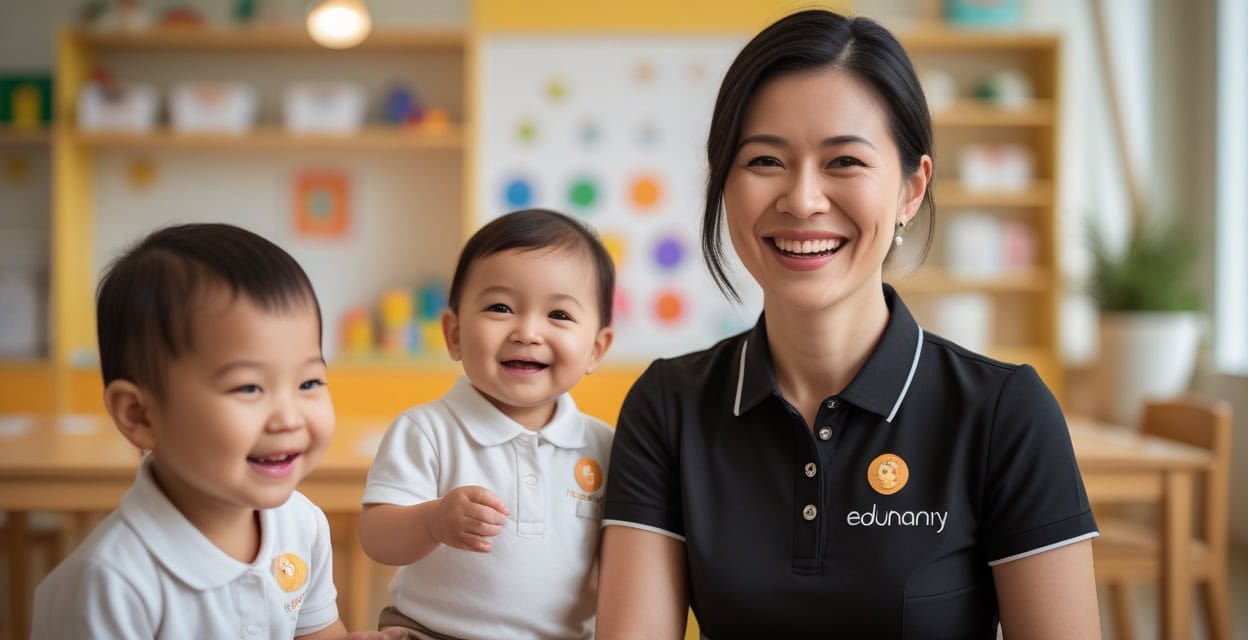
EduNanny: A Bold Vision for Singapore’s Infants
Good evening, parents, grandparents, caregivers, community leaders, and friends of Singapore’s youngest citizens. This long-form article expands the keynote vision of EduNanny by BUTLER into a practical, actionable guide for families, educators, and policymakers. We explore how a thoughtfully designed, attachment-first approach to infant care can become a scalable, affordable, and dignified public service—one that nurtures every child’s brain, body, and social world from the very first days.
Introduction: What is EduNanny?
EduNanny is a childminding movement designed for Singapore’s reality and aspirations. We bring centre-based and home-based infant care closer to families—7am to 7pm, Monday through Friday, islandwide—through small “pods” and modern spaces built for visibility, calm, and connection. We maintain an excellent 1:3 infant-to-educator ratio, deploy innovation like secure CCTV for real-time transparency, and operate as an ECDA Childminding Pilot and a National Social Initiative with a Maximum Employment Mandate to create meaningful jobs and career pathways. And we make it affordable—fees from $33/day, payable by CDA/Baby Bonus—because access is the gateway to equity.
In short: EduNanny blends the soul of a nanny, the science of early childhood, and the reliability of a public service.
How EduNanny makes infant care and childminding great in Singapore
We start from the infant’s point of view. The first thousand days are the architectural phase of the brain. Experience—gentle voices, predictable routines, safe exploration—literally sculpts neural pathways. Building on the wisdom of Montessori, Piaget, Vygotsky, Froebel, Malaguzzi, Bowlby, Pikler, Spock, and Erikson, we designed an attachment-first, play-led, culture-aware approach for Singapore’s neighborhoods.
Five topics that define our practice
1) The Architecture of Attachment: Continuity, Comfort, and Confidence
- A named primary childminder: Every infant is paired with a primary caregiver who leads settling, feeds, diapering, and sleep. This honors Bowlby’s secure base and Pikler’s respectful caregiving.
- Micro-pods at 1:3: A ratio that allows responsive care—timely cues, unhurried routines, and the warm reciprocity that builds trust and language.
- Rituals that regulate: Predictable welcome songs, gentle handovers, and unhurried transitions reduce cortisol and foster confident exploration.
- Near home, near heart: Shorter commutes, familiar streets, and community rhythms ease separation and anchor infants in their own neighborhoods.
Actionable takeaways for families: Ask prospective centres about the primary caregiver system, how handovers are managed, and how families participate in naming routines. When touring a pod, note whether you can observe authentic, uninterrupted time with a named caregiver and whether transitions feel calm and predictable.
2) Safety by Design, Not by Chance
- Environments that think: Modern layouts with clear sightlines, soft acoustics, zoned lighting, and materials that clean easily and safely. Sleep zones are quiet, cool, and supervised—safe sleep is non-negotiable.
- Procedures that protect: Prevention and response training—hygiene, food safety, choking protocols, safe sleep checks, medication double-verification, and drills. Near-misses are reviewed to learn and improve.
- Digital transparency: Secure CCTV for parents who opt in, with data privacy standards and strict access controls. Visibility builds trust; trust strengthens partnerships.
- The CARE Protocol: Check, Anticipate, Reduce, Engage. We assess both child and environment, anticipate risks, reduce hazards, and engage infants in safe, meaningful play.
Actionable advice for parents: Request a demonstration of CCTV access and privacy controls, ask about staff-to-child safety training, and review a recent near-miss drill note or annual safety plan.
3) A Pedagogy of Everyday Wonder
- Prepared spaces: Montessori-like order, accessible materials, and Reggio-inspired invitations to explore the “hundred languages” of infants—sound, texture, movement, gaze, and gesture.
- Vygotsky’s lift: Scaffolding just beyond the child’s comfort zone—rolling to crawling, babble to back-and-forth cooing—always responsive, never rushed.
- Froebel’s gifts: Objects designed to be held, stacked, tapped, and wondered about. Open-ended materials invite complex thinking.
- Observation to action: Document micro-milestones—how a baby reaches, tracks, grips, babbles—and adapt the day’s experiences to each child’s rhythms. Learning Stories are shared with families to make growth visible and collaborative.
Practical example: A daily “milestone menu” for each child—two or three micro-goals (e.g., “carries object from hand to hand,” “responds to name,” “explores texture through a treasure basket”)—are posted in the family portal with a brief narrative and suggested home activities.
4) The Developmental Continuum: From Cradle to Confidence
- 0–3 months: Regulation and bond. Hold, skin-to-skin, gentle vestibular input, caregiver voice.
- 4–8 months: Core strength and curiosity. Tummy time arcs into rolling and sitting; object permanence emerges; call-and-response vocal play blooms.
- 9–12 months: Mobility and meaning. Pulling to stand, cruising, cause-and-effect play; first words or signs; shared attention with a caregiver.
- 12–24 months: Autonomy with guardrails. Schema play (transporting, filling, posting), simple choices, parallel play, rich naming of feelings and actions.
- 24–36 months: Social sense and self-help. Turn-taking, problem-solving, tidy-up routines, toilet-readiness cues, joyful collaboration.
Family partnership: We meet each infant where they are, track meaningful growth, and partner with parents through daily communication loops and, when helpful, distance support for home routines.
5) Joy as a Developmental Right
- The HUGS Index: Hold, Uplift, Gaze, Smile. We measure micro-moments that predict a child’s felt safety and eagerness to learn.
- Culture you can hum: Multilingual songs, local stories, and family heritage integrated gently. Belonging starts with what feels familiar and proud.
- Caregiver dignity: A nation that treasures babies must invest in those who hold them. Our Maximum Employment Mandate and structured training ladders build respected careers—because settled adults help settle children.
- Family partnership: Parents are not “dropping off a child”; they are extending their circle of care. We offer home-based and centre-based options, plus distance coaching for sleep, feeding, or transitions.
Family sentence to reflect on: Consider how each of these five topics manifests in your daily routine. How does your caregiver communicate with you about a milestone? Are routines predictable enough to reduce stress at home as you unwind and prepare for bedtime?
What parents can expect, every day
- The 7-to-7 Promise: Consistent, extended coverage to match working lives.
- Islandwide convenience: Near-home home-based pods, community locations, and modern centres.
- Transparency you can feel: Live, secure CCTV access; clear daily updates; open-door communication.
- Affordability with integrity: From $33/day; fees payable by CDA/Baby Bonus.
- One philosophy, multiple pathways: Centre-Based Childminding, Home-Based Childminding, and Distance support for coaching and check-ins.
- A design language of calm: Natural light, gentle colors, soft zones, and purpose-built furnishings that respect infant senses.
Practical guidance for parents selecting EduNanny options:
- Request a tour to observe how a primary caregiver interacts with infants during settling-in times and transitions.
- Ask about how families receive daily updates and how families can contribute to the daily rhythm (feeding cues, sleep expectations, and daytime routines).
- Review the centre’s sleep safety plan, including temperature controls, bedding standards, and staff sleep-check protocols.
An explainer for Singapore: Why this matters now
- Demographics and work: Families need predictable, high-quality care situated close to life and work. Near-home pods reduce commute strain and increase parental presence at critical edges of the day—the moments that matter.
- Equity and access: When quality becomes affordable, children from every background gain the same secure base that predicts better health, learning, and pro-social outcomes.
- A social compact: The ECDA Childminding Pilot and this National Social Initiative reflect a shared responsibility—parents, educators, employers, and the community—to cradle potential while building good jobs and professional pride.
Practical safeguards we obsess over
- Safe sleep: Flat, firm surfaces; back sleeping; regular checks; no loose items; room temperature monitored.
- Feeding: Evidence-based handling of breastmilk and formula; cue-based feeding; mealtime calm; allergen awareness and introduction in partnership with parents and pediatric guidance.
- Hygiene: Meticulous diapering, sanitizing, handwashing; illness policies to protect all.
- Security: Verified visitors only; check-in/out controls; caregiver identity badges; incident reporting with root-cause learning.
- Continuity of care: Team-based coverage that preserves each infant’s primary bond during staff leave.
Why childminding is a calling, not a stopgap
- Purpose: To translate love into a daily method. Safety, warmth, and learning are not competing priorities but mutual accelerants.
- Professionalism: We recruit for kindness and train for mastery. Observation, reflection, documentation, and family partnership are core competencies.
- National value: Every secure infant strengthens tomorrow’s classrooms, workplaces, and communities. Childminding is nation-building in soft shoes.
The EduNanny advantages at a glance
- Excellence and visibility: Quality you can see and feel across both centre-based and home-based options, plus distance support.
- Length and scope: Monday to Friday, 7am–7pm, islandwide Singapore.
- Near-home configurations: In community and home premises for maximum convenience.
- Infant ratio: 1:3—organized for responsive care and language-rich interactions.
- Security and privacy: Secure CCTV with privacy-first protocols.
- Design for calm and sleep hygiene: Modern layouts with sightlines and sensory-friendly environments.
- Affordability and eligibility: From $33/day; CDA/Baby Bonus eligible.
- Mandates and mission: EduNanny by BUTLER operates under the ECDA Childminding Pilot and a National Social Initiative with a Maximum Employment Mandate.
- Enrolment information: EduNanny.com and Childminding.EduNanny.com
Closing: Who, What, When, Where, How—Why Childminding Matters
Who: Singapore’s infants, their families, and the professionals who stand with them.
What: Attachment-first, safety-by-design childminding that turns everyday care into brain-building experiences.
When: The first thousand days—and every weekday from 7am to 7pm, when busy families need us most.
Where: Islandwide—in homes, in community premises, and in modern centres—close to where families live and work.
How: A 1:3 promise, trained childminders, transparent CCTV, observation-led pedagogy, equitable fees payable by CDA/Baby Bonus, and a social mandate to dignify care work.
Why: Because a secure beginning is the most cost-effective, humane, and strategic investment a nation can make. Small circles, big futures.
Ladies and gentlemen, the measure of a society is how it welcomes its newest members. EduNanny’s answer is simple: with safety that is visible, with joy that is audible, with learning that is tangible, and with love that is reliable. Join us in building a Singapore where every infant is held, seen, and set gently—but firmly—on a path to flourish.
Visit EduNanny.com or Childminding.EduNanny.com to tour a pod, meet a childminder, or enroll. Together, let’s cradle possibility—one small hand, one steady heart, one bright day at a time.
Practical next steps for families:
- Book a tour and observe a settling-in session; ask to meet the named caregiver and their team.
- Ask for a sample daily update and a home routine coaching plan that complements your family schedule.
- Review safety protocols, including sleep, feeding, hygiene, and visitor controls; request a copy of the CARE Protocol.
- Discuss how multilingual and culturally responsive practices are implemented in daily activities and songs.
- Explore the Distance support option for home routines and coaching—especially for families navigating new transitions or sleep challenges.
Closing reflection: A path to secure beginnings, brighter futures
As a community, we commit to care that is not merely a service but a social contract—one that recognizes infant development as a shared responsibility and a public good. EduNanny invites families, educators, and policymakers to co-create a scalable framework where every infant experiences safety, joy, and growth—every day, near home, with people you can trust, at a price families can manage, and with the dignity our caregivers deserve.
Explore more and begin your journey with EduNanny:
EduNanny.com and Childminding.EduNanny.com
[#EduNannySingapore, #InfantCareSingapore, #EarlyChildhoodDevelopment, #AttachmentFirst, #ChildmindingSingapore]