

Close to Home and Growth, EduNanny Attuned Infant Care Redefining Singapore First Thousand Days

EduNanny Singapore: Close to Home, Excellent Infant Care for Singapore’s Youngest Citizens
Good evening, distinguished parents, caregivers, partners, and friends of Singapore’s youngest citizens. Thank you for gathering to consider something deceptively small and immeasurably large at once: the first thousand days of life. In those quiet minutes, a nation’s character is rehearsed. In the first smile answered, the first cry soothed, the first nap taken in safety, we write the prologue to everything that follows—schooling, relationships, resilience, contribution, and joy.
EduNanny is a human-centered, science-led childminding movement that brings excellent infant care to where families live and work—reliably, affordably, and with deep respect for the dignity of each child and every caregiver. We operate centre-based and home-based micro-environments islandwide, Monday through Friday, 7 a.m. to 7 p.m., with an ultra-low 1:3 infant ratio. We are part of Singapore’s broader public effort to uplift early care through the ECDA Childminding Pilot, designed as a national social initiative that grows employment, skills, and trust. Our promise is simple: safe, joyful, developmental care, close to home, at a price from $33 per day, supported by modern design, innovative CCTV for transparency, and fees payable by CDA/Baby Bonus. You can learn more at EduNanny.com and Childminding.EduNanny.com.
But EduNanny is more than an operating model. It is a philosophy shaped by the wisdom of Montessori’s independence, Piaget’s discovery, Vygotsky’s social learning, Froebel’s play, Malaguzzi’s hundred languages, Bowlby’s secure attachment, Pikler’s respectful caregiving, Spock’s reassurance, and Erikson’s stages of trust and autonomy. Our task is to translate that heritage into everyday Singapore life—into routines parents can trust, rooms that invite calm, and relationships that let a small person feel seen, safe, and ready to grow.
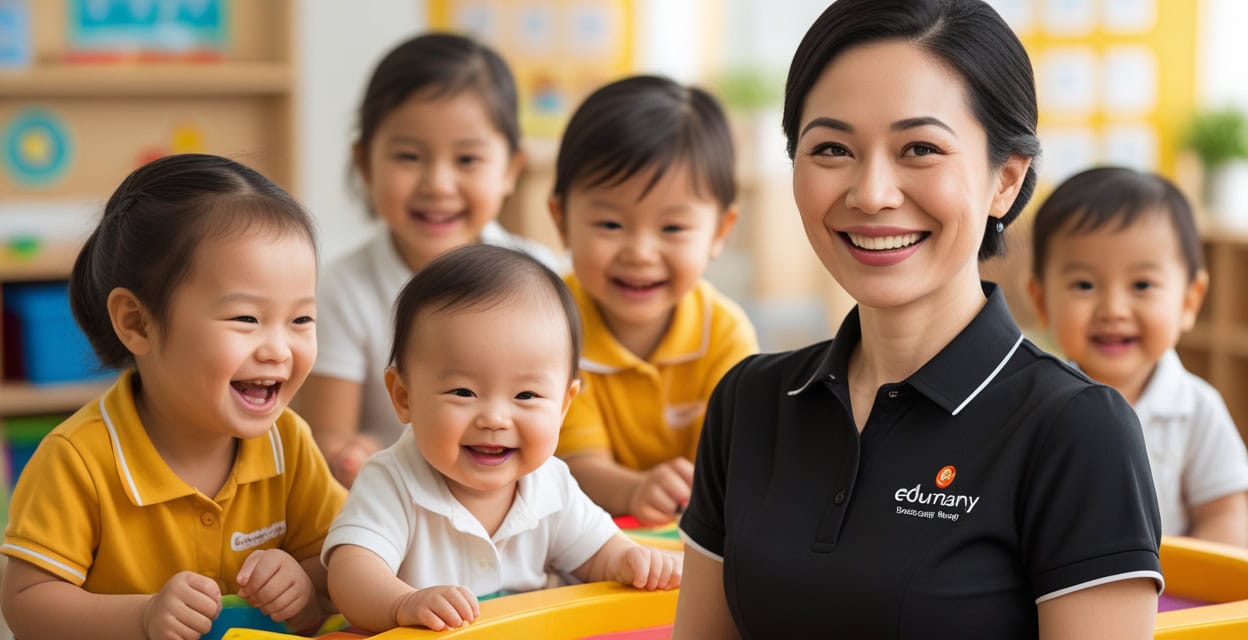
EduNanny’s Philosophy: Translating Heritage into Everyday Practice
Pedagogy of Attuned Presence: Micro-moments that build big minds
- The secure base: Following Bowlby and Pikler, infants learn best when the adult is reliably warm, unhurried, and responsive. We train childminders to see small signals—a foot flex, a gaze shift, a pause in cooing—as conversation. Practical example: during bottle feeding, the caregiver maintains soft eye contact, narrates actions (“I’m warming your bottle now; you’re deciding when to take the next sip”), and pauses to invite the infant to respond with a smile or a turn of the head.
- Play as the brain’s first language: Echoing Montessori and Froebel, environments are prepared with simple, reachable materials—soft blocks, textured fabrics, rattles, mirrored panels—to invite self-initiated exploration. Practical example: a corner with a mirror panel encourages facial expression practice; a textured cloth and block stack invites safe exploration of cause-and-effect.
- Scaffolding, not scripting: With Vygotsky’s insight, we meet the child at the edge of ability—handing the spoon but not doing every scoop; offering a steady palm, not lifting through every step. Practical example: when a toddler attempts a self-feeding gesture, the caregiver guides with a hand-over-hand approach then gradually fades support as the child gains independence.
- Observation journals, not checklists alone: In addition to standard milestones, EduNanny caregivers keep brief narrative notes—what captivated the child, which song soothed, which stretch of tummy time felt easiest—so the curriculum lives in the child, not just the plan. Practical tip for parents: maintain a simple daily log of mood, feeds, and nap length to share with your child’s educator.
Safety by Design: Quiet systems that keep little lives secure
- 1:3 ratio as a core safety feature: Fewer infants per caregiver means faster response times, better hygiene, and calmer routines—from safe sleep to mealtimes to transitions. Practical tip: ask about staff rotation and shift coverage to ensure consistent caregiver presence for your child.
- Spaces that think: Low, open shelves; rounded corners; separate sleep zones with dimmable light; fresh-air circulation; zoned hygiene flow for diapering and food prep; and modern layouts that reduce overstimulation. Practical tip: request a walk-through to assess how the space reduces noise and introduces calm during busy drop-offs.
- Transparent accountability: Innovation CCTV with secure, consent-based access promotes trust and coaching. It’s not surveillance; it’s a mirror for practice, a tool for reassurance, and a record for continuous improvement. Practical tip: review how access is granted, what recordings cover, and how families can opt in/ out.
- Preparedness and prevention: All childminders trained in safe sleep, choking response, infant CPR and first aid, food safety, and environmental checks (temperature, humidity, air quality). Practical tip: request quarterly safety drills and incident review summaries to stay informed about improvement actions.
Development as a Daily Rhythm: The four streams and the gentle arc
- Attachment and emotional regulation: Predictable greetings, cozy reading corners, soft singing, and caregiver availability that teaches infants, “Your feelings make sense here.”
- Language and communication: Rich, face-to-face talk; parallel narration during care (“I’m warming your hands, now your toes”); nursery rhymes; early turn-taking games that encourage vocal play.
- Motor and sensory integration: Age-appropriate floor time; free movement; safe grasp and reach materials; textured paths; outdoor pram walks when weather permits.
- Curiosity and executive beginnings: Short, focused invitations—rolling a ball back and forth, hiding and finding a scarf, dropping pegs in a cup—that seed attention, memory, and problem-solving.
Happiness as a Safety Signal: Joy at the core of care
- Warm cycles, not rushed schedules: We slow the day. Bottles are held and cosied; naps are supported with consistent routines; transitions use songs and touch to ease stress.
- Belonging cues: Photos of families at child’s eye level; familiar blankets; caregiver scent cloths for sleep routines; multilingual greetings that honor home languages.
- Outdoor time and nature touches: Breeze, birdsong, and sunlight support healthy development. Practical tip: introduce short nature breaks that align with the child’s energy level and weather tolerance.
- Caregiver well-being matters: Reflective supervision, peer learning circles, and clear career pathways ensure caregivers feel supported and respected.
The Purpose of Childminding: A profession that binds home, work, and community
- A bridge for families: Childminders partner with parents—morning check-ins, end-of-day notes, and monthly “quiet conferences” that focus on the child’s unfolding journey.
- A ladder for workers: Through the Maximum Employment Mandate, EduNanny turns talent into vocation—paid training, mentorship, and specialisations—so Singapore builds a high-skill, high-heart early years workforce.
- A civic compact: Affordable access from $33/day, islandwide availability, and fees payable by CDA/Baby Bonus, placing infant care within reach of ordinary families, not a privilege for a few.

How the EduNanny Model Works — Simply Put
Centre-based Care
Modern, light-filled micro-hubs designed for calm, hygiene, and low sensory clutter. Features include child-friendly layouts, safe sleep zones, and accessible outdoor spaces. The 1:3 ratio ensures quick response times and a steady caregiver/child relationship.
Home-based Care
Licensed childminders offering smaller, familiar environments close to family routines, guided by EduNanny’s safety and pedagogy standards. Practical tip: if your child thrives in a quieter setting, a home-based option can provide intimate, personalized care with consistent routines.
Distance Support
Tele-consults and digital check-ins for families and helpers at home—coaching on sleep, feeds, play, and routines. Practical tip: schedule regular virtual check-ins to review progress notes and adjust routines as your child grows.
Hours that Serve Working Parents
Monday to Friday, 7 a.m. to 7 p.m.—predictable coverage so caregivers can count on care and focus on work. Practical tip: align your own work schedule with care hours and discuss emergency backup options in advance.
Transparency and Affordability
Innovation CCTV for reassurance; fees payable by CDA/Baby Bonus; pricing from $33/day. Practical tip: request clear fee schedules, any additional costs, and a plan for fee support or subsidies you may be eligible for under the national schemes.

Five Topics at the Heart of Our Practice
-
Attachment and Emotional Regulation
We prioritise secure caregiver relationships as the foundation for later learning. Concrete actions include consistent greeting rituals, eye-level interactions, and responsive soothing routines. Parent-focused tip: work with your EduNanny team to establish a reliable morning ritual that signals safety and welcome to your child.
- Actionable example: create a flexible “calm starter” routine for mornings—soft music, a cuddle, and a short cuddle-based song before separation at the center or home-based setting.
-
Language and Communication
Language-rich environments support vocabulary growth, turn-taking, and early literacy. We narrate care, provide rich sounds, and invite toddlers to respond in turn-taking games. Practical tip: incorporate home language into daily routines and request bilingual greetings that honor your family’s languages at drop-off and pick-up.
-
Motor and Sensory Development
Structured opportunities for movement, safe exploration, and sensory play support physical growth and coordination. Practical tip: rotate simple materials weekly to stimulate new textures and challenges, from tactile cloths to soft climbing structures.
-
Executive Beginnings and Curiosity
Small, focused challenges cultivate attention, memory, and problem solving. Practical tip: set up short, repeatable activities (like rolling a ball back and forth) and gradually increase complexity as the child demonstrates readiness.
-
Social-Emotional Well-Being
Joy, belonging, and caregiver attunement build trust. Practical tip: incorporate daily “feelings check-ins” with simple language and visual cues to help children label and manage emotions.

What Parents Can Expect from EduNanny
- Excellence and quality: High standards without compromising affordability.
- Calm, modern spaces: Environments designed to reduce overwhelm and invite curiosity.
- Transparent practice: Open communication, progress notes, and collaborative planning with families.
- Daily reflections: Brief notes that illuminate what delighted your child today and how they engaged with caregivers.
- Consistent relationships: A dependable adult who knows your child well and invests in their growth.
- Strong leadership: A leadership team committed to continuous improvement and to Singapore’s early-years ambitions.
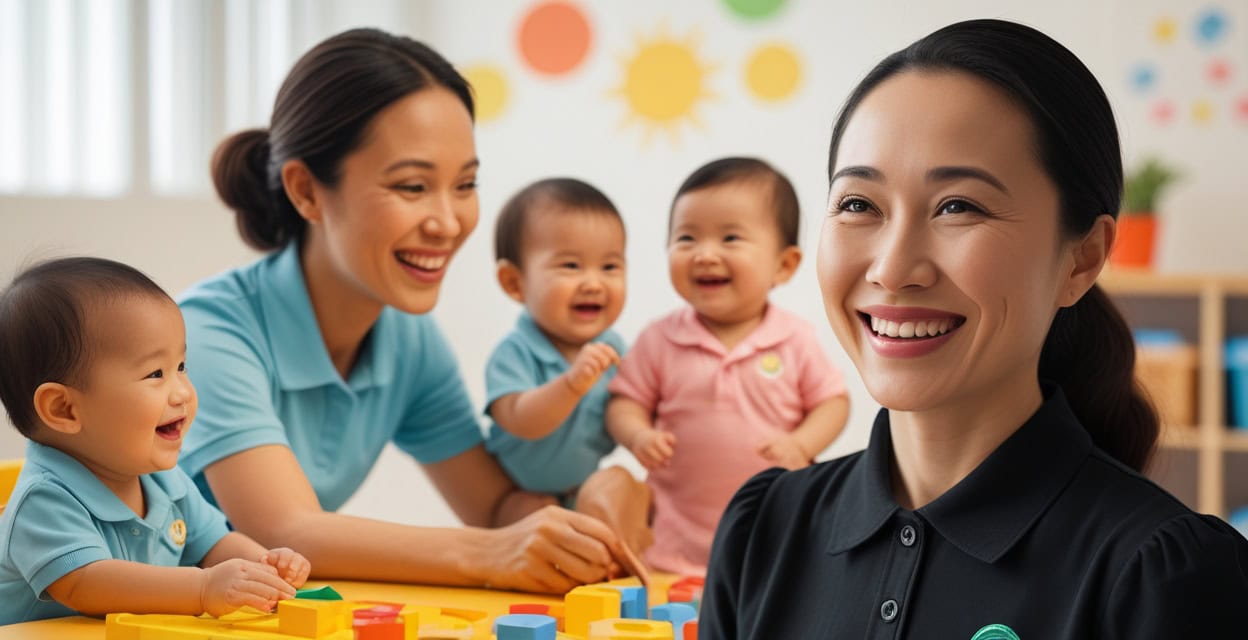
What Infants Experience
- A warm greeting, by name, at eye level.
- Care that moves at the child’s pace—unhurried feeds, secure naps, and time to wonder.
- Play that is simple, real, and purposeful.
- A caregiver who narrates the day and patiently waits for the child’s turn to respond.
- Safety that feels like softness, not restriction; predictability that feels like love.

Why This Matters in Singapore Now
Singapore prizes excellence and community. The earliest years are where those values are learned in the body: from the way a caregiver’s eyes soften to meet a baby’s gaze, to the design of a space that invites first attempts at standing. By bringing quality care close to home, we strengthen neighborhoods. By professionalising childminding, we dignify essential work. By maintaining a 1:3 ratio, we transform aspiration into daily safety and opportunity.
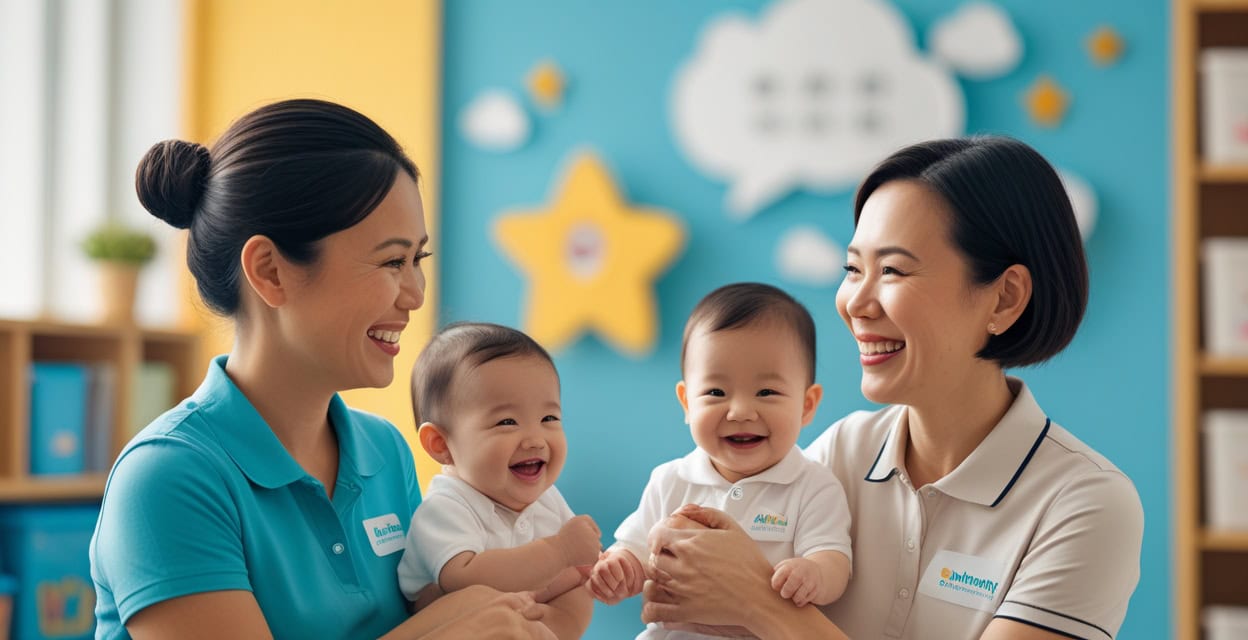
Practical Guidance for Parents: Selecting, Preparing, and Partnering with EduNanny
Choosing the right early years arrangement is a decision that shapes daily life and long-term development. Consider the following actionable steps to make a well-informed choice.
1) Define Your Priorities
- Impact areas: attachment safety, language development, physical activity, and guided exploration.
- Environment preference: centre-based community hub or intimate home-based setting, or a blend with distance support.
- Time needs: ensure care hours align with work schedules, with clear backup arrangements for emergencies.
2) Ask the Right Questions
- What is the caregiver-to-infant ratio and how is coverage managed during staff absences?
- What training do caregivers receive in safety, first aid, and child development?
- How is progress documented, and can families access observation notes or CCTV footage with consent?
- How are meals prepared, how is food safety ensured, and how are allergies managed?
- What is the process for handling concerns or incidents, and how are families updated?
3) Evaluate the Daily Rhythm
- Request a sample daily schedule showing a balance of attachment activities, language play, movement, and focused learning.
- Ask about nap structure, feeding routines, and how transitions are handled to minimize distress.
4) Prepare Your Family and Child
- Bring a welcome routine: a familiar object or photo for the child to keep during transitions.
- Share home language preferences and routines to harmonize care with at-home practices.
- Prepare a simple “feelings card” set to help your child express needs during the day.
5) Collaborate with EduNanny
- Establish regular touchpoints: weekly notes, monthly conferences, and quarterly reviews of development goals.
- Co-create a home–school bridge plan that mirrors routines and milestones at home and in care.
- Engage in the Maximum Employment Mandate by supporting caregiver growth: ask about training opportunities, mentorship programs, and specialization tracks.
Practical Checklists for Parents
- Visits: Observe caregiver responsiveness, pace of activities, and how the space feels to your child.
- Documentation: Confirm what insights will be shared daily, weekly, and monthly.
- Safety: Review safety drills, sleep protocols, allergy management, and environmental controls (temperature, air quality).
- Consistency: Ensure a reliable caregiver team and a plan for continuity during absences.

Closing: A Promise for Singapore’s Infants
If we want confident children, we must give them confident beginnings. If we want empathic leaders, we must show them empathy before they have words. If we want an inventive economy, we must protect the curiosity in a baby’s first experiments with sound and shape.
EduNanny stands for a Singapore where early care is a public good—close to home, joyful by design, and excellent on principle. Where caregivers are respected professionals. Where families feel seen, not judged. Where infants meet the world as it should be met: safe, responsive, and full of possibility.
This is not charity, and it is not luxury. It is nation-building at cradle scale.
To every parent here: your hopes are our blueprint. To every childminder: your steadiness is our pride. To every infant: you are the reason we measure time in minutes and invest as if those minutes are everything—because they are.
Join us. Visit EduNanny.com or Childminding.EduNanny.com. Come see how a 1:3 ratio changes the texture of a day. Watch how a modern, thoughtfully arranged room can hush a fretful morning. Feel how an attuned adult turns care into learning, and learning into joy.
In the smallest rooms of our city, something very big is happening. A future is taking shape, one gentle handover at a time. And with EduNanny, that future is close, clear, and ready to be held.
[#keyword1, #keyword2, #keyword3, #keyword4, #keyword5]