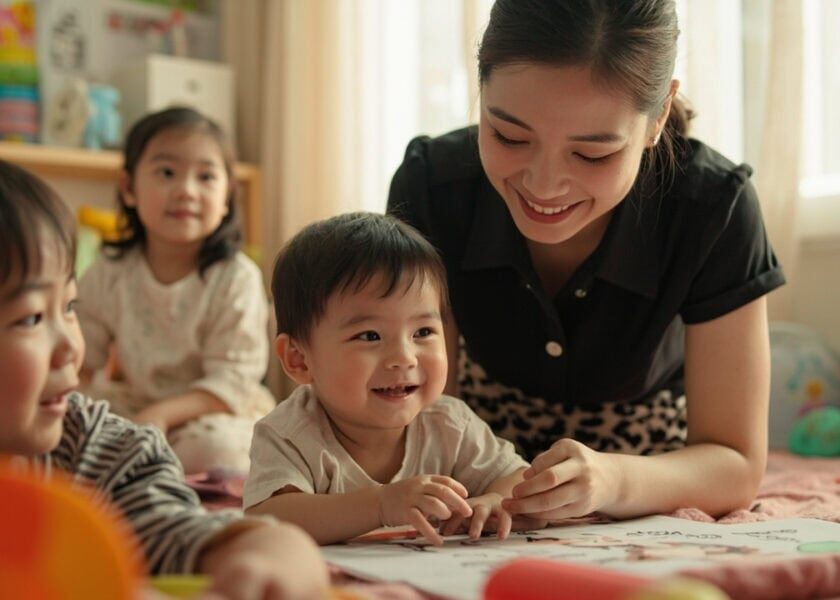
Calm Beginnings and 1 to 3 Care EduNanny Near Home Pods for Singapore Infants

EduNanny Singapore: Redefining the First Hours of Care for Singapore’s Infants
Good evenings, Singapore. This is a message about something ordinary and profound: the first hours of care, and how a nation shows up for its youngest citizens. EduNanny, powered by BUTLER, envisions infant care that is safe, calm, and meaningful from the very start. This article expands on that vision with practical guidance, insights from our practice, and actionable steps families can use today.

Introduction to EduNanny
EduNanny was built on a simple, evidence-led promise: an infant’s day should be safe, calm, and full of meaning. We operate across Singapore with a combination of centre-based and home-based childminding — available Monday to Friday, 7am to 7pm — engineered for ultra-low 1:3 infant ratios that let a grown-up kneel, notice, and respond in real time. Our spaces are modern, well-lit, and designed for floor-level learning and quiet confidence, supported by innovation CCTV for family-only access and transparent practice. We participate in Singapore’s ECDA childminding pilot framework (Dec 2024–Dec 2027), and where eligible, fees are payable using CDA/Baby Bonus. Most importantly, we are committed to affordability — from $33 per day — because dignity at the start should not be a luxury.
At EduNanny, our approach is inspired by a family of developmental wisdom: Montessori’s prepared environment, Pikler’s respectful caregiving, Bowlby’s attachment, Vygotsky’s scaffolding, Piaget’s schemas, Froebel’s gifts, Malaguzzi’s hundred languages, Spock’s reassurance, and Erikson’s trust. Their wisdom is not a museum for us; it is a daily checklist, a training standard, and a way to hold each infant with scientific respect and human warmth.

How EduNanny makes infantcare and childminding great in Singapore
We make care proximate, predictable, and professional. Proximate means the right place is a short stroller ride from home. Predictable means infants thrive on rhythms, not surprises. Professional means childminding is a vocation, not a fallback. With a 1:3 ratio, our caregivers have the bandwidth to see cues before they become cries, to turn diapering into dialogue, feeding into relationship, and tummy time into triumph. Our flexible operating model — centre-based, home-based, and distance-supported guidance — lets families choose what fits today and adjust as life shifts.

Five New Topics for Singapore’s Infants and Families
1. Slow-First Pedagogy: The 60-Second Method for Everyday Mastery
We teach by waiting. Slow-First Pedagogy turns daily care into a minute-long, high-impact lesson — just enough time for a brain to wire new connections and a heart to settle into trust. Use these practical steps daily:
- Observe: A caregiver kneels at eye level and watches the infant’s signal — the fist to mouth, searching eyes, a frown that softens with contact.
- Mirror: Echo the cue in language and touch. “You’re telling me you’re hungry. I see you.” A calm hand on the back or a gentle pat invites co-regulation.
- Invite: Pause to let the infant participate — lifting an arm into a sleeve, reaching for the bottle, rolling toward a toy — turning moments into tiny accomplishments.
This rhythm builds agency. Montessori shows the power of a prepared environment; Pikler shows dignity in unhurried care. We blend both: floor-level spaces with natural materials, and caregivers with a calm voice, warm hands, and a habit of narrating without crowding. Vygotsky would call it scaffolding within the zone of proximal development; your infant will know it as the delicious feeling of “I can.”
Practical tips for families:
- Structure daily routines with three simple blocks: nourishment, play, rest. Keep transitions calm and predictable.
- Provide a small, low-scent sensory bag at home (soft cloth, wooden rattle, safe teether) to support calm exploration between EduNanny sessions.
- Encourage caregiver narration during routines at home. Describe what you’re doing and why, e.g., “Now we’re changing your diaper so you stay clean and comfy.”
2. Safety as a Quiet Symphony: Twelve Habits that Make Risk Boring
True safety is invisible because it is constant. Our “Twelve Quiet Habits” embed risk reduction into muscle memory. Implement these daily habits in both EduNanny settings and at home:
- Safe sleep: Alone, on Back, in a safe Cot. Ventilated rooms; firm mattress; no loose items.
- Identity and allergy protocol: two-tag check at arrival; visible allergy cards at feeding stations.
- Hygiene cadence: hand-wash ritual on entry; disinfected surfaces; toy rotation and sanitation logs.
- Floor sweep every hour: small-object elimination; plug covers; furniture anchored.
- Bottle safety: labeled prep, temperature checks, discard times.
- Medication: double-sign, dosage verification, parent confirmation.
- Air and light: CO2-aware ventilation checks; natural light prioritised.
- Movement safety: no restrictive devices; generous supervised floor time.
- Emergency drills: monthly practice; clear evacuation maps; first-aid and infant CPR certified team.
- Digital assurance: innovation CCTV with family-only secure access and privacy protocols.
- Staffing integrity: background checks, reference verification, continuous training.
- Ratio discipline: never exceeding 1:3, so attention is present, not promised.
\n
Practically, this means a culture of safety that never feels performative. For families, it means transparency you can trust and a daily sense that your child is in capable hands.
3. Development Without Milestone Anxiety: The Five Streams
We measure what matters and celebrate growth without unhealthy comparison. Our Five Streams guide daily invitations and family conversations:
- Attachment and regulation: Co-regulation through voice, breath, and predictable transitions.
- Movement and posture: Unrestricted floor play, rolling to crawling, supported standing when ready.
- Language and prosody: Sing-speak, book-bathing, caregiver echoing of babble into words.
- Sensory integration: Natural textures, graded sounds and light, gentle vestibular experiences.
- Early executive seeds: Turn-taking games, waiting moments, simple cause-and-effect play.
We use micro-observations — brief notes captured across the day — to inform tomorrow’s invitations. Daily updates become a collaborative narrative: not just “ate and slept,” but “tracked red ball for 8 seconds; reached with left hand; calmed with humming.” This turns development into a shared practice with your family.
4. Joy as a Standard, Not a Surprise: The Warmth Protocol
Happiness is steady, not spectacular. Our Warmth Protocol builds a daily Joy Index through consistent, small moments of care:
- Morning attunement: Eye-level greeting; name spoken warmly; caregiver handover ritual.
- Predictable rhythm: Eat, play, rest, repeat — guided by the infant’s cues.
- Sensory kindness: Natural light, soft colours, minimal flashing plastics.
- Music minutes: Live voice and simple instruments; steady tempos to support regulation.
- Outdoor moments: Pram walks where feasible; real air, real neighbourhoods.
- Rest with respect: No “cry-it-out”; consistent cues and comforting routines to help sleep onset.
Joy is measured through comfort, engagement, and post-distress repair. Erikson’s trust versus mistrust comes alive as daily experiences of reliability and warmth.
Practical tips for families:
- Maintain a predictable daily rhythm at home that mirrors EduNanny’s cycle, even on weekends.
- Create a quiet “comfort box” with familiar objects for times of distress (a soft cloth, a comforting song, a familiar toy).
- Use a gentle, consistent voice during transitions and soothing routines to reinforce safety and trust.
5. Childminding as a Civic Profession: Dignity, Training, and Work That Builds Community
Childminding is a profession that deserves respect, ongoing training, and clear career paths. EduNanny’s approach elevates the entire field:
- Training ladder: Onboarding in infant development, safe sleep, responsive caregiving, and family partnership; advanced modules in language facilitation and sensory regulation.
- Supervision and coaching: Routine observations with feedback; reflective practice circles to grow practice together.
- Career path: Recognition and wage progression; opportunities across centre-based, home-based, and community sites.
- Maximum Employment Mandate: Commitment to meaningful local jobs, with pathways for caregivers re-entering the workforce.
Community mesh: Families meet families; caregivers meet neighbours; children grow up seeing their caregivers as trusted adults. This is how a society builds social capital from infancy.

Why families choose EduNanny—practical benefits
- Excellence and Quality: Evidence-led care with editorial-level attention to detail and a culture of continuous improvement.
- Centre-Based and Home-Based options: Flexibility to fit your week; seamless transitions as life changes.
- Distance support: Virtual coaching for parents on WFH days, routines, and sleep/feeding guidance.
- Convenience: Monday to Friday, 7am to 7pm; multiple locations across Singapore’s neighbourhoods.
- Affordability: From $33/day; CDA/Baby Bonus eligibility where applicable.
- 1:3 infant ratio: Real-time attunement and support, not an aspirational target.
- Innovation CCTV: Family-only secure access; transparent, responsible practice.
- Modern layouts: Floor-level learning zones, natural light, hygienic materials, safe sleep rooms.
- EduNanny by BUTLER: Operational rigor with hospitality-grade warmth.
- ECDA Childminding Pilot alignment: National standards for trusted, high-quality infant care.
- National Social Initiative and Maximum Employment Mandate: Care that builds careers while building public trust.
- Find us: EduNanny.com and Childminding.EduNanny.com
A day in the life, briefly
A parent arrives to a caregiver who already knows the morning: last night’s wake-up, the preferred lullaby, the new rash you’re watching. The infant is greeted by name, settled into a clean, light-filled room, and offered time to look around. The day flows: an unhurried feed with eye contact; floor play that invites rolling and reaching; songs in soft keys; a restful nap on a firm, safe surface. Throughout, our caregiver notes micro-wins and small struggles. At pickup, you hear not just what happened, but who your child was today. You leave feeling seen — and so does your infant.

Closing: Who, What, When, Where, How — Why Childminding Matters
Who: Singapore families with infants who deserve care that is both scientific and soulful; caregivers who deserve a profession with dignity and growth.
What: Professional childminding that blends centre-based, home-based, and distance-supported care; a 1:3 ratio; transparent safety; daily pedagogy in the ordinary.
When: Monday to Friday, 7am to 7pm — reliability you can build a workday and a life around.
Where: Across Singapore’s neighbourhoods, in thoughtfully designed community premises and vetted homes — close enough to be part of your real day.
How: Slow-First Pedagogy, the Twelve Quiet Safety Habits, the Five Streams of Development, the Warmth Protocol, and an employment model that honours the people who carry our public trust.
And the Why: Because the first thousand days write a language the rest of life will read. Because trust is not taught by talk; it is taught by how we handle a child’s small moments. Because a country that cares well at the beginning does not need to repair as much later. Because every infant is not preparing for life — they are living it now.
Parents, you should not have to choose between safety and joy, between convenience and quality, between affordability and dignity. EduNanny refuses those false choices. We offer a standard — clear, human, and accountable — so your child’s ordinary day can be quietly extraordinary.
If this vision feels like the day you want for your infant, we invite you to tour, to try a day, to ask hard questions, and to partner with us. Visit EduNanny.com or Childminding.EduNanny.com. Talk to our team about CDA/Baby Bonus options, locations near you, and start dates that match your family’s rhythm.
Let us build this with you: one minute of attention, one safe sleep, one calm song at a time — until those small moments add up to a confident child and a kinder nation. Thank you.

Conclusion
EduNanny invites families to reimagine the first hours of care as a public trust — a blend of science, warmth, and dignity that grows with your child. By combining proximate access, predictable routines, professional caregiving, and a four-part framework of Slow-First Pedagogy, Twelve Quiet Habits, Five Streams, and the Warmth Protocol, we create days that feel both ordinary and extraordinary. This is not merely care; it is an investment in trust, development, and a nation that learns to listen to its youngest citizens from day one. If you share this vision, connect with us to tour, trial a day, and become part of a community that treats early childhood as a civic priority.
[#keyword1, #keyword2, #keyword3, #keyword4, #keyword5]Ready to Experience Excellence?
Transform Your Family’s Journey
Discover Singapore’s leading infant care and childminding services. Expert guidance for your little one’s first thousand days.