Beyond Supervision: Why Your Child Deserves to Be Truly Known
The Moment of Arrival: What Separation Really Feels Like
When a young child enters a childcare environment, they are not simply being dropped off at a location. They are crossing a threshold into a world that is not home. The room may be warm and bright. The toys may be carefully arranged. The caregivers may be warm, competent, and genuinely loving in their work.
But for the child, the experience of arrival is always, in some essential way, an experience of departure. Departure from the familiar. Departure from the one face that has been their entire world. Departure from the particular rhythm of their own home, their own routines, their own unspoken language of comfort.
This is not a small thing. For a young child, separation is a genuine reckoning with the reality that the people they depend on most in the world are, for now, somewhere else. The world does not end. The child will survive this, grow through it, and ultimately flourish from navigating it. But in the moment of arrival, in those first minutes and hours, the child is doing real emotional work.
Every Child Navigates This Differently
What does that work look like? It looks different in every child.
Some children show it openly, in the tears and the clinging and the protest. We have culturally learned to read that distress as the visible sign of what is happening. But other children do not cry. They turn away. They go quiet. They observe. They perform a kind of calm compliance that can, if we are not paying careful attention, be mistaken for ease.
And still others absorb themselves in play with a ferocity that looks almost like distraction, as though they are building something within themselves through every block they stack and every page they turn.
All of these are children doing the same internal work. They are each finding their own way to navigate the experience of being in a new place without the familiar anchors of home. They are each, in their own way, grieving a little and adapting a little and learning a little about the world being larger than they once understood.
The Science of Attachment and Why It Matters More Than Curriculum
The first thing quality care offers is not activity. It is presence. Not just any presence, but the particular kind of presence that says: I see you. I know this is hard. I am here.
This is the beginning of what we call attachment in the care context, and it is one of the most underestimated elements of early childhood experience. Attachment is not a warm feeling. It is not a checkbox or a mood. It is a neurobiological and psychological process through which a child comes to feel that a particular person is a safe base from which to explore the world.
In the early weeks and months of childcare, the child’s primary task is not to learn colors or numbers or social skills. It is to establish, through thousands of small interactions, the felt sense that their caregiver is reliable.
- When they signal distress, someone responds.
- When they reach for comfort, it is given.
- When they look up, there is a familiar face that meets their gaze with warmth and recognition.
This is the foundation of human development. Decades of research in developmental psychology have shown us that the quality of early attachments shapes not only a child’s immediate emotional wellbeing but their capacity for relationships, resilience, and regulation throughout their entire lives.
The first thousand days of life are not merely a period of rapid physical and cognitive growth. They are the period in which the architecture of the social brain is being constructed, and that construction happens in relationship.
Why Ratios Matter: The Condition for Attunement
So when we talk about a quality childcare environment, we are not just talking about safety or stimulation or curriculum. We are talking about whether this environment is a place where a child can gradually, over days and weeks and months, build the most important thing they will build in early childhood: the felt knowledge that the world contains people who will care for them well.
This is why ratios matter. Not as abstract numbers, but as the concrete condition that makes true attunement possible.
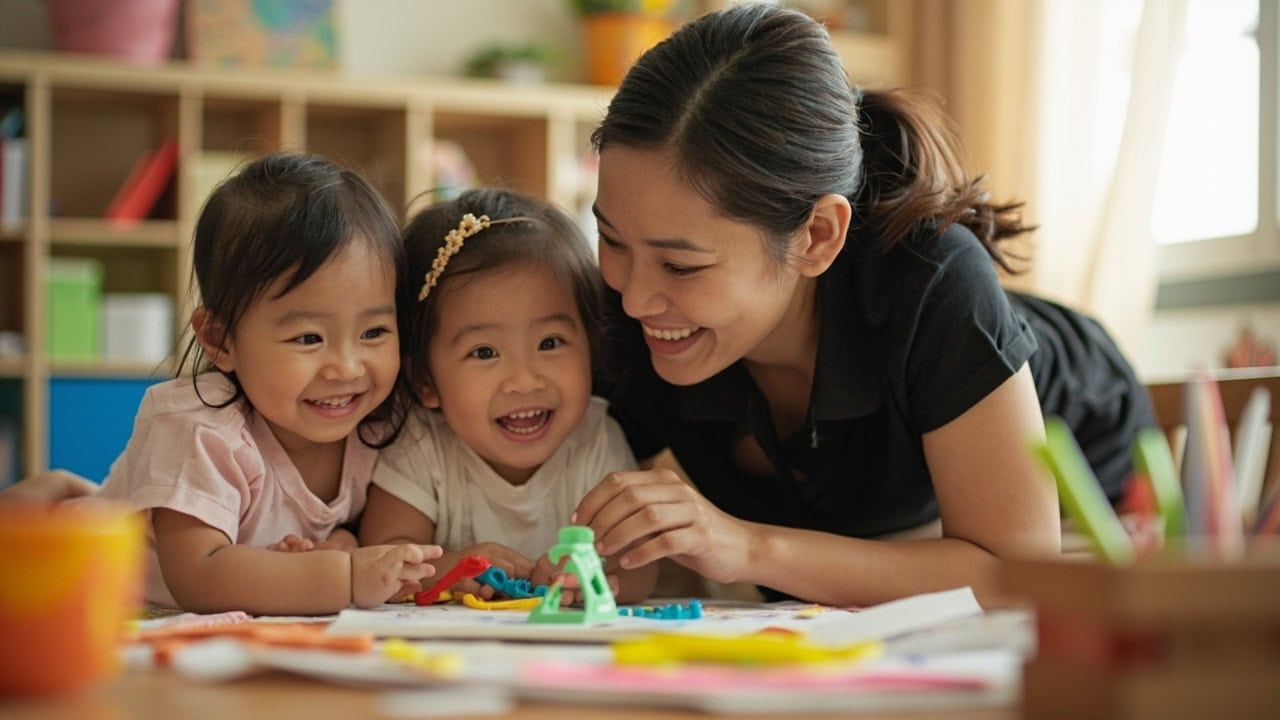
When a caregiver is responsible for one infant, or two or three at most, she can notice. She can observe. She can read the subtle shift in a child’s face, the small sound that precedes a larger cry, the moment when curiosity is giving way to overwhelm. She can intervene before the child is fully escalated. She can offer comfort when comfort is needed, and she can do so with the child’s specific temperament and needs in mind. This is not luxury care. This is the necessary condition for what we might call the emotional infrastructure of early childhood.
The Social World Inside the Room
But the inner life of the child in care extends beyond the direct relationship with their caregiver. There is also, from a surprisingly young age, the beginning of a social world.
We often underestimate what infants and toddlers are doing when they are in the presence of other children. We see them playing alongside one another, parallel play, and we assume the social world has not yet begun. But this is a misreading.
Even the youngest children in group care are absorbing something essential about human relationship. They are watching. They are registering. They are beginning to understand that other small beings have feelings, needs, and intentions that are separate from their own.
In time, this watching becomes reaching. A child learns that they can extend a toy to another child and receive something back. They learn that a smile can be answered with a smile. They learn, through trial and error and the sometimes-painful negotiation of early social life, that sharing is hard and that it is also necessary and that it can sometimes lead to something joyful.
Early social life is full of moments that are confusing, frustrating, and frightening for young children. A toy is taken. A friend walks away. A game changes without warning. These are not failures of care. They are, in fact, evidence that the child is in an environment rich enough to offer genuine social experience.
What matters is how those moments are held. Whether there is a caregiver nearby who can help the child name what they are feeling, who can offer comfort without judgment, who can help them find their way back to a place of emotional equilibrium.
Reading the Signals: Understanding What Your Child Is Communicating
Children, especially before they have words, communicate through behavior. They cannot sit down with us and say, “I feel safe here” or “I am not yet ready for this activity” or “Something about this room unsettles me.” Instead, they show us through what they do and what they refuse to do.
A child who runs to the caregiver at arrival, who settles quickly into the routine, who plays freely and returns periodically to check in and then goes back to play, is telling us something. They are saying: I trust this place. I know what to expect. I feel held.
A child who lingers at the gate, who cries for long stretches without settling, who shows us through their body that tension is always present, is telling us something else. They may be telling us that the transition is still hard, which is developmentally normal and will often pass with time and consistency. Or they may be telling us that something in the environment is not meeting their needs, that the ratios are too high for them to feel seen, that the routine is too unpredictable, that the caregiver they have come to trust is not consistently present.
Some children do not cry at drop-off but may still be doing the internal work of separation. The key is looking for signs over time: Does your child seem to look forward to care? Do they have a relationship with their caregiver? Do they seem to be growing in confidence and social ease? These are the indicators that matter, not just the absence of tears.
Being Supervised Versus Being Truly Known
There is a phrase that captures something essential about what we are really talking about when we discuss quality childcare: the difference between being supervised and being truly known.
Supervision is necessary. Supervision is the baseline. A safe environment, appropriate ratios, trained caregivers, clear protocols. These are the foundations that any serious childcare arrangement must have. But supervision is not enough. Supervision says: this child is safe. It does not say: this child is understood.
Being truly known is something different. It is the quiet, continuous work of attunement.
- It is the caregiver who notices that this particular child is especially sensitive to noise and adjusts the environment accordingly.
- It is the caregiver who recognizes that this child communicates distress through withdrawal rather than tears and offers comfort in a way that does not demand they perform their feelings.
- It is the caregiver who knows that this child has been working hard on a particular skill and offers them encouragement at exactly the right moment.
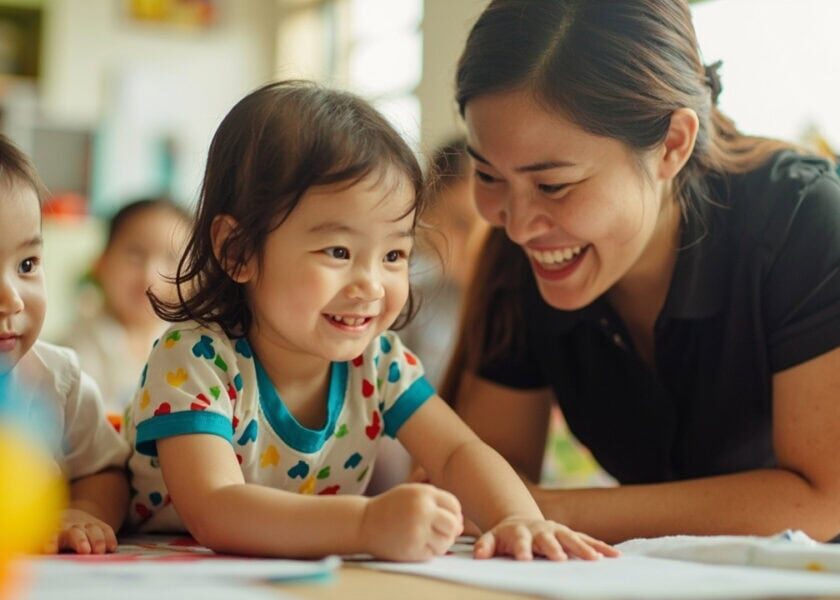
When children are truly known, something remarkable happens. They begin to relax into themselves. They begin to explore. They begin to take the small risks that lead to growth, knowing that there is a safe base nearby.
They begin to develop what we might call confidence, though it is not the showy confidence of performance. It is the quieter, more durable confidence of a child who has learned, through consistent experience, that they are cared for and that the world is a place where they can belong.
This is what emotional safety in childcare makes possible. Not just comfort in the moment, but the gradual construction of an inner architecture of trust that will support the child for years to come.
What Quality Childminding Looks Like in Practice
For parents in Singapore navigating infant care and childminding options, understanding what quality looks like in practice can feel overwhelming. Here are the key indicators that an environment is designed to meet your child’s inner world, not just supervise it:
Predictable Routines That Provide Emotional Anchors
Young children find security in knowing what comes next. A consistent daily rhythm, with predictable transitions between activities, meals, and rest, gives children the emotional stability to explore and engage rather than spending their energy on uncertainty.
Consistent Caregiver Relationships
The same caregiver or small team of caregivers, present day after day, allows deep familiarity to form. This consistency is the foundation for attachment. When a child knows who will be there, they can invest their energy in learning and playing rather than endlessly recalibrating to new faces.
Responsive Communication With Parents
Quality care is transparent. You should receive regular, thoughtful updates about your child’s day, their emotional state, their discoveries, and any challenges they encountered. This is not just courtesy; it is evidence that someone is paying close attention to your child’s inner experience.
Physical Environments That Feel Warm, Not Institutional
Look for spaces that feel human rather than corporate. Natural light, soft materials, child-sized furniture, and areas designed for quiet connection alongside active play. The environment should feel like a place where a child could feel at home.
Caregivers Who Observe and Reflect
The best caregivers are students of the children in their care. They notice patterns. They remember small details. They can tell you not just what your child did today, but how it seemed to feel for them. This kind of observation requires time, training, and genuine interest.
Common Questions Parents Ask
Will my child feel abandoned?
Separation is hard. This is normal and expected. What matters is not whether your child experiences distress at first, but how the environment responds to that distress. In quality care, your child’s grief is met with patience, consistency, and warmth. Over time, as attachment forms with their caregiver, most children settle and begin to trust that you will return.
How do I know my child is really okay during the day?
You know by finding a place that communicates deeply, not superficially. Quality care means hearing not just what your child ate or slept, but how they seemed. How they played. What made them light up. What challenged them. If your childcare provider cannot tell you these things, the ratios or the training may not support the kind of attention your child needs.
Is home-based or centre-based care better for my child’s emotional development?
Both can be excellent. Both have distinct advantages. Home-based care offers intimacy, consistency, and a smaller, more predictable environment. Centre-based care offers rich peer interaction and a wider range of experiences. The best choice depends on your child’s temperament, your family’s needs, and the quality of the specific arrangement. What matters most is not the model but the attunement within it.
How EduNanny Approaches the Inner Life of the Child
EduNanny was built with a specific understanding: that the child in care is a whole person with an inner life that deserves to be seen, understood, and met with care. This understanding shapes everything about how they approach infant care and childminding in Singapore.
EduNanny operates within the ECDA Childminding Pilot, offering families access to both home-based and community-based pathways for care. The home-based pathway brings qualified, trained childminders into family homes, offering the intimacy and predictability that many young children need. The community-based pathway offers a group setting designed to provide rich social experience while maintaining the ratios and individualized attention that quality care requires.
In both pathways, the focus is not on supervision alone but on the deeper work of attunement and relationship.
EduNanny maintains the ratios necessary for genuine care: up to one to three infants in their infant care settings, ensuring that every child can be seen and known by their caregiver. This is not an accident of design. It is a deliberate commitment to the conditions that make attunement possible.
They have also built transparency into their model. Communication with parents is prioritized, with regular updates about the child’s day, their wellbeing, and their emerging needs. Where CCTV measures are deployed, they serve not as surveillance of caregivers but as a tool for reflection, quality assurance, and parent peace of mind. These are not marketing features. They are expressions of a deeper commitment: that parents deserve to know what is happening in their child’s inner life during the hours they are apart.
The care operates Monday through Friday, in care blocks designed to meet the realities of working families in Singapore. Fees within the pilot are structured to be accessible, and payment mechanisms include CDA and Baby Bonus usability, removing unnecessary barriers for families who need quality care.
EduNanny’s approach to childminding goes beyond logistics. The childminder is not merely a supervisor but a significant figure in the child’s early life, someone who must be trained, supported, and treated with the professionalism and dignity that this work demands. EduNanny invests in their caregivers because they understand that the quality of the relationship between caregiver and child is the single most important factor in the child’s experience of care.
Your Practical Path Forward
If you are currently researching infant care or childminding in Singapore, here is how to apply what you now understand about the inner life of the child:
- Ask about ratios, but understand why they matter. A low ratio is not about your child getting more attention in a luxury sense. It is about whether the caregiver has the capacity to truly observe, attune, and respond to your child’s inner experience. Ask specifically how many infants each caregiver is responsible for.
- Visit more than once, at different times of day. The feel of an environment in the morning during drop-off is different from how it operates mid-morning during play. Ask to observe during arrival if possible, when the emotional work of separation is most visible.
- Ask caregivers what your child is experiencing, not just what they are doing. The best question to ask during a visit or update is: “How did that seem to feel for them?” Listen to whether the caregiver can answer this with genuine observation or falls back on generic descriptions.
- Look for consistency of caregivers over time. Ask about staff turnover and whether your child will have a primary caregiver who remains the same week to week. Consistency is not a nice-to-have; it is the foundation of attachment.
- Trust your observations of your child after care. Your child may not have the words to tell you how they felt, but their behavior after pick-up will tell you something. Do they seem settled? Overstimulated? Happy to return? These signals matter.
- Ask about communication practices. How will you know what your child’s day was like? What kind of updates can you expect? If a provider cannot articulate a clear, thoughtful approach to parent communication, it may be a sign that individualized attention to children is also limited.
The Question That Started Everything
We began with the question that lives quietly in the hearts of parents who bring their children to care.
What is my child feeling right now?
This question is not a sign of weakness or anxiety or excessive worry. It is a sign of love. It is the natural expression of a parent’s deepest hope: that their child is okay, that they are seen, that they are safe, that they are becoming who they are meant to be.
The answer to this question cannot be found in a tour of a facility or a list of credentials or a regulatory checklist. The answer can only be found in understanding. In the willingness to ask not just what is happening but how it feels. In the commitment to seeing the child as a whole person with an inner world that matters.
When parents find a childcare arrangement that truly meets this standard, something shifts. The anxiety does not disappear entirely, because loving parents always carry some concern for their children. But it transforms. It becomes something quieter and more trusting. It becomes the recognition that their child is in a place where they are known, where they are safe, where their inner life is being seen and understood by people who care about the work of caring.
This is what quality childcare makes possible. Not just development of skills or preparation for school or respite for parents. It is the quiet, profound gift of emotional safety in the earliest years, when the foundations of the self are being laid, when the capacity for trust and connection and resilience is being built brick by brick through a thousand small moments of being held, seen, and known.
The work of caring for a child’s inner world is not easy. It requires patience and attention and training and humility. It requires the willingness to see what is not always visible, to listen to what is not always said, to respond to what is not always easy to understand.
But it is work that matters. It is work that leaves marks not on paper but in the developing hearts and minds of children who will carry what they have received in care into every relationship, every challenge, every joy they will ever know.
That is why childminding matters. That is why infant care matters. That is why the inner life of the child, and our collective responsibility to meet it with the care, the attention, and the love it deserves, is the most important conversation we can have.
If you are looking for care that sees your child as a whole person with an inner life that deserves to be understood, EduNanny is here to have that conversation with you.
At EduNanny, every child is seen. Every family is supported. Learn more about their approach to infant care and childminding in Singapore.