

Fraud Blocker edunanny.com
edunanny-5811a20a-c96e-446f-a5b4-5dba10062d35
September 19, 2025

EduNanny Singapore A Living Promise of Safe Joyful Infant Care and Family Partnership

EduNanny Singapore: A Living Promise for Infant Care, Early Development, and Family Partnership

EduNanny Singapore: A Living Promise for Infant Care, Early Development, and Family Partnership

Good evening, friends, families, childminders, and partners in the flourishing of Singapore’s youngest citizens. EduNanny is not merely a logo or a location; it is a living promise. It is a childminding standard and service designed to align with Singapore’s real rhythms—centre-based and home-based options, islandwide availability, Monday to Friday, 7am to 7pm; a consistent 1:3 infant ratio; modern, observation-friendly layouts; secure CCTV for transparent partnership; and affordability that begins from $33 per day, payable via CDA/Baby Bonus. Operated by EduNanny by BUTLER and participating in the ECDA Childminding Pilot as a national social initiative with a maximum employment mandate, EduNanny dignifies care work as part of dignifying childhood. This article expands the vision with practical guidance for parents, caregivers, and communities who want to put infant care and early development on solid, actionable foundations.
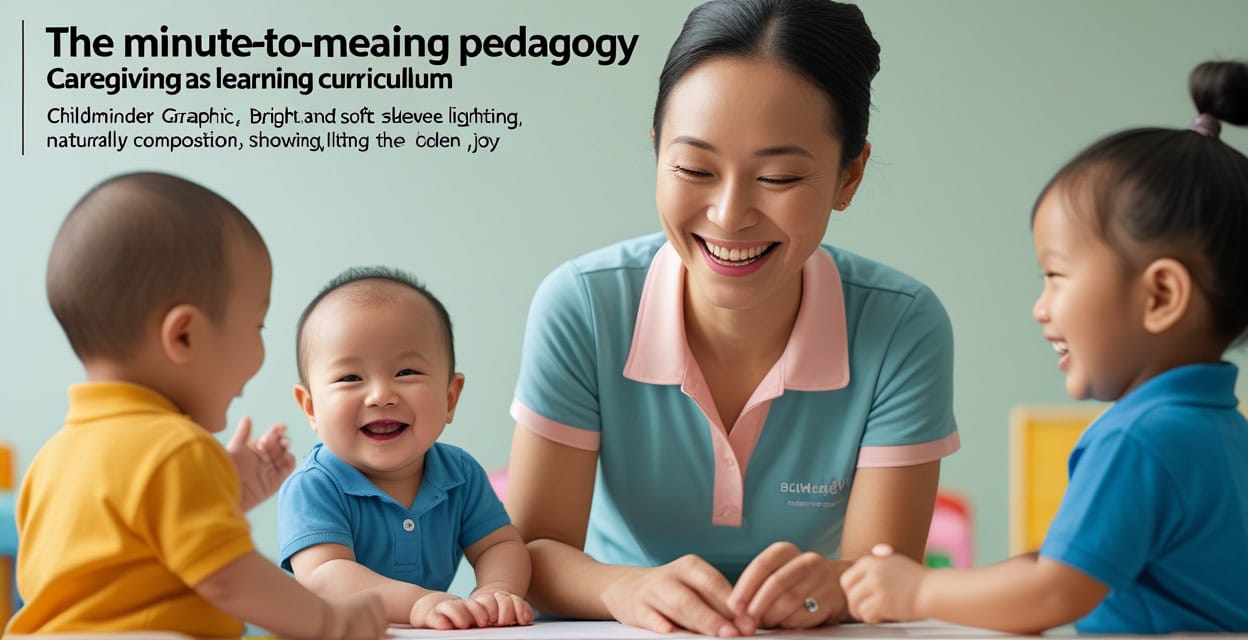

The Minute-to-Meaning Pedagogy: Caregiving as Curriculum

The Minute-to-Meaning Pedagogy: Caregiving as Curriculum

At the heart of EduNanny’s practice is the belief that “what we do during caregiving is what infants learn about the world.” This is not merely philosophy; it is a daily practice that translates into precise routines, responsive interactions, and measurable growth. Here is how parents and caregivers can translate this pedagogy into real-life outcomes.

  • Attentive routines as first lessons: Treat diaper changes, feeds, and transitions as one-to-one learning moments. Narrate what you are doing, offer small choices (e.g., “Would you like to hold the spoon or the plate?”), pause for cues, and invite participation. This builds trust and early language foundation.
  • Play arcs, not playlists: Design short, child-led explorations that cultivate attention, curiosity, and problem-solving. For example, create light “arcs” such as a simple stacking activity that transitions to rolling a ball and then to reaching for a peekaboo moment.
  • Language that lands: Speak with clear, real words, at a comfortable pace, face-to-face. Use descriptive language about actions and feelings, and respect home languages to support identity and cognitive development.
  • Observation over interruption: Observe for cues, name emotions, and scaffold learning before directing. This approach strengthens autonomy and confidence, helping infants become authors of their own beginnings.
  • Practical home integration: Parents can reinforce the pedagogy by maintaining consistent routines at home—predictable bedtimes, ritual “hello/goodbye” moments, and shared storytelling that mirrors on-site practices.

In a 1:3 ratio, these micro-moments become predictable pathways to robust development. Small circles of care enable infants to become confident, capable explorers of their world.


Five Lines of Safety: People, Place, Practice, Proof, Partnership

Five Lines of Safety: People, Place, Practice, Proof, Partnership

Safety is not a poster on a wall; it is a living culture. EduNanny builds safety through five deliberate lines that families can scrutinize, practice, and sustain together.

  • People: Carefully selected, trained, and supervised childminders who understand infant cues, safe sleep, choking prevention, and positive touch. Ongoing coaching ensures skills evolve with practice.
  • Place: Modern layouts with sightlines, separate sleep and play zones, quiet corners for rest, and controlled light, sound, and temperature. Space is designed to support calm exploration and safe movement.
  • Practice: Health checks at arrival, safe sleep protocols, accurate feeding logs, allergy and anaphylaxis plans, medication records, and emergency drills to ensure preparedness without chaos.
  • Proof: Secure CCTV for oversight, digital attendance and handover records, and daily notes that reflect actual events to the minute. Transparency is a pillar of trust.
  • Partnership: Families are safety co-authors. Regular routines, medical needs, immunization schedules, and any at-home changes are communicated and aligned with care plans.

Safety means a sense of calm that supports curiosity. When caregivers and families share calm, infants thrive and learning accelerates.
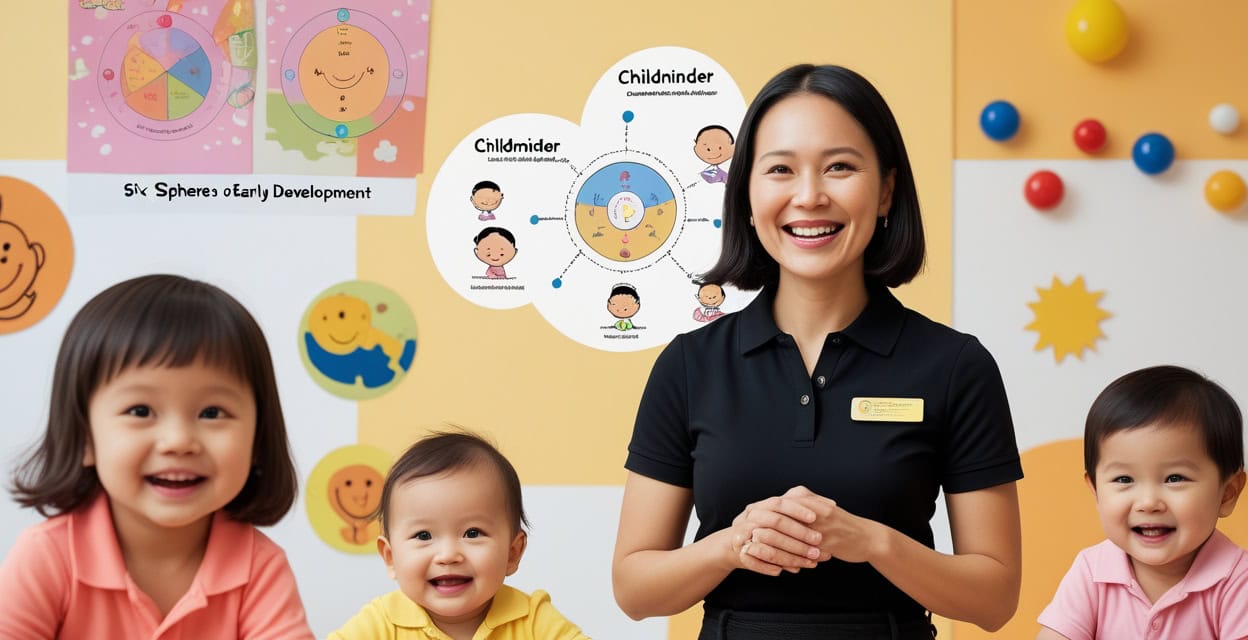

The Six Spheres of Early Development: A Whole-Baby Map

The Six Spheres of Early Development: A Whole-Baby Map

The first thousand days are rapid, dynamic, and interconnected. EduNanny plans around six spheres to support whole-baby development with individualized attention within a communal rhythm.

  • Attachment and regulation: Warm, predictable responses to cues; soothing followed by teaching self-regulation in gentle steps.
  • Sensorimotor mastery: Encouragement of tummy time, safe exploration of grasping and reaching, rolling, and early mobility with clear boundaries that protect safety.
  • Language and social communication: Turn-taking “conversations,” songs with gestures, naming feelings, and reading facial expressions as a foundation for literacy.
  • Cognitive discovery: Cause-and-effect play, basic problem-solving, early categorization, and age-appropriate challenges without rushing.
  • Health and rest: Nutrition aligned with family choices, paced feeding, protected nap windows, clean environments, and diligent hygiene practices.
  • Identity and belonging: Respect for temperament, family culture, and individual rhythms; smooth, patient transitions that honor attachment.

EduNanny’s small-group design ensures each baby receives an individualized day within a communal rhythm—personalized care that remains social and developmentally appropriate.
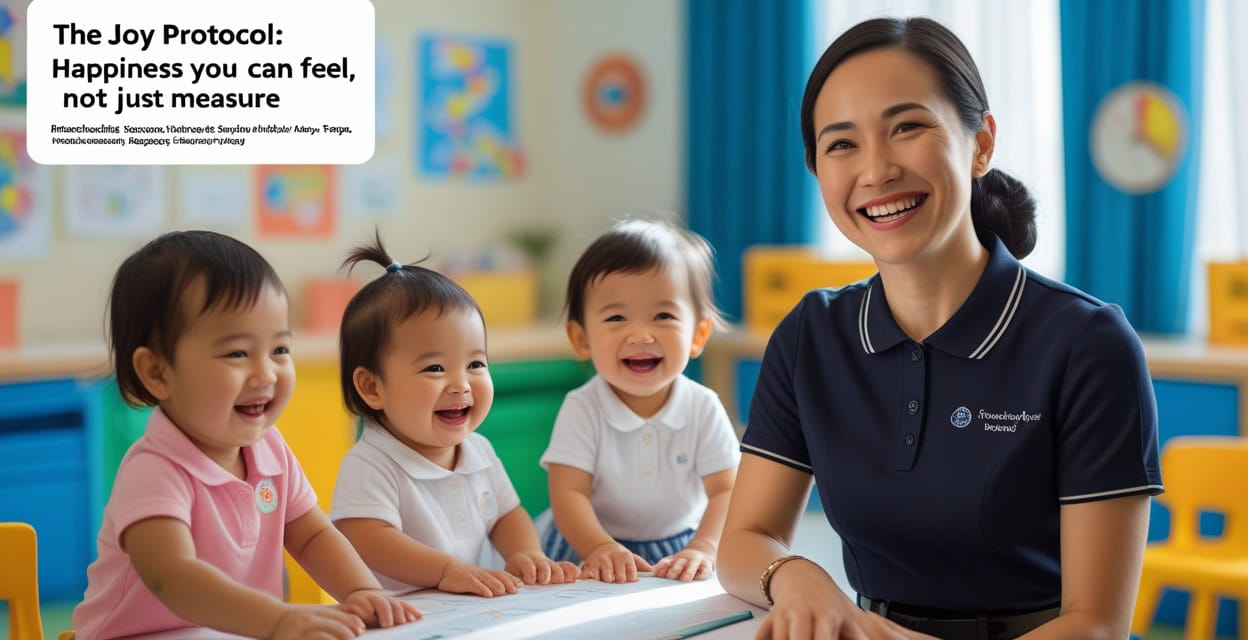

The Joy Protocol: Happiness You Can Feel, Not Just Measure

The Joy Protocol: Happiness You Can Feel, Not Just Measure

Joy in infancy is a real signal of healthy development. It arises when the environment is emotionally legible and paced with kindness. Practical strategies for fostering joy include:

  • Predictable greetings and unhurried goodbyes: Create rituals that signal security and continuity.
  • Daily outdoor light and movement: Where possible, outdoor time acts as a mood-setter and supports physical well-being.
  • Sensory invitations rather than overstimulation: Use natural textures, warm colors, and gentle human voices to invite exploration.
  • Music and rhyme with gentle repetition: Familiar songs build security and language rhythms.
  • Quiet spaces for rest: Provide calm corners that permit respite from sensory load, allowing nervous systems to regulate.

Joy is tracked through engagement, recovery from distress, and ongoing secure attachment, but the core aim is to cultivate environments where delight appears naturally when a trusted adult is present.
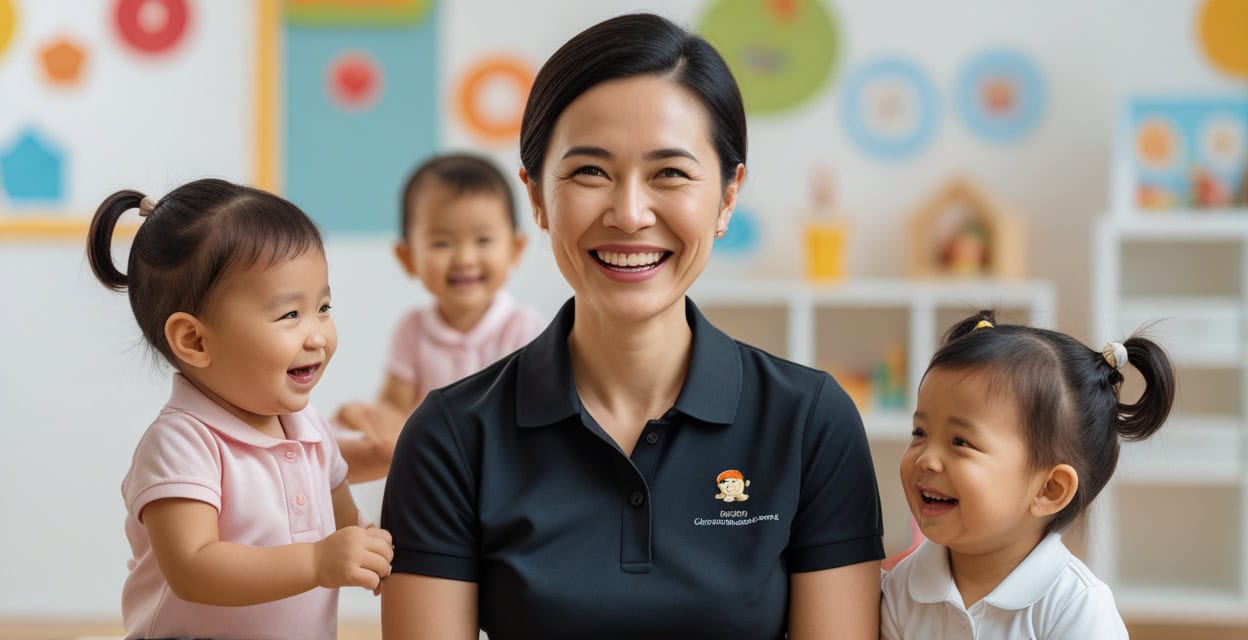

The Childminder’s Civic Craft: A Profession of Public Importance

The Childminder’s Civic Craft: A Profession of Public Importance

Childminding is a public trust and must be treated as a professional pathway with real dignity and support. EduNanny emphasizes:

  • A professional pathway: Structured training, mentoring, observation cycles, and leadership routes to retain skilled caregivers who thrive in the role.
  • A shared code of dignity: Respect for infants as persons, parents as partners, and colleagues as co-educators.
  • Community embeddedness: Near-home options reduce commute stress and improve continuity of care for families and caregivers alike.
  • Public-minded employment: A national-standard platform that uplifts care work and creates meaningful, purpose-driven jobs.

When caregivers are valued, the care they provide becomes a national asset—an investment in the city’s future.

How EduNanny Makes Childminding Work for Singapore

How EduNanny Makes Childminding Work for Singapore

EduNanny translates its philosophy into practical, scalable solutions that meet families where they are. Key advantages include:

  • Choice without compromise: Centre-based and home-based options share the same safety culture, pedagogy, and supervision, with digital support that complements on-site care.
  • A schedule that matches real life: Monday to Friday, 7am to 7pm, islandwide, delivering reliability as a form of love.
  • Transparent partnership: CCTV and daily logs offer clear windows into the day, complemented by constructive feedback for growth.
  • Designed for infants, not retrofitted: Modern layouts protect sleep, invite exploration, and reduce overstimulation.
  • Affordability and access: From $33/day with CDA/Baby Bonus, ensuring excellence is accessible, not exclusive.
  • A public-minded platform: Participation in the ECDA Childminding Pilot aligns everyday nurturing with national goals—expanding access, raising standards, and elevating the profession.

Practical guidance for parents navigating EduNanny choices includes: how to evaluate a centre or home setting, what questions to ask during visits, how to observe caregiver–child interactions, and how to align routines with your family values and medical needs.


A Small Story: Morning in Ang Mo Kio

A Small Story: Morning in Ang Mo Kio

Picture a morning in Ang Mo Kio. Three infants arrive at a home-based EduNanny setting: one starting solids, one learning to crawl, and one confident on two feet. The childminder greets each by name at the door, kneels to their height, and narrates the plan: “We will sing hello, wash hands, then read under the window light.” The youngest gazes, the crawler smiles, and the walker approaches a board book. The day unfolds in careful crescendos: a brief stretch of exploratory play, a calm bottle, a nap in a quiet room. Midday, a parent checks the secure feed—calm, untheatrical care in motion. By pickup, the crawler has attempted three new moves, the infant tasted pumpkin without fuss, and the toddler practiced waiting for a turn. No fireworks—just the slow architecture of a steady childhood. This is how confidence is built: exacting care, held lightly.


Why Childminding Matters: Who, What, When, Where, How

Why Childminding Matters: Who, What, When, Where, How

To understand the impact of EduNanny, consider five questions that guide families and policymakers alike:

  • Who: Infants, families, and the professionals who stand with them. Every baby deserves precise, affectionate care; every parent deserves trust; every childminder deserves respect and support.
  • What: A reliable mesh of centre-based and home-based infant care that is safe, developmental, joyful, and transparent—delivered in small circles with a 1:3 ratio.
  • When: The first thousand days when brain architecture is malleable and relationships write the operating system for life.
  • Where: In community and home premises across Singapore—near homes, workplaces, and grandparents’ houses—where families live and love.
  • How: Through attunement, rigorous safety, a clear pedagogy, modern environments, and partnerships among parents, professionals, and public institutions. Through affordability and access that turn excellence into the norm.
The Philosophy and Purpose of EduNanny

The Philosophy and Purpose of EduNanny

EduNanny holds three commitments that guide every practice and policy decision:

  • Attachment before acceleration: Secure bonds are the engine of later learning and resilience.
  • Precision with warmth: Procedures matter, but tenderness matters more. The balance is deliberate and ongoing.
  • Community as curriculum: When care is near and consistent, belonging becomes the foundational lesson of citizenship.

EduNanny exists so that parents can work with confidence, babies can explore without fear, and childminders can take pride in a craft that shapes the soul of a city. The platform demonstrates that excellence can be affordable, safety can be transparent, and innovation can be human.

Engaging with EduNanny: How to Get Involved

Engaging with EduNanny: How to Get Involved

If this vision resonates, here are practical steps for parents, caregivers, and partners:

  • Explore options: Compare centre-based and home-based EduNanny settings, noting proximity, hours, and layout considerations that affect sleep and play.
  • Ask the right questions: Inquire about caregiver training, safety protocols, daily reporting, transition plans, and how home cultures are respected in care plans.
  • Prepare for enrollment: Gather medical history, immunization schedules, and any dietary requirements. Clarify eligibility for CDA/Baby Bonus and document submission timelines.
  • Partner in routine design: Work with caregivers to align daily rhythms with family routines, ensuring consistency between home and EduNanny settings.
  • Observe and reflect: Use daily logs and CCTV updates as touchpoints for conversation, feedback, and shared growth goals.
Conclusion: The Future of Infant Care as a Public Good

Conclusion: The Future of Infant Care as a Public Good

The future will remember how we greeted our youngest today. EduNanny welcomes infants with safety, science, song, and the slow, steady confidence that the best beginnings are simple: a trusted adult, a clear space, and time to grow. If you seek care, partnership, and a path toward a formative early years experience for your child, step closer to EduNanny. Visit EduNanny.com or Childminding.EduNanny.com to explore centre-based and home-based options, schedule visits, and learn how to enroll with CDA/Baby Bonus support. The journey to a joyful childhood begins with every careful choice you make today.

Thank you.


SEO Keywords

SEO Keywords

[#EduNanny, #SingaporeChildcare, #InfantDevelopment, #EarlyYears, #ChildmindingPilot]


edunanny-c1f1e8bb-89f5-4c16-aa38-e157ff814f4e
September 19, 2025

EduNanny by BUTLER A Civic Movement for Safe Joyful Early Years in Singapore

Introduction: EduNanny by BUTLER — A Civic Movement for Singapore’s Early Years

Introduction: EduNanny by BUTLER — A Civic Movement for Singapore’s Early Years

Good evening, Singapore. EduNanny by BUTLER stands as a science-led, heart-forward childminding movement built for our neighborhoods, work rhythms, and hopes for the next generation. This article distills the spirit of that vision into practical, actionable guidance for parents, caregivers, employers, and communities. Here you will find concrete steps, real-world examples, and EduNanny insight to help you navigate early childhood care with confidence and care.


The EduNanny Model: Five Pillars in Practice

The EduNanny Model: Five Pillars in Practice

1. The science of being seen: attunement as daily practice

What it looks like in daily life: a key-person model where one primary caregiver leads a three-infant circle, supported by a second adult as needed. This arrangement creates familiarity, reduces stress, and fosters secure attachment. Practical steps for families:

  • Ask providers about their key-person policy and backup coverage. For new infants, request a gradual transition period where the child grows comfortable with the primary caregiver.
  • Seek daily communication that mirrors the child’s cues: a short note on feeding times, nap patterns, and notable moments. If a caregiver uses a specific name or cue, know how it translates into changes in routine.
  • Monitor continuity: request a weekly overview of who was with your child and how introductions to new caregivers are managed to preserve predictability.

EduNanny insight: continuity reduces cortisol spikes in infants and supports language development. In practice, expect consistent greetings, unhurried feeds, responsive naps, and language that mirrors your child’s cues.

2. Safety that learns: from checklists to culture

Safety becomes a culture, not a file. Beyond checklists, EduNanny embeds safety into daily rituals: pre-shift safety huddles, mid-shift environmental checks, end-of-day reviews, and transparent incident reporting. Practical steps for families:

  • Inquire about safety drills (fire, haze, lockdown) and request a calendar of drills with after-action notes.
  • Ask how CCTV is used: what is recorded, who can access footage, and how privacy is protected.
  • Review entry controls, infant sleep protocols, allergen management, and food safety procedures. Bring a written list of your child’s allergies and dietary needs to the first week’s briefing.

EduNanny insight: safety-by-design paired with transparent communication builds trust and reduces anxiety for parents while supporting calm, focused care.

3. Learning without rush: a developmental pedagogy for the first years

The first years are a conversation, not a race. EduNanny’s curriculum is observation-rich, language-forward, and paced to each infant’s development. Practical guidance for parents:

  • Provide a home environment that complements the curriculum: natural materials for sensorial play, safe exploration spaces, and language-rich interactions in multiple languages.
  • In daily routines, incorporate ZPD-friendly interactions: nurses of turn-taking, modeling, and inviting infants to initiate actions with caregiver support.
  • Track milestones through simple logs: say, “Your child showed jaw-dropping coordination during reach-and-grasp today,” and share with caregivers to align activities.

EduNanny insight: a balanced rhythm of floor-based movement, language exposure, and unforced play fosters curiosity without overwhelm. Bilingual or multilingual settings enhance cognitive flexibility when introduced gradually and meaningfully.

4. Joy as a birthright: wellbeing, culture, and family partnership

Joy is designed into the day through rituals, routines, and inclusive culture. Practical actions for families:

  • Establish daily rituals: a “Good morning” song, calm handovers, outdoor time when weather permits, and a closing moment of gratitude.
  • Involve families in routines: invite cultural songs, stories, and festivals into care spaces to reflect Singapore’s diversity.
  • Support caregiver wellbeing: regular reflective practice, access to mental-wellness resources, and predictable rosters to reduce burnout.

EduNanny insight: well-supported caregivers deliver steadier, warmer interactions, which translates to more secure attachments and resilient children.

5. The craft and purpose of childminding: a profession with a future

Childminding as skilled work requires pathways, mentorship, and leadership opportunities. Practical actions for families and communities:

  • Ask providers about training, accreditation journeys, and mentorship programs; look for ongoing professional development opportunities for caregivers.
  • Encourage local employers to sponsor caregiver training or partner with ECDA pilots to expand access to quality care near workplaces.
  • Prioritize centers with clear pathways from entry-level roles to supervisory or mentor roles, signaling a durable, dignified profession.

EduNanny insight: elevating the profession strengthens outcomes for children and sustains vibrant communities with accessible, high-quality care.


How the EduNanny Model Meets Singapore: Practical Options for Families

How the EduNanny Model Meets Singapore: Practical Options for Families

  • Home-based childminding: vetted community premises with modern layouts and secure sightlines, delivering ECDA-aligned care within neighborhood contexts. Practical guidance: examine the premises for safety features, ease of access for parents, and clarity on daily routines.
  • Center-based childminding: purpose-built hubs with high ventilation, movement-friendly design, and calm aesthetics near transport hubs or workplaces. Practical guidance: assess air quality measures, noise levels, and availability of outdoor or movement spaces.
  • Distance accompaniment: real-time guidance, tele-consults, and home learning kits that keep care responsive when formal care isn’t available. Practical guidance: verify responsiveness, scheduling options, and the relevance of learning kits to your child’s stage.

All options offer Monday to Friday, 7am to 7pm coverage islandwide, with transparent pricing from $33/day and CDA/Baby Bonus payments where applicable. EduNanny’s inclusion in ECDA pilots and National Social Initiatives align public purpose with daily practice.


What Parents Can Do Now: Practical Steps for Early Care Planning

What Parents Can Do Now: Practical Steps for Early Care Planning

  • Assess your family rhythms: map work hours, commute times, and preferred caregiving styles (in-home, center-based, or hybrid) to identify ideal options.
  • Define non-negotiables: 1:3 ratio, key-person continuity, language exposure, and safety standards. Create a short checklist to compare providers.
  • Visit with a plan: request a guided tour, observe caregiver interactions with infants, and note whether nap spaces feel calm and private.
  • Ask about communication: what daily notes look like, how often you’ll receive updates, and how parent–caregiver meetings are scheduled.
  • Understand costs and subsidies: confirm eligibility for CDA/Baby Bonus, and ask for a written breakdown of fees, deposits, and any additional charges.
  • Plan for transition: arrange a gradual introduction, with backup caregivers during the first weeks, to support attachment and reduce stress for your child.

Safety and Development: Key Guidelines for Early Care

Safety and Development: Key Guidelines for Early Care

  • Safe sleep: firm mattresses, supine position, separate sleep areas, and age-appropriate sleep routines.
  • Nutrition and hygiene: clean feeding environments, allergen management, and clear handwashing routines for caregivers and visitors.
  • Environment design: clear sightlines, age-appropriate furniture, and movement-friendly layouts that support gross motor development.
  • Language and play: daily talk, storytelling, and bilingual exposure in meaningful, contextual ways to boost vocabulary and cognitive growth.
  • Transition management: predictable routines around arrival, handover, and departure to minimize disruption and support security.

Partnerships with Parents and Employers: Building a Shared Ecosystem

Partnerships with Parents and Employers: Building a Shared Ecosystem

EduNanny emphasizes collaboration with families and workplaces to fortify care quality. Practical ideas:

  • Workplace care partnerships: offer access to on-site or nearby EduNanny hubs, with flexible scheduling to accommodate shifts and commutes.
  • Employee support programs: subsidized care, employer-provided learning kits, and regular family circles to align home and care settings.
  • Community engagement: host neighborhood open houses, family circles, and cultural exchange days to celebrate diversity and shared values.

A Closing Invitation: Join the EduNanny Movement

A Closing Invitation: Join the EduNanny Movement

If you believe that a secure baby becomes a confident child, and a confident child becomes a generous adult, this work is ours to share. EduNanny by BUTLER invites you to partner with us—in your block, in your workplace, in your family story. Explore center-based, home-based, and distance options near you, learn about our 1:3 ratio, safety-by-design protocols, modern layouts, secure innovation CCTV, and how to leverage CDA/Baby Bonus to make quality care accessible.

Visit EduNanny.com or Childminding.EduNanny.com to discover options near you, understand our rhythm and routines, and learn how to participate in Singapore’s public-care initiatives. Together, we greet our youngest each morning with calm, safety, and joy, and return them each evening with gratitude and pride.


Conclusion

Conclusion

EduNanny by BUTLER presents a holistic framework for early childhood care that blends science, culture, and community. The five pillars—attunement, safety, thoughtful learning, joy, and professional craft—offer tangible paths for families to partner with caregivers in nurturing secure, curious, and resilient children. By embracing home-based, center-based, and distance options, families can design care that fits their lives while upholding high standards of safety, transparency, and development. If you are a parent, caregiver, employer, or community leader, consider taking the next steps: identify your needs, ask the right questions, and engage with EduNanny’s tools and networks to build a dependable, nationwide standard of care for Singapore’s youngest citizens.

SEO Keywords: [#early-childhood-care, #infant-attunement, #safety-by-design, #developmental-pedagogy, #Singapore-childminding]


edunanny-a24e3c68-cd32-415a-8e35-4706ed192f04
September 19, 2025

Attunement as Infrastructure The EduNanny Living Blueprint for Safe Joyful Infancy in Singapore

Introduction: The First Thousand Days as Architecture for Trust, Language, Movement, and Memory

Introduction: The First Thousand Days as Architecture for Trust, Language, Movement, and Memory

Thank you for gathering to consider something both intimate and nation‑shaping: the first thousand days of a child’s life. In those thousand days, the architecture of trust, language, movement, and memory is poured and set. EduNanny was created to steward that architecture with a courageously simple premise: when we center attunement, safety, and joy, tiny moments become mighty futures.

EduNanny is introduced here as both service and stance—a Singapore‑born, science‑led, heart‑first childminding movement offering near‑home care in centre‑based, home‑based, and distance‑supported formats. We carry a 1:3 infant ratio because human beings learn best in small circles where every cue is noticed. We design spaces with modern layouts for clear sightlines and calm acoustics, and we build transparency through privacy‑safeguarded CCTV. We strive to make quality affordable—from $33 per day—with fees payable via CDA/Baby Bonus. This work unfolds under the ECDA Childminding Pilot (2024–2027) as a national social initiative by EduNanny by BUTLER that advances a Maximum Employment Mandate: dignified roles, robust training, and meaningful careers for childminders who carry our youngest forward.

Tonight I want to share four ideas at the heart of our pedagogy and practice—each a bridge between the wisdom of Montessori and Pikler, the science of Bowlby and Vygotsky, and the everyday realities of Singaporean families.


The 1:3 Advantage—Attunement as Daily Architecture

The 1:3 Advantage—Attunement as Daily Architecture

Infants don’t “use” curriculum; they invite us into one. They offer a look, a coo, a reach—each a neurological “serve.” In our small 1:3 pods, we train childminders to return that serve with timely, warm, developmentally tuned responses. This is Bowlby’s secure base made practical.

  • Observe before we act. A baby’s hand opens: we name it, mirror it, and offer an object they can grasp. That tiny exchange builds motor planning, vocabulary, and trust.
  • Allow time and floor space for free movement. Pikler‑inspired practice invites safe exploration without rushing milestones.
  • Scaffold like Vygotsky. Provide just enough support to keep the child at the sweet edge of discovery—never overwhelmed, never under‑challenged.
  • Preserve Montessori’s respect for environment. Prepare the space, follow the child, and offer real objects, natural materials, and dignified choice appropriate to age and stage.
  • Translate theory into reflexes. A 1:3 ratio turns principles into everyday practice, delivering a steady, joyful, and secure atmosphere for learning.

Practical, actionable steps for Parents and Caregivers

  • Implement a daily 5–10 minute attunement routine: name cues, mirror expressions, and respond with a simple object that supports exploration.
  • Design a home learning corner with real, inviting materials—natural textiles, wooden objects, and containers at the child’s reach.
  • Use floor time as a daily habit: set a simple safe area, introduce a movement toy (e.g., low‑weight rattle, textured cloth), and observe the child’s attempts before joining.
  • Integrate language development during routine tasks—naming actions, describing textures, and narrating discoveries during play.

Safety as a Habit, Not a Promise

Safety as a Habit, Not a Promise

Promising safety is not enough; safety must be woven into daily routine. We embed safety in rituals that may seem routine but yield profound outcomes over time:

  • Two‑person handover and name‑to‑face checks at every transition, reinforcing attention and memory formation for caregivers and parents.
  • Safe sleep, every time. Firm mattress, supine position, empty cot, visible breathing checks, and documented intervals to monitor well‑being.
  • Feeding protocols rooted in dignity and health. Never prop bottles; responsive, paced feeding; meticulous hygiene.
  • Daily environment sweeps. Floor‑level hazard checks, sanitization cycles, and ventilation standards tuned to Singapore’s climate.
  • “Eyes‑up” room design. Modern layouts create clean sightlines and reduce visual clutter; quiet zones for rest and active zones for exploration.
  • Smart transparency with privacy safeguards. Innovation CCTV provides parent insight and professional accountability within strict data protections.
  • Redundancy in care. Centre‑based reliability, home‑based intimacy, and distance support during travel, illness, or transition days.

Practical safety routines you can implement today

  • Establish a predictable handover ritual with names and a brief, shared health check between caregiver and parent.
  • Adopt a consistent sleep window and a calming pre‑naptime routine that signals rest with a gentle cue (voice, soft touch, and dim lighting).
  • Create a simple hygiene protocol for feeding and cleaning that involves both caregivers and parents in the process.
  • Practice a weekly “scan” of each room for hazards and create a quick checklist for transitions between activities and spaces.

Joy Literacy—Teaching Happiness Without Noise

Joy Literacy—Teaching Happiness Without Noise

Happiness in infancy isn’t entertainment; it’s coherence. When routines are reliable and responses are warm, the nervous system learns it can rest and then play. We call this Joy Literacy, and it rests on four daily practices:

  • Serve‑and‑return loops. Name baby cues, expand their sounds, and respond with warmth. This builds social trust and early language networks.
  • Sensory rightness. Favor natural light, soft textures, fresh air, human voices, and music at a conversational volume. Avoid overstimulation and flashy, distracting toys.
  • Movement as meaning. Encourage safe floor time, tummy time, reaching, rolling, cruising, and crawling; offer simple treasure baskets with varied weights, textures, and sounds.
  • Rest with respect. Predictable sleep windows, unhurried settling, and waking rituals anchored in connection—eye contact, gentle voice, and naming the day.

Joy literacy in practice

  • Track “joy signals” that matter: sustained eye gaze, relaxed posture, social smiles, shared giggles, and a healthy rhythm of curiosity followed by calm.
  • Design a daily rhythm that balances active exploration with purposeful rest to support neural regulation and curiosity.
  • Use joyful routines to scaffold early communication: pause for response, narrate outcomes, and celebrate tiny discoveries together.

The Civic Purpose of Childminding

The Civic Purpose of Childminding

Great childminding is not a private luxury; it is public infrastructure. When families can access excellent near‑home care, commute stress decreases, family cohesion strengthens, and workforce participation expands. When childminders are trained, fairly employed, and visibly respected, we rebalance a care economy that has too often depended on invisible labor.

EduNanny’s Maximum Employment Mandate invests in Singaporeans as early‑years professionals—traineeships, coaching, and a culture of dignity. The work is not “helping out with babies.” It is a living curriculum of attachment, movement, language, nutrition, and rest that yields secure, curious children and saner family life. That is nation‑building, one gentle routine at a time.

What this looks like for families—Monday to Friday, 7 to 7

  • Clear communication. Daily notes on feeding, sleep, nappies, and highlights; fortnightly developmental snapshots aligned with first‑year milestones; immediate alerts for health concerns.
  • True partnership. Parent‑nanny alignment meetings; distance consults for home routines; responsive support through transitions—return to work, weaning, nap changes.
  • Access and affordability. Centre‑based and home‑based options islandwide; fees from $33 per day; CDA/Baby Bonus‑payable.
  • Transparency and trust. Innovation CCTV for visibility into practice; open‑door culture for scheduled drop‑ins; consistent, named carers in small pods.

EduNanny Promise: Excellence, Accessibility, and Trust

EduNanny Promise: Excellence, Accessibility, and Trust

  • Excellence in practice. Ultra‑low 1:3 ratio, trained childminders, modern environments designed for calm, clarity, and safety.
  • Modalities that match life. Centre‑based, home‑based, and distance‑supported care, islandwide Singapore, Monday–Friday, 7am–7pm.
  • Safety engineered into the day. Rigorous protocols, safe sleep, hygiene systems, and innovation CCTV with strong privacy safeguards.
  • Affordability and access. From $33/day; CDA/Baby Bonus‑payable; national social initiative under ECDA’s Childminding Pilot.
  • A people‑first mission. EduNanny by BUTLER with a Maximum Employment Mandate—training, dignified work, and uplifting communities through early‑years careers.

Five Civic Questions of Childminding—Who, What, When, Where, and How

Five Civic Questions of Childminding—Who, What, When, Where, and How

Who does childminding serve?

  • The infant first—brains triple in size in the early years and require reliable, loving, skilled humans to wire security and curiosity into every circuit.
  • The family—parents who deserve rest, flexibility, and partners who listen without judgment.
  • The nation—future capacity shaped by how seriously we treat the quiet work of care.

What is childminding at its best?

  • A living curriculum of attachment, language, movement, nutrition, and rest executed in small, stable circles.
  • Professional practice—observed, documented, coached, and continually improved.
  • An ethical stance: every child is worthy of time, attention, and joy.

When does it matter most?

  • In every micro‑moment of the first thousand days—during feeds, diaper changes, naps, and small discoveries that are neurologically extraordinary in their simplicity.

Where should it happen?

  • Near home, in community, and in well‑designed rooms where safety, sunlight, and serenity are part of the lesson plan—across neighbourhoods, islandwide.

How does EduNanny make it real?

  • 1:3 ratio that translates ideals into daily practice.
  • Trained, respected childminders supported to do their best work.
  • Safety systems that are habits, not headlines.
  • Transparent partnerships, modern layouts, and CCTV innovation with privacy protections.
  • Accessible pricing and CDA/Baby Bonus pathways so excellence is not elite.

Conclusion

Conclusion

The EduNanny philosophy is built on steady respect for childhood, a commitment to quiet excellence, and a purposeful approach to reducing noise while increasing noticing. Our aim is to empower parents to breathe easier, to empower infants to bond deeply, and to strengthen Singapore’s future through a robust, joyful, and scientifically informed early‑years ecosystem. If this vision resonates, we invite you to walk the space, meet the people, and see the work in action. Explore EduNanny at EduNanny.com and Childminding.EduNanny.com. Inquire about centre‑based and home‑based availability near your block, and about fees payable via CDA/Baby Bonus. If you’re drawn to the profession, ask about our training pathway and the Maximum Employment Mandate—we are hiring, coaching, and elevating the art and science of care.

The first thousand days are not a race; they are a relationship. EduNanny exists to protect that relationship with excellence, safety, and joy—so that Singapore’s smallest citizens grow up secure enough to be curious, and curious enough to be brave.

Learn more at EduNanny.com and Childminding.EduNanny.com. If this vision resonates, consider joining us in the work of respectful, science‑led, heart‑first care.

Keywords for discovery: EduNanny Singapore, early childhood care, childminding, 1:3 ratio, Joy Literacy, safety in childminding, Montessori Pikler Bowlby Vygotsky, near‑home care, early‑years education, CDA, Baby Bonus, ECDA Pilot

[#EduNannySingapore, #earlychildhoodcare, #childminding, #JoyLiteracy, #1to3ratio]

edunanny-a3d7966a-b7bb-4329-bd5d-77f5ced19297
September 19, 2025

Launchpad for a Nation The EduNanny Near Home Pod Movement and the Attunement of Singapore First Thousand Days

Introduction: The Launchpad of a Human Story

Introduction: The Launchpad of a Human Story

Ladies and gentlemen, parents and grandparents, policymakers and neighbours, caregivers and future caregivers—good evening. The first thousand days of life are not a holding pattern; they are the launchpad of a human story. When we attune to an infant, we do more than soothe; we encode safety, curiosity, and the expectation that the world will answer back. EduNanny was born to make that promise ordinary—available near home, reliably, affordably, and at a standard worthy of every child in Singapore. This article expands on the EduNanny vision with actionable guidance for parents, caregivers, and communities alike.


EduNanny: Vision, Ethic, and Model

EduNanny: Vision, Ethic, and Model

EduNanny is not merely a service; it is a public ethic made practical. We blend world-class developmental science with Singaporean pragmatism—an ultra-low 1:3 infant ratio; centre-based and home-based childminding options; Monday to Friday, 7am to 7pm; islandwide availability within community and home premises; modern, child-scaled layouts; and transparent, innovation-forward CCTV designed for trust and partnership with families. Under the ECDA Childminding Pilot (December 2024 to December 2027), and as part of a National Social Initiative with a Maximum Employment Mandate, we are building an ecosystem that protects infants, strengthens families, and dignifies care work. Fees are designed to be accessible—affordable from $33/day—and payable by CDA/Baby Bonus. This is care that fits life, and it lives close to you.

What follows is a deeper dive into practical, actionable practices you can adopt or assess as a parent, caregiver, or policy ally. Each section includes concrete steps, routines, and examples drawn from EduNanny’s approach.


The Attunement Arc: A Micro-Pod Ecology for Secure Attachment

The Attunement Arc: A Micro-Pod Ecology for Secure Attachment

Attachment is the architecture of resilience. In EduNanny’s 1:3 micro-pods, the science translates into daily routines that anchor secure base moments for infants.

  • Serve and Return as a measurable rhythm: When a baby coos, the educator leans in; when a gaze shifts, the caregiver follows, labels, and awaits the infant’s response. Practically, aim for at least three turn-taking cycles per minute during peak engagement times (play, feeding, or caregiving routines).
  • Observe before intervening: Protect uninterrupted, self-initiated movement. Provide low platforms, varied textures, and safe exploration zones. Encourage infants to initiate movement—crawl, reach, roll—then support with timely, gentle interventions to advance skills.
  • Culture and language as scaffolds: Soft soundscapes, bilingual labeling, and culturally resonant songs help embed language and social cognition. Rotate materials to reflect Singapore’s linguistic tapestry without overstimulation.
  • Strategies you can echo at home: Mirror infant-led interactions, narrate actions during play, and name emotions during transitions. Create predictable cues (e.g., a gentle clap before a transition) to reduce stress and increase confidence.

Safety Without Shadow: Technology That Illuminates, Care That Holds

Safety Without Shadow: Technology That Illuminates, Care That Holds

Safety is a system, not a checklist. EduNanny designs environments and protocols that reduce risk while preserving the child’s sense of autonomy and exploration.

  • Environment and sleep safety: Open sightlines, quiet acoustics, ventilated sleep zones, and standardized sleep checks integrated into daily routines help infants rest securely and consistently.
  • Transparent technology as a partner tool: CCTV is for transparency and collaboration, not surveillance. Access controls respect privacy; daily briefings and incident clarity keep families informed without eroding trust.
  • Hygiene as a choreography: Colour-coded zones for clean-to-dirty flows, explicit hand hygiene rituals, and durable materials chosen for gentle infant contact—implemented as routines, not add-ons.
  • What you can do as a parent: Ask for a written safety protocol, request a sample daily briefing, and inquire how incidents are tracked and addressed. Observe how caregivers discuss safety with children and families in real-time.

Learning in the Little: A Living Pedagogy for the First Thousand Days

Learning in the Little: A Living Pedagogy for the First Thousand Days

Infants learn through living, not through a rigid schedule. EduNanny presents a living weave of sensory, motor, language, and social-emotional experiences that your child experiences day by day.

  • Sensorimotor mastery: Nested baskets, soft rings, floor mirrors, and varied textures promote reaching, grasping, rolling, crawling, and early locomotion—each activity linked to brain integration and confidence in movement.
  • Attention and curiosity: Treasure baskets, cause-and-effect objects, and rotating provocations invite infants to test, repeat, and discover patterns—supporting executive function and problem-solving from infancy.
  • Language and connection: Warm narration, labeling feelings, actions, and people, plus small-group songs nurture expressive and receptive language. Practice at home: narrate routines, label emotions, and pause to listen to the infant’s response.
  • Emotional literacy and co-regulation: Treat every transition as a teachable moment. Preview changes, narrate what will happen, and use gentle touch and eye contact to regulate states—self-regulation starts with co-regulation.
  • Practical at-home integration: Create a “story of the day” during dinner, share a photo or trace a small symbol that marks milestones (first steps, new words), and align your home routines with the infant’s learning pace.

Care That Works for Work: Family Partnership as Daily Practice

Care That Works for Work: Family Partnership as Daily Practice

Parents carry dual callings—work and parenting. EduNanny is designed to sustain both through practical, partnership-based care.

  • Predictable hours: Monday to Friday, 7am–7pm, with clear expectations around late shifts or emergencies. Build a contingency plan with your educator for rare flexibility needs.
  • Near-home options: Centre-based and home-based care reduce transfers and travel time, easing transitions for infants and parents alike. Plan a near-home trial period to compare routines, staff gentleness, and handover warmth.
  • Affordability and dignity: From $33/day with CDA/Baby Bonus acceptance, explore subsidy or grant options early. Use the daily update to monitor progress and to justify ongoing investment in the child’s development.
  • Daily feedback loops: Expect micro-milestones, eating and sleep patterns, and “three moments that mattered.” Use these updates to anchor conversations with your child and to tailor routines at home.
  • Practical home-school collaboration: Create a shared digital notebook or weekly family meeting to discuss goals, concerns, and celebrations. Invite your educator to your home for a live demo of routines that strengthen routines at both places.

The Purpose of Childminders: From “Keeper” to Co-Regulator, Culture-Bearer, and Community Builder

The Purpose of Childminders: From “Keeper” to Co-Regulator, Culture-Bearer, and Community Builder

A professional childminder is a civic asset. EduNanny recruits for heart, trains for skill, and advances for excellence.

  • The Maximum Employment Mandate: A national initiative that grows skilled care workers, with pathways for training, coaching, and mastery. Families benefit from professional, stable relationships with caregivers who understand child development deeply.
  • Continuous learning and mentorship: Educators engage in reflective practice, daily observation, and iterative improvement, grounded in Montessori respect, Vygotskian scaffolding, and trauma-informed attunement.
  • Community integration: Near-home operations turn neighbours into a safety net. Children grow within a network of trust, not a single caregiver, reinforcing social cohesion and shared responsibility.
  • What to look for in a childminder: Ask about training, ongoing mentorship, and a system for parent feedback. Look for documented routines that demonstrate attunement and a track record of safety and warmth.

What Parents Can Expect on Day One

What Parents Can Expect on Day One

A clear picture helps families feel confident from the start. Here is what EduNanny aims to deliver on day one and beyond:

  • 1:3 infant ratio: Attentive, age-appropriate care with a focus on individual needs and responsive interaction.
  • Modern, light-filled spaces: Environments designed for visibility, movement, and calm, with zones for play, rest, and meals.
  • Innovation-forward CCTV with privacy safeguards: Transparent monitoring that respects consent and data privacy, paired with open dialogue about practice.
  • Two pathways near your doorstep: Choose Centre-Based or Home-Based Childminding according to what feels like “us.”
  • Islandwide operations, weekday schedule: 7am–7pm across Singapore, with consistent routines across locations.
  • Affordability and subsidies: From $33/day; CDA/Baby Bonus accepted; guidance on subsidies provided at enrollment.
  • A living partnership: Daily updates, educator responsiveness, and collaborative goal-setting that keeps you connected to your child’s day.

How EduNanny Makes Infant Care and Childminding Great in Singapore

How EduNanny Makes Infant Care and Childminding Great in Singapore

We translate theory into practice with a focus on equity, safety, and joy. Here are concrete pillars and actions you can implement or assess:

  • Excellence and Quality: Fidelity to developmental science with warmth. Practice tip: request a monthly practice highlight where educators demonstrate a milestone and explain the reasoning behind the activity.
  • Access and Convenience: Near-home locations, predictable hours, and simplified handovers reduce parental stress. Home-near checks: visit a pod at different times of day to experience transitions first-hand.
  • Equity and Affordability: Transparent pricing and subsidies make high-quality care accessible. Action: prepare a budget and subsidy plan early; track changes in family income and adjust care options accordingly.
  • Safety by Design: A culture of safety anchored by clear protocols and transparent technology. Practice: review a real-world incident scenario with your caregiver and role-play how you would communicate concerns.
  • Civic Purpose: The ECDA pilot and employment mandate elevate care as essential infrastructure. Action: engage with local policymakers by sharing family experiences and suggesting enhancements in care networks.

The EduNanny Signature—A Few Quiet, Powerful Practices

The EduNanny Signature—A Few Quiet, Powerful Practices

These practices are designed to feel like quiet constants in a child’s day—rituals that build predictability, peace, and belonging.

  • The Two-Minute Arrival: A simple handover ritual—eye level, gentle naming, and a short continuity moment. Example: “Good morning, Kai. Mum’s coat is on the hook; we’ll read your favorite book after you hang your hat.”
  • The Uninterrupted Meal: Unhurried, seated, relational meals. Narrate textures, hunger cues, and preferences. Practically, introduce one new texture per week and document acceptance or reluctance to guide future meals.
  • The Restorative Nap: Sleep is supported, not imposed. Observe cues, protect the environment, and practice co-regulation to help infants settle. Create a consistent nap routine with dim lights, quiet routines, and a gentle lull.
  • The Three Keeps: Keep it Slow, Keep it Simple, Keep it Seen. Reduce clutter and noise; maintain clear observation points; preserve routines that provide comfort and predictability.

A Word on Technology and Trust

A Word on Technology and Trust

CCTV is an innovation, not intimacy. It makes the work visible, reduces uncertainty, and invites partnership, but it never replaces human connection. Knowing comes from dialogue, practitioners who can explain the reasoning behind practices, and parents who feel included in the day-to-day learning. EduNanny’s promise is to keep the line open and the child at the center.


A Word on Place

A Word on Place

Centre-based childminding offers the hum of a shared space—light, movement, and a widening social world. Home-based childminding provides the intimacy of a small, homelike pod with same standards and heart. Both options are designed to feel like “us” because your family’s sense of place shapes your child’s sense of safety and belonging.


Conclusion: Why Childminding Matters—And Why Now

Conclusion: Why Childminding Matters—And Why Now

Infants, parents, childminders, and neighbours form Singapore’s first community of care. Daily acts of attunement, safety, and discovery compound into character. Care happens Monday to Friday, 7am–7pm—and it echoes in every memory a child keeps. The nation’s temperament begins in miniature—within a held gaze and a gentle hand, and the creativity we prize begins in a safe place to try, fail, and try again. EduNanny braids heart and science until excellence feels like care and care feels like home. Let us build this together. Visit EduNanny.com and Childminding.EduNanny.com. Come see a pod. Meet the people. Ask the questions that matter to you. If we do our work well, your infant will feel it before you read it, and you will see it in the quiet confidence of a child who expects the world to be safe, interesting, and kind.

This is our public promise: attunement you can feel, safety you can trust, development you can see, and access you can afford. In the first thousand days, little things are not little. They are everything. And together, through EduNanny, they can be everything—for every family—across Singapore. Thank you.


Practical Tools and Checklists for Parents and Caregivers

Practical Tools and Checklists for Parents and Caregivers

Below are ready-to-use templates and checklists you can adopt or adapt to support your child’s earliest development and daily rhythm with EduNanny or any quality caregiver in Singapore.

  • Daily Attunement Checklist: Three serve-and-return interactions per hour, three opportunities to label emotions, one culture-language activity (song or story), and one moment of uninterrupted infant-led movement.
  • Home-Care Coordination Sheet: A shared document with feeding times, sleep cues, milestones, and any concerns. Include a “three matters that mattered” note for quick parent-teacher conversations.
  • Two-Minute Arrival Script for Parents: Prepare a simple, consistent greeting that your child recognizes to ease transitions (e.g., “Kai, it’s morning. We’ll read your book after you hang your hat.”).
  • Meal-Time Playful Textures Guide: Weekly textures (smooth puree, mashed, crunchy) with notes on acceptance to guide the next meal plan and avoid food aversions.
  • Nap Readiness Plan: A 3-step cue system to help caregivers recognize sleep readiness and to support a smooth transition from activity to rest.

FAQ: Common Questions from Parents

FAQ: Common Questions from Parents

  • What if my child has special needs? EduNanny’s model emphasizes individualized attunement, continuous observation, and collaboration with families and healthcare professionals to tailor activities and routines that support development.
  • How is privacy protected with CCTV? Access is controlled, logged, and limited to families and authorized staff. Clear policies govern data retention and usage, with ongoing reviews to protect child privacy.
  • Can I switch between Centre-Based and Home-Based? Yes. EduNanny provides options near home, with the same standards and support, to accommodate changing family needs.
  • What if I need to adjust hours occasionally? We support flexible arrangements within the 7am–7pm window and discuss a plan that minimizes transitions for the child.

Closing Call to Action

Closing Call to Action

Join us in writing a new chapter in early childhood care for Singapore—one that respects science, fosters community, and dignifies care work. Discover a pod near you, meet the educators, and witness how EduNanny translates attunement, safety, and development into daily life for your child. Visit EduNanny.com and Childminding.EduNanny.com to learn more, book a tour, or begin your enrollment journey today.

Note: This article reflects EduNanny’s public commitments, practices, and evidence-informed approaches to infant care and childminding in Singapore.

[#keyword1, #keyword2, #keyword3, #keyword4, #keyword5]

edunanny-5d8230a9-39de-4aff-b24f-a6c6b991d471
September 18, 2025

Quiet Moments, Bold Futures EduNanny Near Home Infant Pods Redefining Singapore First Thousand Days

Introduction: The Ordinary Moment that Shapes Tomorrow

Introduction: The Ordinary Moment that Shapes Tomorrow

Thank you for gathering to consider something both ordinary and profound: the quality of a baby’s day. In those quiet hours—feeding, napping, watching light play on a wall—brains are wiring, trust is forming, and character is taking root. EduNanny exists to make those hours safe, joyful, and deeply developmental, for every family, in every neighborhood, every weekday. This article expands on that vision with practical, actionable insights for parents, caregivers, and communities across Singapore.


Meet EduNanny: A Singapore-born Childminding Ecosystem

Meet EduNanny: A Singapore-born Childminding Ecosystem

EduNanny by BUTLER blends the best of home and center-based care into a scalable, relationship-led model. We offer attentive, small, near-home pods and modern centers staffed by trained professionals, delivering an ultra-low infant ratio of 1:3. Operating Monday to Friday, 7am–7pm islandwide, we partner with families through both community hubs and vetted home premises for convenience and continuity. Our approach is anchored in science and heart, with CCTV innovations designed for privacy and reassurance rather than surveillance. Fees are accessible through the Singapore Government’s Child Development Account (CDA) and Baby Bonus schemes, with options starting from $33 per day.


Four Core Topics that Guide Our Work

Four Core Topics that Guide Our Work

Topic 1: A Pedagogy of Attunement and Agency

  • Observe-first, respond-deeply: Each day begins with a three-minute observation of state, signals, and tempo to co-regulate the baby’s nervous system, creating a calm foundation for learning.
  • Yes-spaces over constant corrections: uncluttered, age-appropriate environments invite exploration with minimal “no’s.”
  • Serve-and-return language: narrate actions to build brain architecture for language and executive function.
  • Micro-choices that matter: offer small invitations—this toy or that song—to foster early agency and decision-making.
  • Curriculum in daily moments: diapering as a language lesson, feeding as turn-taking practice, tummy time as persistence training.

Actionable tip for parents: replicate attunement at home by spending three minutes at high-eye-contact, narrating actions during routine care, and offering two simple choices during playtime.

Topic 2: Safety by Design, Discipline, and Dignity

  • Environment: line-of-sight supervision, soft edges, breathable sleep spaces, clearly zoned play/rest areas; near-home pods reduce commute stress and support stable daily rhythms.
  • People: all caregivers hold infant CPR/AED certification, safe sleep training, hygiene and food-safety knowledge; thorough background checks and ongoing coaching safeguard practice.
  • Process: arrival health checks, feeding/sleep/diaper logs, two-person medication verification, safe-sleep audits, and regular drills; CCTV is parent-facing with privacy safeguards.
  • Culture: safety as kindness—prioritizing presence over speed and never substituting devices for human connection.

Practical takeaway: implement a simple safety routine at home, including a two-person handover during caregiver changes and a daily safety checklist for sleep, feeding, and diapering.

Topic 3: Developmental Flow in the First Thousand Days

  • Morning: sensory warm-ups, songs, and face-to-face time to sharpen social referencing.
  • Midday: consolidated nap in a dark, quiet zone with consistent checks and temperature control.
  • Afternoon: floor-based exploration, finger plays, and sound-rich storytelling to nurture phonological awareness and early motor control; outdoor time when feasible.
  • Everyday literacy: board books, picture talk in Singapore’s languages, and shared nursery rhymes to build belonging and vocabulary.
  • Documentation and partnership: brief daily reflections with photos, monthly developmental check-ins, and distance support via activity guidance when families keep baby at home.

Practical recommendation: maintain a simple development journal at home—note when your baby reaches a new milestone, so you can discuss progress at monthly check-ins with EduNanny.

Topic 4: Joy, Belonging, and the Everyday Soul of Care

  • Unhurried transitions: pace the day to the child’s rhythm to protect against cortisol spikes and support calm learning.
  • Celebrate small wins: every roll, gaze, or reach is a learning signal; use positive feedback to reinforce exploration.
  • Culture in care: incorporate lullabies across Singapore’s languages, light festivals, and family stories to strengthen identity from infancy.
  • Caregiver well-being: reflective circles, mental-health check-ins, and respectful staffing practices ensure a sustainable, attuned workforce.

Editorial note for families: create a culture of belonging at home by sharing your family rituals with EduNanny—storytime in your mother tongue and simple celebratory rituals can be mirrored in daily routines.


The Purpose and Promise of Professional Childminders

The Purpose and Promise of Professional Childminders

EduNanny childminders are educators of attachment—professionals trained to transform feeding, diapering, and play into a living curriculum. They are neighbors who knit social fabric, mentors who help parents feel less alone, and a pivotal lever in Singapore’s inclusive growth strategy. Through the Maximum Employment Mandate, we create skilled roles across estates, enabling parents—especially mothers—to participate more fully in the economy. When we professionalize childminding, we professionalize the future.


How EduNanny Works for Families

How EduNanny Works for Families

Center-Based Care

  • Modern infant layouts with supervised teams and structured community activities.
  • Transparent daily routines, with robust safety and documentation protocols.

Home-Based Care

  • Vet­ted near-home pods that deliver warmth, ultra-low ratios, and continuity.
  • Close coordination with families to preserve familiar environments without sacrificing quality.

Distance Support

  • When families keep baby home, EduNanny provides tele-support, daily activity plans, and coaching to sustain continuity of development.

A Day in the EduNanny Way

A Day in the EduNanny Way

A parent hands a baby to a calm face each morning. A brief check-in—sleep, feeds, mood—sets the tone. The caregiver observes quietly, meets the child’s gaze, and co-regulates breath to breath. A simple song signals a new activity. The baby reaches, rolls, and grins in a yes-space designed for discovery. Naptime arrives without a fight because the routine is known. Parents peek via secure CCTV for a moment of reassurance. At pickup, a five-minute handover turns data into meaning: “Today she tracked a rattle from left to right and held it with both hands. We’ll try supported sitting next week.” Small moments, compounded daily, become capability and confidence.


Why This Matters—Who, What, When, Where, How

Why This Matters—Who, What, When, Where, How

  • Who: Infants, parents, childminders, and the wider community, each contributing to a trust-filled environment.
  • What: Relationship-led childminding that turns routine into curriculum and safety into a calm state of learning.
  • When: The first thousand days—and every weekday from 7am to 7pm, when reliability matters most to families.
  • Where: Near home and in centers across Singapore, so infants grow where they live and families waste no time.
  • How: Ultra-low 1:3 ratios; trained, supervised professionals; modern layouts; privacy-preserving CCTV; observe-first pedagogy; and a blend of home-based, center-based, and distance support.
  • Why: Because resilience, empathy, language, movement, and executive function are shaped before age three, and a nation’s future rests on daily quality of care.

Our Philosophy in One Line

Our Philosophy in One Line

We slow down for babies so Singapore can move forward.


Practical Guidance for Parents: Making Great Care Real at Home

Practical Guidance for Parents: Making Great Care Real at Home

  • Establish a predictable rhythm: set regular wake times, feeds, and naps. A simple visual schedule can reduce caregiver transitions and help your baby anticipate what’s next.
  • Attach with attunement: spend three minutes of direct eye contact daily, narrate your actions, and mirror your baby’s pace to build trust and language.
  • Invite safe exploration: create unstructured play spaces with a few open-ended toys to invite problem-solving and curiosity while ensuring safety.
  • Partner in development: share daily reflections with EduNanny through the parent app, and prepare a short monthly milestone note to discuss at check-ins.
  • Culture as curriculum: incorporate family stories, songs, and languages into routines to strengthen identity and belonging from day one.

Safety, Privacy, and Data Trust: What Families Should Expect

Safety, Privacy, and Data Trust: What Families Should Expect

  • Transparent safety protocols: clear logs for feeding, sleep, and health; visible safety drills; regular safety audits.
  • Privacy-first CCTV: footage is accessible to parents via secure channels, with strict access controls and data minimization.
  • Qualified professionals: ongoing training, performance coaching, and reflective supervision to keep practice sharp and compassionate.
  • Clear accountability: two-person checks for medications, allergies, and emergency responses; open channels for feedback and escalation.

Join EduNanny: Tour, Trial, and Enrollment

Join EduNanny: Tour, Trial, and Enrollment

Explore a center, visit a home-based pod, or try a day of care to feel the difference between being watched and being understood. Our team welcomes inquiries and looks forward to partnering with families across Singapore to deliver reliable, joyful, development-affirming care.

Enrollment and information: EduNanny.com and Childminding.EduNanny.com. Learn more about our ECDA Childminding Pilot as a National Social Initiative and how the Maximum Employment Mandate supports caregivers and communities.


Conclusion

Conclusion

EduNanny offers a professional, relationship-led approach to infant care that is safe, joyful, and deeply developmental. By combining near-home pods, center-based environments, and distance support, we provide continuity of care that respects family rhythms while elevating child development. The first thousand days are a window of opportunity—one that we aim to protect, nurture, and amplify through science, culture, and community. If you’re a parent seeking trustworthy, compassionate care that feels like an extension of home, we invite you to join us, tour our spaces, and experience the EduNanny difference.

[#keyword1, #keyword2, #keyword3, #keyword4, #keyword5]

edunanny-599c2ff1-fc2d-4be6-9020-a235f6e0f26e
September 18, 2025

Shaping the Future of Singapore in the Cradle, The EduNanny Near Home Pod Movement for Safe Joyful Infant Care

EduNanny: A Singapore-born Commitment to Humane Infant Care

EduNanny: A Singapore-born Commitment to Humane Infant Care

Thank you for joining us in a conversation about a simple, profound idea: the future of a nation begins at the cradle. How we care for our youngest citizens—day by ordinary day—sets the tone for everything that follows. As an EduNanny infant care advisor, rooted in science and lived family life, we draw from Montessori, Piaget, Vygotsky, Froebel, Malaguzzi, Bowlby, Pikler, Spock, and Erikson. Their insights converge on a single truth: infancy is not a waiting room for life; it is life in full, rich formation. This article expands on that vision, translating evidence into everyday practice for families, caregivers, and policymakers in Singapore.


Introduction to EduNanny

Introduction to EduNanny

EduNanny is a Singapore-born commitment to make infant care humane, safe, joyful, and close to home. It is center-based and home-based, meeting families in their neighborhoods from Monday to Friday, 7am to 7pm, islandwide. It pairs modern layouts with trusted people. It puts a camera where trust meets accountability. It keeps a 1:3 ratio so a caregiver can truly see a child. It is accessible—fees payable with CDA/Baby Bonus, with options starting from $33/day—because care should not be a luxury. And it is part of a national effort: EduNanny by BUTLER is participating in the ECDA Childminding Pilot (December 2024 to December 2027), a social initiative designed to lift children, families, and dignified employment together. We call it maximum employment with maximum care: work for adults that dignifies the most important work on earth, and care for infants that dignifies their first thousand days.

EduNanny is not just a service; it is a philosophy of daily care that sees attachment as civic scaffolding, environment as a gentle teacher, routine as rhythm, hygiene as respect, play as thinking, and family partnership as the glue. We do this near home because proximity reduces stress, increases consistency, and weaves babies into the fabric of their own community. Below are the core anchors that guide our practice and help families translate research into practical, joyful routines.


Four anchors of our practice

Four anchors of our practice

1) A pedagogy of attuned independence

  • Care moments as learning moments: A diaper change becomes a two-way conversation; feeding is paced, responsive, and face-to-face; sleep is predictable, soothing, and safe. Training caregivers to narrate each action helps infants anticipate and participate.
  • Movement with respect: Inspired by Pikler, infants enjoy ample floor time on safe mats to roll, pivot, crawl, and explore postural control—developing inner confidence without pressure to reach milestones early.
  • Environment as invitation: Montessori-inspired order meets Malaguzzi’s aesthetics: low shelves, natural textures, photos at baby’s eye level, soft lighting, quiet zones, and open pathways. The room whispers, “You belong here; you can try.”
  • Subtle scaffolding in relationship: Following Vygotsky, development accelerates in collaboration. Caregivers narrate, imitate, and extend infant initiatives—coo for coo, pause for pause—so language and social understanding bloom.

2) Safety as a living culture, not a checklist

  • Safe sleep as sacred practice: Firm mattress, fitted sheet, back-lying, nothing in the crib, and continuous observation. Routine is steady, unglamorous, and uncompromising.
  • Hygiene as respect in action: Ritual hand hygiene, bottle safety timing, surfaces and toys cycling through clean–dry–back-to-play. Sick-child protocols protect the whole pod.
  • Continuous, purposeful supervision: A 1:3 ratio is more than a metric—it is the difference between noticing and missing early cues that prevent bigger upset.
  • Technology that builds trust: Secure CCTV supports training, quality assurance, and parent assurance. Visibility drives accountability and confidence.
  • Prepared adults, prepared environments: Regular infant CPR, choking response, safe sleep training, incident reporting, and respectful de-escalation are practiced and refreshed.

3) Development and happiness as daily practice

  • Sensorimotor richness: Textures, scents, rattles, mirrors, and gentle movement turn every encounter into a micro-experiment that wires the brain for learning.
  • Language in stereo: Multilingual exposure, Mother Tongue songs, rhymes, and caregiver narration foster phonological awareness long before fluent speech.
  • Outdoors as curriculum: When safe, pram strolls and balcony breezes expose infants to moving leaves, distant voices, and sunlight—early, authentic learning experiences.
  • Minimal screens, maximal human faces: Babies thrive on faces and social contingencies; we coach parents to minimize screens and maximize real-world interactions.
  • Observation with purpose: We maintain a living portrait of each child—sleep, feeds, diapering, moods, milestones—and share timely, simple updates with parents.

4) The vocation of childminding

  • A clear professional pathway: From trainee to lead caregiver to mentor, with structured coaching and reflective practice to grow as professionals.
  • Work that works for families: Islandwide placements, home-based and center-based roles, and stable hours create dependable livelihoods.
  • Community of practice: Weekly huddles, case reflections, and peer observation keep the craft alive and continuously improving.

What families actually receive

What families actually receive

  • Safe, modern spaces in centers and approved homes designed for infant movement and calm, with “yes” zones that reduce the need for “no.”
  • A true 1:3 infant ratio that enables caregivers to see and respond to each child’s cues.
  • Coverage Monday to Friday, 7am–7pm, islandwide across Singapore’s heartlands and hubs.
  • A choice of center-based, home-based childminding, and distance-supported parent coaching.
  • Affordable plans from $33/day, with fees payable by CDA/Baby Bonus.
  • Innovative CCTV for quality assurance and peace of mind.
  • A living curriculum woven into daily routines, so every feed, nap, cuddle, and crawl advances attachment and development.
  • Enrollment through EduNanny.com and Childminding.EduNanny.com, with islandwide availability as the ECDA Childminding Pilot scales.

Five living themes that shape our day

Five living themes that shape our day

  • Predictability with flexibility: Consistent rhythms that adapt to each baby’s cues and family routines.
  • Co-regulation before self-regulation: Calm adults cultivate calm infants; executive function begins with secure relationships.
  • Touch as teaching: Gentle, narrated care builds body awareness, trust, and social connection.
  • Playful inquiry: Curiosity is invited, materials are real and simple, and learners own their discoveries.
  • Family as partner: Home rhythms and care rhythms align to reduce friction and amplify progress.

How EduNanny fits Singapore

How EduNanny fits Singapore

Singapore’s pace is fast, precise, and caring by design. Families blend ambition with devotion, and EduNanny aims to honor both. We bring care near home to cut commute stress and shorten daily transitions, standardize quality so every neighborhood can expect the same safety, warmth, and learning, and invite grandparents, nannies, and parents into a shared language of care. We uplift caregivers as respected professionals and build a dependable backbone for working parents and a soft landing for every infant.


The practicalities you asked about

The practicalities you asked about

Who

Families with infants in the first thousand days, caregivers seeking meaningful work, communities seeking child-safe neighborhoods, and policymakers building future-ready infrastructure.

What

High-quality infant childminding offered in small, ultra-low-ratio pods in homes and centers, guided by a research-based care-and-learning framework.

When

Monday through Friday, 7am–7pm; year-round; flexible starts; transitional settling-in plans for new families.

Where

Islandwide Singapore—near homes, near transport, near the flow of family life.

How

Through trained childminders, safe environments, a 1:3 ratio, secure CCTV, rigorous hygiene and sleep protocols, and a living curriculum embedded in daily routines; affordable access via CDA/Baby Bonus; enrollment at EduNanny.com and Childminding.EduNanny.com.


Why childminding matters now

Why childminding matters now

  • Attachment is not a private luxury—it’s foundational public good.
  • Maternal and paternal employment are economic engines that need dependable care to run smoothly.
  • Infant brains develop rapidly in the first 1,000 days, but this requires slow, unhurried, relational attention.
  • A greeting at 7:12am can influence how a child meets the world at 17, 27, and 47—consistency today creates resilience tomorrow.
  • A small ratio today translates into a big capacity for empathy and learning in the future.

Our philosophy and purpose

Our philosophy and purpose

We exist so that every infant in Singapore can grow on three pillars: safety, relationship, and joyful discovery. We exist so that parents can work with a quiet heart. We exist so that caregiving is honored as skilled, noble labor. We exist so that neighborhoods are places where strollers, not just statistics, set the pace. We exist to prove that excellence can be affordable, that quality can be consistent, and that national pilots can feel neighborly and human.


Let me close with a simple image

Let me close with a simple image

Imagine a morning. A caregiver kneels to infant height, meets a gaze, and says the baby’s name slowly. A tiny hand opens, unclenches. The room is calm. The light is kind. The routine is known. The ratio is low enough that this moment is not rushed. In those few seconds, trust is built, curiosity is invited, and the day begins with dignity. Multiply that moment by every infant, every pod, every neighborhood, every weekday across Singapore. That is EduNanny’s promise.


To the parents: come and see

To the parents: come and see

Visit a home pod. Walk a center. Read the daily notes. Ask questions. Bring your baby’s rhythm and your family’s hopes; we will match them with care. To caregivers: your craft is a calling. Step into a profession that values you as much as you value children. To our partners and policymakers: keep asking for evidence and empathy; we will bring both. Together, we can make infant care the quiet strength of this nation.


Enrollment and information

Enrollment and information

Enrollment and information are at EduNanny.com and Childminding.EduNanny.com. EduNanny by BUTLER is honored to serve under the ECDA Childminding Pilot from December 2024 to December 2027. We are islandwide, Monday to Friday, 7am to 7pm, with a 1:3 ratio, innovative CCTV, modern layouts, home-based and center-based options, distance-supported coaching, affordability from $33/day, and fees payable by CDA/Baby Bonus.


The work is simple and profound

The work is simple and profound

The work is simple and profound: greet well, care well, rest well, play well, go home well. When we do, babies flourish, parents exhale, communities knit, and a city grows kinder and wiser—one unhurried morning at a time.


Conclusion

Conclusion

EduNanny invites families, caregivers, and policymakers to partner in a framework where safety, relationships, and joyful discovery are woven into daily routines. By maintaining small, intimate pods, upholding a 1:3 ratio, and centering families in every decision, we turn the science of early childhood into practical, humane care. If you seek care that respects dignity, honors professional caregiving, and brings communities closer to home, explore EduNanny’s offerings and join us in shaping a kinder, wiser Singapore—one unhurried morning at a time.

Enrollment and information are at EduNanny.com and Childminding.EduNanny.com. EduNanny by BUTLER is honored to serve under the ECDA Childminding Pilot from December 2024 to December 2027. We are islandwide, Monday to Friday, 7am to 7pm, with a 1:3 ratio, innovative CCTV, modern layouts, home-based and center-based options, distance-supported coaching, affordability from $33/day, and fees payable by CDA/Baby Bonus.

Let us greet well, care well, rest well, play well, and go home well—together, building a future where every infant’s first thousand days are cherished, secure, and filled with joyful discovery.

SEO keywords: [#keyword1, #keyword2, #keyword3, #keyword4, #keyword5]


edunanny-dba77460-7cab-484b-82a3-0c8efad18d52
September 18, 2025

Cradling a Nation: A Public Infrastructure for Singapore’s First Thousand Days Rooted in Attunement Safety and Joy

Introduction: A Clear, Evidence-Rich Vision for Singapore’s First Thousand Days

Introduction: A Clear, Evidence-Rich Vision for Singapore’s First Thousand Days

In the intimate work of caring for newborns and infants, there lies a public mandate: when the cradle is held with knowledge and heart, a nation stands taller. EduNanny Singapore presents a science-grounded, caregiver-led movement designed for the first thousand days—an era where attachment is formed, language is born, and trust becomes the lifelong compass. This article offers an in-depth, practical expansion of that vision, with actionable guidance for families, caregivers, and policymakers alike.


EduNanny’s Promise: A Thousand Days, A Public Good with Private Tenderness

EduNanny’s Promise: A Thousand Days, A Public Good with Private Tenderness

EduNanny is a Singapore-born program that integrates world-class infant pedagogy into neighbourhood homes and thoughtfully designed micro-centres. It operates Monday through Friday, 7am to 7pm islandwide, with an ultra-low 1:3 infant ratio. By blending centre-based and home-based care with distance check-ins, EduNanny makes high-quality care accessible, affordable, and scalable. The initiative is grounded in national partnerships—ECDA’s Childminding Pilot, with support through the CDA/Baby Bonus—and aligned to a Maximum Employment Mandate that dignifies both care work and childhood itself.

Topic 1: A Pedagogy of Attunement—Where Science Meets the Everyday

Core principle: daily caregiving is teaching when guided by attachment science and child development theory. Practical steps include:

  • Slow, relational routines: treat diapering as dialogue, feeding as partnership, and rest as a protected rhythm. Schedule is predictable but flexible to the child’s cues.
  • Reading subtle cues: caregivers interpret gaze, breath, posture, and affect to offer just-right challenges (the Zone of Proximal Development in action).
  • Language as a relationship: narrate actions, label emotions, and encourage a rich language environment—home languages welcome to support identity and cognitive growth.
  • Attunement zones: maintain eye-level interactions, use gentle touch, and foster autonomy through safe choices (e.g., selecting which toy to explore).
  • 1:3 ratio as a practice standard: ensures depth of engagement, safety, and responsive learning, not just a slogan.

Topic 2: Safety as a Designed System, Not a Wish

Safety is built into every layer of EduNanny—from architecture to ongoing practice. Key elements include:

  • Environment design: modern layouts with clear sightlines, calm colours, and resources that invite exploration.
  • Transparency and privacy: approved CCTV in centres and careful handling of data with consent in home premises.
  • Proactive risk management: daily hazard sweeps, sleep safety checks, and allergy protocols that are standard, not optional.
  • Health training: all caregivers are trained in infant first aid and safe sleep practices; naps occur on firm surfaces, face-up, with vigilant supervision.
  • Structured handovers: accountable logs and digital check-ins ensure continuity of care across shifts.

Topic 3: Development as a Living Curriculum—From Wonder to Will

Infancy is foundational learning. A developmentally aligned micro-curriculum supports neural growth, language, and early social skills:

  • Sensorimotor mastery: intentional opportunities for reaching, grasping, transferring, and exploratory actions that promote neural network development.
  • Language as relationship: rich, responsive talk; songs; encouragement of home languages; and sign support to reduce early-frustration.
  • Motor freedom through floor time: prioritise safe, supervised exploration; avoid over-reliance on screens; facilitate movement rather than direct every action.
  • Social learning in tiny circles: small-group interactions that model turn-taking, empathy, and comforting rituals.
  • Continuous observation: caregivers document progress through journals and rubrics that translate scientific insight into practical daily practice.

Topic 4: Happiness and the Ethics of Care

Joy is a developmental nutrient, not an afterthought. Three conditions cultivate happiness in infancy:

  • Predictability: reliable routines create security and calm.
  • Respect: permission-based handling, patient transitions, and a slow pace that honours infant autonomy.
  • Mastery: celebrate effort and curiosity; prioritise intrinsic motivation over entertainment and excessive stimulation.

Caregivers are coached to nurture infant agency, regulate the nervous system, and maintain a calm, dignified atmosphere. Less flashy stimulation; more presence, rhythm, and relational depth.

Topic 5: The Purpose and Profession of Childminding

Childminders are early-life professionals who bridge home and world with skill, science, and heart. EduNanny elevates this profession through:

  • Structured coaching and observation cycles that convert practice into measurable growth.
  • Standards-aligned practice rubrics for consistent quality across homes and centres.
  • Peer learning, reflective journals, and ongoing professional development.
  • Transparent parent communication with live updates that reflect growth as a narrative, not a checklist.
  • Pathways linked to a Maximum Employment Mandate, ensuring quality care translates into meaningful careers.

EduNanny: How It Works for Families and for Singapore

EduNanny: How It Works for Families and for Singapore

EduNanny operates through multiple, complementary modalities designed to fit diverse family needs while maintaining high standards of care and development.

Centre-Based Childminding

  • Architected for visibility, calm, and flow; spaces designed for safe, independent exploration and guided interactions.
  • Hygiene-forward protocols and clear routines that align with infant safety standards.

Home-Based Childminding

  • Approved home premises that meet the same safety and pedagogy standards as centres.
  • Small, familiar settings that reduce stress for infants while enabling close caregiver-child relationships.

Distance Support

  • Tele-coaching and digital check-ins to provide continuity of care when in-person sessions are not possible.
  • Digital tools are used to share daily updates, progress notes, and goals with families in real-time.

Islandwide Availability and Scheduling

  • Monday–Friday, 7am–7pm, across neighbourhoods to ensure near-home access and convenience.
  • Predictable scheduling that supports working families and reduces caregiving friction.

Ultra-Low Ratio and Accessibility

  • 1:3 infant ratio to prioritise attunement, safety, and responsive learning in every setting.
  • Affordability from $33/day with CDA/Baby Bonus support to ease financial barriers to high-quality care.

Assurance-by-Design

  • Innovation CCTV and robust onboarding processes to maintain transparency and safety.
  • Health and hygiene protocols, sleep-safety audits, and allergy-aware kitchen practices baked into daily routines.

A Public Purpose

  • EduNanny by BUTLER operates under the ECDA Childminding Pilot as a national social initiative—driving early-life infrastructure while expanding meaningful employment opportunities.

Our Five Daily Vows: A Practical Ethic for Every Day

Our Five Daily Vows: A Practical Ethic for Every Day

To every child, EduNanny commits five daily vows that shape routines and relationships:

  • 1) I will see you before I teach you—attunement first.
  • 2) I will keep you safe with my presence and with our systems.
  • 3) I will make room for your discovery—movement, language, and wonder.
  • 4) I will honour your rhythms—feeding, sleeping, playing with dignity.
  • 5) I will walk with your family—clear communication, shared goals, open doors.

A Word on Trust: Proof Through Transparent Practice

A Word on Trust: Proof Through Transparent Practice

Parents deserve more than promises. EduNanny pairs relational transparency with operational clarity. Families will know who is with their child, what training they have, what the child experienced today, and what the team is working on next. Development is read as a story—yours, ours, and your child’s—rather than a checklist, creating a narrative of growth that families can own and celebrate.


A Civic Invitation: Care as Public Infrastructure

A Civic Invitation: Care as Public Infrastructure

Infant care is not a private puzzle but a shared promise. When childminding becomes a respected, well-trained, and well-supported profession, family well-being improves, workforce participation increases, and the resilience of our youngest citizens strengthens. Treating the cradle as foundational infrastructure is not merely policy; it is daily practice that shapes long-term national prosperity.


Closing: Who, What, When, Where, How—and Why It Matters

Closing: Who, What, When, Where, How—and Why It Matters

Who: Singapore’s infants, their families, and a rising community of professional childminders.

What: Attuned, safe, joyful, and developmentally rich childminding at a 1:3 ratio—home-based, centre-based, and distance-supported.

When: Monday through Friday, 7am–7pm, during the precious first thousand days when trust, language, and secure attachment are formed.

Where: Islandwide—near home, in community and home premises designed for clarity, calm, and care.

How: Through a science-backed, heart-led model; innovation CCTV and modern layouts; rigorous training; clear parent partnerships; affordability from $33/day with CDA/Baby Bonus; and alignment with the ECDA Childminding Pilot as a national social initiative with a Maximum Employment Mandate.

Why: Because a nation that cradles well grows well. A baby held in competence and love becomes a child who trusts, a teen who explores, and an adult who contributes. Every gentle, knowledgeable touch in the first thousand days is policy made personal—and a future made possible.


Practical Guidance for Parents: Bringing EduNanny Principles Home

Practical Guidance for Parents: Bringing EduNanny Principles Home

Choosing a Care Model That Fits Your Family

  • Assess whether your family needs centre-based, home-based, or hybrid care. Consider your commute, your infant’s temperament, and the times you work.
  • Ask about caregiver training and ongoing coaching. Look for explicit rubrics and documentation that show progress over time, not just daily counts.
  • Inquire about safety systems: sleep environments, food safety, allergy protocols, and daily hazard checks. Demand transparent reporting and routine audits.

Preparing for Your Infant’s EduNanny Experience

  • Share your child’s routines, cues, and preferred soothing strategies. Write a simple one-page guide for caregivers (bedtime song, favourite comfort item, and a smoke-free environment).
  • Set up a home-language plan that allows your child to hear and respond in their primary language, with support for bilingual development where appropriate.
  • Agree on a communication rhythm: daily notes, weekly summaries, and monthly developmental conversations to track progress and set goals.

What to Observe: Quality Indicators in Practice

  • Caregiver responsiveness: do staff notice subtle cues and respond promptly with calm, meaningful interactions?
  • Attunement in routine: are diapering, feeding, and rest integrated with talk, eye contact, and gentle touch?
  • Environment cues: are spaces designed for safe exploration, with materials rotated to maintain interest?
  • Safety culture: are there daily logs, hazard checks, food safety measures, and clear nap procedures?
  • Family partnership: is there openness to feedback, clear updates, and collaborative goal-setting?

Partnering with EduNanny: A Practical Plan

  • Attend orientation sessions to understand the pedagogy and safety protocols before your child starts.
  • Establish a trial period with defined milestones (e.g., weight of self-feeding, first words, or new motor milestones) and plan for a family-teacher conference after the first four weeks.
  • Maintain open channels: use the distance-support tools when needed, but also schedule in-person visits when possible to observe routines and ask questions.

Policy, Practice, and Community: The Bigger Impact

Policy, Practice, and Community: The Bigger Impact

EduNanny is positioned to demonstrate how high-quality infant care can scale responsibly within a national framework. By integrating the ECDA Childminding Pilot and a Maximum Employment Mandate, the model supports workforce participation, gender equality in family life, and resilient early development outcomes. This isn’t merely care—it’s a structured system of support that strengthens families and communities across Singapore.


Join the Movement: How to Engage with EduNanny

Join the Movement: How to Engage with EduNanny

Interested families, caregivers, and policymakers are invited to experience the EduNanny model in action. Visit the EduNanny and Childminding EduNanny sites to observe a morning circle, a quiet nap, a curious crawl, a first sign, and a shared smile. See how excellence feels when it is small, near, and yours. Your involvement helps redefine what it means to cradle a nation’s future.


Conclusion

Conclusion

In the first thousand days, careful attention to attachment, language, safety, and joyful learning lays the groundwork for a lifetime of growth. EduNanny offers a scalable, evidence-informed approach that treats infant care as a public good with private tenderness—centered near home, grounded in science, and oriented toward the dignity of every child and the dignity of every caregiver. By embracing these principles, families lift one another, communities strengthen, and Singapore advances as a nation that protects, values, and enables its youngest citizens to thrive. Join us in making the cradle the strongest foundation for a brighter future.

[#EduNanny, #SingaporeChildminding, #First1000Days, #EarlyChildhoodEducation, #InfantCareSingapore]

edunanny-7439b6c6-3b38-41a9-8c1a-1afd8b86d184
September 18, 2025

EduNanny Singapore, A Civic Movement in Infant Care Attunement at the Cradle and the City

EduNanny Singapore: A Civic Movement in Infant Care

EduNanny Singapore: A Civic Movement in Infant Care

Good evening, friends, parents, caregivers, and partners in the future of Singapore. Thank you for gathering here where the smallest handshakes can shape our largest hopes. This article expands the vision behind EduNanny—a movement in infant care and childminding, born of science, shaped by community, and designed for the everyday realities of Singaporean families. Read on for practical, actionable guidance you can use today as a parent, caregiver, or policymaker.


What is EduNanny? The Vision in Practice

What is EduNanny? The Vision in Practice

EduNanny is more than a brand; it is a practical framework for elevating early care near where families live and work. It blends excellence, affordability, and a pedagogy of attunement to ensure every baby is seen, heard, and known. The model operates through Centre-Based and Home-Based Childminding, with distance-based parent connection and guidance. As a participant in the ECDA Childminding Pilot, EduNanny aligns with a National Social Initiative and a Maximum Employment Mandate. Key operational truths include:

  • Centre-Based and Home-Based Childminding across islandwide Singapore, with a predictable Monday–Friday, 7am–7pm rhythm.
  • Ultra-low 1:3 infant ratio for richer attention, safer supervision, and deeper attunement.
  • Transparency through innovation-grade CCTV for training, supervision, and accountability.
  • Affordability from $33/day, with fees payable via CDA/Baby Bonus proudly supporting families.
  • Near-home care that reduces commutes, strengthens routines, and supports workforce participation.

Practical takeaways for families and practitioners: your care should fit your life, not the other way around. EduNanny demonstrates how rigorous safety and development can coexist with accessibility and dignity.


The Pedagogy of Attunement: Turning Cues into Curriculum

The Pedagogy of Attunement: Turning Cues into Curriculum

The first thousand days offer the most honest syllabus a child can provide. EduNanny translates micro-signals into meaningful, everyday learning. We draw from respected theories—Montessori, Piaget, Vygotsky, Bowlby, and Pikler—to inform a responsive practice that respects the child’s pace.

Listening Before Leading

  • Observe feeding, changing, and resting routines as windows into a child’s state and needs.
  • Practice “pause and respond”: when a cue arises, pause to interpret before action, and narrate your choices to the child when appropriate.
  • Practical example: during a bottle feed, slow the pace, maintain gentle eye contact, and narrate “I’m lifting you up so you can see my face” to support social referencing.

Time Made Visible

  • Adopt predictable cycles—eat, relate, move, rest, explore—to create a comforting metronome for infants.
  • Use simple routines that balance structure with flexible responsiveness, allowing natural variation in each child’s day.
  • Practical example: a standard morning sequence (diaper change, feed, floor play, quiet cuddle) provides security and stimulates curiosity.

Turning Everyday Moments into Inquiry

  • Equipment and environments act as learning partners: a spoon becomes a grip lesson; a mirror supports self-recognition and early language.
  • Caregivers are researchers: pose gentle questions, observe responses, and adapt activities to the child’s interests.
  • Practical example: a small mirror during tummy time invites baby to track reflections, fostering joint attention and early social cognition.

Safety as a Design Language: Layers, Not Lines

Safety as a Design Language: Layers, Not Lines

Safety at EduNanny is an architecture—environment, protocols, and culture woven together. It is designed, practiced, and refined through daily routines and ongoing training.

Environment

  • Modern layouts with clear sightlines and soft zones reduce noise and risk while inviting exploration.
  • Sleep surfaces follow best-practice safe sleep guidelines; clutter-free floors support confident mobility and reduce tripping hazards.
  • Practical tips: designate a quiet corner for calm-down time, maintain low-height storage for easy access to age-appropriate toys, and rotate materials to sustain interest without clutter.

Ratios and Roles

  • The 1:3 ratio is a pledge: caregivers can notice subtle cues, provide timely comfort, and prevent overstimulation or under-stimulation.
  • Staggered teams and consistent caregivers build trust and continuity, essential for healthy attachment.
  • Practical tip: use a simple daily handover checklist so any caregiver stepping in is up to speed on feeding cues, sleep schedule, and notable changes in mood or routine.

Transparent Systems

  • Innovation-grade CCTV supports training, supervision, and safety by design, with an emphasis on privacy-respecting practices.
  • Data-informed practice: periodic reviews of incidents and safe-sleep adherence help refine routines and training content.
  • Practical tip: share monthly safety reflections with families, including outcomes of emergency drills and updates to policies.

Drills and Culture

  • Regular, calm, rehearsed safety checks—feeding safety, temperature hygiene, and emergency readiness—are practiced, not improvised.
  • A culture of pause and recheck is encouraged: anyone can say, “Pause. Let’s recheck,” and be thanked for it.
  • Practical tip: run quarterly tabletop emergency scenarios with caregivers and a representative from each family so responses are familiar and confident.

The Five Rivers of Development: Flow, Not Flashcards

The Five Rivers of Development: Flow, Not Flashcards

Development is a holistic flow of interdependent domains. EduNanny centers on five rivers that nourish each other: attachment, movement, language, cognition, and self-regulation.

Attachment

  • Secure bonds unlock curiosity and resilience. Regular caregiver returns reduce distress and increase exploration.
  • Practical example: consistent arrival rituals (hi, hug, and a simple hello-ahead cue) help infants feel safe when caregiver transitions occur.

Movement

  • Floor time and safe, unconfined movement support physical development and cognitive mapping.
  • Practical tip: incorporate short, child-led movement sessions into the day with simple mats, mirrors, and soft blocks to encourage gross motor exploration.

Language

  • Describe, narrate, wait, and respond. The “look—sound—reply” loop sets foundations for literacy and social communication.
  • Practical example: label actions during play (“I see you stacking blocks—one, two, three. Awesome!”) to build vocabulary and turn-taking.

Cognition

  • Cause-and-effect play and problem-solving activities strengthen executive function without pressure.
  • Practical tip: use simple cause-and-effect toys (press-and-release, nesting cups) and “peek-a-boo” to teach object permanence and prediction.

Self-Regulation

  • Co-regulation today grows into self-regulation tomorrow. Diaphragmatic breathing, soothing touch, and predictable transitions cultivate resilience.
  • Practical example: practice pairing a short calm-down ritual with a transition cue (e.g., “Time to move to the play mat—three slow breaths”).

Joy Literacy: Teaching Happiness as a Daily Practice

Joy Literacy: Teaching Happiness as a Daily Practice

Happiness in infancy is not luck; it can be taught, practiced, and shared. Joy Literacy builds a positive emotional climate for learning.

Attention as a Gift

  • Provide full, undivided attention during critical moments to reinforce that the child matters.
  • Practical tip: during feeding or changing, minimize distractions and use eye contact and gentle narration to reinforce safety and belonging.

Play as Purpose

  • Open-ended objects, music, gentle sensory experiences, and neighborhood nature walks invite curiosity and autonomy.
  • Practical tip: maintain a “sensory basket” with safe, varied textures and sounds; rotate items weekly to sustain interest.

Rest as Respect

  • Protected nap times and calm transitions reduce stress and support healthy sleep habits.
  • Practical tip: create a soothing nap routine with dim lighting, soft music, and a consistent lullaby or cue for daytime sleepers.

Community as Comfort

  • Near-home settings foster familiar faces, reducing separation anxiety and building a sense of security.
  • Practical tip: coordinate occasional “family days” where parents visit to participate in baby-led activities, fostering trust and collaboration.

The Calling of the Childminder: A Third Anchor for the Family

The Calling of the Childminder: A Third Anchor for the Family

A great childminder stands with parents, not in place of them. In a bustling city like Singapore, time matters, and a reliable caregiver becomes the third anchor in family life—linking home to community, work to well-being, and weekdays to weekends.

  • Consistent hours (7am–7pm, Monday–Friday) create reliability as a standard, not a favor.
  • Near-home care reduces distance between intention and action, making daily routines smoother and more sustainable.
  • Daily reflections and photos provide parents with a transparent story of growth and skill development—without staging moments.
  • Honor cultural rhythms: meals, songs, and language reflect heritage, reinforcing belonging as a developmental need.

EduNanny elevates childminders as quiet professionals of public good, with a Maximum Employment Mandate recognizing and elevating this vocation and creating dignified work that builds dignified childhoods.


How EduNanny Works—Concrete Commitments You Can Hold Us To

How EduNanny Works—Concrete Commitments You Can Hold Us To

  • Excellence and quality without compromise, delivered Centre-Based, Home-Based, with distance connection and guidance for families.
  • Convenience with dignity: Monday to Friday, 7am to 7pm, islandwide Singapore, in community and home premises.
  • Ultra-low 1:3 infant ratio that protects attention and attunement.
  • Innovation CCTV and modern layouts for transparency, training, and safety by design.
  • Affordable access from $33/day, with fees payable by CDA/Baby Bonus.
  • EduNanny by BUTLER, a proud participant in the ECDA Childminding Pilot—built as a National Social Initiative that also advances local employment.
  • Simple onboarding and clear information at EduNanny.com and Childminding.EduNanny.com.

A Brief Explainer—Why This Model Fits Singapore Now

A Brief Explainer—Why This Model Fits Singapore Now

Singapore’s compact, fast-paced, and highly connected environment demands care that is close, consistent, and humane. EduNanny braids three strands to fit this moment:

  • Near-home distribution reduces commute stress and separation anxiety for families and caregivers.
  • A human-science pedagogy ensures every routine is developmental, rooted in attunement and evidence.
  • A social mission keeps care affordable and dignified, while creating meaningful, skilled work for childminders.

The Closing Promise: Who, What, When, Where, and How Childminding Matters

The Closing Promise: Who, What, When, Where, and How Childminding Matters

  • Who: Infants and toddlers in their first thousand days; parents and caregivers who deserve support, not strain; childminders who deserve training, respect, and fair work.
  • What: High-quality childminding—a secure base where safety, development, and joy are not competing priorities but a single ecosystem.
  • When: Monday to Friday, 7am to 7pm—reliably consistent, the way trust must be.
  • Where: Islandwide Singapore, in centres and homes, embedded in real communities and reachable without long travel.
  • How: Through an attunement-first pedagogy, an ultra-low 1:3 ratio, safety architecture with innovation CCTV and modern layouts, affordability via CDA/Baby Bonus, and the accountability of the ECDA Childminding Pilot and a National Social Initiative with a Maximum Employment Mandate.

Practical Guidance for Parents: Turning Vision into Everyday Practice

Practical Guidance for Parents: Turning Vision into Everyday Practice

Below are concrete steps families can take to engage with EduNanny principles in daily life and during initial onboarding with a provider.

  • First 30 days checklist: observe caregiver-child interactions, note cues, and request weekly updates with photos or short notes on development milestones (language, movement, self-regulation).
  • Routines that support attunement: establish a simple morning and evening routine that includes a predictable transition cue and a brief, soothing closings ritual.
  • Safety routines at home: designate a safe sleep area, maintain a clutter-free play space, and practice emergency response basics with the caregiver (e.g., a basic choking-rescue message, who to call, and where supplies are kept).
  • Developmental play ideas: use open-ended objects (fabric, blocks, cups) to invite exploration; keep a small development log to celebrate progress (crawling, babbling, grip changes).
  • Communication with caregivers: use a standardized shared diary for daily highlights, questions, and concerns to strengthen collaboration with the childminder.
  • Subsidy and access planning: identify eligibility for CDA/Baby Bonus early; plan finances to sustain consistent care as incomes and benefits change.

Sample Day: A Practical Blueprint for a 6–10-Month-Old

Sample Day: A Practical Blueprint for a 6–10-Month-Old

Morning (7:00–9:00):

  • Gentle arrival routine with a brief greeting, face-to-face interaction, and a quick diaper check.
  • Solid or milk feeding with sensory engagement (narrating taste and texture).
  • Floor time with supported movements (tummy time on a mat, reachable toys at eye level).

Midday (9:00–12:00):

  • Controlled nap environment with consistent sleep cues; monitor room temperature and noise levels.
  • Language-rich play: mirror play, peek-a-boo, and simple signs for routine words (more, all done, sleep).

Afternoon (1:00–5:00):

  • Outdoor exposure if possible (short walk, sensory exploration in a safe yard or garden).
  • Quiet independent play with caregiver support to scaffold self-regulation and problem-solving.
  • Ending with a transition routine and a brief family update to help prepare for caretaking handover.

Evening (5:00–7:00):

  • Final feeding and bath time with gentle, predictable sequences; story or lullaby to encourage calm readiness for home.
  • Handover notes and questions for parents to review the next day.

Implementation Toolkit for Centres and Home-Based Settings

Implementation Toolkit for Centres and Home-Based Settings

  • Staff training plan: incorporate attunement principles into onboarding, with quarterly refreshers and live demonstrations.
  • Family communications framework: weekly updates, photo sharing, and a child progress log that aligns with development milestones.
  • Safety audit schedule: monthly spot checks, quarterly drills, and biannual policy reviews to integrate new evidence and local regulations.
  • Quality assurance metrics: caregiver responsiveness, child engagement levels, incident reports, and parent satisfaction scores—tracked and acted upon.
  • Community integration: partner with local health and education resources for parent workshops, early literacy nights, and family wellness events.

Conclusion

Conclusion

EduNanny offers a practical, research-informed approach to infant care and childminding that is tailored to Singapore’s unique urban landscape. By centering attunement, safety as design, developmental fluidity, joy, and the essential role of childminders, EduNanny seeks to turn early care into civic infrastructure—supporting families, empowering caregivers, and elevating the early years for every child. If this vision resonates, explore EduNanny resources, engage with partner providers, and consider joining the movement to make the first days the best days for every child in Singapore.

[#EduNannySingapore, #InfantCareSingapore, #ChildmindingSingapore, #AttunementPedagogy, #NearHomeCare]

edunanny-86e9548f-2582-465d-a939-062be934698e
September 18, 2025

Tiny Constellations and Big Futures EduNanny Near Home Redefining Singapore First Thousand Days

Introduction: What is EduNanny

Introduction: What is EduNanny

EduNanny is a Singapore-born approach to infant care and childminding that treats the first years as a civic priority and a family necessity. We blend the wisdom of Montessori’s respect, Pikler’s gentle movement, Bowlby’s secure attachment, Piaget’s hands-on discovery, Vygotsky’s social scaffolding, and Malaguzzi’s image of the child as capable. Then we translate that wisdom into everyday practices you can see, measure, and trust—near your home, inside your community, and throughout your workday.

We operate Monday to Friday, 7am to 7pm, islandwide. We offer home-based childminding in community residences, center-based care with modern layouts, and distance options to support parents and caregivers at home. We keep groups tiny—just one childminder to three infants—so every baby is held in mind and in safe view. We pair this with innovation such as secure CCTV access for families, and we price it accessibly (from $33/day) with Fees Payable by CDA/Baby Bonus accepted. EduNanny by BUTLER participates in the ECDA Childminding Pilot as a National Social Initiative with a Maximum Employment Mandate to train and retain local talent in dignified early-years work. You can find us at EduNanny.com and Childminding.EduNanny.com.


How EduNanny makes infant care and childminding great in Singapore

How EduNanny makes infant care and childminding great in Singapore

Great infant care is not a building; it is a relationship, reliably repeated. We have designed four pillars that convert care into daily excellence:

1) Tiny Constellations, Not Crowds

Our 1:3 ratio and small, stable groups allow attuned routines, safe supervision, and individualized learning. Practical actions you can implement today include:

  • Assign a primary caregiver per infant, with a clearly defined handover routine to ensure continuity of care.
  • Keep a visible, simple daily plan for each infant (e.g., wake, feed, play, nap) posted at the care space for families to see during drop-off and pick-up.
  • Introduce a “care buddy” system where a second caregiver shadows the primary during high-sensitivity periods (settling, feeding) to ensure safety and responsiveness.
  • Offer a short, two-item choice during routines (e.g., two textures for tactile play; two book options) to nurture agency within a structured plan.

2) A Dynamic Daily Curriculum

Every caregiving moment—feeding, diapering, sleeping, playing—becomes a teachable exchange of language, trust, and motor mastery. Actionable ideas:

  • Frame routine moments as learning episodes: describe actions, introduce simple vocabulary, and model turn-taking with a mirror or small hand puppet.
  • Design floor-time blocks that mix sensory exploration with language cues (narrating actions, labeling objects, singing during movements).
  • Curate high-quality materials that invite discovery—self-correcting toys, textured fabrics, safe household items to explore cause and effect.
  • Document micro-milestones weekly (e.g., first supported sitting, new grasp pattern) and share them with families in a concise, child-friendly update.

3) Safety Engineered as a Habit

Safety is a discipline, not a promise. Our approach is architecture, protocol, training, and transparency:

  • Environment design: low-to-the-ground spaces, secured furniture, gated zones, hazard-free pathways, and sleep areas that follow firm, flat, face-up guidelines with separate cots and vigilant checks.
  • Health and hygiene: strict hand hygiene, careful bottle prep, daily sanitization, clear illness exclusion rules, allergen tracking, and practiced emergency responses.
  • Competence and coverage: caregivers trained in infant CPR/first aid, choking response, safe sleep, child protection, and risk assessment; never leaving an infant unattended; ratios never exceeded.
  • Digital oversight: privacy-respecting CCTV for enrolled families, incident logging, supervisory audits. Visibility builds confidence and quality.

4) Parent Partnership Without Guesswork

We partner with families through transparent, two-way communication and shared plans for each infant:

  • Secure CCTV access for real-time reassurance, combined with structured daily notes that translate moments into growth language.
  • Clear, predictable handover scripts and a written plan outlining feeding, sleep, and soothing strategies to maintain continuity across caregivers.
  • Scheduled updates (daily or biweekly) with photos or short videos that highlight development and interactions.
  • Co-created routines that respect family cultures, languages, and rituals, so identity is welcomed from day one.

Four topics for Singapore’s first years

Four topics for Singapore’s first years

I. The Pedagogy of Attuned Caregiving: Learning in Every Routine

Infants learn fastest when they feel safest. Our pedagogy turns essentials—feeding, diapering, settling to sleep—into rich learning episodes:

  • Respectful caregiving: Slow, deliberate touch with narrations. For example, “I’m picking you up now” becomes a predictable script that builds trust and language.
  • Freedom of movement: Floor time on safe, clean surfaces that support rolling, reaching, and cross-lateral coordination, with ample supervised exploration.
  • Schema play: Following Piaget’s insight, babies repeat actions—filling, dropping, posting, transporting—to make sense of the world. We curate materials that invite these discoveries.
  • Social scaffolds: We model turn-taking, mirror infant sounds, and pace interactions to stretch capabilities without overwhelming.
  • The capable child: From Montessori to Malaguzzi, we offer two meaningful choices in simple activities to cultivate agency alongside attachment.

II. Safety as a System: Four Layers of Protection

Safety is a discipline, not a mood. Our four-layer protection model:

  • Environment design: Safe layouts, stable furniture, secure zones, and clearly marked sleep spaces with vigilant checks.
  • Health and hygiene: Rigorous hygiene transitions, safe bottle handling, daily cleaning, illness management, and allergen awareness.
  • Competence and coverage: Ongoing training in infant safety, first aid, protection, and risk assessment; never leaving infants unattended.
  • Digital oversight: Privacy-respecting CCTV with logs and audits, allowing families to see care in action and providers to learn from data.

III. Development with Intent: A Map for the First Thousand Days

We translate milestones into everyday practice and parent-friendly updates:

  • Sensorimotor mastery: Daily floor time, reaching arcs, transfers, early crawling paths, and self-feeding motions.
  • Language and connection: Face-to-face talk, nursery rhymes, song, and book handling from day one; infant-directed speech and gestures to grow language and attachment.
  • Emotional regulation: Consistent routines, gentle transitions, responsive soothing, and co-regulation to help babies learn to settle and then self-settle.
  • Observation and sharing: Brief, structured notes—sleep, feeds, diapers, play highlights—shared with families to turn moments into a growth narrative.

IV. Joy and Belonging: The Everyday Metric That Matters

Happiness for infants appears as calm curiosity, steady sleep, eager engagement, and smooth reunions at pick-up. Practical steps:

  • Track wellbeing indicators such as settling time, appetite, social smiles, and vocal play; use these to adjust approach.
  • Honor cultural practices and languages; celebrate family rituals and music so each baby’s identity is welcomed from the start.
  • Foster a joyful environment where care routines are warm, predictable, and collaborative with families.

The purpose and promise of childminders in Singapore

The purpose and promise of childminders in Singapore

A childminder is both a caregiver and a civic professional. In tiny circles of care, the childminder:

  • Stabilizes working families: Reliable 7-to-7 coverage that enables parents to work, study, and lead with peace of mind.
  • Translates science into daily acts: Attachment, motor development, and language enrichment become the choreography of the day.
  • Builds community: Neighbourhood care near home reduces commute stress, strengthens mutual aid, and knits social trust.
  • Grows national capability: Through the ECDA Childminding Pilot and the Maximum Employment Mandate, we professionalize early-years roles, create good jobs, and retain talent close to our youngest.

Operational clarity: How families use EduNanny

Operational clarity: How families use EduNanny

  • Modes: Home-Based Childminding and Centre-Based Childminding, with Distance support for families needing guidance at home.
  • Hours: Monday–Friday, 7am–7pm, islandwide across Singapore neighborhoods.
  • Group size: Ultra-low ratio—1 childminder to 3 infants.
  • Safety: Multi-layer safeguards, trained childminders, secure CCTV innovation, and modern layouts designed for infants.
  • Access and affordability: From $33/day, with Fees Payable by CDA/Baby Bonus accepted.
  • Social mission: EduNanny by BUTLER participates in the ECDA Childminding Pilot as a National Social Initiative, expanding quality care and employment.
  • Parent partnership: Daily communication, developmental notes, and respectful inclusion of family routines and culture.
  • Learn more: EduNanny.com and Childminding.EduNanny.com.

Five commitments you can hold us to

Five commitments you can hold us to

  • Excellence you can see: Calm rooms, focused adults, content babies, clean spaces, and predictable rhythm.
  • Quality that is trained, observed, and improved: Ongoing coaching, audits, and reflective practice as a team.
  • Safety that is engineered, not improvised: Clear rules, rehearsed responses, and transparent reporting.
  • Learning embedded in care: Routines as curriculum; purposeful materials; observation guiding next steps.
  • Love with boundaries: Warmth and responsiveness within consistent limits—secure infants grow into secure children.

Closing: Who, what, when, where, and how childminding matters

Closing: Who, what, when, where, and how childminding matters

Who does childminding serve? Parents who shoulder work and hope, infants whose trust and brains are being built, and the nation that depends on both.

What is childminding at its best? Safe, predictable, relationship-rich care that converts the ordinary—feeding, sleeping, changing—into the extraordinary—language, movement, attachment, and joy.

When does it matter? Every weekday between 7 and 7; every evening when families reunite; and across the first thousand days that shape health, learning, and resilience for life.

Where does it happen? In the rooms and rhythms where babies live—in community homes, in thoughtfully designed centers, and with support that reaches families at a distance when needed.

How does it work? Through small groups, skilled childminders, layered safety, a dynamic daily curriculum, parent partnership, affordability, and national purpose.

At EduNanny, our philosophy is simple: the way we care today is the future we raise tomorrow. We believe excellence should be convenient, safety should be non-negotiable, learning should be woven into care, and joy should be visible in every infant’s face. We believe families deserve transparency, predictability, and dignity. And we believe childminders are builders of the common good—professionals whose work deserves training, respect, and the chance to make a living by helping babies thrive.

To every parent choosing care, to every childminder choosing this vocation, and to every partner who shares this mission—thank you. Let’s make it easy to do the most important thing well.

Join us. Visit EduNanny.com or Childminding.EduNanny.com. Come see a tiny constellation of care where safety is steady, learning is alive, and happiness is the daily proof. Because in the quiet work of infancy, we are building Singapore’s brightest future—one secure, joyful beginning at a time.


Conclusion

Conclusion

EduNanny offers a holistic framework for infant care that marries scientific insight with everyday practice. By embracing small groups, a dynamic yet predictable curriculum, rigorous safety systems, and transparent parent partnerships, we turn early-years care into a national asset. For families, this means less guesswork and more confidence; for children, it means secure attachment, rich language, and joyful exploration; for Singapore, it means a workforce of skilled, respected professionals who grow our future leaders from the very start.

If you are a parent, caregiver, or policy partner, consider how you can weave these four pillars into daily routines—whether at home, in a centre, or through community supports. Let EduNanny show what consistent, compassionate, research-informed care looks like in practice. Together, we can make the first thousand days the strongest foundation for a bright, resilient generation.

[#keyword1, #keyword2, #keyword3, #keyword4, #keyword5]

edunanny-f16c4004-95fc-4cc3-b03d-98d8f2cb0666
September 17, 2025

EduNanny Singapore: Redefining Early Care as Civic Infrastructure for Safe Joyful Development

EduNanny Singapore: Redefining Infant Care as a Civic Standard

EduNanny Singapore: Redefining Infant Care as a Civic Standard

Good evening, Singapore. This is EduNanny speaking to parents, caregivers, colleagues, and every champion of the early years. Our simple, powerful promise remains: every infant deserves care that is safe, deeply attuned, and joyfully developmental—right where families live and work. EduNanny by BUTLER is a Singapore-born approach to infant care and childminding that blends global science with the realities of our neighborhoods. We operate Mondays to Fridays, 7am to 7pm, island-wide, with an ultra-low 1:3 infant-to-caregiver ratio in modern micro-pods and centers, home-based settings, and distance support when families need guidance at home. We offer secure, parent-empowering innovation—such as live-view CCTV for transparency—while remaining accessible and affordable from $33 per day, with fees payable via CDA/Baby Bonus. We are part of a national social initiative that honors families and dignifies care work, including a Maximum Employment Mandate that creates meaningful jobs and career pathways for childminders. And we proudly participate in the ECDA Childminding Pilot as part of a broader national learning journey.


A New Compact for the First Years

A New Compact for the First Years

Infancy is not a waiting room for childhood; it is the architecture of it. Bowlby taught us that secure attachment is the launchpad of resilience. Pikler showed us that caregiving moments are themselves the curriculum. Montessori gave us the dignity of a prepared environment; Vygotsky illuminated learning as a social dance; Erikson and Piaget charted the stages through which self, intellect, and character grow. These insights are not museum pieces. In Singapore’s pace—compressed commutes, long workdays, multigenerational households—we turn them into daily practice near home, with continuity you can feel and outcomes you can see.

Foundations: What science tells us

  • Secure attachment supports resilience and social competence later in life, making early relationships a foundation for lifelong learning.
  • Care moments as curriculum show that sensitive, responsive caregiving teaches through everyday interactions, not isolated lessons.
  • Environment matters—prepared, calm spaces with intentional materials foster autonomy and exploration.
  • Learning is social—language, play, and problem-solving emerge from interaction with trusted adults and peers.
  • Development follows rhythms—sleep, feeding, and play cycles should align with each infant’s body and family routines.

Translating theory into daily practice near home

  • Integrate near-home care: micro-pods and centers place learning and caregiving within a short distance of family routines, reducing stress during drop-offs and handovers.
  • Establish consistent relationships: a lead childminder who knows your infant’s cues, feeding patterns, and settling strategies to reduce distress during transitions.
  • Honor family languages and cultures: daily routines include native-language songs, greetings, and narratives that mirror what happens at home.
  • Evidence-based routines with a local flavor: routines adapt to Singapore’s multilingual, multicultural context while remaining scientifically grounded.
  • Transparent progress: families receive clear, non-jargony updates and documentation you can revisit at home.

How EduNanny Makes Infant Care Great in Singapore

How EduNanny Makes Infant Care Great in Singapore

Place: Care Within Reach

We shorten the distance between separation and reunion, reducing parent stress and improving on-time handovers. Our near-home micro-pods and centers offer safe, predictable environments that support infant regulation and caregiver continuity.

  • Practical steps for families:
    • Visit pods near your block; compare layout, noise levels, and sleep spaces.
    • Ask about transition routines for morning drop-offs and afternoon handovers.
    • Request a sample day plan to see how a typical day flows for your infant’s rhythm.

People: Attuned Professionals

Our childminders are trained to read infant cues, scaffold emerging skills, and practice respectful care. They do not “watch babies”; they build trust minute by minute through calm, responsive interaction.

  • Practical steps for families:
    • Ask about caregiver qualifications, ongoing professional development, and supervision structures.
    • Inquire how lead caregivers document daily cues, feeding patterns, and soothing strategies.
    • Seek alignment with your family’s routines and feeding preferences (breastmilk handling, bottle feeding, etc.).

Practice: A Living Curriculum

We fuse evidence-based routines with Singapore’s multilingual, multicultural context—so care is safe, developmental, and culturally warm. Daily practices adjust to each infant’s rhythms with clear documentation parents can understand and revisit.

  • Practical steps for families:
    • Review the weekly plan and how activities align with your child’s milestones.
    • Ask for a parental access window to review growth notes and milestone updates.
    • Verify how routines adapt when your child is unwell or when seasonal changes affect sleep and feeding.

Five Pillars of Our Craft

Five Pillars of Our Craft

1) The Pedagogy of Gentle Inquiry: From Care to Learning

We blend Pikler’s respect, Montessori’s independence, and Vygotsky’s guided participation. The day is a rhythm of Observe, Invite, Pause.

  • What it looks like:
    • During a nappy change, caregivers narrate, invite the infant to participate, and pause to let the infant respond: “I’m lifting your legs now.”
    • In play, rotate open-ended materials—cloth squares, wooden cups, textured objects—so curiosity leads and adults follow. No screens, no over-stimulation.
    • Language blooms in context: native songs, multilingual rhymes, and family words used to support continuity with home.
  • Why it works: Relational learning in safe, predictable moments builds the brain’s sense of safety, enabling later exploration.

2) Safety as Infrastructure: Designed, Not Declared

Safety is a built system with three layers: environment, routines, and relationship.

  • Environment: Age-zoned spaces, rounded edges, clean sightlines, and safe sleep surfaces.
  • Routines: Two-person sleep checks; safe sleep guidelines; hygiene and infection-control playbooks; transparent documentation of care events.
  • Relationship: A primary caregiver model, where one lead childminder knows a child’s cues, feeding patterns, and settling strategies to reduce distress.
  • Transparency: Secure live-view CCTV provides calm and accountability for families; it is shared visibility, not surveillance for fear.
  • Readiness: All staff trained in infant first aid and CPR; regular drills and near-miss learning cycles to continuously improve safety.

3) Development with Rhythm: The Science of Small Wins

Growth accelerates when care follows the body’s natural timing—sleep windows, hunger cues, and play cycles.

  • Daily arc:
    • Morning: Welcome ritual, tummy time or floor play, outdoor walk if conditions allow, first nap aligned with home rhythms.
    • Midday: Sensory play, quiet social time, language reading corner.
    • Afternoon: Music and movement, one-to-one interactions, second nap, gentle parent handover with a short progress note.
  • Tracking and partnership:
    • Developmental check-ins cover motor, language, social, and self-regulation milestones with cultural humility.
    • Share concerns early; help families access appropriate assessments or therapies if needed, with clear next steps.

4) The Architecture of Joy: Happiness You Can Observe

Joy is not noise; it is ease. We design micro-rituals, clear choices, and outdoor learning as everyday features.

  • Micro-rituals: Predictable greetings, settling songs, and a thoughtful goodbye ritual acknowledge the infant’s feelings during separation.
  • Agency in small doses: Two bibs to choose from; two textures to feel; autonomy calms and fosters curiosity.
  • Outdoors as teacher: Stroller loops to watch buses, trees, and neighbors—daily city life becomes a narrative for discovery.
  • Gentle groupings: A 1:3 ratio ensures infants can be together without crowding; quiet time remains possible for those who need it.
  • Signs joy is real: Faster settling, secure reunions, engaged play, and deep, calm breath states.

5) The Purpose and Profession of Childminding: A Civic Craft

Childminding is not casual labor; it is a profession with technique, ethics, and public value.

  • Maximum Employment: Career pathways exist—from Assistant to Lead to Coach—with training and mentoring.
  • Community anchors: Childminders know families by name, contributing to neighborhoods as a safety net rather than a distant service.
  • Ethics: Consent, cultural and language respect, confidentiality, and continuous learning—accountability to infants and families.

Practical Benefits for Families

Practical Benefits for Families

EduNanny offers islandwide convenience and choice: centre-based, home-based, and distance support to maintain developmental momentum when needed.

  • Service hours and access:
    • Monday to Friday, 7am to 7pm, island-wide.
    • Ultra-low 1:3 infant ratio.
    • Secure CCTV for parent peace of mind.
    • Affordable from $33/day; fees payable via CDA/Baby Bonus.
    • Find us at EduNanny.com and Childminding.EduNanny.com.
    • EduNanny by BUTLER, participating in the ECDA Childminding Pilot as part of a national initiative.
  • Design details that matter:
    • Light-filled spaces, natural materials, and clean sightlines.
    • High-contrast visual zones for developing vision.
    • Quiet, cool sleep areas with strict safety standards.
    • Feeding zones honoring breastmilk handling protocols and responsive bottle-feeding.
  • What parents experience:
    • Mornings feel lighter thanks to nearby, predictable drop-offs.
    • Updates are useful and concise—photos, short notes on naps and feeds, plus a moment of progress.
    • Over weeks, infants settle faster, sleep consolidates, and mealtimes become calmer.

Diversity, Inclusion, and Nation-Building

Diversity, Inclusion, and Nation-Building

Singapore’s tapestry is multilingual and multiethnic. Our teams mirror that fabric: we sing in family languages, celebrate festivals as sensory invitations, and adapt care for differently abled infants in partnership with families and specialists, aiming for belonging before anything else.

  • Practical steps for families:
    • Ask about language coverage in daily routines and staff language training.
    • Request inclusive festival plans that connect with your family’s traditions.
    • Discuss individualized plans for infants with special needs, including collaboration with therapists and medical providers.

How Childminding Becomes Nation-Building

How Childminding Becomes Nation-Building

When families can access trustworthy care near home, commuting time becomes time for breakfast together. When caregivers have professional status, turnover drops and consistency rises. When infants experience secure attachment and exploratory play, their brains wire for focus, empathy, and problem-solving. This is not only private good; it is public infrastructure—shaping classrooms, workplaces, and communities of tomorrow.


Five Commitments We Live By

Five Commitments We Live By

  • Attunement before activity. Listen first, then guide.
  • Safety by design, not by slogans. Build safety into every layer of care.
  • Development through rhythm, not rush. Respect the body’s timing and routines.
  • Joy as a daily metric. Measure success in calm, engaged moments.
  • Professionalism as a public trust. Treat caregiving as a respected, evolving vocation.

A Brief Word to Caregivers

A Brief Word to Caregivers

You are artisans of quiet hours. The pause for a gaze, the steady tempo of your voice, and the respectful touch become a child’s inner soundtrack. This work cannot be automated, outsourced, or hurried. We will continue investing in your craft, providing ongoing training, mentorship, and pathways for advancement.


A Brief Word to Employers and Communities

A Brief Word to Employers and Communities

Family-friendly cities are productive cities. Near-home childminding reduces friction and absenteeism. Partner with EduNanny to transform care deserts into care districts—pod by pod, block by block—so every family can find trusted care near home.


Closing: Who, What, When, Where, and How Childminding Matters

Closing: Who, What, When, Where, and How Childminding Matters

Who: Infants, families, and the professionals who stand beside them. What: A safe, relational, developmental daily experience—crafted with science and heart. When: Every weekday, 7am to 7pm—and in every caregiving moment that becomes a lesson. Where: In centers and homes across Singapore, as near as your neighborhood, with distance support when home is the right day’s choice. How: With an ultra-low 1:3 ratio, modern environments, secure transparency, respectful pedagogy, rigorous safety, and affordability that keeps care within reach.


The Philosophy and Purpose of EduNanny Childminding

The Philosophy and Purpose of EduNanny Childminding

We believe care is a civic act. We believe the first thousand days are a national commons. We believe infants thrive when adults slow down enough to notice, respond, and delight. Our purpose is to make that level of care ordinary—available islandwide, consistent across settings, and woven into working families’ daily lives. Excellence, quality, convenience, affordability, and dignity are not competing values; they are the pillars that hold the cradle steady.


If this vision speaks to your family, your company, or your neighborhood

If this vision speaks to your family, your company, or your neighborhood

Come and see. Visit EduNanny.com or Childminding.EduNanny.com. Tour a pod. Meet a childminder. Watch a quiet moment of care, and you will understand our promise.


Conclusion

Conclusion

In Singapore, we build the future with intention—starting from the very first embrace. EduNanny offers a civic standard for infant care that is safe, attuned, developmental, near home, and accessible to every family. By centering three coordinates—Place, People, and Practice—and grounding our work in five durable pillars, we create daily experiences that nurture secure attachment, joyful exploration, and lasting resilience. If you value care that honors families, supports caregivers, and invests in the nation’s future, consider joining EduNanny’s journey—tour a pod, meet a childminder, and witness how careful, compassionate care can transform daily life into a shared national asset. Thank you.

[#keyword1, #keyword2, #keyword3, #keyword4, #keyword5]