Fraud Blocker edunanny.com
edunanny-e122441d-1036-413f-b96b-b46a2e23f9f0
September 26, 2025

Near Home and Heart A Covenant for Safe Joyful Infancy in Singapore
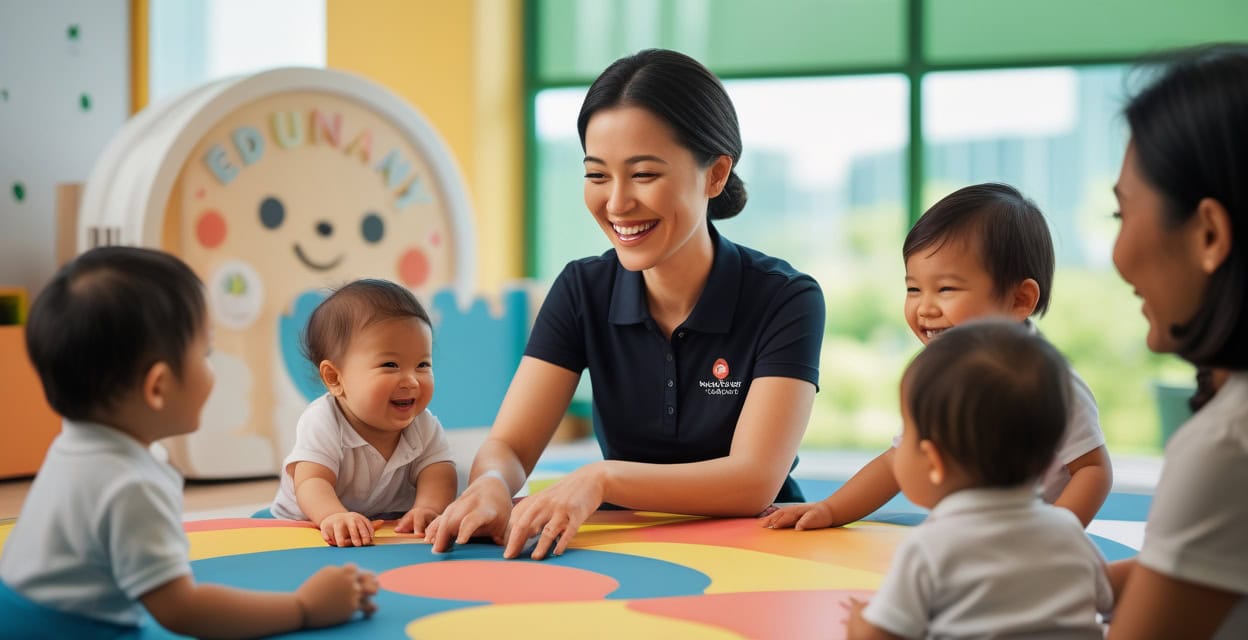
EduNanny by BUTLER: A Covenant with Our Youngest Singaporeans

EduNanny by BUTLER: A Covenant with Our Youngest Singaporeans

Good evening to parents, grandparents, childminders, educators, employers, neighbors, and the smallest citizens in our arms. EduNanny is more than a service; it is a public‑spirited, quality‑first approach to infant care that makes great care a standard, not a luxury, across Singapore. This is a public‑minded mission—centered on proximity, safety, and humanity—that operates under the ECDA Childminding Pilot as a National Social Initiative with a Maximum Employment Mandate. Learn more at EduNanny.com and Childminding.EduNanny.com.

What EduNanny Is in Practice

What EduNanny Is in Practice

EduNanny aligns three essentials that families need and children deserve:

  • Presence: A designated primary caregiver within an ultra‑low 1:3 ratio who truly knows your child—their cues, rhythms, and ways of saying yes, no, wait, more.
  • Proximity: Centre‑based and home‑based care within communities to shorten commutes and keep a child’s circle of trust small.
  • Partnership: Transparent communication, scheduled CCTV viewing windows, and daily notes that keep families informed without encroaching on the privacy of care.

EduNanny does not reinvent childhood; it restores dignity to its beginnings. Below, you will find the actionable framework and practical guidance that parents can use every day.


The Three-Rhythm Method: Pedagogy for the Very Young

The Three-Rhythm Method: Pedagogy for the Very Young

Settle

Every day begins with co‑regulation. A child is welcomed by name and by touch, with a calm voice and familiar cues. This is the curriculum of trust. Practical steps you can apply at home or in EduNanny settings:

  • Greet by name, offer a familiar comfort item, and match your pace to the child’s cues.
  • Observe first: pause before guiding, read subtle signals, and voice your intentions softly.
  • Prepare a predictable routine that signals transitions from wait to play to rest.

Explore

Curated sensory and motor invitations follow—gentle floor time, cause‑and‑effect play, rich language, and turn‑taking with sounds. Exploration is a conversation, not a race.

  • Introduce safe, age‑appropriate materials—textures, mobiles, soft books, and simple puzzles.
  • Encourage joint attention: name objects, narrate actions, and pause for the child’s response.
  • Use turn‑taking games and songs to build early communication and social bidding.

Restore

Sleep, feeding, and quiet transitions are protected. Respect each infant’s sleep needs and guide rest with consistent rituals and responsive comforting rather than overstimulation.


Safety You Can Feel, Not Just Read About

Safety You Can Feel, Not Just Read About

Safety is the choreography of the day, not a one‑off checklist. EduNanny designs safety into every moment—from environment to routine.

  • Modern layouts and child‑safe home settings minimize blind spots; cots and sleep spaces meet rigorous standards; temperature and lighting support comfort and sleep quality.
  • The 1:3 ratio acts as a real‑time safeguard: eyes on, hands free, attention shared but never diluted.
  • Innovative CCTV provides transparency with privacy in mind—scheduled windows for viewing, clear data governance, and caregiver consent.
  • Hygiene flows naturally: handwashing, clean surfaces, safe bottle handling woven into daily practice.
  • Home‑based and centre‑based safety protocols are standardized, with drills, safe egress plans, and secure handover rituals.
  • Secure identity checks during arrival and departure support safe and trusted transitions.

Development That Grows from Relationship

Development That Grows from Relationship

Development is a story, not a race. EduNanny uses narrative observation to track micro‑milestones:

  • Tummy‑time endurance, rolling cues, early grasp patterns.
  • Joint attention and early turn‑taking that fuel language growth.
  • Pre‑linguistic signals: babbles, gaze shifts, gestures.
  • Emerging preferences: textures, songs, routines that soothe and empower.

Parents receive concise daily notes that describe comfort triggers, curiosity sparks, and shifts in behavior—ensuring home and care are aligned. The goal is attunement, not acceleration; a child who feels understood learns to love learning.


Happiness as a Daily Practice

Happiness as a Daily Practice

Joy is a climate, not a momentary highlight. EduNanny’s daily joy practices create a healthy emotional baseline:

  • Name rituals that affirm belonging at each greeting and farewell.
  • Songlines that mark transitions with rhythm and calm, not haste.
  • Gentle pacing—depth over volume, meaning over multitude of activities.
  • Outdoor time when feasible, safe stroller walks, and exposure to nature in a city context.
  • Everyday language that treats babies as whole persons—narrate care and honor signals.

A happy baby is not one who never frowns; it is a baby who feels heard, protected, and free to explore at a respectful pace.


Why EduNanny Works: Singapore’s Context

Why EduNanny Works: Singapore’s Context

  • Choice with continuity: Centre‑based or home‑based options share the same standards, 1:3 ratio, pedagogy, and safety framework.
  • Time back to families: Monday to Friday, 7am–7pm, islandwide, reducing travel and creating peaceful evenings.
  • Affordability with dignity: From $33 per day, with CDA/Baby Bonus support.
  • Transparent care: Innovative CCTV with privacy and clear communication routines.
  • Designed spaces, calm environments: Baby‑centered layouts that minimize visual clutter and support self-directed exploration.
  • A national purpose: EduNanny operates as a National Social Initiative under ECDA, supporting the Maximum Employment Mandate and investing in caregiver training and professional growth.
The Purpose of a Childminder: Civic Professionals in Action

The Purpose of a Childminder: Civic Professionals in Action

Childminders are not “stopgaps.” They are civic professionals who contribute to early attachment, safe sleep, and language and motor development. When trained and supported, they turn ordinary days into secure bases for lifelong growth.


Real Families, Real Outcomes: Everyday Examples

Real Families, Real Outcomes: Everyday Examples

Consider how continuity and attunement transform daily life for families:

  • A mother hands her baby to a caregiver who already understands the fever‑ish night and softens the day’s pace to protect the child’s rhythm.
  • A father checks a CCTV window and sees his child resting in familiar arms, allowing him to return to work with a calmer, more focused mind.
  • A mentor caregiver stays in the profession, ensuring stability for children and strengthening neighborhood trust through consistent, high‑quality care.
Practical Guidance for Parents: How to Engage with EduNanny

Practical Guidance for Parents: How to Engage with EduNanny

Choosing Centre‑Based vs Home‑Based Care

  • Assess your child’s temperament: Do they thrive in social, structured environments (center) or a home‑like setting with smaller groups (home‑based)?
  • Evaluate the caregiver‑child ratio and named primary caregiver model; consistency matters more than location alone.
  • Visit spaces at different times of day to observe pace, sleep routines, and transition rituals.
  • Ask about safety practices, hygiene routines, and how CCTV data is used and protected.

Questions to Ask Caregivers

  • Who is my child’s designated primary caregiver, and how will we manage handovers if that person is unavailable?
  • What does a typical day look like, from wake to nap to feeding to play?
  • How are sleep routines established and respected for each child’s needs?
  • How is progress tracked, and how are parents informed—daily notes, weekly summaries, or monthly reviews?
  • What is the plan for emergencies, and how are safety drills integrated?

Reading Daily Notes and Using CCTV Responsibly

  • Daily notes should be concise but insightful—what comforted your child, what sparked curiosity, and any changes in routine.
  • View CCTV windows as a trust tool, not a surveillance state. Use them to reassure yourself about your child’s safety during key transitions.
  • Respect caregiver privacy and view CCTV content with sensitivity; discuss questions with the care team rather than relying on interpretations from behind a screen.

Home Practices That Support EduNanny’s Approach

  • Maintain consistent sleep and feeding routines at home to reinforce what your child learns in care.
  • Engage in brief, meaningful language moments: narrate daily actions, label emotions, and encourage turn‑taking during play.
  • Provide a calm, safe environment at home with age‑appropriate materials that echo the care setting’s rhythm.
Enrollment and Next Steps

Enrollment and Next Steps

  • Visit EduNanny.com and Childminding.EduNanny.com to learn about the program, locations, and enrollment steps.
  • Schedule a visit to a centre or home‑based setting to observe the environment, meet the caregiver, and discuss your child’s needs.
  • Prepare essential documents and confirm eligibility for CDA/Baby Bonus support.
  • Join an orientation session to understand routines, safety protocols, and daily communication methods.

Conclusion: A Shared Covenant with Our Youngest

Conclusion: A Shared Covenant with Our Youngest

This is not merely childcare. It is a covenant with our youngest citizens, an investment in a calmer, kinder, and more capable Singapore. When we honor the work of childminders, design spaces that nurture trust, and maintain a transparent partnership with families, we lay a foundation for secure curiosity and resilient futures. If you are a parent, visit a prepared space and meet the caregiver who will learn your child by heart. If you are a prospective childminder, join a profession that is essential and respected. If you are an employer, partner with EduNanny to support your staff and strengthen retention. If you are a community leader, help host more high‑quality home‑based and centre‑based settings where families live and thrive.

Let us care for our youngest with excellence, safety, and daily joy. Tomorrow morning, when you pass a stroller on the way to the MRT, remember: in those bright, searching eyes lies the longest plan we will ever make together.

Visit EduNanny.com or Childminding.EduNanny.com to begin.


Final Call to Action

Final Call to Action

Join us in building a Singapore where every baby is seen, soothed, and set on a path of secure curiosity. This work is humble, but its impact is generational. The time to invest in early care is now.

Note: This article reflects EduNanny by BUTLER’s framework under the ECDA Childminding Pilot and is intended for educational and outreach purposes. All program details are subject to ECDA guidelines and available at the official sites listed above.

Visit EduNanny.com or Childminding.EduNanny.com to begin. And tomorrow morning, when you pass a stroller on your way to the MRT, remember: those bright eyes are the longest plan we will ever make together.

SEO Keywords: [#SingaporeChildcare, #InfantCareSingapore, #EduNanny, #CentreBasedCare, #HomeBasedChildminding]


edunanny-a38610f1-87b6-457e-9b08-ce642d65a03e
September 26, 2025

Attunement as Infrastructure EduNanny Five Pillars and the Near Home Revolution in Singapore Infant Care

EduNanny Singapore: A New Standard in Early Childhood Care

EduNanny Singapore: A New Standard in Early Childhood Care

EduNanny by BUTLER represents a bold integration of developmental science with everyday care, designed for Singapore’s families, caregivers, and communities. This long-form article expands on the principles, practical strategies, and tangible steps families can take to partner with EduNanny to nurture secure attachment, curious minds, and resilient habits from infancy onward. Built to be WordPress-ready, this guide translates vision into daily practice—home, centre, and distance coaching—so parents can make informed choices and caregivers can deliver consistent, high-quality care.


The Five Pillars: Where Science Meets Everyday Practice

The Five Pillars: Where Science Meets Everyday Practice

1) The Pedagogy of Attuned Autonomy: Teaching through Trust, Not Rush

Infancy is learning at the speed of relationship. EduNanny trains childminders to observe first, respond second, and then guide toward safe independence. This is a stance, not a technique. Practical applications for families:

  • Serve-and-Return in Action: During care moments, the caregiver notices your infant’s lead (a gaze, a reach, a coo) and responds with nurturing language and a held engagement. For example, “I see you’re curious about the rattle—shall we shake it together?”
  • Structured Daily Arc: Predictable routines create security. A typical day includes care rituals (greeting, diapering, handwashing), sensory-rich play, quiet reflection, and rest. Home routines can mirror this arc to reinforce consistency.
  • Home Practices You Can Do: Engage in one 5–10 minute attuned activity each day—eye contact during bottle feeds, narrating actions, and inviting your child to participate in simple tasks (opening a snack container, reaching for a toy).
  • Documentation for Growth: EduNanny tracks micro-milestones (eye contact, babbling, imitation). Parents can maintain a simple home diary of notable moments to share at caregiver updates.

2) Safety as a System, Not a Checklist

Safety is woven into every decision. It’s a system of environment, people, and transparent technology working in harmony:

  • Environment: Modern layouts with calm lighting, clearly designated nap zones, breathable sleep materials, and cleanable surfaces reduce overload and support safe exploration.
  • Human Factors: Ultra-low 1:3 caregiver ratios, fatigue management, daily readiness briefings, and ongoing training in safe sleep, hygiene, and emergency response ensure calm, capable care under pressure.
  • Transparent Technology: Real-time CCTV provides secure visibility for families and a mechanism for coaching and quality assurance. Digital logs track sleep, feeds, nappies, and milestones—giving families a single source of truth to act on.
  • What Parents Can Do: Learn how to review daily logs, ask about safety drills, and request gentle explanations of any safety concern. Ask caregivers to walk you through how a typical safety incident would be handled and how you’ll be updated during and after.

3) The Developmental Nutrition of Experience

Infants absorb the world through movement, language, touch, and regulated arousal. EduNanny designs experiences that feed the brain in the right order and intensity:

  • Movement as Medicine: Daily opportunities for varied positions—prone, side-lying, supported sitting—build core strength, proprioception, and vestibular balance. Home activities: tummy time on a soft mat with a favorite mirror to encourage tracking and head control.
  • Language in the Lap: Face-to-face talk, singing, and reading during care routines. At home, narrate actions (“We’re washing your hands now,” “The cup is warm, let’s sip slowly”).
  • Hands Before Screens: Safe, natural textures (cloth, wood, water) before introducing any digital content. Encourage exploration with grasping, banging, and mouthing safe objects to strengthen fine motor skills.
  • Regulated Arousal: Create an environment that alternates effort and rest—soft sounds, gentle lighting, and familiar routines to help the child consolidate learning and achieve restful states.

4) Happiness and Belonging as Measurable Outcomes

Joy is cultivated through predictable, warm interactions and secure relationships. EduNanny tracks well-being through “Comfort-and-Curiosity” notes and consistent caregiver pairings:

  • Comfort-and-Curiosity Notes: Short indicators such as quicker settling after separation, longer engrossed play, and expanding social interest help quantify emotional safety.
  • Belonging and Identity: Consistent caregivers build recognition, a sense of safety, and confident exploration. Home routines should reinforce this by maintaining familiar voices and gentle transitions when you return.
  • Practical Home Application: Create short arrival rituals at home (greet with a favorite song, a short hug, then a shared activity) to mirror the caregiver’s reunions and support secure attachment.

5) The Professional Purpose of Childminders: Citizen-Caregivers

EduNanny views childminders as skilled craftspeople of attachment, not placeholders in a schedule. Strengthening their professional life deepens child outcomes:

  • Structured Training and Reflective Supervision: Access ongoing pedological coaching and leadership opportunities to grow expertise and job satisfaction.
  • Maximum Employment Mandate: A commitment to dignified, sustainable work that supports families and communities.
  • Community Alignment: Care approaches that partner with families, schools, and local services to create a seamless early-years ecosystem.
  • What Families Can Expect: Clear communication about training, supervision, and professional development that translates into consistent care and meaningful relationships with caregivers.

EduNanny in Practice: How It Works Across Singapore

EduNanny in Practice: How It Works Across Singapore

EduNanny operates islandwide in home-based and centre-based settings, Monday–Friday, 7am–7pm. A transparent, family-friendly model includes:

  • Ultra-Low 1:3 Infant Ratio: Ensures attention, safety, and individualized pacing.
  • Modern Layouts and Safe Practices: Centres designed to support movement, rest, and exploration with safety at the core.
  • Innovative CCTV and Data Logs: Real-time visibility for parents and ongoing quality assurance for educators.
  • Affordability and Policy Alignment: Fees payable by CDA/Baby Bonus and more; options starting from $33/day to support accessible care.
  • Public Mission: Participation in the ECDA Childminding Pilot and a National Social Initiative, plus a Maximum Employment Mandate elevating care work.
  • Access Points: Home-Based, Centre-Based, and Distance Guidance—coordinated under a single pedagogy and quality framework.

Practical Guidance for Parents: Making the Most of EduNanny

Practical Guidance for Parents: Making the Most of EduNanny

Below are actionable steps, checklists, and example routines to help families integrate EduNanny into daily life.

  • Enrollment and Planning: Start with a needs assessment: family schedule, budget, preferred care setting, and desired level of transparency. Compare home-based vs. centre-based options, then request a trial period if possible.
  • Sample Daily Routine (Infant): 7:00–7:30 Arrival and greeting; 7:30–8:00 Diaper care and feeding; 8:00–9:00 Quiet play and tummy time; 9:00–10:00 Sensorial play and early language; 10:00–11:00 Cradle/nap transition; 11:00–12:00 Snack and social interaction; 12:00–13:00 Lunch and caregiver talk; 13:00–15:00 Rest and gentle exploration; 15:00–16:00 Active play; 16:00–17:00 Language-rich goodbye routine. Adapt timings to your child’s age and sleep needs.
  • Reading the Logs and CCTV: Review sleep, feeds, nappies, and milestones. Use questions like: “What changes did you observe in the child’s feeding rhythm this week?” and “How is the child responding to the new language prompts?”
  • Distance Coaching at Home: Schedule brief weekly video calls with a caregiver coach to discuss language development targets, daily routines, and strategies to support self-regulation at home.
  • Transition Tips: Prepare your child for pickups and drop-offs with predictable rituals; coordinate with the caregiver to maintain continuity in greetings, manners, and comfort objects.
  • Budget and Subsidy Planning: Understand CDA/Baby Bonus eligibility, schedule of payments, and how EduNanny’s pricing aligns with your family budget. Ask about eligibility for the ECDA Pilot subsidies and any additional government support.
  • Privacy and Safety Best Practices: Discuss CCTV access boundaries, data retention, and how footage is used for coaching. Ensure you know how to report concerns and how timely feedback is shared.
  • Developmental Activities at Home: Complement centre activities with simple play: sensory bins, language games, and gross motor play, gradually increasing complexity as the child grows.

Measuring Success: Outcomes for Children, Families, and Caregivers

Measuring Success: Outcomes for Children, Families, and Caregivers

EduNanny’s approach translates into tangible outcomes across three stakeholder groups:

  • Children: Secure attachments, early language development, self-regulation, and curiosity-driven exploration.
  • Families: Clarity, trust, and peace of mind through transparent communication, reliable scheduling, and accessible support from distance coaching and on-site updates.
  • Caregivers: Professional recognition, continuous training, and leadership pathways that reinforce pride and purpose in their work.

Why This Matters: A Public Promise for Singapore’s Future

Why This Matters: A Public Promise for Singapore’s Future

EduNanny believes that how we care for the youngest shapes the health of a nation. When babies experience consistent, responsive care, neural pathways for language, attachment, and self-regulation are strengthened. The result is a more confident child who enters school ready to learn, collaborate, and contribute to the community. By aligning care with community, policy, and professional development, EduNanny seeks to create a scalable model that preserves dignity in work while delivering high-quality care near home.


Conclusion: A Steady Hand, An Open Door, A Standard You Can Trust

Conclusion: A Steady Hand, An Open Door, A Standard You Can Trust

EduNanny offers a comprehensive, research-informed approach to infant care and childminding that balances family convenience with rigorous standards. Whether you seek centre-based excellence, home-based flexibility, or distance coaching to complement your caregiving, EduNanny is prepared to partner with you. Our islandwide network operates Monday through Friday, 7am to 7pm, with safety, transparency, and joy at the core of every day. Visit EduNanny.com or Childminding.EduNanny.com to explore Home-Based Childminding, Centre-Based Childminding, the Childminding Pilot, and enrollment options, including fees payable by CDA/Baby Bonus. EduNanny by BUTLER is ready to partner with you—and with Singapore—to turn small daily moments into lifelong strength.

Thank you.

SEO keywords: [#keyword1, #keyword2, #keyword3, #keyword4, #keyword5]


edunanny-e63938e4-2b98-48e7-94c2-2ec49663fcf0
September 25, 2025

The First Thousand Days as Public Mission A Near Home Care Revolution in Singapore

Introduction: The first thousand days as a public mission

Introduction: The first thousand days as a public mission

The earliest years of a child’s life are not private moments to be managed in isolation; they are the nation’s investment in its future. EduNanny exists to dignify the daily rituals of caregiving—feeding, cuddling, play, and learning—and to elevate them into a publicly supported, universally accessible standard of care. In Singapore, where family life threads through dense urban living, reliable, high-quality infant care near home is not a luxury—it is a cornerstone of social mobility, workforce stability, and inclusive growth. This article expands on EduNanny’s approach, offering practical guidance for parents, caregivers, and communities who share the belief that the first thousand days deserve extraordinary care.


EduNanny by BUTLER: A national childminding initiative

EduNanny by BUTLER: A national childminding initiative

EduNanny is designed as a national service that fuses heart, science, and civic purpose. We bring Centre-Based and Home-Based childminding to the doorstep, with Distance guidance for families who need professional help from home. Operating Monday to Friday, 7am to 7pm, islandwide, we commit to an ultra-low 1:3 infant ratio, modern layouts designed for safe movement and rest, and privacy-respecting CCTV for transparency and learning. As part of the ECDA Childminding Pilot, EduNanny is built as a National Social Initiative with a Maximum Employment Mandate: to create meaningful careers for childminders while ensuring Singapore’s youngest citizens receive the gold standard of care. And we make it accessible—plans are affordable from $33/day, with fees payable via CDA/Baby Bonus where eligible. Find us at EduNanny.com and Childminding.EduNanny.com.


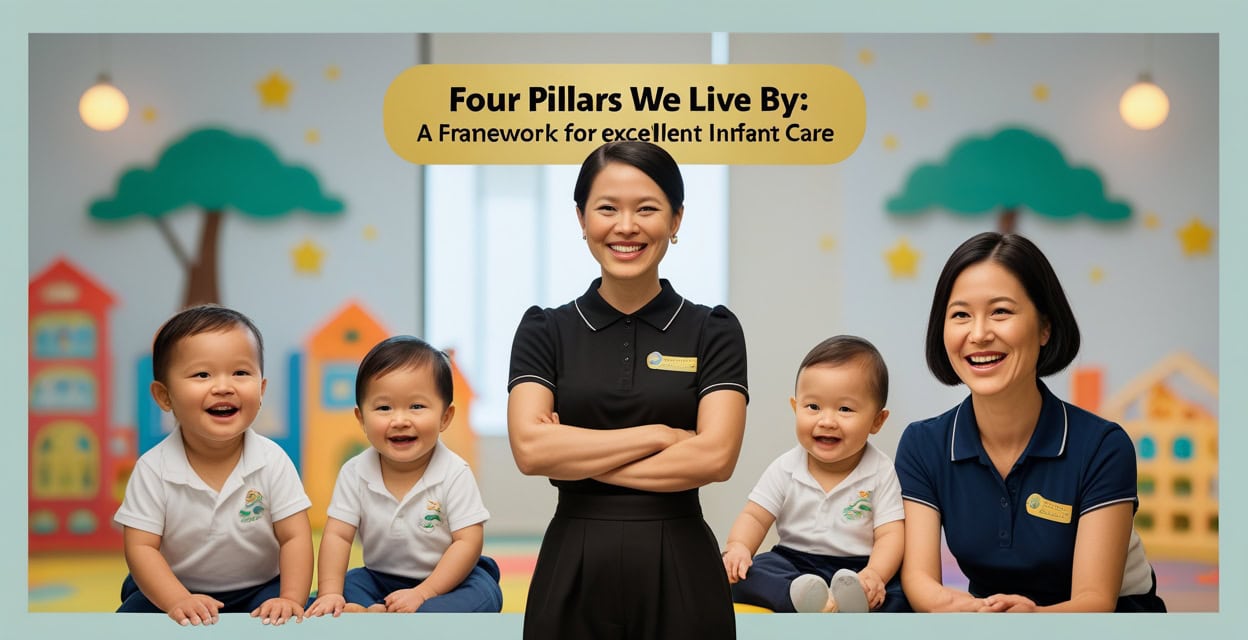
Four pillars we live by: a framework for excellent infant care

Four pillars we live by: a framework for excellent infant care

EduNanny’s practice rests on four interwoven pillars. Each pillar offers practical, actionable guidance for families and care teams, grounded in the best of developmental science and the rhythms of Singaporean life.

1) A pedagogy of attuned simplicity: the 1:3 promise

Great infant care is about precise, timely responses rather than a barrage of activities. The 1:3 ratio creates breathing room for attunement—where the childminder can see, name, and respond in the moment. Practical guidance for families and caregivers:

  • Prepared environments: Create zones for movement, exploration, feeding, and rest. Use low, open shelves, uncluttered floors, and natural light. Example: a corner for floor toys and soft mats near a window for natural shading, with a visible daily routine chart at child height.
  • Free movement and secure attachment: Emphasize floor time, crawling, pulling up, and independent sitting in the infant’s timeline. Avoid overhandling; respond warmly and consistently to cue-based exploration. Practical tip: incorporate daily “movement breaks” where baby moves freely for 5–10 minutes between activities.
  • Scaffolding early communication: Narrate actions, mirror sounds, and anchor routines in language. Example activity: name objects as the infant explores—“soft ball,” “blue block”—and respond to babbles with turn-taking cues.
  • Emotions have names: Label feelings calmly—“You’re tired; I’m here.” Use simple emotion cards and friendly facial expressions to help infants begin emotional literacy long before words emerge.

2) Safety as an ecosystem: designed, trained, and transparent

Safety is never a single device or drill; it is a living ecosystem with multiple, well-integrated layers.

  • Design that prevents: Rooms and home setups separate sleep from play, designate safe feeding zones, anchor furniture, use cord-free blinds, secure gates and sockets. Ensure non-toxic materials, easy cleanability, and quiet acoustics. Proactive design includes childproofing checks as part of daily routines.
  • Procedures that protect: Standardised, evidence-based practices for sleep positioning, hygiene, bottle handling, and medication logging. Digital checklists help caregivers stay thorough; reminders reduce memory lapses.
  • Transparency that builds trust: Privacy-respecting CCTV supports safety and reflective practice, with role-based access and robust data protection. It is a learning tool, not surveillance for its own sake.
  • Proximity that reduces risk: Near-home care shortens commutes, reduces transition stress, and enables quicker reunions. Our schedule—Monday to Friday, 7am–7pm—aligns with family needs, especially for working parents.

3) Development and happiness: turning tiny moments into milestones

Development is joy in motion. We weave growth into ordinary moments through sensory richness, purposeful play, and language-rich interactions.

  • Sensory-rich, not sensory-loud: Use natural textures, gentle sounds, and language-rich narration. Integrate music and open-ended objects that invite calm focus rather than overstimulation.
  • Movement before milestones: Emphasize tummy time, safe floor play, crawling pathways, and supported pull-ups. Celebrate progress and effort, not premature achievement.
  • Language in two directions: Speak to infants and pause for their response—eye contact, gaze, gesture, or babble. This reciprocity builds confidence and social connection.
  • Rhythm that regulates: Predictable feed–play–sleep routines support circadian health, leading to fewer tears and more engaged learning moments.
  • Culture that belongs: Reflect Singapore’s diversity in lullabies, stories, and visuals so children see themselves represented in everyday care.

4) The vocation of childminding: purpose, dignity, and national impact

Childminding is a profession that shapes a child’s emotional architecture and lifelong resilience.

  • The first relationships outside the family: A childminder becomes a secure base for exploration and a calm harbour for recovery. Consistent care at 1:3 nurtures trust and autonomy.
  • A career with a ladder: EduNanny trains, certifies, mentors, and advances talent—from trainee to lead childminder to site mentor and beyond. Emphasise reflective practice, coaching, and peer learning.
  • A Maximum Employment Mandate: Create dignified jobs across neighbourhoods, empowering experienced caregivers and career switchers to contribute meaningfully to families and communities.
  • A National Social Initiative: Accessible, near-home care stabilises family routines, strengthens neighbourhood bonds, and supports working parents—turning childminding into civic infrastructure.

Access and affordability: care near home, with quality you can trust

Access and affordability: care near home, with quality you can trust

Quality should be accessible to every family, regardless of income or location. EduNanny offers Centre-Based and Home-Based options, plus Distance support for home care guidance. Islandwide service with a clear, family-friendly booking process ensures consistency in safety and learning design across community and home premises.

  • Affordability and subsidies: Plans start from $33/day, with eligible families able to use CDA or Baby Bonus assistance.
  • Flexible options: Centre-Based care for structured environments or Home-Based care that mirrors a childminder’s home setting, upgraded to EduNanny design standards.
  • Distance support: Professional guidance delivered remotely for families who prefer or require home-based care, ensuring continuity of high-quality practice without physical relocation.
  • Your next step: Visit EduNanny.com or Childminding.EduNanny.com to enrol, book a visit, or apply to become a childminder.

How EduNanny fits Singapore—beautifully close, beautifully possible

How EduNanny fits Singapore—beautifully close, beautifully possible

Our model is designed to integrate seamlessly into the fabric of Singaporean life. Key considerations include:

  • Near every MRT line and estate: We place services within easy reach of workplaces and homes, shortening travel time and stress for families.
  • Consistent safety and learning design: Modern centre layouts and upgraded home environments provide uniform safety standards and predictable routines across settings.
  • Human-first technology: Daily journals, moment-to-moment photographs, and multilingual updates keep families connected without sacrificing privacy or relationship.
  • Parent–educator partnership: Parents act as co-educators; our process integrates family values into daily care, ensuring continuity between home and care settings.

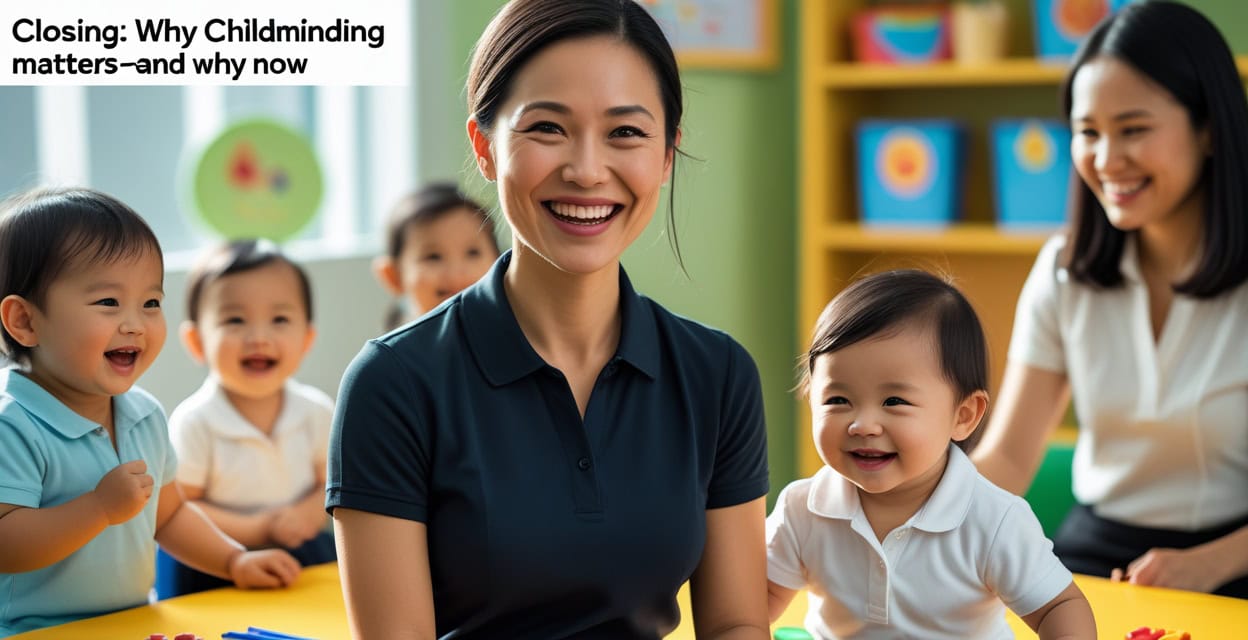
Closing: Why childminding matters—and why now

Closing: Why childminding matters—and why now

Childminding serves multiple layers of society: it supports infants who deserve secure bonds; it gives parents trust, time, and peace of mind; it provides dignified, meaningful work for childminders; it sustains employers who rely on a stable workforce; and it builds a nation that understands the first thousand days as destiny under construction. The best childminding is relationship-rich, safety-assured, developmentally sound, culturally rooted, and delivered with equality and joy. The right care improves attendance at work, supports gender equality, and strengthens community ties—making the home a launching pad for a robust, inclusive future.


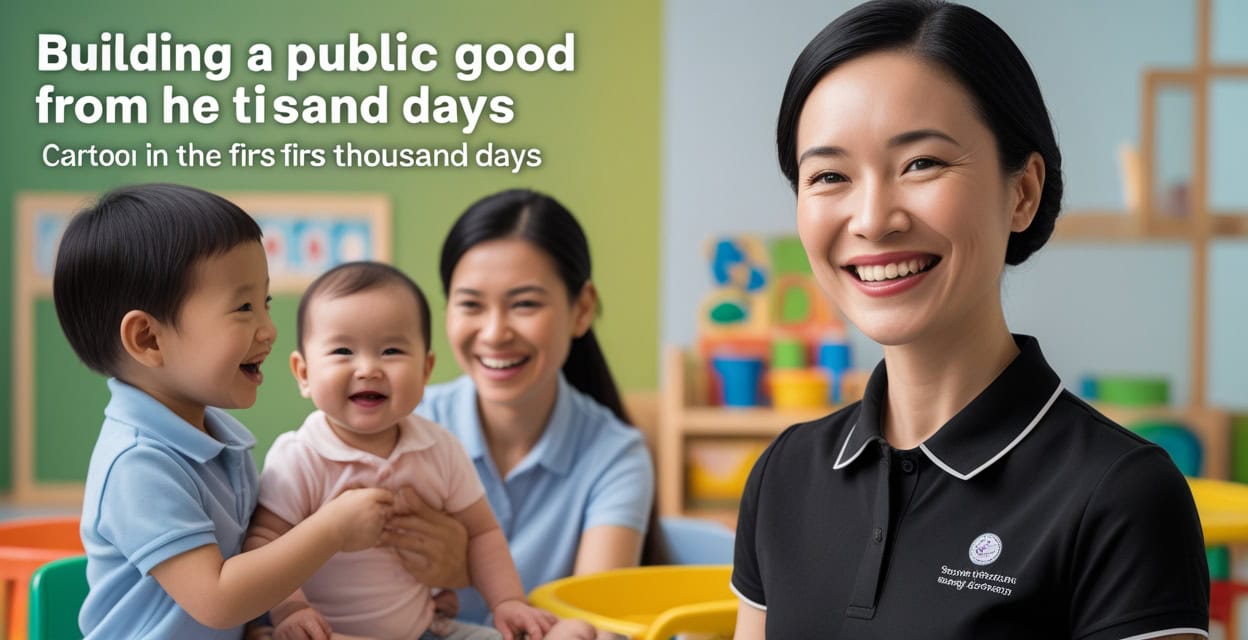
Conclusion: Building a public good from the first thousand days

Conclusion: Building a public good from the first thousand days

EduNanny invites families, caregivers, and employers to co-create a care system that is nearby, excellent, and scalable across Singapore. Tour a centre, visit a home site, speak with a childminder, or join the profession to shape a generation. When we invest in attunement, safety by design, joyful development, and a respected care workforce, we turn everyday care into a durable public good. The first thousand days become a shared mission—near home, in community, for all. The door is open at EduNanny.com and Childminding.EduNanny.com.

SEO keywords: [#earlychildhooddevelopment, #childmindingSingapore, #affordablechildcare, #safetybydesign, #parentpartnership]


edunanny-c6529854-52c0-4e83-bb7e-122776d678d9
September 25, 2025

EduNanny Shaping Singapore Infant Futures Through Near Home Care Safety and Joy

Introduction: A Vision for Every Infant in Singapore

Introduction: A Vision for Every Infant in Singapore

Thank you for gathering to imagine a better beginning for every infant in Singapore. EduNanny stands at the intersection of care, science, and community—bringing Montessori-inspired respect for independence, Erikson’s understanding of development, Piaget and Vygotsky’s discoveries about thinking and social learning, Bowlby’s attachment clarity, and Pikler’s reverence for the child’s self-initiated pace into everyday life. This article translates those insights into practical, near‑home infant care that is safe, joyful, developmentally rich, transparent, and rooted in relationships.


What is EduNanny?

What is EduNanny?

EduNanny by BUTLER is Singapore’s home‑grown standard for childminding and infant care that blends heart, science, and accessibility. We operate through two models—Home Base Childminding and Centre Based Childminding, Monday – Friday, 7am – 7pm, islandwide. Families choose convenience without compromise:

  • Excellent 1:3 infant ratio that allows caregivers to observe, respond, and scaffold learning as it unfolds.
  • Modern layouts designed for safety and exploration to invite curiosity.
  • Innovative CCTV that invites trust—made to affirm practice, not replace professional supervision.
  • Affordable fees from $33/day, with payments eligible for CDA/Baby Bonus.

EduNanny is part of the ECDA Childminding Pilot—a National Social Initiative aligned to a Maximum Employment Mandate—creating dignified roles for trained childminders while giving infants what science says they need most: responsive, consistent, nearby care.


How EduNanny Makes Infant Care Great in Singapore

How EduNanny Makes Infant Care Great in Singapore

We do three things exceptionally well. Each is grounded in research and designed for real families navigating busy city life.

  • We bring quality near to families. Centre‑Based options offer a hub for social exploration; Home‑Based options deliver the intimacy of a familiar routine in the community. Distance and daily logistics shrink—commute time becomes cuddle time.
  • We translate research into routines. A 1:3 ratio enables caregivers to observe, respond, and scaffold learning as it unfolds. We protect unhurried floor time, safe sleep, and responsive feeding. We share learning stories with families so growth is visible and shared.
  • We build a transparent partnership. Safety is designed into environments and procedures, then made visible through CCTV and clear daily communication. Parents don’t have to guess what “good care” looks like—they can see it, hear it, and feel it in their child’s calm, curiosity, and steady development.

Four Topics That Define Our Practice

Four Topics That Define Our Practice

The Pedagogy of Micro‑Moments: Small Acts, Lifelong Impact

Actionable principles you can apply at home and in care settings:

  • Observation before intervention. Train caregivers to notice cues first—eye gaze, reaching, vocalizations—then shape the environment so the infant can initiate action. This honors independence (Montessori) and scaffolding (Vygotsky) in daily life.
  • Freedom of movement the Pikler way. Avoid devices that constrain the infant’s natural sequence. Encourage rolling, tummy time, supported sitting, and self‑initiated exploration as the brain wires itself through effort.
  • Language as relationship. Narrate routines slowly and respectfully: “I’m warming your milk. I’m lifting you now.” These micro‑scripts teach cause and effect, rhythm, and security.
  • Play that is simple and deep. Everyday objects, high‑contrast books, textured baskets, and water or light play. Emphasize repetition, variation, and mastery to support curiosity and confidence.

Safety by Choreography: Turning Protocols into Predictable Peace

Turn safety policies into calm, repeatable routines that families can trust:

  • Space design. Clear zones for sleep, feeding, changing, and exploration; reduce hazards with thoughtful layout. Maintain clean floor spaces and store adult equipment out of reach when not in use.
  • Safe sleep as a non‑negotiable norm. Firm mattresses, no loose items, supine sleep, temperature checks, and nap logs. Consistency here supports infant regulation and caregiver confidence.
  • Hygiene as a learning moment. Hand‑washing songs, standardized disinfection routines, and bottle protocols presented as calm, routine care rather than interruptions to growth.
  • Purposeful CCTV usage. CCTV supports transparency and accountability when used in alignment with practice, not as a substitute for professional supervision.
  • Emergency readiness. Regular drills, clear escalation maps, and trained staff who know their roles—because in urgent moments, practiced choreography saves time and lives.

The Development Orchestra: Five Domains in Harmony

Building a holistic developmental repertoire across core domains:

  • Motor. Daily floor time, safe climbing spaces, open pathways, and grasping stations. Track milestones to tailor experiences without comparing children—focus on each child’s next step.
  • Language. Repetition, singing, rhymes, and responsive turn-taking. Infants “converse” long before they articulate words; ensure they are heard and valued in every interaction.
  • Social‑emotional. Primary caregiver continuity, predictable routines, and warm limits. Name and validate emotions: “You’re frustrated; I’m here.” Strong self‑regulation grows from secure attachments.
  • Cognitive. Cause‑and‑effect play, object permanence games, simple puzzles, and gentle problem‑solving. Value process and exploration over product alone.
  • Emerging self‑care. Respectful diaper changes, family‑aligned feeding rhythms, opportunities to participate (holding a spoon, wiping a tray). Agency builds confidence and autonomy.

Family partnership loop. Weekly “learning stories” that help parents see progress and contribute home context; together, we tune the environment to the child’s next step.

Joy as a Measurable Practice: The Wellbeing Index for Infants and Adults

Healthier, happier infants emerge when joy is measured as part of everyday care:

  • Infant joy indicators. Relaxed posture, curiosity during exploration, settled sleep transitions, consistent appetite, spontaneous smiles, and cooing. Track alongside milestones to celebrate growth in real time.
  • Stability of care. Regulated caregiver wellbeing—predictable schedules, coaching, and communities of practice—because regulated adults co‑regulate children.
  • Rhythm of the day. A humane routine—arrive, greet, explore, rest, feed, connect, repeat—so infants experience time as gentle and predictable, not rushed and fragmented.
  • Community belonging. Story mornings, caregiver cafés, and short parent‑learning capsules on sleep, feeding, and play. When families feel seen, children flourish.

The Purpose of Childminders: A Civic Profession, Not a Stopgap

The Purpose of Childminders: A Civic Profession, Not a Stopgap

  • Attachment security, language growth, motor mastery, and the earliest sense of self are shaped by skilled, consistent care.
  • Training and mentorship rooted in global best practice and local Singaporean context—advancing both caregiver competence and child outcomes.
  • A clear career lattice from trainee to lead childminder to mentor and quality coach—creating durable, meaningful professional pathways.
  • The Maximum Employment Mandate: elevating standards across Home Base and Centre Based Childminding while sustaining dignified, stable employment.
  • A public‑private compact: part of the ECDA Childminding Pilot and a National Social Initiative—balancing high standards, affordability, and wide access.

Why Families Choose EduNanny

Why Families Choose EduNanny

  • Excellence and Quality. A curated standard built on evidence and refined in daily practice.
  • Centre-Based and Home-Based options. Pick the setting that suits your family rhythm and logistics.
  • Distance and Convenience. Proximity to home or work, with predictable schedules that reduce friction.
  • Affordability from $33/day. Fees eligible for CDA/Baby Bonus, easing family finances.
  • Weekday coverage 7am – 7pm, islandwide.
  • Excellent 1:3 infant ratio. Real-time responsiveness and engagement.
  • Transparent CCTV. Visible alignment between promises and practice, building trust.
  • Modern layouts and spaces. Environments that invite safe exploration and calm learning.
  • EduNanny by BUTLER. A reputation for reliability and high standards.
  • National alignment. Part of ECDA’s Childminding Pilot, driving accountability and nationwide care quality.

A Day in the Life: What It Feels Like

A Day in the Life: What It Feels Like

Experience a typical EduNanny day through a rhythm families can anticipate and rely on:

  • 7:45 am — Arrival. Your child’s primary caregiver greets by name, tunes into your family’s tone, and checks cues. A live room view is accessible via app for reassurance and connection.
  • Morning. Floor time, story circle, and sensory exploration. Bottles are warmed with care; feeding is paced and responsive to cues.
  • Midday. Relaxed, safe sleep in a serene, well‑ventilated room. Nap logs are updated; you receive short notes about new grasps or babbles.
  • Afternoon. Outdoor time when available, quiet music, soft climbing, finger plays, and respectful diapering with conversation and warmth.
  • Handover. A warm summary: what delighted your child, what’s being watched next, and how home and care feel continuously connected rather than separate.

Parents play a pivotal role in maximizing the EduNanny experience. Use these practical steps to collaborate effectively with educators and caregivers.

  • Before enrollment: Visit spaces (Centre and Home Base when possible), observe caregiver interactions, ask about staff training and supervision, and request sample learning stories to understand reporting style.
  • During enrollment: Clarify daily routines, nap schedules, feeding guidelines, and safety protocols. Ensure you understand how CCTV access is used and how privacy is protected.
  • During the day: Share home routines, dietary restrictions, and comforting strategies that work for your child. Provide a simple “cue sheet” for common needs (tired, hungry, overwhelmed).
  • Weekly/biweekly: Review “learning stories” and discuss any shifts in development. Use these moments to align home activities with school readiness goals (e.g., turn-taking games, language prompts).
  • At home: Reinforce routines established at EduNanny—consistent bedtimes, safe sleep positions, and predictable feeding rhythms to support continuity of care.

Infancy is not a logistics problem—it is a national treasure. When a caregiver kneels to a baby’s eye level, waits that extra beat, and says, “I’m here; I see you,” the future of Singapore grows stronger. EduNanny multiplies these moments—reliably, respectfully, and close to home—so safety becomes steady, learning becomes joyful, and families feel held by a community that means it.


Conclusion: Who, What, When, Where, and How Childminding Matters

Conclusion: Who, What, When, Where, and How Childminding Matters

Who: Every infant deserves a consistent, responsive adult; every parent deserves partnership; every childminder deserves the dignity of a skilled profession. EduNanny serves families across Singapore and grows careers for local caregivers.

What: Safe, joyful, developmentally rich care at a true 1:3 ratio, delivered through Home Base and Centre Based Childminding, with innovative CCTV, modern layouts, and humane routines.

When: The first thousand days—the period of rapid brain development—and every weekday from 7am to 7pm, so families can work with confidence and return home to peace.

Where: In community and home premises islandwide, designed to reduce commute time and increase family time; supported by national standards through ECDA’s Pilot framework.

How: Through trained, mentored professionals; evidence‑based pedagogy; safety by design; transparent communication; affordability from $33/day with CDA/Baby Bonus; and a National Social Initiative with a Maximum Employment Mandate to uplift families and the caregiving workforce together.


The Ethical and Practical Promise of EduNanny

The Ethical and Practical Promise of EduNanny

We believe infancy is a national treasure worthy of deliberate, informed care. When caregivers meet a child’s gaze, share a moment of quiet listening, and respond with timing and warmth, we contribute to a stronger Singapore—one child, one family, one community at a time.

Explore EduNanny today: visit EduNanny.com and Childminding.EduNanny.com to learn options, speak with a coordinator, tour a space, or meet a Home Base Childminder in your neighborhood. Let’s turn the science of early love into daily practice—for every infant in Singapore.

SEO keywords: [#EduNannySingapore, #InfantCareSingapore, #ChildmindingPilot, #MontessoriInPractice, #EarlyChildhoodDevelopment]


edunanny-128414ff-95ee-479a-a28b-1c5ec3637b0b
September 25, 2025

Attuned Presence and Public Promise EduNanny Redefining Safe Joyful Infancy Across Singapore

Introduction: A Conviction That Shapes Our Future

Introduction: A Conviction That Shapes Our Future

When a society organizes itself around the dignity of its babies, it quietly organizes itself around its best future. EduNanny by BUTLER is born from that conviction. We are more than a childminding operator—we are a public promise for Singapore: every infant can be safe, soothed, curious, and confident, without parents sacrificing tenderness for logistics or quality for convenience. This article expands on how EduNanny translates that conviction into daily practice, practical guidance for families, and a blueprint for caring that elevates early childhood as national priority.


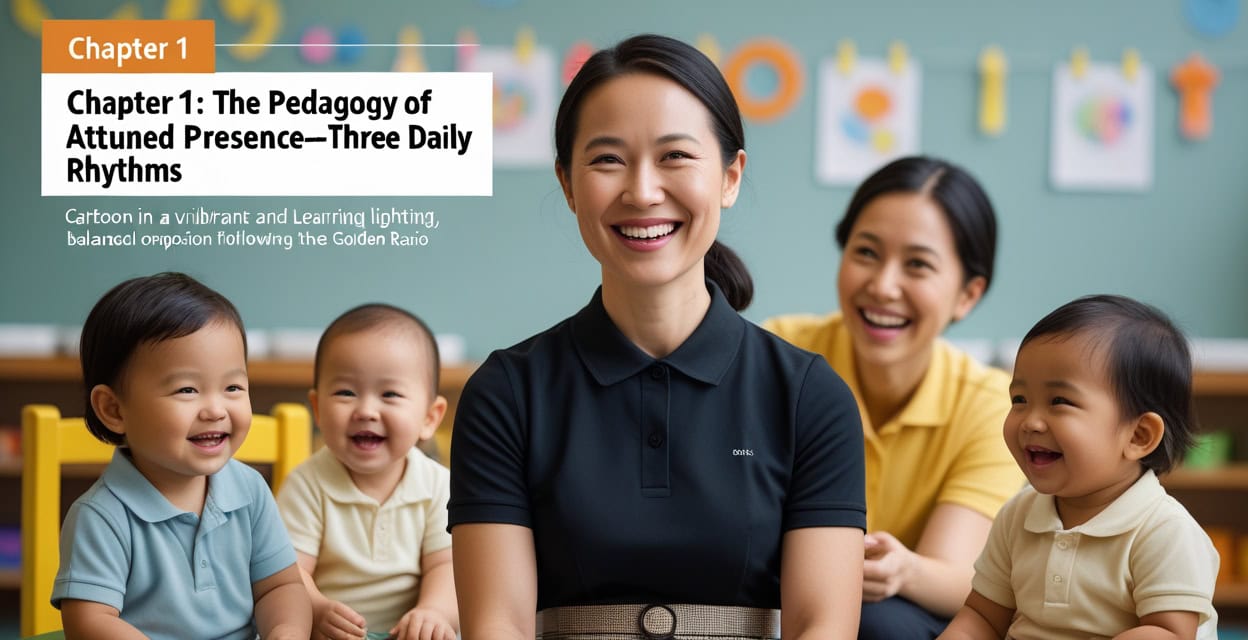
Chapter 1: The Pedagogy of Attuned Presence—Three Daily Rhythms

Chapter 1: The Pedagogy of Attuned Presence—Three Daily Rhythms

Observe

Observation is the quiet engine of trust. Caregivers begin by noticing posture, breathing, gaze, and sound, recognizing early signals before a request is voiced. For families at home, cultivate a daily micro-observation routine:

  • Begin with a neutral check-in: “How did you sleep?” and “What did you enjoy most today?”
  • Record a brief note on mood, energy, and feeding cues, then adjust the day’s plan accordingly.
  • Practice open-ended language: narrate your surroundings during routines to build language scaffolding.

Actionable at-home example: Set up a simple observation window each morning using a small notebook or a note on your phone to jot two signals you notice about your child (e.g., “stretches when waking” or “enjoys mirror play”). Use these notes to guide transitions and activities later in the day.

Co-regulate

Co-regulation is a duet: when adults remain calm, infants borrow that calm and learn to self-regulate over time. Strategies families and caregivers can use include:

  • Tone and tempo: soften voice, slow breathing, and steady pacing during transitions (waking, feeding, diapering).
  • Gentle touch and presence: use a comforting touch and a steady gaze to reduce distress during change times or unfamiliar environments.
  • Predictable routines: keep nap times, feeding windows, and play periods consistent to anchor a sense of safety.

Practical tip: Create a “nervous system bridge” kit at home—soft fabrics, a familiar song, and a short breathing cue (inhale 4 counts, exhale 4 counts)—to use during transitions when baby shows signs of overstimulation.

Invite

Invite is about curated discovery, not bombardment. After a baby is settled, offer developmentally meaningful choices and materials that invite exploration and autonomy, while avoiding overstimulation.

  • Rotate play materials to emphasize different senses: soft textures, mirrors, and age-appropriate toys that encourage grasping and cause-and-effect.
  • Space and pace: allow time for processing—pause between activities to observe the child’s response.
  • Documentation and storytelling: narrate what the child is exploring so they build language and comprehension.

Home practice: Instead of directing every moment, rotate one new activity daily (e.g., water play on a warm day, a safe scaffolded tummy-time ramp, or simple cause-and-effect toys) and watch for spontaneous curiosity to grow.


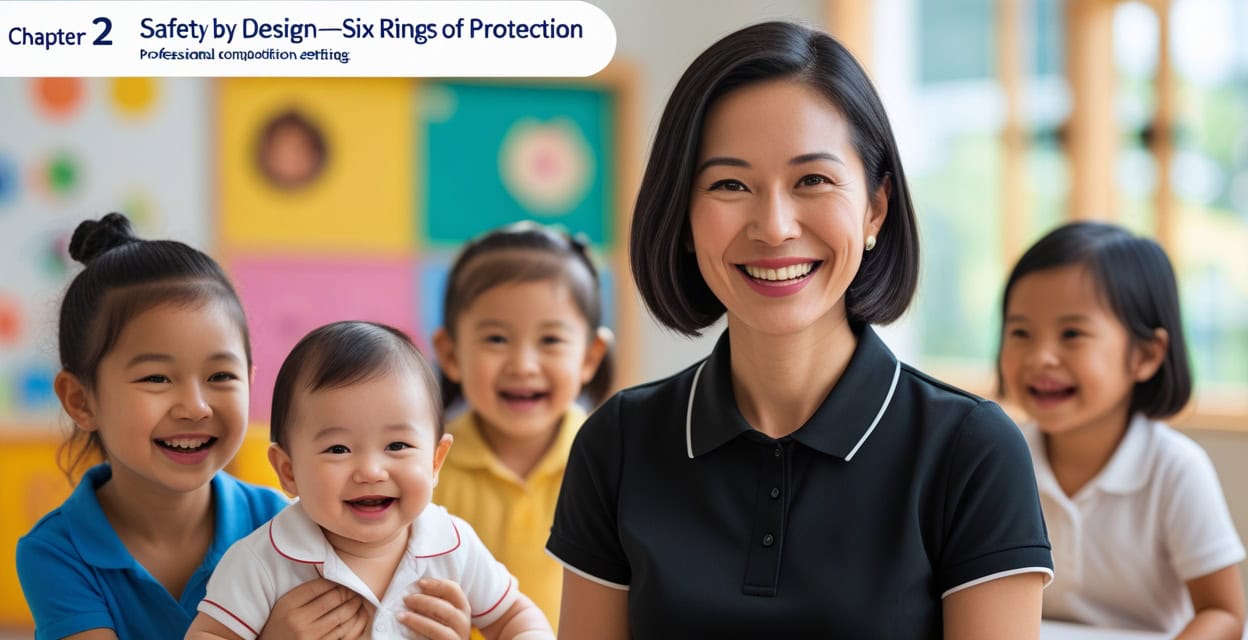
Chapter 2: Safety by Design—Six Rings of Protection

Chapter 2: Safety by Design—Six Rings of Protection

Environment

  • Design spaces with sightlines, rounded edges, non-toxic materials, and proper ventilation; ensure light levels support wakefulness and calm.
  • Daily environment checks for choke points, loose cords, small objects, and slippery floors.
  • Post clear zones for feeding, resting, and play to reduce confusion and risk during transitions.

Protocols

  • Hygiene cycles with hospital-grade standards; keep bottle preparation logs and nap checks; track diaper changes to monitor health status.
  • Incident drills and written policies for common scenarios; ensure families are informed and aligned.
  • Counter-signatures for medication and feeding plans to guarantee accuracy and safety.

People

  • Maintain a 1:3 infant ratio to ensure genuine supervision and relational safety.
  • Hire for temperament as well as technique; invest in ongoing coaching and professional development for caregivers.
  • Foster strong parent-caregiver partnerships through regular, transparent communication.

Health

  • Daily wellness checks, clear sick policies, and prompt escalation pathways.
  • Written plans for feeding, allergies, and medications with counter-signatures and regular reviews.

Technology

  • Secure, role-based access to CCTV feeds to build trust; use digital logs to maintain continuity of care between home and caregiver.
  • Respect privacy: implement clear guidelines on viewing times, access, and data protection for families.

Community

  • Structured handover rituals during drop-off and pick-up to ensure information flows smoothly.
  • Educate families on home safety continuity so that transitions stay low-risk and high-trust.

When all six rings hold, a baby experiences a reliable sense that the world is safe enough to explore—a foundation for deep learning and curiosity.


Chapter 3: Development and Happiness—The Joy Architecture

Chapter 3: Development and Happiness—The Joy Architecture

Nourish

  • Support family choices on breastmilk, formula, and solids with evidence-based guidance and respectful routines.
  • Preserve feeding as attachment time: prioritize eye contact, warmth, and responsiveness during feeding sessions.
  • Share practical tips with parents on planning healthy, developmentally appropriate meals and snacks for infants and toddlers.

Sleep Well

  • Protect nap windows and practice gradual self-soothing with consistent cues and routines.
  • Explain sleep architecture to families: predictable daytime activity supports better nighttime rest.
  • Offer a gentle fading plan for self-regulation milestones, from soothing methods to independent settling as appropriate for age.

Sense and Move

  • Offer a curated menu of sensory experiences: water play, textures, mirror exploration, tummy-time ramps, and light tracking.
  • Recognize motor development as cognition in motion: activities should link to problem-solving and exploration.
  • Ensure safety in all movement-rich activities with appropriate mats, supervision, and environmental padding.

Go Out, Come Back

  • Provide age-appropriate outdoor experiences: short, supervised visits to nearby courtyards, shaded walks, and observation of nature.
  • Create a consistent return ritual: a calm hug, a brief recap, and a prepared transition back to home routines.
  • Integrate city textures and sounds as safe, guided classroom-like experiences that root curiosity in real-world context.

Measure happiness through indicators of flourishing: deeper naps, balanced feeding, attentive gaze, growing curiosity, and confident transitions at goodbye.


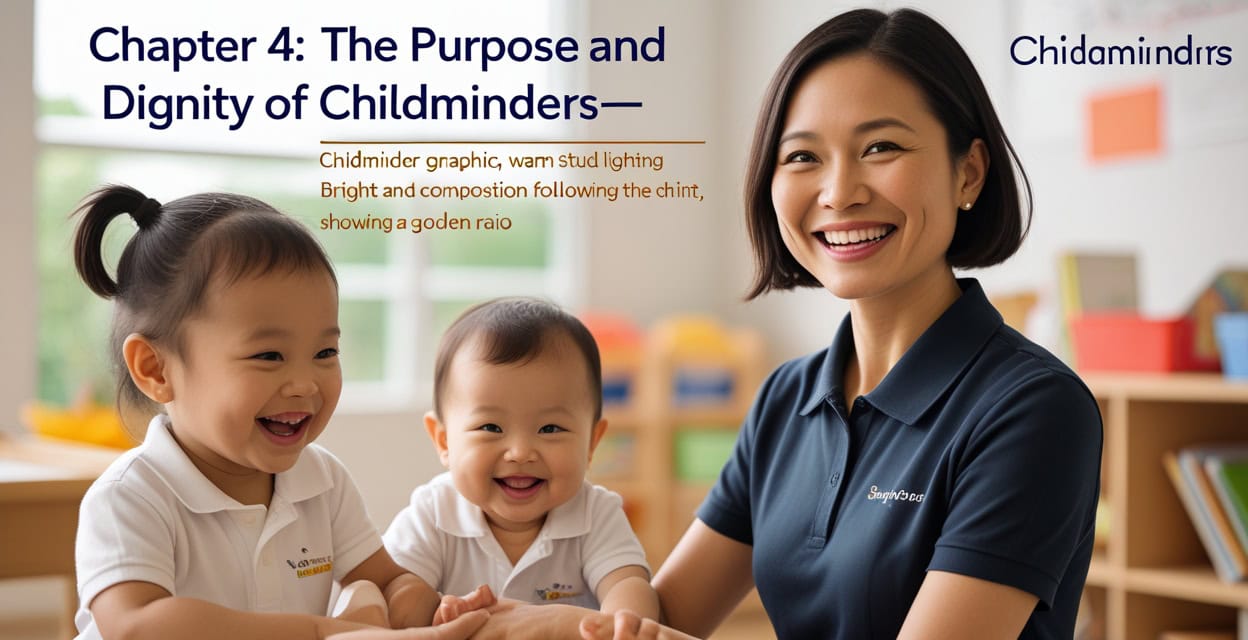
Chapter 4: The Purpose and Dignity of Childminders—A Civic Craft

Chapter 4: The Purpose and Dignity of Childminders—A Civic Craft

  • EduNanny’s Maximum Employment Mandate builds a respected talent lattice for caregivers: clear training, mentorship, progression, and professional pride.
  • Why this matters: infants reflect the calm, competence, and dignity of the adults who hold them.

What we train caregivers to do

  • Micro-observation: identify subtle cues that signal changing needs or states of arousal.
  • Relational language: speak to infants with respect, specificity, and warmth.
  • Playcraft: design play that teaches without intruding—scaffolding growing independence.
  • Family partnership: listen well, communicate clearly, and align routines between home and care settings.

This is more than workforce development; it is a statement about who we are as a nation: a place where those who care for our youngest are valued and supported.


Chapter 5: Access Without Compromise—A Singapore Promise

Chapter 5: Access Without Compromise—A Singapore Promise

Quality care should be accessible, not a luxury. EduNanny makes this possible through three pathways:

  • Centre-Based Childminding: Light-filled, modern spaces with a full safety stack and social learning with peers.
  • Home-Based Childminding: Intimate settings within communities—fewer transitions, familiar routines, near-home comfort.
  • Distance Support: Tele-guidance, virtual check-ins, and customized routines for families who prefer to keep baby at home but stay connected to experts.

Operational promise: Monday to Friday, 7am–7pm, islandwide across Singapore. Fees start from $33/day, with CDA/Baby Bonus support. The aim is to provide convenience without compromising quality, choice without confusion, and transparency without theatre.


What Does This Look Like in a Day?

What Does This Look Like in a Day?

Morning

  • A calm greeting, temperature check, and a brief note on last night’s sleep.
  • A gentle sensory invitation: scarves, mirror play, and soft textures to welcome the day.
  • A nap prepared with familiar cues from home; caregivers log details and parents can view a secure live window if desired.
  • Following wake, a responsive feed and a quiet courtyard stroll with narration: “Warm breeze, red kite, auntie waving.”

Midday

  • Tummy time as a victory: gradually increasing chin elevation and purposeful movement.
  • Timely diaper changes with a language of care: “I’m lifting you; I’m wiping; warm wipe.”
  • A second nap on time, guided by calm and comfort in a dimly lit room with a soothing lullaby.

Afternoon

  • Water play under careful supervision; fine-motor play with large beads for hand-to-hand transfer.
  • A concluding cuddle and a short daily recap with the parent at pickup.
  • Unhurried, kind handover that leaves the baby ready to go home regulated and ready for a calmer evening.

Why Childminding Matters: The Who, What, When, Where, and How

Why Childminding Matters: The Who, What, When, Where, and How

  • Who: It matters to infants wiring trillions of connections, to parents juggling careers and love, to caregivers seeking a respected path, and to a nation investing in its future.
  • What: Everyday care becomes developmental gold—safety, attachment, language, motor growth, and the beginnings of autonomy.
  • When: Every weekday, reliably—7am to 7pm—when working families need it most and infants benefit most from rhythm and predictability.
  • Where: Centres designed for visibility and calm; neighbourhood homes with intimate routines; distance support that reaches families who prefer home care but not isolation.
  • How: Through 1:3 infant ratios, secure CCTV, modern layouts, clear protocols, trained caregivers, a pedagogy of attuned presence, and strong parent partnerships—plus affordability from $33/day via CDA/Baby Bonus.

EduNanny’s Philosophy and Purpose

EduNanny’s Philosophy and Purpose

Our plainspoken yet profound philosophy guides every decision: every infant deserves a safe lap and open invitation to explore; every caregiver deserves training, respect, and a career ladder; every parent deserves transparency, convenience, and relief in knowing the day was meaningfully lived. Our purpose is to turn early care into public good—one baby, one family, one neighbourhood at a time—so that today’s infants become tomorrow’s responsible, curious citizens who remember a country that took their earliest needs seriously.


A Closing Invitation

A Closing Invitation

If this vision aligns with the life you are trying to build—stable, loving, ambitious, and sane—come visit EduNanny. Tour a centre, meet a home-based carer, or explore distance support. Ask hard questions. Look through the glass and into the day. You will see small hands reaching, small chests steadying, and small eyes bright with the first confidence.

Because the quiet truth at the heart of EduNanny is this: when care is excellent and near to your life, the morning rush softens, the evening reunites, and the day in between becomes an engine of growth. That is not just good childcare—that is good nation-building.

Thank you. And welcome to EduNanny by BUTLER—where excellence is daily, safety is designed, joy is intentional, and your child’s first steps are the first steps of our shared future.

For enrolment and information: EduNanny.com and Childminding.EduNanny.com. We are ready when you are.


Conclusion

Conclusion

In embracing a pedagogy of attuned presence, a safety framework built in six rings, and a joy-focused developmental architecture, EduNanny offers a practical blueprint for families and a model for national care. By integrating home routines with professional support, we create environments where infants thrive, caregivers grow in dignity, and parents experience reassurance. If you seek a care partner that treats your child’s early years as the cornerstone of lifelong possibility, explore EduNanny’s centre, home-based, and distance-support options, and engage with a care philosophy that puts your child—and Singapore’s future—at the center of every decision.

[#keyword1, #keyword2, #keyword3, #keyword4, #keyword5]

edunanny-a00ee58b-7592-4778-b427-48aed1ce39c1
September 25, 2025

Near Home Pods and the First Thousand Days, A Living Blueprint for Safe Joyful Infancy in Singapore

Introduction: EduNanny—A Singapore-built Movement for Safe, Attuned Beginnings

Introduction: EduNanny—A Singapore-built Movement for Safe, Attuned Beginnings

Good evening, friends, parents, educators, and partners in Singapore’s future. This is a moment to honor the quiet, powerful work that shapes our nation from the very first hours of life: the way we hold a baby, the way we listen before they have words, and the way we design a city so that care is never far from home. EduNanny is more than a program; it is a movement grounded in science, dignity, and a shared commitment to families. This article offers an in-depth, practical exploration of what EduNanny is, how it works, and how to apply its insights in everyday life for your child and your community.


What EduNanny Is, and Why It Matters Now

What EduNanny Is, and Why It Matters Now

EduNanny by BUTLER is a Singapore-built childminding and infant care movement born from one conviction: if we give our youngest citizens safe, attuned, joyful beginnings—close to home, with adults who are present and prepared—we change the trajectory of families and the nation. We operate in ultra-low ratio constellations—one EduNanny to three infants—across center-based, home-based, and distance-supported offerings, Monday to Friday, 7 a.m. to 7 p.m., islandwide. Our practice aligns with the science of attachment, the dignity of caregiving as a profession, and the realities of modern working families.

Key to our philosophy is accessibility without compromising intimacy. We tailor our approach to Singapore’s rhythms—multilingual homes, two-working-parent families, intergenerational households, and neighborhoods where convenience must meet excellence. The EduNanny model is designed to turn high-quality infant care into a proven, scalable, and near-home option for every family.


How EduNanny Makes Infantcare and Childminding Great in Singapore

How EduNanny Makes Infantcare and Childminding Great in Singapore

  • Ultra low ratio: 1 EduNanny to 3 infants, ensuring every cry has an answer and every cue finds a response.
  • Flexible settings: Center-Based, Home-Based, and Distance (for coaching and continuity during transitions or illnesses).
  • Hours families can trust: Monday–Friday, 7 a.m.–7 p.m., islandwide, near home and in community premises.
  • Safety by design: modern layouts with line-of-sight supervision, safe sleep practices, cleanable surfaces, and innovation CCTV with family-access governance.
  • Partnership in practice: real-time updates, developmental documentation, and open, ongoing communication with parents.
  • Civic purpose: participation in the ECDA Childminding Pilot as a national social initiative to uplift early care quality, expand safe capacity, and create dignified jobs.
  • Affordability: options from $33/day; fees payable by CDA/Baby Bonus; simple onboarding and transparent fee structures.
  • A living curriculum: care routines transformed into learning moments grounded in science, culture, and the arts.

Five Topics That Shape Our Practice

Five Topics That Shape Our Practice

1) Attunement as the Daily Language of Learning

We stand on the shoulders of Bowlby and Ainsworth’s attachment science, and Emmi Pikler’s respectful care: babies learn trust when adults move at their pace and narrate what they do. Our practice centers on:

  • Serve-and-return as grammar: we notice cues, name them, and respond—hunger, curiosity, fatigue, and social bids—without rushing.
  • Three-to-one rhythm: one caregiver to three infants fosters natural responsiveness and co-regulation.
  • Montessori and Froebel-influenced environments: low shelves, safe floor time, natural materials, and invitations rather than directives.
  • Guided by developmental theory: Vygotsky’s zone of proximal development and Piaget’s schemas inform how we scaffold, not rush; and Erikson reminds us the first tasks are trust and autonomy.
  • Practical home-forward tips for parents: narrate daily actions at home, label emotions, and create predictable routines that comfort and prepare your child for learning moments beyond the home.

2) Safety as an Ecology, Not a Checklist

Safety is an ongoing culture built through presence, design, and practices that protect dignity and health. Practical elements include:

  • Presence and design: uncluttered sightlines, stable furniture, finger-safe hinges, and clearly defined zones for feeding, sleep, and exploration.
  • Safe sleep as non-negotiable: firm mattresses, back-to-sleep positioning, individual cots, breathable layers, no loose items, strict hygiene, and logged checks.
  • Hygiene and daily rituals: structured handwashing, bottle protocols, sanitization cycles, and vigilant illness screening.
  • Innovation CCTV with governance: secure parent access, clear privacy safeguards, and consent procedures that honor trust and transparency.
  • Drills and calm preparedness: rehearsals for airway, allergy, and evacuation—trained responses that feel like second nature.

3) Development Woven Into Care: The Living Curriculum

Care moments are learning moments. We intentionally weave development into everyday activities:

  • Care as a learning moment: during diaper changes, we make eye contact, narrate steps, sing fingerplays, and engage in gentle touch to ground trust.
  • Movement matters: tummy-time pathways, rolling ramps, soft climbing, crawling circuits—to build strength and brain-body integration.
  • Language in context: bilingual and multilingual songs, chants, simple sign language, and culturally reflective story baskets.
  • Living documentation: brief daily notes and monthly snapshots that track play themes, emerging skills, and well-being; shared with families to align home and care.
  • Home-friendly progression: provide families with simple at-home activities linked to observed goals (e.g., label-and-respond games to boost vocabulary).

4) Happiness as a Measurable Practice

Emotional well-being is a core developmental predictor. We assess and nurture happiness through concrete practices:

  • Emotional indicators: settling time after drop-off, responsiveness to caregivers, joyful engagement, babbling patterns, relaxed posture, and consistent sleep-wake rhythms.
  • Delight-forward design: light, nature, music, and community walks; sensorial play with safe, natural materials; warm greetings and predictable rituals.
  • Downtime and balance: guarding rest to prevent overstimulation; generous margins for quiet time and digestion of new experiences.

5) Childminding as a Calling and a Profession

EduNanny is a skilled practice, not a placeholder job. Our emphasis on professional development elevates the field:

  • Caregiver selection: temperament, trainability, and compassionate disposition are criteria alongside safety knowledge.
  • Ongoing training and career paths: shadowing with master childminders, reflective supervision, and clear progression toward lead roles, family coaching, or center leadership.
  • Community impact: dignified care work in neighborhoods strengthens local economies, supports families, and elevates early-childhood standards nationwide.

How It Works, Practically and Plainly

How It Works, Practically and Plainly

Who

Infants and toddlers in their first thousand days, with families seeking near-home, attuned care that is evidence-based and developmentally appropriate.

What

Center-Based Childminding, Home-Based Childminding (micro-pods), and Distance support (parent coaching, tele-consults, continuity plans during transitions).

When

Monday–Friday, 7 a.m.–7 p.m., with flexible enrolment options to fit working families.

Where

Islandwide Singapore, in thoughtfully designed center spaces and in home premises, with safe layouts that encourage presence and interaction.

How

Ultra low ratio 1:3; real-time family updates; innovation CCTV with privacy governance; robust sanitation, safe sleep, and feeding protocols; developmental documentation; ongoing caregiver training; affordability from $33/day; simple onboarding via EduNanny.com or Childminding.EduNanny.com.


A Brief Explainer: Why 1:3 Changes Everything

A Brief Explainer: Why 1:3 Changes Everything

  • Natural noticing: with three infants, staff can read cues and respond fluidly, supporting emotional regulation and early exploration.
  • Ritual over randomness: micro-pods reduce noise and chaos, turning routine into ritual—mealtimes become conversations, play becomes collaboration, and transitions become gentle.
  • Continuity and trust: families experience consistent care across home and pod environments, reducing illness and strengthening home-care partnerships.

Pedagogy in Action: A Day in an EduNanny Pod

Pedagogy in Action: A Day in an EduNanny Pod

A typical day is designed to maximize presence, attunement, and gentle progression:

  • unrushed arrivals, a warm parent check-in, and a predictable greeting ritual. Each infant’s plan reflects last night’s sleep, today’s mood, and developmental needs.
  • Mid-morning: movement invitations—rolling, reaching, cruising—and sensorial baskets. Caregivers narrate, mirror expressions, and celebrate micro-achievements to build confidence.
  • Midday: feeding, rest, and quiet presence. Soft music, dim lighting, and regulated breathing support calm states; checks are logged methodically.
  • Afternoon: songs in multiple languages, outdoor light exposure when appropriate, and safe sensory play. Family updates are shared with concise, actionable observations; documentation becomes a living narrative for each child.

The Benefits, Stated Clearly

The Benefits, Stated Clearly

  • Excellence and quality without compromise.
  • Flexible options: Center-Based, Home-Based, and Distance support.
  • Convenience: Monday–Friday, 7 a.m.–7 p.m., islandwide, near home.
  • Affordability: from $33/day; CDA/Baby Bonus payments.
  • ECDA Childminding Pilot participation as part of a national social initiative.
  • Maximum Employment Mandate: dignified neighborhood jobs and strong standards.
  • Excellent 1:3 infant ratio, modern layouts, and privacy-governed CCTV.
  • A living curriculum grounded in science, culture, and care.

Why Childminding Matters: Who, What, When, Where, and How

Why Childminding Matters: Who, What, When, Where, and How

  • Who: The smallest among us and the adults who become their secure bases—parents, grandparents, and skilled childminders forming a circle of trust.
  • What: Childminding is not babysitting; it is the daily architecture of attachment—practice of noticing, safety, and joy.
  • When: The first thousand days—crucial for neural growth, language development, and motor foundations.
  • Where: Near home, in familiar neighborhoods, so transitions are short, community ties are strong, and support is accessible.
  • How: Through attuned adults, low ratios, evidence-based practice, safe environments, transparent partnerships, and a cultural respect for caregiving as a profession.

A Closing Promise

A Closing Promise

If we want a Singapore that is confident and compassionate, we must begin in the quiet hours—when a caregiver hums a familiar lullaby; when an infant’s eyes light up at a familiar face; when a small hand reaches out and finds a steady, loving palm. EduNanny was built to make those moments dependable, dignified, and accessible—at home, in centers, and across the city we share.

This is our philosophy: presence before program, safety before speed, joy before metrics—knowing that when we honor those priorities, development soars and families flourish. This is our purpose: to stand with parents, elevate childminders, and cradle the country’s future, one small circle at a time.

I invite you to walk through a pod, meet an EduNanny, and see how a day designed around attention feels different. Discover a model that is close to home and aligned with the best of science and heart.

To learn more, visit EduNanny.com and Childminding.EduNanny.com. Speak to our family team about center-based, home-based, or distance support; ask about affordability from $33/day and CDA/Baby Bonus payments; tour an environment built for presence and safety; and join a national social initiative that gives our infants a start worthy of their promise.


Conclusion

Conclusion

EduNanny offers a practical, scalable approach to infant care that marries attachment science with Singapore’s social and urban realities. By maintaining ultra-low ratios, prioritizing safety as an ecology, and treating caregiving as a respected profession, EduNanny creates predictable, nurturing environments where infants thrive and families feel supported. The model invites parents to engage as partners, caregivers to grow as professionals, and communities to invest in the earliest years that shape our nation’s future. If you seek a near-home, evidence-based path to high-quality infant care, EduNanny provides a clear, compassionate roadmap—one small circle at a time.

Take the next step: explore pod visits, meet EduNannies, and experience the difference of a day designed around attention, safety, and joy.

[#keyword1, #keyword2, #keyword3, #keyword4, #keyword5]

edunanny-fdba7375-e2d7-473c-80ca-2cc87ccd3d4c
September 25, 2025

Cradling the First Thousand Days A Near Home Vision for Safe, Joyful Infants in Singapore with EduNanny

Introduction: EduNanny’s Promise for Singapore’s Families

Introduction: EduNanny’s Promise for Singapore’s Families

Good evening, families, caregivers, neighbors, and every Singaporean who believes the future begins in the quiet cradle of today. EduNanny by BUTLER emerges as a new standard for infant care and childminding, designed for Singapore’s neighborhoods and working rhythms. We blend developmental science with everyday reliability, safety, and excellence. Our promise is simple: when attuned care becomes accessible to every family, we strengthen a child’s first thousand days and a nation’s next thousand months.


Introduction: What is EduNanny

Introduction: What is EduNanny

EduNanny by BUTLER is a comprehensive infant care and childminding service crafted for Singapore’s diverse households. We integrate the best of developmental science—Montessori’s respect for the child, Vygotsky’s scaffolding, Bowlby’s attachment, Pikler’s clarity of caregiving, and Erikson’s early trust—with Singapore’s demand for safety, reliability, and excellence. Operating Monday to Friday, 7am–7pm, islandwide, we offer both home-based and centre-based options with an ultra-low 1:3 infant ratio. Our spaces are designed for safety and flow, and we use innovation-forward CCTV to maintain transparency and partnership with families. This is quality you can see, convenience you can feel, and affordability designed to include—fees payable by CDA/Baby Bonus, with options from $33/day. EduNanny is also participating in Singapore’s ECDA Childminding Pilot as part of a National Social Initiative that advances a Maximum Employment Mandate and elevates the standard of care.


Five Fresh Lenses on Infant Care That Matter Now

Five Fresh Lenses on Infant Care That Matter Now

1) The Microsymphony of Care: Turning Small Moments into Lifelong Signals

  • Infancy unfolds in micro-moments—tiny cues and responses that teach the brain that the world is safe and reliable. Our 1:3 ratio is not a luxury; it’s the instrument that lets caregivers notice and respond within the 60–90 second window where learning and trust consolidate.
  • Practice at home: Create a 5–10 minute “micro-moment” routine after each feeding or diaper change. Sit at the child’s level, narrate facial expressions, and mirror mouth movements to support early language.
  • Actionable steps for parents:
    • Observe a cue (glance, breath change, fidget).
    • Respond with attunement (calm voice, eye contact, gentle touch).
    • Release with respect (allow self-directed play, pause to let the child lead).
  • Impact: Gradual accumulation of secure attachment, curiosity, and self-regulation through consistent, respectful interactions.

2) Safety as Architecture, Not Afterthought

  • Safety is a system designed into people, places, and practice. EduNanny shapes six interlocking lines of defense:
  • People: Carefully selected, trained childminders practicing reflective caregiving, scenario-based drills, CPR/First Aid, ongoing development.
  • Place: Light-filled layouts, clear sightlines, safe sleep zones, zone-based play, secure entries, and infant-safe exploration materials.
  • Protocols: Evidence-based routines for sleep, feeding, hygiene, and medication with clear pathways for incidents and contingencies.
  • Practice: Daily supervision, peer mentoring, rehearsed emergency responses, and calm coordination.
  • Partnership: Consent-based CCTV for transparency, daily briefs, shared logs of feeds, naps, diapering, and milestones; bilingual communication aligned to family preferences.
  • Proof: Regular audits and data reviews aligned to ECDA standards and international best practice.

Practical takeaway for parents: ask for your caregiver’s safety training records, observe the environment for clear sightlines, and request routine updates that show how safety is integrated into daily care.

3) The Living Continuum of Development: Observe, Respond, Release

  • Development is a living continuum that respects each child’s pace and cultural world. Our daily practice follows a clear loop:
  • Observe: Track motor, language, cognition, and socio-emotional milestones; note preferences, sensory thresholds, and emerging strengths.
  • Respond: Offer right-sized challenges—side-lying play for posture, object permanence games for memory, gentle bilingual songs for rhythm, textured play for sensory integration.
  • Release: Step back when the child is ready to own progress; avoid over- prompting. This mirrors Pikler’s philosophy of minimal intervention to empower self-directed growth.

Practical guidance for families: maintain a simple home observation log (what the child attempts, what prompts engagement, how they respond to new activities). Share insights with your EduNanny team to tailor daily routines to your child’s temperament and language needs.

4) The Joy Index: Measuring What Truly Matters

  • Joy in infancy is quiet and profound. We track secure-base signals and attunement rather than noise alone:
  • Measures include: glad-to-sad ratio, frequency of shared smiles, serve-and-return exchanges, willingness to explore with safe reassurance, smooth transitions into sleep and feeding, and self-soothing with support.
  • Practical application: Use a simple daily scorecard to note moments of security (e.g., settled after a play break, consistent eye contact during feeding) and use this to adjust activities and caregiver pairing.
  • Impact: A Joy Index rooted in attunement guides caregivers to create a more predictable, emotionally available environment that nurtures motivation and curiosity.

5) The Civic Purpose of Childminding: A Profession that Holds a Nation’s Hopes

  • Childminding is more than a service; it is civic work. EduNanny advances a Triad Compact—Parent, Childminder, and Child—bound by daily communication and shared goals.
  • As a National Social Initiative, EduNanny expands opportunities: training and employing more Singaporeans in meaningful, near-home roles, strengthening families and neighborhoods, and aligning with the Maximum Employment Mandate.
  • Practical takeaways for families: view childminding as a professional career path, ask about ongoing training, and engage in regular feedback sessions to ensure the caregiver’s development aligns with your family’s values.

How EduNanny Makes It Work—Practically

How EduNanny Makes It Work—Practically

These practical choices ensure high-quality care is accessible and sustainable for modern Singaporean families.

  • Proximity and choice: Centre-based and home-based childminding located within communities, offering options that fit daily commutes and family routines.
  • Time that fits work: Monday to Friday, 7am–7pm, designed around typical work hours and flexible scheduling needs.
  • Right ratio, right care: Ultra-low 1:3 infant ratio to enable true attunement, safety, and responsive caregiving.
  • Thoughtful spaces: Modern layouts with clear zones for sleep, feeding, sensory exploration, and quiet cuddle corners to support calm transitions.
  • Transparent partnership: Innovation-forward CCTV with consent-based sharing and privacy safeguards; daily briefings; shared logs of feeds, naps, diapering, and milestones; bilingual communication as preferred.
  • Access and affordability: Fee options from $33/day; CDA/Baby Bonus eligibility passed through to families; transparent pricing structures with clear value in care quality.
  • Flex for modern families: Near-home placements, backup care coordination, and tele-coaching for grandparents or transitioning parents returning to work.
  • A living curriculum: Daily arcs including arrival rituals, sensory play, songs and stories, outdoor pram walks where appropriate, unhurried feeds, respectful routines, sleep hygiene, and reflective pickup.

A Day in the Life, Close to Home

A Day in the Life, Close to Home

Imagine an ordinary morning made extraordinary by attunement. At 7:02am in Ang Mo Kio, a mother hands her son to an EduNanny caregiver who kneels to his eye level and says, “Good morning, Kai. I’m happy to see you.” A familiar lullaby hums softly in the background. They begin with floor time; Kai reaches for a soft ring, testing his grip and turning his wrist—tiny steps in motor control. Later, two infants share a mirror while a caregiver narrates facial expressions, planting seeds of empathy and language. Before nap, a warm wash, a quiet story, and a gentle pat help sleep arrive easily because trust has arrived first. At 6:30pm, the handover to mom includes concrete updates: “Two good feeds, one long nap, new sound play with ‘ba-ba’; shoulder stability improving.” Information becomes insight; insight becomes continuity at home. This is daily life when care is close, careful, and quietly transformative.


Singapore-Specific Strengths

Singapore-Specific Strengths

  • Islandwide coverage: Arrangements that fit commuting patterns and multigenerational living, empowering families across Singapore.
  • Cultural fluency: Respect for family feeding practices, mother-tongue songs, and festival rhythms integrated into daily routines.
  • ECDA alignment: Participation in ECDA’s Childminding Pilot as part of a broader civic infrastructure for early childhood care.
  • Maximum Employment Mandate: Professionalizing near-home care to uplift meaningful work within communities.

A Simple Philosophy, Stated Plainly

A Simple Philosophy, Stated Plainly

  • Safety is designed, practiced, and verified.
  • Development is relational, not rushed.
  • Joy is quiet, frequent, and intentional.
  • Partnership is transparent, respectful, and two-way.
  • Proximity is power: near home, near heart, near daily life.

At-a-Glance Benefits

At-a-Glance Benefits

  • Excellence and quality in care and pedagogy.
  • Centre-based, home-based, and distance support options.
  • Monday–Friday, 7am–7pm, islandwide Singapore.
  • Affordable from $33/day; fees payable by CDA/Baby Bonus.
  • ECDA Childminding Pilot; National Social Initiative; Maximum Employment Mandate.
  • Ultra-low 1:3 infant ratio; innovation CCTV; modern layouts.
  • EduNanny by BUTLER; details at EduNanny.com and Childminding.EduNanny.com.

Closing: Why Childminding Matters—Who, What, When, Where, and How

Closing: Why Childminding Matters—Who, What, When, Where, and How

  • Who: Infants who need steady hands and soft eyes; parents who deserve trustworthy partners; childminders who are professionals in the deepest human craft.
  • What: Safe, joyful, developmental care that dignifies daily routines and turns them into learning and attachment.
  • When: The first thousand days—the critical period for architecture of trust, language, self-regulation, and curiosity.
  • Where: Near home, in EduNanny centers and community/home premises across Singapore—accessible and reliable.
  • How: With an ultra-low 1:3 ratio; safety designed into people, place, protocol, and proof; a living curriculum rooted in Observe–Respond–Release; transparency through CCTV; affordability via CDA/Baby Bonus; and hours aligned with real work and commutes.

Conclusion: A Civic Promise in Tiny Moments

Conclusion: A Civic Promise in Tiny Moments

EduNanny is more than a service; it is a civic promise that every family deserves professional, loving, science-led infant care. When caregivers are trained, when environments are safe and enriching, and when families are part of a transparent partnership, children grow with confidence, curiosity, and resilience. The first thousand days lay the architecture for a lifetime of learning—and in Singapore, they lay the foundation for a confident, connected nation.

If you believe the future begins in these early exchanges of trust, walk with us. Consider EduNanny for your family: explore EduNanny.com or Childminding.EduNanny.com, tour a modern space, meet a childminder, ask hard questions, and feel the difference when care is close, careful, and quietly transformative. The future doesn’t arrive suddenly; it’s cradled, minute by minute. Let’s give every child a neighborhood that says, “You are safe. You are seen. You can grow.” And let’s give every parent the peace of mind they deserve.

SEO keywords: [#earlychildhood, #infantcare, #SingaporeECE, #EduNanny, #parentalpeace]


edunanny-27a59fb1-2a45-4a1a-8130-91594413ef58
September 25, 2025

Three Seats to a Lifelong Start EduNanny 1 to 3 Care Model and the Near Home Promise for Singapore First Thousand Days

Care, Close and Clear: EduNanny’s Promise to Singapore’s Youngest

Care, Close and Clear: EduNanny’s Promise to Singapore’s Youngest

Every city tells a story about itself in the way it welcomes its youngest citizens. In Singapore, the first thousand days shape language, trust, movement, and the quiet courage children carry into school, service, and work. EduNanny was created to make those first days—and every day after—safe, joyful, and deeply human. This long-form guide breaks down EduNanny’s approach, provides practical, actionable advice for families, and offers a window into what world-class infant care looks like in Singapore today.

EduNanny by BUTLER is a purpose-built infant care and childminding system designed for Singapore’s neighborhoods and workplaces. As part of the ECDA Childminding Pilot and a National Social Initiative, EduNanny brings excellence, quality, and convenience within reach for families islandwide. We operate Monday to Friday, 7am to 7pm, in both centre-based and home-based settings, with an infant-first design language and an ultra-low 1:3 caregiver-to-infant ratio. Our innovations include live-view CCTV with privacy safeguards, thoughtful layouts that support free movement and secure sleep, and a multi-mode approach—centre-based, home-based, and distance support—to match real family rhythms.

Fees are affordable (from $33/day), payable by CDA/Baby Bonus where eligible. We run islandwide in community and home premises because safe care should be close to where children live and where parents work. Our work also carries a “Maximum Employment Mandate,” building meaningful caregiving careers and strengthening local communities through dignified work.

How does EduNanny make infant care and childminding great in Singapore? By fusing world-leading science with Singaporean pragmatism, by honoring parents as partners, and by training childminders to be both emotionally attuned and technically excellent. Tonight, I will share five core topics that anchor our promise and practical guidance you can use at home and in conversations with caregivers.


Topic 1: The Three-Seat Circle—Why 1:3 Changes Everything

Topic 1: The Three-Seat Circle—Why 1:3 Changes Everything

Why a 1:3 ratio matters in infant development

In a small, stable circle of three infants to one caregiver, the science of development comes alive. Attachment theory shows trust forms through consistent, responsive exchanges. Cognitive theories—from Piaget’s schemas to Vygotsky’s guided participation—show learning blooms when a skilled adult mediates the world at a child’s pace. A 1:3 ratio gives a caregiver the attentional bandwidth to notice the twitch of a hand reaching for a rattle, the shifting gaze signaling “I’m done,” and the early cues that precede distress.

With three infants, routine becomes rhythm rather than rush. One baby feeds while another explores a treasure basket and the third drifts to sleep—no child is parked, and no moment is wasted. This is how safety, language exposure, motor practice, and emotional regulation happen together. Practically, the 1:3 model reduces errors, supports secure sleep checks, and increases the number of positive micro-interactions per hour. It’s not a luxury—it’s an intelligent baseline for infant dignity.

Practical implications for daily care and parenting partnerships

  • Structured daily rhythm: Create predictable blocks for feeding, quiet rest, and exploration. For example, rotate focus infants every 20–25 minutes to ensure all receive individualized attention within the group.
  • Observation that informs interventions: Document tiny cues (hand reach, gaze shifts, murmurs) and translate them into responsive actions (offer a favorite rattle, pause to label emotions, adjust lighting to calm).
  • Explicit parent-caregiver handovers: Use a shared one-page routine card highlighting feeding times, sleep windows, and notable cues so parents see continuity between home and care settings.
  • Training for centric tasks: Ensure caregivers are trained in responsive feeding, gentle positioning, and age-appropriate pacing so each infant experiences safety and respect.
  • Quality control through audits: Regular micro-audits on sleep safety, transitions, and caregiver attention to confirm the 1:3 model is functioning as intended.

Topic 2: Safety as a Daily Culture, Not a Poster on a Wall

Topic 2: Safety as a Daily Culture, Not a Poster on a Wall

Safety embedded in every moment

At EduNanny, safety is predictable care plus prepared environments. Modern layouts keep sightlines open and hazards controlled. Sleep spaces are firm and clear; feeding areas are hygienic; play zones are designed for exploration with age-appropriate materials. We treat safety as a daily practice rather than a one-off checklist.

Transparent oversight and privacy-by-design

Our live-view CCTV is a tool for families and supervisors, paired with comprehensive training, checklists, and privacy-by-design protocols. Oversight builds trust when paired with clear standards and consent. Families can observe play, transitions, and routines while maintaining caregiver privacy and dignity.

Category: safety training and anticipatory care

Childminders receive coaching in safe sleep, bottle handling, choking prevention, infant CPR/First Aid, and safe transport. Beyond protocols, EduNanny emphasizes anticipatory care—reading hunger, fatigue, or overstimulation early to stop problems before they begin.

Beyond physical safety: psychological safety

Calm voices, predictable routines, and thoughtful transitions teach infants that the world is consistent. This consistency becomes lifelong resilience. Practical steps you can adopt at home:

  • Establish a calm pre-bedtime routine to support secure sleep patterns.
  • Use predictable language during transitions (e.g., “Time to move to the high chair now”).
  • Create safe spaces for exploration with clearly defined boundaries and soft, child-friendly materials.

Topic 3: Development Grows in the Small Things—Our Living Daily Practice

Topic 3: Development Grows in the Small Things—Our Living Daily Practice

Language as a living practice

Development is a conversation with the world. We embed language into everyday caregiving—label feelings, narrate actions, sing in English and Mother Tongue, and pause to let infants respond with coos, looks, and gestures. Practical home suggestions:

  • Label emotions during daily activities (e.g., “You look happy playing with the scarf.”).
  • Use bilingual cues during routines to support early language development.
  • Pause for “turn-taking” during simple activities like rolling a ball back and forth.

Motor development through play and everyday objects

We prioritize floor time over furniture. Rolling, reaching, cruising, and grasping wire the brain for later literacy and numeracy. Everyday objects become tools for discovery:

  • Scarves for tracking motion and depth perception.
  • Wooden rings and cups to practice grasp and release.
  • Tiny challenges that foster object permanence and problem-solving.

Co-regulation and parental partnerships

When distress occurs, we attune, acknowledge, and soothe—never dismiss. Over time, infants internalize calm, a cornerstone of resilience. Parents stay involved with daily logs and secure updates, ensuring continuity between centre-based and home-based programs. Distance support resources help families troubleshoot routines at home, turning development into a 24-hour narrative.


Topic 4: Joy Is a Competency—The Science of Happy Babies

Topic 4: Joy Is a Competency—The Science of Happy Babies

Joy as measurable well-being

Joy is not optional; it’s evidence that needs are met. Smiles, shared attention, and relaxed posture indicate a regulated nervous system. EduNanny tracks well-being trends in addition to attendance, recognizing joy as a core indicator of healthy development.

The art of serve-and-return

Our caregivers practice “serve-and-return”—the back-and-forth that builds language, trust, and curiosity. We celebrate micro-moments: a shared giggle at a peekaboo scarf, early independent movements, or a focused page-turn in a board book. Home practice ideas:

  • Set aside 10–15 minutes daily for joint reading with interactive questions (point to pictures, name objects, and imitate sounds).
  • Pause during play to invite the child to share a response, even if it’s a smile or a sound.
  • Celebrate small transitions with a warm good-bye that signals continuity between caregivers and parents.

Continuity across settings

Joy thrives when transitions are gentle and predictable. We slow down handovers at 7am and 7pm to honor the moment when a parent leaves and a caregiver takes over. Practical tips for families:

  • Develop a consistent drop-off routine to reduce morning stress.
  • Use a familiar comfort item from home during the first week with a new caregiver.
  • Request daily updates on mood and energy to tailor activities to the child’s day.

Topic 5: The Public Purpose of Childminders—A Vocation with Civic Weight

Topic 5: The Public Purpose of Childminders—A Vocation with Civic Weight

A vocation, not a stopgap

Childminders are early-years professionals shaping the emotional and cognitive soil of our nation. EduNanny invests in training, mentoring, and career pathways so this work is respected and sustainable. Practical steps to support professional development at home or within your community:

  • Encourage ongoing learning: ask about recent training topics and how they’re applied in daily routines.
  • Support career progression: discuss opportunities for advanced certifications or mentorship roles within the program.
  • Foster a culture of pride: celebrate the specialist skills childminders bring to homes and centres.

Islandwide access and convenient care

By operating islandwide—in centres and home premises—we reduce commute stress, return hours to families, and knit neighbors into a care network. Our Monday–Friday, 7am–7pm coverage aligns care with the real Singaporean workday.

Affordability and national alignment

Affordability (from $33/day), CDA/Baby Bonus compatibility, and transparent pricing make quality care accessible. This is how a National Social Initiative translates into everyday dignity.

The Maximum Employment Mandate

The mandate turns childcare challenges into employment opportunities: more trained Singaporeans practicing meaningful work in their own communities, with oversight, standards, and pride. Practical implications for families and communities include:

  • More local caregivers with stabilized careers, reducing turnover and increasing trust.
  • Stronger community support networks through islandwide coverage and shared standards.
  • Public confidence in the quality and safety of early-childhood care options.

EduNanny in Practice: Services and Ways We Reach Families

EduNanny in Practice: Services and Ways We Reach Families

Centre-Based Childminding

Modern, secure layouts with dedicated play, sleep, and feeding zones; professional supervision; and live-view CCTV for families who want visibility into their child’s day. Practical tips for parents:

  • Ask for a day-in-the-life schedule and request sample photos or videos of activities.
  • Review staff qualifications and ongoing training records; confirm CPR/First Aid certifications are current.
  • Explore how the centre supports transitions between activities to reduce stress for infants.

Home-Based Childminding

Small, homelike environments that honor routines; vetted premises and caregivers; consistent pedagogy; and neighborhood convenience. Home-based care works well when you value intimate, continuous engagement. Tips for families considering home-based care:

  • Visit several vetted home-based settings to compare routines, safety features, and caregiver warmth.
  • Ask about neighbor-friendly accessibility and transport considerations for daily routines.
  • Request a home-specific daily log to track feeding, sleep, and developmental milestones.

Distance Support

Coaching for routines, sleep, feeding, and play; continuity between home and program; and on-demand resources for parents. Use distance support to normalize routines when schedules change or when one parent travels for work.

Access and Reach

Islandwide availability, Monday–Friday, 7am–7pm; community and home premises; affordable options; and payments supported by CDA/Baby Bonus where eligible. Build a care network that can flex to your family’s needs, whether you’re in a city-center apartment or a residential precinct.

Always-on Trust

Standard 1:3 infant ratio; clear hygiene and safety protocols; documented daily updates; and a culture of kindness. This is trust you can rely on, every day.


Closing: Who, What, When, Where, How—Why Childminding Matters Now

Closing: Who, What, When, Where, How—Why Childminding Matters Now

Who: Infants who deserve attuned, unhurried care; parents who carry the nation forward; childminders whose vocation is to make the world feel safe and interesting to a new human.

What: A coherent, science-led system—EduNanny by BUTLER—delivering centre-based, home-based, and distance support with a 1:3 ratio, modern environments, and transparent oversight.

When: Monday to Friday, 7am to 7pm—because reliability is a form of love.

Where: Islandwide Singapore, in thoughtfully designed centres and carefully vetted homes—close to families, close to work, close to heart.

How: With excellence and affordability (from $33/day), with innovation (CCTV and modern layouts), with payments made easier (CDA/Baby Bonus where eligible), and with national purpose through the ECDA Childminding Pilot and a Maximum Employment Mandate.


Conclusion: Care, Close and Clear—A Plan for Singapore’s Youngest

Conclusion: Care, Close and Clear—A Plan for Singapore’s Youngest

EduNanny believes that care should feel like a blessing and look like a plan. When we invest in small moments—labeling a child’s emotion, sharing a responsive pause, or gently guiding a baby through a new movement—we unlock curiosity, courage, and the confidence to explore the world. This is the foundation of lifelong learning: a child who feels safe, seen, and supported. For families, it is a reliable partner that respects time, understands work-life rhythm, and shares a commitment to child-centered development. For caregivers, it is a respected vocation with purpose and opportunity.

If EduNanny resonates with your family or organization, we invite you to connect with us:
– EduNanny.com
– Childminding.EduNanny.com

Together, let’s give Singapore’s youngest a beginning that feels like a blessing and looks like a plan. Thank you.

SEO keywords: [#keyword1, #keyword2, #keyword3, #keyword4, #keyword5]


edunanny-48dd89ad-a844-473c-a089-9c3fb07d0c51
September 24, 2025

One to Three Attunement and Safety by Design in EduNanny Singapore Care Model

Introduction to EduNanny: what it is and why it matters

Introduction to EduNanny: what it is and why it matters

In Singapore, the early years set the course for lifelong learning, health, and belonging. EduNanny by BUTLER anchors this truth in a practical, scalable model: near-home childminding and infant care that is safe, joyful, dignified, and scientifically informed. We operate across center-based pods and home-based pods, with distance support available for families who prefer to stay connected from home. This isn’t just care; it’s a national initiative designed to elevate every family’s daily life by making high-quality infant care accessible, transparent, and trustworthy.

Key features that shape EduNanny’s approach include an ultra-low 1:3 infant ratio, contemporary layouts designed for visibility and calm, privacy-respecting CCTV as a partnership tool, and a team of trained childminders who blend evidence with empathy. Our services run Monday to Friday, 7am to 7pm islandwide, ensuring working parents can exhale and families feel secure. Fees begin from $33/day and can be supported by CDA/Baby Bonus where eligible. EduNanny participates in the ECDA Childminding Pilot to learn, test, and raise the standard for infant care across Singapore. Learn more or enroll at EduNanny.com and Childminding.EduNanny.com.


Five fresh lenses: how EduNanny reimagines infant care and childminding

Five fresh lenses: how EduNanny reimagines infant care and childminding

1) The 1:3 Dialogue: micro-attunement as pedagogy

Care is co-created rather than delivered. The 1:3 ratio creates a dependable conversational loop that invites babies into a secure learning partnership. Practical steps for families and centers include:

  • Observe: Document subtle cues—gaze, breath, muscle tone—and note context, not just outcomes.
  • Name: Narrate emotions and needs (“You’re working so hard to roll; I’ll make space for your body.”).
  • Respond: Offer the right help at the right time with a light touch that preserves curiosity and agency.
  • Release: Step back and let the child own the next step, encouraging self-initiated discovery.

Practical home tips: practice short “narration moments” during daily routines—diaper changes, feeding, or dressing—pausing to name feelings and choices. At EduNanny centers, staff use consistent language to help parents observe and align with the child’s pace. This approach reflects Montessori independence, Pikler’s trust in self-movement, and Vygotsky’s zone of proximal development.

2) Safety by Design: seeing, predicting, preventing

Safety is an ecosystem, not a checklist. EduNanny’s design philosophy reduces blind spots, separates sleep from active play, and keeps essential supplies within easy reach for swift response. Key elements:

  • Modern layouts that enable active supervision without crowding.
  • Privacy-respecting CCTV used as a growth mirror for caregivers and a transparent window for parents.
  • Scenario-based drills (choking, safe sleep, emergency egress) and strict sanitation protocols.

Practical home guidance: create a calm, clearly defined sleep space at home and practice consistent daily routines so caregivers can predict and support transitions with minimal friction.

3) The Living Day: routines that teach without teaching

Infants learn in cycles of arousal and rest. EduNanny’s daily flow honors biology and curiosity:

  • Arrival: grounding with familiar voices and soft lighting to orient the child.
  • Care moments: unhurried diapering, feeding, and settling as consent-rich micro-lessons in language and turn-taking.
  • Play invitations: simple, purposeful, open-ended activities that spark problem-solving and joy.
  • Movement time: emphasis on floor play and self-propelled discovery, with a focus on safe, contained exploration.
  • Sleep: protected and predictable, with no bright lights or abrupt interruptions and always on safe surfaces under supervision.

What to track: state regulation, curiosity cycles, social bids, and resilience after frustration. A happiness-forward approach—where joy is a safety signal—can reduce distress and feeding issues while increasing engagement.

4) The Home–Centre Continuum: care that follows the child

Care should travel with a family, not require them to fit a program. EduNanny’s continuum provides flexibility and consistency:

  • Centre-based pods for community, structure, and rich social learning.
  • Home-based pods for near-home convenience with the same standards and supervision.
  • Distance support with live check-ins, secure video coaching, and tele-consults on sleep, feeding, and settling.

Guidance for families: request daily notes that translate care into home-friendly insights—what worked, what was observed, and what to try next. Ensure the language used at home and in care settings aligns to maintain a shared sense of belonging for the child.

5) Work with Dignity: the profession behind the promise

Childminding is skilled work that deserves recognition and opportunity. EduNanny’s framework builds careers through:

  • Clear induction, mentoring, and continuous professional development.
  • Reflective practice using video and observation journals.
  • Leadership tracks for those who want to train others.

A well-supported workforce yields consistent, high-quality care and helps families feel secure about the people who hold their children each day.


Three quiet revolutions inside every EduNanny day

Three quiet revolutions inside every EduNanny day

From task to relationship

A diaper change becomes a dialogue about trust. Caregivers narrate, listen for cues, and move at the child’s pace, reinforcing security and autonomy.

From entertainment to engagement

Care is not about keeping a child busy; it is about inviting engagement. Open-ended materials, natural textures, and guided problem-solving become the daily laboratory for curiosity and growth.

From surveillance to partnership

CCTV is a tool for growth, not a surveillance trap. It provides real-time feedback to caregivers and a transparent, constructive window for parents to participate in the learning journey.


A brief story: what 10 minutes can do

A brief story: what 10 minutes can do

At 8:10 am, baby Aylin arrives unsettled after a rough night. Her caregiver meets her at eye level, matches her breath, and softly says, “Big feelings from a small sleep. I’m here.” They sway gently. Aylin explores a soft ring, and the caregiver names the moment: “You checked. I’m still here.” In ten minutes, a secure attachment is woven into daily practice—science, art, and heart braided together.


Why childminding matters: who, what, when, where, and how

Why childminding matters: who, what, when, where, and how

  • Who: Infants, families, and the caregivers who shape the climate of early life. Every adult in the room is a reference point for safety and possibility.
  • What: Childminding is civic care—the daily translation of research into ordinary moments of feeding, changing, settling, and playing—done with kindness and precision.
  • When: In the first thousand days, when brains are most plastic, bodies most dependent, and trust most teachable.
  • Where: Near home and across neighborhoods, ensuring care belongs to the community it serves.
  • How: With mindful ratios, designed environments, biology-respecting routines, transparent communication, and high-quality training that elevates practitioners to partners in a child’s growth journey.

The EduNanny philosophy and promise

The EduNanny philosophy and promise

  • Presence over pressure: We slow down to the child’s tempo and honor spontaneous moments of discovery.
  • Safety by design: We remove guesswork by engineering environments and processes that prevent risk.
  • Attachment first: Relationship is the engine of development, guiding secure attachment and social competence.
  • Joy as data: Delight signals development, safety, and engagement aligned in daily life.
  • Partnership as practice: Parents are co-authors, not clients, in a shared learning journey.

EduNanny’s purpose is twofold: for infants, a daily experience of security, curiosity, and delight; for parents, a reliable partner who shows up with competence and care so family life can breathe. This is a national social initiative because infant care is public infrastructure. And the maximum employment mandate reflects the belief that investing in people—more of them, better trained, better supported—raises standards for everyone.


A closing invitation

A closing invitation

If this vision resonates—if you want a 1:3 dialogue instead of a 1:many monologue, if you want CCTV as a mirror for growth and not a window for worry, if you want modern layouts that keep children safe and calm, if you want center-based or home-based care or distance coaching that speaks the same language of dignity—then EduNanny is ready to welcome you.

We are open Monday to Friday, 7am to 7pm, islandwide, with options from $33/day and fees payable via CDA/Baby Bonus where eligible. Explore enrollment, find a neighborhood pod near you, or learn about home-based and distance support at EduNanny.com and Childminding.EduNanny.com.

In the end, nations are not built in parliaments alone. They are built in quiet rooms with soft rugs and steady hands. They are built in how we greet a baby after a nap, how we narrate a small struggle, how we celebrate a first reach, and how we set the world back in order when it feels big.

EduNanny exists so those quiet rooms are everywhere in Singapore—near home, near heart, and reliably excellent. Let’s cradle tomorrow, together, one good morning at a time.


Conclusion

Conclusion

EduNanny embodies a disciplined blend of science, empathy, and practicality—designed to lift infant care from a private concern to a robust public infrastructure. By prioritizing a 1:3 dialogue, safety by design, living-day routines, and a home–centre continuum, EduNanny provides a scalable model that respects families, dignifies caregivers, and nurtures children’s immediate well-being and long-term development. If you seek a partner in care that acts with presence, transparency, and shared responsibility, consider EduNanny as a trusted path forward for Singapore’s first thousand days and beyond. Take the next step: explore enrollment, connect with a neighborhood pod, or inquire about distance coaching to begin a new chapter in everyday care that supports thriving children and thriving families.

[#keyword1, #keyword2, #keyword3, #keyword4, #keyword5]

edunanny-d4cee63d-c961-4bf2-b6f7-63bb2d84c515
September 24, 2025

EduNanny by BUTLER A Civic Movement for Safe Joyful Infant Care Across Singapore One to Three Near Home Pods

EduNanny by BUTLER: A Childminding Movement for Singapore’s First Thousand Days

EduNanny by BUTLER: A Childminding Movement for Singapore’s First Thousand Days

Good care in the earliest days shapes brains, hearts, and futures. EduNanny by BUTLER is a national initiative designed to make the most advanced infant care near home—so families work, rest, and grow with confidence. Built to participate in the ECDA Childminding Pilot, EduNanny blends world-class pedagogy with Singapore’s public spirit, delivering safety, calm, and human connection across Centre-Based, Home-Based, and Distance support. This article translates the vision into practical, actionable guidance for parents, caregivers, and communities who want to understand how EduNanny operates, what to look for, and how to participate in elevating infant care in Singapore.


Introduction: A Vision for Safer, Calmer, More Human Care

Introduction: A Vision for Safer, Calmer, More Human Care

EduNanny is anchored in real-world care that you can see and trust. The program runs Monday to Friday, 7am–7pm, islandwide, with a 1:3 infant ratio and modern layouts engineered for safety and exploration. Transparent practices—including privacy-preserving CCTV, digital journals, and clear handover processes—give families visibility without intruding on a child’s rhythm. Fees are designed to be affordable, with CDA/Baby Bonus support, ensuring high-quality care is within reach for diverse families.

Parents deserve a care partner who blends scientific insight with practical routines. EduNanny integrates Montessori-inspired autonomy, Pikler-inspired unhurried care, Vygotsky’s social learning, and Bowlby/Erikson developmental foundations into daily rituals—naps, feeds, diapering, and play—so every moment supports growth. The aim is not mere supervision, but cultivation: language, trust, self-regulation, and belonging, nurtured in community and at home.


Five Pillars of EduNanny: Five Topics, Five Promises

Five Pillars of EduNanny: Five Topics, Five Promises

Topic One: A Living Pedagogy of Attunement—Observe, Respond, Release

Infants learn through attuned relationships more than worksheets. EduNanny’s practice centers presence and micro-moments of learning.

  • Observe: Caregivers notice cues others miss—gaze aversion signaling a need to pause, a palm flutter indicating a readiness to try, a yawn inviting rest. The 1:3 ratio provides the time and space to notice and interpret these signals accurately.
  • Respond: Caregivers match tone, tempo, and touch. Serve-and-return conversations—where a baby’s coos are answered with language and acknowledgment—are the engine of early communication.
  • Release: Once needs are met, adults step back, inviting mastery. This scaffolding—guided by Vygotsky—builds self-efficacy and independence over time.

Practical tip for families: Create a simple daily cue chart at home for feeding and nap times. Use calm, consistent language (for example: “I’m lifting you now,” “You’re reaching for the red ball”) to reinforce predictability and language development.

Topic Two: Safety as a System—People, Places, Processes, Proof

Safety is not a slogan; it is a structured system that integrates people, places, processes, and proof.

  • People: Well-trained childminders with infant first aid, safe sleep mastery, reflective supervision, and ongoing coaching that translates protocols into practiced habits under pressure.
  • Places: Safe-sleep rules (A–B–C), anchored furniture, finger-safe finishes, non-toxic materials, and distinct zones for feeding, sleeping, and play to minimize risk.
  • Processes: Gold-standard handovers (arrival health check, mid-day update, end-of-day summary) and clearly defined triggers for illness, travel, and medications.
  • Proof: Privacy-respecting CCTV, digital incident logs, cleaning schedules, and temperature checks that are auditable and transparent to families.

Actionable checklists for parents: Ask potential providers about their handover templates, what constitutes a red-flag illness protocol, and how often supervising staff conduct safety drills. Look for evidence that safety is practiced daily, not only on paper.

Topic Three: Development by Design—The Micro-Rhythms that Build a Mind

Development is a rhythm, not a single event. EduNanny designs days into micro-progressions that anchor brain growth in physical, linguistic, and social domains.

  • Movement: Daily floor time and grounded motor development guided by Pikler-inspired freedom of movement, with tummy-time architectures that invite persistence and joy.
  • Language: Sustained “sportscasting” of the child’s experience—narrating actions, labelling objects, and singing—supports vocabulary and narrative thinking. Distance coaching helps parents replicate language styles at home.
  • Sensory: Gentle, varied sensory experiences (textures, temperatures, natural scents) delivered in “tolerance windows” to prevent overstimulation.
  • Executive Function Seeds: Simple, age-appropriate activities—turn-taking with a rattle, matching objects, accessible clean-up tasks—that exercise early planning and self-regulation.
  • Culture and Belonging: Multilingual songs and festivals, with attention to the child’s family language and cultural identity, form the basis of a secure sense of self.

Practical home application: Build a weekly routine that alternates between motor play, language-focused interaction, and quiet, soothing transition periods. Use shared family languages and favorite songs to reinforce consistency between home and EduNanny settings.

Topic Four: Happiness as a Developmental Right—Not a Bonus

Joy nourishes the developing brain, reduces stress responses, and supports immune health. EduNanny prioritizes happiness as a core outcome.

  • Predictable Transitions: Consistent cues for naps and feeds reduce distress and support calmer brains.
  • Dignity in Care: Slow, respectful diapering, consent-informed routines, and warm, deliberate handling foster trust and autonomy.
  • Effort Over Result: Celebrate the process—claps for trying, not just success—and reinforce the child’s belief that effort brings people closer.

Parent partnership tip: Co-create a “joy log” for the child with your EduNanny team—note moments of delight, small milestones, and strategies that soothe or excite the child. Use it to tailor routines and language to your child’s personality.

Topic Five: The Modern Childminder—A Civic Professional

Childminders are not a stopgap; they are builders of futures. EduNanny supports practitioners across four lenses to ensure consistent, high-quality care.

  • Attachment: Continuity of care, attachment-focused supervision, and burnout prevention through reflective practice.
  • Pedagogy: Ongoing observation, documentation, and individualized plans aligned with the infant’s developmental arc.
  • Health: Mastery of safe sleep, feeding safety (including expressed milk handling), hygiene, and infection control.
  • Family Partnership: Coaching, respectful feedback, and cultural sensitivity that honours family values and routines.

Career development note: A well-supported workforce strengthens communities. EduNanny emphasizes training ladders, mentorship, and merit-based progression to elevate childminding into a respected profession with meaningful, long-term career opportunities for Singaporeans and PRs.


Why EduNanny Is Uniquely Singaporean—and Uniquely Helpful

Why EduNanny Is Uniquely Singaporean—and Uniquely Helpful

  • Proximity and Choice: Centre-Based and Home-Based options in neighbourhoods; Distance support for families in transition or with irregular schedules.
  • Time That Matches Life: Monday–Friday, 7am–7pm, accommodating work, studies, and personal commitments without forcing trade-offs.
  • 1:3 Advantage: A true infant ratio that enables attentive observation and responsive care, not a theoretical ideal.
  • Transparency by Design: Privacy-respectful CCTV, digital journals, and clear, responsive communication channels.
  • Beautiful, Modern Layouts: Spaces designed for calm, safe exploration that still feel like home or a well-planned studio.
  • Affordability and Accessibility: From $33/day with CDA/Baby Bonus support—quality care without price barriers.
  • Islandwide Network: A coordinated standard that brings near-home care across Singapore, with a common mission and shared best practices.
  • A Public Purpose: As part of the ECDA Pilot and a National Social Initiative, EduNanny aligns private care with public well-being.

Education in Practice: How EduNanny Works for Families

Education in Practice: How EduNanny Works for Families

EduNanny translates theory into daily practice that parents can observe, trust, and participate in.

  • Near-Home Care: Pods near neighborhoods shorten commutes, honor infant sleep needs, and reduce parental stress.
  • Heart with Evidence: Attachment-informed care measured by calm transitions, eye contact, and micro-developmental gains, with transparent reporting.
  • Technology as Trust: Privacy-respecting CCTV and smooth digital journaling keep families connected without intruding on the child’s rhythm.
  • Culture and Language: Care environments mirror family languages and rhythms to support identity development.
  • Planning for the Ordinary: Clear routines for milk, medication, naps, and handovers reduce chaos and create dependable days.

Closing: Childminding Matters—Who, What, When, Where, and How

Closing: Childminding Matters—Who, What, When, Where, and How

Who

EduNanny serves infants needing steady, attuned care; parents who deserve to work, rest, and hope without guilt; childminders who pursue a profession of purpose; and communities that benefit from rested, resilient families.

What

The work of childminding is attachment work wrapped in routine; pedagogy embedded in play and caregiving; health and safety turned into practiced habits; and a respectful partnership with families that honours culture and choice.

When

Key moments matter most—every weekday from 7am to 7pm, especially during the first thousand days when the brain is writing its most permanent code; and at every transition—return to work, a new sibling, a move—where confidence is fragile and support is essential.

Where

Near home—within familiar streets, lift lobbies, or community hubs—across centre-based studios and carefully prepared home settings. A digital layer keeps families connected—without disrupting the child’s pace.

How

EduNanny works through:

  • a 1:3 infant ratio that enables true attunement;
  • modern, safe layouts that encourage movement and calm;
  • trained professionals with reflective supervision and audited routines;
  • transparency tools—CCTV, digital journals, clear policies—that build trust;
  • affordability—starting from $33/day, with CDA/Baby Bonus support;
  • a national mandate to create quality jobs and strengthen the social fabric that supports families.

What You Can Do Today

What You Can Do Today

If EduNanny’s vision resonates, consider exploring the options in your neighbourhood:

  • Explore Centre-Based or Home-Based childminding near you.
  • Consider Distance coaching for home routines or transitions between caregivers.
  • Visit EduNanny.com or Childminding.EduNanny.com to learn more and enrol.

Conclusion: A Cathedral of Small Decisions for a Stronger City

Conclusion: A Cathedral of Small Decisions for a Stronger City

EduNanny believes that childminding is foundational public infrastructure: safe hands, calm rooms, and clear eyes that guide a child through the most rapid period of growth. When we steady the cradle, we steady the country. By centering attachment, development by design, and joy with purpose, EduNanny aims to make the best infant care the nearest care for every family in Singapore. This is not merely care—it is a civic act, a professional standard, and a hopeful future for our smallest citizens.

Call to action: If this vision speaks to you, engage with EduNanny today. Contact your nearest centre, inquire about Home-Based options, or explore Distance coaching to build routines that travel with your family.

EduNanny by BUTLER stands ready—calm rooms, warm hands, clear eyes—so your child’s first days become everyone’s best work. Because when we steady the cradle, we steady the country. Thank you.

[#keyword1, #keyword2, #keyword3, #keyword4, #keyword5]