Infant Formula in Singapore: Types, Costs and Safe Feeding (2026)
A practical guide for Singapore parents comparing infant formula types, labels and costs, with official guidance on milk allergies, preparation, storage and caregiver handovers.

A practical guide for Singapore parents comparing infant formula types, labels and costs, with official guidance on milk allergies, preparation, storage and caregiver handovers.
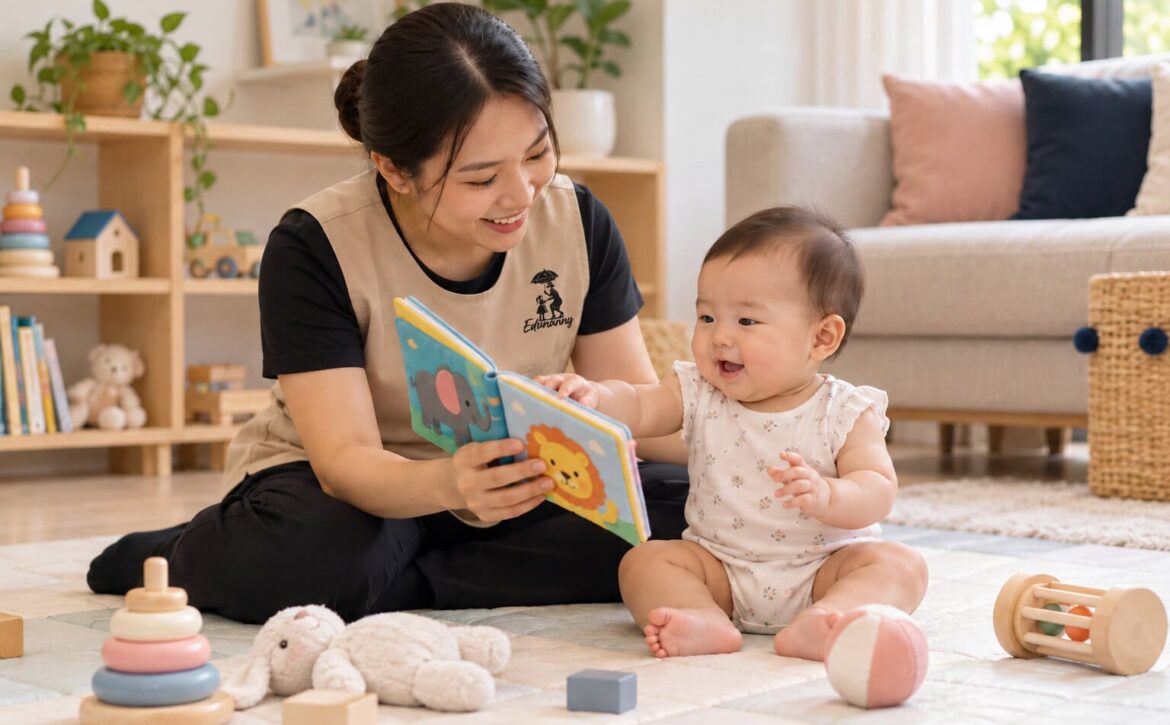
A practical milestone guide for Singapore parents, with current age checklists, everyday play ideas and clear steps for developmental concerns.

Every new parent faces the feeding question: breast or bottle? And when do those little ones start solids? The options can feel overwhelming.
You’re not alone in these decisions—and knowing the science-backed guidelines can bring real clarity. Proper nutrition during your baby’s first year shapes lifelong health, brain development, and eating habits. [Source: WHO]
Need feeding support? EduNanny’s trained caregivers can help with infant nutrition and care.
The good news? Whether you breastfeed, formula-feed, or combine both, you can give your baby an excellent start. Here’s your complete guide to feeding your baby in Singapore.
The World Health Organization and American Academy of Pediatrics recommend exclusive breastfeeding for the first 6 months of life. This isn’t arbitrary—it’s based on decades of research showing remarkable benefits.
Why breastfeeding matters:
Breast milk continues providing benefits well beyond 6 months. It supplies half or more of your baby’s energy needs between 6-12 months and about one-third between 12-24 months. [Source: WHO]
Only 44% of infants worldwide are exclusively breastfed for the recommended 6 months. If you’re struggling, you’re not alone—and support is available.
Not every family can breastfeed—and that’s okay. Iron-fortified infant formula is the only safe alternative to breast milk, according to AAP guidelines. [Source: AAP]
Choosing formula:
Here’s something many guides miss: formula spoils faster in Singapore’s heat. In tropical climates, prepared formula should not be left at room temperature for more than 1 hour—compared to 2 hours in cooler climates. [Source: AAP Safe Formula Guidelines]
Safe formula practices for Singapore:
Most babies are ready to start solids around 6 months—not before 4 months. Watch for these signs:
Starting solids too early can increase choking risk and hasn’t been shown to help babies sleep better—a common myth.
Babies are born with iron stores that run low by 6 months. Their first foods should be iron-rich:
Here’s where guidance has changed dramatically: introducing common allergens early may prevent allergies. The landmark LEAP study found that introducing peanut products between 4-6 months reduced peanut allergy risk by up to 80%. [Source: NEJM, LEAP Study 2015]
Introduce these allergens one at a time:
Wait 2-3 days between each new food to watch for reactions. If your family has a history of allergies, discuss introduction timing with your pediatrician.
Foods to avoid in the first year:
Our trained caregivers provide feeding guidance and support for new parents.
Singapore’s heat affects how you feed your baby. Your baby may need extra fluids in hot weather:
Signs of good hydration:
Singapore’s Health Promotion Board recommends introducing a varied diet with different textures gradually. [Source: Singapore HPB]
Popular local first foods:
Avoid local seasonings like soy sauce, salted egg, or MSG in baby food—their kidneys aren’t ready for high sodium.
If you’re experiencing latch problems, low supply, or pain—these are common and solvable:
Remember: Fed is best. If breastfeeding isn’t working for you, formula is a healthy, safe choice.
Spit up: Some spit-up is normal. Keep baby upright after feeds. Projectile vomiting or blood in spit-up needs medical attention.
Constipation: When starting solids, some babies get constipated. Offer prunes, pears, or extra fluids.
Food refusal: It can take 10-15 exposures before a baby accepts a new food. Stay patient and keep offering variety.
Responsive feeding: Watch your baby’s cues, not the clock. Responsive feeding—responding to hunger and fullness signs—prevents overfeeding and establishes healthy eating patterns. [Source: AAP]
Feeding your baby is a journey, not a destination. From those first breastfeeding sessions to the exciting (and messy!) introduction of solids, each stage has its challenges and joys.
Key takeaways:
You don’t have to navigate feeding alone. Whether you need childcare for your baby or simply feeding support from experienced infant care services in Singapore, help is available.
EduNanny provides 24/7 infant care with feeding support in Singapore.

Every parent knows the anxiety of watching their newborn sleep. Is the breathing okay? Is the position right? Could something happen?
You’re not alone in these worries—and knowing the science-backed guidelines can bring real peace of mind. Sudden Infant Death Syndrome (SIDS) remains the leading cause of infant mortality in developed countries. Each year, approximately 3,500 infants die from sleep-related causes. [Source: AAP Policy Statement 2022]
The good news? Following safe sleep practices can dramatically reduce these risks.
SIDS refers to the sudden, unexplained death of an otherwise healthy infant under one year of age. These tragedies often occur during sleep, leaving families devastated and searching for answers.
Research shows that infants are particularly vulnerable during sleep because their brain development and arousal mechanisms are still maturing. Factors like premature birth, exposure to smoke, and certain sleep environments can increase risk.
Key statistics every parent should know:
The American Academy of Pediatrics has distilled safe sleep into three core principles: Alone, on Back, in Crib. Let’s break down what each means for your family.
Your baby’s sleep space should contain only a firm mattress with a fitted sheet. No pillows, blankets, bumper pads, stuffed animals, or toys. These soft objects can block airflow and create suffocation hazards.
Since the AAP launched the “Back to Sleep” campaign in 1994, SIDS rates dropped by more than 50%. Placing babies on their backs for every sleep—naps and nighttime—is the single most effective protective measure.
Parents sometimes worry about choking, but babies’ airway anatomy actually protects them in this position. Even babies with reflux should sleep on their backs. [Source: HealthyChildren.org]
Here’s where many parents get confused. The AAP strongly recommends room-sharing without bed-sharing for at least the first six months, ideally up to one year.
Room-sharing benefits:
Bed-sharing risks:
The safest arrangement? Place baby’s bassinet or crib next to your bed. You’ll hear every sound, feed easily, and sleep peacefully knowing baby is protected.
Living in Singapore’s hot, humid climate adds unique challenges to safe sleep. Here’s how to adapt the guidelines for our tropical environment.
Heavy swaddles and thick blankets are counterproductive in tropical climates. Instead:
Good airflow helps prevent overheating, a known SIDS risk factor. Keep windows slightly open when possible, or ensure your air conditioner circulates fresh air.
Many Singapore families follow traditional confinement practices after birth. While these customs hold cultural significance, some may conflict with safe sleep guidelines. Here’s how to navigate thoughtfully.
Common practices to discuss:
The goal isn’t to dismiss tradition, but to adapt it safely. Work with confinement nannies and grandparents to find solutions that honor cultural practices while protecting baby.
EduNanny tip: Our professionally trained caregivers understand local customs and can help bridge traditional wisdom with evidence-based safety practices.
Use this quick-reference guide to verify your baby’s sleep space every time.
Safe sleep isn’t complicated, but it is critical. By following the AAP’s ABCs—Alone, on Back, in Crib—and adapting them to Singapore’s unique environment, you’re giving your baby the safest possible start.
Remember these key points:
You don’t have to figure this out alone. Ready for restful nights? Contact EduNanny for professional, trained caregivers who understand safe sleep practices and can support your family 24/7.
Singapore’s screen-free preschool trend is growing. But evidence shows quality matters more than quantity when it comes to early childhood technology. Here is the nuanced reality parents need.
Discover childcare options with EduNanny. ECDA-appointed childminding with 24/7 CCTV access, ultra-low ratios, and professionally screened caregivers. Learn more about our services today!
Discover the benefits of home-based childminding: a parent’s guide with EduNanny. ECDA-appointed childminding with 24/7 CCTV access, ultra-low ratios, and professionally screened caregivers. Learn more about our services today!
Discover nanny vs childcare centre: which is right for you? with EduNanny. ECDA-appointed childminding with 24/7 CCTV access, ultra-low ratios, and professionally screened caregivers. Learn more about our services today!
Discover ecda licensing requirements with EduNanny. ECDA-appointed childminding with 24/7 CCTV access, ultra-low ratios, and professionally screened caregivers. Learn more about our services today!

Discover building trust with your childminder with EduNanny. ECDA-appointed childminding with 24/7 CCTV access, ultra-low ratios, and professionally screened caregivers. Learn more about our services today!