Attunement at Eye Level Near Home Care The EduNanny First Thousand Days Revolution in Singapore
EduNanny in Singapore: A Living Practice for the First Thousand Days
Good evening, friends of early childhood, partners in possibility, and guardians of tomorrow. EduNanny stands as a national movement designed to turn timeless ideas about development into day-to-day care—on the floor, at eye level, near home, in Singapore. This article expands the founding speech into a practical, editor-quality guide for parents, carers, and communities. It offers actionable advice, real EduNanny insights, and concrete steps you can apply now to support infants during the most elastic window of human development: the first thousand days.

What is EduNanny?
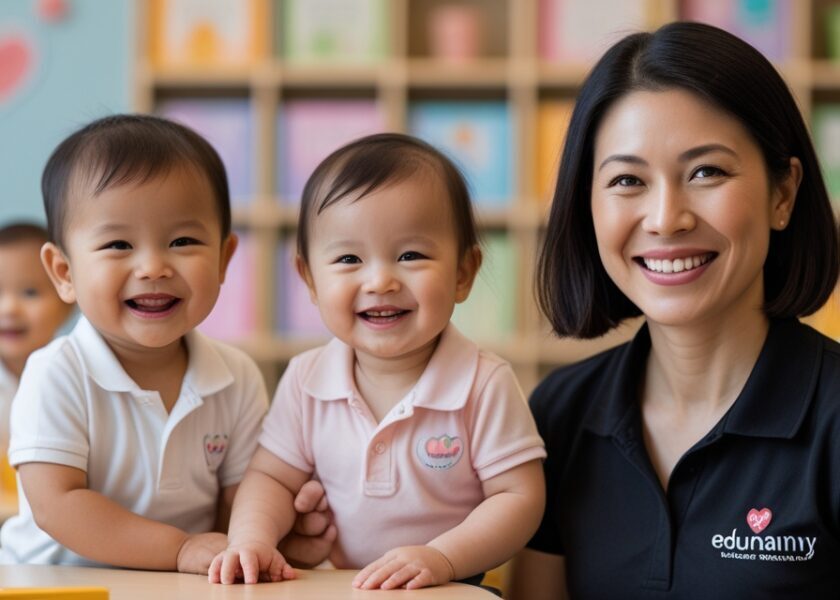
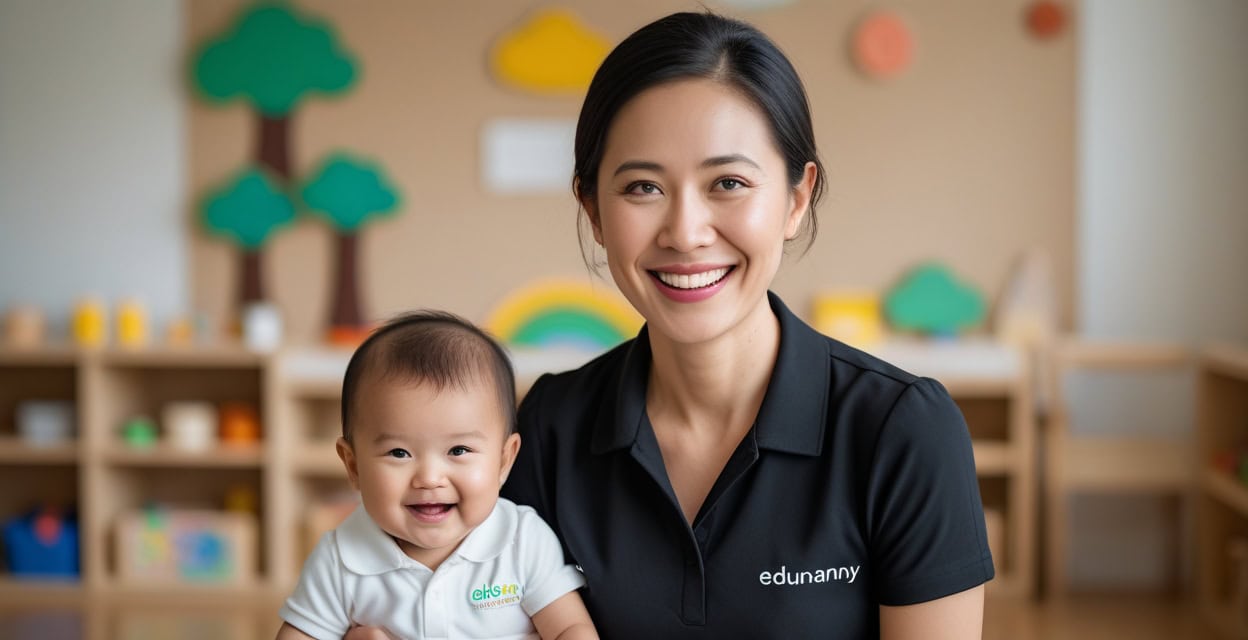
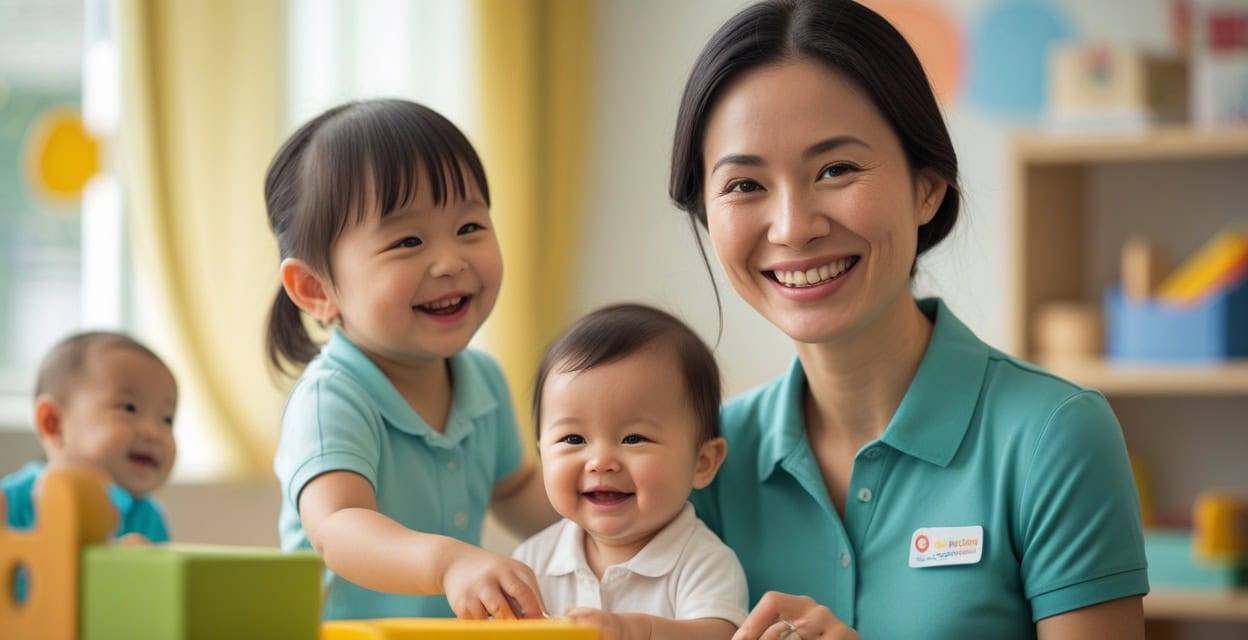
EduNanny is a national childminding movement built for the first thousand days—the period when attention, attachment, and early learning foundations are formed. We deliver excellence in infant care across center-based hubs, home-based micro-settings, and distance-supported coaching for families. Our model operates Monday to Friday, 7am to 7pm, islandwide in Singapore—close to MRT lines, close to workplaces, and closest of all to where families live. Our standard is human-scale: a maximum of three infants to one trained carer, with spaces designed at floor height, modern, calm, and transparent. Parent-enabled CCTV ensures a clear line of sight in every room, and a culture of calm presence makes safety feel like oxygen—ever-present, never intrusive.
We’re proud to participate in the ECDA Childminding Pilot as a National Social Initiative shaped to do two things at once: give infants the steady start they deserve, and help Singaporean families and carers achieve dignified work through a Maximum Employment Mandate. Fees are affordable—starting from $33/day—and, where eligible, payable by CDA/Baby Bonus. Learn more at EduNanny.com and Childminding.EduNanny.com.
Four vital ideas shape our work
1) The Quiet Geometry of Three
In every EduNanny setting, the infant, the carer, and the environment form a triangle of attention. With a 1:3 ratio, the carer’s working memory aligns with the infant’s need for timely attunement. We train carers to practice micro-scaffolding—Notice, Name, and Nudge:
- Notice the cue: a head turn, a foot flex, a breath pattern. Example: “I notice you’re turning your head toward the toy.”
- Name the state: “I see you’re curious” or “That sound surprised you.”
- Nudge the exploration: a soft toy angled to invite reach, a brief pause to let the infant lead.
This is a living translation of Vygotsky’s zone, Pikler’s patience, and Bowlby’s secure base—rendered minute by minute on the floor. The outcome is more than calm care; it’s cognitive traction—tiny repetitions that build neural confidence.
Practical at-home application: Create a simple Observation-Response routine with your child. When you notice a cue (e.g., a new reach), name the state aloud, then offer a safe, short nudge (a hand position or a chosen toy) and pause for the infant to lead again. Log one successful micro-scaffold per day to build a personal “quiet geometry” of your child’s attention over time.
2) Safety as a Mesh, Not a Fence
Safety at EduNanny is a layered mesh that holds without hemming in. We outline four layers: Design, Process, Transparency, and Proximity.
- Design layer: modern, ground-level layouts; non-toxic materials; soft thresholds; anchored furniture; sightlines that keep carers present, not tethered to corners.
- Process layer: dual-person checks for sleep, feed, and medication; incident-prevention walkabouts every morning; hydration, ventilation, and temperature logs; smooth handover protocols.
- Transparency layer: optional parent-enabled CCTV; daily briefings with photos and short notes; clear escalation pathways if a child is unwell.
- Proximity layer: near-home pods reduce long commutes and separations; smaller groups cut transmission risk; carers know each child’s rhythms intimately.
Family-friendly safety practicalities: request a short safety orientation for new spaces, keep a simple daily safety checklist at home (sleep posture, feeding temperature, toy inspections), and ask for photo or text updates after key transitions (wake-to-activity, meal time, nap time).
3) The Slow Hour: Rituals That Build a Fast Mind
EduNanny follows four anchoring rhythms—Breathe, Eat, Explore, Rest. The 60 minutes after wake-up is the Slow Hour: a time to greet the body, ground the senses, and rejoin the world with calm. Why slow? Calm brains learn faster later. Each pod weaves micro-routines—gentle greetings, predictable transitions, low-arousal soundscapes—into a 7am–7pm cadence. This is not idle time; it is deep preparation. When infants trust the pattern, their minds are free to play, and play is how intelligence practices being itself.
Practical timeline example (adjust for your child):
- 7:00–7:15 Wake and greet: carer gets down to eye level, soft voice, gentle touch to initiate connection.
- 7:15–7:30 The Slow Hour activities: simple sensory play (soft fabrics, light rattles), quiet songs, breathing together (4-count inhale, 4-count exhale).
- 7:30–8:00 Meals and exploration: age-appropriate self-feeding with safety supervision; low-arousal exploration stations (water play with cups, textured balls).
- 8:00 onward Patterned transitions: predictable shifts between play, rest, and care routines to stabilize attention.
Home adaptation: Create a “Slow Hour corner” at home with a low, safe mat, soft lighting, and a small shelf of simple toys. Use a calming track during the hour and narrate the routine softly to reinforce predictability.
4) Joy Literacy
Joy Literacy is the discipline of reading early social signals and turning them into micro-conversations. It trains carers to respond with language, tone, and tempo that honor the infant’s right to be seen before being taught. The loop is simple: Meet, Mirror, Make room.
- Meet: the carer gets down to eye level, face soft, shoulders open.
- Mirror: reflect the infant’s sound or gesture with a slight variation (echoed vowel, rhythm, or facial expression).
- Make room: pause, allow the infant to respond, then extend the game with a new action or toy.
Practical home tips: Use short, age-appropriate “conversations” several times a day. When your baby coos, imitate the sound and add a tiny variation. Pause and wait for their next cue, then respond with a new action (peek-a-boo from a chest pocket, a soft jingling toy, etc.). This builds language, self-regulation, and secure attachment.
Why childminding matters—and why now
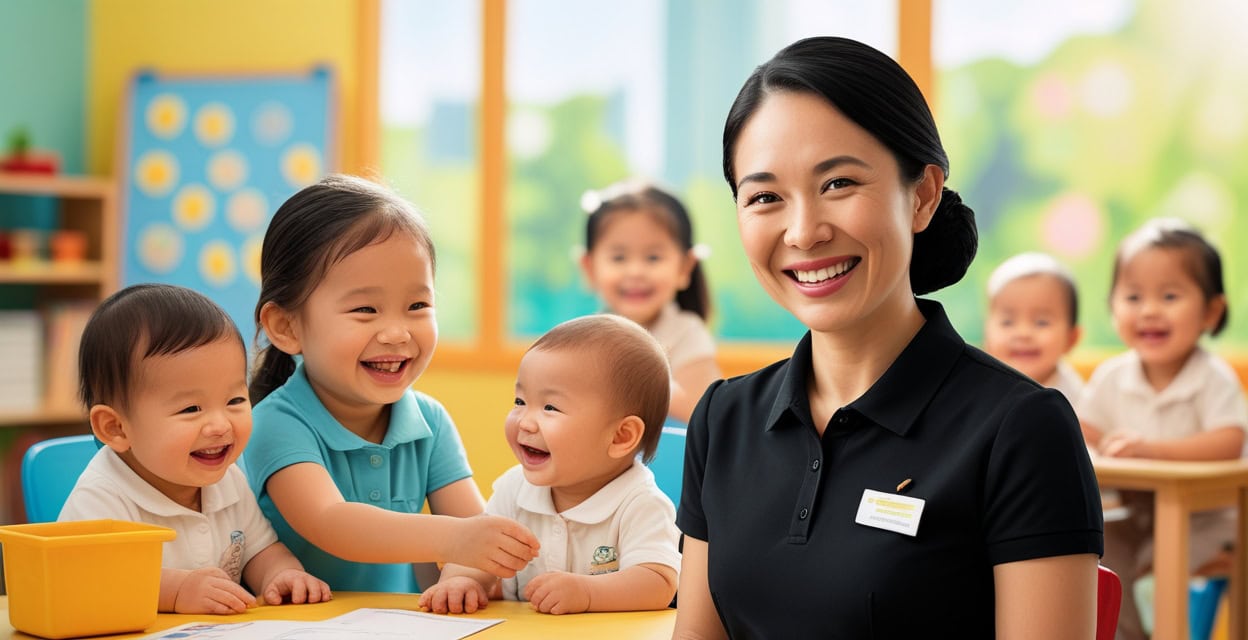
Childminding matters because infants need continuity across their week, and parents need reliability to participate fully in Singapore’s economy and civic life. The first thousand days are not only about nutrition and naps; they’re about the grammar of human connection. Carer employment is a public good: professionalizing and dignifying this workforce helps children thrive, parents breathe, and communities grow.
EduNanny’s public promise
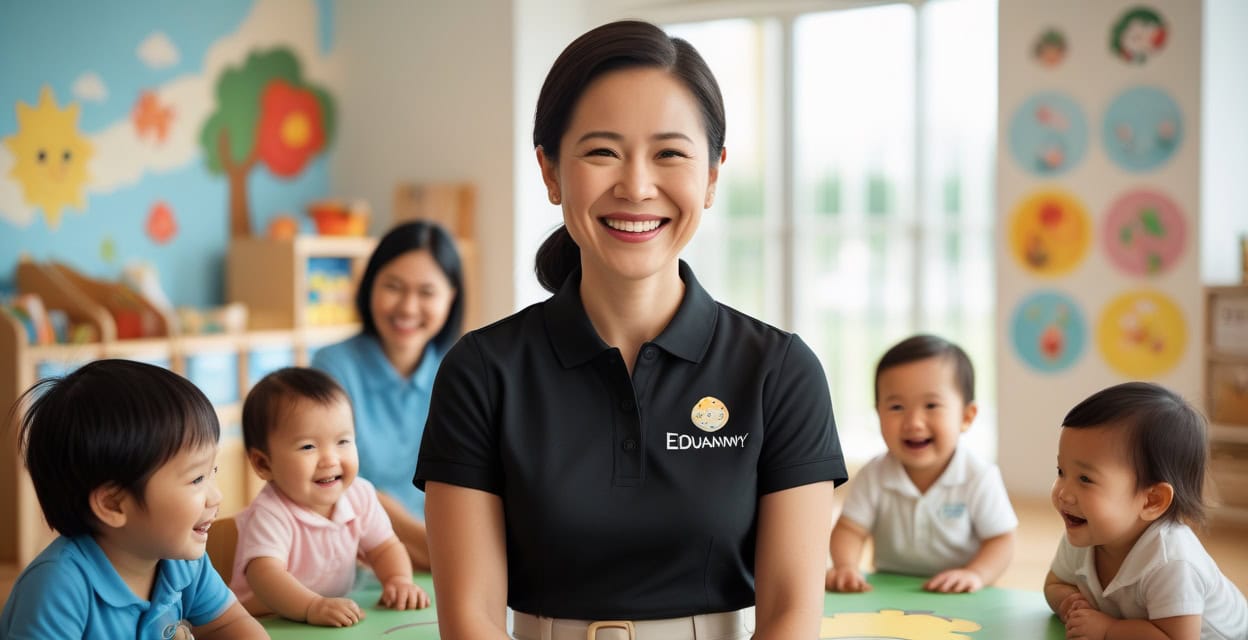
- Who: Infants from birth to three, their families, and professional childminders recruited from communities and trained to an exacting standard.
- What: Attuned, science-led, floor-level care with a 1:3 ratio; transparent safety; clear routines; developmentally rich play; daily family partnership.
- When: Monday to Friday, 7am–7pm, with consistent carers and predictable rhythms.
- Where: Islandwide Singapore—near-home home-based pods and center-based spaces—with distance support for coaching between visits.
- How: Safety mesh, human-scale ratio, shared curriculum of attunement, open channels—CCTV transparency, daily updates, and in-person reviews. We align with the ECDA Childminding Pilot and national priorities around affordability, access, and employment. Fees begin from $33/day and may be payable by CDA/Baby Bonus where eligible.
What parents can expect, every single day
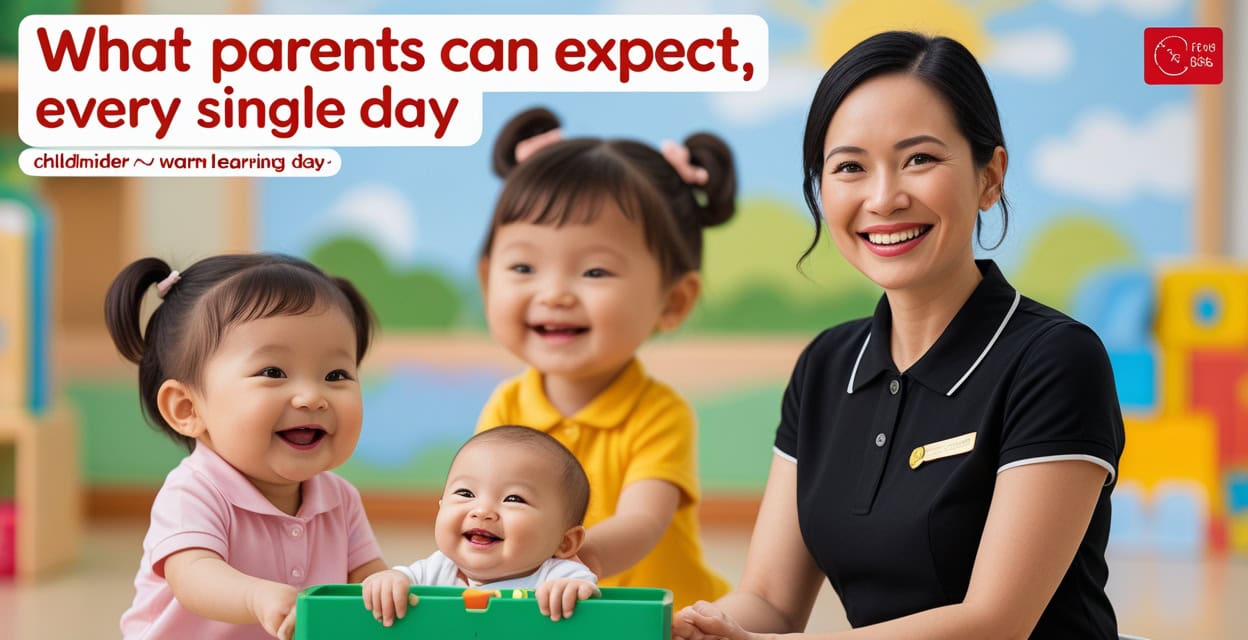
- Calm rooms that invite discovery rather than overwhelm.
- Carers who kneel to greet, listen, and follow the child’s lead.
- Routines that stabilize sleep, feeding, and exploration without rigid rigidity.
- Transparent logs for health, safety checks, and development notes.
- A tiny circle of three infants that becomes a secure base, not a crowd.
- Modern design, clean air, and meaningful oversight you can see.

What carers can expect
- Professional training rooted in attachment science and responsive caregiving.
- Fair scheduling and protected preparation time to plan individualized care.
- A Maximum Employment Mandate that recognizes care work as essential work.
- Supportive supervision, peer learning, and clear pathways for growth.

And what Singapore can expect
- A near-home network that reduces stress, shortens commutes, and strengthens neighborhoods.
- A workforce participation boost for families and carers—care enabling work, and work valuing care.
- Children who enter preschool with secure attachment, settled rhythms, and curiosity intact.

In closing
Infant care is not a private errand; it is a public ethic. When we place a trained adult at eye level with a child; when we design rooms that speak softly; when we hold ratios low enough for love to be timely; when we treat families as partners and carers as professionals—we do more than mind children. We mind our future. This is the philosophy of EduNanny: meet every child with dignity, make safety effortless and visible, and move learning from the floor up—one careful, joyful minute at a time.

Conclusion
If this is the start you want for your child, for your family, and for our shared tomorrow, I invite you to visit EduNanny.com and Childminding.EduNanny.com. Book a tour of a center-based hub near you. Explore a home-based pod in your neighborhood. Ask about distance support if you need coaching at home. Enrol for Monday–Friday, 7am–7pm, with fees from $33/day and CDA/Baby Bonus options where eligible. Join a National Social Initiative that honors infants, elevates carers, and serves Singapore.
Let us build a city where the smallest citizens are met with the greatest care: calmly, closely, and together. Thank you.
SEO keywords: [#keyword1, #keyword2, #keyword3, #keyword4, #keyword5]
Ready to Experience Excellence?
Transform Your Family’s Journey
Discover Singapore’s leading infant care and childminding services. Expert guidance for your little one’s first thousand days.