Attunement at Eye Level A Near Home Promise for Singapore Infants and Families

EduNanny Singapore: A Daily Promise for Infants, Caregivers, and Families
EduNanny by BUTLER stands as a movement and a daily practice designed to support Singapore’s smallest citizens and their first communities—the infant, the caregiver, and the family. This long-form article expands the speech you heard, offering practical guidance, real EduNanny insights, and actionable steps parents and caregivers can apply today to nurture early development with dignity, safety, and joy.
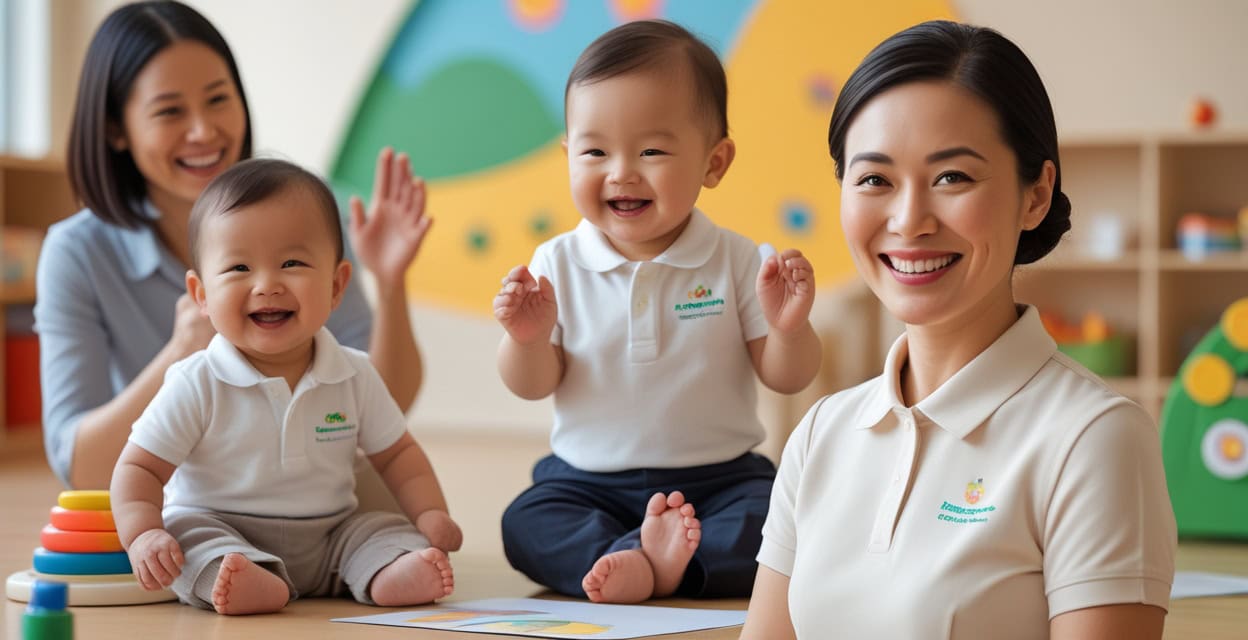
Topic One: The Attuned Triangle—Infant, Caregiver, Family
Infants learn most deeply in relationship. Our pedagogy centers on attunement, with the caregiver serving as a reliable mirror and co-learner. Below are practical approaches to bring the Attuned Triangle to life in everyday routines.
Connect: Building Trust at Eye Level
- Adopt a consistent greeting ritual: kneel or sit at the infant’s eye level, name signals, and mirror facial expressions to validate what the baby communicates.
- Use rhythmic talking: slow, soothing cadence with short phrases like “Hello, I see you,” or “That’s your toy.”
- Document cues: maintain a simple log of signals (cry, coo, gaze) to anticipate needs and shorten distress cycles.
Scaffold: Just-Right Challenges for Growth
- Offer age-appropriate challenges: trackable milestones such as rolling, reaching, or sitting with support, and celebrate small advances.
- Structure micro-activities: 2–3 minute, purposefully varied play sequences—tummy time with textures, a safe hover for supported sitting, and guided reach games.
- Balance challenge with rest: monitor cues and insert gentle resets to prevent overstimulation.
Release: Fostering Autonomy Without Pressure
- Gradually step back during play: pause to observe the infant’s independent actions, then re-enter with responsive scaffolding as needed.
- Introduce choice within limits: offer two safe options (e.g., two toys) to empower decision-making.
- Encourage safe exploration: coach caregivers to allow self-started activities with close supervision and clear safety boundaries.
EduNanny insight: In a 1:3 setting, attunement becomes the daily rhythm. Every moment—feeding, play, nap—offers an opportunity to observe, respond, and co-create a secure base for the child and a trusted practice for the caregiver.
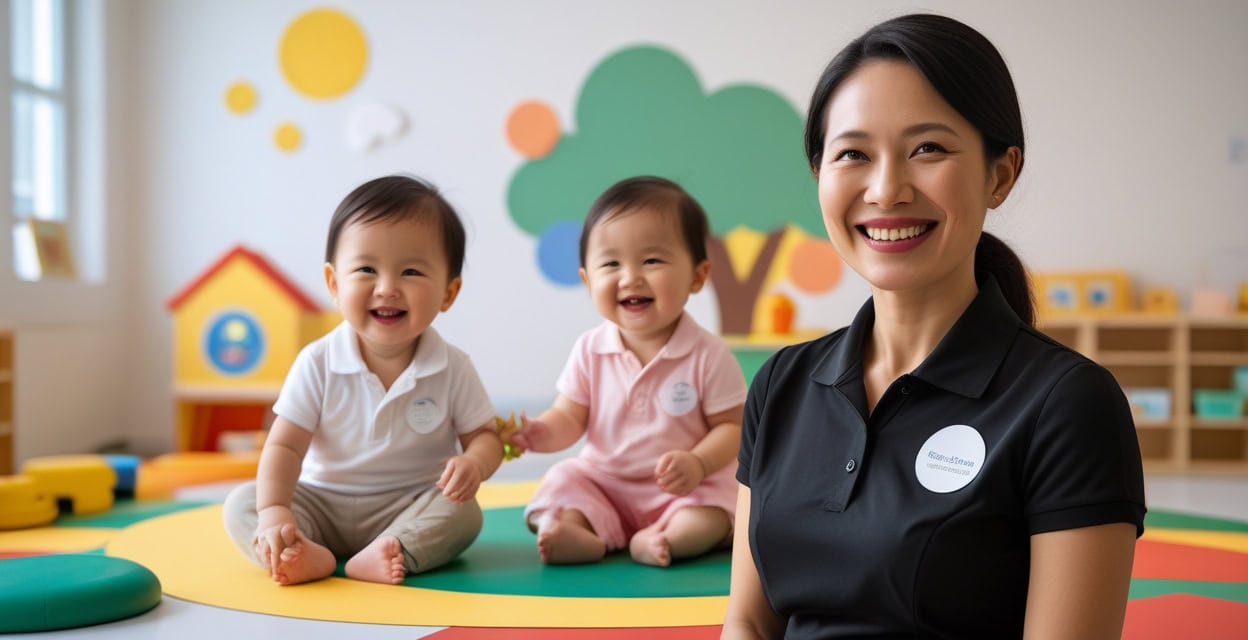
Topic Two: The Safety Lattice—Design, Practice, Transparency
Safety is a lattice of decisions repeated hourly. It requires thoughtful design, disciplined practice, and transparent communication with families.
Design: Safe, Calming Environments
- Layout: open sightlines, soft corners, and floor-level activity zones reduce risk while inviting exploration.
- Materials: non-toxic, washable, and appropriately sized for infant mouths and hands; rotate textures to stimulate sensory development.
- Environment: ensure consistent temperature, noise control, and accessible, organized spaces for easy caregiver oversight.
Practice: Consistency You Can Count On
- Two-person checks: handovers, health checks, and medication administration (where applicable) with mutual confirmation.
- Hygiene: rigorous but kind routines—handwashing, equipment sanitization, clean feeding tools, and allergen-aware menus aligned with family guidance.
- Sleep safety and routines: clearly defined sleep practices, monitored by caregivers through safe, quiet methods and visible cues.
- Emergency drills: calm, practiced responses; post-drill debriefs to improve real-time response and reassurance for families.
Transparency: Trust Through Visibility and Privacy
- Innovation CCTV: live access for authorized parents with robust data security and privacy-by-design safeguards.
- Communication: regular, bite-sized updates on activities, meals, sleep, and notable observations; respect for parental preferences on reporting format.
- Oversight: welcome feedback loops and periodic reviews of safety practices to maintain trust and continuous improvement.
EduNanny insight: Safety is not a set of rules, but a daily posture—anticipating needs, minimizing risk, and ensuring caregivers can respond with calm competence. With a 1:3 ratio, there is time to notice micro-cues and intervene before distress escalates.

Topic Three: The Growth Arc—From Sensation to Symbol to Social
The first thousand days unfold in stages. Our approach maps the arc from bodily sensation to social language, with practical milestones and activities to scaffold each phase.
Sensation to Movement: Building Body Awareness
- Structured tummy time: progressively increase duration, vary textures, and use mirrors or crinkly toys to invite curiosity.
- Position rotation: alternate between back, side-lying, and supported tummy positions to promote motor flexibility.
- Proprioception through play: softly press toy edges, encourage reaching, and celebrate small shifts in posture.
Movement to Meaning: The World Learns You Are Reliable
- Predictable routines: consistent feeding, play, and transitions reinforce security and expectations.
- Routine narrations: caregivers describe actions and intentions as they occur to model causal understanding (e.g., “If you reach, you’ll be fed next.”).
- Turn-taking patterns: simple games that practice waiting and responding help establish social rhythm.
Meaning to Language and Social Play: The Dance of Communication
- Language-rich environment: label objects, name emotions, and respond in turn-taking exchanges.
- Social micro-play: imitate, respond, and expand on the infant’s vocalizations to foster early conversational skills.
- Score of development: track specific, observable milestones (e.g., “held head up for 10 seconds,” “initiated a new gesture”) rather than vague terms like “on track.”
EduNanny insight: Progress is best understood as a constellation of tiny, precise gains. By celebrating specific moments, families and caregivers build a shared language of growth and trust.

Topic Four: The Joy Index—Rituals, Rest, and the Feel of a Good Day
Infant happiness stems from coherence, predictability, and responsive care. Here is how to cultivate daily joy in practical terms.
Rhythm: Predictable Days, Calming Nervous Systems
- Daily cadence: establish morning and afternoon routines that align with the infant’s sleep and feeding cues.
- Transition signals: brief songs or phrases signal upcoming changes (feeding to play, play to nap) to reduce stress.
Micro-Celebrations: Acknowledging Small Triumphs
- Three-minute celebrations: a first smile, a new reach, or a vocalization are acknowledged with warmth and a clear reflection (“I noticed you”).
- Visual notes: short photo or video notes shared with families to celebrate small skills in real time while protecting privacy.
Caregiver Wellbeing: Joy as a Daily Practice
- Professional dignity: ongoing training, mentorship, and opportunities for career advancement support caregiver happiness and retention.
- Wellbeing rituals: quiet moments of reflection, peer support, and manageable workloads help caregivers stay present.
Gentle Enrichment: Simple Yet Rich Experiences
- Music, nature, and language play: short, meaningful enrichment activities integrated into daily routines.
- Nature-time when appropriate: outdoor exploration with safety in mind, weather considerations, and appropriate gear.
Family Partnership: Shared Day, Shared Pride
- Daily notes and photos: clear, developmentally informative updates; invite parental feedback on observations.
- Inclusive planning: involve families in routine design, celebrations, and long-term milestones to sustain engagement.
EduNanny insight: A joyful day is not about nonstop activity; it’s about coherent rhythms, meaningful micro-moments, and a caregiver who is genuinely present with both skill and heart.

Topic Five: The Civic Heart of Childminding—Work, Worth, and the Neighborhood
Childminding is purposeful work that elevates families, caregivers, and communities. EduNanny’s approach translates national initiatives into everyday practice and long-term career pathways.
A Near-Home Solution for Working Families
- Extended hours and access: Monday–Friday 7am–7pm with options near home makes daily routines predictable and reduces the geography tax on parenting.
- Continuity of care: consistent standards across centre-based, home-based, and distance support for seamless transitions during illness or travel.
Caregivers: Stable Careers with Growth
- Structured training and mentorship: ongoing professional development to elevate skill, status, and earning potential.
- Clear progression: pathways from trainee to lead caregiver to mentor roles in a supportive, regulated framework.
Neighborhoods: Safe, Trusted Spaces
- Community integration: neighborhood hubs that welcome families, support social bonds, and reconnect parents with local networks.
- Quality standards: unified care quality across settings ensures that any EduNanny space delivers consistent, trustworthy experiences for children and families.
EduNanny insight: By tying a private caregiving role to public social goals, EduNanny converts everyday care into a national strength—where work, wellbeing, and early learning reinforce one another.

How EduNanny Makes Care Work for Singapore Families
- Excellence and Quality: A unified standard across centre-based and home-based sites; rigorous selection and training for childminders; continuous supervision.
- Convenience and Coverage: Islandwide access; hours that match working families; options near home or work; consistent pedagogy across settings.
- Affordability with Dignity: Fees payable by CDA/Baby Bonus; accessible pricing from $33/day; transparency on what families are paying for—time, training, and trust.
- Safety by Design: 1:3 infant ratio, modern layouts, strict hygiene and sleep safety, and innovation CCTV for accountable caregiving.
- Family Partnership: Daily notes grounded in developmental detail; open lines with caregivers; coherent routines across home, centre, and distance support.
- Public Purpose: Part of the ECDA Childminding Pilot, contributing to a national social initiative that builds work, wellbeing, and early learning together.
Visit EduNanny.com and Childminding.EduNanny.com to select home-based or centre-based childminding, schedule a tour, or speak with an advisor about the option that fits your family season.

A Singapore Story, Told in Minutes
Picture one morning. A parent hands a daughter to her childminder in a bright, uncluttered room. The caregiver kneels, greets by name, mirrors a smile, and pauses. Noticing the infant’s glance toward the window, they narrate: “You’re looking at the light.” A soft song begins the day. Later, tummy time becomes a triumph; a small reach is noted and celebrated. During nap, a gentle hand rests on the crib edge—enough presence to reassure, enough space to self-soothe. At pickup, the caregiver shares three precise observations and one suggestion to carry the new skill into the weekend. The parent sees a short clip on the secure CCTV archive and says, “That looked like her tempo.” The infant leaves as she arrived—calm, held, and growing.
This is not a special day. This is the standard we hold, minute by attentive minute.

Conclusion: Who, What, When, Where, and How Childminding Matters
Who: Infants, their families, and the caregivers who become part of that first circle of trust.
What: Childminding is the daily craft of safety, attachment, and gentle learning—a profession that dignifies both the giver and the receiver of care.
When: The first thousand days, and every workday between 7am and 7pm, when families need reliable presence.
Where: Across Singapore—centre-based hubs, home-based premises, and distance support that keeps the thread unbroken.
How: Through an ultra-low 1:3 ratio; modern, safety-led environments; trained and mentored childminders; innovation CCTV and open communication; affordability via CDA/Baby Bonus; and a national social initiative within the ECDA Childminding Pilot that turns private care into public good.
EduNanny’s philosophy is simple: Every infant deserves a steady hand; every parent deserves a trustworthy partner; every caregiver deserves a respected profession. Our purpose is to weave those three promises into a daily reality—near home, within reach, and worthy of a child’s astonishing potential.
If this vision resonates with the cadence of your family life—if you want care that is calm, transparent, and expertly human—come and see us. Tour a centre. Meet a home-based childminder. Try distance support on a week you need flexibility. Ask every question. Watch how your baby is greeted at eye level and how the room is designed for their curiosity. Look for the small things; that’s where quality lives.
Together, let’s give Singapore’s infants a beginning that is safe, joyful, and deeply competent. Let’s treat every caregiving minute as a building block of character, language, and confidence. And let’s make sure those who care for our children can build strong futures of their own.
EduNanny by BUTLER. Excellence, made ordinary. Care, made close. Futures, made daily.
[#EduNannySingapore, #InfantCareSingapore, #EarlyChildhoodEducation, #1to3CaregiverRatio, #ECDAChildmindingPilot]Ready to Experience Excellence?
Transform Your Family’s Journey
Discover Singapore’s leading infant care and childminding services. Expert guidance for your little one’s first thousand days.