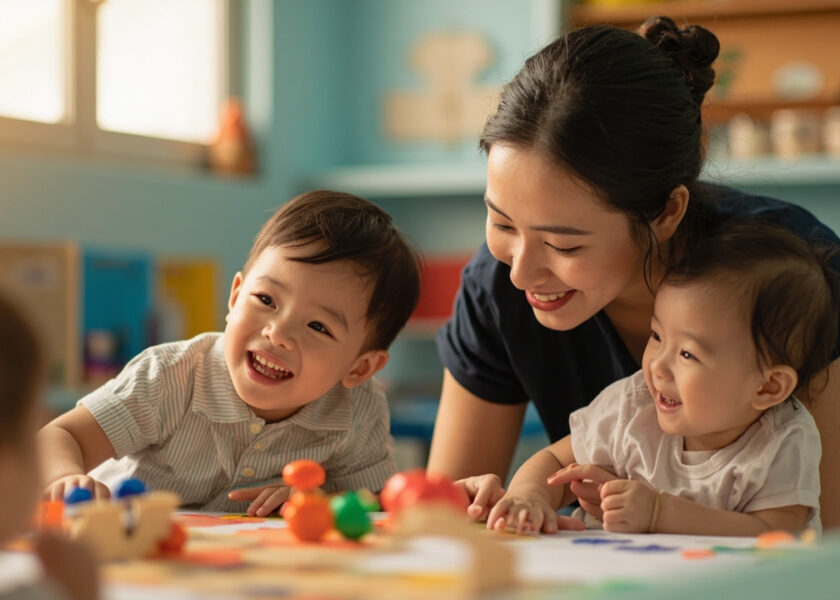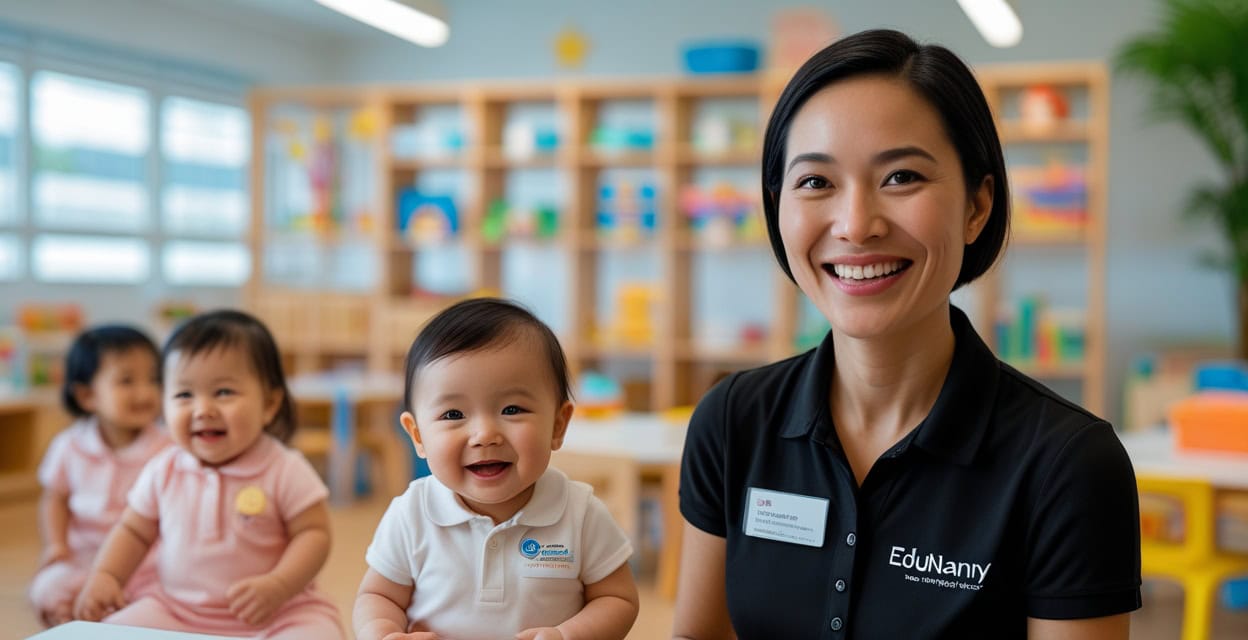
A National Pact for Tiny Citizens How EduNanny Turns Care into Public Trust in Singapore First Thousand Days
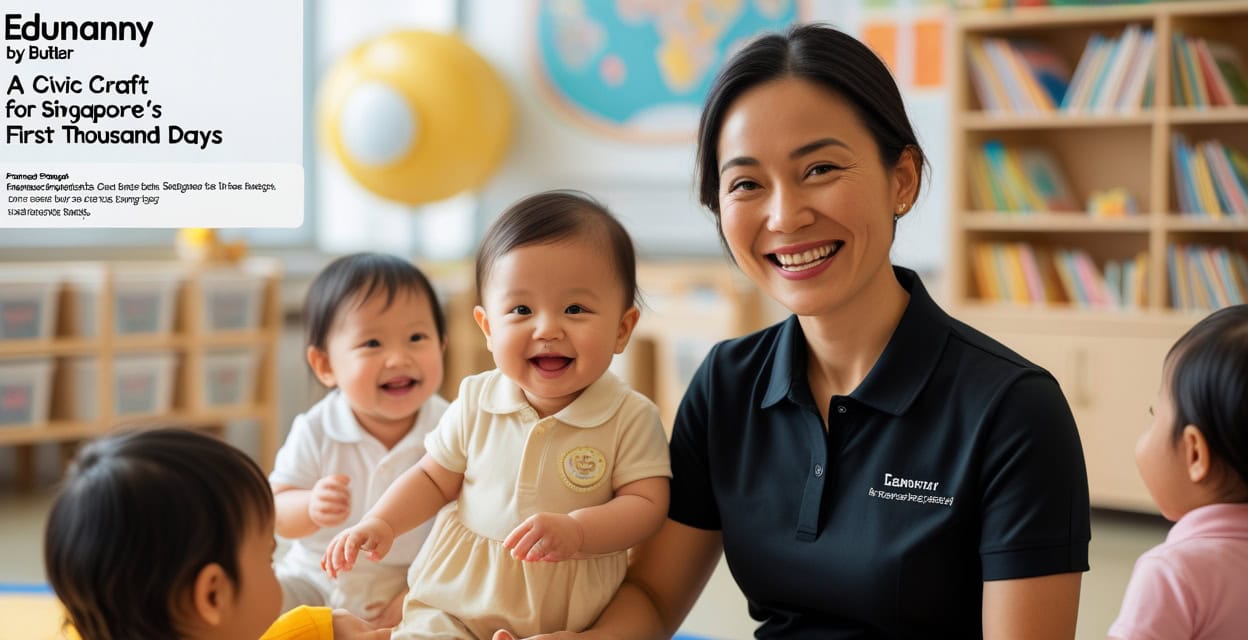
EduNanny by BUTLER: A Civic Craft of Care for Singapore’s First Thousand Days
Good evening, Singapore. Tonight’s message extends beyond a service announcement; it articulates a national conviction: the future of our nation is written in the care we give our youngest citizens, minute by minute, breath by breath. EduNanny is not merely a provider of childminding; it is a civic craft—childminding as public trust—where heart meets science in the first thousand days. This is a invitation to families, caregivers, and communities to join a movement that professionalises care, dignifies the caregiver, and anchors early years in the soil of daily life.
EduNanny by BUTLER delivers centre-based and home-based childminding across Singapore, Monday to Friday, 7 a.m. to 7 p.m., anchored in an ultra-low 1:3 infant ratio that makes trust tangible. Our offerings include modern, floor-safe layouts; innovation-driven transparency with oversight through CCTV; and daily rhythms designed for calm, joy, and growth. We are proudly part of the ECDA Childminding Pilot—EduNanny by BUTLER—advancing a National Social Initiative with a Maximum Employment Mandate to professionalise caregiving, create dignified jobs, and serve families where they live. Services are designed to be affordable (from $33/day) and fees are payable by CDA/Baby Bonus, making quality care accessible. We operate in centres, in community and home premises, and we extend distance support to families—because not every day looks the same, and care must flex to real life. Islandwide, we bring excellence, convenience, and trust to your doorstep.
Tonight, I’ll speak to four themes at the heart of EduNanny’s work: pedagogy, safety, development, and happiness—each one woven into the purpose of the childminder. Then I’ll close with a simple map—the who, what, when, where, and how of why childminding matters for Singapore now.
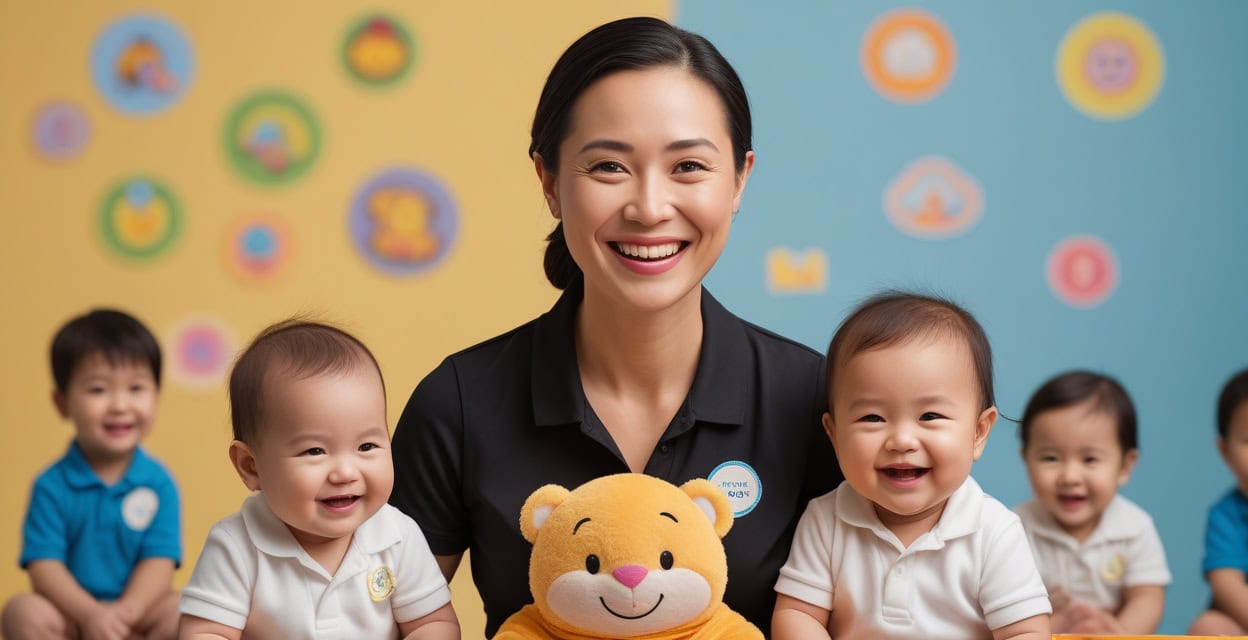
Pedagogy: Kneel, Connect, and Co‑Discover
Infancy is not a sprint to milestones; it is a series of attuned exchanges that shape the brain’s architecture. Our pedagogy is simple and rigorous:
- Kneel: We meet infants at eye level. Eye-level care reduces stress hormones, increases social referencing, and invites reciprocity—the first grammar of learning.
- Connect: We use a three-step cycle—See, Say, Support. We observe closely, name what we see (“You’re reaching for the red ring”), then scaffold the next step (“Let’s roll it to you”). This turns curiosity into mastery.
- Co‑Discover: We design the floor as a safe landscape for movement and inquiry. Instead of rushing to “do,” we prepare the environment to “allow.” Ramps, mirrors, soft baskets, open-ended objects, and low shelves invite the child to lead—Montessori’s respect, Piaget’s exploration, Vygotsky’s guided participation, and Pikler’s autonomy applied to Singapore’s daily realities.
What you’ll notice in an EduNanny room:
- Fewer toys, more purpose: objects that invite mouthing, gripping, tracking, balancing, filling, and emptying.
- A calm soundscape: gentle voice, soft music, clear cues—because noise overwhelms; clarity frees the mind.
- A one-minute micro-curriculum: tiny loops of attention repeated through the day that compound into secure attachment, language growth, and motor confidence.
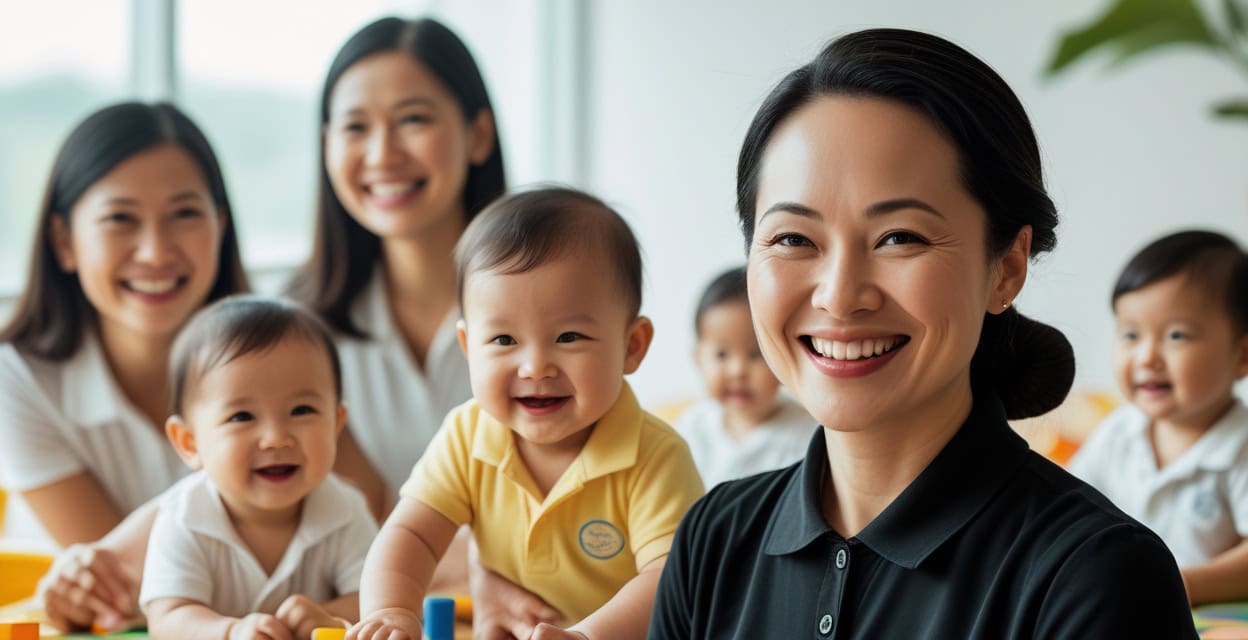
Safety: Design It In, Live It Out
Safety is not a checklist at the door; it is choreography that continues all day. We design, train, and verify.
- Space: Modern, low-lying layouts; cushioned corners; breathable surfaces; secure gates; labelled storage; clear sightlines.
- Sleep: Firm cots or safe floor-sleeping nests; supine sleep unless medically advised; temperature regulation; 10–15 minute visual checks; no loose bedding.
- Sanitation: Hand hygiene rituals; separate zones for food, diapering, and play; disinfect cycles documented and audited.
- Supervision: A true 1:3 ratio—never an aspiration, always a staffing reality. Coverage plans prevent “blind spots” during transitions and breaks.
- Security: Controlled entry; visitor logs; pickup codes; and innovation-driven CCTV for oversight and training, used with strict privacy and data policies.
- Preparedness: All staff are trained in infant first aid, choking response, and emergency drills. Allergies and medical needs are posted discreetly yet clearly in caregiver planning areas.
This is safety by design and culture: practiced, predictable, and kind.
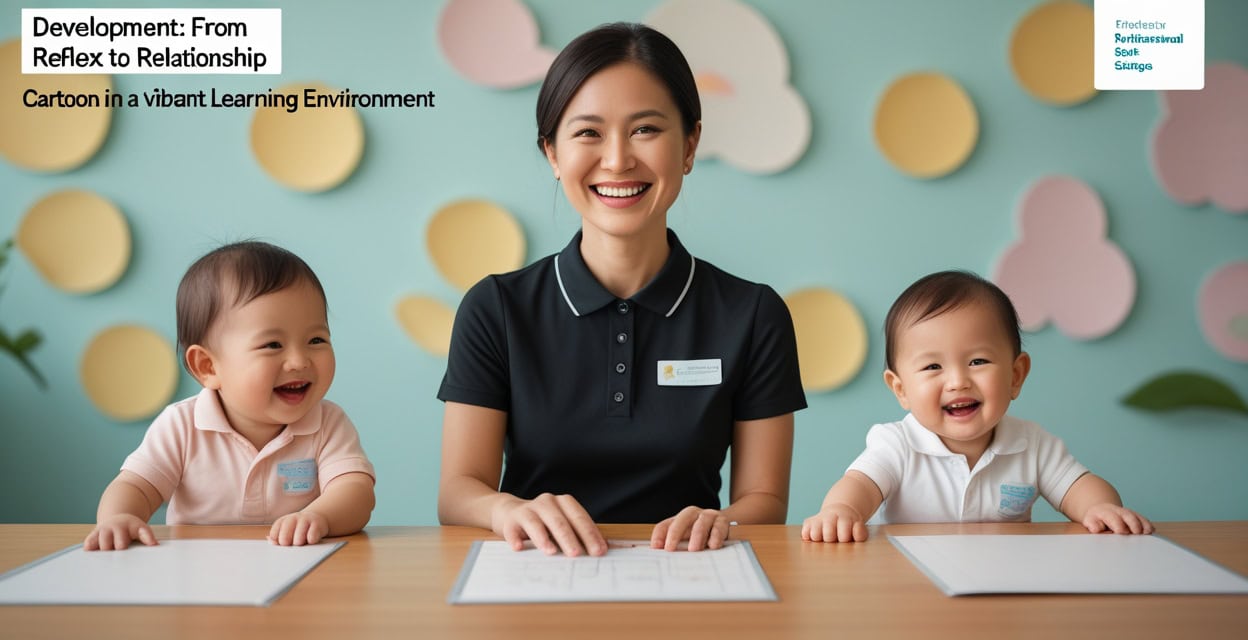
Development: From Reflex to Relationship
Brains grow where relationships are reliable. We shape each day to match the arc of development.
0–6 months
Regulation and sensing. High-touch, slow rhythms, contour holds, black-and-white tracking cards, tummy time on firm mats, soft vocal mirroring. Aim: a body that feels safe.
6–12 months
Reach and repeat. Basket play, object permanence (peekaboo with purpose), crawling pathways, finger foods where appropriate. Aim: cause-and-effect and bilateral movement.
12–24 months
Move and name. Push carts, simple sorting, water scoops, two-step routines (“wash hands, dry hands”), early social scripts. Aim: mobility, early words, and turn-taking.
24–36 months
Try and choose. Taste-safe sensory trays, early pretend, loose-part building, first group rituals. Aim: autonomy, empathy, and problem-solving.
At every age, we measure what matters:
- Stability of caregiver relationships.
- Frequency and quality of back-and-forth interactions.
- Progressive independence in daily routines (feeding, transitions, toileting readiness where relevant).
- Joy markers—shared smiles, relaxed bodies, spontaneous bids for attention, and frequent returns to a secure base.
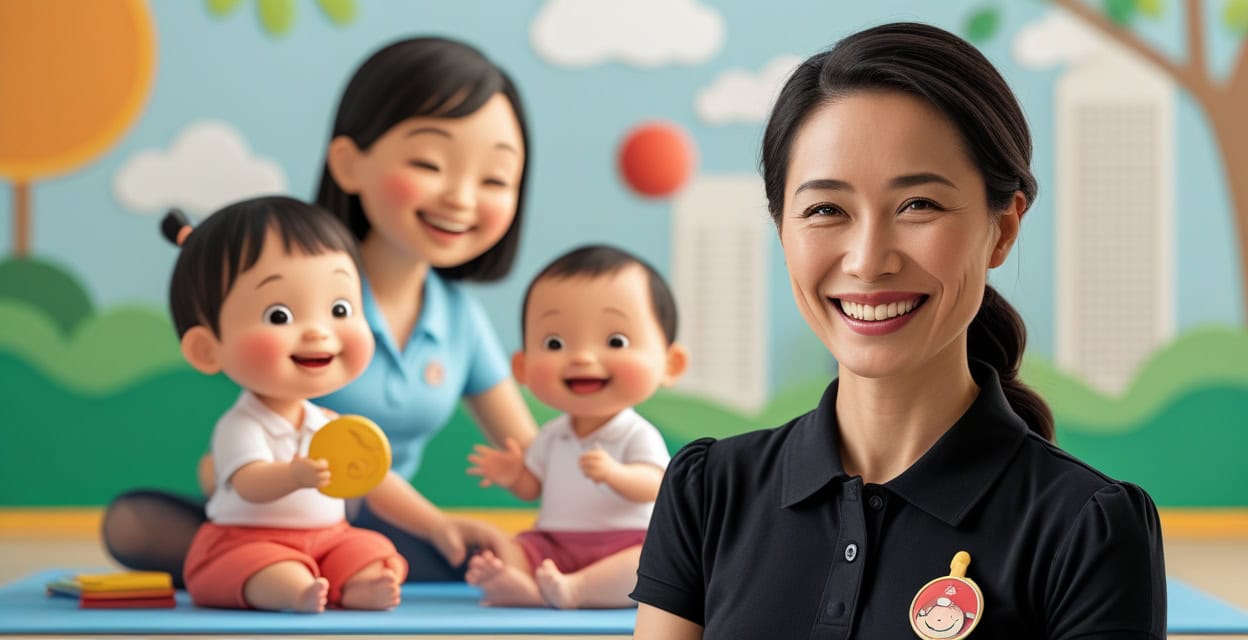
Happiness and Belonging: Joy You Can See
Happiness in infancy is the feeling of being understood. We build that feeling deliberately.
- Rhythm: Predictable day flows—arrivals, snuggles, play arcs, naps, fresh air, closing rituals.
- Story and song: Repeated language patterns in multiple languages—hello songs, name songs, fingerplays—that seed vocabulary and belonging.
- Outdoors: Light, air, and natural textures daily where possible; when weather limits us, we bring nature inside: basil to touch, citrus to smell, water to pour.
- Family partnership: Daily notes and photos via secure systems; home routines respected; caregivers learn family words, comfort objects, and cultural practices. Distance support—video check-ins, transition coaching, and at-home activity guides—keeps care continuous even when the child is with you.
- Gentle transitions: Slow handovers, familiar greetings, and goodbye rituals. No rushed exits, no unnecessary tears. Trust is a tempo.
The Purpose of Childminders: The Quiet Profession That Powers a Nation
Childminders are not “extra hands.” They are the stable adults who help wire attention, empathy, and resilience in the first thousand days. EduNanny exists to dignify this profession through training, mentorship, and a career ladder under the ECDA Childminding Pilot. This is a National Social Initiative with a Maximum Employment Mandate: more quality jobs close to home, more stable incomes for caregivers, and more trusted options for families. When we professionalise attuned care, we invest in human capital where it yields the highest return—early.
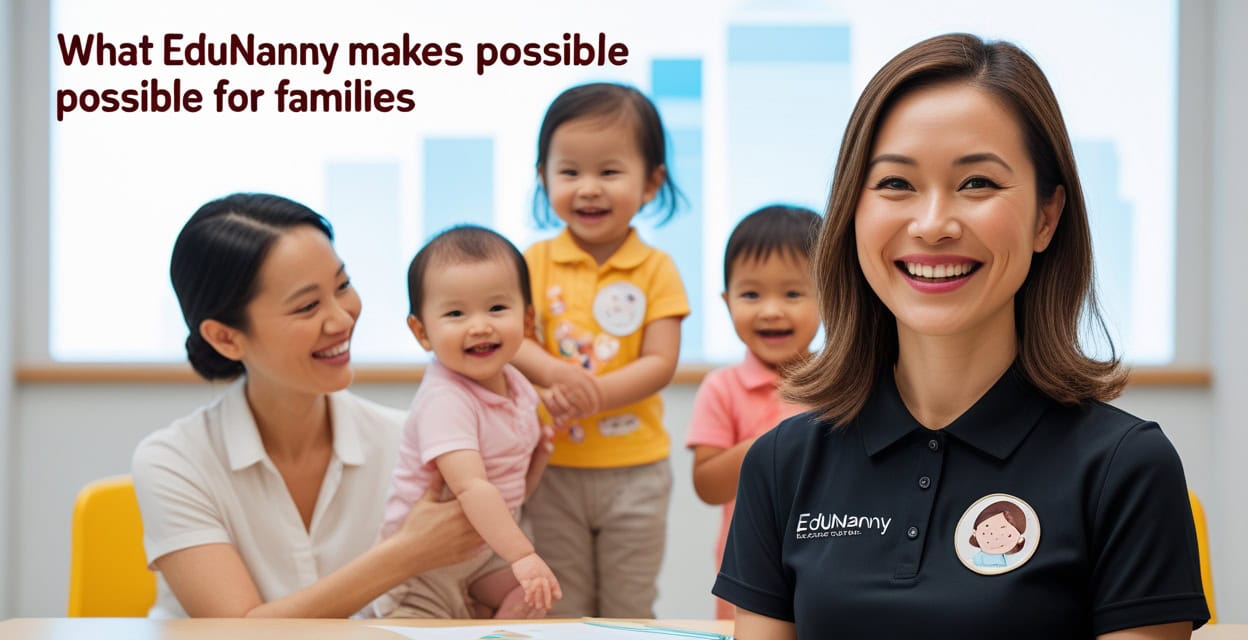
What EduNanny Makes Possible for Families
- Centre-Based and Home-Based options, plus Distance support for hybrid needs.
- Islandwide availability, Monday to Friday, 7 a.m. to 7 p.m., so work and care can coexist.
- Modern layouts, transparent operations, and a real 1:3 infant ratio—so your child is seen, named, and nurtured.
- Affordable fees from $33/day, with CDA/Baby Bonus eligibility—so excellence is accessible.
- A clear pathway to confidence—from the first hello to the walk out the door.
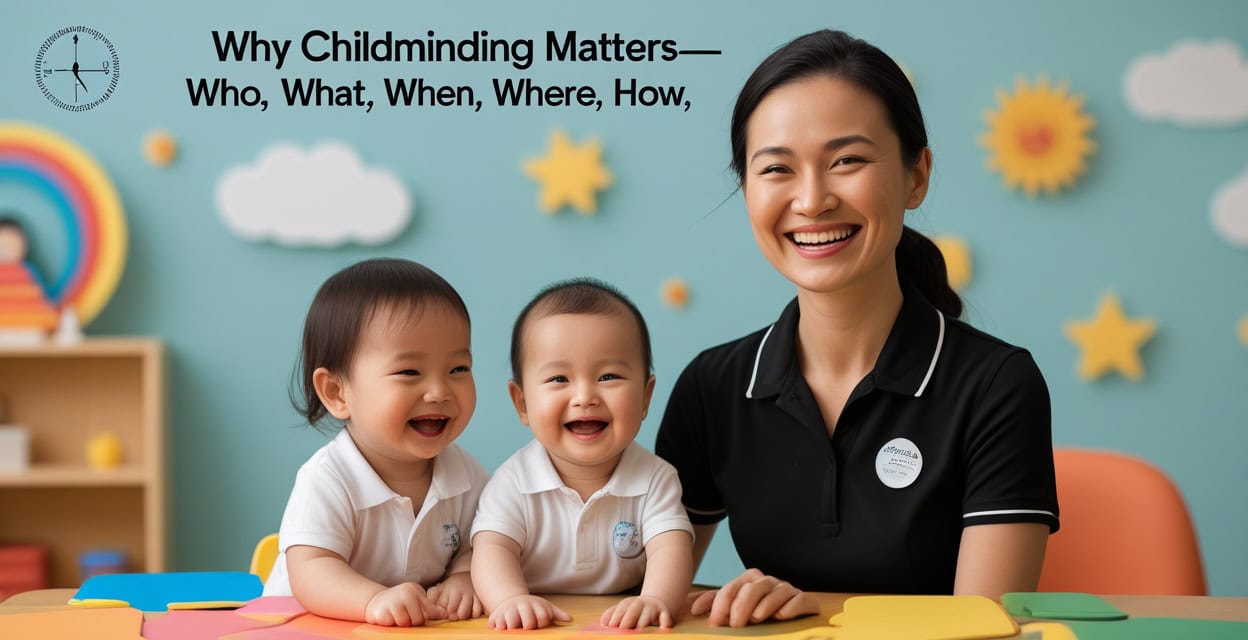
Closing: Why Childminding Matters—Who, What, When, Where, How
- Who: Infants, parents, and professional childminders—an ecosystem of trust.
- What: Attuned, science-led, heart-true childminding at an ultra-low 1:3 ratio.
- When: The first thousand days, and the practical hours that shape family life—weekdays, 7 a.m. to 7 p.m.
- Where: In centres and homes across every neighbourhood in Singapore, with distance support when needed.
- How: By design—prepared environments, trained caregivers, safety embedded in practice, transparent operations including CCTV oversight, and a partnership with families that honours culture and routine.
EduNanny’s philosophy is simple: meet the child on the floor, build safety into every minute, and let curiosity lead. Our purpose is public and personal—to help parents work and rest with peace of mind, to dignify the caregiving profession, and to give each infant a secure base from which to grow courageous, compassionate, future-ready.
Singapore, if you believe that the earliest care is the clearest path to our brightest future, we invite you to join us. Enrol your child. Train to become a childminder. Partner with us in your community. Because when an infant is held in competent, loving hands, a family steadies—and a nation rises.
Learn more or register at EduNanny.com and Childminding.EduNanny.com.
EduNanny by BUTLER—excellence, near home, for every child.

Conclusion
In the first days, hours, and minutes of a child’s life, the framework of a society is formed. EduNanny invites families to choose care that is grounded in pedagogy, safety, development, and happiness; invites caregivers to a profession that is valued, trained, and supported; and invites communities to build spaces where every child can begin with a secure base. The journey from reflex to relationship is lifelong, but it begins with a trusted caregiver at eye level, a thoughtfully designed environment, and a daily rhythm that honours both play and purpose. Join us in shaping Singapore’s earliest years into a durable foundation for resilience, empathy, and opportunity.
[#keyword1, #keyword2, #keyword3, #keyword4, #keyword5]Ready to Experience Excellence?
Transform Your Family’s Journey
Discover Singapore’s leading infant care and childminding services. Expert guidance for your little one’s first thousand days.