
Revolutionizing Infant Care in Singapore: EduNanny’s Vision for Secure, Purposeful, and Joyful Early Childhood Development

Reimagining Infant Care in Singapore: A Deep Dive into EduNanny’s Philosophy and Practice
In the evolving landscape of early childhood care, Singapore stands at a pivotal crossroads—balancing tradition with innovation, safety with exploration, and parental expectations with expanding societal roles. EduNanny emerges as a trailblazing movement, redefining what infant care can and should be. This comprehensive guide explores the core pillars that underpin EduNanny’s approach, offering parents, caregivers, and educators practical insights to foster a resilient, joyful, and purpose-driven foundation for Singapore’s youngest learners.

Understanding the Foundation: Why Infant Care Is a Societal Priority
Early childhood is a critical period where brain development accelerates, emotional bonds are formed, and lifelong habits take root. Recognizing this, EduNanny advocates for a holistic approach—integrating pedagogy, safety, emotional well-being, and professional development—to shape a nurturing environment tailored to Singapore’s diverse community.

1. Pedagogy with Purpose: Transforming Care into Learning
Bringing Science to Play: How Caregivers Foster Curiosity
At EduNanny, every interaction is an opportunity for learning. Drawing from the principles of Montessori, Vygotsky, and Malaguzzi, caregiver training emphasizes intentionality in play and routine activities. For example, caregivers are encouraged to introduce age-appropriate manipulative toys that promote fine motor skills, or incorporate language-rich interactions during feeding and diaper changes. Such practices transform seemingly mundane moments into rich learning experiences that promote independence, language development, and problem-solving skills.
Implementing Routine as a Learning Tool
Structured routines not only provide stability but also serve as scaffolding for cognitive and social-emotional growth. Consider implementing visual schedules that signal transitions, encouraging infants to anticipate and adapt, fostering autonomy. For instance, a visual chart indicating “clean-up,” “storytime,” and “outdoor play” helps children understand expectations and develop self-regulation.
Actionable Tips for Parents:
- Engage in daily routines like dressing, feeding, and play with intentional language—describing actions, asking open-ended questions, and encouraging imitation.
- Create safe, inviting spaces at home that stimulate exploration, such as sensory bins, musical instruments, and soft climbing areas.
- Participate in workshops or parent-child classes that focus on nurturing purposeful interactions based on current developmental science.

2. Safety as a Living Principle: Nurturing Trust Through Every Measure
Physical Safety: Building Trust Through Environment and Protocols
Physical safety remains foundational. EduNanny’s spaces are designed with child-proofing in mind—lowered furniture, secure outlets, anti-slip flooring, and safe toys. Caregivers undergo rigorous background checks, and CCTV systems provide transparency for parents. Regular safety audits and emergency preparedness training ensure standards are not just met but are continuously refined.
Emotional Safety: The Bedrock of Secure Attachment
Beyond physical safety, emotional security nurtures confident explorers. EduNanny prioritizes attachment-building strategies—responding promptly to crying, maintaining consistent routines, and offering comforting presence. Caregivers learn to understand each infant’s cues, fostering trust and reducing anxiety, which positively impacts brain architecture and emotional regulation.
Actionable Tips for Parents:
- Choose care providers who integrate safety protocols with warm, responsive interactions.
- Establish consistent routines at home to reinforce secure attachments.
- Communicate openly with caregivers about your child’s emotional needs and development progress.
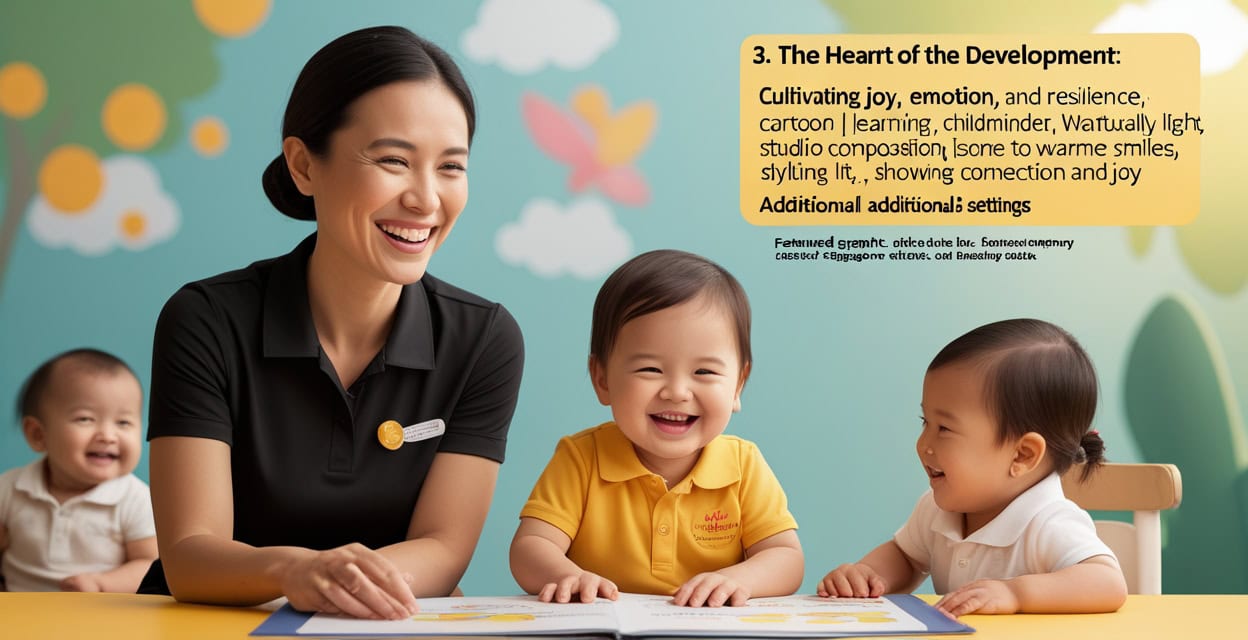
3. The Heart of Development: Cultivating Joy, Emotion, and Resilience
Joy as a Catalyst for Learning
Research confirms that happiness enhances cognitive engagement. EduNanny embeds joy into daily routines through outdoor play, music, tactile activities, and communal meals. For example, outdoor scavenger hunts or music and movement sessions create shared moments of wonder, fostering social bonds and emotional resilience.
Building Emotional Quotient (EQ)
Recognizing early signs of empathy and persistence is key. Caregivers are trained to observe emotional cues, such as a child’s reaction to a new toy or peer interaction, and respond in ways that promote kindness and self-awareness. Activities like storytelling, role-playing, and empathy games further develop these skills.
Practical Advice for Parents:
- Encourage expressive play that allows children to name feelings and understand others’ emotions.
- Provide opportunities for outdoor exploration to stimulate sensory development and physical resilience.
- Celebrate small successes to bolster confidence and emotional security.

4. Professional Childminders: Elevating Care Through Purpose and Partnership
From Caretakers to Catalysts: The Role of the Professional Childminder
EduNanny redefines the caregiver’s role—from passive watchers to active mentors. Trained to be insightful, empathetic, and culturally responsive, childminders serve as bridges between the child’s early experiences and a broader learning trajectory. The professional development programs foster continuous growth, ensuring caregivers remain at the forefront of early childhood science and practice.
Connecting Families and Educators
Partnership with families is central. Regular updates, parent-teacher meetings, and digital portfolios help parents stay involved in their child’s journey. This collaborative approach reinforces learning and emotional security beyond the care environment.
Accessibility and Affordability
EduNanny’s innovative hybrid model—combining home-based, centre-based, and distance caregiving—ensures flexible access. Affordable fees, starting from $33/day with subsidies like CDA and Baby Bonus, make quality care accessible to all families, regardless of socioeconomic status.
Actionable Tips for Parents:
- Engage with caregivers through regular communication—ask about daily routines, developmental milestones, and emotional needs.
- Utilize digital tools offered by EduNanny to stay connected with your child’s progress and activities.
- Support caregiver training and community programs that elevate the professionalism of childminders, ensuring quality care for your little ones.

5. The Path Forward: Building a Compassionate and Capable Society
Childminding is more than a service—it’s the cornerstone of societal well-being. Investing in early childhood development translates into a generation equipped with resilience, empathy, and innovation. EduNanny’s philosophy champions a future where quality, safety, joy, and professionalism are not optional, but standard.

Conclusion: Embracing a New Standard in Infant Care
As we’ve explored, EduNanny’s integrated approach—focusing on purposeful pedagogy, unwavering safety, emotional warmth, and professional excellence—sets a new standard for infant care in Singapore. It emphasizes that caregiving is not merely a duty, but a profound partnership that shapes lives.
Parents and caregivers are invited to reflect on this vision and consider how they can contribute—by choosing quality care, engaging actively, and advocating for policies that support early childhood development. Together, we can build a society where every child’s earliest experiences are infused with love, purpose, and possibility.

Join us on this journey—invest in your child’s future today, and be part of Singapore’s movement towards compassionate, innovative, and high-standard infant care with EduNanny.
#EarlyChildhoodDevelopment, #InfantCareSingapore, #ChildmindingStandards, #ParentEngagement, #QualityChildcare