How to Try Responsive Object Play With Your Baby at Around 9 Months
Use one familiar object to create a short shared play moment around 9 months. Follow your baby's attention, try a simple response and let comfort guide when the round ends.
At around 9 months, one familiar object can create a short shared play moment. Let your baby’s gaze, reach, point or sound guide the beginning: notice what they do, make one connected response, then pause for their next move. This is play, not a naming test, and your baby’s comfort matters more than completing the activity.
Babies around this age may point, make different sounds, copy movements and show interest in familiar objects. UNICEF’s 9-month guidance recommends following a baby’s signals and letting them lead during playtime. These are possibilities, not predictions of what your baby will do next.
Start with your baby’s immediate interest
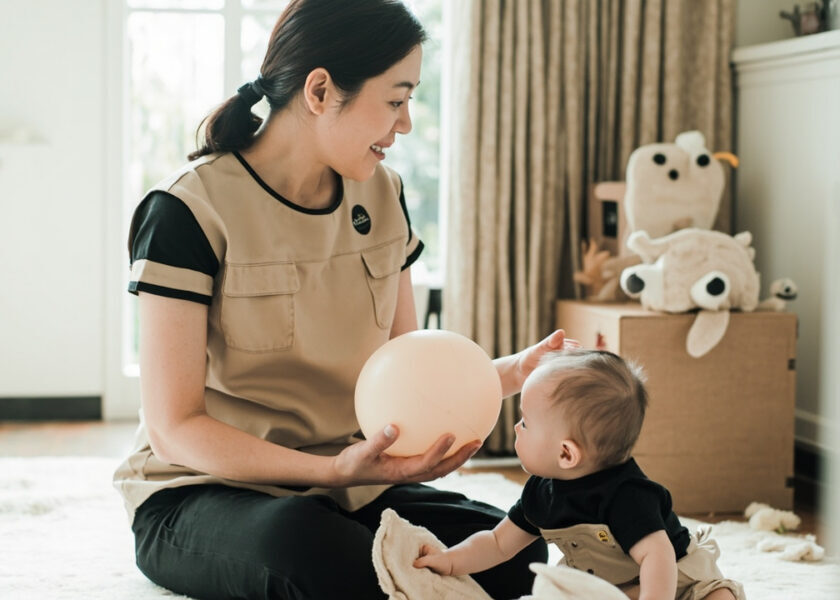
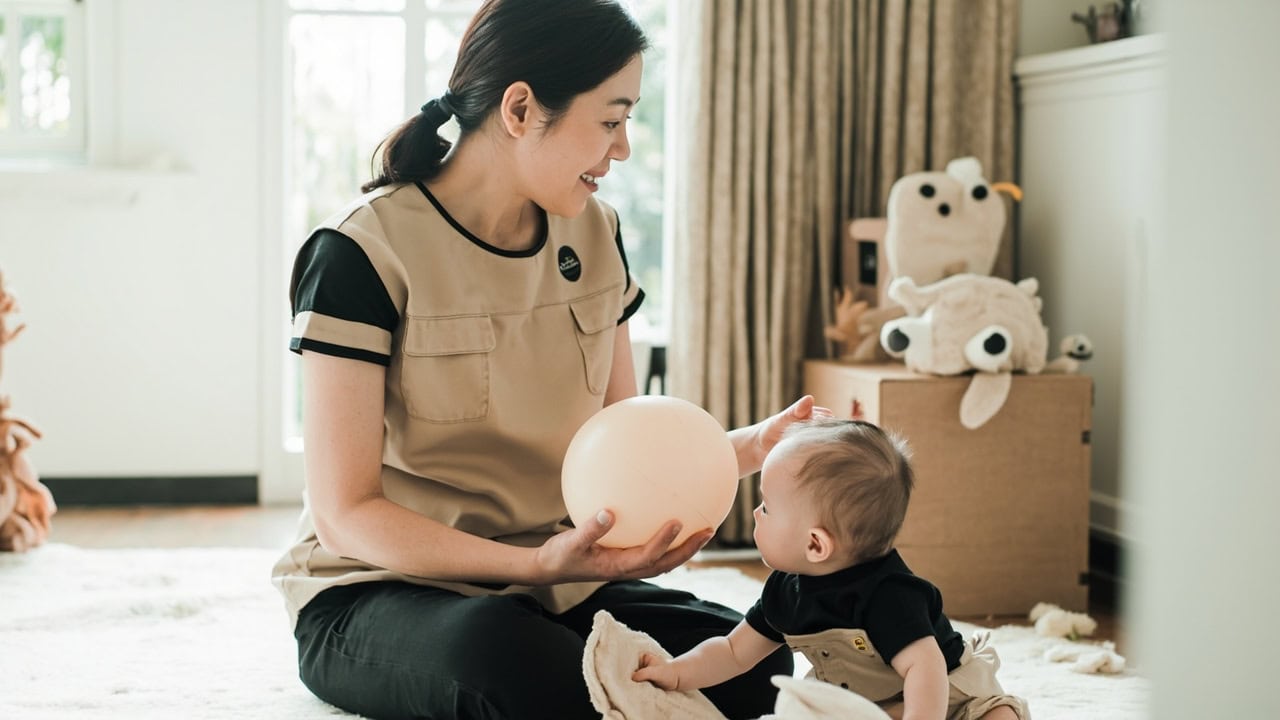
Begin with an object your baby already knows. Place it where they can see it and within comfortable reach, perhaps on a clear floor mat while you sit beside them. A large, clean, intact soft ball may work well for some babies. Support your baby’s sitting position if they need it, and stay close enough to supervise every reach.
Give your baby time to look, reach, point or vocalise. When they show interest, follow that cue rather than introducing another object. If they look away or change activity, let the round end. A return of attention is enough reason to offer one small response.
An object can have a name without making naming the goal. UNICEF suggests naming objects that babies notice in their surroundings. If your baby looks towards the ball, you might say “ball” once, then notice what they do next. Their immediate action remains the guide.
Use the observe, echo and pause method
The method has three short steps:
- Observe: Notice one thing your baby is doing, such as watching the object, reaching, vocalising, copying your movement or turning away.
- Echo: Reflect one sound or movement connected with their action. If your baby repeats a “ba” sound, you might answer with one “ba”. If they touch the ball, you might touch it once.
- Pause: Stop adding sounds and movements for a few moments. Leave room for your baby to look, reach, vocalise or end the interaction.
The Harvard Center’s serve and return guidance describes responsive, attentive interactions with plenty of back and forth exchanges as building a strong foundation for learning and development. Observe, echo and pause is a practical illustration of that idea. Echoing connects your response to your baby’s contribution, while the pause gives them room to begin the next turn. It is an illustrative routine, not a diagnostic tool.
You do not need to fill the pause with more language. UNICEF’s baby talk guidance describes infant directed speech as ordinary language made simpler through repetition, slower speech and expressive facial movements. During this short round, one connected word or sound is enough.
Worked example with one soft ball
This example is illustrative rather than a report about one baby. Place one large, clean soft ball on a clear floor mat within your baby’s view and sit close beside them. Your baby looks towards it and reaches out. You touch the ball once, make a quiet “oh” and pause.
Your baby looks back at the ball and reaches again. You repeat the same response once, then pause. If your baby looks towards you or vocalises, you might say “ball” and return your attention to the object.
On a later round, move the ball a short distance across the mat. Your baby follows it with their eyes and reaches again. Wait before adding another sound. If your baby turns away, let the play finish and return to the surrounding routine.
Your baby may reach without vocalising, vocalise without looking back or show no interest in the ball. Each response helps you decide what to do next: follow it once, pause again or end the round.
Change only one element at a time
If your baby remains interested, vary one feature while keeping the rest of the interaction familiar:
- Position: Place the object slightly to the left or right, within view and comfortable reach.
- Movement: Move the object slowly across the mat once, then stop.
- Sound: Echo your baby’s sound once, or pair one familiar word with the action.
- Pause: Wait a little longer before adding your next response.
Pause and observe after each change. Repeat the version your baby returns to, or stop if their attention fades. Changing one element makes it easier to notice what captured your baby’s interest without adding more objects or prompts to the exchange.
Keep the object safe and the play comfortable
Choose an object that is clean, intact and suitable for your baby’s current grasping and mouthing. Stay close throughout the activity and keep loose, small items away from the play area. Babies at around 9 months may put objects in their mouths and use a thumb and index finger to pick up small items. UNICEF’s milestone guidance describes both behaviours at this age, so close supervision and a suitable object matter throughout the round.
End the play if your baby repeatedly looks away, becomes uncomfortable or no longer takes part. A short exchange that stops while your baby remains at ease can simply be a moment to enjoy together.
If you have concerns that a 9-month-old cannot sit without support, does not babble, does not respond to their own name or does not play games involving back and forth play, speak with a paediatrician. UNICEF’s 9-month guidance identifies these as reasons to seek paediatric advice.
Sources and further reading
- Your baby's developmental milestones at 9 months | UNICEF Parenting · www.unicef.org
- Baby talk: Mini parenting master class | UNICEF · www.unicef.org
- 5 Steps for Brain-Building Serve and Return – Download Resources · developingchild.harvard.edu
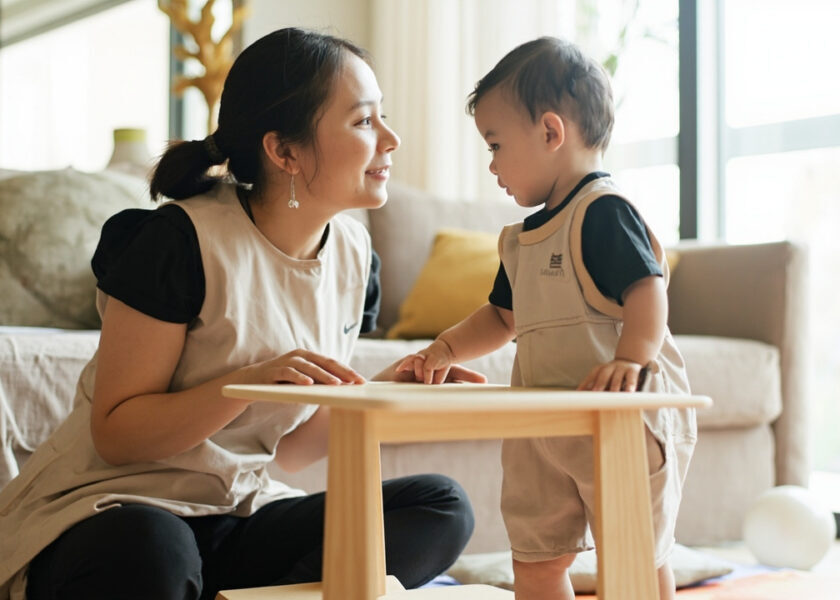
The image in this article was generated with AI for illustration. It does not show an actual EduNanny staff member, child or facility.
Choose one familiar object, sit beside your baby and try one short round of observe, echo and pause.