Giving Your Infant the Best Start Through Attentive Care
An infant’s best start is built in everyday moments: a familiar voice answering a babble, a childminder noticing a reaching hand, a shared book that invites another look. At EduNanny, we want to make room for these moments through dedicated attention and meaningful opportunities to learn.
Our approach brings development and learning into warm daily care. We notice what each infant enjoys and can do, then offer playful experiences that build on those abilities. Curiosity, connection and growing confidence guide the experience.
What we mean by more bandwidth
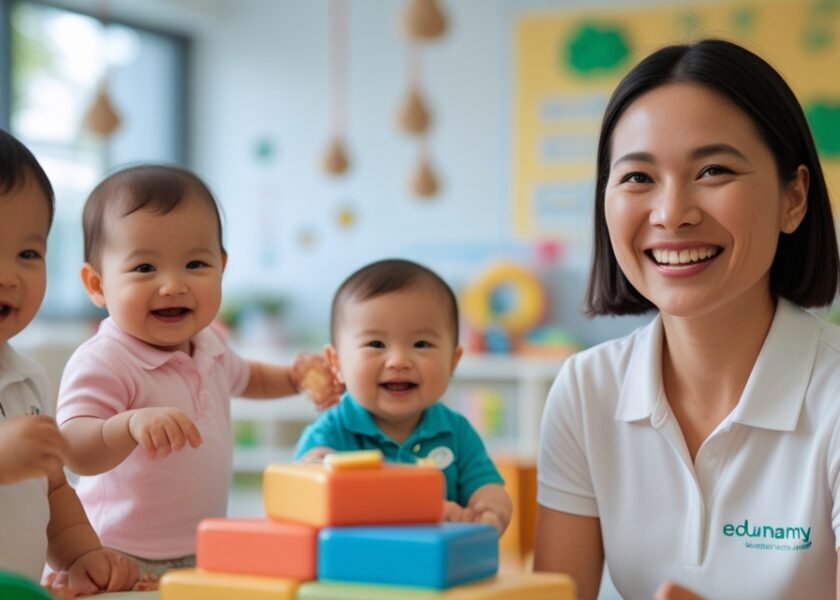
Care bandwidth is the time and attention available to notice an infant’s cues and respond thoughtfully. In the EduNanny ECDA Childminding Pilot, one childminder cares for up to three infants. This small-group arrangement creates room for individual observation, responsive interaction and activities suited to each child.
A childminder can notice the object an infant looks towards, the sound they repeat or when they need a quieter moment. That observation helps shape the next response: bring a familiar object within safe reach, answer the sound or offer comfort before returning to play.
The ECDA pilot serves eligible Singapore Citizen infants aged 2 to 18 months. Within that setting, our aim is to use the available attention well, balancing learning opportunities with feeding, rest and the care that helps an infant feel secure.
Time to notice
Every infant brings their own interests, routines and emerging abilities. Looking closely helps us choose a useful starting point. An infant may be fascinated by the colours in a cloth book, interested in a familiar face or eager to explore an age-appropriate toy.
Responsive care begins by acknowledging that interest. The adult follows the infant’s attention, offers a warm response and allows time for the infant to take another turn. These back-and-forth exchanges reflect the serve-and-return approach described by Harvard’s Center on the Developing Child.
Space to explore
Purposeful play can be simple. Shared stories, conversation, singing, sensory exploration and safe floor play offer different ways to engage. The activity has a purpose, while the infant still has room to look, reach, listen, move and discover.
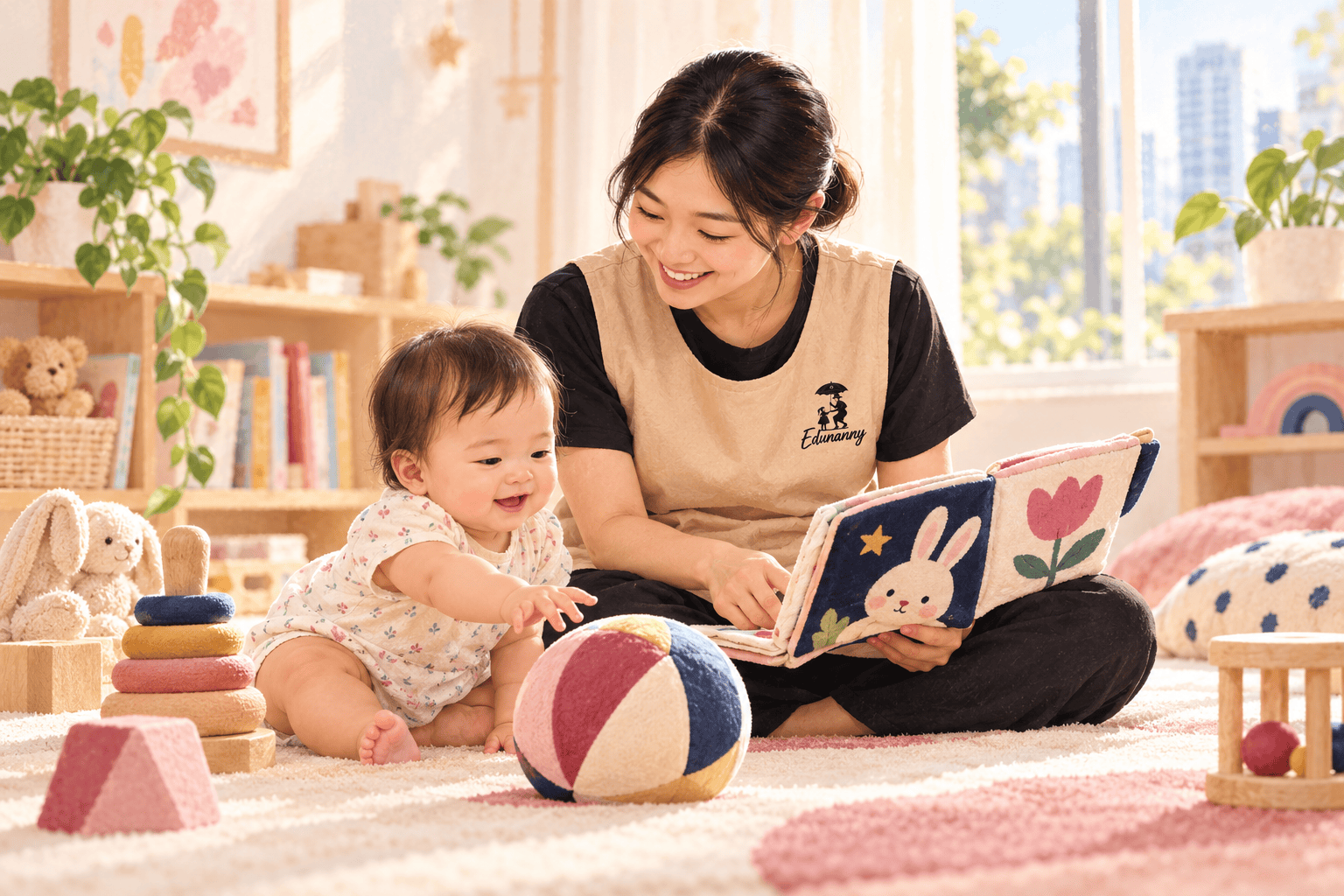
For example, a childminder sharing a cloth book can name a picture, pause and notice the infant’s response. If the infant reaches towards a large fabric ball nearby, that interest can become the next moment of play. The adult can name it, offer it safely and invite exploration.
The World Health Organization’s early childhood development guidance supports responsive caregiving and early learning during the first three years. Our care approach applies those broad principles to the ordinary interactions within an infant’s day.
Support to grow
As an infant’s abilities develop, their learning opportunities can develop too. We support familiar skills and offer a suitable next activity when the infant shows readiness. A new gesture can invite another turn in a conversation; growing interest in a familiar object can lead to a simple choice or hide-and-find activity.
Milestones give us useful context for observing development. The individual infant’s readiness, interests and comfort guide the activity. Sometimes the right next step is a little more variety. Sometimes it is another warm opportunity to enjoy a familiar experience.
An everyday example of attentive learning
| What we notice | The learning opportunity |
|---|---|
| An infant reaches towards a familiar ball. | Offer it safely within reach, name it and allow time to explore. |
| An infant makes a sound during shared play. | Respond warmly, pause and give the infant a turn. |
| An infant looks towards a picture in a book. | Follow their attention, name the picture and enjoy the shared moment. |
These examples show how dedicated attention can turn an ordinary moment into an opportunity for connection and learning. If interest fades, the childminder can simplify the activity, offer comfort or return to it later.
A thoughtful start, together with parents
Parents help us understand the infant beyond the care setting. Tell us about favourite objects, familiar words, settling routines and new things your infant is trying at home. These details help us offer activities that feel familiar and appropriate.
Daily updates and routine communication also make progress easier to discuss. A useful observation describes what the infant explored, how the childminder responded and what held the infant’s interest. The aim is to understand the child and support their next opportunity.
Giving an infant the best start means surrounding them with care that notices, responds and creates room to learn. EduNanny’s small-group care supports that intention through attentive relationships, purposeful play and opportunities that grow with each infant.
Speak with our team about your infant’s age, routines, interests and preferred care schedule. We can discuss eligibility, available care options and how our approach can support their day.