Permission to Trust Quality Childcare for Singapore Parents
The Weight Singapore Parents Carry
Singapore has one of the highest rates of dual-income households in the world. Nearly six in ten married couples with children under fifteen are both working. We build our lives around this reality — the HDB flat in a good school district, the carefully plotted MRT route that just barely gets everyone where they need to be on time, the WhatsApp group that coordinates pickups between office meetings.
Singapore parents are extraordinary at making logistics work. But beneath the logistics, there is an emotional reality that does not get solved by efficiency. Unlike previous generations, most Singapore parents today do not have grandparents living down the corridor, or across the street, or even in the same time zone. The extended family network that once distributed the load of early caregiving has been replaced by a nuclear family structure that places the full weight of both provision and nurturing onto two people, often pulling them in opposite directions.
The result is a generation of parents who are doing everything right by the standards the world sets for them, and who still feel, privately, that something is missing. What is missing is permission. Permission to trust that choosing quality care is not a departure from love, but an expression of it. Permission to stop carrying the guilt alone, and to look instead at what the science actually says about how children develop, how secure attachment forms, and what it truly means to give a child the best start.
What Science Says About Early Childhood Development
The neuroscience of early childhood development has advanced in ways that should change the conversation parents are having with themselves. We now understand, with remarkable clarity, that the first thousand days of a child’s life — from gestation to approximately age three — represent a period of neural development that will not be replicated at any other point in the human lifespan.
Synaptic connections form at a rate of more than one million per second in the first years of life. The architecture of the brain — its capacity for learning, emotional regulation, and resilience — is built during this window in ways that are profoundly shaped by the quality of the child’s environment and relationships.
Research in attachment theory, beginning with John Bowlby and advanced through decades of longitudinal studies, consistently demonstrates that secure attachment — the foundation of a child’s emotional and cognitive development — develops when a child experiences consistent, warm, and responsive care. The caregiver does not need to be the biological parent. The caregiver needs to be someone who is present, attuned, and consistent.
When a child is met with an attuned caregiver who responds to their cues, who celebrates their small discoveries, who provides a secure base from which to explore — that child is building the neurological pathways for trust, for emotional regulation, for curiosity, and eventually for the independence that every parent wants for their child. The attachment system does not require exclusivity. It requires reliability.
Quality Care and Your Peace of Mind
Choosing quality childcare is not a compromise of parental devotion. It is a developmental investment — one that requires exactly the kind of careful evaluation, intentionality, and love that parents bring to every other decision about their child’s future.
Modern parenting culture has constructed an impossible standard — one that tells parents that the best parent is the one who does everything themselves, who is always present, who is enough on their own. This standard is not just unrealistic for most Singapore families. Developmentally speaking, it is not even the goal.
The goal is not a parent who does everything. The goal is a child who thrives — and that child thrives when they are in an environment that is safe, stimulating, responsive, and rich with developmental opportunity.
There is another dimension to this that deserves to be named. When parents feel peaceful — when they genuinely trust the environment their child is in — that peace is not a luxury. It is functional. It is developmental. A parent who is riven with anxiety about their child’s care carries that tension into every interaction, every evening, every moment of presence they do have with their child.
Children are exquisitely tuned to the emotional states of the adults around them. A parent who is at ease, who can truly be present during the hours they have together, who can engage without the background hum of worry — that parent is offering their child something profoundly valuable.
So the question shifts. It is not just: Is my child well cared for? It is also: Am I free enough from anxiety to be the parent I want to be in the time we share? And the answer to both questions, when care is genuinely excellent, is yes.
What Genuine Developmental Care Looks Like
Supervision keeps a child safe — it ensures physical wellbeing, basic needs are met, and the child is not in harm’s way. Supervision is necessary. It is not sufficient.
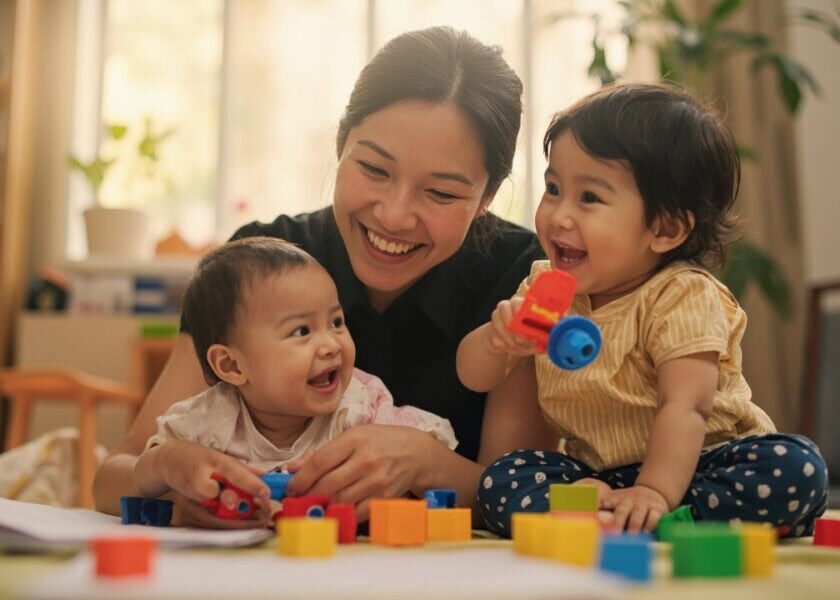
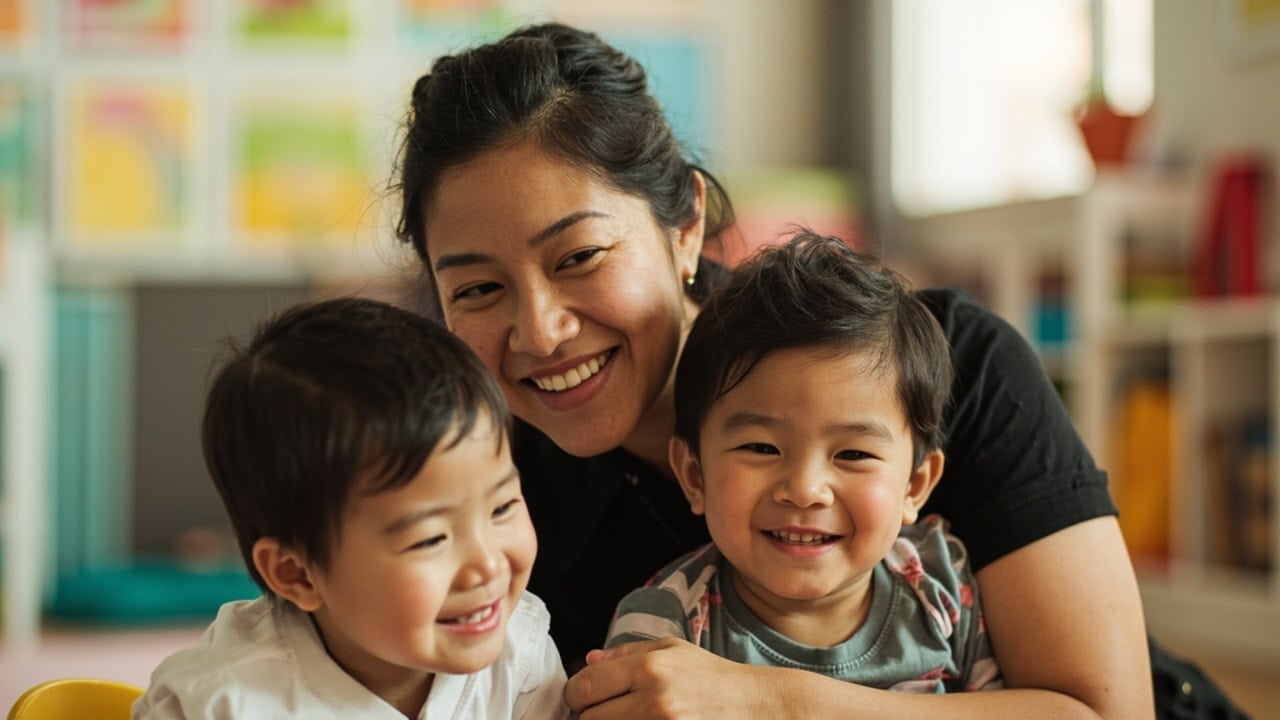
Developmental care helps a child become. It means a caregiver who understands developmental milestones, who recognizes cues that signal a child’s need for comfort or stimulation, who creates the kind of environment where a child can explore safely, attach confidently, and grow at their own natural pace.
The best childminders are not substitutes for parents. They are extensions of the family’s values, collaborators in a child’s development, professionals who bring skill, warmth, and genuine dedication to the most important work there is.
Finding Quality Childcare in Singapore
For parents beginning this search, here is a framework for thinking through your options:
- Start with your values. What matters most to you? Is it developmental richness? Flexibility? A home-like environment? Understanding your priorities helps you evaluate options rather than feeling overwhelmed by them.
- Observe the caregiver-child interactions. When you visit, notice whether caregivers respond to children’s cues. Are they attuned? Do they get down to the child’s level? Do children seem at ease?
- Ask about ratios and training. Quality care requires attention. Ask about how many children each caregiver looks after, and what training caregivers receive.
- Evaluate the communication systems. Regular updates, documented observations, and transparent reporting are markers of a programme that takes its responsibility seriously.
- Trust your instincts, but also seek evidence. Your gut feeling matters, but so does information. Look for programmes that can articulate their philosophy and demonstrate their practice.
- Consider your own peace of mind as a legitimate factor. A parent who is calm and trusting during their working hours is offering their child something valuable. The right care should reduce your anxiety, not add to it.
Signs of Quality to Look For
- Caregiver ratios that allow for responsive attention — no more than three infants per caregiver
- Transparent communication and regular documented updates
- Caregivers who demonstrate understanding of developmental milestones
- An environment that balances safety with opportunities for exploration
- A programme that treats you as a partner, not just a customer
- Evidence of training, selection, and ongoing support for caregivers
Answering Common Parent Concerns
Will my child feel abandoned? Children are remarkably adaptable when they experience consistent, warm, and responsive care. What children respond to is not the absence of a parent, but the presence of attuned caregiving. When a child knows their needs will be met — when they have a secure base from which to explore — they develop the emotional security that enables healthy independence.
Can someone else really provide what my child needs? The attachment research is consistent: secure attachment forms through responsive care, not through parental exclusivity. A child in quality care with an attuned caregiver develops the same neurological pathways for trust, emotional regulation, and curiosity as a child whose primary attachment figure is their parent.
What if I still feel guilty? The guilt so many parents feel is not a signal that something is wrong with their choice. It is a signal that they care deeply. That emotional response reflects love, investment, and the weight of responsibility. Channel it into a decision that is informed, intentional, and grounded in trust.
How EduNanny Singapore Supports Your Family
This understanding shaped the development of EduNanny Singapore, a service developed under ECDA’s Childminding Pilot — an initiative that reflects the government’s recognition that Singapore’s families need more than a one-size-fits-all approach to early care.
The pilot programme operates across home-based, community, and centre-based pathways, each designed with the flexibility to meet families where they are. Whether care begins in the familiarity of the child’s own home or within a thoughtfully resourced community setting, the principles that guide every arrangement are the same: intentionality, developmental richness, and the understanding that quality care is a partnership between family and caregiver.
EduNanny’s model maintains ratios of up to one caregiver to three infants, ensuring that every child receives the responsive, attuned attention that developmental science tells us is non-negotiable. The fee structures within the pilot are designed with accessibility in mind — families can apply their Child Development Account contributions and Baby Bonus payments in eligible arrangements.
Care operates across Monday to Friday blocks, with the transparency measures that modern parents rightly expect: regular communication, documented updates, and where deployed, CCTV arrangements that give families direct visibility into their child’s day. These are not administrative features. They are the infrastructure of trust — the mechanisms that allow a parent to leave their child in the morning and carry with them, not anxiety, but the quiet confidence that comes from knowing exactly what kind of day their child is having.
Caregiver Standards
- Every caregiver is selected, trained, and supported not merely to supervise, but to nurture
- Caregivers understand the developmental milestones of the children in their care
- They recognize cues that signal a child’s need for comfort or stimulation
- They create environments where children can explore safely, attach confidently, and grow at their own natural pace
- They are chosen not only for competence but for alignment with the principle that every child deserves to be known — not just watched, but known
For the Parent Who Carries This Question
The emotional truth that Singapore parents carry is real, and it is heavy. It is the weight of a society that asks a great deal of its families and does not always pause to acknowledge how well those families are doing under that weight. It is the weight of wanting, with every fibre, to be enough — and of questioning, in the quiet hours, whether the choices that modern life demands compromise that wanting.
They do not. The evidence, the neuroscience, the longitudinal research, the science of attachment — it all points in the same direction: children flourish when they are in environments of quality, responsive, intentional care. That environment does not have to be a parent’s own hands, in every hour of every day, for a child to develop securely, joyfully, and with the emotional foundation they need for everything that comes after.
What children need is not a parent who never leaves. What children need is a parent who chooses well, who loves fiercely, who is present in the ways that matter most — and who trusts themselves enough to know that making a thoughtful, evidence-informed decision about childcare is not a departure from that love. It is one of its highest expressions.
EduNanny Singapore was built for this moment. For these parents. For these children. For the family that is doing its best in a complex world, and who deserves a partner in that effort — one that sees them clearly, understands the weight they carry, and offers not just excellent care but genuine peace of mind.
Not the trust that comes from hoping. The trust that comes from knowing that the environment your child is in has been chosen with the same seriousness you bring to every other dimension of their future.
That is what EduNanny offers. That is the promise it makes, and the promise it keeps — for every child, and for every parent who deserves to put the doubt down.
If you would like to learn more about how EduNanny supports Singapore families, explore our approach or get in touch with our team.