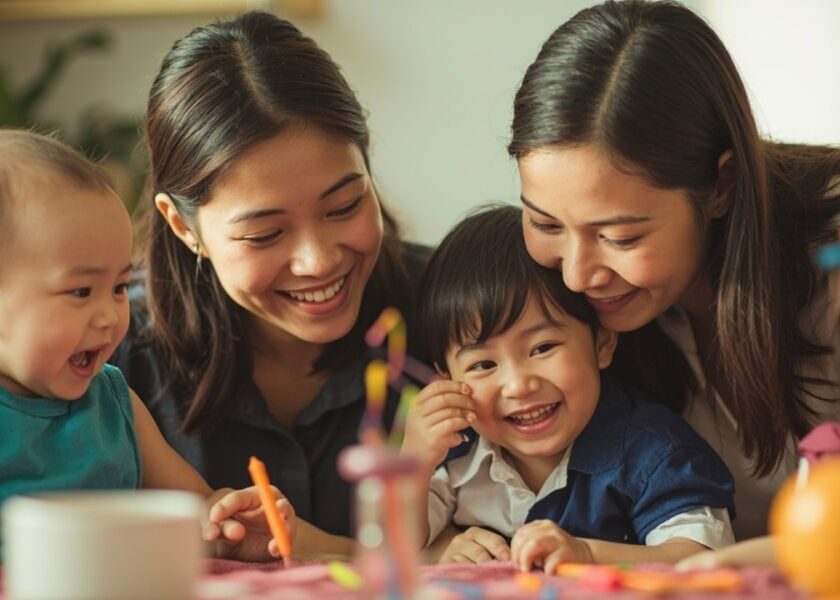
Why Emotional Safety Shapes Your Child’s Learning and Confidence
What Safety Actually Means in Infant Care
When you ask a childcare centre whether your child will be safe, they will say yes. They will point to locked doors, CCTV cameras, ratios of staff to children, and certification displays on the wall. These things matter. But they are not what your child means when they feel safe—or what you mean, on some unspoken level, when you feel uneasy about leaving them.
Emotional safety is the feeling that the world is manageable, that someone is paying attention, that when something goes wrong, there is someone who will respond. It is the knowledge that you matter to someone, that your feelings are valid, that someone sees you—really sees you—and will not abandon you when you are most vulnerable.
This feeling is not a luxury. It is the foundation on which every other human capacity is built.
The First Thousand Days: Building a Secure Base
In the first thousand days of life—roughly from conception to age three—the brain develops faster than it will ever develop again. Neurons are forming connections at a rate of one million per second. This is not an abstract statistic. It is the biological reality of your child’s developing mind.
But the speed of this development is not random. It is directed, in profound ways, by the quality of the child’s relationships and environment. A child who feels safe, whose needs are anticipated and met, whose caregiver reads their cues and responds with consistency—that child is building something inside themselves that will last a lifetime.
The Psychology of Attachment
The concept of a secure base comes from psychologist John Bowlby, who spent decades studying how children form attachments. His insight was elegant and, at the time, revolutionary: a child does not just need to be fed and protected. They need a psychological home—a person who serves as a launching pad for exploration and a safe harbor for return.
When that base is secure, the child ventures out. They reach for a toy. They take a step. They look up to check if someone is watching, and when they see that person, they feel something settle inside them. They feel capable.
This is the feeling you may have already noticed in your child—the way they glance back at their caregiver before wandering into a new space, the way they return to a familiar lap after an encounter that overwhelmed them. This check-in is not weakness. It is the beginning of confidence.
Here is what matters for Singapore parents: this secure base can be built in quality childcare. Bowlby himself, in his later work, acknowledged this. A child can form multiple secure attachments. What matters is not the number of caregivers, but the quality of attunement—the caregiver’s ability to notice what the child needs, to respond appropriately, and to do so again and again, day after day, until the child internalizes the message that the world is reliable.
You do not have to be everything to your child in order to give them everything they need. What they need is responsiveness, consistency, and genuine attention—and these can come from skilled caregivers who understand child development and are committed to building security with your child.
Supervision vs Care: The Difference That Changes Everything
Supervision is watching. It is ensuring physical safety, managing schedules, keeping children fed and rested and clean. These things matter. But they are the floor, not the ceiling.
What transforms supervision into care—what transforms a daycare into a developmental environment—is attunement. Consider what this looks like in practice:
- A caregiver who notices that your usually easygoing baby is fussy today and wonders why
- A caregiver who recognizes the look in your toddler’s eye that means they want to try something but need reassurance
- A caregiver who narrates your child’s experience back to them—”I see you’re building a tower. That’s tall. You must feel proud”—giving language to feelings your child cannot yet name
When attunement happens consistently, something extraordinary develops in the child. They begin to develop what researchers call emotional competence—the ability to identify what they are feeling, to tolerate those feelings, and to express them in ways that work.
How Emotional Competence Develops
Consider what is happening inside a child who has learned, through months and years of responsive care, that their feelings are noticed and valid. When that child becomes frustrated, they do not immediately dissolve into overwhelmed distress.
They have an inner voice—a residue of all those times a caregiver said, “I see you’re upset. It’s okay to feel that way.” That voice does not eliminate the frustration. But it creates a pause. And in that pause, self-regulation has room to grow.
This is why security and curiosity are not opposites. They are partners.
The Developmental Cascade: How Early Care Shapes Everything
Research on early childhood development has identified a clear sequence—a cascade, where each capacity builds on the one before it. Understanding this cascade can transform how you think about the childcare decision.
| Stage | What It Looks Like | What Enables It |
|---|---|---|
| Security | Child feels safe, knows someone is watching | Responsive, consistent caregiving |
| Exploration | Child ventures out, investigates environment | Emotional safety; no need for constant vigilance |
| Confidence | Child takes initiative, tries new things | Trust that they can return to safety |
| Curiosity | Child asks questions, seeks novelty | Freedom from anxiety about the world |
| Self-Regulation | Child manages emotions, tolerates frustration | Internalized calm from external support |
| Social Competence | Child engages positively with others | Security becomes the foundation for connection |
Notice how this cascade begins. It does not start with flashcards or academic stimulation. It starts with the feeling of being held—not just physically, but psychologically. Seen. Known. Responded to.
A child who is anxious, who is scanning the room for danger, who has learned that no one is really paying attention to them—that child cannot explore. Their energy is consumed by vigilance.
But a child who has internalized security, who knows in their bones that someone is watching and that they can return whenever they need to—that child is free. Free to wonder. Free to touch things, to ask questions, to fail and try again.
The child who feels safe becomes the child who asks why. And the child who asks why becomes the child who learns.
What Quality Childminding Looks Like in Practice
You will know quality childminding when you see it. It may not look dramatic. It often looks like small things.
You will see a childminder kneel to a child’s level before speaking—not because she was trained to do it, but because she understands that connection happens at a child’s pace, not an adult’s. You will see her narrating what is happening: “We’re washing our hands now. Water is cool. It feels slippery.” You will see her noticing when a child struggles and offering exactly enough help—not too much, which steals the learning, not too little, which creates anxiety.
You will see her reading the child’s face and adjusting her approach in real time. When a toddler pushes away from a puzzle, she does not insist. She watches. She waits. She offers a simpler piece, and when the child takes it, she lets the triumph belong to the child.
These are not gestures. They are the substance of secure attachment, day after day, until the child carries that security inside them like a compass that always points toward safety.
EduNanny: Building Security Through Thoughtful Care
EduNanny, a service under the BUTLER platform, participates in the ECDA Childminding Pilot. This means its approach is grounded in evidence and structured around the understanding that infant care is not a one-size-fits-all proposition. Every child is different. Every family has different rhythms, different needs, different hopes.
EduNanny offers pathways that reflect this diversity: home-based arrangements where care happens in your own space, and community and centre-based options where children benefit from peer interaction in thoughtfully designed environments.
Small Ratios, Genuine Attention
What all these pathways share is a commitment to ratios that allow for genuine attunement. With up to one to three infants in care, EduNanny childminders have the capacity to notice, to respond, to remember that your child had a rough night and might need extra patience this morning, or that your toddler is working through a developmental leap that might make them clingier than usual.
Small ratios are not just about safety. They are about creating the conditions for connection.
Trained Responsiveness
EduNanny’s childminders are professionals who understand child development, who have been trained in responsive caregiving, who know how to read infant and toddler cues and respond in ways that build security rather than undermine it.
They are trained to observe not just behavior, but emotional states. To ask themselves not just “is this child safe?” but “does this child feel safe?” There is a difference, and it is everything.
Accessible and Transparent
The pilot structure means EduNanny is designed to be accessible to families across Singapore. Families can use their Child Development Account and Baby Bonus funds. Monday to Friday care blocks are structured around the realities of working parents.
Depending on the setting, families have access to regular updates, transparent reporting on their child’s day, and in some deployments, additional measures that provide visibility into the care environment. This transparency builds the kind of trust that allows parents to leave each day feeling confident that their child is in capable, attentive hands.
Choosing Infant Care in Singapore: What to Look For
There is a narrative that suggests working parents must choose between their careers and their children’s wellbeing. That leaving your child in care is a necessary sacrifice, something to feel guilty about, something to minimize or apologize for.
This narrative is not true. Children do not need their parents to be present every waking moment. They need their parents to be present when they are present, and they need the people who care for them when parents are away to be competent, attuned, and genuinely invested in the child’s development.
Rather than asking “Am I a good parent for choosing childcare?”, ask instead: “Is the care my child receives genuinely responsive, consistent, and attuned?” The first question generates guilt. The second generates discernment.
Observe, Don’t Just Ask
- Do the caregivers kneel to a child’s level before speaking?
- Do they narrate what is happening, giving the child language for their experience?
- Do they notice a child’s emotional state, not just their behavior?
- Do children seem at ease, or are they constantly on alert?
Ask About Approach, Not Just Credentials
- How do caregivers respond when a child is upset?
- What does a typical day look like—is it structured around the child’s development or the centre’s convenience?
- How do they communicate with parents?
- What is the ratio of caregivers to children?
Pay attention to how you feel when you visit a setting. If something feels off—if the caregivers seem hurried, if the children seem subdued, if you would not want to be cared for in that environment yourself—that is data. Your child cannot tell you what they experience. You have to feel your way toward it.
Quality childminding is not about perfection. It is about consistent, responsive, attuned care. Small moments of connection, day after day, building something that will last.
A Final Word on What Your Child Is Building
Your child is building something right now. In every interaction, in every responsive moment, in every time a caregiver says “I see you” in words or in action, your child is building their understanding of what the world is like.
Are people reliable? Is the world interesting? Am I capable? Am I loved?
These are not small questions. They are the questions that will shape your child’s relationships, their learning, their resilience, their capacity for joy and for courage for the rest of their lives.
We live in a city that moves fast. We live in a culture that celebrates achievement, that measures children by milestones and parents by productivity. It is easy, in this environment, to lose sight of what children actually need. It is easy to focus on what can be measured—vocabulary size, motor skills, academic readiness—and forget what cannot: the feeling of being loved, the confidence that comes from knowing you are valued not for what you do but for who you are.
The decision to seek quality childcare is not a consolation. It is a commitment to your child’s future. When that care is built on understanding, on training, on ratios that allow for attention, on communication that builds trust—it is one of the most powerful choices you can make.
Your child is ready to explore. Find out how EduNanny can support your family.