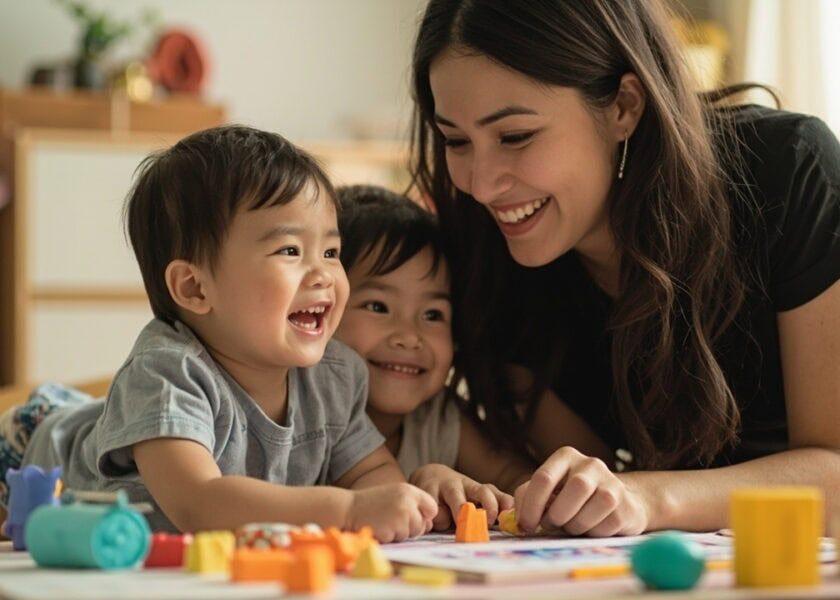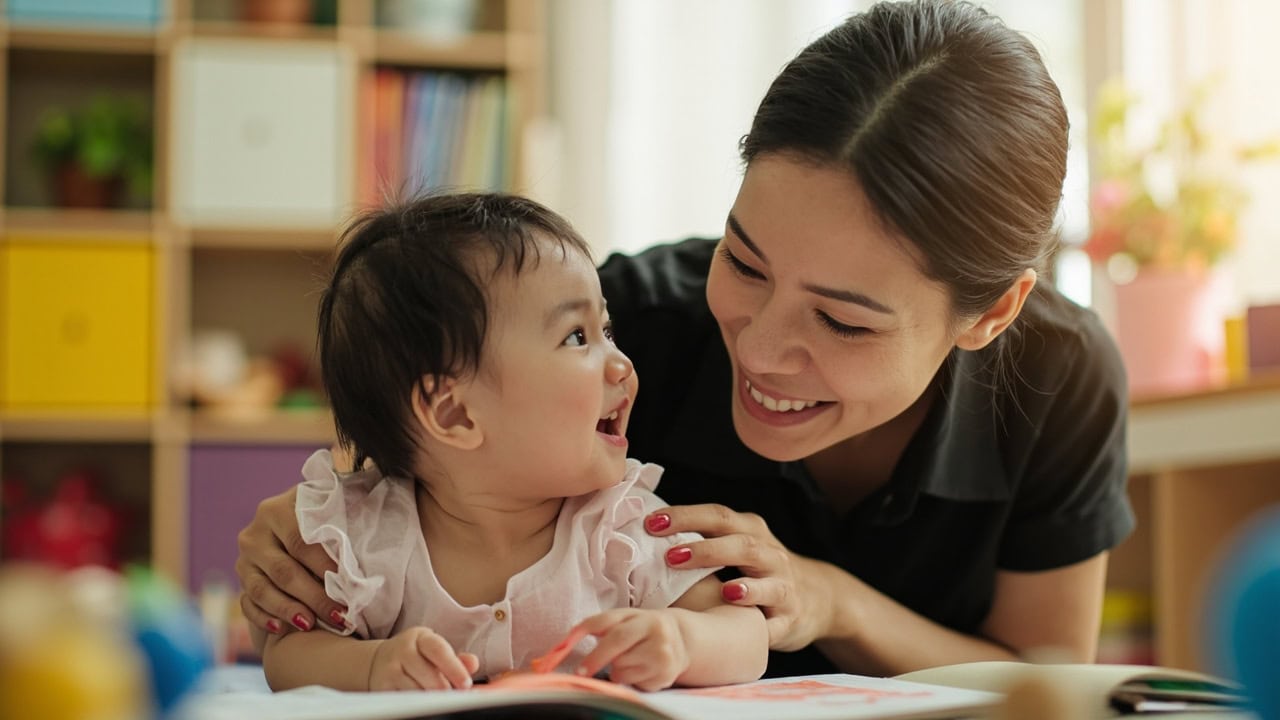
What Your Child Shows You at Pick-Up Is Their Development Unfolding
The Silence After Drop-Off: What Every Working Parent Needs to See
There is a particular silence that follows drop-off. You have walked through the door, handed your child into another’s arms, and stepped back into the world outside. In that moment, your child disappears into hours you cannot see—hours shaped by people you are learning to trust, surrounded by experiences you will never witness directly.
You know this feeling. Every parent who chooses childcare knows it. That small, persistent question that lives just beneath the surface of every morning goodbye: What is actually happening in there?
This is not a question about safety. You have already done the work of choosing, of visiting, of reading reviews and asking questions. This is something deeper—a question from a parent who wants more than supervision. A parent who wants to know: Is my child growing? Is my child flourishing? Is this daily separation not just a necessary arrangement, but a genuine investment in everything my child is becoming?
The gap between what you cannot see and what you need to know has always existed in childcare. But this gap is not as wide as it feels. The hours your child spends away from you are not hidden in shadow. They are, in fact, visible—not during the day, but in the moments when you reunite. The answer to your question is waiting for you every single afternoon, written in the small, ordinary miracles of your child’s behaviour.
The Observation Gap: Why Trust Alone Is Not Enough
You experience the observation gap every single day. While your child is in care, you cannot see them. You cannot hear them. You cannot know, moment by moment, whether the day is shaping them well or merely passing time.
This gap has always existed in childcare. What has not always existed is a framework for understanding what that gap actually contains. Parents have been asked to trust—to take the safety of the environment on faith, to believe that good care is happening, to accept the uncertainty as simply the cost of working parenthood.
But trust and visibility are not the same thing. And parents who can see what flourishing looks like are parents who can trust what they are seeing. The anxiety that has become so normalised in working parenthood—that low-grade hum of uncertainty that follows you through your workday—does not need to stay quiet. It can be quieted. Not by reassurances alone, but by the concrete, daily evidence of a child who is visibly, measurably growing.
The research on child development is clear: the first years of life are not a waiting period before real learning begins. They are the most active and consequential period of human development. Neural connections form at a speed that will never be matched again. Social instincts awaken. Language explodes. Motor skills refine themselves in preparation for everything that will follow.
In these years, children are not merely being cared for. They are building the architecture of who they will become. And this development does not pause during childcare hours. It accelerates, or it stalls. It deepens, or it plateaus. The environment your child inhabits during those missing hours is not a background. It is a stage on which the most important growth of early childhood is being performed—whether or not anyone is there to read the performance.
Quality childcare produces visible, recognisable evidence of development. When your child runs toward you at the end of the day, there is a window of extraordinary clarity. In those first moments of reunion, children do not perform. They do not edit or conceal. They arrive as they are, shaped entirely by what their day has been.
Reading Your Child at Pick-Up: Three Domains of Flourishing
The signs of quality care cluster into three interconnected domains. Together, they form a complete picture of whether your child’s environment is merely keeping them safe—or actively building them.
Physical Confidence: How Movement Tells the Story
Physical development is often the most visible, and also the most overlooked. Watch your child move at pick-up. Not just whether they are walking, but how they are walking.
Are they moving with a new kind of confidence—a looseness in the shoulders, a willingness to climb and jump and reach? Children who are thriving physically at childcare often arrive home with a slightly different quality of movement: more purposeful, more experimental, more willing to test their own limits.
You might notice improved coordination. The toddler who was tentative about stairs a month ago now navigates them with visible satisfaction. The infant who was just beginning to push up on their hands now does so with sustained strength and evident pleasure. These are not coincidences. These are the physical signatures of an environment that has offered space, encouragement, and appropriate challenge.
Notice the energy level. Children who are developmentally stimulated tend to arrive home tired in the best sense—not from stress or overstimulation, but from the satisfying exhaustion of a body that has been actively used. They have been running, climbing, grasping, exploring. They have been building themselves through movement.
Physical Signs to Watch For
- New confidence in gross motor skills (climbing, jumping, running)
- Improved fine motor control (grasping, manipulating objects)
- Satisfying tiredness rather than depleted exhaustion
- Social awareness in physical navigation
- Willingness to test physical limits with appropriate caution
Language Expansion: What Words Reveal About Your Child’s Day
Language development is where many parents feel the most acute anxiety, because it is so visible, so measurable, and so central to everything that follows.
When you ask your child about their day, listen not just to the content but to the capacity. Is your child speaking in more complex sentences than they did last month? Are they using new words—unexpected words, words that clearly came from somewhere beyond your own home vocabulary? Are they experimenting with language, trying out new sounds, repeating phrases they have clearly absorbed from somewhere else?
Children who are flourishing at childcare often arrive home with language that has outpaced what they would have learned in isolation. Quality childcare environments are rich with conversation, with songs, with stories, with the constant verbal engagement that builds neural pathways for language like nothing else can.
Listen for the language of connection. Does your child reference their day with evident emotional warmth? Do they mention their caregiver by name, with the easy familiarity of someone who feels known and valued? Do they talk about friends, about shared experiences, about things that clearly mattered to them? This language of belonging is not separate from language development—it is inseparable from it.
Pay attention to comprehension. Does your child seem to understand more than they did before? Can they follow multi-step instructions, engage with more complex stories, respond appropriately to questions that require real thinking? These are signs of a mind that is developing not just vocabulary, but the capacity to process, analyse, and understand.
Language Signs to Watch For
- New vocabulary that did not come from home
- More complex sentence structures
- Natural references to caregivers and friends
- Comprehension that exceeds previous levels
- Experimentation with sounds and new phrases
Social-Emotional Wellbeing: Where Inner Experience Becomes Visible
Perhaps the most important and the most overlooked category of observation is the social-emotional one. Watch how your child relates at pick-up. Watch how they navigate the space, the people, the small social complexities of a room full of children and parents and caregivers. This is where the inner experience of your child’s day becomes most visible.
A child who is genuinely thriving will often show visible signs of secure attachment to their caregiver—not as a replacement for you, but as a complement to you. They may show you with easy confidence where their caregiver is, may wave goodbye with genuine warmth rather than performative cheer. They may mention their caregiver naturally, the way they might mention a favourite teacher or a beloved relative. This is healthy. This is what secure base behaviour looks like. Your child has built a second relationship that supports rather than threatens the first.
Watch for signs of social confidence. Is your child playing cooperatively, or attempting to? Are they navigating small conflicts with growing skill, showing more sophisticated social problem-solving than they displayed a month ago? Are they showing empathy, noticing when another child is upset, responding with concern?
Notice emotional regulation. This one is crucial. Children who are in environments that match their developmental needs tend to arrive home with more regulated nervous systems, not less. They have had enough stimulation to be engaged but not overwhelmed. They have had enough support to manage big feelings when they arose. They arrive home ready to connect, not depleted from constant dysregulation.
Social-Emotional Signs to Watch For
- Easy, warm references to caregivers
- Cooperative play or attempts at cooperative play
- Growing skill in navigating small conflicts
- Signs of empathy toward other children
- Arrival home ready to connect, not depleted
- Bright, curious, present eyes
Three Categories, One Afternoon: Bringing It All Together
These three domains—physical, language, and social-emotional—come together every afternoon at pick-up. When you begin to see them, you begin to see something remarkable: your child is not merely being cared for during those hours. Your child is growing.
But this requires something from you. It requires that you approach pick-up not just as a reunion, but as an observation opportunity. That you slow down, even for a few minutes, and watch. That you ask open-ended questions and actually listen to the answers. That you notice the small changes, the subtle shifts, the evidence that yesterday’s child and today’s child are not exactly the same.
Children this age change visibly, measurably, in the space of weeks and months. If you are not watching for it, you will miss it. You will arrive at a parent-teacher conference and hear that your child has grown enormously in confidence or language or social skill, and you will feel surprised. You should not be surprised. The evidence was there, every single day, if you had known how to see it.
Approach pick-up with curiosity. Ask what was the best part of the day. Ask who they played with. Ask what song they learned. Listen to the words they choose, watch how they move, notice how they connect. You are not interrogating—you are reading. And what you read tells you everything about whether those hidden hours were well spent.
What Quality Childminding Actually Looks Like
Quality childcare is not just supervision. It is not just safety. It is an environment so carefully designed, so thoroughly considered, so deeply attentive to the developmental needs of young children, that the evidence of flourishing becomes visible, observable, real.
In Singapore, parents have more childcare options than ever before. But not all options are equal, and understanding what quality actually looks like is essential for making a decision you can feel confident about.
Quality childminding begins with ratios. When one caregiver is responsible for fewer children, each child receives more individual attention. For infants, whose developing brains require responsive, consistent interaction to build secure attachment and healthy neural pathways, this is not a luxury. It is a developmental necessity. A caregiver who is caring for fewer children can observe more carefully, respond more sensitively, and build the kind of consistent, responsive relationship that forms the foundation of everything that follows.
Quality childminding requires qualified caregivers who understand child development, not just childcare. It requires an environment that is warm without being chaotic, stimulating without being overwhelming, safe without being restrictive. It requires communication that keeps parents genuinely informed—not as an afterthought, but as a partnership in your child’s development.
Questions to Ask When Evaluating Childcare
- What is the caregiver-to-child ratio, especially for infants?
- What are the caregivers’ qualifications in child development?
- How is the daily routine structured to support different developmental domains?
- How will I be informed about my child’s day—not just what happened, but how they are growing?
- What does a typical day look like in terms of language-rich interaction, physical play, and social engagement?
The answers to these questions will tell you whether the environment is merely keeping your child safe, or actively building them.
EduNanny: A Partnership in Your Child’s Development
EduNanny enters this picture not as a brand making promises, but as a practice grounded in something specific and real.
EduNanny is part of the ECDA Childminding Pilot, a government-recognised initiative that represents Singapore’s serious commitment to the quality of early childhood care. This is not a generic childcare arrangement dressed in professional language. This is a structured approach to childminding that has been evaluated, approved, and built on evidence about what actually works for young children.
What works is small ratios. At EduNanny, infant care operates with ratios of up to one to three, meaning every infant receives the individual attention that their developing brain requires. What works is qualified, supported caregivers who understand child development. What works is an environment that is warm without being chaotic, stimulating without being overwhelming, safe without being restrictive.
EduNanny provides this through both home-based and centre-based pathways, because Singapore families are diverse and one size does not fit all. Whether your child is cared for in a home setting with a dedicated caregiver or in a community environment with peer interaction, the standards are the same. The observation practices are the same. The commitment to developmental evidence is the same.
For parents, there are practical dimensions that matter. EduNanny’s pilot fee structures are designed to be accessible. Monday to Friday care blocks cover the standard working day. CDA and Baby Bonus funding are usable, making quality care financially within reach rather than a privilege reserved for those who can pay premium prices. This matters. When childcare is affordable, the pressure of the choice lifts, and parents can focus on quality rather than just cost.
Where CCTV measures are deployed, parents have visible evidence of what their child’s day looks like. Communication is consistent and purposeful, giving parents the information they need to see their child’s development—not just hear that it happened.
This is the EduNanny approach: not just caring for your child, but creating the conditions in which your child flourishes visibly, measurably, in ways you can observe and celebrate every single day.
Addressing the Real Concerns of Singapore Parents
You may have questions. These are the right questions to ask.
Will my child feel secure with someone else caring for them?
Secure attachment to caregivers develops when caregivers are consistent, responsive, and sensitive to your child’s cues. In quality childcare arrangements with appropriate ratios, your child can develop healthy secondary attachments that complement—not replace—the attachment they have with you. The signs of this security will be visible at pick-up: your child waves goodbye warmly, mentions their caregiver with easy familiarity, and arrives home ready to connect with you.
How will I know my child is actually learning, not just being kept?
Learning in the early years is not separate from experience. It is embedded in every interaction, every conversation, every physical challenge, every social moment. You will know because you will see it. New words, new skills, new social instincts, new physical confidence—the evidence of active learning will appear in your child’s behaviour at pick-up, in the changes you notice over weeks and months.
Is this worth the financial investment?
Quality childcare is an investment in your child’s development, not just a cost of working parenthood. When you can see evidence of flourishing—when your child is visibly growing in language, physical skill, and social-emotional capacity—you know that the hours and resources you are committing are producing real returns. The best childcare is not the cheapest option that keeps your child safe. It is the option that actively builds your child.
What if I still feel anxious after pick-up?
Some anxiety is normal. Parenting always involves some uncertainty, some leap of faith. But the anxiety can quiet when you have a framework for observation—when you know what to look for, and you see it, day after day. The anxiety of the observation gap is replaced by something more grounded: the daily evidence of a child who is growing.
A Different Way to Think About Pick-Up
Most parents experience pick-up as an ending. The day is over. You have survived another separation. You collect your child, and you go home, and the childcare hours become a vague blank in your memory until the next morning.
But pick-up is not an ending. It is a beginning. It is the moment when the invisible becomes visible. It is the daily debrief that tells you everything you need to know about whether your child spent their day in a container that merely kept them safe, or in an environment that helped them grow.
When your child runs toward you at the end of the day, they are not just reuniting with you. They are arriving. Arriving as someone who has been engaged, challenged, supported, and seen. Arriving with new words, new skills, new social instincts, new physical confidence. Arriving as evidence of the work that has been happening all day long, in the hours you could not see.
Your job, as a parent, is not to interrogate that evidence. It is simply to see it. To notice it. To receive it with the attention it deserves.
When you can identify, in concrete specific terms, the ways your child has grown in a single day, you will feel something shift. The anxiety will not disappear entirely. Parenting always involves some uncertainty. But it will quiet. It will be replaced by something more grounded, more present, more real.
You will feel the satisfaction of a parent who knows what they are looking at. Who can see their child’s development unfolding, daily, visibly, in the ordinary moments of reunion. Who understands that the investment they are making—emotionally, practically, financially—is producing real returns, visible evidence of a child who is not just being kept, but is being built.
Your Next Step
If you are a parent in Singapore researching infant care or childminding, you are not looking for just supervision. You are looking for an environment that will help your child flourish. You are looking for evidence that the choice you are making is the right one.
That evidence is available. It is visible. It is there every single afternoon, in the way your child moves, speaks, connects, and arrives home ready for you.
EduNanny is here to be your partner in this—not just in the care of your child, but in your ability to understand what that care is producing. The observation skills shared here are not meant to make you doubt what you see. They are meant to help you trust what you see. To know, with growing confidence, that your child is flourishing.
That is what this is about. Not reassurance in the abstract, but the concrete evidence of growth that justifies every choice you have made. The visible signs that your child is not merely being adequately supervised, but is thriving, daily, measurably, in the hours that matter most.
At pick-up, watch. Listen. Notice. And then go home knowing that what you saw was real.
Your child is growing. And now, finally, you can see it.
Explore EduNanny by BUTLER and discover an infant care and childminding approach built on small ratios, qualified caregivers, and a genuine commitment to your child’s visible, measurable development. Because your child’s flourishing is not a promise. It is something you can see.
Learn more about what EduNanny offers, or connect with the team to discuss your family’s needs.