Beyond Worksheets: What Real School Readiness Looks Like for Singapore Children
Why Singapore Parents Are Being Guided in the Wrong Direction
The school readiness conversation in Singapore has become something of an industry. Enrichment centres market themselves on readiness. Academic programmes promise readiness. Assessment tools claim to measure readiness. And in the middle of all this, parents are left holding a question that feels enormous and urgent, surrounded by answers that feel expensive and uncertain.
Here is what working alongside families in these early, formative years teaches us: the way we talk about school readiness in Singapore is fundamentally misdirected.
We have confused preparation with acceleration. We have mistaken knowledge for capability. And in doing so, we have created a culture where parents feel they must teach their toddlers to read, drill their preschoolers on vocabulary, and sign them up for programmes that promise a head start—all because they are afraid their child will fall behind before the first school bell ever rings.
But readiness, real readiness—the kind that allows a child to walk into a classroom on their first day and feel not just capable but curious, not just prepared but confident—that readiness is not built in the months before school begins. It is built across years. It is built in the daily rhythms of early childhood. It is built in the quality of care your child receives, the consistency of the adults around them, the safety they feel to explore, to fail, to try again, to wonder.
The truth that Singapore parents are rarely told, because it does not sell enrichment programmes or academic workbooks, is this: school readiness is not about what your child knows. It is about who your child is.
This is a much more hopeful question to answer. Because it means that every interaction you have with your child right now, every choice you make about their care, every environment you place them in—this is readiness being built. Not someday. Not eventually. Now.
What Real School Readiness Actually Looks Like
When educators and child development researchers talk about school readiness properly—without commercial influence—they describe a constellation of qualities that matter far more than academic knowledge.
Emotional Security
A child who feels secure, who trusts that the adults around them will respond when they need something, is a child who can direct their energy toward learning rather than toward managing fear. They are not spending their attention wondering if they are safe. They are free to be curious.
The Capacity for Curiosity
From emotional security comes something remarkable: the ability to ask questions, to reach for the unfamiliar, to be willing to not know something, because they trust that the process of finding out is exciting rather than threatening. This is the child who will genuinely love learning—not because they have been trained to perform, but because learning has always felt like an adventure.
Self-Regulation
The ability to manage impulses, to wait, to tolerate frustration, to recover from setbacks—these are the capabilities that allow a child to sit in a classroom, to follow a teacher’s instructions, to navigate the inevitable social complexities of school life.
Self-regulation is not a character trait that some children are born with and others are not. It is a skill that develops, given the right environment and the right support, in the early years.
Social Comfort
The ability to be in the company of other children, to share, to take turns, to resolve small conflicts, to understand that other people have feelings too—these are foundational social skills. A child who can move comfortably in a social environment, who has had practice navigating relationships with peers and adults, arrives at school ready to learn. Because learning in those early years is deeply social. It happens in conversation, in collaboration, in the exchange of ideas.
Genuine Confidence
Not the confidence of a child who has been told they are brilliant, but the quieter, more durable confidence of a child who has learned that they are capable. That they can do hard things. That making mistakes does not make them a failure.
This kind of confidence is earned through experience—through being given the chance to try, to struggle, to succeed, to try again.
Readiness Versus Performance
You have been told that school readiness looks like early literacy. The ability to recognize letters, to count, to perform small academic tasks before the age of five. Yes, children can learn these things. But the question is not whether a child can recite the alphabet at three. The question is what that child is losing in the process:
- The hours spent drilling could have been spent in child-led play that builds executive function and creativity
- The relational warmth that builds emotional security is replaced by structured instruction
- The freedom to move and explore that builds physical confidence is constrained by worksheets
Academic drilling does not build readiness. It can create the appearance of readiness—a child who can pass a test, who has memorized facts—but this is not the same thing. It is a performance. And performances, unlike genuine capabilities, do not sustain a child through the long years of school and beyond.
Meanwhile, quality early care is working quietly and profoundly on the capabilities that actually matter. A child who has spent their early years in a warm, consistent, developmentally informed environment arrives at school not just ready to learn, but hungry to learn. Not just able to sit at a desk, but able to engage. Not just equipped with facts, but equipped with the emotional and social tools to navigate an entirely new world.
Where Readiness Is Built—and What to Look For in Quality Childcare
Here is the question worth sitting with: where are these capabilities—emotional security, curiosity, self-regulation, social comfort, and genuine confidence—where are these actually built?
The answer is not a classroom. Not at this age. Not in the way that matters most.
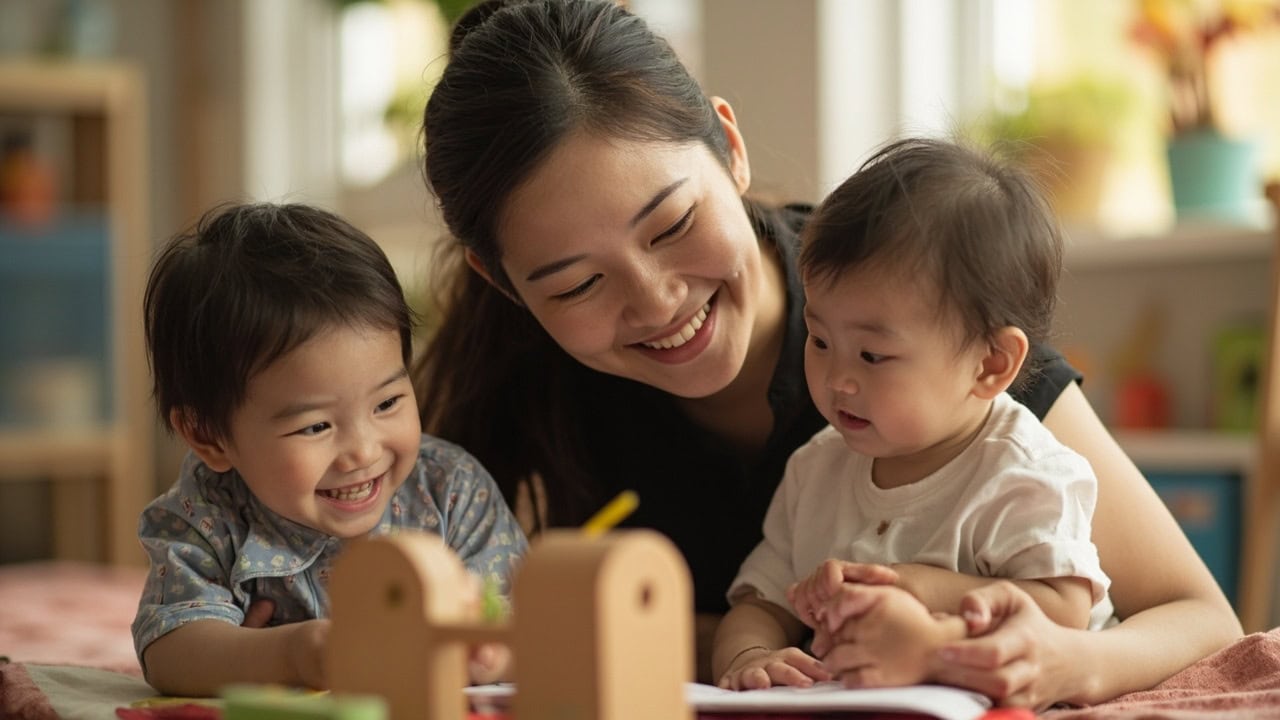
These capabilities are built in the environments where your child spends their early years. In the quality of the relationships they form with the adults who care for them. In the consistency of that care. In the small, daily moments where they learn, over and over, that the world is a safe place and that they can navigate it.
This is why the choice of childcare matters so profoundly. Not because of the curriculum a centre claims to follow, or the number of enrichment programmes it offers. But because of what happens in the ordinary hours of your child’s day: the conversations they have, the way adults respond to their cries, the way their attempts at independence are supported rather than discouraged, the way their curiosity is met with patience and engagement.
Quality early care is not about acceleration. It is about the slow, patient, utterly essential work of building the human being who will one day walk into a school and take their place among other children. It is developmental in the deepest sense.
1. Observe the Relationships
Watch how caregivers interact with the children in their care. Is there warmth? Genuine attention? Do the adults kneel down to a child’s level when they speak to them? Do they respond to a child’s distress with comfort rather than correction?
The quality of the caregiver-child relationship is not a soft, sentimental consideration. It is the mechanism through which all other development occurs. Emotional security, curiosity, self-regulation—these are all built in the context of relationships.
2. Look for an Environment That Values Play
Not play as a filler, not play as a break between instructional activities, but play as the primary mode of learning. Child-led play, where children choose what to do and how to do it, is where executive function is built, where social skills are practiced, where creativity flourishes.
A childcare setting that understands development will protect and nurture play, not replace it with worksheets and drills.
3. Notice How the Setting Handles the Hard Moments
When a child is frustrated, or sad, or in conflict with another child—these are not problems to be eliminated. They are opportunities.
How a caregiver responds to a child’s distress teaches that child about emotions, about regulation, about the reliability of the adults around them. A setting that handles these moments with patience and wisdom is a setting that is genuinely preparing your child for the complexities of school and life.
4. Ask About Ratios
This matters more than most parents realize. The number of children per caregiver directly affects the quality of attention each child receives. In settings where caregivers are overwhelmed by numbers, the relational warmth that builds emotional security simply cannot exist.
Children are not seen. They are managed. And a child who feels unseen is a child whose development is compromised.
5. Consider Consistency
Does your child see the same caregiver, or a rotating cast of faces? Consistent relationships are not a luxury. They are a developmental necessity.
The child who has a primary caregiver who knows them—who knows their preferences, their fears, their joys—is a child who can build genuine attachment. And attachment is the foundation upon which all other development rests.
What EduNanny Offers: Quality Care Built Around Readiness
EduNanny operates within the ECDA Childminding Pilot, and this is significant. It situates us within a framework that understands childminding not as babysitting, not as a logistical convenience, but as a profession with genuine developmental purpose.
The pilot reflects a recognition that children thrive in home-based and community environments when those environments are supported, resourced, and held to high standards. We offer pathways that include home-based care and centre-based options, because families are not all the same, and the right fit matters.
Ratios Designed for Developmental Priority
We maintain up to one-to-three infant ratios in our infant care, because we understand that in the earliest months and years, the quality of attention a child receives is not a detail. It is the point. Every infant deserves to be seen, known, and responded to.
This is not a marketing claim. It is a structural commitment that shapes how we operate.
Accessible Fees, Highest Standards
Our fees within the pilot are structured to be accessible. We believe that quality early care should not be the exclusive preserve of families with significant financial resources. The children who need the most support are often those from families with the fewest options, and we are committed to a model that does not abandon them.
Monday to Friday Care, Built for Families
We offer Monday to Friday care blocks, recognizing that families need predictability and reliability. When parents know their child is in a consistent, high-quality environment, they can work with confidence, knowing that their child is not just being kept safe, but being built up in the ways that matter most.
Working Within Singapore’s Support Structures
We have designed our programme to work within the support structures Singapore has put in place for families. CDA funds can be used, and Baby Bonus provisions apply. We want the financial dimension of quality care to be a consideration, not a barrier.
Transparency and Trust
Where our community and centre-based pathways are deployed, we implement communication practices and CCTV measures that allow parents to see into the environment where their child spends their day. We understand that trust is not given. It is earned. And we believe that openness is part of how we earn it.
The Real Story
But none of these structural elements are the real story. The real story is what happens between a caregiver and a child, hour after hour, day after day. The quiet, daily work of building a human being who will one day walk into a school and thrive.
EduNanny’s approach to childminding is built on a developmental care model that understands school readiness as I have described it—as a constellation of emotional, social, and self-regulatory capabilities that are built through consistent, warm, professionally informed care.
We are not preparing your child to pass a test. We are preparing your child to love learning, to manage their world, to feel confident in their own capabilities, to navigate relationships with curiosity and kindness.
This is what we mean when we talk about school readiness preparation. It is not a programme. It is a philosophy, enacted in the ordinary moments of your child’s day.
The Parent as the Readiness Anchor
I do not want to leave you with the impression that all of this rests on childcare alone. You, as a parent, are not peripheral to this process. You are central to it.
The research on early development is remarkably consistent: the parent-child relationship is the primary context in which development occurs, and no amount of high-quality childcare can substitute for the irreplaceable role of the family.
What quality childcare does, when it is working well, is extend and support the developmental work you are already doing as a parent. It gives your child additional relational warmth. It offers environments designed for their developmental needs. It provides caregivers who are trained and reflective.
But the foundation is you. The anchor is your relationship with your child.
What You Can Do Alongside Quality Childcare
- Prioritize the quality of your own presence. Not the quantity of activities you schedule, but the quality of the attention you give. When you are with your child, be with your child. Listen to them. Follow their lead. Let them experience the pleasure of being truly seen by the adults who love them.
- Create space for play. For the unstructured, messy, unscheduled kind. For the kind where your child decides what happens and you follow. Play is not a break from learning. Play is learning. And in these early years, it is the most powerful tool you have.
- Help your child learn to manage emotions. Not by fixing their feelings or making them go away, but by being present with them, naming them, and helping your child understand that all feelings are okay, even when all behaviours are not. Emotional literacy is one of the greatest gifts you can give your child, and it is built in the everyday moments of connection.
- Trust your child. Trust that they are capable. Trust that they are learning. Trust that given the right environment and the right support, they will grow into the people they are meant to become. Not on your timeline. Not on the school’s timeline. But on their own, which is exactly as it should be.
- Make choices about childcare guided by these principles. Not by fear. Not by comparison. Not by the loudest marketing voices in the room. But by a clear understanding of what your child actually needs, and a willingness to choose environments that provide it.
The First Thousand Days: Why Your Choices Now Matter So Much
The research tells us that the first thousand days of a child’s life are extraordinarily important. The brain develops faster in these years than at any other time. The relational and environmental inputs during this period have lasting effects on emotional regulation, cognitive capacity, social skills, and physical health.
This is not hyperbole. This is what the evidence consistently shows.
Which means that the anxiety you feel about school readiness is not misplaced. It is real. It is warranted. Your child’s early years matter enormously. You are right to care about them. You are right to ask questions.
But the answer to that anxiety is not more enrichment. It is not earlier academics. It is not the relentless pursuit of an edge that may not even exist.
The answer is quality. Quality of care. Quality of relationships. Quality of attention. Quality of environment. And the wisdom to understand what quality actually means—not in the marketing language of a brochure, but in the lived experience of your child, hour by hour, day by day.
Your Next Step
EduNanny was built for parents like you. Not because we have all the answers, but because we have learned, through our work with families, that the questions you are asking deserve better answers than the ones most of the market is providing.
We believe in school readiness as a developmental achievement, not an academic performance. We believe in the primacy of relationships. We believe in the quiet, daily work of building capable, confident, curious human beings.
We also know that navigating this landscape as a parent can feel overwhelming. The choices are many. The pressure is constant. And it is easy to lose sight of what matters when the noise is so loud.
If you are standing at that moment I described at the beginning—if you are watching your child and feeling that clock start to tick—I want you to know:
- You are not alone.
- You are not doing it wrong.
- You are not too late.
The capabilities your child needs to thrive in school and in life are not built in a crash programme in the months before Primary One. They are being built right now, in the choices you are making today, in the care you are providing, in the environments you are selecting.
Every time you respond to your child with patience. Every time you let them struggle and try again. Every time you create space for them to be curious and messy and fully themselves.
That is readiness. That is what matters. And that is what EduNanny is here to support.
Not because the first school bell defines your child. But because your child is already ready to become who they are meant to be. And our job is simply to walk alongside you as you help them get there.
Ready to explore quality childcare that builds real readiness? We invite you to connect with us and discover what it means to choose care that builds your child from the inside out.
The clock may be ticking. But the readiness your child needs is already being built. Let us help you do it right.
For families seeking thoughtful, development-oriented childcare in Singapore, EduNanny offers a trusted path forward—grounded in warmth, standards, and genuine care for your child’s future.