What Your Child Feels in Singapore’s Most Attuned Childcare
What Your Child Actually Feels in Childcare
There is a particular kind of silence that falls over a Singapore flat the moment you close the door behind you and leave your child for the first time. It is not the silence of emptiness. It is the silence of a question you cannot answer.
What is happening to my child right now, in this exact moment, while I am sitting in this meeting, while I am on this train, while I am anywhere but beside them?
Every parent in this city knows that silence. Not because they have failed — but because they love their child with a ferocity that makes every separation feel like a small act of faith.
Most conversations about childcare stop at the wrong place. They tell you about ratios, about curriculum frameworks, about pick-up schedules and food menus. They offer you peace of mind as if peace of mind were the destination.
But you have always been asking a deeper question. You have been asking about your child’s inner world. Are they happy. Are they afraid. Are they known.
EduNanny Singapore was built on the belief that this question deserves a real answer.
The Emotional Experience of Quality Care
When a child enters quality care, they do not simply enter a space. They enter an emotional experience.
In the first days, the world of a childcare setting can feel vast and bewildering to a young child. The faces are new. The sounds are different. The rhythm of the day belongs to someone else.
And in those early moments, something profound is quietly at stake — not just whether the child is fed and changed and supervised, but whether they feel safe enough to be themselves. Whether the people around them are attuned enough to read the signals of their discomfort, their curiosity, their quiet longing for familiar comfort.
This is the part of childcare that no inspection report captures. This is the part that no price comparison lists. And it is, without question, the part that matters most to every parent who has ever stood at a door and wondered.
How Children Show Us What They Feel
When we talk about what a child feels at childcare, we are talking about something very specific — a felt sense of security, of being held inside an environment that understands their needs before those needs become a cry.
Young children cannot articulate what they need. They do not say, I am feeling uncertain, or I need to know someone is paying attention to me. They show us.
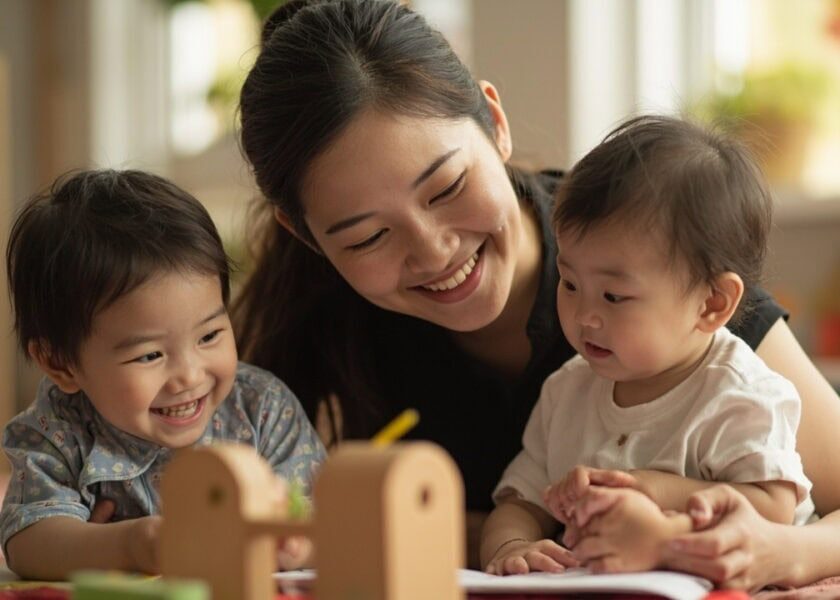
A child who is genuinely secure in their care environment will, over time, begin to explore. They will reach for a toy and then look back to check that the caregiver is still there. They will approach another child with cautious curiosity. They will settle into the rhythms of the day — eating, playing, resting — with a body that is relaxed, not guarded.
That willingness to leave and return, to explore and then come back, is not a small thing. It is the earliest and most foundational lesson a child learns about the world outside their family. It is the lesson that says: the world can be trusted. Other people can be trusted. I am safe here.
The Signs You Are Looking For — Without Knowing It
As a parent, you may not have the language for what you are watching for. But you already know what to look for. Here is what security actually looks like in a young child:
- The check-in glance. Your child reaches for something new, then turns back to find the caregiver’s face. Finds it. Settles. This is not clinginess — this is a child building an internal map of safety.
- Body relaxation over time. In the early days, your child’s body may look stiff or watchful in a new environment. Weeks later, their body softens. They sit differently. They move with more ease. This is emotional settling you can see.
- Curiosity that returns to centre. A secure child wanders, explores, reaches — and then comes back. Not because they are told to, but because returning feels natural.
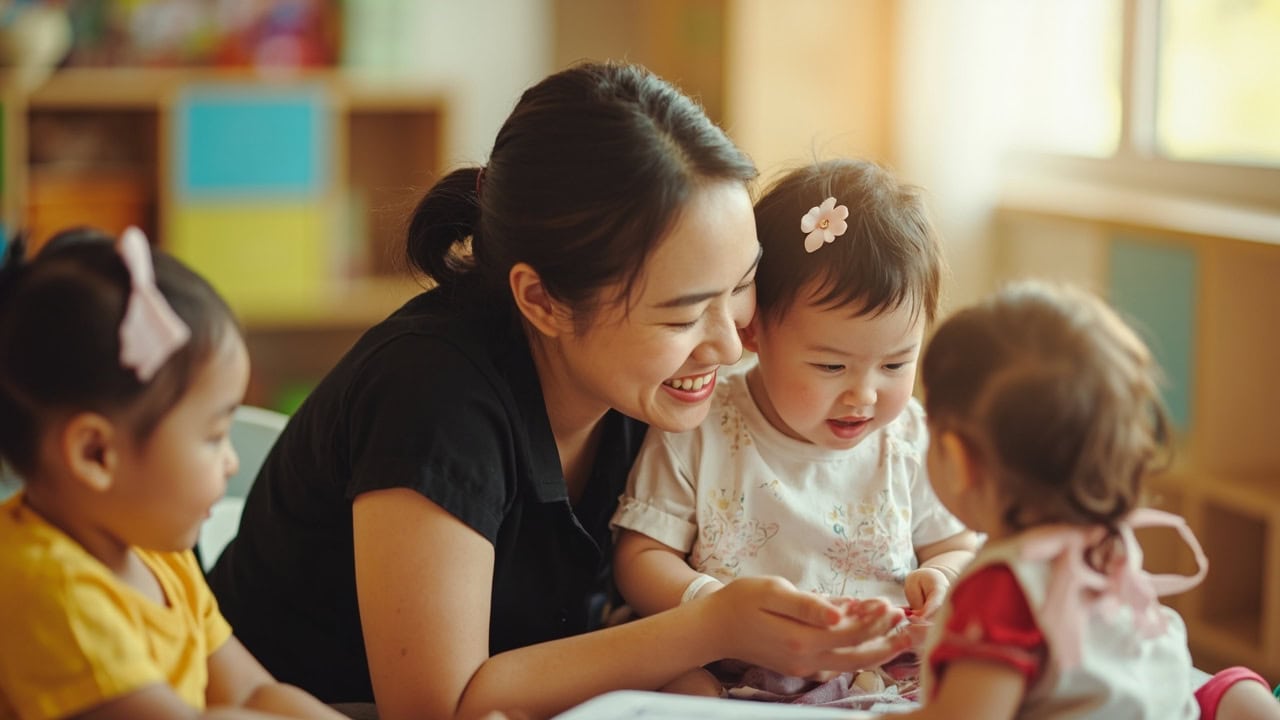
- Gradual comfort with peers. It starts with parallel play. Then cautious reaching. Then a shared toy. Then laughter. The progression from observer to participant is a measurable sign of growing social trust.
How Security Is Built — And Why It Is Not Accidental
But this kind of security is not accidental. It is built. It is built through the slow, patient, daily work of a caregiver who learns the particular temperament of each child in their care.
Consider what this actually looks like on any given morning at quality childminding:
- A caregiver notices that one child needs a few extra minutes of transition time before a new activity begins — and gives them that time without making it a thing.
- They understand that another child uses quiet, solitary play to self-regulate — and ensures there is a cosy corner where that child can do so without interruption.
- They recognise that when a little one presses their palm against the floor, they are checking whether the room is familiar yet — and respond with a gentle word that says, you are safe here, this space is yours too.
Every one of these observations — these small, unglamorous, profoundly important observations — is a stitch in the fabric of your child’s emotional world. And that fabric, thread by thread, becomes the child’s first map of what relationships feel like, what belonging means, and who they are in the company of others.
Minding Versus Being Known
EduNanny Singapore does not speak only about childcare. We speak about childminding — and there is a difference, though it lives in a place that is easy to overlook.
A child who is minded is kept safe. A child who is truly minded is seen. Not just watched, but known. Not just fed, but understood.
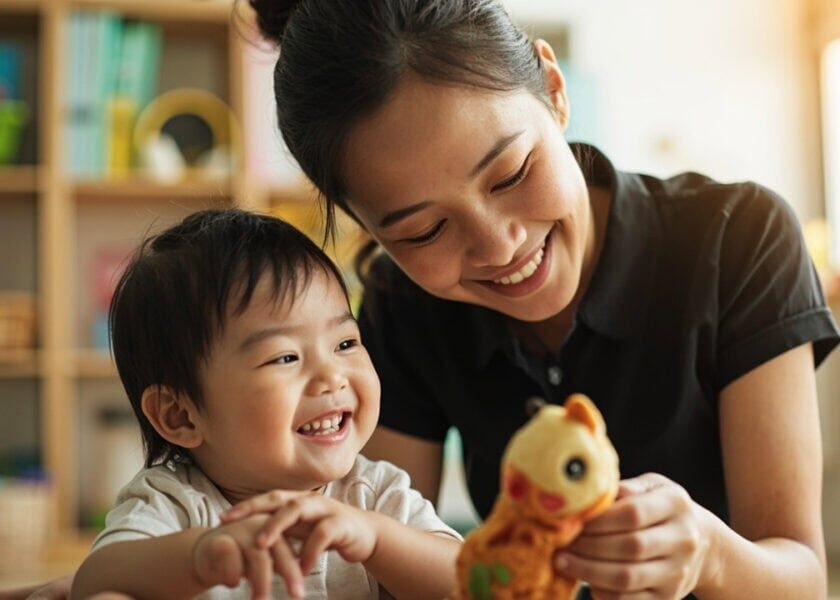
There is a caregiver in a quality environment who notices when a child shifts from curious to overwhelmed, who intervenes not with discipline but with presence, who holds the emotional world of that child as carefully as anyone ever has.
That is what quality childminding looks like in practice. That is what the architecture of a programme is designed to hold.
The Caregivers: People Who Witness
A childminder in the EduNanny programme is not simply someone who has been trained in safety protocols — though of course they have. They are someone who has been formed in the understanding that every behaviour a child shows is a message.
- A child who clings is not being difficult.
- A child who pushes away is not rejecting connection.
- A child who cries at drop-off and then settles an hour later is not manipulating — they are learning, for the first time in their short lives, that departure is not permanent and return is reliable.
This is enormous work. It is emotionally demanding, intellectually rigorous, and deeply human. EduNanny believes that the role of the childminder deserves dignity, proper recognition, and genuine support — because when a caregiver is held well, they hold the children in their care well.
What EduNanny Singapore Offers
Now, let us speak plainly about what this looks like on the ground — because you deserve clarity alongside the feeling.
EduNanny Singapore operates under the ECDA Childminding Pilot, which means we are part of a structured, government-recognised framework that brings together the warmth of home-based care with professional oversight. We offer both home-based and community or centre-based pathways, because families in Singapore are not all the same and neither should their options be.
Ratios That Allow Genuine Attunement
In our infant care settings, we maintain ratios of up to one caregiver for every three infants. We hold this standard because the research on infant attachment is unambiguous: a child who receives consistent, attuned responsiveness in the first years develops not just emotional security but the neurological architecture for empathy, self-regulation, and the capacity to learn.
When you hold a ratio like that, you are not just managing a group of children. You are holding the conditions in which a child can feel genuinely secure.
Accessibility for Singapore Families
Singapore families make extraordinary sacrifices for their children, and the kind of care described here should not be available only to the privileged few.
Our pilot fee structures are designed to be accessible, and we make it straightforward for families to use their Children’s Development Account (CDA) and Baby Bonus funds. Using the tools the government has provided should not require a finance degree to navigate.
Communication You Can Count On
Monday to Friday care blocks cover the rhythm of a working family’s life. Our communication protocols — including transparency measures such as CCTV where deployed — mean that the silence between you and your child’s day is a silence you can choose to fill.
You can reach out. You can ask. You can know.
Thomas AI Chatbot: Support When You Need It
Parenting in Singapore means navigating an extraordinary amount of information, doubt, and second-guessing. You are not short on advice. You are short on certainty that the people caring for your child truly understand what they are doing and why.
That is why EduNanny has developed Thomas AI Chatbot — not as a gimmick, not as a replacement for human warmth, but as a genuine resource for parents who have questions, who need guidance, who want to feel that there is always a knowledgeable, thoughtful presence available to them.
When your baby wakes with a rash at eleven at night, when you are wondering whether a certain developmental milestone is on track, when you simply want to understand what your child’s day looked like through a lens of developmental knowledge — Thomas is there. It bridges the gap between your world and your child’s world, so that you are never standing on opposite sides of a closed door.
Addressing the Concerns Every Singapore Parent Carries
It is reasonable to have questions. The concerns you are carrying deserve honest answers.
“Will my child feel abandoned?”
This is the fear underneath every fear. Some protest at drop-off is developmentally normal. It is not a sign that your child is being harmed. It is a sign that your child has a healthy attachment to you — and that they are learning, gradually, that you always come back.
What matters is what happens next. Does your child settle within a reasonable window of time? Does the caregiver respond with warmth and patience, not frustration? Over days and weeks, do you see signs of growing comfort rather than escalating distress? These are the indicators that matter — not the absence of all tears.
“How will I know what is happening?”
You will know because the communication will be open, consistent, and two-way. At EduNanny Singapore, transparency is built into the programme — through regular updates, accessible channels for questions, and the kind of caregiver relationships where you can genuinely ask, how was their day, and receive a real answer.
CCTV where deployed is available for parents who want that additional reassurance. But the deeper answer to this concern is not surveillance — it is relationship. When you trust the people, you do not need to watch the footage.
“Is this too expensive for what we are getting?”
Affordability is a real concern in Singapore, and it is one EduNanny takes seriously. The CDA and Baby Bonus integration means you are using the resources already available to your family.
When you calculate what you are actually receiving — not just supervision, but the conditions for your child’s emotional development — the value reframes. You are not paying only for someone to watch your child. You are paying for the environment in which your child’s sense of security, belonging, and self-worth is being quietly, daily constructed.
“What if my child has special needs or sensitivities?”
A quality childminding programme is built around the understanding that every child is an individual with their own temperament, pace, and way of experiencing the world. Caregivers trained in attunement are specifically equipped to notice and respond to children who need more time, more predictability, or more gentle support — without pathologising difference or applying one-size-fits-all responses.
How to Choose Quality Infant Care in Singapore
If you are in the research phase — comparing options, visiting centres, asking questions — here is what to prioritise beyond the brochure:
- Observe the caregivers’ faces when they interact with children. Are they present? Do they kneel to a child’s level? Do you see warmth in the exchange, not just duty?
- Ask about caregiver-to-child ratios. For infants, anything beyond 1:3 makes genuine attunement very difficult to sustain. Ask what the actual ratio is, not just what the regulation allows.
- Notice the environment’s emotional temperature. Is it calm? Are children allowed to move at their own pace? Is there space for quiet as well as activity?
- Ask how they handle separation and distress. A good programme has a considered, consistent approach — not a reactive one.
- Ask about communication. How will you know what your child’s day looked like? How can you reach out? How quickly can you expect a response?
- Trust your gut during visits. If something feels off, do not dismiss that feeling. You know your child better than any checklist.
When Trust Becomes Possible
And this is where something important happens. When a parent has genuine access to their child’s day — not through invasive surveillance, but through respectful, open communication — something shifts.
The question changes.
It stops being, are they okay, and starts being, tell me what they discovered today. Tell me who they played with. Tell me what made them laugh.
That shift — from anxiety to curiosity, from fear to genuine interest in your child’s experience — is one of the most quietly transformative things quality care can offer a family.
That silence in your flat after you have left for work — it does not have to be a silence of unanswered questions. It can be a silence of trust.
Not the blind trust of hoping everything is fine, but the informed, evidence-based, deeply felt trust of knowing that your child is in a place that understands their inner world. That sees their discomfort and responds with patience. That celebrates their small discoveries. That holds them when they need holding and steps back when they need to grow.
That teaches them, through every single day of their earliest years, that they are safe, that they belong, and that they are known.
To the Parent Standing at the Edge of This Decision
If you are carrying the weight of that invisible question — what does my child feel right now — we want you to know that you are not being unreasonable. You are not being overprotective. You are being a parent.
And the fact that you care this much about your child’s inner experience is the very reason they will be okay. Because you are choosing carefully. And what we are building at EduNanny Singapore is worthy of that care.
We cannot show you every moment of your child’s day. But we can tell you this: every moment of your child’s day is seen. Every feeling matters. Every small, quiet act of emotional attunement is happening, and it matters more than you know.
And when you pick your child up at the end of the day and they reach for you with the kind of ease that says the world was a safe place while you were apart — that is not coincidence. That is the result of people who care deeply about what your child feels. That is the result of a programme built around your child’s inner world, not just their schedule.
That is what EduNanny Singapore is. That is what we do.
And that is why, when you trust us with your child, you are not just handing over a responsibility. You are handing over something far more precious. You are handing over the beginning of their sense of who they are in the world.
We do not take that lightly. Not for a single child. Not for a single day.
Ready to learn more about what EduNanny Singapore offers your family?
Explore our infant care and childminding programme, speak with our team, or schedule a visit to see our approach in action.
Your child’s inner world deserves to be held with care. Let us show you what that looks like.
#childmindingSingapore #infantcareSingapore #ECDAchildmindingpilot #emotionalsecuritychildcare #EduNannySG