The Signs Your Child Is Becoming Themselves in Singapore Childcare
What Quality Care Looks Like at Pickup
You arrived here because you love your child enough to ask the hard question. Here is what to look for—and what it means:
- Emotional ease, not just the absence of tears — A child who waves goodbye casually, who trusts the parting is temporary, who reaches for their caregiver with recognition rather than desperation
- Curiosity in action — Pointing at the dog, building towers, exploring with their whole body; your child reaching for the world because they feel safe enough to
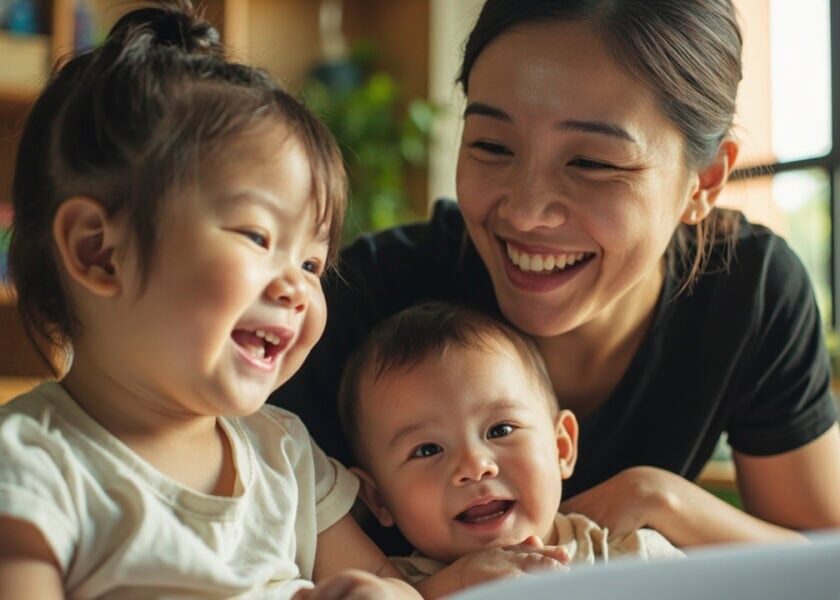
- Emerging personality — Gestures, preferences, new words, the particular way they tilt their head or smile; signs that a person is becoming
- Wholehearted engagement — Playing fully, not anxiously; exploring without conserving energy for vigilance
- Reunion, not rescue — Coming to you as a traveler with something to share, not a refugee returning from exile
These are not signs of adjustment. These are signs of identity—of a child who is being known, and who is becoming more themselves because of it.
The Search Beneath the Search
We do not ask this question because we doubt quality care. Singapore parents are some of the most informed, most deliberate decision-makers in the world when it comes to their children’s futures. You have done your research. You have weighed your options. You understand the value of consistency, of attuned caregiving, of an environment that meets your child where they are.
And yet.
The rational knowing and the emotional knowing do not always arrive together. The heart needs something the mind cannot provide: visible proof. Observable evidence that your child is not merely surviving the hours you are apart, but flourishing within them. That something is happening in your absence that adds to your child rather than subtracts from them. That the person who runs into your arms at pickup is more themselves than they were this morning—not less.
Consider what you are scanning for when you catch your child’s face at pickup. You are looking for what psychologists call coherence—the signs that the child before you is integrated, regulated, at ease within themselves. You are looking for a certain quality of aliveness. A brightness in the eyes that says, I was here, I was present, I did not disappear while you were gone.
This is different from the absence of distress. A child can be placid, quiet, uncomplaining, and still not be thriving. Still not be known. Still not be becoming. What you are looking for is something more subtle.
It is in the way your child moves toward a caregiver to say goodbye—trusting, relaxed, perhaps even casual, as though the parting is not a rupture but a brief and manageable separation. It is in the way your child turns back to wave, then forward again, ready. It is in the way they re-enter your arms not as a refugee returning from exile, but as a traveler with something to share.
Coherence does not emerge from supervision alone. It does not emerge from safety measures, from CCTV cameras or locked doors or meticulous documentation of feeding times. It does not even emerge from loving intention alone, however genuine. Coherence emerges from being known.
From a caregiver who remembers that this child loves to be held facing outward so they can watch the world. From a caregiver who notices when frustration flickers across that small face before it becomes a full cry, and intervenes with a puzzle piece or a song or a change of scene. From a caregiver who has seen this child often enough, consistently enough, to understand their particular rhythms, their particular joys, their particular vulnerabilities—and who responds not with a script but with genuine recognition.
Watching Identity Emerge
Watch a child who feels truly known in their care environment, and you will see something remarkable begin to unfold.
In the early weeks and months, your child was mostly reactive. Hungry, tired, uncomfortable, soothed. Their world was a series of sensations to be managed, needs to be met. There was no self yet to express—only impulses, reflexes, the raw material from which a self will eventually emerge.
But watch that same child at six months, at nine months, at fourteen months. Watch how they begin to show you who they are.
- There is the child who points—insistently, joyfully—at the dog across the park, as though this observation is the most important thing that has ever happened.
- There is the child who gathers toys into a pile and then distributes them with deliberate care, as though running a small economy of generosity.
- There is the child who climbs to the very top of the structure and looks down with an expression that says, I did this, I am capable, the world is navigable.
- There is the child who pats another child’s back with a kind of grave solemnity, practicing the rhythms of comfort before they have words for it.
These are not random behaviors. These are the first visible threads of identity. These are your child reaching out to test the world and discovering, through consistent and responsive care, that the world reaches back.
Quality care does not create this identity. Your child was already carrying it, in potential, from the beginning. But quality care creates the conditions in which this identity can safely emerge. It creates the safety—the felt sense that I am held, I am not alone, I can explore without losing myself—that makes exploration possible.
A child who is anxious, who is inconsistently cared for, who has learned that the world is unpredictable, will not climb to the top of the structure. They will not point at the dog. They will not distribute toys. They will conserve their energy for vigilance, for survival, for the constant work of managing an unsafe internal landscape.
But a child who has been known, consistently, over time, can relax. And in that relaxation, something extraordinary becomes possible: the emergence of a genuine self.
The Singapore Context: Why This Matters Here
Singapore parents carry a particular weight. The cost of living, the demands of career, the ambition to give your children every advantage—these are not abstractions here. They are lived realities that shape decisions made at kitchen tables, in whispered conversations between exhausted partners, at desks checked on lunch breaks.
The choice to place your infant in care is rarely simple. It is made in the context of pressure, expectation, and a fierce desire to get it right.
Singapore parents are not underserved in terms of options. There are centres and home-based arrangements, subsidies and schemes, frameworks and guidelines. The ECDA Childminding Pilot, in particular, has opened pathways that were not available to earlier generations—pathways that offer more personalized care, lower ratios, environments designed around the developmental needs of infants and toddlers rather than the administrative convenience of institutions.
But options do not answer the deeper question. Options do not tell you whether your child will be okay. They do not tell you what your child is becoming in the hours you are apart. They do not tell you whether the person who runs into your arms at pickup is flourishing or merely surviving.
What answers that question is not a policy document. It is your own observation. It is your willingness to look at your child with the same attention you brought to evaluating childcare options, and to ask: What am I actually seeing here? Who is this person in front of me? And is this who I hoped they would become?
If the answer is yes—if your child is curious, confident, at ease; if they express themselves authentically, show genuine warmth toward the people who care for them, demonstrate resilience in separation and joy in reunion; if they are becoming rather than merely being—then you have your answer. You made the right choice. Not because the logistics were perfect, but because the care was real.
What Real Care Looks Like
The word quality has lost some of its meaning through overuse. Every childcare provider will tell you they provide quality care. But quality is not a claim. It is a visible, observable phenomenon.
It can be measured in the ratios that allow a caregiver to truly know each child—not just their schedule but their temperament, their fears, their joys. It can be measured in the communication that flows between caregiver and parent, in the daily details shared, in the sense that you know who was with your child and what they did together. It can be measured in the environment itself: Is it warm? Is it organized? Does it invite exploration? Does it feel, even to an adult walking in for the first time, like a place where a child could flourish?
What to look for in a caregiver or centre:
- Consistency of relationship — Does your child have a primary caregiver who sees them regularly? Or are they passed between many hands?
- Attentiveness to the individual — Does the caregiver know your child’s particular temperament, preferences, and rhythms? Do they adapt to your child, or expect your child to adapt to them?
- Responsive communication — Do you receive regular updates, pictures, and details about your child’s day? Does the caregiver share observations, not just schedules?
- Environmental warmth — Is the space organized, inviting, and safe for exploration? Does it feel like a place where a child could thrive, not just be kept?
- Transparency and trust — Are you welcomed into the space? Can you observe what happens in your absence? Is there nothing to hide?
Permission to Trust What You Are Seeing
If you have made the choice to place your child in quality care—if you have done your research, weighed your options, chosen a pathway that felt right for your family—you have already done the hardest part. The decision, that weighing of love against logistics, is not one that anyone else can make for you. It is yours, and you made it.
But perhaps what you are still looking for is permission. Not to leave your child—we know you have already made that decision. Permission to trust what you are seeing. Permission to believe that your child is not diminished by your absence but expanded by the care they receive. Permission to stop scanning their face for damage and start seeing who they are becoming.
We want to give you that permission. Because the signs are there. They have been there all along.
- The way your child reaches for their caregiver in the morning—not with the desperate clinging of a child who does not trust, but with the easy recognition of a child who knows exactly where they are going.
- The way they explore the room when they arrive, moving toward the activity that calls to them, making choices that reflect a person with preferences and interests.
- The way they respond to challenge—not with collapse, but with persistence.
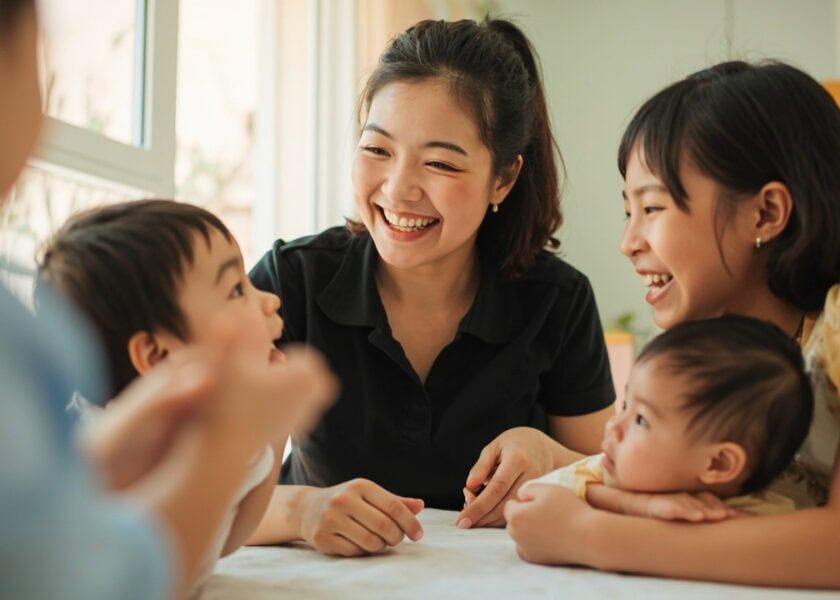
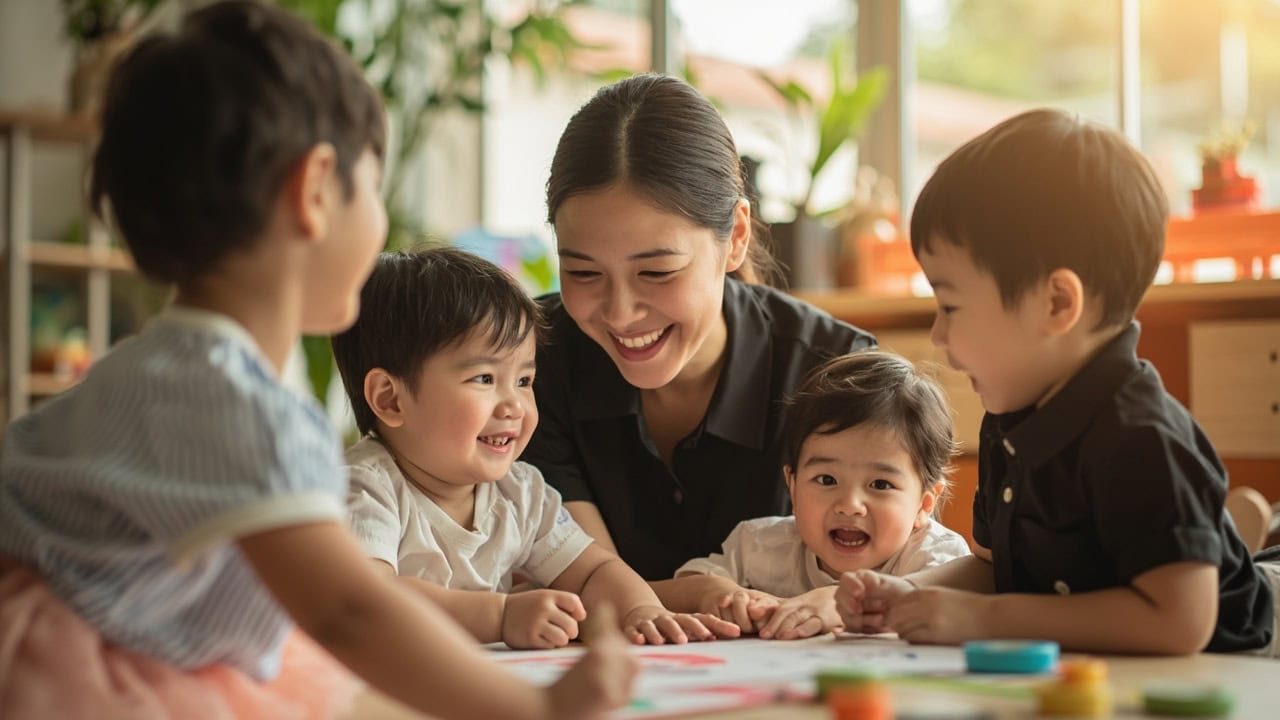
- The way they play alongside other children, noticing them, occasionally engaging, learning the rhythms of social life.
- The way they come home and show you what they learned, or collapse into your arms with the satisfied exhaustion of a day fully lived.
These are not the behaviors of a child who is merely being cared for. These are the behaviors of a child who is being known. And a child who is being known will become more themselves—not less.
The child who runs into your arms at pickup is not just a child. They are evidence. They are living proof of what happens when a child is held in consistent, attentive, knowing care. Every curious gesture, every confident reach, every authentic expression of joy or frustration or love—they are not random. They are the visible trace of an inner world being built. They are the emerging self, making itself known.
You are the person most qualified to read the signs. No checklist can tell you what your child is becoming. Only you can see it.
What to look for at your next pickup:
- Curiosity — Does your child look at the world with interest? Are they pointing, exploring, reaching for new things? This says, I trust this world enough to explore it.
- Confidence — Does your child approach challenges with persistence rather than collapse? Do they try again after failure? This says, I am capable, I am growing, I can manage.
- Authenticity — Does your child express their preferences, their joys, their frustrations genuinely? Do they show you who they are without fear? This says, this is me, and I am not afraid to show it.
- Emotional ease — Does your child separate from their caregiver with trust rather than desperation? Do they reunite with you with joy rather than relief? This says, I know the people who care for me, and I know you will come back.
- Social warmth — Does your child notice other children? Are they beginning to engage, to share, to comfort? This says, I am learning to be in relationship with others.
EduNanny by BUTLER: Built Around What Matters
EduNanny by BUTLER was built around these questions. Not as an afterthought, not as a marketing claim, but as a design principle.
The ECDA Childminding Pilot created a framework in which home-based care could be developed with the rigor and transparency that parents deserve. EduNanny accepted that framework and went further—building in communication structures, maintaining ratios that allow for genuine attentiveness, creating pathways that give families options appropriate to their circumstances.
When we talk about up to one-to-three infant ratios, we are not just citing a number. We are describing a relationship. One caregiver, three infants. Enough attention for each child to be known, to be seen, to be responded to as the specific person they are. This is not an accident of staffing. It is an intentional choice to create the conditions for identity to form.
Trust is not given. It is built. That is why communication matters—not as a courtesy, but as a covenant. Parents need to know what happens in their absence. They need pictures, updates, details. They need to feel that the bridge between home and care is not a leap of faith but a structure built on observation and transparency.
These are not luxuries. These are the foundations upon which your child’s emerging self can safely rest.
Quality care does not replace you. It does not do what you do. But it does something you cannot do alone: it holds the space for your child to emerge. It witnesses them in their fullness. It celebrates their emerging self with you, not instead of you.
Your child is becoming. Let us help you find the village that makes it possible.
If what you have read here resonates—if you are looking for care that sees your child as a person, not just a schedule—we invite you to speak with us.
Visit an environment. Watch how caregivers interact with the children. Ask to see what a typical day looks like. And then, at pickup, ask yourself what you see in your child’s face.
Because you already know how to read the signs. You have always known. Now you have permission to trust what you see.