Beyond the Handover: How Singapore Parents Can Build a True Partnership with Their Caregiver
The Relationship You Already Have—And the One You Want
Let us begin with a simple truth that rarely gets said plainly: most parent-caregiver relationships in Singapore operate as transactions. You hire someone to watch your child while you work. They fulfill that function. You pay them on time. You exchange information about meals and naps. The relationship is polite, professional, and deeply superficial.
It works. But it does not flourish.
The problem is not that parents do not care. Singapore parents care enormously. We care with a fierce, almost exhausting intensity. We read the research. We worry about attachment. We agonize over whether we are doing enough.
But somewhere along the way, we accepted an unspoken assumption: that the relationship with our caregiver is separate from the relationship with our child’s development. That we handle one, and they handle the other, and never the twain shall meet.
This assumption does a disservice to everyone involved. It undersells the caregiver’s potential role in your child’s life. It leaves you feeling disconnected from the hours your child spends away from you. And it deprives your child of the profound developmental gift that comes when the adults in their life are truly aligned.
The parent-caregiver relationship is not a logistics arrangement. It is a developmental partnership. And the difference between the two is the difference between a child who is simply cared for and a child who is truly known.
Three Habits That Change Everything
So what separates a transactional relationship from a true partnership? It is not grand gestures or elaborate systems. It is the small daily habits that you build without even realizing you are building them. It is the language you use, the questions you ask, the observations you share, the trust rhythms you establish over time.
Sharing Context, Not Just Facts
When you pick up your child and say, “She didn’t sleep well last night,” you have shared a logistical fact. When you say, “She’s been really into dinosaurs this week, we watched a documentary together and she kept pointing at the T-Rex,” you have shared something that transforms the caregiver’s understanding of your child. Now they know something that will help them respond to her curiosity, redirect her when she gets frustrated, celebrate the small moments when she makes a connection.
It is telling the caregiver that your daughter is working through something difficult when she melts down over small things—not because you want them to manage it, but because you want them to understand it. It is letting them know that your son is anxious about starting swimming lessons, so they can offer extra reassurance on those mornings.
When you share developmental context consistently, something shifts in the relationship. The caregiver stops being someone who simply executes a schedule and starts being someone who is genuinely invested in your child’s growth. They become part of the village raising your child, not just a service provider waiting for the next handover.
Asking Better Questions
Most parents ask binary questions. Did she eat? Did he sleep? Was she okay? These questions invite one-word answers, and one-word answers close conversation. But if you want to build a true partnership, you need to ask questions that invite observation, reflection, and insight.
Consider these alternatives:
- Instead of “Did she eat?” try “What did she seem most interested in at lunch today?”
- Instead of “Did he sleep well?” try “How did he seem when he woke up? Was there anything that seemed to comfort him?”
- Instead of “Was she difficult?” try “What surprised you about her today?”
These questions communicate something important: that you see the caregiver as an observer whose observations matter. That you are not simply managing a checklist but genuinely curious about your child’s experience.
And when caregivers feel seen and valued this way, they rise to meet that expectation. They start noticing more. They start sharing more. The partnership deepens organically.
Mutual Observation
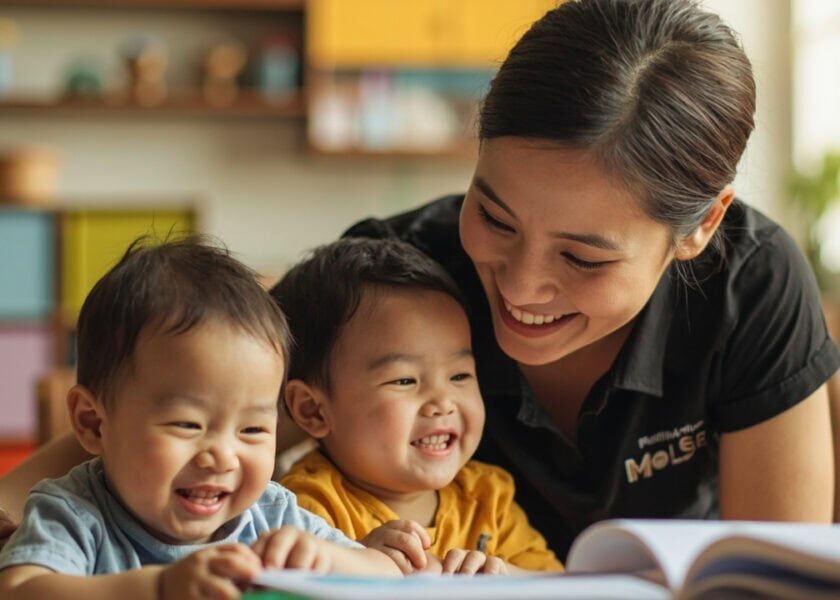
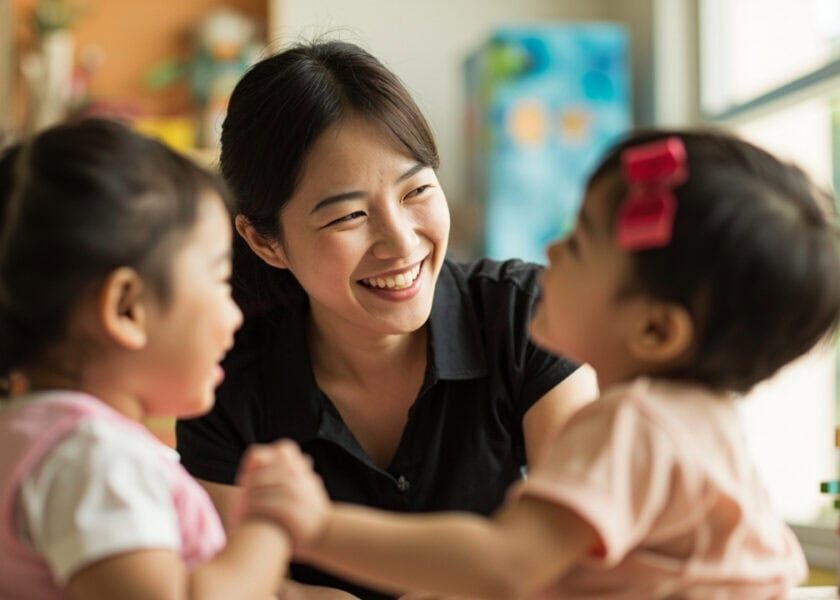
This is where the partnership becomes truly powerful. When a caregiver and a parent are truly aligned, they become co-observers of the same child. Each one sees the child from a different angle, in different contexts, at different times of day. Together, they construct a more complete picture than either could build alone.
This is not about formal observation reports or structured documentation. It is about the quiet accumulation of shared understanding.
When you notice something at home and mention it to the caregiver, and they say, “Yes, I noticed that too”—that moment of alignment confirms that you are both watching the same child and both invested in her flourishing. When you notice a discrepancy, that too is valuable information—an invitation to understand the child more deeply by understanding how they show up differently in different environments.
Trust: The Foundation That Makes Partnership Possible
Trust is the foundation that makes all of this possible. And trust, in this context, is not an abstract feeling. It is built through small, consistent rituals over time.
Sharing Small Victories
One of the most powerful trust rituals is the act of sharing small victories. When your caregiver tells you, without prompting, that your child said her first two-word sentence today, or that she figured out how to stack three blocks, or that she showed unexpected gentleness with a younger child—these moments are gifts. They tell you that your caregiver is paying attention not just to your child’s basic needs but to her developmental milestones. They tell you that your child is having experiences in your absence that are worth noting and celebrating.
Showing Up Consistently
But trust is a two-way street. It is also built when you, as a parent, show up consistently. When you are on time for pickups. When you communicate clearly about schedule changes. When you respect the boundaries and rhythms that the caregiver has established.
These acts of reliability communicate respect. They tell the caregiver that you value what they do and that you are not taking their time for granted.
The Safety That Trust Creates
Over time, this mutual trust creates safety. And when the caregiver feels safe, they are more likely to share concerns, to ask questions, to be honest about challenges. The parent who has built trust through consistent reliability can receive honest feedback without defensiveness. They can ask the caregiver, “Is there anything I should know?” and trust that they will receive an authentic answer.
This kind of honest, bidirectional communication is perhaps the most underappreciated benefit of the true parent-caregiver partnership. When the relationship is purely transactional, feedback flows in one direction—from parent to caregiver—and it tends to be about logistics. But when the relationship is a true partnership, feedback flows in both directions.
The caregiver can tell you, with genuine care, that they noticed your child seemed unusually tired this week. They can ask you questions about your child’s behavior that help them understand her better. They can share observations that you might have missed because you only see one version of your child, while they see another.
This kind of communication requires intention. It requires the parent to create space for it, to receive feedback gracefully, to ask questions without defensiveness. But when it exists, it creates a feedback loop that benefits everyone: your child, you, and the caregiver.
Navigating Difference: The Cultural Dimension
Singapore is a city of diverse backgrounds, and the relationship between parents and caregivers often spans differences in language, culture, generational expectations, and communication style. These differences are not obstacles. They are simply the terrain that you must navigate together.
What matters most is not that you and your caregiver are alike, but that you are committed to understanding each other. This means being explicit about expectations, being patient with miscommunications, and being willing to adapt your communication style when needed.
It means assuming positive intent, especially when there is a language barrier. It means recognizing that a caregiver who grew up in a different cultural context may have different instincts about childrearing, and finding ways to honor both your values and theirs while keeping the child’s needs at the center.
The best parent-caregiver partnerships are not the ones where parent and caregiver are most similar. They are the ones where both parties are most committed to the relationship itself—where both parties genuinely care about the child’s wellbeing above their own comfort, where both parties are willing to do the work of understanding someone who is not exactly like them.
What This Partnership Means for Your Child
And here is what is so beautiful about this kind of partnership: it directly impacts your child’s development.
When your caregiver is informed about your child’s needs, routines, and temperament, they can respond with greater attunement. When they feel valued and trusted by you, they bring warmth to their care rather than anxiety or guardedness.
And when your child sees that the important adults in their life communicate with respect and care, they are learning something profound about relationships. They are learning that trust is built through consistent care, that communication is a gift, and that they are surrounded by a village of people who are genuinely invested in their wellbeing.
This is not wishful thinking. This is how children develop secure attachment—the foundation for emotional resilience, curiosity, and the capacity for healthy relationships throughout life. And this security is built, in part, through the consistency and quality of the care they receive from the adults around them, including the caregiver you have chosen.
What Quality Infant Care Looks Like in Singapore
For parents evaluating their options, understanding what quality care actually looks like can feel overwhelming. Here are the markers that matter most:
- Individualized attention: Small caregiver-to-child ratios mean your infant can be truly known, not just managed. Home-based childminding arrangements with ratios of one caregiver to up to three infants allow for the attentive, responsive care that developmental research supports.
- Observational practice: Caregivers who are trained to notice developmental milestones—not just feeding schedules and sleep times—can partner with you in tracking your child’s growth and identifying areas where support may be needed.
- Relational warmth: Quality care shows up in how your child responds to their caregiver over time. Does your child show signs of comfort and trust? Do they have a predictable, positive response to the care environment? These are the real indicators that matter.
- Communication infrastructure: The best care arrangements include regular touchpoints—not just daily handover conversations, but ongoing sharing of observations, concerns, and celebrations. Ask prospective providers how they handle this communication.
The EduNanny Approach to Partnership
EduNanny was built on a simple but radical premise: that the relationship between parent and caregiver is the heart of quality childcare. Not the curriculum. Not the facilities. Not even the training, though training matters enormously. The relationship.
When we designed our approach to infant care and childminding, we kept this partnership at the center of everything. Our caregivers are trained not just in the technical aspects of childcare, but in the relational skills that make true partnership possible. They learn how to observe children developmentally. They learn how to communicate with parents in ways that build trust rather than just convey information. They learn to receive parent insights as valuable data, not as criticism.
We are proud to be part of the ECDA Childminding Pilot, working within a framework that allows us to maintain the small ratios essential for this kind of attentive, relational care. With up to one to three infants per caregiver, we ensure that every child receives the individualized attention that their development requires, and that our caregivers have the capacity to truly know the children in their care.
Our care options span both home-based and community-based pathways, with Monday to Friday care blocks designed to fit the realities of Singapore family life. Many families find that CDA and Baby Bonus funds can be used to offset costs, and we are happy to help families navigate these options.
We know that leaving your infant with someone else—even someone you trust—can feel deeply vulnerable. You may wonder: how can I really know what happens when I’m not there?
Where families desire additional peace of mind, we offer communication and transparency measures, including CCTV where deployed. But we want to be honest with you: no system of monitoring can replace the trust that comes from a genuine relationship. The deepest reassurance is not in watching your caregiver, but in knowing your caregiver. In having regular conversations where you learn what your child experienced. In feeling that you are both watching the same child, both invested in the same growth.
This is what EduNanny caregivers are trained to make possible.
An Invitation to Choose Differently
You have already shown that you care deeply about your child’s care by being here, by taking the time to learn about what EduNanny offers. That care is the foundation everything else is built on.
But we want to invite you to go one step further. We want to invite you to see this not just as a transaction, not just as a service you are purchasing, but as a relationship you are building.
The truth is that the childcare relationship does not have to be superficial. It does not have to be limited to logistics and pleasantries. It can be deep, communicative, trust-filled, and genuinely developmental. It can be one of the most meaningful relationships in your family’s life.
EduNanny exists to make this kind of relationship possible. Not just to provide childcare, but to provide a framework for partnership. To train caregivers who are ready to be true partners. To support parents in building the habits and communication patterns that make deep partnership natural.
We believe that every child deserves to be known, not just watched. Every parent deserves to feel genuinely connected to the person caring for their child. And every caregiver deserves to be seen as the professional, the ally, and the extended family member they truly are.
This is what we are building at EduNanny. This is the partnership we invite you to join.
If you are looking for a childcare and childminding partner who shares this vision, we would be glad to hear from you. Learn more about who we are or explore our approach to quality infant care in Singapore.