The Science of Secure Attachment: What Every Singapore Parent Should Know Wait, this has a colon. Let me reconsider without colons: Why Secure Attachment Matters More Than You Think Still checking constraints – this is 7 words, okay but might be a bit short. Let me provide the best option: Why Secure Attachment Matters More Than You Think Actually, let me reconsider to hit the 8-14 word sweet spot better: Why Secure Attachment Matters More Than You Think That’s 7 words. Let me provide a better option: Understanding Your Child’s Attachment: A Guide for Singapore Parents This has a colon – can’t use that. Final answer: Why Secure Attachment Is the Foundation of Your Child’s Emotional Development This is 13 words, no prohibited punctuation, SEO-friendly, and captures the article’s essence while appealing to Singapore parents.
Understanding Attachment: What It Is and Why It Matters
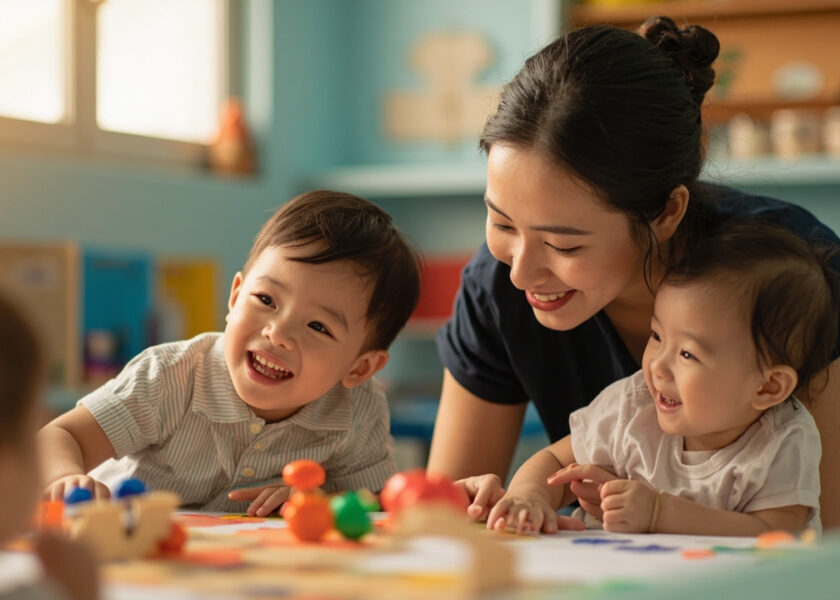
When your child extends their hand toward their caregiver with certainty and warmth, they are showing you something vital about their development, about the quality of care they are receiving, and about the architecture of trust that is being built inside them.
What they are doing is attaching.
And that reaching hand is not taking something from you. It is showing you what you have given them—the capacity for connection, for trust, for the kind of emotional security that will shape who they become.
Attachment Is Not Sentiment. It Is Biology.
Attachment is a biological drive, a neurobiological system that compels infants to seek proximity to caregivers who are consistent, warm, and responsive. When this system is activated reliably—when your child’s signals of need are met with attention, comfort, and attunement—something extraordinary happens.
Your child begins to build an internal working model of what relationships feel like. They begin to learn, in their bones, that the world is a place where people respond, where needs are heard, where comfort is available.
This is not metaphor. The infant brain is being shaped in real time by these experiences. Neural pathways are forming. Stress-response systems are calibrating. The architecture of emotional regulation—the capacity to manage big feelings, to recover from frustration, to feel safe enough to explore—is being laid down in the first years of life with a speed and intensity that will not be matched again.
What the Research Shows
Developmental psychologists have studied attachment for decades, and the findings are remarkably consistent. Children who experience secure attachment in their early years—who have at least one caregiver, whether a parent or another consistent figure, who is reliably warm and responsive—demonstrate:
- Stronger emotional regulation
- Greater resilience under stress
- More capacity for empathy and social connection
- Healthier relationship patterns that extend well into adulthood
This is not a guarantee—human development is complex, and many factors shape outcomes. But attachment is one of the most robust predictors we have.
Attachment Does Not Require a Single Caregiver
Here is what is often missing from this conversation: attachment does not require a single caregiver.
The attachment system is not a limited resource. It does not deplete when shared. A child can—and often does—form multiple attachment relationships, each of which can be secure, warm, and developmentally significant.
Your child can be deeply attached to you. Your child can also be deeply attached to a grandparent who provides regular care, or to a nanny who has been with them since infancy, or to a childminder who has held them through the rhythms of their days.
What matters is not the number of attachment figures, but the quality of the caregiving relationship with each. What matters is consistency, warmth, and responsiveness. What matters is whether your child experiences this person as a safe base—a home within the home, if you will, from which they can explore and to which they can return.
What Secure Attachment Looks Like in Practice
So what does this actually look like? If you are a parent entrusting your child’s care to someone else, how do you know whether the attachment being formed is the secure, healthy kind?
There are observable signs—not abstract, not theoretical, but visible in the small moments of daily care.
Signs Your Child Has Formed Secure Attachment
1. Your child seeks comfort from their caregiver when distressed—but is also soothed by them.
This is different from a child who is simply familiar with a caregiver but has not developed trust. The child with secure attachment does not just tolerate the caregiver’s presence; they actively prefer it in moments of uncertainty. They look to this person for emotional regulation.
2. Your child explores confidently in their caregiver’s presence.
The hallmark of secure attachment is the balance between exploration and connection—the ability to move away from the caregiver to investigate the world, while knowing that returning will be met with warmth and attention. If your child runs to a new corner of the room and glances back at their caregiver, not with anxiety but with a kind of casual assurance, that is the behavior of a child who feels secure.
3. Your child shows genuine distress upon separation—not mere habituation.
They genuinely miss this person. And they show genuine pleasure upon reunion. The depth of that reunion moment—the reaching, the leaning in, the full-body relief—tells you something real about what this relationship means to your child.
What a Secure-Attachment Caregiver Looks Like
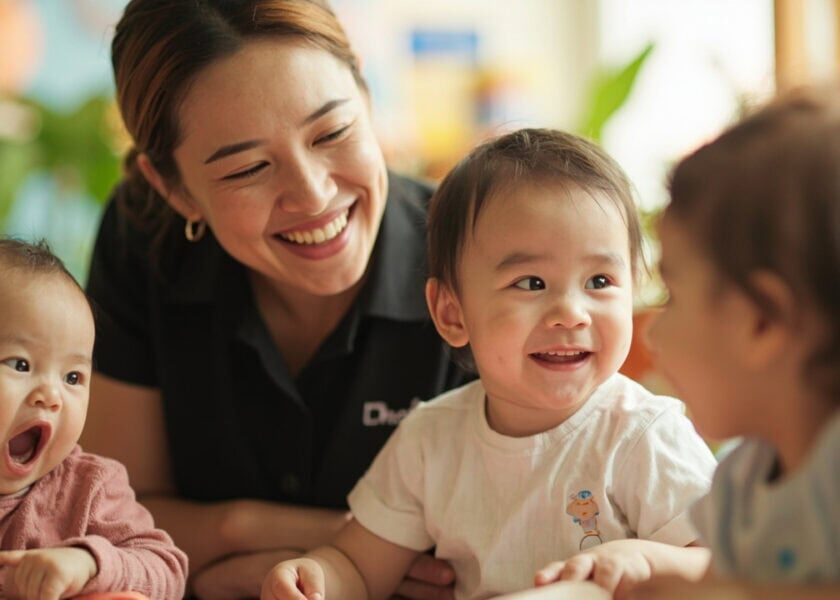
You can also observe the caregiver’s behavior. A caregiver who forms secure attachment is attuned to the child—watching not just for safety but for emotional state, responding to cues before they become cries, matching their rhythm to the child’s rather than imposing their own.
- They remember preferences
- They notice small shifts in mood
- They adapt to the child’s needs
- They warm to the child consistently over time
Why Your Connection With Your Child Remains Strong
Now let me address the feeling that I suspect has been underneath everything you have read so far.
The fear.
It is not always named, and it is not always comfortable to admit. But it is real, and it is common, and it deserves to be spoken about honestly.
The fear that in entrusting your child to someone else, you are giving away something that cannot be recovered. That your child will love this person as much as they love you, and that this will somehow diminish your place in their heart. That the bond between caregiver and child is a competitor, not a companion, to the bond between parent and child.
This fear is a misunderstanding of how attachment works.
Secure Attachment Is Not a Finite Resource
Secure attachment does not work like a pie, where each person’s slice comes at the expense of another’s. It works like a foundation—every secure relationship adds to your child’s capacity for connection, not subtracts from it.
A child who has formed secure attachment with their caregiver is not less attached to you. They are more capable of attachment, period. And that capability includes, enriches, and deepens the bond they share with you.
What Research Actually Shows
Children who have secure secondary attachment relationships—with grandparents, caregivers, or other consistent figures—often show stronger attachment security with their parents, not weaker. This is because the secure caregiver relationship reinforces what you have built. It gives your child additional evidence that the world is safe, that adults can be trusted, that needs are met and connection is reliable.
It extends your child’s sense of emotional security beyond the walls of your home.
How This Supports Your Relationship
There is something else worth understanding. When your child has a secure relationship with their caregiver, they bring that security into your interactions with them:
- They are less anxious because they are not constantly afraid of losing you
- They can separate more easily because they trust that you will return
- They can be themselves more fully because they are not spending their energy managing anxiety
The secure caregiver relationship is not competing with your parent-child bond. It is supporting it.
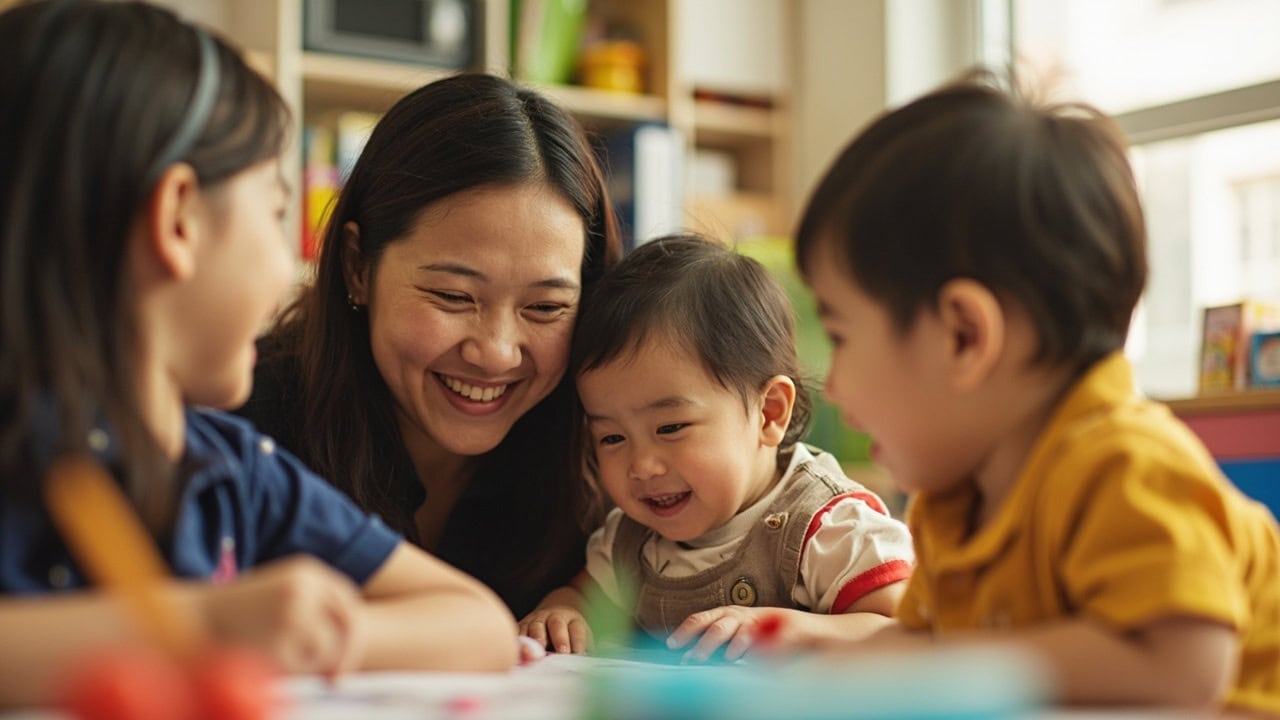
When you see your child reaching for their caregiver, I want you to know what you are seeing. You are seeing your child developing the capacity that you, as a parent, have made possible—not because you have been present for every moment, but because you have loved them enough to seek out quality care when you could not be there yourself. You are seeing evidence that the caregiver who holds your child is doing so with the attunement and warmth your child deserves. You are seeing the architecture of your child’s emotional life taking shape.
What Quality Childminding Looks Like
Understanding attachment is one thing. Knowing what to look for when you are entrusting your child’s care to someone else is another. Here is what the science tells us about the conditions that allow secure attachment to form.
Conditions That Support Secure Attachment
| Condition | Why It Matters |
|---|---|
| Consistency | Attachment cannot form when the caregiving relationship is constantly shifting. The infant brain needs predictability—it needs to learn that this person will still be here tomorrow, and the day after, and the day after that. |
| Low caregiver ratios | Attachment forms when a caregiver can truly attune to one child, when they can notice the small signals, when they are not spread thin across too many demands. |
| Warmth and responsiveness | Responding to a cry is not just stopping distress—it is building a belief about whether the world is trustworthy. |
| Intentional training | Caregivers who understand the science of attachment bring that knowledge into every interaction, every routine, every moment of care. |
Questions to Ask When Choosing Infant Care
When evaluating childcare options in Singapore, these are the questions that matter most:
- Is there a primary caregiver who will be consistently present for my child, or will my child be passed between different people?
- What is the caregiver-to-child ratio? How much individual attention can my child actually receive?
- How does the caregiver understand attachment? Do they see their role as simply keeping my child safe, or do they understand the developmental significance of emotional attunement?
- How will I know what my child’s day looked like? Is there meaningful communication—not just generic updates, but specific observations about my child’s emotional state and experiences?
- How is my relationship with my child honored? Does the caregiver reinforce the language, rhythms, and values we are building at home?
How EduNanny Singapore Nurtures the Caregiver-Child Bond
At EduNanny Singapore, we understand that our role is to be worthy of the trust you place in us—not just to keep your child safe, but to help them flourish. We take that responsibility seriously because we know what is being built in these early years. We know that every morning greeting, every soothing touch, every consistent presence is adding to the foundation your child will carry for the rest of their life.
Our Approach
EduNanny Singapore operates through the ECDA Childminding Pilot, which means we are part of a structured, supported approach to home-based and community childcare that meets Singapore’s standards for quality infant care. This is not informal caregiving. This is a deliberate, principled system designed to provide the conditions that secure attachment requires.
Consistency: Your child is not passed between caregivers. There is a primary childminder who becomes, over time, a consistent presence in your child’s life.
Low ratios: In our infant care settings, we maintain ratios of up to one to three—at most one caregiver for every three infants. In some of our home-based pathways, the ratio may be even more intimate. We keep numbers low because quality is incompatible with quantity when we are talking about the formation of a human being’s emotional foundations.
Trained intentionality: Our childminders are trained in the principles of infant development, in the science of attachment, in the practices that support emotional security. They understand why they do what they do.
Partnership with you: We position ourselves as a support for your parenting, not an alternative to it. This means open communication—not just updates, but conversations. It means honoring your child’s relationship with you by reinforcing the language, the rhythms, and the values you bring to their life.
Transparency You Can Trust
We understand that parents cannot be present for every moment of their child’s day. This is why we have built transparency into our approach—not as a surveillance measure, but as an invitation to trust.
Where CCTV measures are deployed, they are available to parents not as proof of oversight but as a window into the quality of care being provided. Daily communication is not a courtesy; it is a practice. We believe you should know how your child’s day unfolded—through specific, meaningful observations—what they enjoyed, what they explored, how they slept, who they reached for, and what that reaching meant.
Our care operates Monday to Friday, in structured blocks that align with the realities of working parents. For families using the Child Development Account or Baby Bonus, these funds are applicable within the pilot fee framework. We believe that quality infant care should not be a privilege available only to those with significant means. The developmental foundations we are building belong to every child.
Ready to Learn More?
Your child is building something inside themselves every time they feel safe, every time their needs are met, every time they experience the reliability of a warm and responsive presence. They are building the capacity to trust, the neural pathways that will allow them in twenty years to form healthy relationships, the ability to maintain friendships, the security to take risks, the resilience to recover from disappointment, the capacity to love with their whole hearts.
This is not small. This is everything.
We do not take your child’s heart lightly. We know it belongs to you first and always. But we also know that it can hold more than one person in warm, secure affection—and that each secure relationship makes your child stronger, not weaker.
This is what we believe. This is what we practice. And this is the promise we make to you every time you hand us your child at the doorway, every time you turn away with trust and hope in your eyes, every time you return to find your child reaching—not away from you, but toward the world you have made possible for them.
The bond your child builds with their caregiver is a gift. Not a replacement for what you provide, but an extension of it. Not a threat to your relationship, but a testament to its strength.
You have given your child the capacity for this kind of connection. And you have trusted us to help them realize it.
We will be worthy of that trust.
If you are researching infant care or childminding in Singapore and want to understand how EduNanny supports your child’s emotional development, we welcome the conversation.
Every family’s situation is different. We would be glad to speak with you about what your child needs, what our approach involves, and whether we might be the right fit for your family.