Beyond Logistics: How Quality Childcare Reveals Who Your Child Really Is
The First Thousand Days: Why the Early Years Matter
Singapore is not a place that makes slowness easy. We know this. We live it — in the commute, in the cost of living, in the expectations we carry for our children. There is weight in wanting to do right by them while also holding down jobs, supporting aging parents, maintaining relationships, and holding on to some sense of self that predates parenthood.
For families with infants, this pressure is especially acute. The first thousand days of a child’s life — from birth to roughly age three — are neurologically critical in ways that research has consistently affirmed. Synaptic connections form at a pace that will never be matched again. The architecture of language, of emotional regulation, of trust, of curiosity — it is all being built in these early years, largely in the presence of the adults who hold that child.
For many families in Singapore, that presence cannot always be fully available at home. Not because parents are failing. Because life is demanding. The reality of dual-income households, of careers that do not pause, of families spread across the region — these mean that the question of who holds your infant, and how, is not a hypothetical. It is an urgent, deeply personal decision that carries real consequences and real hopes.
This is where the conversation so often stops. It becomes a conversation about logistics. About trust, which matters enormously. About safety, which matters absolutely. About ratios, credentials, operating hours, subsidies, proximity to your office or your parents’ home.
All of that is valid. It is the necessary work of choosing care.
But there is something beyond the necessary work that we rarely name — and naming it changes the weight of the decision entirely.
What Quality Care Reveals
There is a moment — you may not even notice it at first — when your child does something you have never seen before. A gesture. A word. A way of holding a spoon or watching a bird or reaching for your hand that seems to arrive from somewhere you did not know existed.
And in that moment, something in you shifts too. Not dramatically. Not all at once. But something shifts.
You are watching your child become more themselves. But here is what we rarely talk about: you are also becoming someone new. And recognizing that — quietly, unexpectedly, sometimes almost unsettlingly — may be one of the most honest moments of parenting.
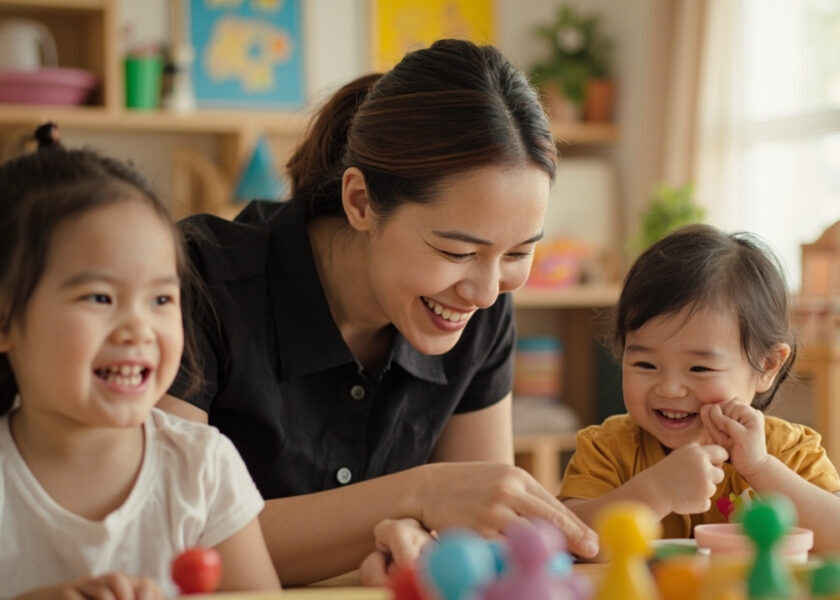
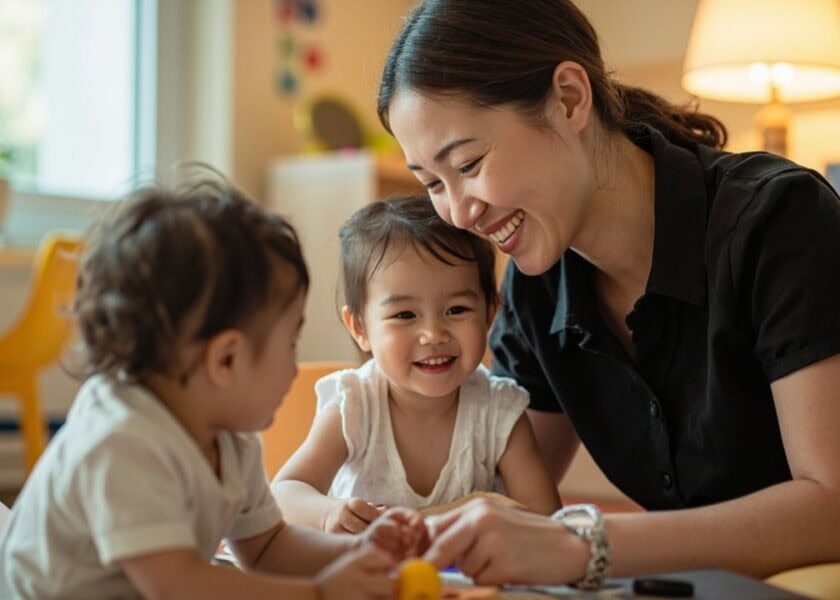
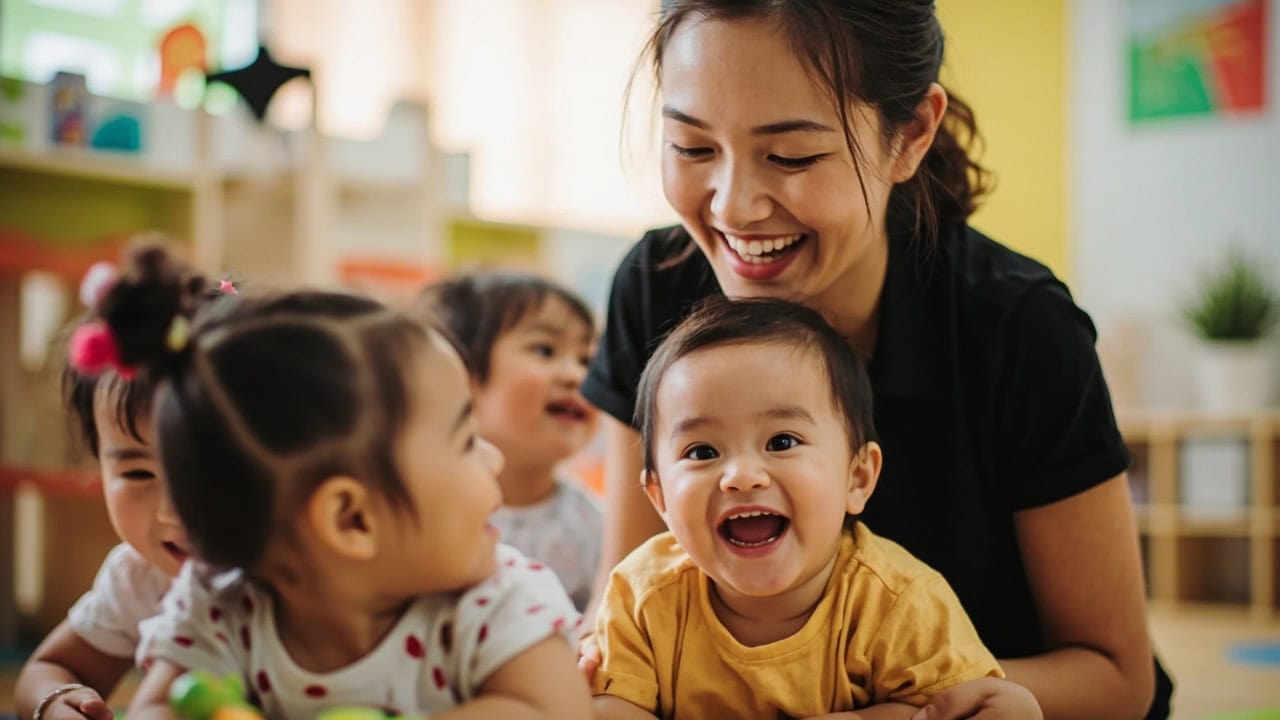
When a child grows in an environment of genuine quality — one where the ratio of caregivers to infants allows for real attention, where the people holding your child are trained, present, and consistent — something extraordinary becomes observable.
Your child begins to show you who they are.
Not who you imagine them to be. Not the child filtered through the exhaustion of your own days. But the child in their fullness, in their specificity, in the particular texture of their emerging personality.
Consider what becomes visible in the right conditions:
- The baby who is fiercely curious about textures — who reaches for everything, examines everything, mouths everything with a concentration that tells you something about the adult they are becoming.
- The toddler who mediates conflict with a thoughtfulness you did not teach them — who knows instinctively how to comfort, how to share, how to hold space for another child’s feelings.
- The small person who sings to themselves while playing, or who studies faces with an intensity that tells you something profound about the kind of person they will be.
What quality childcare reveals — and what busyness conceals — is the individuality of your child. Because when your child is in the right place, the conditions for that individuality to emerge are present. There is time. There is responsiveness. There is the kind of unhurried observation that a single overwhelmed parent, however loving, cannot always sustain.
This is not a small thing. It is one of the most important gifts you can offer your child — and one of the most important gifts your child can offer you. The gift of being seen.
The Reciprocal Relationship: How Children Grow Their Parents
Here is what is less often spoken about: the same process that reveals your child to you changes you.
Parenting literature is full of advice about how to raise a child. What it rarely addresses is that raising a child is a two-way street — that the child, in growing, is also growing you.
Think about what becomes visible when you have the distance and clarity to observe:
- The infant who learns to trust a caregiver outside the home is simultaneously teaching you what trust requires — and what it feels like to release control without releasing love.
- The toddler who overcomes separation anxiety and runs joyfully into a morning that once made them cry is showing you something about resilience that applies to your own life.
- The child who brings home a new word, a new question, a new way of noticing the world is expanding your own capacity to notice.
There is a particular kind of self-knowledge that comes from watching your child flourish in a place you chose for them. It is not always comfortable. It can be humbling. It can be revelatory.
You may discover that you were more anxious than you realized — and that seeing your child settle and thrive eases something in you that you did not know was tight. You may discover a capacity for letting go that surprises you. You may discover that the version of yourself who thought she could not return to work, who felt she was failing by choosing care outside the home — you may discover that she was not failing at all. That she was participating in something larger. That the child in quality care is not less yours for it. That the distance creates not a void but a kind of clarity that proximity can obscure.
This is what quality care makes possible. Not just the child’s development — though that is the visible, primary gift. But the parent’s recognition of their own evolution. The quiet understanding that you are not only raising this child. You are being raised alongside them.
What Quality Actually Means
In infant care, quality begins with ratios. When an infant is in a space where one caregiver is responsible for no more than three little ones, something fundamentally different becomes possible compared to settings where those numbers are stretched.
There is time to respond to a cry without rushing past its meaning. There is the capacity to notice the small shift in mood that precedes a meltdown, and to meet it with presence rather than reaction. There is the ability to have genuine conversations — even with pre-verbal children — the kind that happen in eye contact, in tone, in the way a caregiver mirrors a baby’s expression back to them and, in doing so, teaches that baby what it means to be understood.
Quality means trained caregivers who understand infant development not as a checklist but as a lived unfolding. It means consistency — the same faces, the same routines, the same warm voices that allow an infant to build the secure attachment that research tells us is the foundation for every relationship they will ever have.
It means communication — real, transparent communication between the people caring for your child and you. The kind that closes the loop on your day, that tells you not just that your child ate and slept, but how they ate, what they reached for first, who they played with, what made them laugh.
And quality means the caregivers themselves — the people who sit on the floor and watch your child build a tower, who stay quietly nearby when that child falls asleep mid-construction. Who learn the specific sound your child makes when they are hungry versus tired. Who notice the way they hold a book. Who celebrate the exact moment they decide to take their first independent step.
A truly excellent childminder is a witness. And that witnessing — that sustained, knowledgeable, unhurried attention — is one of the most undervalued forms of care there is.
The Dimensions of Quality Infant Care
| Dimension | What It Looks Like in Practice |
|---|---|
| Ratios | One caregiver to no more than three infants — allowing for genuine attention, not just supervision |
| Training | Caregivers who understand infant development as a lived unfolding, not a checklist |
| Consistency | The same faces, routines, and warm voices that build secure attachment |
| Communication | Real, transparent updates that close the loop on your day |
| Environment | Spaces designed for infant safety, exploration, and unhurried observation |
EduNanny: Where Quality Meets Intention
EduNanny by BUTLER is built on the recognition that these details are not extras. They are the work. And they require the structural conditions to be in place — the ratios, the training, the communication protocols, the oversight — in order to happen consistently, not just occasionally.
EduNanny operates as part of the ECDA Childminding Pilot, and this matters. It means the service is embedded within a framework designed to raise the standards of childminding in Singapore — to bring the same rigour and intentionality to home-based and community-based care that parents have rightly come to expect from centre-based settings. Whether your family moves through a home-based pathway or a centre-based one, EduNanny is part of a deliberate ecosystem of quality, one that is pilot-tested, held to accountable standards, and continuously learning.
For families navigating the financial realities of childcare in Singapore, EduNanny is structured to be affordable within the pilot fee framework. The cost of care should not be a barrier to quality, and the model is designed with this principle at its core. There are practical pathways for using the Child Development Account and Baby Bonus funds, so that the resources the government has made available to support your child’s early years can flow directly into the care you are choosing. Monday to Friday care blocks are available, aligned with the rhythms of working family life.
Across its service, EduNanny maintains the communication and transparency measures — the regular updates, the documentation, and where deployed, the CCTV access — that give parents the visibility they need to feel genuinely connected to their child’s day.
This is not a small thing in a city where so much of a parent’s anxiety comes from not knowing. From the leap of faith that the leaving feels like. Quality infrastructure — the ratios, the training, the open channels — does not eliminate that leap. But it transforms it. It turns the act of leaving your infant into something that feels not like abandonment but like a thoughtful, considered choice. One that you have made with full knowledge of what you are choosing and why.
Choosing Infant Care in Singapore: A Practical Guide
If you are beginning this search — or if you are in the middle of it and feeling overwhelmed — here is what to look for, and why.
Start with the ratios
Ask: How many infants per caregiver? The lower the number, the more attention your child receives. In infant care, this is not a detail. It is the foundation.
Ask about training
Not just certifications, but philosophy. Do the caregivers understand infant development as a lived unfolding? Are they equipped to read cues, respond with sensitivity, and support the individual temperament of each child?
Look for consistency
Ask: Will my child have the same caregiver over time? Consistent, warm, reliable relationships are how infants build the secure attachment that research tells us is the foundation for every relationship they will ever have.
Evaluate communication
Ask: What will I know about my child’s day? The quality of communication between caregivers and parents is not just a nice-to-have. It is how you stay connected to your child’s life — and how you gain the distance and clarity you need to observe who they are becoming.
Trust your observation
Visit. Watch. Notice how the caregivers speak to the children. Notice how the children respond. Notice what feels warm and intentional versus what feels rushed and transactional. You are trusting someone with the most important person in your life. You are allowed to be discerning.
Common Questions, Honest Answers
Am I giving up something by not being there myself?
Choosing quality care is not a withdrawal from parenting. It is a different kind of participation. You are still the parent. You are still the primary influence in your child’s life. What quality care offers is the conditions for your child to flourish in ways that busyness might not allow — and for you to observe that flourishing with the clarity that comes from a little distance.
How do I know my child is really okay while I’m away?
This is where transparency matters. Quality care comes with open channels of communication — daily updates, documentation, and in many cases, direct visibility into your child’s day. The question is not whether you can trust quality care. The question is whether you have found a setting that gives you the evidence you need to trust your own peace of mind.
Is this really worth what it costs?
Quality has a price, and Singapore families are right to ask this question honestly. But consider what quality provides: the ratios that allow for real attention, the training that allows for responsive care, the consistency that builds attachment, the communication that closes the loop on your day. These are not luxuries. For infants in their first thousand days, they are the architecture of everything that comes after.
Will my child remember being away from me?
What your child will remember is how they felt. Whether they felt held, seen, responded to. Whether the adults around them were present and warm. Whether coming home to you was a joy, not a stress. Quality care builds the emotional foundation that makes attachment secure — and security is what allows your child to explore, to grow, and to come back to you with more of themselves each day.
A Final Reflection
Choosing quality childcare is not a sacrifice. It is not a concession. It is not a sign that you have failed to be enough for your child on your own.
It is an act of faith — in your child, in the process, and in yourself. It is the recognition that your child’s growth is something you participate in. And that participation changes you in ways you cannot predict, cannot plan for, and cannot fully understand until you are in the middle of it.
When you place your child in an environment where they are truly seen — where they have the space, the attention, the consistency, and the warmth to unfold at their own pace — you are not stepping back from your role as a parent. You are stepping into it more fully.
Because now you have something you did not have before: the distance to observe, the clarity to notice, the emotional room to recognize your child in their full particularity.
And in that recognition, something in you will recognize itself too.
You will see, perhaps for the first time, the parent you are becoming. Not the one you planned to be. Not the one the books describe. But the one who is emerging alongside this small, remarkable person — imperfect, surprised, evolving, more capable than you knew.
That is what the right care makes possible. That is what EduNanny is designed to hold space for.
And that — I believe with my whole heart — is the most important work there is.
If you are ready to explore what quality care can reveal about your child — and about yourself — EduNanny is here to answer your questions and walk this path alongside you.
At EduNanny, we believe that finding the right childcare is not just about logistics. It is about finding a place where your child can be seen — and where you can watch them become who they are meant to be. Learn more about EduNanny and what thoughtful, development-oriented childminding looks like in Singapore.