What It Means When Your Child Feels Safe With Another Caregiver
What It Really Means When Your Child Runs Toward Their Caregiver
There is a moment that many parents in Singapore know, though few speak about it openly. You have just dropped your child at their childcare or with their caregiver. You have said your goodbyes, kissed their forehead, and walked to the gate—or perhaps turned back one last time for one of those lingering looks we have all taken.
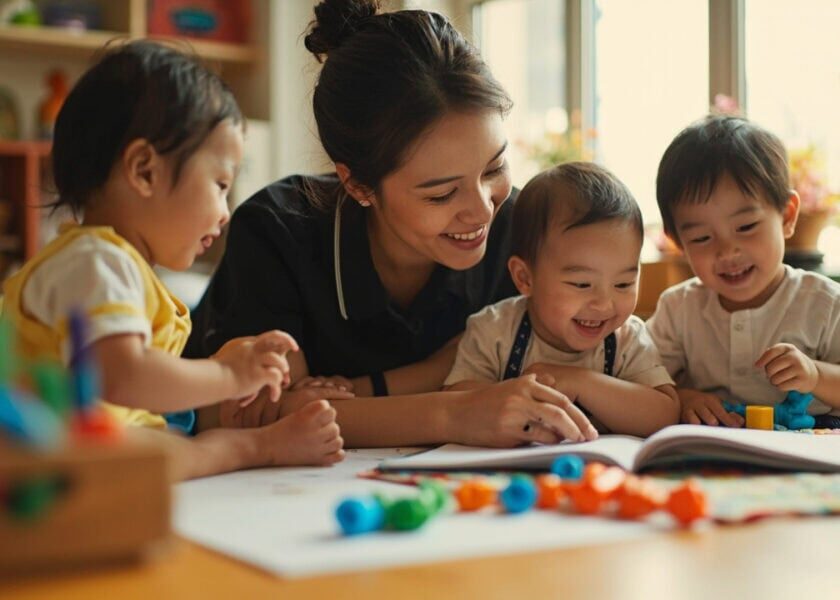
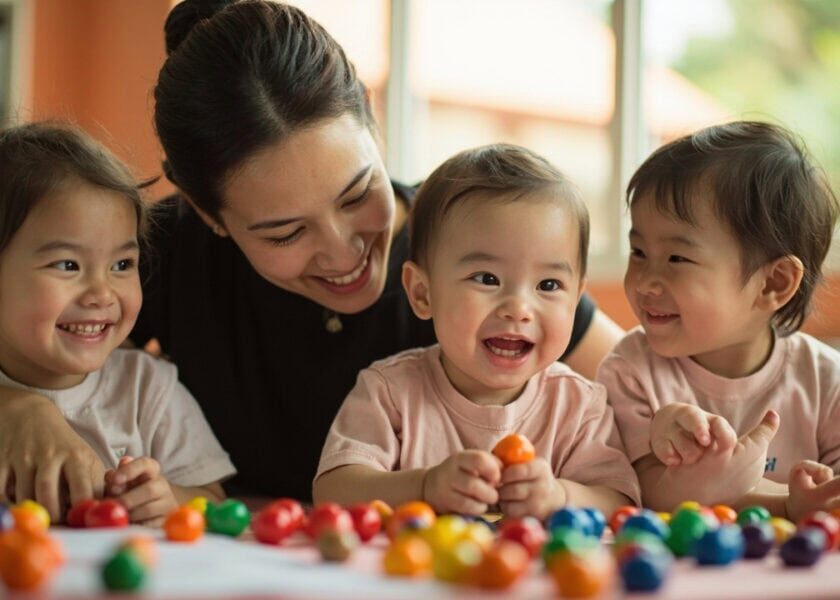
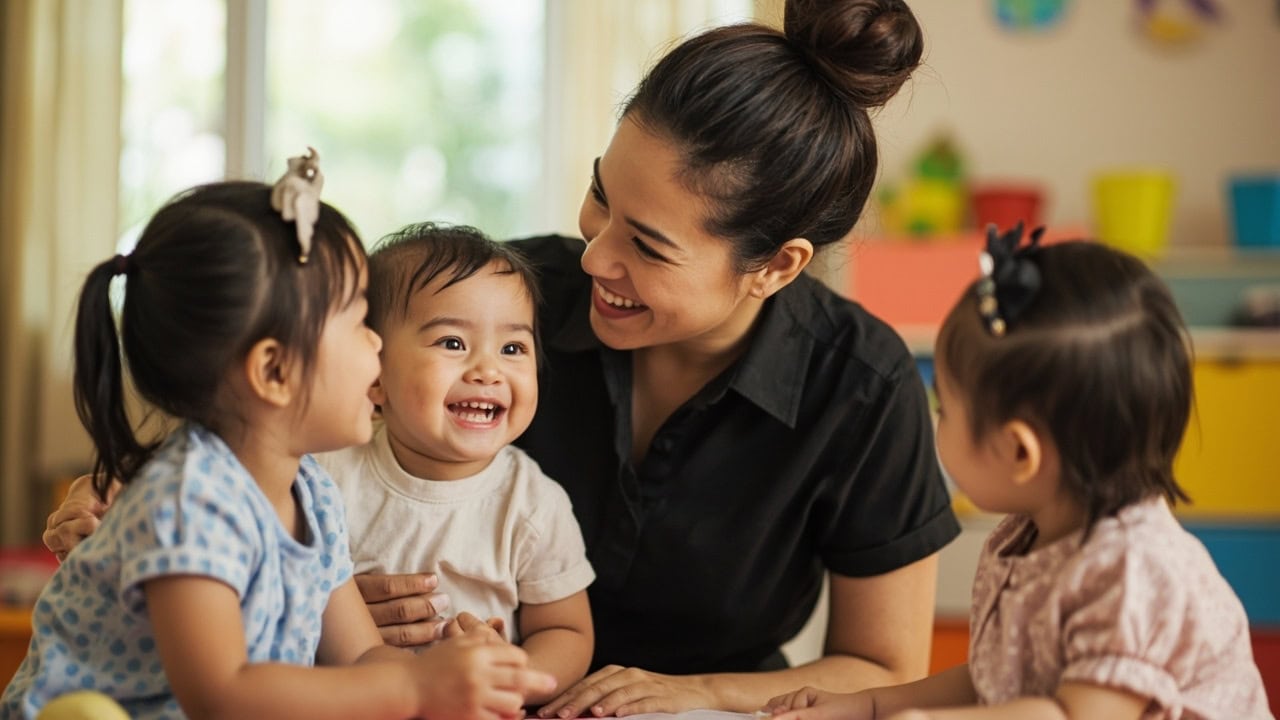
And then you see it. Your child, who clung to your leg just two weeks ago, who screamed when you tried to leave, is now running toward their caregiver with open arms. She is laughing. Her face lights up with genuine recognition and joy.
In that moment, you feel something complicated and unexpected—not quite jealousy, not quite relief, but something quieter and more tender. It is the feeling of watching your child love someone else.
If you have felt this, I want you to know something. You are not imagining it. And more importantly, you are not wrong to feel it. But you may, without realizing it, be misreading what you are witnessing.
The Quiet Worry Singapore Parents Rarely Speak About
In Singapore, we plan for our children’s futures with extraordinary care. We research preschools the way some of us research universities. We navigate the weight of dual-income households, the pressure of raising children in one of the world’s most demanding environments, the particular pressures of the Singapore parenting landscape.
And in that navigation, we carry something quiet and rarely spoken—a fear that in entrusting our children to others, we are somehow diminishing our own irreplaceable place in their hearts. We worry that the people we choose to care for our children will become the people our children need most.
So when we see warmth between our child and their caregiver, our first instinct is not always to celebrate. Sometimes it is to wonder what it means.
I am here to suggest that what you may be witnessing is not a threat to your bond with your child. What you may be witnessing is one of the most significant developmental milestones of your child’s early life—and once you understand it, it will change not only how you see that moment at the gate, but how you think about choosing care, about quality, and about what it truly means to raise a secure and confident child.
What Science Tells Us About How Children Form Bonds
Attachment theory has been developing for decades, and its findings are both rigorous and, for many parents, surprising. The concept of the secure base was first articulated by the psychologist John Bowlby, who observed that children need a reliable foundation—a person who is consistently present, warm, and responsive—from which to explore the world and to which they can return for comfort when they are frightened or overwhelmed.
What is less widely understood, and what I want to share with you today, is that this secure base does not have to be singular. The developmental window for attachment is not a narrow doorway through which only one person can pass.
Children are wired for connection. They are capable of forming multiple secure attachments—not competing attachments, but complementary ones. A child can have a primary secure base with their parent and still form a genuine, meaningful, developmentally significant attachment with a grandparent, a caregiver, a teacher.
Each secure attachment adds something to the child’s emotional architecture. It does not divide the love; it expands the capacity for trust.
Research consistently shows that children who form secure attachments with multiple caregivers demonstrate greater emotional resilience, stronger social skills, and more flexibility in their relationships as they grow. They are not confused by multiple sources of love. They are enriched by them. They learn that people can be trusted, that care is reliable, that the world is a place where their needs matter and will be met.
A Reframe That Changes Everything
When your child runs to their caregiver with joy, when they reach for someone else with warmth, you may be experiencing a quiet grief—a sense that your child does not need you in the way you thought they did.
I want to gently suggest that what you are seeing is the opposite of replacement. What you are seeing is your child’s healthy capacity for connection doing exactly what it is supposed to do.
Your child is not learning to love someone else instead of you. Your child is learning that love is not a finite resource. That the world can hold them, delight in them, comfort them—and that this abundance does not diminish your love.
Your child is learning that they are worthy of attachment, that they can trust, that people are reliable and kind. And that security does not pull them away from you. It sends them back to you with more confidence, more curiosity, more capacity to explore because they know, deep in their bones, that you are their foundation.
But they are also discovering that the world has other safe harbors. And that is not a threat to your family. That is a gift.
What Healthy Caregiver-Child Attachment Looks Like
Let me make this practical, because as parents in Singapore, you want more than philosophy. You want to understand what this looks like in real life, in the daily rhythm of drop-offs and pick-ups, in the small moments that accumulate into something meaningful.
How do you know, concretely, if the bond forming between your child and their caregiver is serving your child well? Here is what developmental science tells us to look for:
- Warm anticipatory behavior: When you arrive to pick up your child, notice whether they show genuine recognition and ease toward their caregiver—not anxiety, not clinging, but authentic joy at seeing them. This tells you that your child has come to see this environment as safe.
- Responsive comfort: When your child is upset, notice whether the caregiver is able to comfort them within a reasonable time, whether there is a rhythm of responsiveness developing between them, a sense that your child’s cues are understood and met.
- Confident exploration: Notice whether your child is able to explore freely when their caregiver is nearby, to venture out and return, to check in and venture out again. This back-and-forth is one of the most beautiful signs of healthy attachment—the secure base in action.
- Natural affection: Notice whether your child shows the caregiver affection with ease, not out of anxiety but out of genuine warmth.
- Smooth transitions: Notice whether transitions between caregivers happen without deep distress, whether your child is generally regulated and content at pick-up time.
These are not just pleasant behaviors. They are the markers of a bond that is doing exactly what it should be doing for your child’s development.
If you are seeing these signs, I want to tell you something that may reframe the ache you have been feeling. You are not seeing evidence that you are being replaced. You are seeing evidence that you chose well.
That warmth at the gate is not a betrayal of your bond. It is a testament to the conditions you have created for your child to thrive.
How EduNanny Supports Attachment From the Ground Up
EduNanny was built on a philosophy that understands exactly what I have been describing. Operating within the ECDA Childminding Pilot, we offer care that meets children where they are developmentally—treating each child as a full human being worthy of genuine relationship, not merely supervision.
One of the foundations of our approach is caregiver continuity. This is not an accident or a logistical preference. It is a deliberate commitment rooted in attachment science.
A child cannot build a secure base with someone they see inconsistently, someone who changes every few weeks or every term. Attachment requires presence over time. It requires the caregiver to know the child deeply—not just their routines, but their cues, their preferences, the way they express hunger or tiredness or the need for comfort.
EduNanny maintains up to one to three infants per caregiver. Your child is not lost in a crowd. Your child is seen, known, and responded to with the kind of attention that forms the foundation for healthy attachment.
We offer Monday to Friday care blocks, providing families with the reliable rhythm that children need to feel secure and that parents need to feel confident. Our service integrates with the schemes available to Singapore families, including CDA and Baby Bonus usability, because we believe that quality care should be accessible.
We are also committed to transparency. Where CCTV measures are deployed, families can have visibility into the daily life of their child’s care. We believe that trust is built through openness, and that parents in Singapore deserve to feel confident—not anxious—when they leave their children in someone else’s care.
Questions to Ask When Choosing Infant Care in Singapore
If you are researching your options and want to evaluate whether a care arrangement will support healthy attachment, here are some questions worth asking:
- How long has my child been with the same caregiver? Consistency matters for attachment to form.
- What is the caregiver-to-infant ratio? Smaller ratios allow for deeper, more responsive relationships.
- How does the caregiver respond when my child is upset? Look for warmth, not just efficiency.
- Can I observe how my child reacts during transitions—drop-off and pick-up times?
- Is there transparency about what my child’s day looks like? Trustworthy care invites parental involvement.
- Does the schedule offer reliable, consistent blocks of care? Children need predictability to feel safe.
The Love Your Child Feels for Their Caregiver Is an Echo of Your Love
I want to speak directly to the parent who may still be listening with that small, quiet worry. The parent who wonders if choosing professional care means something is wrong with their family. The parent who feels that ache when their child reaches for their caregiver and wonders if they have given something away that they cannot get back.
You have not.
Choosing quality care for your child is not a compromise. It is not a failure of parenthood. It is one of the most loving, forward-thinking decisions you can make—to surround your child with people who will love them, respond to them consistently, and build the kind of environment where they can flourish.
When your child forms a bond with their caregiver, that is not evidence that you are replaceable. That is evidence that you chose a place where your child could thrive. Your child’s joy at seeing their caregiver is not your failure. It is your success.
What your child has with their caregiver is not a rival attachment. It is a complementary one. It is another secure base from which your child can explore the world, grow in confidence, and return to you with more to share, more joy to offer, because they are being held well in all the spaces of their life.
The caregiver who knows your child deeply, who understands their rhythms and cues and needs, becomes a partner in your parenting—not a replacement for it.
Close your eyes and picture this. Your child, some years from now, running toward their caregiver with open arms. And standing behind you, watching, is another version of you—the you from today, the one who felt that quiet ache, the one who wondered if this moment meant something was wrong.
I want that version of you to smile. Because that version of you made a choice. A choice to trust, a choice to open your child’s world, a choice to believe that your child’s heart is big enough to hold many people who love them.
And that version of you was right.
The caregiver bond at EduNanny is not a footnote in your child’s life. It is a chapter. And it is a chapter your child will carry with them—the knowledge that the world has kind hands, consistent hearts, and reliable love—as they grow into the confident, curious, emotionally whole person you are already raising them to become.
The love your child feels for the people who care for them is not a departure from your love. It is an echo of it. It is a sign that you have done something profoundly right.
If you are looking for care that honours the science of attachment, values caregiver continuity, and treats your child as worthy of genuine, attentive relationship, EduNanny welcomes the opportunity to learn about your family’s needs. We would be glad to hear from you.