The Difference Between Supervision and Care That Knows Your Child
The Moment Every Singapore Parent Knows
There is a moment, somewhere between the car door closing and the afternoon pickup, that every parent in Singapore knows intimately. It is the moment when you hand your child to someone else and drive away. And in that moment, a question forms — sometimes spoken aloud, sometimes held quietly in the chest:
What is actually happening right now? Is my child okay? Is my child happy? Is my child being seen?
You are not wrong to ask these questions. You are not anxious or overprotective or insufficiently trusting. You are a parent. And the distance between love and knowledge is one of the most honest spaces in caregiving — a space that deserves acknowledgment rather than dismissal.
Most content written for parents about childcare stops at the threshold of that question. It tells you what to look for on paper. It offers checklists and ratios and accreditation logos. It advises you to trust your instincts, to observe pickup time, to ask the right questions.
These are not wrong things to know. But they leave the deepest parental concern untouched: the fear that even if the credentials are sound and the environment is clean, somewhere between nine and five, your child is being kept safe and entertained rather than being genuinely known.
Let us show you what quality actually looks like from the inside.
Supervision vs. Intentional Care: The Distinction That Changes Everything
There is a distinction that matters more than any checklist, and it is this: supervision is not care. Entertainment is not education. Presence is not attunement.
Supervision means a child is watched. It means no harm comes to them, that they do not wander into danger, that their basic needs for food and hygiene are met. Supervision is necessary. It is the floor, not the ceiling.
Intentional care is something else entirely. It is a professional practice built on observation, responsiveness, developmental knowledge, and a quality that is harder to name but unmistakable when it is present: genuine relational investment in who this particular child is becoming.
A supervised child is safe. An intentionally cared-for child is known.
The difference is not cosmetic. It is structural. It shapes neural pathways. It influences how a child learns to regulate their emotions, how they come to understand their own worth, how they form expectations about whether the world is a reliable and warm place.
The early years are not simply a waiting period before real life begins. They are the foundation upon which everything else is built, and the quality of care during these years leaves a mark that decades cannot fully erase.
Warmth without skill is sentimentality. It feels good but does not help. A caregiver can be genuinely affectionate, can have a warm personality, can be kind and well-meaning — and still lack the professional competence to support a child’s development effectively.
Quality caregivers have both. The warmth you experience when you meet them is inseparable from the professionalism they bring to their work. It is not warmth that tolerates chaos because avoiding conflict is easier than setting limits. It is warmth that holds boundaries firmly because they understand that children need structure to feel safe.
It is warmth that notices a child’s distress and responds with calm skill rather than flustered anxiety, modeling emotional regulation even in the midst of a meltdown. It is warmth backed by deliberate professional practice:
- Active patience. A deliberate choice to stay present, to wait, to allow a child the time they need — not passive endurance but engaged attentiveness.
- Attunement-based communication. A reading of children’s needs before they are expressed, a responsiveness that makes children feel understood before they have even asked to be understood.
- Understanding over frustration. When a child refuses to eat, does not want to sleep, hits another child, or cries for a parent — the quality of response differs, grounded in understanding rather than frustration, in technique rather than improvisation.
What Quality Caregivers Actually Do Throughout a Day
Morning Arrival: Reading, Not Just Receiving
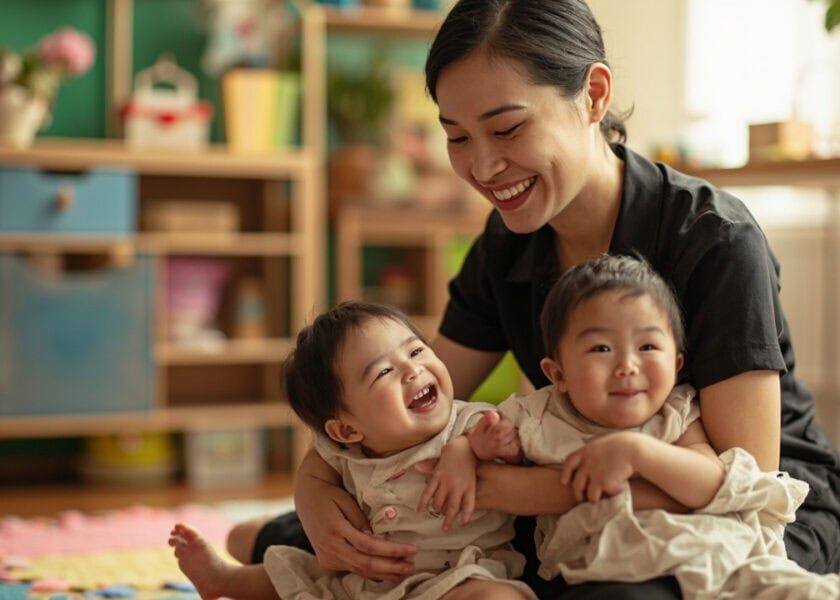
A child arrives in the morning, and the caregiver does not simply receive them. She reads them. She notes the particular quality of their greeting — whether it is eager or hesitant, whether the child seeks proximity immediately or holds back, whether their eyes meet hers with confidence or flicker away.
This reading is not guesswork. It is professional observation, developed through training and refined through deliberate practice. Within minutes, she has a working understanding of where this child is emotionally today. Not where they were yesterday. Not where a typical child of their age would be. Here. Now. This child.
And she adjusts. Because a child who arrived hesitant is not treated the same as a child who arrived eager, even if the activities are identical. The hesitant child gets more proximity, more quiet acknowledgment, more space offered rather than demanded. The eager child gets enthusiasm mirrored back, the joy of being received with matching energy.
Same caregiver, same room, same morning. Different attunement to two different children.
When Difficult Moments Arise
Consider what happens when a child becomes frustrated. Perhaps the puzzle piece will not fit. Perhaps another child has taken a toy. Perhaps they are simply tired and overwhelmed and do not have the words yet to say so.
A supervisor notices the tantrum. A quality caregiver notices what came before the tantrum.
She noticed the narrowing of focus, the tightening of the body, the small vocalization that preceded the explosion. She was already moving closer when the crisis hit — not to intervene but to be present. A calm regulatory presence that says, through proximity and even breathing, through a hand placed gently on a back:
I see you. You are not alone. This feeling is survivable.
She does not rush to fix the problem. She does not immediately remove the source of frustration. Because she knows that a child’s capacity to tolerate distress — to learn that overwhelming feelings pass, that they can be survived, that an adult will stay present through the hardest moments — this capacity is built precisely through experiences like this one. Experiences where the feeling is hard but the container holds.
She stays. She witnesses. She names the feeling with calm certainty: I can see you are feeling really frustrated right now. That is okay. I am here.
And when the storm begins to pass, she does not rush to redirect. She allows the child a moment to return to equilibrium at their own pace, then gently re-engages them with whatever comes next.
Learning Through Play: Seeing What Others Miss
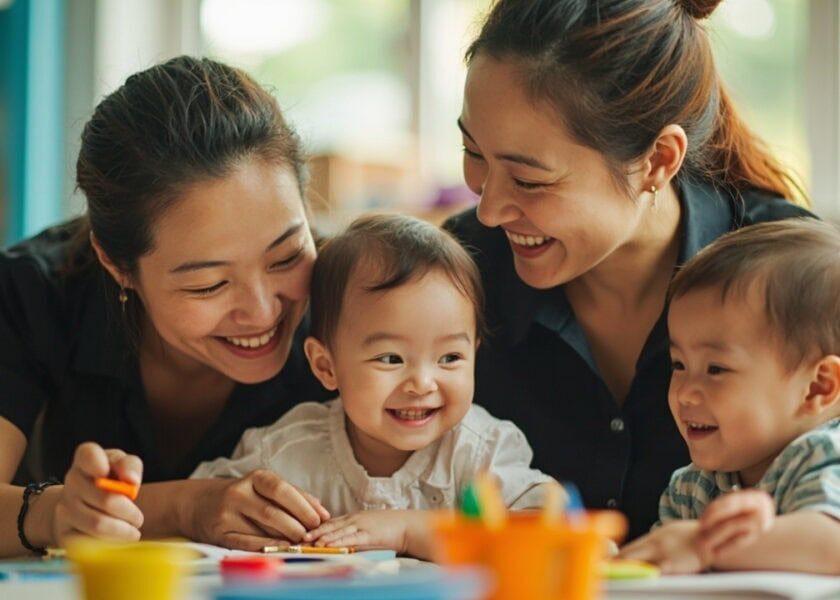
Now consider the moments that are not difficult. A child engaged in free play, building with blocks, exploring the texture of sand, investigating how water behaves when poured from one container to another.
A supervisor sees a child playing. A quality caregiver sees a thousand learning opportunities unfolding simultaneously.
She notices that this child always builds towers rather than structures, that they seem drawn to height and verticality, that they test the limits of how high a tower can go before it falls. She files this observation. Later, when she introduces a new material, she might offer one that extends this fascination — an open-ended challenge that stretches the child’s natural inquiry patterns without overwhelming them.
She notices that another child plays beside others but rarely with them, that they are content in parallel play, that they watch carefully before engaging. She does not push social interaction prematurely. She creates conditions where collaborative play is available and inviting but not required, where this child’s observational temperament is respected as a valid way of being in the world rather than a deficit to be corrected.
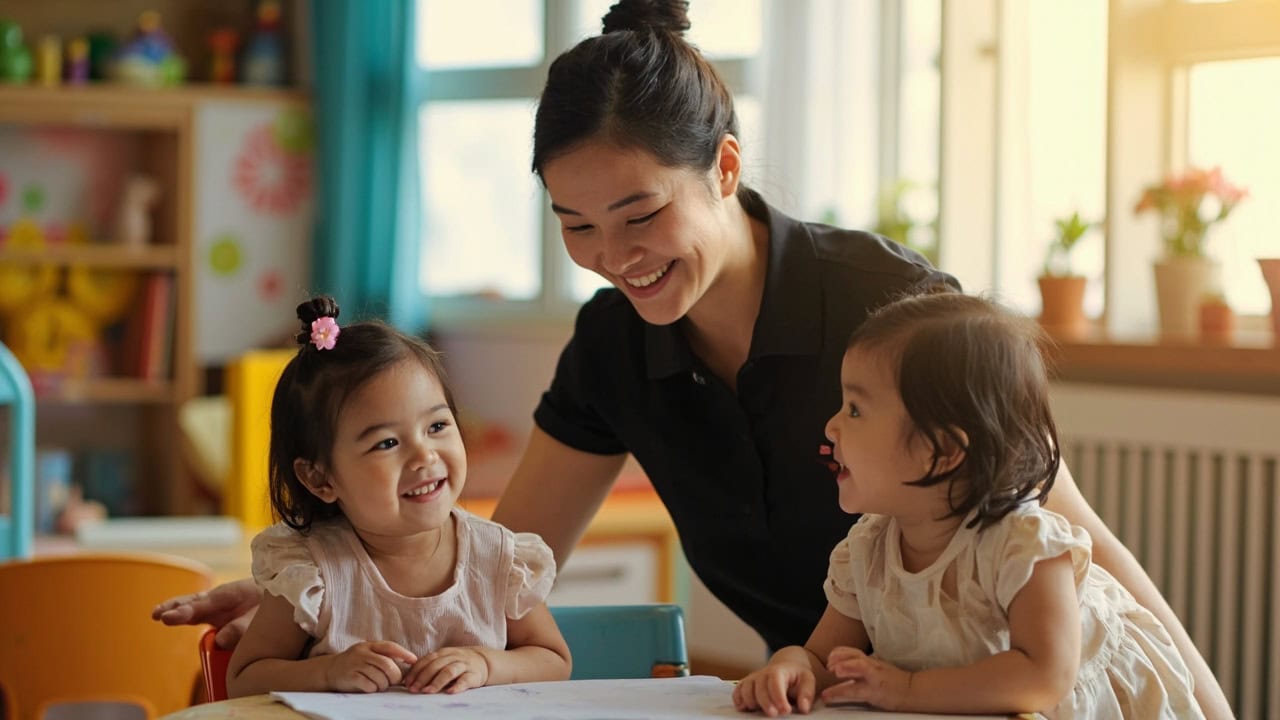
She notices that a third child is drawn to language, that they repeat new words with delight, that they are developing rapidly in vocabulary and narrative understanding. She responds with rich, complex language — not baby talk, not simplified speech, but real sentences with real words that honor this child’s growing capacity. She narrates what she is doing. She asks open-ended questions. She pauses to let the child fill in the response.
These are not interventions that require expensive materials or elaborate curricula. They require knowledge, observation, and the professional discipline to respond thoughtfully rather than reactively. They require caregivers who understand child development as a science and a craft, who have been trained not just in what children typically do but in why they do it and what their individual patterns reveal about who they are becoming.
This is what individualized care means. Not that every child receives a different activity. But that every child is seen, understood, and responded to as a distinct person with distinct needs, strengths, and rhythms.
The Guilt of Choosing Care — And Why Quality Eases It
There is something that parents in Singapore carry but rarely voice: the guilt of not being present, the sense that someone else is doing the nurturing that you wish you could be doing yourself, the worry that your child will form their deepest attachments to the caregiver rather than to you.
This fear is understandable. It is also, in quality care, unfounded — but not for the reasons typically offered.
Children are not a finite vessel of attachment. They do not have a limited capacity for connection that gets filled by the caregiver and leaves nothing for the parent. Children form multiple attachments, and what matters is not the quantity of time spent but the quality of attunement experienced.
A child can be deeply attached to a parent and warmly connected to a caregiver, and these are not competing loyalties but complementary foundations.
In fact, a child who is securely cared for during the day — who has a reliable, responsive, warm caregiver — arrives home more regulated, more available for connection, more ready to engage. The caregiver does not replace the parent. She supports the child’s overall development in ways that enhance the parent’s capacity to parent well.
The guilt you feel is evidence of how much you care. The quality of care you seek is evidence of that care in action. These are not things to overcome. They are things to honor by choosing care that matches the depth of your concern.
Recognizing and Choosing Quality Care in Singapore
Understanding what quality looks like is the first step toward trusting it. When you know what to look for, quality becomes visible. And that visibility is the foundation of trust.
How to Recognize Quality at Any Care Arrangement
- Observe the greeting. Does the caregiver read the child’s emotional state each morning, or do they simply check them in?
- Notice transitions. How does the caregiver respond when a child is struggling? Do they intervene quickly to fix, or do they stay present through the difficulty?
- Listen to language. Does the caregiver speak to children with respect, using rich vocabulary and genuine questions? Or does communication focus on commands and corrections?
- Watch for observation. Does the caregiver seem to notice patterns in individual children — their preferences, their rhythms, their emerging strengths?
- Notice responsiveness. Are children’s cues met with timely, thoughtful responses? Or do children have to escalate before being noticed?
- Feel the environment. Is there a sense of calm engagement — not chaotic entertainment, not silent passivity, but purposeful warmth?
What to Ask and Look For When You Visit
When you are ready to begin your search, here is what matters most:
- Visit more than once. First impressions can be polished. Unannounced visits at different times of day reveal what typical care actually looks like.
- Ask about observation. How does the caregiver track individual children’s development and emotional states? What does their documentation process look like?
- Observe caregiver-child interaction. During your visit, watch how caregivers respond to children — especially during transitions and moments of frustration.
- Ask about training. What specific training do caregivers receive in child development, emotional regulation, and responsive caregiving?
- Inquire about ratios. How many children is each caregiver responsible for? Lower ratios enable deeper attunement.
- Discuss communication. How will you be updated about your child’s day? What feedback can you expect, and how often?
- Trust your read. If something feels off during a visit, take it seriously. Your intuition as a parent is a valuable assessment tool.
The choice you make is significant. It deserves more than a checklist — it deserves understanding.
What EduNanny’s Approach Looks Like in Practice
The distinction between supervision and intentional care is not just philosophical — it is structural. And structure is where promises become practice.
EduNanny by BUTLER operates within the ECDA Childminding Pilot, a framework designed with these very standards in mind. The pilot was not created to provide mere supervision. It was created to establish professional benchmarks for home-based and community-based care that parents can trust — benchmarks that go beyond safety and licensing to address the quality of interaction, the training of caregivers, and the systems that support consistent, intentional care.
Structural Standards That Enable Quality
In the EduNanny model, infant ratios are maintained at a maximum of one caregiver to three infants. This is not an accident. It is a deliberate structural choice that makes individualized attention possible.
When a caregiver is responsible for fewer children, she can read each one more accurately, respond more thoughtfully, and build the kind of consistent relational presence that forms the foundation of early security.
Professional Training and Accountability
Caregivers within this framework operate under professional standards that distinguish their practice from informal childcare arrangements. They are trained in developmental observation, in responsive caregiving, in the specific needs of infants and toddlers. They are not left to improvise.
They are supported by systems, by oversight, by ongoing professional development. And critically, they are accountable.
EduNanny’s approach includes communication practices and transparency measures — regular updates, structured feedback channels, and in some deployments, visible monitoring systems — that allow parents to stay connected to what is happening during care hours. Not because parents cannot be trusted to trust, but because transparency is part of the professional contract. Parents deserve to know not just that their child is safe, but what their child is experiencing.
Accessibility and Consistency
The fee structures within the pilot are designed to make quality care accessible. CDA and Baby Bonus funds can be applied, reducing the financial burden on families without compromising the standards of care.
Monday to Friday care blocks provide the consistency that children need for developmental continuity. And the model applies across Singapore, with pathways for both home-based arrangements and community or centre-based options depending on family preference and circumstance.
This is not a generic childcare service wearing the language of quality. This is a framework built around the understanding that what happens in those early years matters, that caregivers deserve to be recognized as professionals doing important work, and that parents deserve to trust what they cannot see.
The Question Worth Returning To
I want to return to the question posed at the beginning:
What is actually happening when you are not there?
If you have chosen quality care — care that is intentional, professional, grounded in developmental knowledge and relational attunement — what is happening is the invisible architecture of your child’s future being constructed one interaction at a time.
Your child is being observed with professional attention and genuine interest in who they are. Your child is being responded to with skill, not just managed through difficulty but supported through it in ways that build resilience and emotional capacity. Your child is being talked to with respect, with rich language that expands their world, with questions that invite thought rather than demand obedience.
Your child is being known.
And the person who knows them is doing this work not as a job but as a calling, supported by training and standards and a professional philosophy that treats every child as worthy of the highest quality of care.
You cannot be there for every moment. No parent can. But you can choose care where every moment is filled with intention, where the person holding your child is not just keeping them safe but actively contributing to who they are becoming.
That is what you are really looking for. Not a service. Not a convenience. An assurance — that the work is being done, that it is being done well, and that your child is not just supervised but cherished.
EduNanny by BUTLER was built on this understanding. Not as a business model. But as a commitment to the proposition that every child deserves to be known, and that parents deserve to trust that they are.
If you are researching infant care or childminding in Singapore and want to understand what quality truly looks like, we invite you to begin a conversation with us. The distance between love and knowledge can be shortened — by understanding, by transparency, and by choosing care that honors the depth of what you feel for your child.
Learn more about EduNanny or our approach to quality childminding in Singapore.