Who Is Your Child Becoming? The Cultural Choice in Singapore Childcare
The Moment That Changes Everything
There is a moment, familiar to every parent in Singapore, that arrives quietly and without announcement.
It is the moment in the morning when you hand your child to someone — a caregiver, a teacher, a familiar face at the door of a childcare centre — and you drive away. You check the rearview mirror. You may not even notice that you have done it, but there is a thought that follows you to work.
It is not about safety, though you have already satisfied yourself on that count. It is not about schedules or feeding routines, which you have discussed and agreed upon. It is a deeper question, one that lives beneath the logistics:
Who is my child becoming while they are away from me?
This question matters more than most childcare conversations in Singapore tend to acknowledge. We speak readily about language milestones and motor skills. We ask about teacher qualifications and classroom ratios. We tour facilities and check licensing.
What we rarely ask — what the childcare industry rarely invites us to ask — is whether the place we are entrusting with our children is actively supporting the cultural foundation we are building at home, or whether it is simply a space where our children exist while we work.
This is the quiet anxiety that many Singapore parents carry, and it deserves to be named honestly.
- Cultural identity does not develop on its own — it is cultivated through daily, intentional experiences
- There is a meaningful difference between passive cultural exposure and active cultural development
- Children who develop a strong sense of cultural belonging become more emotionally secure, not less equipped to navigate the world
- The years before Primary One are the most critical window for establishing cultural identity as internal architecture
- Quality childcare can be a genuine cultural partner — reinforcing what families build at home
- EduNanny’s childminding model is designed around small ratios and relationship-based care that make intentional cultural development achievable
Understanding Cultural Development in Singapore’s Multicultural Context
In Singapore, the question of cultural identity is not abstract. It is immediate, daily, and woven into the texture of family life.
Your child may be raised speaking Mandarin at home with grandparents who remember the dialects their parents left behind. They may celebrate Deepavali with cousins, Hari Raya with neighbours, and Chinese New Year with the whole extended family. They will hear Malay songs on the radio, encounter Tamil words at the hawker centre, and learn — long before they can articulate it — that the world they live in is rich with cultural textures that do not all belong to the same thread.
Managing this well requires something that most childcare arrangements do not offer: intentionality. The deliberate, daily attention to what cultural foundations are being laid, and by whom.
The Difference That Shapes Everything
There is a distinction between passive cultural exposure and active cultural development.
Passive cultural exposure is what happens when a childcare centre acknowledges festivals because the calendar calls for them. It is a poster on the wall. It is a song learned for a performance. It is well-meaning, but it leaves the deeper work of identity formation to chance.
Active cultural development is altogether more deliberate. It is the teacher who notices a child naturally shifting between languages — and responds not by correcting one in favour of the other, but by affirming both. It is a childcare environment that treats cultural festivals not as isolated events but as lived experiences, where children participate in rituals, taste traditional foods, hear stories in heritage languages, and come to understand these moments as meaningful rather than performative.
This is what quality childcare can be when it understands its full responsibility to the children in its care. Not a replacement for the home. Not a neutral space. An extension of the family — one that reinforces heritage language, celebrates cultural traditions, and helps a child feel rooted in where they come from while learning to belong in the world they are growing into.
Why Singapore’s Multicultural Context Is a Developmental Advantage
Singapore’s multicultural context is not a challenge to be navigated. It is a developmental advantage — but only if we choose to treat it as one.
The research on cultural identity development is consistent: children who have a strong sense of their cultural roots do not become narrower or more limited. They become more secure. They develop greater emotional resilience. They are better equipped to navigate unfamiliar environments and form meaningful relationships across cultural boundaries because they possess a stable sense of self.
Cultural belonging is not a constraint on a child’s potential. It is the foundation from which they reach further and dream larger.
When a child knows where they come from, they can move through the world without losing themselves in any of its cultures. This is what cross-cultural fluency looks like in early childhood. Not the abandonment of one identity for another. Not the flattening of cultural difference into a generic sameness. But the authentic, grounded ability to belong everywhere because you know, deeply, where you belong first.
The Critical Window: Why the Years Before Primary One Matter Most
This is why the years before Primary One matter so profoundly for cultural identity. These are not simply years for cognitive preparation. They are years for building the internal architecture of self — the core sense of identity, belonging, and cultural understanding that will anchor a child through every transition, every challenge, and every opportunity that lies ahead.
By the time a child enters primary school, the foundations of their cultural identity are largely in place. What they have absorbed, what they have celebrated, what they have been taught to take pride in — this is the cultural inheritance they carry forward, whether that inheritance has been tended with intention or left to grow wild.
Every day matters. Every interaction shapes the landscape of who your child understands themselves to be.
What Quality Childminding Looks Like in Practice
When cultural development is treated as intentional curriculum rather than accidental exposure, daily life in quality childcare takes on a different quality.
In Language and Communication
- Heritage languages are spoken naturally throughout the day — during meals, play, and routines — not confined to designated language time
- Caregivers learn key words and phrases in the languages your family uses at home and integrate them meaningfully
- Children are never corrected out of their home language — multilingualism is understood as a strength
- Stories, songs, and nursery rhymes in heritage languages are part of daily rhythm
In Cultural Traditions and Rituals
- Festivals are experienced as living traditions — children participate in rituals, not just observe them
- Traditional foods are part of the childcare experience in authentic, non-performative ways
- Cultural milestones are marked with genuine attention, not scheduled for parent performances
- Daily routines reflect cultural values — the way meals are shared, how greetings are exchanged, the rhythms of rest and activity
In Identity and Belonging
- Each child’s cultural background is known, respected, and reflected in the care environment
- Children develop pride in their heritage while also gaining comfort with cultural difference
- The childcare space feels culturally familiar to children — like an extension of home, not a departure from it
- Parents are partners in cultural education, not observers of it
The EduNanny Difference: Cultural Partnership in Practice
EduNanny by BUTLER operates as an ECDA Childminding Pilot provider, and that distinction shapes everything about the approach. The Childminding Pilot was established to offer Singapore families something that conventional childcare models often cannot: intimate, relationship-based care that makes genuine partnership with parents possible.
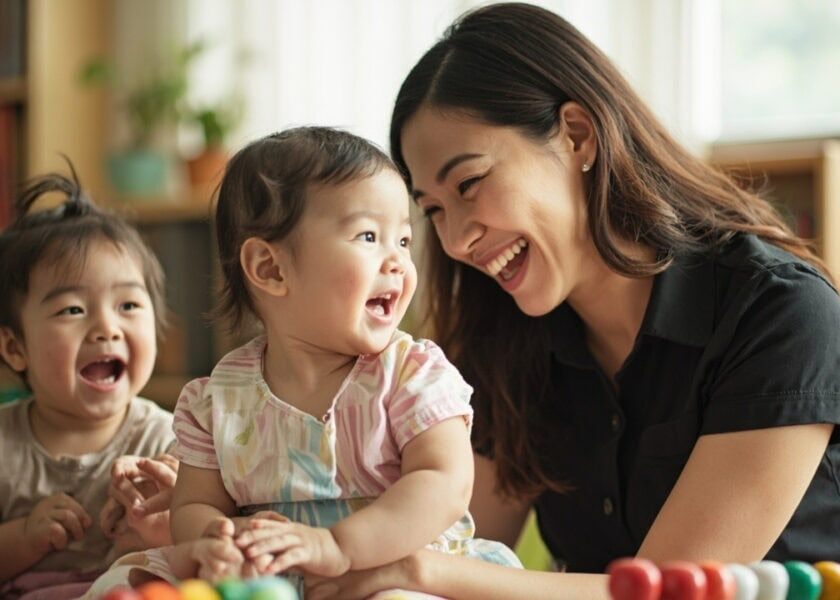
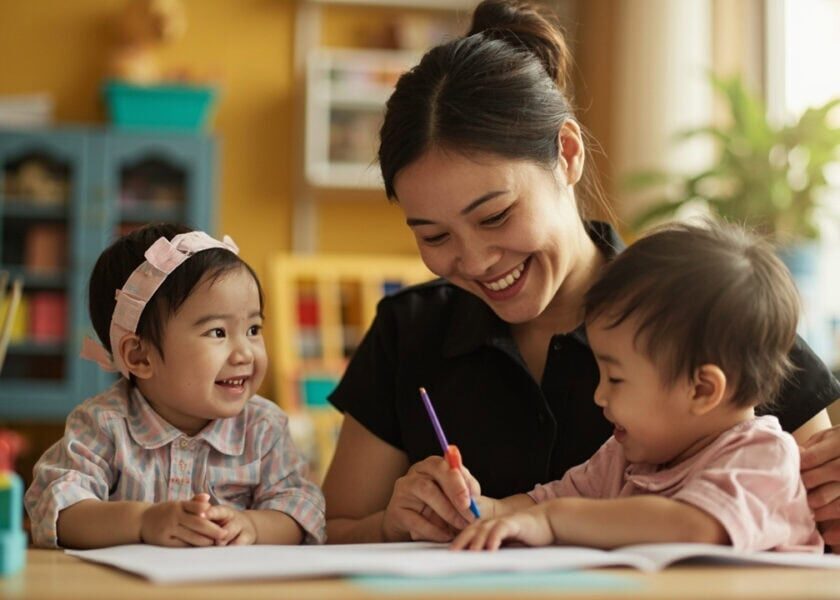
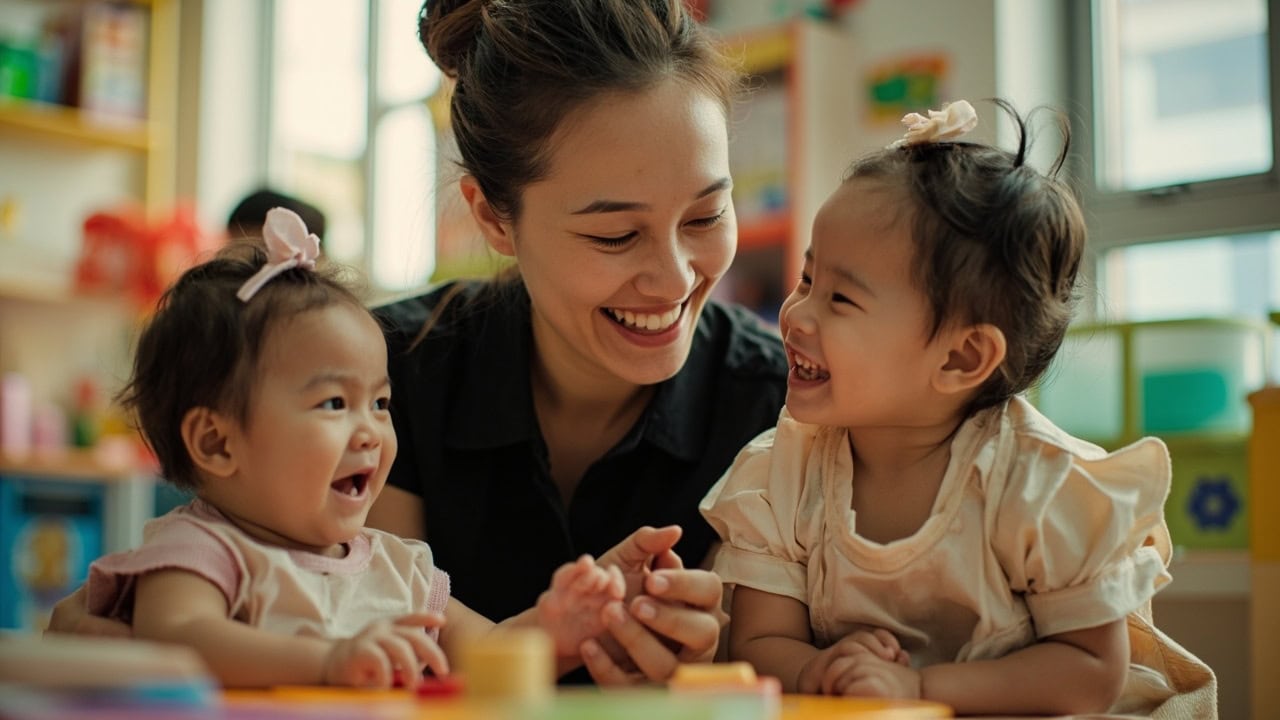
With up to one to three infants per caregiver, there is space for the kind of daily cultural engagement that larger settings simply cannot provide. A childminder who knows your family, who understands the language you speak at home, who celebrates the festivals your family observes, and who integrates these practices into your child’s daily experience — this is not an add-on to quality care. In EduNanny’s understanding, it is quality care.
Here is why this matters developmentally: Cultural development and developmental growth are not separate priorities running in parallel. In the early years, they are inseparable.
- A child’s language acquisition is always cultural
- Their social-emotional development is always rooted in the traditions and values of the people who raise them
- Their cognitive growth unfolds within the context of a cultural world
To attend to one without the other is to attend incompletely. EduNanny’s childminders understand this connection. They are not babysitters. They are cultural partners who work alongside parents to reinforce heritage language, mark cultural milestones, and help children develop the cross-cultural fluency that will serve them not just in school, but throughout their lives.
Addressing What Singapore Parents Actually Ask
“Will my child lose their heritage language in childcare?”
This is one of the most common anxieties Singapore parents carry, and it is legitimate. In settings where heritage languages are not actively reinforced, children can begin to shift toward the dominant language of their childcare environment. This is not inevitable — but it requires intentionality. In EduNanny’s model, heritage language reinforcement is built into daily care. The languages your child speaks at home are treated as assets, not obstacles to be worked around.
“How will I know what cultural experiences my child is having?”
EduNanny provides the communication and transparency that parents in Singapore rightly expect. When your child is in someone else’s care, you want to know more than the fact that they were safe and fed. You want to know how their day unfolded — the songs they sang, the stories they heard, the cultural moments that shaped their morning. EduNanny’s communication practices give parents this visibility. Cultural development should not happen in a vacuum. Parents remain informed, involved, and connected.
“I want cultural richness for my child, but I also need affordable care.”
This should not be a choice between cultural quality and financial accessibility. EduNanny’s pilot fee structures are designed with affordability in mind, recognising that the children who benefit most from intentional cultural care are not only those whose families can afford premium pricing. CDA and Baby Bonus funds are usable within the programme, removing unnecessary financial barriers between Singapore families and the care their children deserve.
“My child spends long hours in care — how can there be time for cultural learning?”
Quality cultural development does not require separate time carved out from “real” childcare activities. It is woven into the fabric of daily life — through language used casually over lunch, through stories told at rest time, through traditions observed during mealtimes and transitions. Monday to Friday care blocks provide the consistency that cultural learning requires — rituals need repetition, language needs daily reinforcement, and a sense of belonging grows not from occasional activities but from the accumulated experience of being known and valued in a consistent, caring environment.
The Real Choice Singapore Parents Are Making
This is the real choice that Singapore parents are making when they choose childcare. It is not simply a logistical decision. It is a cultural one. It is a statement about what matters, about what you believe your child needs, and about who you want your child to become.
Cultural identity is not something that forms itself. It is cultivated. It is taught. It is reinforced in daily routines and small moments:
- In the language a caregiver uses casually over lunch
- In the festival songs that become familiar through repetition
- In the celebration of traditions that make a child feel seen and belonging
In those early years, before Primary One, the people and environments you choose as partners in your child’s care are also partners in this most important work.
What to Look For When Choosing Childcare
If cultural identity matters to you — and the fact that you have read this far suggests it does — here are questions worth asking when you evaluate childcare options:
- How is heritage language handled? Is it actively reinforced throughout the day, or confined to specific language sessions? Are caregivers willing to learn key phrases in your home language?
- How are cultural festivals experienced? Are children active participants in traditions, or primarily observers of performances prepared for parents?
- What are the ratios? Is there space for individualised cultural attention, or is cultural programming necessarily one-size-fits-all?
- How are cultural differences treated? Is Singapore’s multicultural context embraced as a developmental advantage, or managed as a logistical challenge?
- How does the caregiver communicate about cultural experiences? Will you know what songs your child is learning, what stories they are hearing, what traditions are being observed?
- Is the caregiver a partner or a replacement? Do they see their role as reinforcing what you build at home, or as an alternative environment where culture develops separately?
EduNanny’s childminders understand what they are carrying. They carry this responsibility with the seriousness it deserves. They are not simply looking after children. They are helping to raise children who know who they are, where they belong, and what their heritage means.
Children who will walk into primary school and beyond carrying something precious — the quiet, unshakeable confidence that comes from knowing you are rooted in something real, something yours, something that will remain with you wherever you go.
Begin the Conversation
Some childcare providers offer culture as a feature. EduNanny by BUTLER practices it as a principle.
That is what quality childcare can do when it chooses to do it. And that is what EduNanny by BUTLER is building — one child, one family, one culturally intentional day at a time.
If you are exploring infant care or childminding in Singapore and believe your child’s cultural identity deserves the same intentional attention as their developmental milestones, EduNanny welcomes the opportunity to connect with you.
Every morning, when you hand your child to someone, you are making a decision about what matters. You are choosing what your child’s days will be shaped by. You are deciding whether the most formative hours of their early childhood will be spent in an environment that understands cultural identity as something that develops intentionally — or something that happens accidentally.
Choose intentionally.
Learn more about EduNanny’s approach to childminding, or get in touch to begin a conversation about what intentional cultural care looks like for your family.
At EduNanny, we believe that when children know where they belong, they are better equipped to go anywhere. That is the care we are building — and the future we are helping to raise.