Where Belonging Begins Inside Quality Singapore Childcare That Helps Both of Us Thrive
What Belonging Actually Means in Childcare
When we talk about children settling into childcare, we often focus on logistics: Will they eat? Will they sleep? Will they cry? These are reasonable concerns. But they are not the whole story.
The whole story is what happens inside your child. It is the quiet certainty, growing day by day, that the world is not entirely strange. That there are people here who know how to hold them. That this place, these hands, this rhythm of morning song and afternoon rest, will be there again tomorrow and the day after.
Belonging is not something your child learns from a lesson. It is something they feel in their body, in the texture of their days, in the consistency of care that holds them steady when you cannot.
This is what quality infant care creates: not compliance, not entertainment, not mere supervision, but internal safety. The kind of safety that lives in a child’s nervous system long after they have left the room. The kind of safety that allows them to explore, to fail, to try again, to trust that the ground will hold them.
The Village Inside Quality Care
When that belonging takes root, something extraordinary begins. Your child begins to flourish—not because you have left them, but because they have found, alongside you, a second circle of safety. A village.
We do not speak enough about what that village does inside a child. We speak about curriculum and ratios and developmental milestones, and those things matter—they matter enormously—but they are not the whole story.
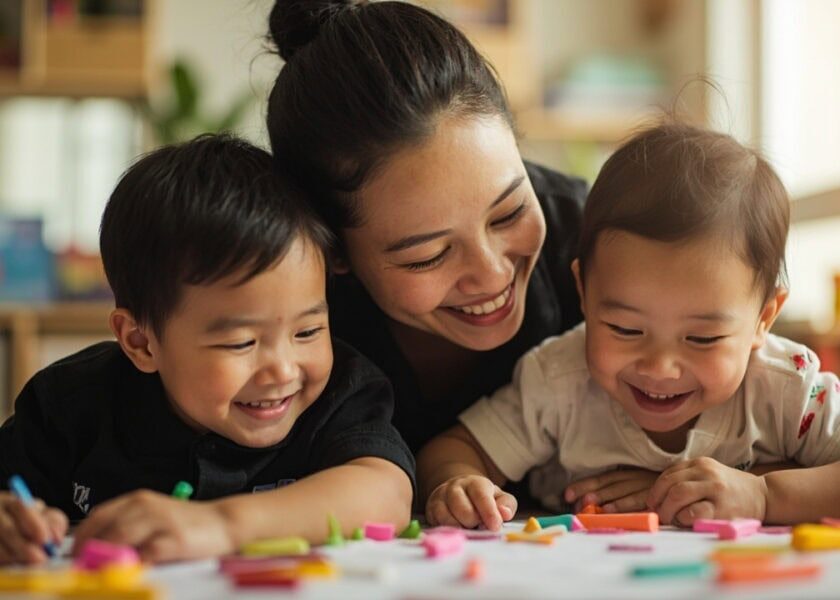
The whole story is the child who wakes from a nap and reaches not for a familiar lovey but for the face of whoever has just entered the room, because that face has become familiar too. The whole story is the child who claps not when they master a new skill, but when they notice that the person they love most is watching them clap. The whole story is the child who, after months of careful settling, runs through the door of their childcare space like it is home—because it is home.
Because home is not only where you live. Home is where you are known.
The Parallel Journey: Settling Together
You, as a parent, are on the same journey. You are walking a parallel path, and you may not have realized it until someone names it for you.
When your child begins childcare, you begin it too. The first days are not only hard for your child. They are hard for you.
There is the morning you hand your baby to someone else and your hands do not know what to do with themselves. There is the walk home in the silence of a car that used to hold small sounds. There is the afternoon when you check your phone seventeen times—not because you do not trust the people caring for your child, but because your body has not yet learned what your mind already knows: that this is safe, that this is right, that your child is in good hands.
This is not weakness. This is love doing what love does—it reaches for the child even when the child is out of sight.
Two Stories, One Journey
Here is what many of us are never told: that your settling and your child’s settling are not two separate stories. They are one story, told from different rooms.
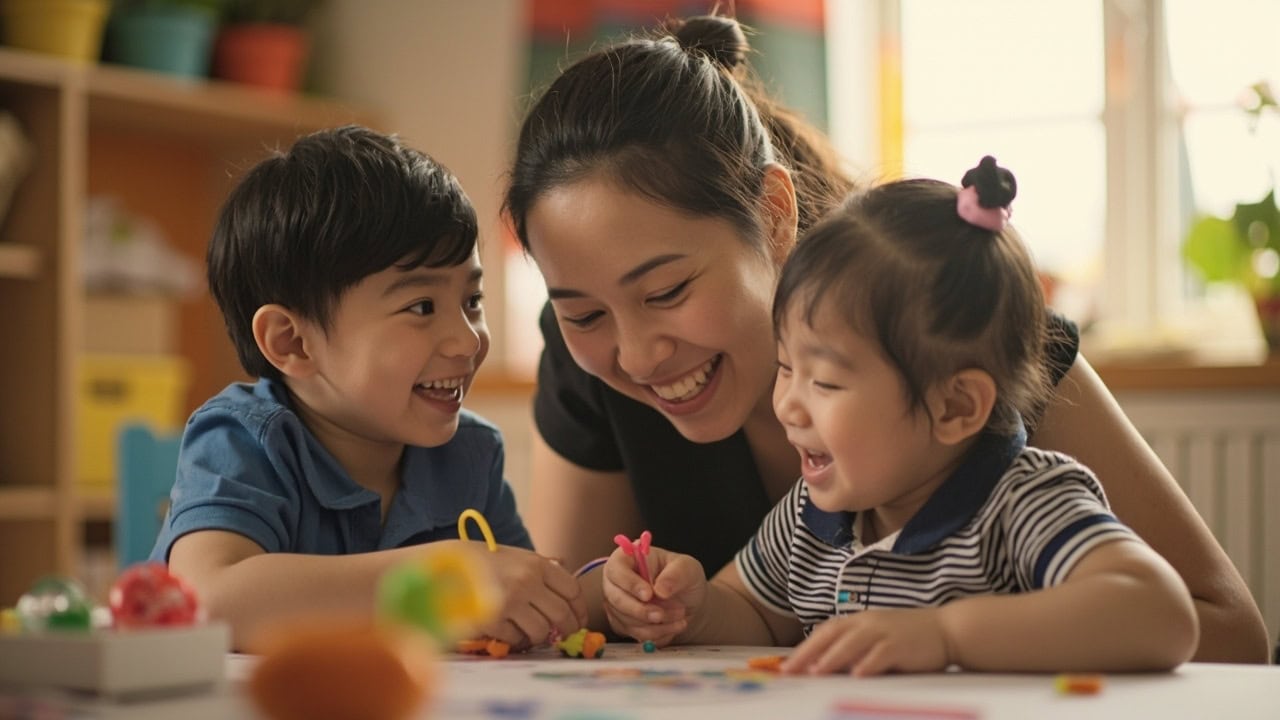
When your child turns back to their blocks, to their caregiver, to the rhythm of the morning, they are not replacing you. They are expanding. They are learning that love is not a finite resource, that safety can come in more than one form, that the world contains more than the arms of the people who made them.
And when you, in time, let go of the seventeen phone checks, when you stop rehearing the goodbye in your mind, when you sit down to your own work and realize, with something like wonder, that you are not thinking about whether your child is okay—you are not failing as a parent. You are doing something extraordinarily difficult: you are learning to trust what you cannot see because you have come to understand what your child is experiencing.
This is the belonging that matters most—not just your child’s belonging in their childcare space, but your belonging in the story of your child’s life. You are not an observer. You are not a distant supervisor. You are a participant in something that will unfold over years, and the childcare partner you choose is a partner in that unfolding, not a service provider you hire and dismiss.
The Grief You May Not Have Named
There is also a quieter grief that many parents do not expect: the grief of not being present. Of knowing that your child is building something profound—learning to belong, learning to trust, learning that the world is safe—and that you are not there to witness it firsthand.
This grief is real. It deserves to be acknowledged. But it can also be transformed.
When you understand what your child is experiencing in those hours apart, the grief softens into something else: the recognition that you have given your child a gift. You have found them a village. You have trusted someone else to hold what you hold, in your absence, with the same care you would bring yourself.
That is not failure. That is parenting at its bravest.
What Quality Childminding Actually Looks Like
In Singapore, where childcare costs and career demands and the simple arithmetic of hours in a day do not always add up, parents need more than a checklist. They need to understand what they are actually entrusting to another person.
Quality care fills the hours you cannot be there—with something your child will carry into every room they enter for the rest of their lives. It fills them with the deep, inarticulate knowledge that they are held.
Consistency Is Safety
For an infant, consistency is not a preference. It is a form of safety. Consistency says: the world is predictable, the people in it can be trusted, tomorrow will be like today.
Your child will not meet a rotating cast of strangers. They will meet the same caregiver—trained and supported—who will learn your child’s rhythms: how they like to be held, what sounds soothe them, the precise temperature they prefer their milk.
These details may seem small. But for an infant, they are everything. They are the building blocks of trust.
Small Numbers, Deep Attention
Quality care also means numbers that allow for genuine attention. When ratios are small—up to one to three infants in care—something changes. When a child falls and skins their knee, there is someone there. When a child needs to be held, there are hands free to hold them.
This is not accidental. It is designed.
Communication as Foundation
Trust is built in ordinary moments, accumulated over weeks and months. It is built through the small evidence of daily life: photos that arrive not as performances but as proof, updates that tell you not just what your child ate but how they slept, how they reached for comfort, how they laughed at something only a caregiver would have noticed.
When transparency measures are in place, they are there not because anyone distrusts, but because transparency is part of trust itself. You should be able to see, if you wish to see, that the care you have entrusted is the care your child is receiving.
Signs Your Child Is Building Belonging
If you cannot be present to witness your child’s settling moment by moment, how do you know it is happening? Here are some signals that your child is building the internal safety that quality care creates:
- The Goodbye Gets Easier—Then Almost Disappears: Not because your child has forgotten you, but because leaving is no longer a rupture. It is simply what happens before returning.
- Your Child Reaches for Their Caregiver: Not instead of you, but alongside you. The caregiver’s face becomes a source of comfort, not just a stranger.
- Stories Emerge: Your child begins to mention their day—another child’s name, a song, a specific moment. This means the day has become meaningful to them.
- Exploration Increases: Children who feel safe take more risks. They wander further, try new things, engage more deeply with the world around them.
- Your Child Runs to the Door: When the childcare space becomes somewhere they want to go rather than somewhere they are dropped off, that is belonging.
When you see these signs, do not mistake them for replacement. This is expansion. This is your child becoming bigger, braver, more trusting, more capable of holding the world in their small hands.
Questions to Guide Your Search
Leaving your child in someone else’s care is one of the most difficult things a parent in Singapore will ever do. If you are researching infant care options right now, here are some questions to hold as you search—not as a checklist to anxiety over, but as a map to guide your thinking.
Ask Yourself First
- Where do I feel the most peace when I imagine my child during the day?
- What would I need to see or hear to trust a childcare arrangement?
- What does my child’s temperament need right now? Small group? One-on-one? Familiar environment? More stimulation?
- What will make my own settling easier?
Ask Potential Providers
- Who will be the primary caregiver? Will they be consistent?
- What does a typical day look like?
- How will I know what is happening while my child is in your care?
- How do you handle settling-in periods?
- What is your ratio of caregivers to children?
- How do you support parents who are struggling with the transition?
What to Look For in Practice
- Consistency: The same faces, the same rhythms, the same expectations day after day.
- Communication: Updates that go beyond the transactional—what did they eat, how did they sleep, but also how did they engage, what made them laugh.
- Calm Authority: Caregivers who seem comfortable, confident, and genuinely present—not just going through the motions.
- Space for Belonging: A physical and emotional environment where your child can be known, not just managed.
EduNanny: Built Around This Understanding
EduNanny was built on this understanding. Not as an afterthought, not as a brand message, but as a daily practice.
We know that the decision to place your child in care does not come from a place of not caring. It comes from a place of caring deeply about your family’s future, about being able to provide, about wanting your child to have more than you had, about the impossible mathematics of modern life in a city where hours do not always add up the way we wish they would.
We built EduNanny to answer the question that wakes you at three in the morning—not with platitudes, but with presence. With a model of care that is built around the child and the family, not around efficiency alone.
The ECDA Childminding Pilot
EduNanny by BUTLER is part of the ECDA Childminding Pilot, and that matters because it means we are part of something larger than ourselves—a commitment, at the policy level, to recognizing that childminding is not a lesser form of care but a distinct and valuable one, one that can meet families where they are.
The pilot gives families pathways that work with the texture of real life:
- Home-Based Care: A trained childminder comes to you, in the familiar environment of your own home.
- Community and Centre-Based Pathways: Your child joins a small, consistent group of peers in a setting designed for belonging.
Both pathways share the same principles: small ratios, consistent caregivers, communication that goes beyond the surface, and a genuine understanding that what we are doing matters.
Making Quality Care Accessible
Quality care should not be a luxury available only to those with means. This is why we have worked to ensure that CDA and Baby Bonus can be used within the pilot fee structures.
These are not just government schemes. They are the system saying that your child’s early years matter, that Singapore as a nation is invested in what happens in the first thousand days, in what takes root in a child before they can speak, before they can read, before they can tell you in words what they already know in their body: that they are safe, that they belong, that the world is kind.
We want every Singapore family to have access to that knowledge. Not just the families who can afford premium packages. All families.
Walking This Road Together
When you choose EduNanny, you are not choosing a service. You are choosing a partner in the long, unfolding story of your family’s life.
We will celebrate your child’s first steps in our care. We will notice when they develop a new interest, when they become fascinated by a texture or a sound, when they begin to prefer one friend over another. We will hold them when they are tired and feed them when they are hungry and sing to them when they are sad.
We will do all of this not because it is our job—though it is—but because we understand what we have been given. We have been trusted with the most precious thing in your life. We do not take that lightly.
We hold it with the seriousness it deserves, and we hold you too, in all your uncertainty, in all your love, in all the complicated feelings you bring to this decision every single morning when you hand your child over and walk away.
Your Becoming
Here is what else we want you to know: as your child grows into the person they are meant to be, you are becoming something too.
You are becoming a parent who can hold ambiguity. Who can trust the unseen. Who can love without possessing. Who can leave and return and leave again with something like grace.
This is not a lesser parenthood. This is its own kind of bravery. And the right childcare partner will walk this road with you—not ahead of you and not behind you, but beside you, for as long as you need us.
EduNanny is here because we believe that raising a child takes a village, and because we believe that this village can be trusted, can be seen, can be known. We are here because Singapore families deserve more than a service—they deserve a partnership.
Because your child’s belonging matters. Because your belonging matters.
Because when both of you belong, something beautiful happens: your child grows into the person they are meant to be, and you grow into the parent you were always capable of becoming.
That is why we do this work. That is why we are here.
If you are beginning to think about what quality, development-oriented childminding could look like for your family, we would be glad to hear from you. Learn more about who we are and the ECDA Childminding Pilot we are proud to be part of. Or simply visit EduNanny to explore what a trusted, thoughtful approach to infant care in Singapore could feel like.