The Real Question Behind Every Singapore Childcare Search
What Singapore Parents Are Really Looking For
What we have come to understand, through years of walking alongside families in Singapore, is that the question most parents are really asking is not about ratios or curricula or operating hours. The question underneath all those practical concerns is something far more human.
It is this: will my child be known?
Not just watched. Not just fed and changed and kept safe. But truly known—the way you know them. The way you know that your daughter calms when someone hums before speaking, that your son needs a moment to warm up before he joins the other children, that the right caregiver will notice these things without being told.
That longing is not a vulnerability to be soothed away. It is a wisdom.
Children do not develop security from places. They develop it from people. They do not learn about the world from curricula. They learn from the quality of the relationships that hold them while they are learning.
Every parent who has walked this path before you knows this in their bones. And the research, the experience, the quiet observations of educators and child development specialists—all of it points toward the same truth.
The difference between a childcare arrangement that works and one that truly nurtures a child is not measured in square footage or activity schedules. It is measured in the depth of human connection.
What Quality Childminding Actually Looks Like
When a child has a caregiver who truly knows them—not just their schedule, but their temperament, their fears, their joys—they move through the world differently. They are more willing to explore, because they have a secure base to return to.
They form friendships with other children more easily, because they have learned through modeling that adults can be trusted, that relationships can be warm and reliable.
They develop what psychologists call secure attachment—not because of any specific curriculum or activity, but because they have lived it, daily, in the care of people who knew their name, their needs, their particular way of being in the world.
The Daily Handover: Where Trust Is Built or Lost
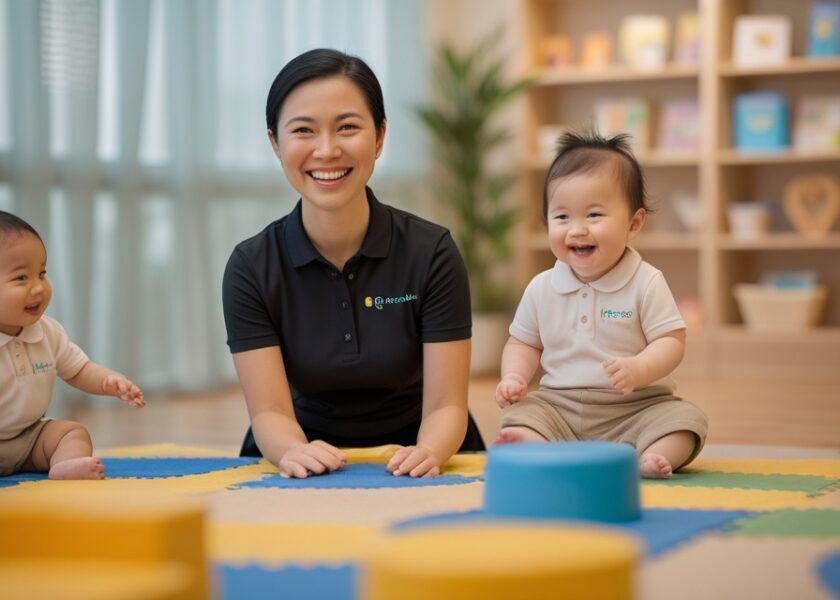
Every morning, you arrive carrying the residue of your night—the worry, the tenderness, the hundred small things you noticed about your child that no one else could possibly know. You hand over not just a child, but a context. A mood. A story about what happened at breakfast, what made them laugh, what they are struggling with.
And the caregiver receives not just a small person in a diaper bag, but a continuation of something already in progress.
This is where most childcare arrangements quietly fail—not because of negligence, not because of bad intentions, but because this exchange is treated as administrative rather than relational. The child is logged in. The form is signed. The exchange is over.
But at EduNanny, handover is where trust is either deepened or diminished. Every single day. The small observations shared in those minutes—the comment about how your child slept, the question about a new behavior, the quiet celebration of a small milestone—these are not pleasantries. They are the architecture of a partnership.
Over Time, Something Changes
These daily exchanges accumulate. They become a shared language, a shorthand, a mutual understanding that no orientation session could create. And what they create is something neither parent nor caregiver could produce alone: a continuity of care that the child experiences as safety.
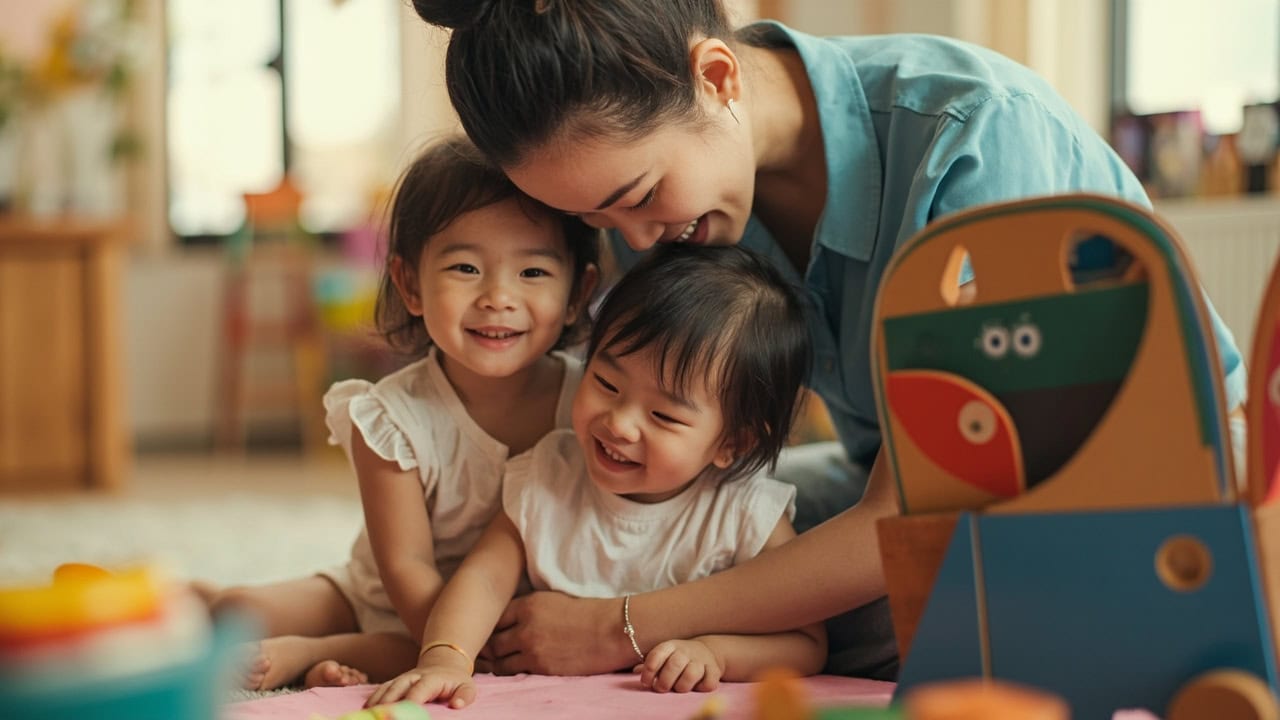
You will notice it one morning when your child runs to their caregiver without hesitation. You will notice it when the caregiver tells you about something your child did that day and you realize she is seeing your child the way you see your child—not as one of many, but as someone specific, someone known.
This is the difference between childcare that merely functions and childcare that nurtures. And it is not accidental. It is designed.
The Caregiver as Secondary Attachment
Children learn about the world from the quality of the relationships that hold them while they are learning. This is not a soft observation. It is one of the most robust findings in child development research—and it is also something every parent already knows intuitively.
When a child experiences warm, consistent, responsive care from a secondary attachment figure, they learn something profound: that the world has reliable people in it. That relationships can be trusted. That they can explore and fall and return, and someone will be there.
This becomes the inner compass they carry into school, into friendships, into adulthood.
That is why EduNanny calls them what they are: childminders. Not because the title is simpler, but because it is more honest. A childminder is not merely executing a task. They are minding a child—which means they are holding that child’s wellbeing in their attention, their care, their thoughtfulness, throughout the hours they are together.
This is work that deserves dignity. It is work that requires skill, patience, observational acuity, and emotional intelligence. It is work that shapes a human being during the most formative years of their life.
At EduNanny, childminders are trained not just in safety protocols and developmental milestones, but in the relational practices that make the difference between a child who is merely cared for and a child who is truly held.
What Changes for the Parent
And something else happens, something that is rarely talked about.
The parent changes too.
There is a kind of parenting that happens in isolation that is exhausting and lonely and full of doubt. And there is a kind of parenting that happens in partnership that is still hard, still demanding, but lighter somehow—held by someone who sees what you are doing and names it, who notices what your child is becoming and shares that discovery with you.
This is what a real childcare partnership offers. Not relief from the responsibilities of parenthood, but companionship within them. Not a replacement for your role, but an extension of it.
The caregiver becomes, in the truest sense, your ally. And in that alliance, you find something you may not have expected: permission to grow as a parent. To learn. To ask questions without shame. To admit uncertainty.
In that collaboration, both adults—the one who has known this child since birth and the one who will come to know them in a different but equally important way—develop.
EduNanny’s Approach: Built Around Partnership
EduNanny is part of the ECDA Childminding Pilot, and we carry that responsibility seriously. The pilot exists because Singapore recognizes that families need more than institutional childcare. They need options that fit the real texture of their lives—home-based arrangements for families who want their child in familiar surroundings, community pathways for families who value connection with other parents and children, centre-based options for families whose circumstances call for them.
We offer these pathways not as a menu of products, but as a response to the genuine diversity of what families actually need.
Designed for Relationship Density
Our ratios reflect this philosophy. With up to one caregiver for every three infants, we keep the relationship density high. This is not an accident of policy. It is a design choice rooted in what we know about how children form trust—slowly, through repeated contact with consistent people, through the accumulation of small moments rather than the impact of grand programs.
The fees within the pilot structure are designed to make this accessible. Many families are able to use the Child Development Account and Baby Bonus funds, which means that relational childcare is not only available to those with significant means. Partnership should not be a luxury.
Transparency as Invitation
Because we know that parents need to feel confident about what happens during the hours they are not present, we build transparency into everything we do. Where deployed, our CCTV measures give parents a window into their child’s day—not as surveillance, but as invitation. You are welcome in this relationship. You are part of it, even when you are not here.
Communication is not an add-on at EduNanny. It is a practice. This is what distinguishes a genuine partnership from a service.
Supported by Technology, Driven by People
Our Thomas AI Chatbot supports both parents and caregivers—not as a replacement for human relationship, but as a way of making the daily coordination of that relationship easier. Questions about routines, reminders about developmental windows, a quick way to share observations. Thomas is part of the infrastructure of care, helping the human relationships at the center of what we do to function smoothly.
Addressing Common Concerns
It is worth naming the fears directly, because they are real and they deserve honest answers.
“How do I know my child will actually be known here?”
You will know because of what happens at handover. You will know because of the questions you are asked. You will know because the caregiver will mention things about your child that no form could capture—the way they like to be held after a nap, the book that makes them giggle every time, the moment they hesitated at a new texture and then surprised themselves by reaching for it anyway.
“Will this actually be different from a centre?”
Different in structure and in substance. EduNanny’s ratios mean fewer children per caregiver, which means more attention per child. The home-based pathway means your child is cared for in a familiar, domestic environment rather than a larger group setting. And the relational culture—built around daily handover exchanges, ongoing communication, and genuine partnership with families—shapes how every hour of every day is experienced by your child and by you.
“What if something goes wrong?”
EduNanny’s transparency measures mean you are not removed from what happens during the day. Communication is built into daily practice, not reserved for emergencies. And because the relationship between parent, caregiver, and child is ongoing and collaborative, concerns are raised and addressed in real time by people who know your family.
“Can we afford this?”
Many families in the ECDA Childminding Pilot are able to use their Child Development Account and Baby Bonus funds. The pilot was designed to make quality relational childcare accessible to more families, not fewer. We encourage you to explore the financial options available and discuss them directly with us.
What to Look For in Any Childcare Arrangement
For parents beginning this search, here are the questions that matter most, beyond the checklist items:
- Observe the handover. How does the caregiver greet you and your child? Do they ask about your child’s night, their mood, the small details that make your child who they are? Or is the exchange purely logistical?
- Ask about ratio. A lower child-to-caregiver ratio is not a luxury—it is the structural condition that makes genuine knowledge of each child possible.
- Notice how your questions are received. Do you feel heard, or managed? A genuine partner welcomes your questions as part of the relationship, not as a threat to their process.
- Ask what happens on a hard day. What does a fussy morning look like? How are new behaviors or regressions handled? The answer will tell you whether the caregiver sees your child as a whole person or a set of needs to be managed.
- Trust your gut. If something feels off during a tour or a conversation, take that seriously. You are looking for a person, not a perfect facility. The right person will not have all the answers, but they will ask good questions—and listen to yours.
The Hope Behind This Work
We hope that when you bring your child to EduNanny, you will find not just a childcare arrangement but a relationship that holds your family. We hope that the morning handover will become something you look forward to—not because the conversation is always easy, but because it is always real.
We hope that you will feel known, not just your child, but your whole family—the rhythms of your household, the values you are raising your child to carry, the particular way you love.
We hope that your child will learn something profound from the quality of care they receive: that adults can be trusted, that relationships are reliable, that the world is generally safe and interesting and worth exploring. Not because we told them this, but because they lived it, day after day, in the presence of a caregiver who knew them and loved them in her own particular way.
And we hope that you, as a parent, will find in this partnership something you may not have expected: the feeling that you are not doing this alone. That there is someone in your corner who sees what you are doing and values it. That the exhausting, beautiful, terrifying work of raising a child can be shared—not transferred, but genuinely shared.
If you are ready to enter into a relationship that will change how you think about childcare, about partnership, about the village it takes to raise a child—we are ready too. And we would be honored to walk this path alongside you.
To learn more about EduNanny and the ECDA Childminding Pilot, visit our website. We welcome your questions and look forward to hearing from you.