What Your Child Is Telling You Every Day Without Words
The Question You Carry Without Asking
There is a question that lives quietly in the chest of every parent in Singapore who has made the decision to place their child in someone else’s care. It is not dramatic. It does not arrive at three in the morning when the house is dark and the mind races. It arrives in smaller moments.
When your child walks toward the childcare door without turning back. When you ask how the day was and receive no answer, or only a sing-song phrase that tells you nothing. When the weekend passes and Monday approaches and you notice your child has been especially attached, or especially easy, and you wonder what each of these means.
The question is this: is this actually working?
You love your child. You want the best for them. You made a thoughtful decision — after tours and comparisons and conversations with other parents and long talks with your partner after the children were finally asleep. You enrolled. You committed.
And now that the decision is made, something strange happens. The searching stops, but the wondering does not. You find yourself looking for signs. You read the daily reports. You watch the photographs. You notice whether your child cried at dropoff and how long the crying lasted.
This is not doubt. This is love doing what love does. And it is one of the most underacknowledged experiences of modern parenthood in Singapore.
What Thriving Actually Looks Like
Most of the conversation around childcare assumes the difficulty lies in choosing. And yes, choosing is difficult. But Singapore has built an entire ecosystem of content, guidance, and frameworks to help parents navigate that moment. What we have not built is anything for the parent who has already chosen — the parent who drives or walks their child to care and says goodbye and drives or walks away and then quietly wonders whether they are leaving their child in the right place.
The real evidence of whether your child is flourishing is carried in your child. In their body, their behavior, their words when they have words, and in the quality of their presence when they come home to you.
Once you know what to look for, something shifts. The wondering does not disappear entirely. But it transforms. It moves from anxious searching to grounded observation. And that shift changes everything.
1. Emotional Security
When a child is flourishing, you see it first in their emotional security — not the absence of tears at dropoff. Many thriving children cry at goodbyes simply because they are young and separation is hard. But you see it in what happens after the goodbye.
A flourishing child may cry, and then settle. They may look uncertain, and then engage. They do not stay in a state of chronic distress. They find their way back to regulated, curious, open engagement with their world. This is the signature of a child who has learned, in their body, that their environment is safe.
2. Social Confidence
You see it in their social confidence. A flourishing child begins to notice other children — not just as objects in the room, but as people worth watching, approaching, and eventually engaging with.
They develop a sense of themselves in relation to others. They look up. They look around. They are interested. This interest is one of the clearest signs that a child’s mind is at work, that they are not merely enduring their days but inhabiting them.
3. Curiosity
You see it in their curiosity. A thriving child asks questions, or if they are pre-verbal, demonstrates questions through their actions. They explore. They reach for things. They point. They bring objects to show an adult. They experiment with sound and movement and cause and effect.
Curiosity is not a luxury of early childhood. It is the engine of development itself. A child who is curious is a child who is learning. And a child who is learning in their care environment is a child who has found a place where learning is possible.
4. Motor Energy
You see it in their motor energy. Not freneticism, but the natural, robust, full-body engagement of a child who feels safe enough to move, to climb, to run, to fall and get up and run again.
A child who moves freely and joyfully is a child who is not spending their energy on vigilance or fear. They are spending it on the business of being young.
5. Evening Warmth
And perhaps most remarkably, you see it in the evenings. This is the signal most often overlooked in all the childcare conversation.
When a child comes home from a day in quality care, pay attention to what happens between the two of you. Not just whether they are tired — all children who have been awake and active and learning all day will be tired. That is normal and healthy.
But how do they come home?
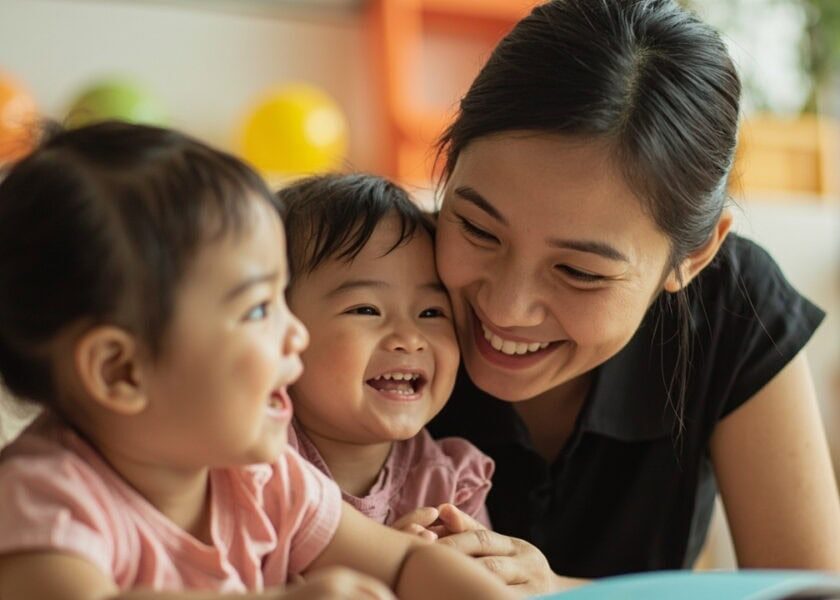
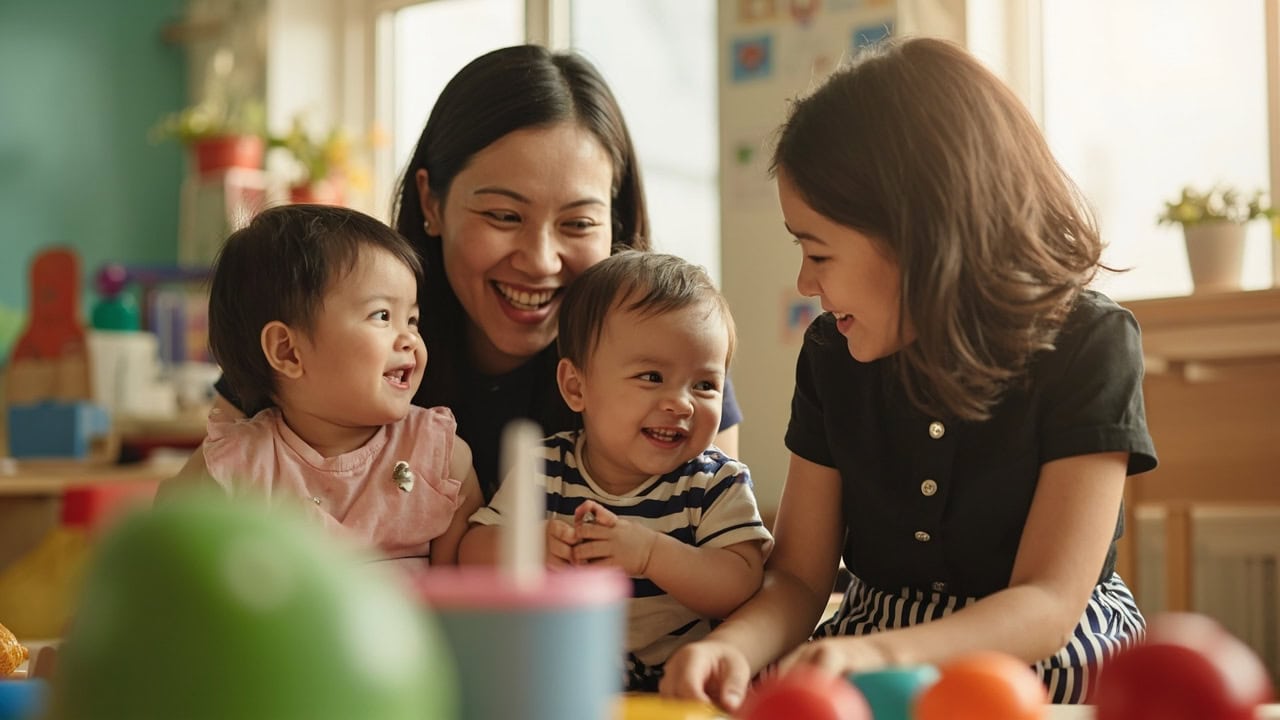
A flourishing child often comes home in a particular way. They are tired, yes, but they are also warm. They settle into you with ease. They may be chatty or quietly content, but there is a quality of ease that is hard to describe but impossible to miss once you recognize it.
They have been away from you, and they are glad to be back, but they are also glad about their day. That combination — that particular warmth — is one of the most honest indicators that your child is not merely surviving their time away from you but growing in it.
The Pattern, Not the Moment
None of these signs appear in isolation, and none of them appear perfectly every single day. Childhood is not a smooth line. There are regressions. There are difficult weeks. There are days when everything seems off and you cannot quite understand why.
What you are looking for is the pattern. The general direction. The overall quality of your child’s engagement with their world over weeks and months, not minutes and hours.
This is what separates confident observation from anxious monitoring:
| Anxious Monitoring | Confident Observation |
|---|---|
| Checks reports multiple times daily | Notices overall patterns over weeks |
| Worries about single difficult moments | Looks at the general direction of growth |
| Compares against external standards constantly | Trusts what the child is showing |
| Feels responsible for catching problems | Believes they can recognize thriving |
| Searching for reassurance | Observing with calm curiosity |
Permission to Trust What You See
Here is what I believe: most parents in Singapore who have made a thoughtful choice about childcare have made a good choice. Not every choice will be perfect, and some choices may need to be revisited. But most parents are doing exactly what they should be doing — paying attention, caring deeply, and making the best decisions they can with the information they have.
For these parents, the missing piece is not more information about their childcare. The missing piece is permission to trust what their child is showing them.
So let me give you that permission.
- If your child is emotionally secure in their care environment, you will see it.
- If they are learning, you will see it.
- If they are safe — physically and emotionally — you will see it.
You already know more about your child than anyone else does. You have known them since before they took their first breath. You have watched them grow from a newborn into the particular, specific, irreplaceable person they are today.
That knowledge is not naive. It is foundational. Trust it.
A Quiet Practice for Parents
If you want to put this into practice, here is something you can do beginning today.
At pickup, before you ask anything, just observe your child for a moment. Notice their face. Notice their body. Notice how they move toward you or away from you in that first moment. Do not ask questions yet. Just watch.
Then, on the drive or walk home, let them lead. If they talk, listen. If they are quiet, be quiet with them. Notice the quality of their presence. Are they easeful? Tired but warm? Engaged? Curious?
This is the practice: Noticing. Over time. Without judgment. Without anxiety. Just noticing what is true.
After a few weeks of this practice, ask yourself — what am I seeing? Is my child flourishing? The answer is probably yes. And now you have the language and the confidence to trust what you already knew.
How Quality Care Makes This Possible
Understanding what flourishing looks like is only half the picture. The other half is understanding that quality care produces something — and that something arrives home with your child every single day.
Your child is the product of their care environment. Not the brochure, not the facility, not the philosophy on paper. Your child.
When a child is in an environment that genuinely supports their development, the signs are there. They are not hidden. They do not require specialized knowledge to recognize. You will see their curiosity active and engaged. Their social confidence emerging. Their motor energy robust and joyful. The warmth in the evenings. A child who is not merely being kept but is being held, seen, and raised in a way that honors who they already are.
Here in Singapore, the EduNanny program by BUTLER operates under the ECDA Childminding Pilot, offering pathways that include both home-based and community or centre-based options depending on what suits your family best.
- The pilot maintains a ratio of up to one to three infants, ensuring attentive, responsive care
- Fee structures are designed to be accessible within the pilot framework
- Families can utilize CDA and Baby Bonus where applicable
- Care is available across Monday to Friday in defined blocks
- Communication and transparency are core operational values, including CCTV measures where deployed
The EduNanny program welcomes parents who want to understand what quality care looks like — because quality care is not afraid of observation. It is confident in what it produces.
Common Questions From Singapore Parents
“How do I know if my child’s behavior is normal?”
Every child adjusts differently. Some children settle within weeks. Others have ups and downs over several months. What matters is the overall trajectory. If your child is moving toward greater ease, curiosity, and engagement over time, that is a healthy sign. If you are ever concerned, speak with your caregiver directly and observe more closely at home.
“What if my child cries every morning?”
Morning tears are common and not necessarily a warning sign. The question is what happens next. Does your child settle after goodbye? Do they engage with their environment? Do they come home warm rather than depleted? Crying at separation is normal. Chronic distress is not.
“How do I stop the anxious checking?”
Anxious checking is a habit, and habits can shift. Instead of reaching for the app or the daily report multiple times, set specific moments to check in — perhaps once in the morning and once after pickup. Redirect your attention to your child when you are with them. Let your observations replace the reports as your primary source of information.
The Question Your Child Has Been Answering
Your child has been telling you, every single day, whether the care they are receiving is right for them. The only question was whether you were listening.
You are now.
So pay attention — not with anxiety, but with curiosity. Not with fear, but with love. Watch your child. Notice them. Trust what you see.
And if you are looking for a childcare arrangement where the signs of flourishing are visible, recognized, and valued — where observation and trust are part of the philosophy — there are pathways worth exploring.
EduNanny is a development-focused childminding and childcare programme operating under Singapore’s ECDA Childminding Pilot. Learn more about our approach or get to know us. We welcome conversations with families who care about thoughtful, quality care.