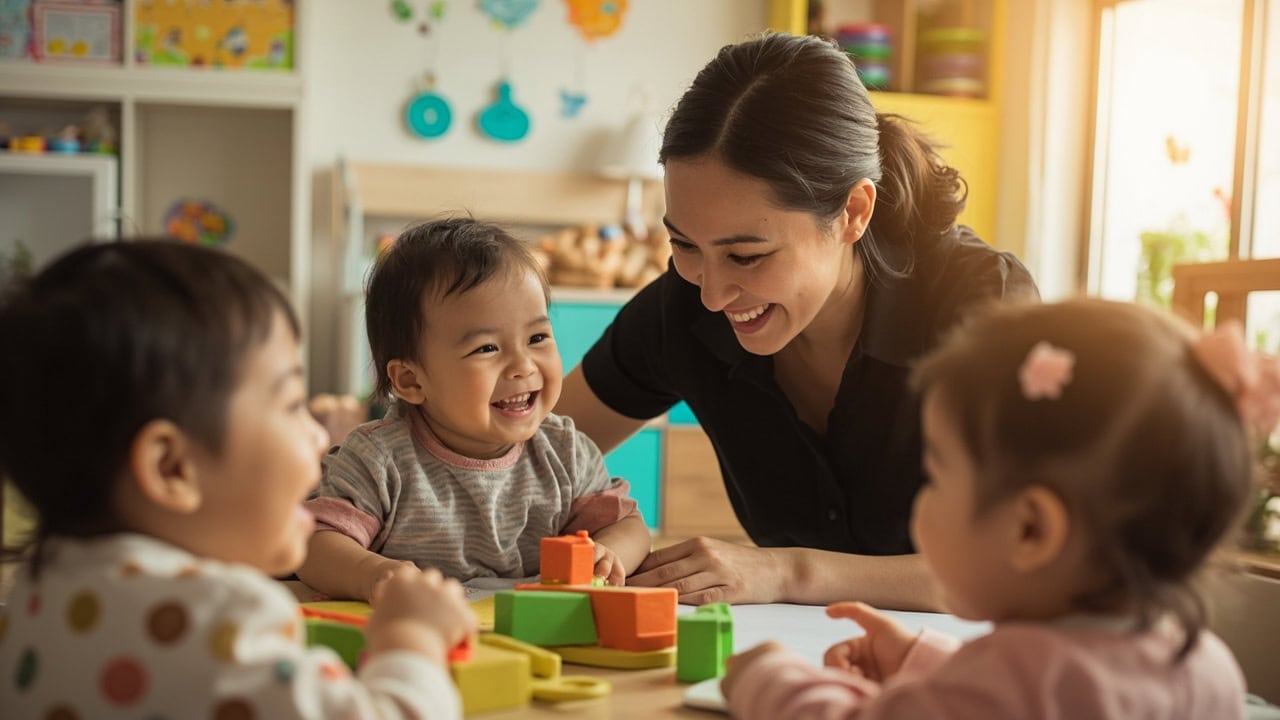
Reading Your Child’s Behavior as the True Measure of Childcare Quality
Quick Summary: Signs Your Child Is Telling You About Their Care
- Children ages 0 to 6 communicate their childcare experience through behavior, not just words
- Quality care produces observable signs: emotional resilience, social confidence, engaged play, and secure attachment to caregivers
- The child who runs toward their caregiver is showing you something profound about their inner experience
- Your child’s behavior at home after care is data—patterns in play, sleep, appetite, and social ease reveal whether they are thriving or struggling
- Learning to read your child’s unfiltered response is more reliable than any observation checklist
Shifting the Lens: From Observer to Listener
Most discussions about childcare quality start with the parent—as chooser, as evaluator, as the person reading signs and signals from the outside. You tour the facility. You check ratios. You read reviews. And all of that matters.
But what if we inverted the lens? What if, instead of asking how parents can assess the quality of their child’s care from the outside, we asked what it feels like to be the child inside that care? And how does that inner experience become visible to the parent who knows how to see it?
Because your child is not simply a passive recipient of whatever care arrangement you have chosen. Your child is an active participant in their own development, expressing their needs, comfort, joy, and struggle through behavior that is far more honest than any verbal report. When you learn to read that behavior with intention and care, you gain something invaluable: a direct line to your child’s inner world that no classroom observation checklist can provide.
Infants: Communication Without Words
Consider how a newborn communicates their experience. A baby cannot tell you that they felt held securely during a feeding, that the rhythm of their caregiver’s voice soothed them, or that they felt safe enough to drift into deep sleep. But their body can tell you.
The way a baby relaxes into their caregiver’s arms, the ease with which they transition from one state to another—from crying to calm, from wakefulness to sleep—these are not random behaviors. They are communication. They are your child telling you something about the quality of their care through the only language they have mastered. In the earliest months, this is the only evidence you have. And it is enough.
Toddlers and Preschoolers: What Behavior Reveals
As children grow, that language expands—but not necessarily into words. A toddler may not be able to articulate that they spent the morning in a beautifully prepared environment that sparked their curiosity, or that their caregiver responded to their frustration with patience and warmth.
But you can see it in the way they play. You can hear it in the questions they ask. You can feel it in the ease with which they move through their evening, versus the exhaustion and dysregulation that might indicate a day that did not serve them well.
After a day in quality care, you may notice:
- Purposeful, imaginative play: Children who have been genuinely engaged often bring that engagement home. They act out scenes, recreate interactions, and explore themes that mattered to them during the day.
- Smooth transitions between caregivers: A child who moves from your care to their caregiver’s care without prolonged distress or shutdown is telling you something important about how safe they feel.
- Sleep patterns that reflect emotional safety: Children who are securely attached and well-supported often sleep more restfully. Chronic restlessness or regression in sleep can be a signal worth exploring.
- Regulated appetite: A child who is emotionally activated all day—whether from stress, overstimulation, or under-stimulation—may come home ravenous or refusing food entirely. Children in responsive care environments tend to have more regulated eating patterns.
- Emotional resilience, not perfection: Quality care does not produce children who never struggle. It produces children who have learned that their emotions are met with understanding—so they return home with quiet resilience rather than a weight that no amount of parental love at the end of the day can fully lift.
What Quality Care Actually Produces in Your Child
When a child experiences genuine engagement—when they are not merely supervised but actively involved in learning, exploration, and relationship—there are observable outcomes that developmental science has consistently shown and that Singapore parents observe daily in their own children.
Emotional Regulation: The Capacity to Be Held
The child who is learning to manage frustration, who is being supported through big feelings by a responsive caregiver, begins to carry that capacity home. They are not perfect. They are still children. But there is a difference between a child who has learned that their emotions are met with understanding and a child who has learned to suppress them.
The first child returns home with a quiet resilience. They cry, they stumble, they have hard moments—but they recover. They trust that the world will catch them.
The second child returns home with a weight. They may appear “good” or “easy” because they have stopped expressing what they feel. But that ease is not peace. It is suppression. And it is worth paying attention to.
Social Confidence: The Ease of Being With Others
The child who has been in a quality care environment, with ratios that allow for real attention, develops an ease with other children and with adults outside their family. They know how to share because they have been in situations where sharing was taught with patience. They know how to navigate conflict because they have been in environments where conflict was handled as a learning opportunity, not a crisis.
Quality care does not just keep children busy. It builds the social architecture of early childhood—thread by thread, interaction by interaction.
Curiosity and Engagement: The Drive to Explore
Children who feel secure explore more freely. This is one of the most reliable findings in early childhood development: security begets curiosity. When a child knows that their base is safe, they venture further from it. When they trust their caregiver, they take intellectual and social risks that build their confidence and competence.
The child who returns home full of “why” and “what if” is a child whose curiosity has been nurtured during care hours. They have been in an environment where their questions mattered, where exploration was encouraged, and where their natural drive to learn was met with response.
The Distinction That Matters: Clinging Versus Running
Perhaps the most powerful evidence of quality care is the one that is hardest to quantify, and yet the most important: a child’s relationship with their caregiver.
There is the child who clings at drop-off, who cries, who seems to feel abandoned by their parent in the arms of a stranger. And there is the child who runs—not away from their parent, but toward their caregiver. Who waves goodbye with confidence. Who does not look back because they trust that the person they are going to is someone worth going toward.
Both children may cry at some point. Both children have valid emotions. Both deserve patient, loving support. But the trajectory of those two children tells a very different story.
The clinging child may be struggling. Their care environment may not be meeting their needs. Or they may simply need time to adjust. Every child’s transition is individual, and some securely attached children still protest drop-offs. But when clinging persists—week after week, without any sign of growing ease—it is worth asking what is happening inside that care environment.
The child who runs toward their caregiver has experienced something important: they have found a second attachment figure they trust. They have discovered that the world outside their family contains people who are safe, warm, and responsive. When you see your child running toward their caregiver with genuine joy, that is not a sign that they do not need you. That is a sign that they have been given the gift of a secure base from which to explore. You are still their primary attachment. But they have learned that other adults can be trusted, and that is one of the most important developmental achievements of early childhood.
What Play and Stories Reveal
Long before your child can give you a verbal report of their day, they give you something more honest: their play. A four-year-old may not be able to articulate what happened during care hours. But she can act it out. She runs to the corner of the playground, picks up two small figures, and begins to re-create a scene—a caregiver reading to children, a child sharing a toy, a morning circle where everyone sings together. Her play is her report.
The themes children return to in their imaginative play are windows into their inner childcare world. Dominant themes of nurturing and care suggest a child who feels held. Themes of exploration and adventure suggest a curious, engaged child. Themes of conflict, abandonment, or fear—recurring and unresolved—are worth sitting with and exploring further.
Other signals include:
- Drawings: Who is in them? Are caregivers present? Are other children included? Do the figures feel connected or isolated?
- Stories they tell: A child who spontaneously narrates events from their day is processing and sharing their experience. Listen to what they include—and what they leave out.
- Songs they hum: Young children often internalize the rhythms and melodies of their care environment. Songs they bring home can reveal what has been present and meaningful in their day.
- The absence of anxiety: Sometimes, the absence of tension around talking about care is itself the strongest signal. A child who mentions their caregiver casually, who does not treat the subject as loaded, is a child for whom care is simply a comfortable part of life.
What Quality Childminding Looks Like in Practice
Understanding these signs matters most when you are choosing care for your child. At EduNanny by BUTLER, our approach was built around this understanding: that the truest evidence of quality care is not what you see on a tour, but what your child shows you over weeks and months of being in that care. We are part of the ECDA Childminding Pilot, and we operate across both home-based and community-based pathways because we believe families deserve options that fit their lives.
Our infant ratios—up to one caregiver for every three infants—are designed not for compliance, but for connection. Every ratio we maintain is a promise that your child will be seen. That their cries will be heard quickly. That their attempts at communication will be met with response. That their development will not be squeezed into a generic routine but observed, documented, and supported with genuine attention.
In environments where ratios are stretched, children learn to wait. They learn that their needs are not immediately important. But in environments where your child is one of two or three in a caregiver’s attention, they learn the opposite. They learn that they matter. That their feelings are valid. That the world is a place where they can make their needs known and expect to be met.
We know that trust requires transparency. That is why we implement communication measures that allow you to feel connected to your child’s day—thoughtful updates, honest reporting, and regular sharing of meaningful moments. Not because we need to prove anything, but because we believe you deserve to know what your child is experiencing. And because we are confident that when you see what happens in our care, you will see exactly what this article describes: children who are engaged, curious, emotionally secure, and visibly thriving.
Common Questions From Parents in Singapore
“What if my child cries at drop-off every day?”
A protest at drop-off is developmentally normal for many children, especially in the first weeks of a new arrangement. Separation anxiety is a sign of healthy attachment, not a sign that care is failing. What matters is the trajectory. Does the crying ease over time? Does your child recover within minutes of you leaving and engage in their day? Does the caregiver respond to their distress with warmth and patience, rather than dismissal?
A child who is deeply struggling in care will often show other signs: changes in sleep, appetite regression, withdrawal, or behavioral shifts that persist long after the transition period should have ended.
“How do I know if my child’s behavior at home is normal or a signal of something wrong?”
Look for patterns, not single data points. One hard evening after care does not mean your child is struggling. But consistent patterns—week after week, month after month—of dysregulation, withdrawal, regression in developmental milestones, or avoidance of anything related to their care experience deserve attention. Trust your instincts as a parent. If something feels off, it is worth exploring, not dismissing.
“Should I feel guilty for placing my child in care?”
No. You are not a negligent parent for placing your child in someone else’s care. You are not failing your child by returning to work, or by needing support, or by asking for help. You are doing exactly what human beings have always done: raising children within a community of care, trusting others to hold your child with the same love and intention you bring home every evening.
The village is not a relic of the past. It is a necessity of the present. And when that village is built with intention—with trained caregivers, with ratios that honor your child’s individuality, with environments that support their development—it becomes something extraordinary.
Reading Your Child’s Unfiltered Response: A Practical Framework
Here is a grounded way to bring this thinking into your daily life as a parent navigating childcare in Singapore:
- Observe the transition in both directions. How does your child respond when you arrive at pickup? Not just whether they are happy to see you, but how they have been during the day—calm or dysregulated, open or guarded?
- Watch the evening routine. Does your child move through the hours after pickup with ease? Or is there a pattern of exhaustion, dysregulation, and behavioral difficulty that feels disproportionate?
- Listen to the non-verbal reports. What does your child play? What do they draw? What do they hum? What themes recur in their imagination?
- Notice the drop-off pattern over time. One hard drop-off means little. A consistent pattern of running toward their caregiver—or consistently struggling—tells you something real.
- Ask, but listen beyond the words. When you ask your child about their day, pay attention not just to what they say, but to how they say it. Is there ease or reluctance? Excitement or deflection?
Your child is giving you data every single day. The question is not whether the data exists. It is whether you are listening.
The Boy Who Waved Goodbye
A mother in Singapore drops her son at his EduNanny arrangement on Monday morning. He is two years old, and the drop-off that once involved tears has become something different. He walks in, finds his caregiver, and turns to wave at his mother. He is not indifferent to her leaving. But he trusts where he is going. He has learned that the world outside his family is safe.
His mother, who once agonized over whether her return to work was harming him, watches this moment and understands something profound: her son is not struggling. He is growing. And the evidence is not in a report card or a checklist. The evidence is in the boy standing before her, turning toward his day with confidence.
That is what quality care looks like from the inside.
Choosing With Confidence in Singapore
The choices you face as a parent in Singapore are specific and significant. Home-based care, community-based arrangements, centre-based programmes—the pathways available to you each have their own strengths. What matters most is not which pathway you choose, but whether the quality of attention within it matches what your child needs.
When you are evaluating your options, look beyond the tour and the brochure. Ask to spend time observing—not just the environment, but the children in it. Notice how caregivers respond to distress. Watch whether children seem at ease, engaged, and curious. Ask about ratios. Ask about how a child’s individual needs are observed and documented.
And then, after your child begins care, pay attention to what your child tells you. Not just in words, but in everything they do.
You are not alone in this. You never were. The village is real. It is made up of trained, attentive caregivers who hold your child with intention. It is made up of environments designed for connection, not just supervision. And it is made up of your own growing ability to read what your child is telling you—the most reliable evidence you will ever have.
Your child is already showing you everything you need to know. Through their play. Through their sleep. Through the way they speak about their caregiver, or the way they simply forget to mention anyone at all because their day was simply good. Through the ease with which they transition between your care and someone else’s. Through the drawings they make, the songs they hum, the themes they return to again and again in imaginative play.
Trust that. Trust what you see. And know that when you choose care that treats your child as a whole person—as someone whose emotional life matters, whose development matters, whose inner experience is worthy of attention—you are giving them something that will stay with them long after the childcare years have passed.
Your child will show you. Every single day.
Listen. And know that you are doing this right.
If you would like to learn more about EduNanny by BUTLER and our approach to quality childminding in Singapore, we invite you to explore our story or get in touch with our team.