Reading Your Child’s Story Why Observation Matters More Than Supervision
The Parent’s Paradox: Loving Distance
Consider what it means to be a working parent in Singapore. The distances between home and office can swallow hours. The choice to place your infant in someone’s care—however trusted, however carefully chosen—is not a casual one. It carries weight. It carries guilt, sometimes, and worry, sometimes, and doubt.
You are making a decision not just about logistics but about your child’s earliest relationships outside the family. You are asking someone else to hold your child while you cannot. The trust this requires is enormous.
And yet here is the paradox that I have seen again and again, in conversations with parents across this island: the very act of entrusting your child to quality care can deepen your understanding of your child, if the conditions are right. It can give you access to a perspective you could never have alone, because you are too close. Because you are the one they cry to, the one they want, the one who already knows them too well to see them clearly.
The caregiver who watches your child for six hours a day, who sees them among peers, who observes the way they approach a new toy or a new person or a new challenge—that caregiver holds a piece of your child’s story that you do not have. The question is whether that piece is shared. Whether it is shared in a way that helps you read your child more accurately, or merely in a way that reassures you on the surface.
What Quality Childcare Actually Looks Like
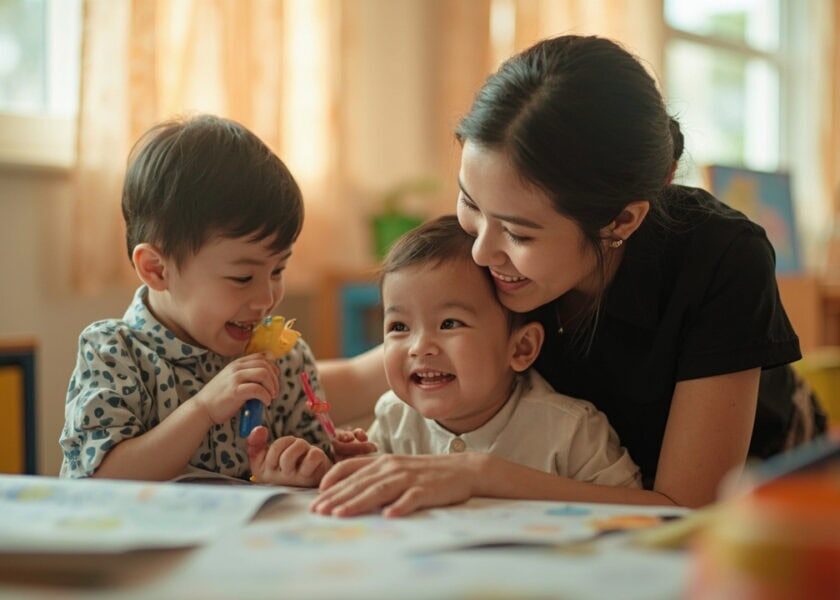
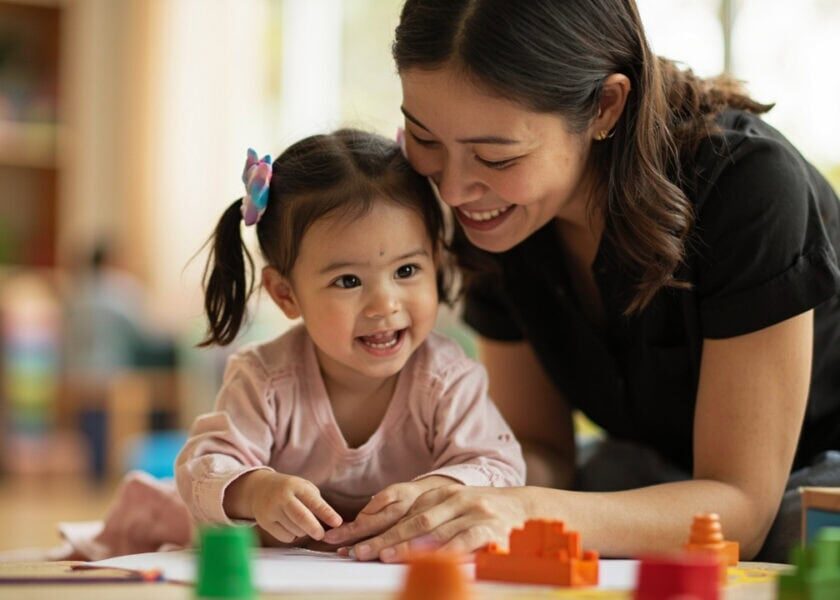
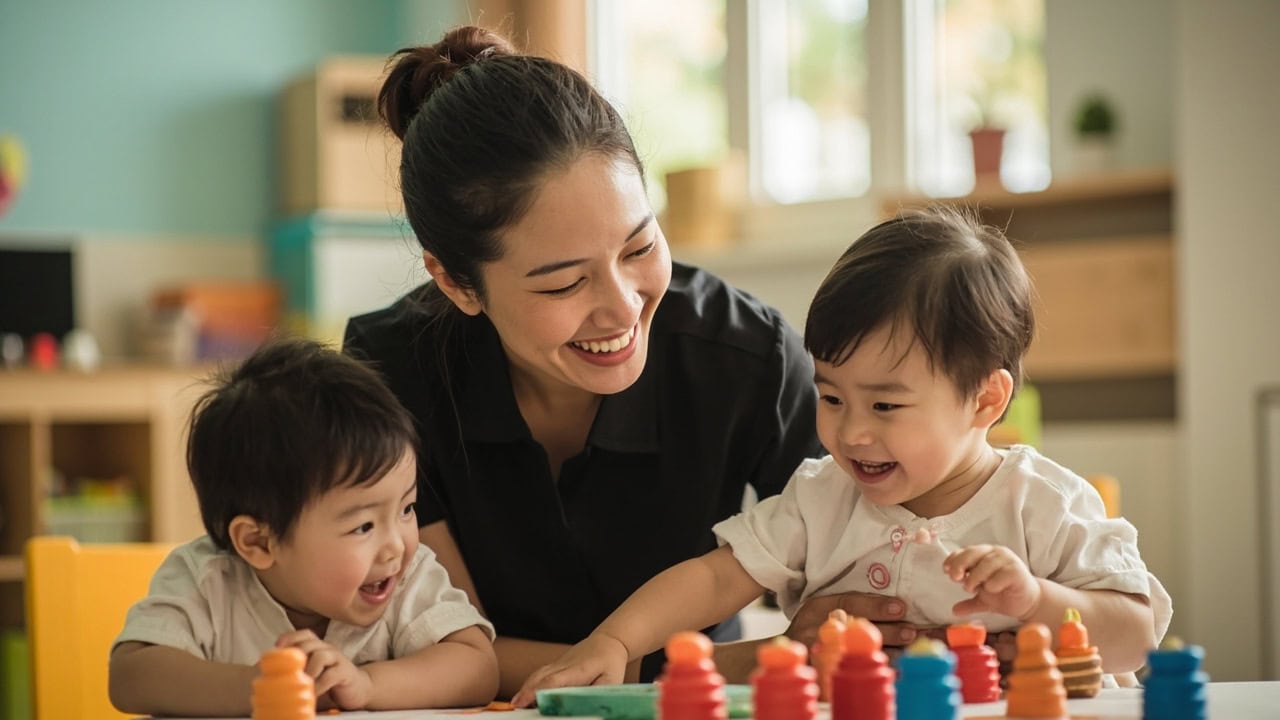
Think for a moment about what your child actually does in a quality care environment. They play. But play is not idle. Play is the work of childhood, and it reveals more about your child’s inner world than any formal assessment could.
Watch how a child plays and you will see their preoccupations, their anxieties, their aspirations. You will see whether they tend toward solitude or collaboration, whether they lead or follow, whether they approach novelty with curiosity or caution. You will see their processing of the world—the themes they return to again and again, the stories they work out through play.
- A child who builds towers only to knock them down may be processing something about control and destruction.
- A child who insists on lining up toy cars in perfect rows may be working through order, precision, the comfort of predictability.
- A child who plays out elaborate caregiving scenarios with dolls or figures may be integrating what they have observed at home, making sense of their own position in the family.
These are not trivial observations. These are windows into your child’s psychology.
In a quality care setting, surrounded by responsive adults and speaking peers, your child’s language expands in ways that may surprise you. A toddler who says very little at home may surprise you with a new sentence one evening. A two-year-old may suddenly name an emotion they have never used before—”frustrated,” “proud,” “scared”—because someone in their care environment helped them learn the word for what they felt.
This is not magic. It is the natural result of rich linguistic interaction: a caregiver who narrates the day, who names emotions, who responds to your child’s attempts at communication with enthusiasm and elaboration.
Trained caregivers notice these play themes and language moments—not to overinterpret them, not to medicalize them, but to notice them. To track them across days and weeks. To notice when a theme emerges, when it shifts, when it resolves. This documentation becomes a narrative. It becomes the story of your child’s inner life during the hours you were not there.
What the Pickup Moment Tells You
There is another layer, quieter and perhaps even more important: the layer of emotional regulation and secure attachment.
Every parent wants their child to be happy. But happiness is not the only, or even the most important, indicator of healthy development. What matters more is how your child recovers from distress. How they negotiate frustration. How they seek comfort when they need it and return to play when they have found it. These are the markers of secure attachment, of a child who has learned that the world is basically trustworthy.
In a quality care environment, you can observe these markers at pickup. Consider what your child’s greeting tells you:
- A brief protest, a look back at the caregiver before settling into your arms. This can be a sign of healthy attachment, not a sign of distress. It means your child has formed a bond with their caregiver, has felt secure enough to venture into a relationship outside the family. It means they trust enough to leave, because they trust they will return.
- Perfect ease, open and delighted, settling into the evening with unusual calm. This too is a signal. It may mean that the care day was rich with responsive interaction that builds emotional resilience—that your child was met with attunement, with patience, with the kind of calm presence that helps a young nervous system learn to regulate itself.
- More needy than usual, more clingy, more prone to tears. This too is information. It may mean they have been processing something—a developmental leap, a social challenge, a new phase—and they need extra closeness to metabolize it. It may mean nothing at all except that children are not linear, that development moves in waves. But if this pattern persists, it is worth a conversation with your caregiver. Because your caregiver saw what happened before you. They saw the hours of struggle, the moment of breakthrough, the nap that did not come, the snack that was refused. They hold context you do not.
The Caregiver’s Quality Determines What You Learn
This is why the quality of the caregiver matters so profoundly. A caregiver who is merely adequate—who keeps children safe and fed but does not observe them, does not reflect on what they see, does not communicate it—offers you almost nothing in terms of developmental insight.
A caregiver who is extraordinary—who is genuinely interested in your child’s inner life, who has the training and the language to notice and interpret, who has the time and the ratios to observe carefully—offers you something invaluable. They offer you a second pair of eyes on your child. They offer you a collaborator in understanding.
Observation requires presence. Presence requires time. A caregiver responsible for five infants cannot observe the way a caregiver responsible for three can. The ratios matter not as administrative details, but as the conditions that make genuine knowing possible.
This is why EduNanny by BUTLER was built on this understanding. The ECDA Childminding Pilot, which EduNanny participates in, reflects Singapore’s own commitment to raising the standards of home-based and community-based childcare. It is a recognition, at the policy level, that quality childminding is not a luxury but a developmental necessity for many families.
Trust Is a Risk You Can Take Wisely
How do you trust a stranger with your infant? How do you hand over the most precious thing in your life and believe it will be returned to you, not just physically unharmed but emotionally intact, developmentally supported, growing in the way you hope?
The answer is that trust is a risk you can take wisely. You can take it when the caregivers are trained, not just experienced. You can take it when the ratios are small. You can take it when the communication is open. You can take it when the organization has been vetted by the very authorities—ECDA, the Childminding Pilot framework—whose job it is to protect children. You can take it when the caregiver you meet has that quality you recognize: a genuine delight in children, a patience that is not performed, a warmth that feels real.
EduNanny works hard to find and develop caregivers with these qualities. Because the credential matters, but it is not everything. The human being matters more. The person who will hold your infant, who will be the first face they look for in the morning and the last one they wave goodbye to—this person cannot be chosen by an algorithm alone. EduNanny’s approach combines rigorous selection with genuine human judgment.
What EduNanny Singapore Offers
EduNanny’s approach aligns with the vision of the ECDA Childminding Pilot: trained caregivers, thoughtful observation, meaningful communication with parents.
The infant ratios at EduNanny—up to one to three, depending on the arrangement—mean that caregivers have the time and attention to notice what your child is doing, to respond to what your child needs, to observe with care rather than merely supervise. This is not a trivial detail. This is the foundation of everything else.
The communication structures are equally important. Parents receive regular updates—not just perfunctory notes about meals and naps, but meaningful glimpses into the child’s day. When a child tried a new food, when a child said a new word, when a child made a friend or solved a problem or struggled with something and worked through it. These updates are not administrative. They are developmental. They are the raw material of parental understanding.
Where deployed, CCTV measures offer an additional layer of transparency and peace of mind. But transparency is not only about surveillance. It is about culture. It is about whether the organization believes parents have a right to know what happens in the hours they are not present. EduNanny’s answer to that question is yes. Not because parents should second-guess their caregivers, but because parents deserve to be partners in their child’s development, and partnership requires information.
There are practical dimensions as well. Monday to Friday care blocks, fee structures that are affordable within the pilot framework, CDA and Baby Bonus usability—these are not just logistical conveniences. They are enablers. They make quality care accessible to families who might otherwise feel that it is out of reach. EduNanny believes that developmental childminding should not be the preserve of the affluent. Every Singapore child deserves to be known well by the adults who care for them.
A Parent’s Guide to Choosing Infant Care
If you are researching childcare options in Singapore, here are the questions worth asking—not as a checklist, but as a framework for understanding what quality actually means:
- How many children is each caregiver responsible for? Smaller ratios create the conditions for genuine observation and responsive care.
- What kind of updates will I receive about my child’s day? Look for updates that go beyond meals and naps to include developmental moments—play themes, language, social dynamics.
- How does the caregiver describe my child’s day? Do they notice patterns? Track shifts? Share observations that help you understand your child better?
- What training do the caregivers have? Credentials matter, but so does the human quality of patience, attentiveness, and genuine delight in children.
- How does my child respond at pickup? The greeting moment tells a story. Watch for signs of healthy attachment, emotional regulation, and overall security.
- Is there transparency about what happens during the day? Not surveillance, but a culture that believes you have a right to understand your child’s experience.
The Story Your Child Is Already Telling
There is a way of thinking about parenting that sees the early years as a period of separation. The child leaves the body. Then the child leaves the home. Each departure is a wound. This is incomplete.
The early years are also a period of connection—not despite the separations but through them. The separations create the need for bridges. The bridges are built by caregivers who observe and share, by communication that is honest and generous, by a system that is designed not just to keep children safe but to help parents understand.
By now, most parents have encountered the phrase “first thousand days”—the neuroscience, the pediatric counsel, the relentless emphasis on those early years when the architecture of the brain is being built with extraordinary speed. What fewer people speak about is the parent’s experience of those thousand days.
You are not merely a witness to your child’s development. You are a participant in it, a reader of it, a protector of it. But you are also, often, confused by it. Because your child is not a textbook. Your child is a person, singular and complex, whose growth does not announce itself with clear labels. It shows up in the way they hold a crayon, the way they reach for you at the gate, the way they negotiate a conflict on the play mat.
Quality childminding gives you access to this unfolding. It offers you something rare: the experience of knowing your child more fully, not less, because you have entrusted them to care. It offers you a window into the invisible hours, not as surveillance, but as understanding. It offers you a partner in reading your child’s development—the caregiver who sees what you cannot see, who shares what they see in a way that enriches your understanding, who helps you see the threads connecting what happens at home to what happens in care.
From Mystery to Knowing
Imagine this: it is an ordinary Tuesday evening. You pick up your child from care. They climb into your arms with that particular weight, that familiar warmth. You ask them what they did. They offer you a fragment—a face, a toy, a word. You smile. You kiss their head.
But now, something has changed. Because this evening, you already know something about their day. You know that they played with blocks and became fascinated by the concept of balance. You know that they tried a new food and rejected it with dramatic flair. You know that they hugged their caregiver goodbye, easily, without protest. You know because your caregiver told you, not in a perfunctory way, but in a way that helped you see your child more clearly.
And when you put your child to bed tonight, when you watch their face in the dim light, you see them differently. Not as a mystery you cannot solve. Not as a puzzle missing pieces. But as a person, unfolding, growing, known. Known by you, yes. But also known by others, in ways that expand rather than diminish your understanding.
Your child has a story. They have always had a story, from the first moments of their life. The story is happening now, in the hours you are not present.
EduNanny helps you read it. Not to control it. Not to optimize it. But to witness it, to participate in it, to understand it.
If you are searching for childcare that treats your child’s development with the same care you do at home, we invite you to connect with EduNanny Singapore. Our approach is built on one conviction: every Singapore child deserves to be known well by the adults who care for them. And every Singapore parent deserves to understand their child more, not less, across the entire arc of the day.
The invisible hours do not have to stay invisible. With the right partner, they become the clearest chapter yet in your child’s story.