What Your Child Brings Home at Pickup Is Evidence Worth Reading
The Pickup Moment: Evidence Worth Reading
There is a moment, if you have lived it, you will recognize it immediately.
It happens at pickup. You have been at work all day, running through meetings, answering messages, doing the invisible arithmetic of modern parenting—calculating who will be where, who will do what, whether there is enough milk in the fridge and enough hours in the evening.
And then you arrive, and there is your child, and something is different.
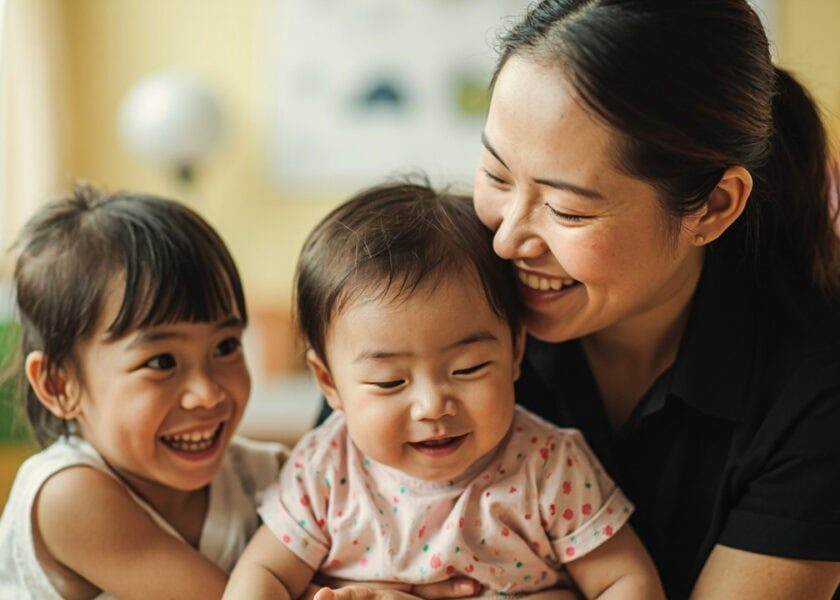
Maybe it is the way they look up when they see you. Not with the frantic, clinging need that tells you the day was hard, but with a kind of settled recognition. A hello that says, I am glad you are here, and I am okay.
Maybe it is the way they walk toward you, instead of needing to be carried. Or the way they start talking in the car—not just about what they ate or who was there, but about something they noticed, something they want to tell you. They are bringing something home with them.
And you can feel it: the day was good.
This moment at pickup is not random. It is not the luck of a child who happened to have an easy day. It is evidence. Understanding what that evidence means—what it tells you about the care your child received, what it tells you about the hours they spent away from you—is one of the most powerful things you can do as a parent choosing childcare in Singapore.
What Singapore Parents Can Look For
- Curious, not clingy: Your child wants to show you something from their day and is oriented toward the world
- Better frustration tolerance: Small setbacks can be felt and moved through without collapsing
- Easier mealtimes: Children who have experienced consistent, positive mealtimes at childcare often bring that ease home
- Gentler bedtimes: A well-regulated child often sleeps better, waking rested rather than depleted
- You feel different too: Less guilt, less worry, more presence—because you can see the evidence that the day was good
These are not coincidences. They are the visible results of quality care building something real inside your child during the hours you are apart.
Why the Evening Window Reveals What Mornings Cannot
When you pick up your child at the end of the day, you are not just collecting a small person who has been fed, changed, and kept safe. You are receiving the cumulative result of hours of environment, interaction, stimulation, and care. You are seeing what the day’s experiences have built inside them.
The quality of what you see—the ease in their body, the brightness in their eyes, the way they move between the childcare space and you—tells you everything about whether that building process was one you can trust.
For working parents in Singapore, this matters more than ever. You have made a choice that millions of parents make: you have brought another set of hands into the raising of your child. You have entrusted your infant to people outside your family, and that trust is not small. It is enormous.
You can see it. You can feel it. You just need a framework for reading it.
What Quality Care Produces at Home
A child who is curious rather than clingy. After pickup, your child wants to show you something—a toy, a mark on their hand, a leaf they found in the garden. They are oriented toward the world, not just toward you. This is a sign of what attachment researchers call secure exploration. It means they felt safe enough during the day to engage with their environment, and now they have enough left in their cup to share that engagement with you.
A child who can tolerate small frustrations. The food they did not want, the sibling who took a toy, the wait for bath time. They can feel the frustration, name it perhaps, and move through it without dissolving into tears. This is emotional regulation being learned and practiced. When you see this capacity in your child at home, you are seeing the result of that day’s care.
An evening meal that is actually a meal. Your child sits at the table with something approaching contentment, willing to taste something new. This is the result of environments where eating is modeled, where meals are consistent, where children learn that food is nourishing and social, not a battlefield.
A gentler bedtime. Your child falls asleep more easily, wakes less in the night, or wakes in the morning with a kind of rested readiness. Sleep is a window into a child’s inner state. When they have spent a day in a calm, responsive environment, their nervous systems are better regulated. They can rest.
A parent who feels different. You are less frantic in the evening, less held hostage by the guilt of the day, less worried about whether your child was okay. Because you can see that they were okay. The evidence is right there in front of you.
How Quality Care Creates This Transformation
The first three years of life are not just a period of growth—they are a period of construction. The brain is building itself in response to experience. The stress-response system is calibrating. The capacity for curiosity, for connection, for learning, is being set like concrete.
In a high-quality childcare environment, every element is designed with this construction in mind.
The Ratio of Caregivers to Infants
When there are fewer children per caregiver, each child receives more attention, more responsiveness, more of the attuned interaction that builds neural pathways for emotional regulation. When a caregiver can notice when a child is becoming overwhelmed and intervene before the child escalates, that child learns something vital: I can be helped before I fall apart. This lesson stays with them.
The Environment Itself
A space that is calm, predictable, and rich with appropriate stimulation supports development in ways that a chaotic or overstimulating environment cannot. When children know what to expect, when routines are consistent, when they can anticipate what comes next, their nervous systems remain calm and their attention is free to explore.
The Caregivers Most of All
Not just their training—though training is important—but their presence, their warmth, their capacity to be fully with a child even in the mundane moments of the day. The person who feeds your infant, who talks to them while they eat, who responds to their coos and babbles as if they are saying something important—because they are—is doing developmental work that no toy or program can replace.
What quality childcare builds in the hours during the day becomes visible in the hours after pickup. The carry-home effect is not metaphorical. It is neurological. It is emotional. It is real.
Reading Your Child’s Evening Signals
When you know what to look for, pickup becomes diagnostic. You can read your child’s evening state and learn from it—not to judge yourself or the care, but to understand.
When Your Child Comes Home Regulated
If your child comes home eager, curious, emotionally available, able to transition between spaces and people, you are reading evidence that the day’s care was good. That your child was held in a way that built rather than depleted. That the investment you made in choosing quality care is paying dividends you can see.
When Your Child Comes Home Unregulated
If your child is inconsolable, cannot settle, seems to have used up all their capacity—you are reading something important. It might be a hard day. All children have hard days. But if this pattern persists, evening after evening, that is a signal worth attending to. The care environment may not be meeting your child’s needs in the way it should.
What This Means for Your Confidence
The evening transformation is not about perfection. Children come home tired. Children have difficult evenings. But patterns tell you things. Over weeks and months, you will know. The evening homecoming is where the evidence lives.
Common Questions from Parents
“How do I know if quality care is actually making a difference?”
You already know how to read your child. The evening homecoming is your evidence. Over time, you will see patterns: easier transitions, better sleep, more curiosity, more capacity for connection. These are not guarantees of a perfect day every day, but they are the visible marks of a building process you can trust.
“What if my child has hard evenings sometimes?”
Hard evenings happen. Children get tired, overstimulated, hungry, or simply have days that did not go well. One difficult evening is not a verdict. What you are looking for is the pattern over weeks—the general trajectory, not the individual data point.
“Is this really about the childcare, or is it just developmental stages?”
Both can be true at the same time. Your child is growing and changing regardless of where they spend their days. But the environment they spend those days in shapes how that development unfolds. Quality care creates the conditions for growth to be visible, stable, and positive.
“How is home-based childminding different from centre-based care?”
Different structures offer different advantages. Home-based settings typically offer smaller ratios, more individualized attention, and a more intimate environment. Centre-based settings offer community exposure and sometimes more resources. Both can be high quality. What matters most is the attunement of the caregivers, the consistency of the environment, and the responsiveness to your child’s specific needs.
What This Means for Singapore Families
Singapore parents face a particular set of pressures. The cost of living, the demands of dual-income households, the long commutes, the expectation that children will be well-adjusted and school-ready.
In this context, the evening transformation is not a luxury—it is a practical necessity.
You need your evenings. You need dinner to be something other than a negotiation. You need bedtime to be a winding down, not a battle. You need your child to arrive at school the next day ready to learn, not depleted from the day before. You need your family to feel like a family, not a collection of tired people passing each other on the way to the next obligation.
Quality childcare can give you this. Not by magic, but by design. By the deliberate construction of environments, interactions, and rhythms that build regulation instead of depleting it.
Our Approach at EduNanny by BUTLER
We have built our approach around this understanding. We are part of the ECDA Childminding Pilot, and we believe that infant care and childminding in Singapore deserves to be treated as the developmental work it is—not as babysitting, not as a logistical convenience, but as a daily contribution to your child’s construction of themselves.
Home-Based and Centre-Based Pathways
Our home-based childminding pathways offer something that larger settings cannot: the intimacy of a small environment, the individualized attention that comes from ratios of up to one to three infants, the consistency of caregivers who know your child deeply because they are seeing them every day. For families who prefer a community or centre-based approach, we offer that pathway as well, with the same commitment to quality, communication, and developmental care.
Transparency and Trust
We know that trust is built in the details. That is why we maintain open communication with families throughout the day, and why transparency measures including CCTV where deployed are available to give you peace of mind. You should never feel that you are sending your child into a black box. You should be able to see what is happening, to hear about it, to feel connected to your child’s day even while you are apart.
Caregivers Trained in Attunement
Our caregivers are trained not just in the mechanics of infant care, but in the art of attunement. They understand that the small moments—the feeding, the diaper change, the nap transition—are not interruptions to something more important. They are the important thing. Every responsive interaction is building something.
Accessible to Families Across Singapore
Our pilot fee structures are designed to be affordable, and we work with CDA and Baby Bonus mechanisms so that quality care is within reach for more families across Singapore. This is not a luxury service for those who can afford it. This is a genuine answer to a universal need.
The Evening Transformation Is Real
When your child was born, you entered a relationship that would span the rest of your life. But in these early years, that relationship is being formed in a particular way. The foundations of trust, of emotional regulation, of curiosity and connection, are being laid.
And while you are the primary architect of those foundations, you do not have to build alone.
The caregivers at EduNanny are not replacing you. They are working alongside you. Every responsive interaction they have with your child is teaching your child something about what the world is like—warm or cold, attentive or indifferent, safe or unsafe. When this work is done well, we are teaching your child that they are worthy of attention, that their needs matter, that other people can be trusted to help them.
These lessons travel home with your child at pickup. They become part of how your child relates to you, to their siblings, to the world.
Children who spend their days in attuned, high-quality care come home different. They are more regulated. They are more curious. They are more available for connection. And this difference ripples outward—not just through the evening, but through the weekend, through the week, through the months and years that follow.
When you see your child at pickup and something is different—when they are calmer, brighter, more themselves—that is evidence. That is the visible result of invisible work. That is what quality care returns to your family.
Ready to Learn More?
If you are researching infant care or childminding in Singapore and want to understand how quality care can transform your evenings, we would love to hear from you.
Visit our website to learn more about our ECDA Childminding Pilot pathways, our home-based and centre-based options, and how we work with CDA and Baby Bonus to make quality care accessible. You can also read more about us or get in touch with any questions.
You already know how to read your child. Trust what you see at pickup. The evening transformation is real, and it is evidence worth attending to.
We would be honored to walk alongside you.