Why Singapore Parents Are Rethinking School Readiness
Separating Readiness from the Academic Trap
When Singapore parents hear school readiness, many picture a child who can recognise letters, count to twenty, or hold a pencil correctly. These are the markers that feel visible, measurable, and therefore reassuring. They are also, according to decades of developmental research, not what actually predicts school success.
Developmental psychologists who have followed children across years—and sometimes decades—consistently find that the strongest predictors of a child’s performance in school have almost nothing to do with early academic knowledge. What they identify instead is a different constellation of capabilities:
- The ability to recover quickly from frustration
- The willingness to ask a question in front of others
- The capacity to notice when a classmate is upset and respond with kindness
- The natural curiosity that makes a child lean in when a teacher says, Let me show you something new
These are not soft skills in the sense of being optional or secondary. They are the architecture of learning itself.
A child who is emotionally regulated, who trusts that adults will respond when they reach out, who has learned through daily, reliable interactions that the world is a place worth exploring—that child walks into a classroom already equipped. Not with a head full of facts, but with something far more valuable: the internal readiness to learn.
It is worth naming the pressure clearly, because many parents in Singapore carry it quietly. The competitive academic environment, the well-intentioned advice from other parents, the marketing from enrichment programmes targeting toddlers—these all reinforce a message that your child is behind unless they are already reading, already counting, already performing.
But this message is not supported by the evidence. It is supported by commercial interests. And it creates unnecessary anxiety for families who are actually doing the right thing.
Where Readiness Begins: The First Thousand Days
A child’s confidence, curiosity, and capacity to function well in a group setting are not built in enrichment classes. They are not built through flash cards or early literacy programmes aimed at toddlers. They are built in relationship—through the everyday, profoundly important exchanges between a child and their caregiver.
Why It Matters Before School Exists
Genuine school readiness does not begin when a child turns four or five. It begins in infancy, in the first thousand days of life, in the thousands of small moments that make up a child’s daily experience with the people who care for them.
When an infant reaches for a caregiver and is met with warmth instead of delay, they are learning something foundational about trust. About self. About whether it is safe to be curious, whether the world responds when they reach for it.
When that infant becomes a toddler and begins to explore with increasing independence, that early foundation of trust becomes something more complex and more remarkable: emotional regulation. The child who has experienced a secure, responsive caregiver relationship has internalised something that will serve them in every school hallway and classroom interaction for years to come.
They know, in their bones, that big feelings are survivable. That an adult will help them manage. That they can be upset and still be loved. This is not a small thing. It is, research consistently shows, one of the single greatest predictors of a child’s ability to engage productively in a school environment.
What Quality Childminding Actually Looks Like
For parents researching infant care in Singapore, it can be difficult to distinguish between different types of care arrangements. The difference between adequate supervision and genuinely developmental care lies in specific, observable practices—not marketing claims.
Secure Attachment in Practice
Secure attachment is not a vague aspiration. It shows up in concrete, daily interactions:
- A caregiver who responds to a baby’s vocalisations with words, treating babbling as the beginning of real communication
- A caregiver who narrates the rhythm of the day, giving the child language for what is happening around them
- A caregiver who gives a toddler the space to try something difficult while staying close enough to offer confident reassurance
- A caregiver who notices when a child is tired or hungry or overwhelmed before the child has learned to articulate those states
When these practices are consistent and reliable, they are not simply childcare. The child’s neurological pathways are being shaped. Their emotional architecture is being constructed. And when they eventually sit in a preschool classroom, every single one of those early experiences will be present in the way they carry themselves, the way they relate to their teacher, the way they handle the social complexity of being part of a group.
Language Development Through Relationship
Parents sometimes worry that their child will lag in Mandarin or English if they are in childcare rather than a home where intensive language modelling happens. What the research shows is the opposite of what this worry assumes.
Children in language-rich care environments—environments where adults talk with them, read with them, and listen to their attempts at words and respond—develop communication confidence that translates directly into classroom performance. Not because they have been drilled in vocabulary, but because they have learned something far more fundamental: that communication is rewarding, that words connect them to people, that asking for something or sharing an idea is a source of success rather than frustration.
A child who speaks confidently to a caregiver at eighteen months will speak confidently to a teacher at four. That confidence is the foundation for every academic interaction to follow.
Preserving Natural Curiosity
Every child is born curious. Every infant reaches for the light, turns toward a voice, explores the texture of something new. This curiosity is natural—but it is also fragile.
It can be dulled by environments that are overstimulating or unpredictable, by caregiving that is rushed or emotionally distant, by the subtle but powerful message that a child’s explorations are inconvenient or bothersome.
Responsive caregiving preserves curiosity. When a caregiver notices what a child is interested in, follows their lead, expands on their discoveries, and creates safe space for them to test limits, that curiosity is not just maintained—it is deepened. It becomes a lasting disposition toward learning.
The child who walks into school still curious, still genuinely interested in the world, already has an advantage that no curriculum can manufacture.
Guided Peer Social Development
Singapore parents often focus, understandably, on the individual child’s development. But schools are social environments, and the ability to navigate relationships with other children—to share, to negotiate, to recover from conflict, to include someone who has been left out—is a skill that develops best in supported peer settings.
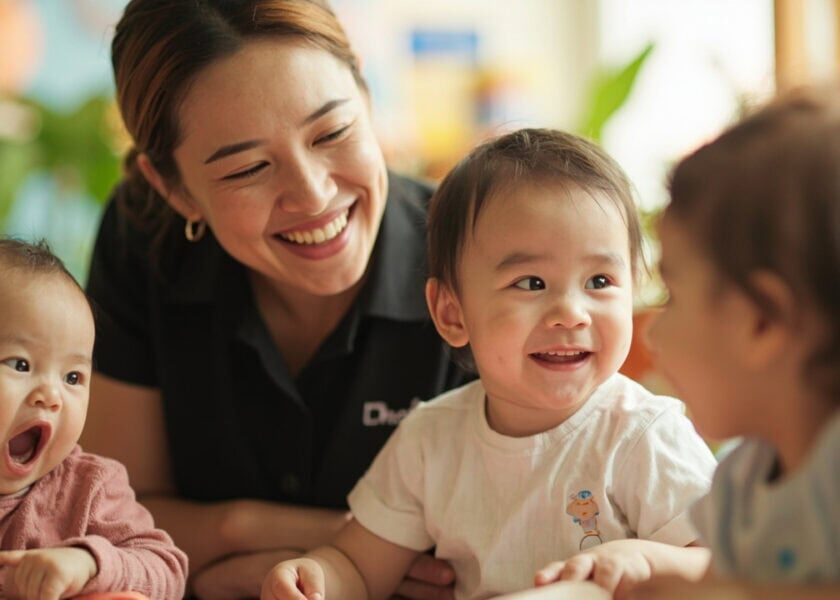
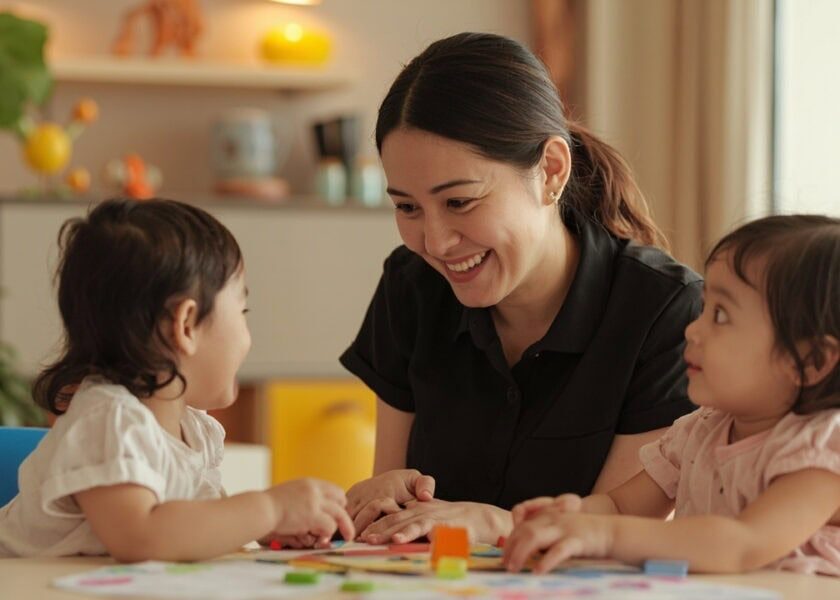
In quality childcare, children learn these skills in the company of trained caregivers who model appropriate social behaviour consistently, step in at the right moments to guide without over-directing, help children name their feelings and find words for what they want, and create opportunities for cooperative play rather than just parallel play.
This is not the same as simply being in a room with other children. It is guided social development, and it is precisely what prepares a child for the rich, complex social world of a school classroom.
How Quality Care Builds What Schools Actually Value
For families navigating infant care options in Singapore—whether through centre-based infant care or structured childminding arrangements—understanding what to look for in developmental quality makes all the difference. The question is not simply whether your child is supervised, but whether their daily experiences are actively building the foundations that schools actually value.
The Caregiver Relationship That Makes Responsiveness Possible
Relationship at this age requires time and attention that cannot be divided across too many children. Smaller caregiver ratios—where each infant or toddler receives genuinely focused attention—create space for the responsiveness that shapes secure attachment and emotional regulation. This is a developmental necessity, not merely a preference for premium care.
What Developmental Science Identifies as Critical
In infant and toddler care, research consistently points to these foundations:
- Secure attachment: Caregivers who respond consistently and warmly to each child’s emotional and physical needs, building the foundational trust that enables all future learning.
- Responsive caregiving: Every interaction becomes an opportunity for connection—naming emotions, following the child’s lead, narrating the day, and being genuinely present rather than procedurally attentive.
- Language-rich interaction: Caregivers who talk with children, not at them—who listen to attempts at words, expand on phrases, and create an environment where communication feels rewarding and safe.
- Supported independence: Toddlers given space to try, fail, and try again—with a caregiver close enough to reassure but not to take over. This is where resilience is built.
When a child enters preschool after this kind of care, what they bring with them is not a list of learned facts. They bring the emotional regulation to sit with challenge, the curiosity to lean into new learning, the communication confidence to engage with teachers and peers, and the social skills to navigate group dynamics with empathy and resilience.
Trust Through Transparency
For parents, especially in Singapore’s demanding environment, choosing childcare is not a simple logistical decision. It is an act of trust. You are leaving your child in someone else’s arms, and you need to know that those arms are worthy of your trust.
Modern care arrangements increasingly address this through transparency and communication—because trust is built not just through philosophy, but through daily reassurance that your child is seen, safe, and well-cared for. Where deployed, open communication channels and thoughtful reporting allow parents to feel connected to their child’s day, not separated from it.
Making Quality Care Accessible
For families navigating the financial realities of quality care, arrangements that participate in government-supported schemes—such as those under the ECDA Childminding Pilot—can make developmental care a more accessible option. Child Development Account and Baby Bonus schemes may apply where eligible, expanding access to the kind of care that builds lasting foundations.
Questions Singapore Parents Ask About School Readiness
“Will my child be behind if they don’t start enrichment classes early?”
The research answer is clear: academic enrichment before age four or five does not produce measurable academic advantages that persist. What it can produce is stress, reduced play time, and a subtle message that learning is something hard rather than something joyful. Quality caregiver relationships, by contrast, build foundations that compound over time.
“How do I know if my childcare arrangement is actually good for my child’s development?”
Ask yourself these questions:
- Does my caregiver respond to my child warmly and consistently?
- Does my child seem genuinely happy and curious when I pick them up?
- Does my caregiver talk with my child, not just at them?
- Is my child given space to explore and try things independently?
- Does my caregiver help my child name and manage emotions?
If the answers are yes, you are likely providing your child with the most important school readiness foundation available.
“Is infant care really that important? They’re so young.”
The first thousand days of life represent a period of unprecedented brain development. Neural connections are forming faster than they ever will again. The emotional patterns established in this period—the sense of security, the trust in caregivers, the curiosity about the world—become the template for how a child approaches all future learning and relationships. What happens in infancy matters profoundly, and it shapes everything that follows.
Choosing Infant Care in Singapore: A Practical Framework
If you are in the process of researching infant care or childminding options, here is a framework for evaluating what will actually serve your child’s long-term school readiness:
Look for relationship, not just credentials
Qualifications matter, but what matters more is whether caregivers are genuinely present with the children in their care. Observe an interaction between a caregiver and a child during your visit. Does the caregiver’s attention feel warm and focused? Does the child seem at ease?
Ask about caregiver-to-child ratios
For infants, smaller numbers mean more responsive care. Ask how many infants each caregiver is responsible for, and consider what that means for the quality of attention your child will receive.
Observe how caregivers handle emotions
When a child is upset or frustrated, watch how a caregiver responds. Do they comfort, name the feeling, and help the child regulate? Or do they redirect dismissively or wait for the child to “figure it out”? The way caregivers handle big feelings is one of the clearest windows into the quality of the care environment.
Consider the language environment
Is there a lot of conversation? Do caregivers talk about what they are doing, name objects, expand on children’s vocalisations? Or is it mostly quiet, or dominated by commands and corrections? Language-rich environments, even in the earliest months, build the communication confidence that becomes classroom confidence.
Trust your instincts
You know your child better than anyone. If something feels off during a visit—if the caregivers seem rushed, disconnected, or stressed—that observation matters. Your child’s emotional safety is not a place to compromise on gut feeling.
Your Child’s Readiness Is Already Being Built
What we want you to carry away from this is not a checklist. It is a reframing of what school readiness means, and a recognition of where it actually comes from.
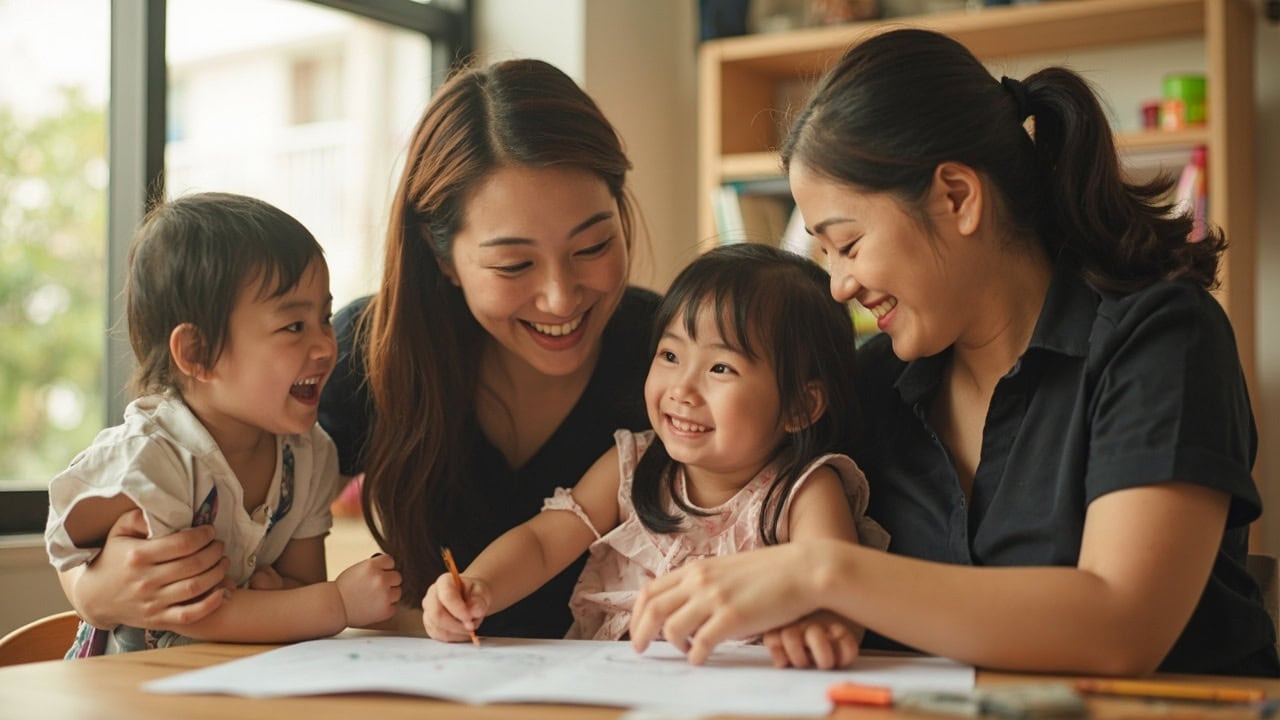
Your child does not need to read before school. They do not need Kumon at two, or Mandarin immersion at eighteen months. They need to feel secure. They need to be spoken to, listened to, and responded to with consistency and warmth. They need to explore the world in a safe environment that celebrates their curiosity. They need to be in the company of a caregiver who knows them—who notices when they are tired, who recognises the early signs of frustration, who can calm them and redirect them and help them build the vocabulary for every feeling they encounter.
And they need time with other children, guided by adults who can help them learn what it means to be part of something larger than themselves.
These are the foundations. And these are exactly what quality infant care builds, every single day, in every family it serves.
Here is what many parents in Singapore have not yet realised: when you chose quality childcare, you were not simply making a practical arrangement for the hours you are at work. You were making your first and most consequential school readiness decision.
The language your caregiver uses with your child today is building the communication confidence your child will carry into their first classroom. The way your caregiver responds to your toddler’s frustration today is shaping the emotional regulation that will help your child navigate a school environment four years from now. The safe, warm, responsive environment your child experiences in infant care is building the inner security that will allow them to take academic risks, to ask bold questions, to stay curious through years of formal education and beyond.
You are already on this path. You chose it. And the fact that you are here, thinking carefully about what your child needs, tells us that you understand something many parents have not yet discovered:
The real preparation for school does not happen in the year before enrollment. It happens in the first thousand days, and it happens through the quality of the relationships that surround your child every single day.
For families seeking care that is built around these foundations—responsive relationships, developmental intentionality, and the understanding that the early years are education in their most fundamental form—EduNanny Singapore was designed to walk this path alongside you.
Your child’s school readiness is not something to worry about. It is something to trust. And it is already being built, beautifully, day by day, in the care that you have chosen for them.
If you are researching infant care or childminding in Singapore and would like to understand how EduNanny supports the foundations that schools actually value—the emotional regulation, the communication confidence, the curiosity, and the social intelligence that predict lasting school success—we welcome the conversation. Learn more about our approach.