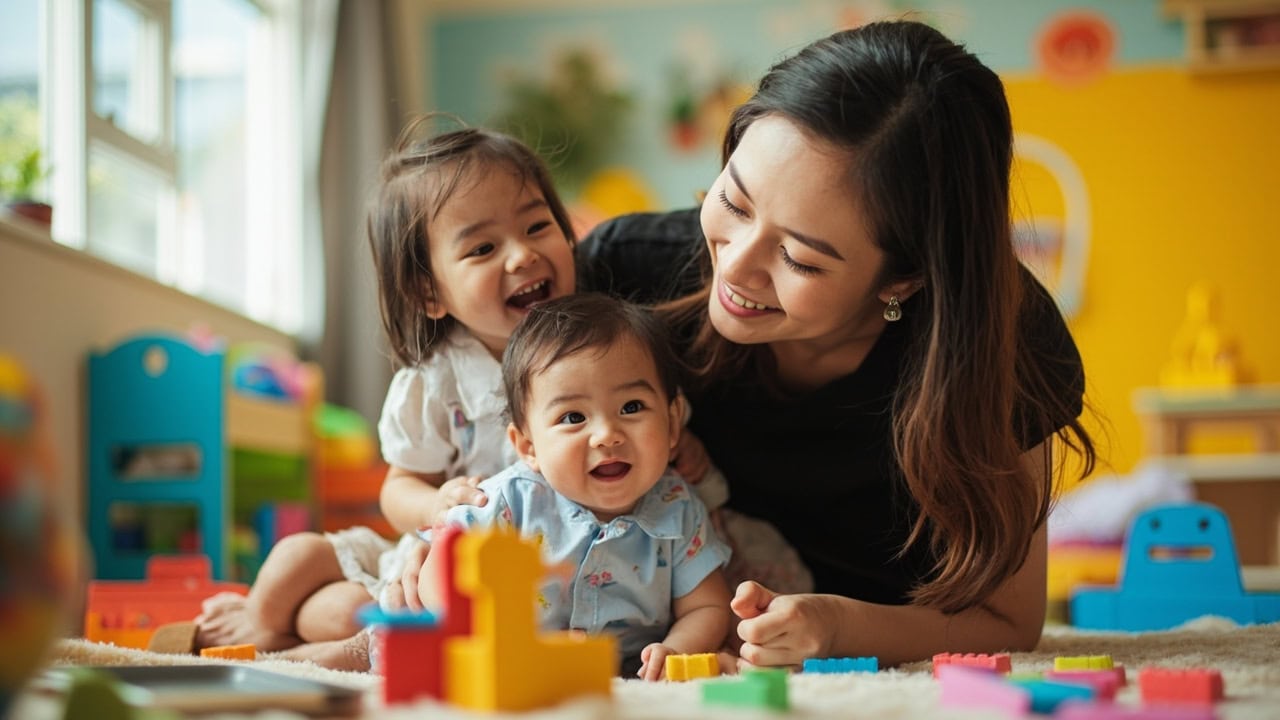
The Caregiver-Child Bond Is the Foundation of Everything Else
What the Caregiver-Child Bond Actually Is
Let us begin with what this bond is not.
It is not supervision. Supervision is watching — the baseline expectation that someone is physically present and keeping your child safe. Any capable person can supervise. It is transactional. It does not require knowing your child.
It is not routine care. Routine care is feeding, changing, settling, protecting. Necessary and kind, but deliverable without genuine attunement. You can change a diaper without noticing your child was particularly upset by the experience. You can feed a meal without registering that they were frustrated by the texture.
What distinguishes a genuine caregiver-child bond is harder to name but unmistakable when you see it. It is a specific quality of attention — a caregiver who relates to your child not as a task to be managed, but as a whole person to be understood.
It is consistency of presence across time, so your child builds expectations and memories with this particular person. It is responsiveness — the caregiver noticing, interpreting, and reacting to your child’s signals with increasing accuracy, so the child learns: my needs are seen here. I am understood here. I am safe here.
This knowledge is not written in any curriculum. It cannot be mandated by any training manual. It is built slowly, through accumulated attention, through hundreds of small moments over weeks and months.
Why This Bond Is the Foundation of Everything Else
Here is what most parents are not told: the caregiver-child bond is not a nice extra. It is the means through which every other good thing in childcare actually happens.
Language Development
A child does not learn to speak primarily from being spoken to in a group. They learn from being spoken with — from a caregiver who responds to their babbling as if it matters, who narrates what they are doing with genuine attention to the child’s focus, who creates back-and-forth exchanges that build the architecture of communication. This requires someone tuned in to your specific child, not simply executing a language enrichment program.
Social and Emotional Development
A child learns to navigate relationships — sharing, turn-taking, empathy, frustration — not from being told about these things, but from experiencing them in a safe relationship. When a caregiver consistently helps a child regulate big emotions and holds steady through difficult moments, the child internalizes something profound: relationships can survive my hardest moments. I am not too much.
This is learned in the back-and-forth of a genuine bond, not in a social skills circle. The ability to name, tolerate, and move through difficult emotions is built in relationship with a calm, consistent adult who co-regulates with the child over and over — until the child begins to develop their own capacity.
How to Recognize the Bond: A Practical Framework
Here is what you can begin using from your very first visits — no expertise required.
1. Look at the Caregiver’s Attention
Not whether they smile at you — they probably will. But how they are with your child. Are they genuinely watching? When your child moves, makes a sound, shifts in energy, does the caregiver register it?
A bonded caregiver has an attentiveness that is different from a professional doing their job well. It is the quality of noticing — the caregiver who stops mid-sentence to see what your child is reaching for, who pauses to interpret a particular sound rather than moving past it.
2. Listen to How They Speak About Your Child
Do they use your child’s name in connection with specifics? Not just “he had a good morning,” but “he was really drawn to the water table today — he spent almost twenty minutes watching the cups fill and empty.”
This kind of observation — specific, developmental, attentive — is a strong signal that the caregiver is truly seeing your child, not just managing them.
3. Observe Your Child at Pickup
This is one of the most honest indicators you have. When you arrive, does your child look up with recognition? Do they have a reaction — even a complex one — to seeing you?
A child who is developing a genuine bond with their caregiver may not rush to leave. They may want to show you something, or linger in the moment. This is not rejection of you. It is evidence that a second secure attachment is forming — one that does not diminish yours but sits alongside it.
4. Notice Your Own Instincts — Then Interpret Them Carefully
If something feels off, take it seriously. If you feel warmly received and genuinely seen as a partner in your child’s care, that matters too. The relationship between you and the caregiver creates the conditions for the caregiver-child bond to flourish. Trust your gut, but give it time to gather real information.
5. Ask Specific Questions
Ask what your child’s favorite activity has been. Ask what makes them laugh. Ask how they respond when your child is frustrated. These are not interview questions designed to catch anyone out. They are invitations for the caregiver to show you how well they know your child — and their answers will tell you something real.
What to Expect — and What It Means
Let me speak directly to the worry many parents feel but may not say aloud: the fear that trusting someone else to form this bond with your child somehow diminishes your role. That it means you are not doing enough.
The bond between you and your child is not threatened by the bond between your child and their caregiver. In fact, the opposite is true.
When your child has a second secure attachment — one built on warmth, consistency, and genuine attunement — they become more secure, not less. They develop a deeper capacity for connection, not a shallower one.
Your child is not dividing their heart. They are expanding it.
Children are not meant to attach to only one person. They are meant to form multiple secure attachments — each one adding to their sense of the world as a place where people can be trusted, where care is reliable, where they are valued.
Your role as a parent is not to be the only one. It is to be the first — and to choose the environment where the second bond can form well. That is an act of love, not a failure of it.
The First Weeks
In those initial days, you may notice your child behaving differently. Perhaps they are clingier at home. Perhaps they are more tired than usual, or their sleep is disrupted. Perhaps they seem indifferent or distant.
All of this is normal. Your child is doing the hard work of extending their sense of safety to include a new environment, a new person, new routines. This takes energy. Be patient with them — and be patient with yourself.
What you are looking for, over time, is a shift. The resistance at drop-off softens. Your child begins to look for their caregiver when they enter the room. They start to mention things that happened during the day — not always clearly, but in small ways that tell you something is registering.
They come home more settled, not less. They seem secure in the knowledge that you will return, and that their caregiver will be there while you are gone.
This is what the bond looks like when it is working. And when it is working, you will know — not because someone tells you, but because your child will show you.
The Singapore Context
We are a city of dual-income families. We value excellence, plan carefully, and want the best for our children. We are also, often, a culture that does not speak easily about emotional vulnerability — even when it is the most important thing on our minds.
So many Singapore parents carry this quiet worry. They know, instinctively, that the relationship their child forms with their caregiver matters. But they do not always have the language for it. They are not sure if they are overthinking it.
They have been given checklists and facility tours and curriculum outlines, but no one has said directly: what you are sensing is real. The bond your child forms with their caregiver is not a soft, sentimental idea. It is the foundation of everything.
That is the recognition this article offers.
What Quality Childminding Actually Looks Like
When we talk about the caregiver-child bond this way, we begin to understand why it is the true standard of quality — not facilities, not curriculum, not even ratios, though all of these matter.
What matters most is whether your child has found a person who holds them in mind when you are not there.
Quality childminding means:
- Small ratios — ideally one to three for infants, so each child has the focused presence they need to form a true connection
- Consistency — the same caregiver showing up day after day, building the accumulated familiarity that trust requires
- Transparency — open communication, regular updates, visibility that lets parents feel secure
- Intentionality — an organization that treats the caregiver-child bond as the central purpose of its work, not a pleasant side effect
The structural elements are not the point. They are the conditions that make the point possible.
The point is this: when a caregiver is genuinely bonded to your child, everything changes. Your child is not just being minded. They are being known.
The Question to Ask on Every Visit
The next time you visit a childcare environment, ask yourself one question, above all others:
Does my child seem to matter here?
Not the idea of children. Not the category of infants. Your child. This specific, irreplaceable person.
If the answer is yes — if you see genuine attention, real responsiveness, a caregiver who is tuned in — then you have found something valuable. Something that no facility upgrade or curriculum innovation can substitute for.
And if the answer is uncertain, trust that instinct. Because your child is not a checklist. They are a person — and they deserve to be known as one.
Moving Forward with Confidence
Choosing childcare is one of the most consequential decisions you will make in your child’s early years. It is also, fundamentally, a decision about relationship — about who will hold your child in mind, who will notice when they are hungry before they cry, who will become a figure of consistency and warmth in their daily world.
You now have a framework for understanding what to look for. You have language for something you likely already sensed. You have permission to trust your instincts while also knowing what to observe, what to ask, and what to expect in the settling period ahead.
The caregiver-child bond is not magical. It is cultivated — by the right conditions, the right ratios, the right culture of intentional care. And it is recognized by you, as a parent, when you see it.
When you find it, you will know. Your child will show you.
EduNanny was built with this bond at its centre — as a trusted, development-oriented approach to childcare and childminding for families in Singapore. Operating within the ECDA Childminding Pilot, EduNanny offers structured, high-quality care designed around individualized attention: small ratios, consistent caregivers, open communication, and fee structures that make thoughtful care accessible.
Every child deserves to be truly known by the person who cares for them.
If you are ready to explore what this looks like in practice, we invite you to begin a conversation with us.
Your child deserves more than someone who watches them. They deserve someone who knows them.
We are here for that.