Trained Eyes for the Child You Love: Seeing Development Clearly in Singapore
The Moment Every Singapore Parent Knows
There is a moment that every Singapore parent knows, though no one teaches you to expect it. You are at a playground, or a birthday party, or perhaps just in the lift with a neighbour’s child who is a few months younger or older than yours. The other child reaches for something, or says a word, or simply looks at the world with a kind of ease that catches you off guard.
And your child—your extraordinary, irreplaceable child—does not do that thing. Not yet, perhaps. But your body does not wait for the qualifier. Your chest tightens. The familiar knot forms.
You are not a bad parent for noticing. You are paying attention. That is what love does in a world that offers no instruction manual for the most important work a person can do.
Why Comparison Haunts Singapore Parents—And What It Really Means
In Singapore, where the distance between aspiration and anxiety is measured in preschool waitlists and K2 portfolio reviews, comparison has become the silent architecture of early parenting. We do not choose it. It chooses us. It comes with the territory of loving someone so completely that their every advance and retreat becomes a mirror for our own adequacy.
But here is the distinction that most parenting advice fails to make: there is a difference between noticing that your child cannot yet do something, and understanding what your child is actually doing.
The first is observation without context. The second is observation with comprehension. The first creates anxiety. The second creates insight.
The reason most parents live in the first mode—circling anxiously around what their child cannot do—is not that they are inattentive or incompetent. It is that they have never been given the language for what they are seeing.
Where Milestone Checklists Fall Short
We live in a culture saturated with developmental milestones. The checklist says: by twelve months, your child should say one word. By eighteen months, three words. By two years, fifty words and the beginnings of sentence structure.
These markers exist for a reason—they offer rough guideposts, a way of knowing when to seek additional support. But they were never designed to be a daily vocabulary for understanding who your child is becoming.
A milestone checklist can tell you that your child is within the expected range. It cannot tell you what your child is discovering, what they are curious about, where their attention naturally rests, how they solve problems when the solution is not obvious, or what makes them light up in a way that has nothing to do with academic readiness.
The Richer Signs of Development Are Not on the Checklist
- A child who is not yet speaking in sentences may be developing a remarkable capacity for social observation.
- A child who struggles to share toys may be building the internal architecture of ownership and boundary that will later serve them in more sophisticated negotiations.
- A child who is slow to walk may be taking in the world with an intensity of focus that will serve them in other ways when they are ready to move.
These are not platitudes. They are the observations of trained caregivers who have spent years watching children grow—not at moments of assessment, but in the ordinary minutes of the day, when no one is performing and the child is simply being.
The knot you feel is not a diagnosis. It is a question that has not yet found its answer. And the answer is in learning to see what is actually there. That is a skill, not a gift. It can be taught. It can be learned. And it can change everything about how you experience these first, irreplaceable years.
The Caregiver as Mirror: What Quality Observation Looks Like
When you entrust your child to a quality caregiver—one trained in the discipline of observation, who understands the difference between a developmental delay and a developmental difference—you are not outsourcing your child’s care. You are adding a dimension of understanding that you could not have created alone.
Consider what trained observation actually looks like in practice:
- A trained caregiver notices that your child, who has not yet begun to speak in sentences, has developed an elaborate system of gestures and sounds that consistently communicates specific needs and desires to the children around her. She is not delayed—she is multilingual before she is verbal.
- A trained caregiver notices that your son, who resists structured activities, enters a state of deep concentration when given open-ended materials that he manipulates according to his own logic, then abandons and returns to over several days, refining his approach each time. He is not struggling with focus—he is practicing a form of scientific inquiry that most curricula would not recognise.
- A trained caregiver notices that your child, who cries at every separation, settles within minutes into play and shows no signs of distress throughout the day—but also notices that this same child has begun to test boundaries more aggressively in the last two weeks, and flags this pattern as a possible sign that something at home has shifted, even before you yourself have articulated what that shift might be.
These are not miracles. They are the product of intentional, daily, skilled observation. And they are available to you, not as a luxury, but as a form of partnership that changes the entire experience of early parenting.
EduNanny Singapore: Trained Eyes for the Child You Love
At EduNanny Singapore, this is the work we have built. We are part of the ECDA Childminding Pilot, and we operate with a conviction that has shaped every element of our approach: that Singapore parents deserve more than safety and supervision for their children in those critical early years. They deserve insight. They deserve a trained second pair of eyes on the child they love more than anything in the world, and they deserve to receive that insight in a form they can understand, trust, and act upon.
What Makes Our Caregivers Different
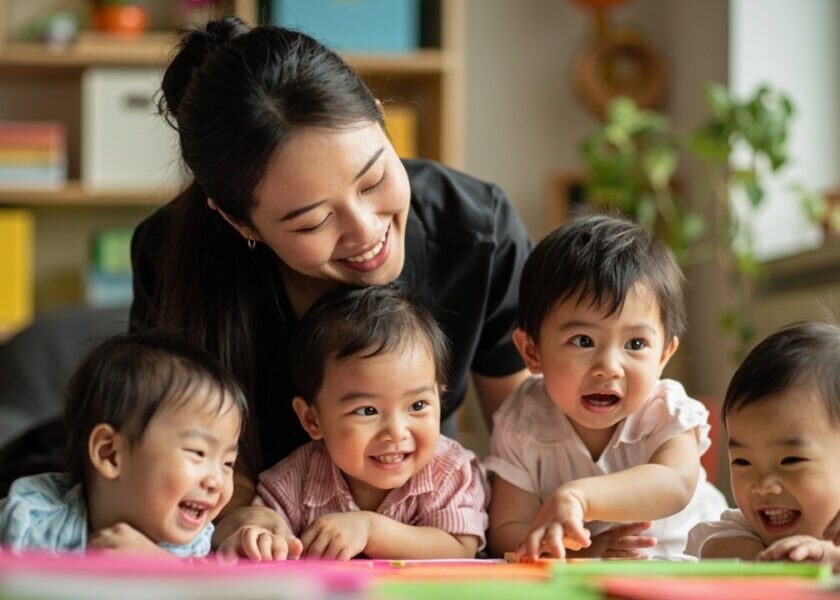
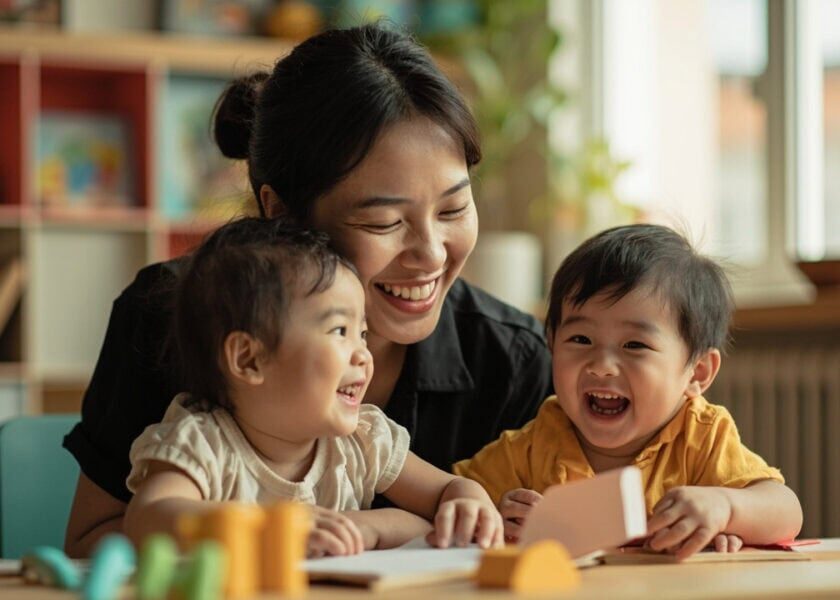
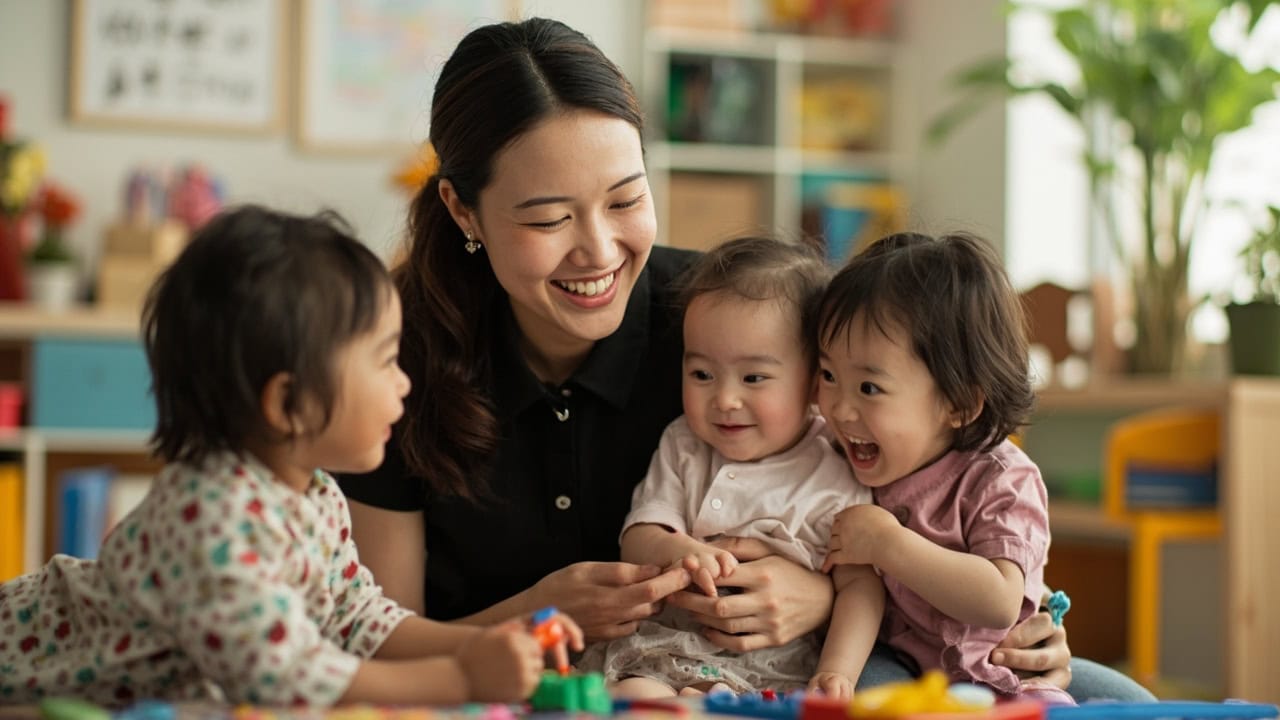
Our caregivers are not babysitters. They are trained observers who develop a relationship with your child over time—sometimes weeks, sometimes months—that allows them to see patterns you cannot see because you are too close.
They work in small ratios, with up to one to three infants in our care, because the quality of observation degrades when the numbers grow. They keep careful, professional notes. They communicate with you—not as a courtesy, but as a discipline—because the observation is only valuable if it travels with your child from our care to yours.
Practical Support for Singapore Families
- Consistent weekday care (Monday to Friday) creates the conditions for deep observation that transforms early development.
- Affordable fees within the pilot framework, with easy access to Child Development Accounts and Baby Bonus funds.
- Transparent communication including regular updates and, where deployed, CCTV access—because trust is built through visibility.
Answering Your Real Concerns
“Will a caregiver replace my role as a parent?”
EduNanny does not replace you. We are not here to tell you what your child is. We are here to show you what your child is showing us, so that you can integrate that understanding into the relationship you already have.
The trained caregiver is not a diagnostician. She is a mirror—and the purpose of a mirror is not to tell you who you are, but to help you see what is already there. The insight comes home to you. The decision comes home to you. The relationship between you and your child remains yours to build.
“How do I know if my child is actually developing well?”
What changes is this: you stop being an anxious observer, straining to see something you do not have the tools to find. You become a curious observer—one who has been given a vocabulary for the quiet, daily, extraordinary development that is happening inside your child right now, in ways that no checklist could capture and no comparison could measure.
The shift is from comparison to clarity. Not because the world has become less competitive, or the stakes have lowered, or the anxiety has vanished. But because you have found something more valuable than reassurance. You have found understanding.
“What if something is actually wrong with my child?”
Quality observation does not replace professional assessment—it supports it. When a trained caregiver notices a pattern consistently over days and weeks, that information is valuable whether it confirms typical development or suggests the need for further evaluation. You will have clearer information to bring to paediatricians, developmental specialists, or early intervention services if needed.
The goal is not to reassure you falsely or to alarm you unnecessarily. The goal is to help you see your child as they truly are.
Signs Worth Paying Attention To: Beyond Milestone Checklists
If you are looking for practical ways to shift from anxious comparison to confident observation, here are the signs worth noticing—not as checklists, but as guideposts for your own daily attention:
- Quality of engagement: Does your child persist with activities even when they are challenging? Do they return to toys or games repeatedly, refining their approach?
- Texture of curiosity: Does your child explore new things with interest or hesitation? Do they ask questions in their own way—even before they have words?
- Resilience in difficulty: When something goes wrong—a toy breaks, a plan changes—how does your child respond? Do they recover, or do they collapse?
- Social responsiveness: Does your child notice other children? Do they respond to emotional cues from caregivers and peers?
- Emotional regulation: Can your child wait? Can they comfort themselves? Do they show signs of managing their own state before they can articulate it?
These are the richer signs. They are not on the milestone checklist. But they are what trained caregivers learn to see—and what you can learn to see too, once you have the language.
Questions to Ask When Choosing Infant Care in Singapore
If you are beginning to explore childcare options, these questions are worth asking—not just of potential providers, but of yourself:
- Will my child be seen as an individual, or as a number in a ratio?
- Will someone be observing my child daily, with intention and skill?
- Will that observation be communicated to me in a form I can understand and trust?
- Will the caregiver be a partner who deepens my understanding, or a service that merely supervises?
- Will I feel more confident as a parent, or more anxious, after a period of care?
The right answer to these questions will not come from brochures or websites alone. It will come from conversations, from visits, from watching how caregivers interact with children who are not their own—and from noticing how you feel in that space.
You Are Already Doing This Right
I want to close by speaking directly to the parent who has read this far—perhaps in the late hours, when the house is quiet and the worry feels louder than it does in the daylight.
The parent who has read enough parenting books to fill a small shelf and still does not feel confident. The parent who looks at their child and thinks, with a love so fierce it almost hurts: I hope I am doing this right.
You are doing this right. Not perfectly—because no one does, and the search for perfection is itself a kind of violence we do to ourselves and to our children. But you are paying attention. You are noticing. You are showing up, again and again, in the small ordinary moments that no one will ever photograph but that will shape your child in ways you cannot yet imagine.
The question is not whether you are paying enough attention. The question is whether you have the right language for what you are seeing.
That language is available to you. It is available in the trained caregiver who watches your child every weekday with professional, compassionate eyes. It is available in the communication that travels between our care and your home. It is available in the partnership that says: you are not alone in this. You do not have to carry the wondering by yourself.
At EduNanny Singapore, we believe that every child deserves to be seen clearly—not the child of our hopes or fears, but the child as they are, in their fullness, in their daily quiet becoming.
And we believe that every parent deserves to see them that way too.
In a world that is always telling you that your child is behind, or ahead, or not enough, or too much, we offer something different. We offer presence. We offer observation. We offer the steady, trained attention that allows your child’s development to be visible, comprehensible, and worthy of wonder.
You came into this work—the work of raising a child—because you wanted to love someone completely. That love is not the problem. The love is the answer. You only needed another pair of eyes to help you see what your love has been growing all along.
If you are ready to find that second pair of eyes—if you are ready to shift from anxious comparison to confident understanding—we would be honoured to walk this path with you.
If you are a parent in Singapore researching infant care or childminding, we invite you to connect with us to learn more about how EduNanny’s trained observation approach can become the partner you have been looking for. Your child’s development is worth seeing clearly. And you are not alone in this.
Discover more about who we are and the work we do, or return to the EduNanny Singapore homepage to explore our approach to quality childminding.