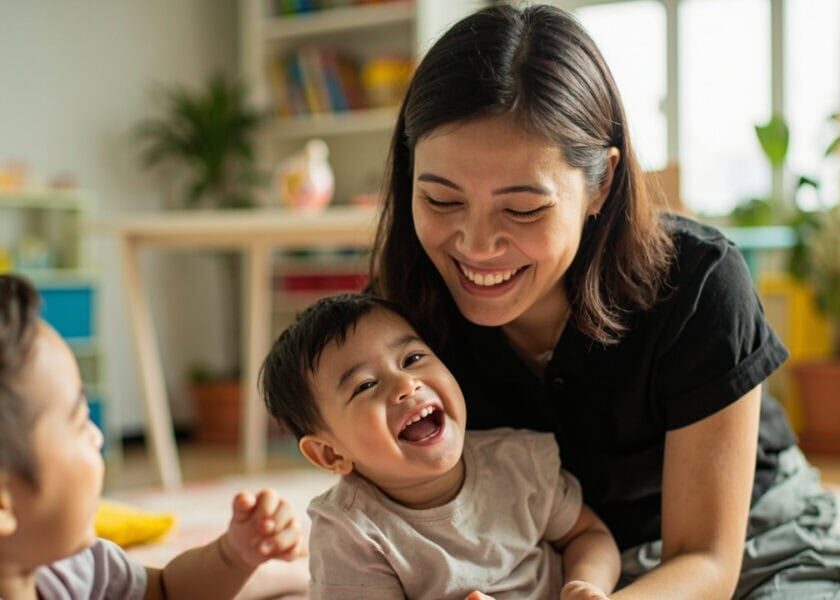
How Singapore Parents Choose to Protect What Matters Most
The Arrangement That Feels Like Help
Here is what we know about Singapore families. Multigenerational living is not simply a housing arrangement. It is a web of love, obligation, expectation, and history woven into how we raise children.
Many of us grew up with grandparents close. We remember the particular comfort of their presence, the stories they told, the way they seemed to have infinite patience for the small dramas of childhood. And so, when we become parents ourselves, one of the things we want most is for our own children to know that same relationship. We want our parents in the story. We want them to be grandparents in the truest and most joyful sense of the word.
And so we ask. And most of the time, our parents say yes.
Because they love our children. Because they want to help. Because saying no to family feels like a kind of failure that Singapore culture doesn’t easily allow. And so the arrangement begins, and on the surface, it works. The child is cared for. The parents can work. The grandparents are present. Everyone is doing their best.
What Happens When the Weekend Grandparent Becomes Daily Care
But there is something that happens quietly, over time, in the spaces between what families say and what they feel.
When a grandparent becomes a primary caregiver — not the occasional weekend grandparent who reads bedtime stories and hands the child back before dinner, but the weekday, full-day, drop-off-and-pick-up grandparent — something shifts.
The grandmother who looked forward to her weekends with her granddaughter becomes the person responsible for meals and naps and diaper changes and the relentless pace of a toddler’s day. She becomes a childcare provider without anyone intending for that to happen.
And the granddaughter who ran into her arms with pure, uncomplicated joy begins to associate Grandma’s house with routine, with transition, with the mild resistance of being dropped off.
This is not a criticism of any grandparent. It is a description of a system, and systems shape relationships whether we intend them to or not.
The Real Cost We Don’t Talk About
We need to be honest about what full-time grandparent childcare asks of a generation that may already be managing their own aging bodies, their own fatigue, their own desire for a life that includes more than caregiving.
Consider the Singapore grandmother who rises at six to prepare breakfast before the parents leave for work. Who manages a toddler’s meltdown at eleven. Who skips her own medical appointments because the schedule doesn’t allow it. Who is too tired on weekends to do the things that once brought her joy.
That grandmother is not a rarity. She is a pattern.
The cost she pays is not just physical. It is relational. It is the slow, quiet erosion of the very bond she and the parents most wanted to protect.
The fear is that by asking so much of your parents, you are damaging the very relationship you are trying to keep close. That your child will grow up seeing Grandma as the person who was always there out of obligation rather than choice. That your parents will look back on these years not as the golden years of grandparenthood but as a second round of the hardest work they ever did.
The Guilt Parents Carry in the Dark
Now let me speak directly to the parents who have had this conversation in the dark.
You love your parents. That is not in question. And so the guilt is not simple guilt. It is layered. It is built from admiration and gratitude and the knowledge that your parents gave up enormous things to raise you, and now here you are, asking them to give up even more.
You feel it when your mother tells you, gently, that she is tired, and you see her hand press against her lower back. You feel it when your father, who retired hoping to travel and tend to his garden, adjusts his schedule around your child’s nap time. You feel it in the way you brace yourself before asking, once again, if they can cover this week because of a work commitment.
That fear is not a sign that you are a bad parent or a thoughtless child. It is a sign that you are paying attention. It is a sign that you understand something true about what family bonds need in order to stay alive and warm and genuine.
The Insight That Changes Everything
Choosing professional childcare — not because you cannot afford to value your parents’ involvement, but because you are choosing to protect it — is one of the most generous things a parent in Singapore can do for their whole family.
And I use the word generous deliberately, because it reframes what is too often seen as a retreat. Parents sometimes feel that choosing outside childcare means choosing away from family. It means outsourcing. It means failure.
But consider that it means something entirely different.
It means you see your parents clearly. It means you love them enough to want them free.
Free to be the grandmother who arrives on Saturday morning without fatigue behind her eyes. Free to be the grandfather who teaches his grandson to catch a ball not because he has to, but because it is what he chose to do with his afternoon. Free to slip back into the role that made them want to be grandparents in the first place: the ones who simply love.
Why Presence Beats Obligation
There is a concept in family systems that helps here. Relationships thrive not when they are filled with obligation but when they are filled with presence.
When a grandparent sees their grandchild out of choice rather than duty, something extraordinary happens. The time is ring-fenced. It is different. It is special precisely because it is not everyday.
The stories get longer. The games get more creative. The patience is replenished, because it is not being spent in an unbroken stream across every single weekday.
And the child feels it. Children are exquisitely attuned to the emotional weather of the adults around them. A grandchild who runs into Grandma’s arms on a Saturday morning and finds her rested, present, genuinely delighted to be there — that child is receiving a gift that no amount of daily obligation childcare can replicate.
What Quality Actually Looks Like
When we talk about childcare in Singapore, parents deserve to know that the choice they make for professional care is one they can trust completely.
Trust, in this context, is not a feeling. It is a system.
It is the kind of transparency that allows you to drop your child at the door and leave with your mind at ease, knowing that your child is not just supervised but truly cared for.
Quality care includes:
- Open communication between caregiver and parent
- Consistency, so that your child builds the secure attachment that is the bedrock of healthy development
- Ratios that allow for genuine attention — small groups where every child is seen
- Caregivers who know not just what your child ate for lunch but how your child played today, what made her laugh, where she struggled
That kind of care is not a convenience. It is a foundation. And when you have it, you have something that changes the entire calculus of your family decisions.
How EduNanny Fits Into This Picture
EduNanny by BUTLER is part of the ECDA Childminding Pilot, which means it has been built with care and accountability. It operates across home-based and community-based pathways, giving families options that fit how they actually live.
The ratios — up to one to three infants in care — are designed not around throughput but around attention. The fee structures are structured to be accessible. And for families who qualify, the Child Development Account and Baby Bonus schemes can be applied, because this kind of care should not only be available to those who can pay without thinking.
Where CCTV measures are in place, they are there not as surveillance but as transparency — for you, as parents, to know that what happens in the hours your child is in care is open and accountable.
The caregivers themselves are trained, supported, and treated as the professionals they are, because the dignity of the person caring for your child matters, and it reflects in the quality of that care.
What EduNanny offers is not just childcare. It is the kind of childcare that allows you to be a full, present parent in your own life while trusting that your child is in hands that take that responsibility as seriously as you do.
Common Questions Parents Ask
“Will this mean my parents are less involved?”
Not if it is done thoughtfully. The goal is not to reduce grandparent involvement but to transform its character. Instead of tired, daily obligation, you create space for bright-eyed visits. Many families find that grandparents become more engaged, not less, because the pressure is removed.
“Will my child miss that bond?”
Children form attachments through quality of time, not quantity. A rested, delighted grandparent giving full attention for two hours will create a different — and often deeper — bond than an exhausted grandparent managing a full weekday. Your child does not need more hours with Grandma. They need better hours.
“What will my parents think?”
This is often the hardest part. But consider this: the conversation you are avoiding may be the same conversation your parents have been hoping you would start. Many grandparents feel trapped by an arrangement they did not choose but felt unable to refuse. Giving them permission to step back is not rejection. It is relief.
The Sunday Lunch Test
Here is a simple way to think about whether your current arrangement is working.
When you sit down for Sunday lunch with your family — your child, your parents — how does everyone look? Are your parents bright-eyed and engaged, or are they moving through the meal with quiet fatigue? Is your child running to greet them with joy, or with the mild resistance of someone who has already spent forty hours this week in their company?
That Sunday lunch is not a small thing. It is the thing. It is what you are building toward. And every arrangement you make should be in service of making that lunch feel like what it was always meant to be: a family coming together because they want to, not because they have to.
Making the Choice With Confidence
If you are considering professional childcare, here is what I would encourage you to do:
- Name the tension honestly. Acknowledge what you have been feeling — the gratitude, the guilt, the fear. These feelings are not weaknesses. They are signals that you care.
- Have the conversation with your parents. Not from a place of accusation, but from a place of love. Tell them what you have observed. Ask them how they really feel. Listen to the answer.
- Visit your options with fresh eyes. You are not looking for a replacement for family. You are looking for a partner in giving your family the space to be what it wants to be.
- Trust your instincts. You know your parents. You know your child. You know the difference between what is working and what is merely persisting. Trust that knowledge.
Protecting Your Parents Is Protecting Your Child
Here is something I want to say plainly, because it is at the heart of this conversation.
Protecting your parents is also protecting your child. Not in opposition to each other. Not as a trade-off. But in the same act, with the same decision.
When you choose childcare that you trust, that honors your child’s development, that treats your family with seriousness, you are doing something that ripples outward in ways you may not even see for years.
You are building a family culture in which everyone has room to breathe. In which grandparents are not props in your child’s daily story but characters who appear at the best moments, with the best of themselves. In which your child grows up knowing that family means presence, not pressure. That love, to be real, must be given freely.
Children are watching. They are learning what family means by watching what we do when family gets complicated. And when they see that their parents made a thoughtful, loving, difficult choice in order to protect the people they love most, that is a lesson in care that no classroom can teach.
The Future You Are Already Building
There is a version of the future that many Singapore parents are quietly building right now, one decision at a time.
In that version, grandparents are at birthday parties and school concerts and Sunday breakfasts. They are the ones who spoil the children just a little, because that is what grandparents are for. They are not burnt out. They are not quietly resentful. They are not the people your child runs to with reluctance because being dropped off at Grandma’s house has become routine rather than a treat.
They are the people your child runs to with pure joy, because the visits are precious and chosen and full of the best version of who they are.
That version of the future is not expensive or impossible. It is built one honest conversation at a time. One decision made not from guilt but from love — the kind of love that is big enough to say, “I want you in our lives, and I want you free.”
It is built when a parent chooses a childcare arrangement that takes the weight off everyone, so that what remains is just the weight of caring, which is the only weight that ever needed to be there in the first place.
EduNanny Singapore is here to be part of that. Not as a replacement for family. Not as a sign that you are giving up on the people you love. But as a quiet, steady partner in the project of building a family that works — for your children, for your parents, and for you.
If you are ready to explore what a different kind of childcare arrangement could mean for your whole family, we would be glad to hear from you.
Speak with our team or learn more about EduNanny’s approach — including our participation in the ECDA Childminding Pilot and the home-based and community-based childminding options available to Singapore families.
You can also read more about who we are and what we stand for.