Your Child’s Heritage Is Not Separate From Quality Childcare
The Quiet Question Singapore Parents Carry
There is a question many Singapore parents carry, often unspoken, in the spaces between choosing a childcare arrangement and watching their child play. It surfaces when grandparents ask about care plans with that particular mix of pride and concern. It surfaces in WhatsApp group chats when someone asks for recommendations. It surfaces in the moments before sleep, when parents review the day’s choices.
It is not a question about safety, though safety matters. It is not a question about development, though development matters too. It is something deeper, more personal: Will my child still know who they are?
This is not melodrama. This is the real texture of parenting in Singapore today.
Heritage and Modern Life Do Not Have to Be in Tension
We live in a city where heritage is not a museum piece but a living practice. Lunar New Year reunion dinners still fill function rooms. Deepavali preparations begin weeks in advance. Children learn their mother tongue not just at home but through deliberate choices parents make about cartoons, books, and conversation.
We live in a city where families have maintained this heritage across generations, through migration, through economic transformation, through the particular pressures that make modern parenting so demanding. And we live in a city where most parents, at some point, need help with childcare.
These two realities—heritage and the need for care support—do not have to be in tension. But too often, they feel that way. There is a worry that childcare arrangements, however warm and capable, might subtly dilute what families work so hard to build. That the language might shift. That the values might soften. That the rootedness, the cultural confidence that comes from growing up knowing exactly where you come from and feeling proud of it—that this might somehow get lost in the logistics of modern parenting.
I want to suggest something: this worry is not a sign of being overly protective or old-fashioned. It is a sign of understanding what raising a child actually requires. And more importantly, cultural identity is not separate from what makes childcare quality. It is woven through it.
What Cultural Identity Means for Young Children
When we say cultural identity in the context of a toddler, we are not talking about abstract knowledge. For a child this age, cultural identity is not the ability to recite facts about Chinese New Year customs or explain why certain foods are eaten during Hari Raya.
Cultural identity, for a young child, is something felt. It is:
- The comfort of hearing familiar words in a familiar rhythm
- The warmth of a caregiver who responds with the same gentle voice your family uses
- The way certain songs or sounds or smells become associated with feeling safe
- The beginning of the answer to the question every child will eventually ask: Where do I belong?
This belonging is not a luxury. It is a developmental necessity. Children who grow up with a strong sense of cultural belonging carry something with them into every new situation—every school playground, every interaction with children from different backgrounds. They carry the confidence that comes from knowing who they are.
And this confidence is not arrogance or insularity. It is the opposite. It is the foundation that allows a child to engage with the world from a place of security rather than uncertainty, to reach outward because they feel rooted within.
How Cultural Transmission Actually Happens
Singapore has always understood multiculturalism in theory. Our national narrative has long celebrated it as a strength. But celebrating multiculturalism at the level of policy and celebrating it in the daily texture of a child’s care are two different things.
One is abstract. The other is specific, practical, and deeply personal. When a parent entrusts their child to a care arrangement, they are not just entrusting their child’s physical safety or even their child’s cognitive development. They are entrusting their child’s sense of self.
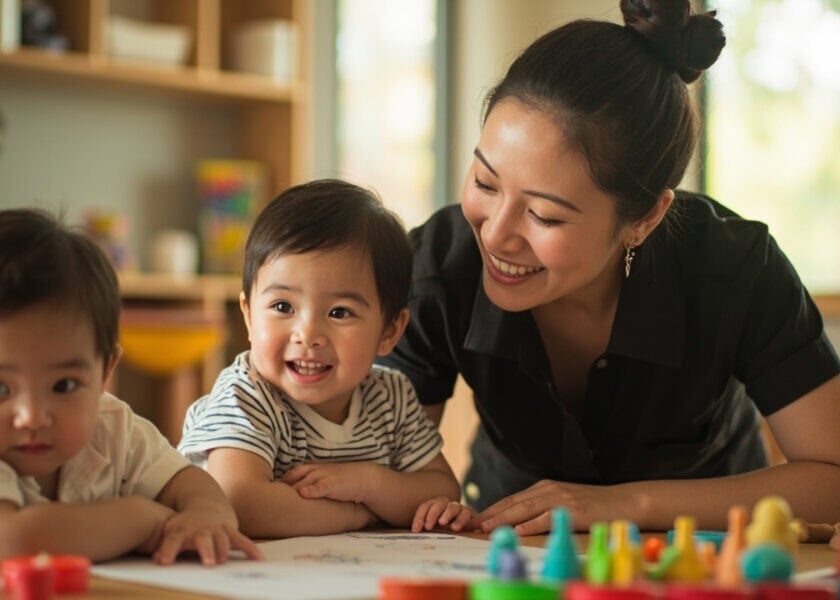
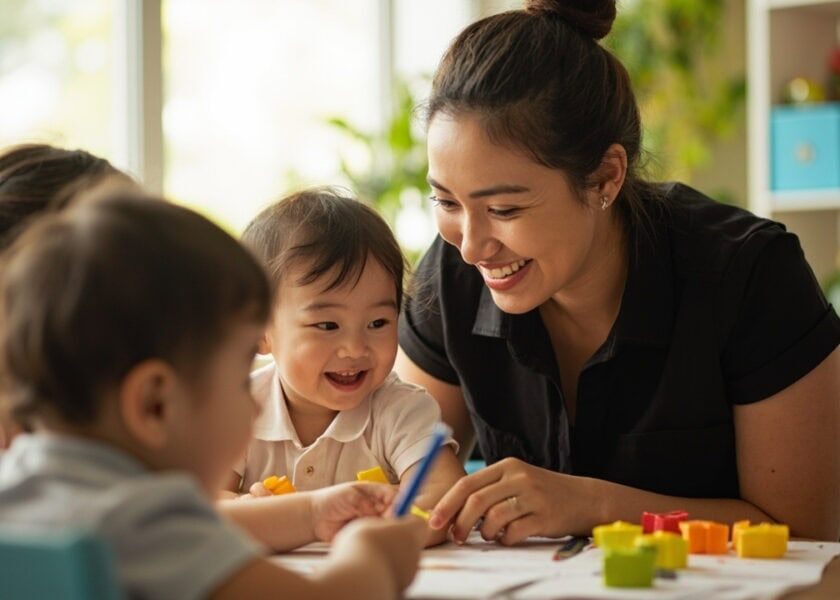
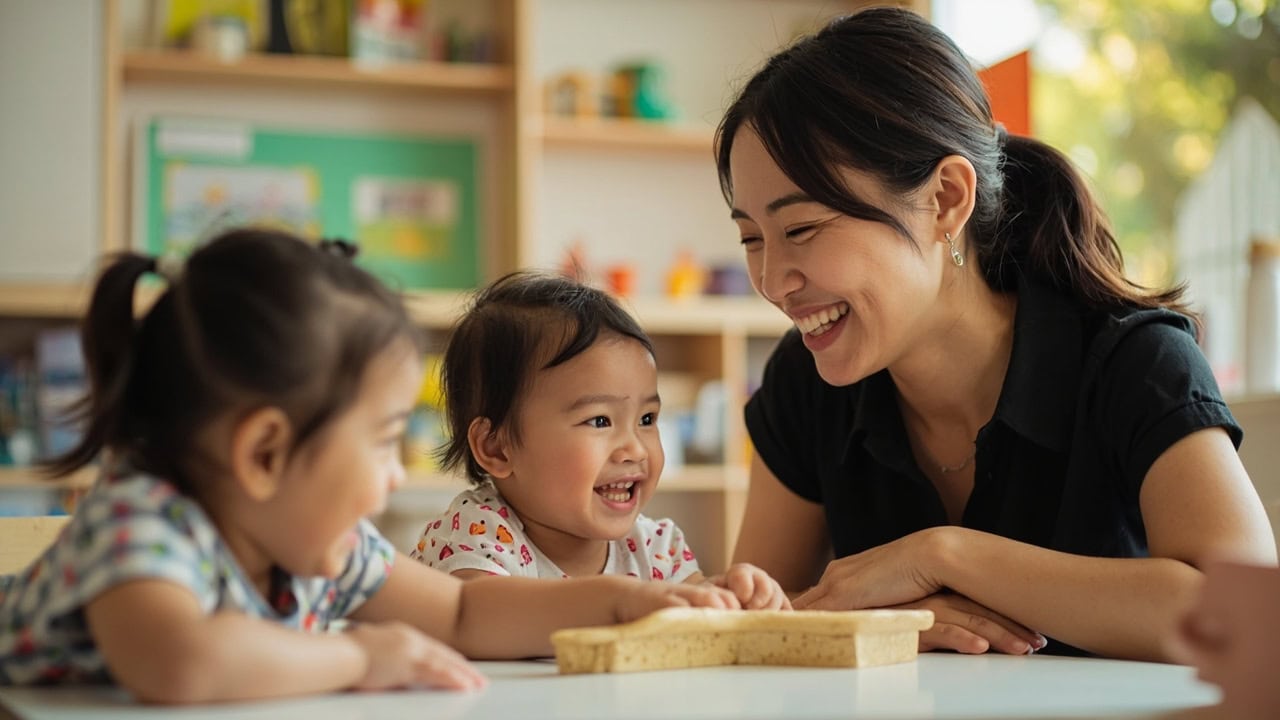
Consider what happens when caregiver ratios allow for genuine attunement. In home-based childminding, when a caregiver is responsible for fewer children, something changes in the quality of attention. The caregiver learns:
- Each child’s rhythms, preferences, and cues for hunger or fatigue or the need for comfort
- The family’s language—even just the common words and phrases that make a child feel at home
- The little songs a child hears at home, so that comfort comes wrapped in familiar sounds
The caregiver becomes a partner in the child’s development, not just a supervisor but someone who knows and responds to this particular child.
This is how cultural transmission actually happens in early childhood. It is not through formal lessons or explicit instruction. It is through the accumulation of small moments:
- A caregiver who gently narrates the child’s day in Mandarin, not as a lesson but as a natural way of speaking
- A caregiver who knows that this family celebrates Mooncake Festival and mentions it casually when the conversation naturally turns to the sky
- A caregiver who learns the songs from home and sings them when the child needs soothing
These are not grand gestures. They are daily rhythms. And daily rhythms, sustained over months and years, build something profound: a child who grows up feeling that their culture is not separate from their life but woven through it, that the people caring for them understand and honor who their family is.
Finding Care That Sees Your Child as Whole
Singapore parents are navigating high costs, long hours, competitive school environments, and the particular exhaustion that comes from raising children while building careers and maintaining family obligations. Many parents work in environments that demand full attention, and the guilt or worry about childcare is real—even when unexpressed.
Parents do not need to be told that they are doing enough. They know they are trying. What parents need is to find arrangements that align with their values, that they can trust, that feel like an extension of their family’s care rather than a compromise of it.
What Home-Based Childminding Offers
Home-based childminding exists within the ECDA Childminding Pilot because Singapore recognizes that families need options that are not one-size-fits-all—options that respect the different ways families want their children raised. Community and centre-based pathways offer their own strengths. What matters is that these options are developed thoughtfully, with the understanding that quality care is not just about ratios and facilities.
Quality care is about what happens in the space between caregiver and child, day after day.
Questions to Ask When Evaluating Childcare Options
When evaluating childcare options with cultural values in mind, consider these dimensions:
- Ratios that allow attunement: When caregivers are responsible for fewer children, they can learn each child’s rhythms, language patterns, and family traditions. This is how cultural transmission happens naturally.
- Communication that builds trust: Transparent, ongoing updates that let you know not just that everything is fine, but what actually happened, what they enjoyed, how they slept, what they learned.
- Flexibility aligned with Singapore work life: Care blocks structured around the reality of weekday work, with structures that make quality care accessible rather than a privilege.
- Support systems for parents: When questions arise at odd hours or doubts surface in the middle of the night, having accessible, knowledgeable support reduces the anxiety that comes from uncertainty.
Even with practical features and thoughtful structures, the heart of quality care remains the relationship between caregiver and child. All systems and structures exist to support one thing: a care environment where your child is known, where your family’s values are respected, where cultural transmission happens naturally through daily rhythms of attunement and warmth.
Your Child’s Heritage Is a Living Inheritance
Your child’s heritage is not a relic to be preserved in spite of modern life. It is a living inheritance, already present in the way you love them, already shaping the person they are becoming.
The right care environment does not compete with this inheritance. It collaborates with it. It becomes another space where your child learns that their culture is a gift, not a burden, a source of confidence rather than a constraint.
The first thousand days of your child’s life are passing right now. The rhythms and relationships being built in these years are laying foundations that will last a lifetime. When you choose care that sees your child’s cultural identity as integral rather than incidental, you are not making a compromise. You are making a statement about what you believe childhood should be and who you believe your child will become.
That statement matters. Your child matters. And the heritage your child carries—that living inheritance passed from grandparents to parents to children, that sense of belonging that no amount of modernization can diminish if it is tended with intention and love—this too matters.
Choosing Care That Aligns With Your Values
Choosing childcare is one of the most consequential decisions a parent makes. It is a decision about trust, about partnership, about who will be part of shaping your child’s earliest experiences of the world.
When that decision is made with cultural values in mind—when the care environment is understood not just as a place for supervision but as a place for identity-building—it becomes something more than logistics. It becomes an act of faith. An act of hope. An investment in the kind of person your child will become.
You are not choosing between your heritage and your modern life. You are finding a way for them to coexist, to strengthen each other. You are choosing care that sees your child as a whole person—not just a developing organism but a being with a cultural self that deserves to be nurtured.
Questions Worth Asking Yourself
- Will my child be cared for by someone who can learn our family’s language and communication style?
- Does this arrangement allow for the kind of attunement that lets caregivers know my child’s rhythms and needs?
- Will the care environment feel like an extension of our family’s warmth, or a departure from it?
- Can I trust that my child’s cultural identity will be respected and naturally reinforced?
- Does this choice reflect what I believe childhood should be?
The quiet question you carry—Will my child still know who they are?—is not a question to answer with worry. It is a question to answer with intention.
The answer is found not in any single decision but in the accumulation of choices, large and small, that parents make every day. The books you read together. The songs you sing in the car. The questions you ask about your own childhood. The way you speak about your heritage, not with pressure but with pride. The care arrangements you choose.
If you are exploring childcare options and want to learn more about an approach that treats cultural identity as woven through quality care—where caregiver attunement, daily rhythms, and family partnership are central—consider what home-based childminding within the ECDA framework offers.
Not as a replacement for what you provide, but as a partner who understands. The child in your home today is already carrying more than you know. With the right support, they can grow into the confident, rooted, culturally secure person they are meant to become.
EduNanny operates within the ECDA Childminding Pilot, offering home-based care with ratios designed for attunement, transparent communication, and a philosophy that treats cultural identity as integral to quality care. CDA and Baby Bonus funds can be used.
If this approach resonates with what you are looking for, we welcome the conversation at EduNanny.