Nanny Training: Choose a Course and Plan the Care Cover
EduNanny® by BUTLER · Parent guide
A useful nanny training plan starts with one learning need, not a long list of certificates. Discuss the care tasks together, choose training that fits those tasks and agree how the carer will have time to attend.
This guide is a planning checklist. A course title does not guarantee a particular care outcome or replace a clear care agreement.
Choose one learning need together
Start with the child’s age, the agreed care duties and the carer’s existing experience. Ask which task or topic would benefit from further learning. It might be age-appropriate play, communicating care updates or child-focused first aid. Describe the gap in practical terms before searching for a course.
For example, wanting a first-aid course that includes infants is a clearer brief than wanting “more childcare certificates”. This is an illustration of how to define a learning need, not an assessment of a particular carer’s competence.
Keep the plan within the agreed role. Training should not quietly add medical, household or other duties that have not been discussed. Our nanny duties guide can help you make that scope clear.
Check what the course actually teaches
Read the current course page rather than relying on its name. Check the age groups covered, entry requirements, language, learning format, practical sessions and assessment. Ask what completion document is awarded and what any accreditation claim specifically applies to.
Singapore Red Cross Academy lists different first-aid and resuscitation courses, including child first aid and refresher options. Its course information distinguishes general workshops from named accredited certification courses. Choose the relevant course and confirm whether a first-time or refresher route is appropriate for the learner; do not assume all first-aid courses cover the same needs.
A course provider’s certificate and a claim about suitability for a particular care setting are different things to check. If you are comparing private nanny care, the ECDA childminding pilot and licensed childcare, ask about the requirements for that exact arrangement. Do not use one workshop certificate as a general approval for all three settings.
For a private provider booking, discuss learning needs with the provider before arranging training directly with the carer. The EduNanny® private care page explains how care scope and booking terms are confirmed.
Agree time, cover and payment before booking
Confirm who is enrolling, who will pay and which course dates both sides can manage. Include travel time and any assessment or follow-up session in the discussion. Arrange your child’s care during those hours rather than assuming the carer can attend training while continuing the booked care.
Check the full fee, materials, cancellation terms and any conditions before treating a subsidised price as the amount payable. MySkillsFuture’s official credit guidance states that SkillsFuture Credit is for Singapore Citizens aged 25 and above, with eligibility varying by course and credit type. Do not assume a carer is eligible or that a particular nanny course qualifies.
Where a household agrees to sponsor training, record the agreed cost and time arrangements. Keep these separate from required employment responsibilities and from any provider’s own training programme. Avoid an informal repayment or extra-duty expectation that neither side has understood or accepted.
Keep a short learning plan and review it
- Need: the care task or learning topic you want to address.
- Course: the provider, exact course and relevant age coverage.
- Commitment: attendance, travel, assessment and care cover.
- Cost: the confirmed fee and who will pay it.
- Follow-up: what completion evidence to keep and when to discuss the learning.
After the course, ask what was covered and whether further learning or a refresher is needed. Keep the completion record and check any stated validity or renewal requirements with its issuer. A parent conversation is not a substitute for a trainer’s practical assessment or professional guidance.
Review one manageable learning goal at a time. The aim is a relevant, workable plan—not a promise that buying training will make a carer stay longer or guarantee an outcome for your child.
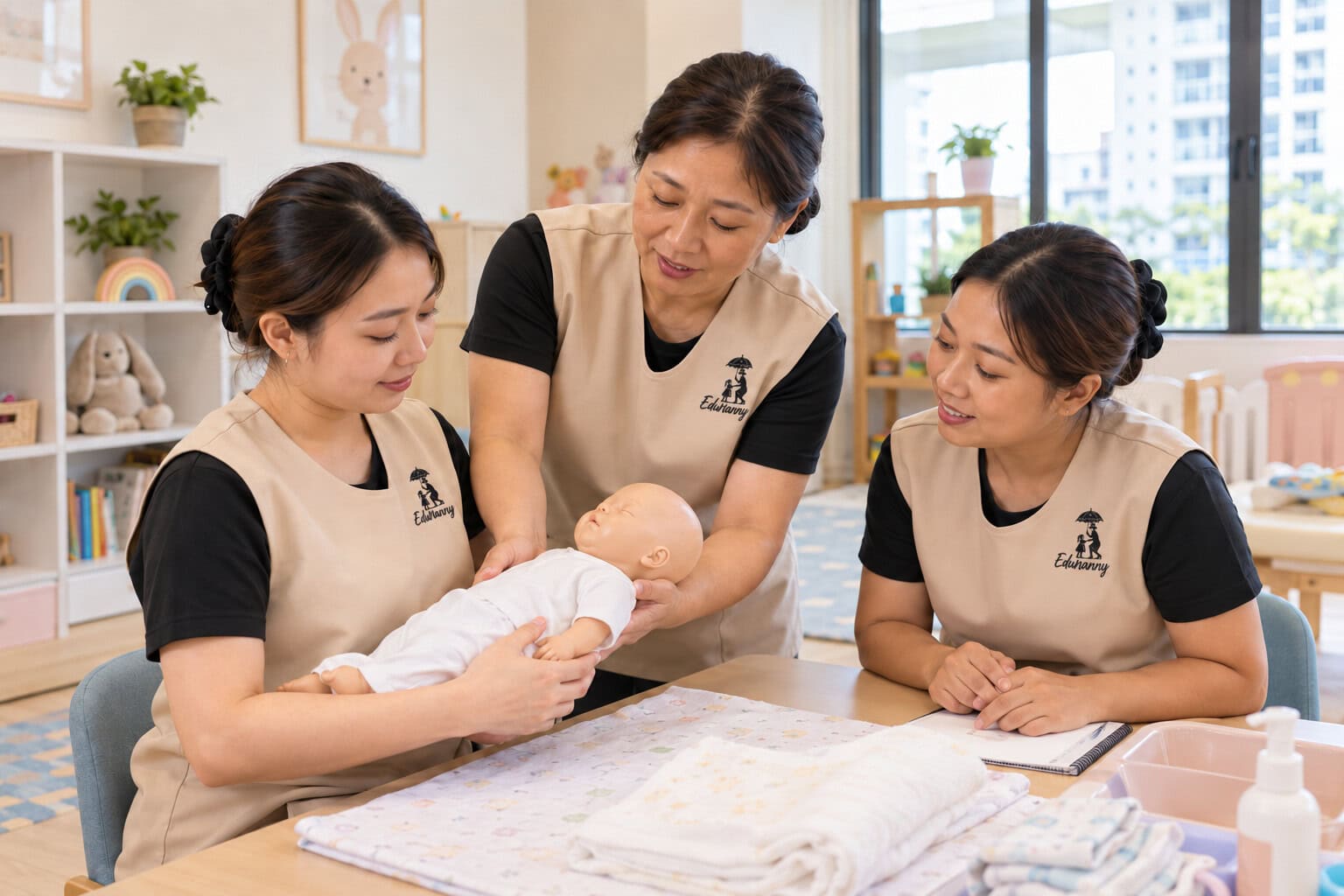
Featured image: an AI-generated illustration of adults practising with an infant training doll. It does not document an actual EduNanny training session or teach a first-aid technique. Care for every little chapter.