Introducing Your Child to a New Nanny: A Gentle Start
PARENT GUIDE · MEETING A NEW CAREGIVER
A first meeting with a new nanny is a chance for your child to get to know someone while you are there to help. A warm welcome can leave room for watching, questions and a slower start.
This guide focuses on introducing a baby or young child to a caregiver for private care at home. It does not set a timetable for bonding or promise that a child will be comfortable after a certain number of visits.
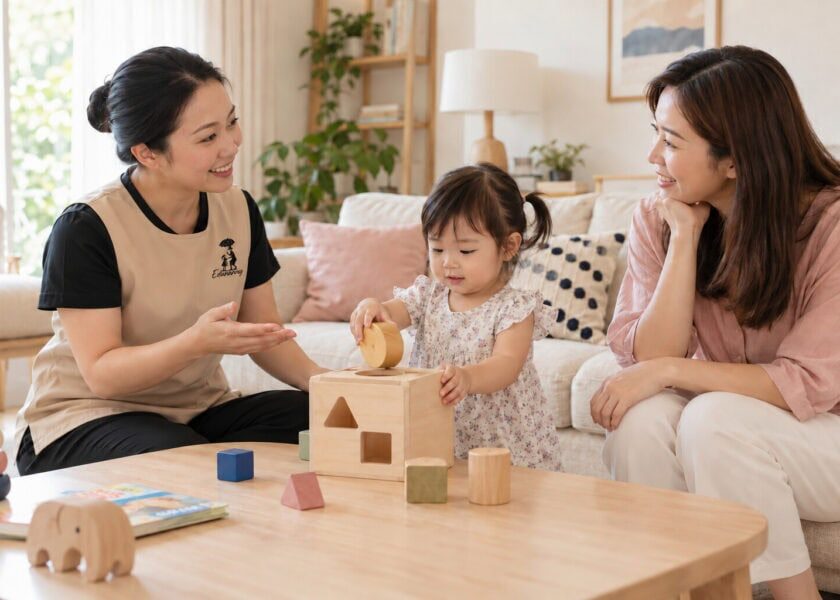
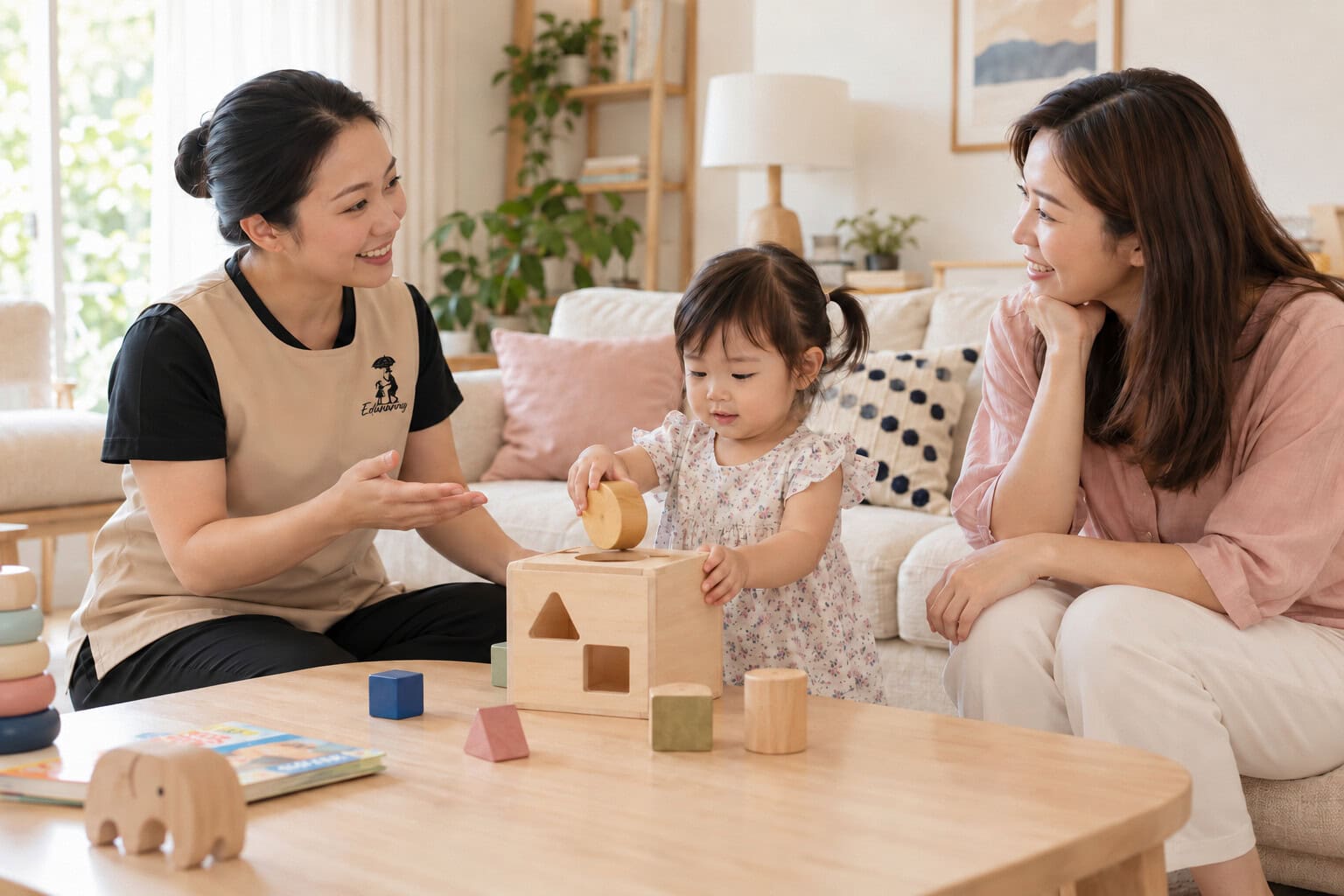
Featured image: an illustrative caregiver, parent and toddler scene from EduNanny’s media library. It does not depict an actual client meeting or identify staff.
Plan the introduction with the caregiver
Agree when the first meeting will take place, who will be present and what the visit includes. Explain what your child already knows about the arrangement and share a familiar book or activity they enjoy. Check any introductory time against your booking rather than assuming extra visits are included.
For a child who can follow a simple explanation, say who is coming and what the person will do. Use the caregiver’s name and a clear description of their role. Avoid presenting them as an instant best friend or promising how your child will feel.
Keep the practical care instructions in your separate handover brief. Our first-week nanny handover checklist covers contacts, duties, supplies and updates, leaving this meeting free to focus on the introduction.
Stay nearby for the first hello
Introduce the nanny calmly and give your child room to observe. Sitting beside you, watching an activity or joining the conversation can be a starting point. A greeting does not have to include a hug, being picked up or immediate play.
Families for Life’s guidance on unfamiliar people recommends letting young children warm up gradually, keeping a familiar adult nearby and asking new adults to be patient about physical contact. It also recognises that children respond differently.
Ask the caregiver to begin with a smile, conversation or the agreed activity, without pushing for a response. For a baby, let the caregiver learn from what you show and explain; do not assume every baby will welcome being held by a new person immediately.
Use a familiar activity without making it a test
Offer a book or suitable play activity your child already knows. You might sit together while the nanny looks at the book or follows the child’s interest. Let the child participate in a way that feels manageable, rather than requiring them to perform, answer questions or demonstrate affection.
Keep any toys or comfort items appropriate to the activity and your child’s care needs. This is an introduction during awake time, not a recommendation about what belongs in a baby’s sleeping space.
If your child wants more space, acknowledge that and discuss the next step with the caregiver. A quiet first meeting is not a score for the child or a guarantee about the whole care arrangement.
Make the goodbye clear if you are leaving
Agree the care and departure arrangements with the nanny beforehand. Tell your child who will stay with them and when you expect to return, using an explanation they can understand.
Families for Life’s toddler-relationship guidance advises preparing children for where they will be and when a parent will return. It supports a clear goodbye and cautions against language that pressures a child to be brave.
For a toddler, keep the farewell simple rather than slipping away without saying goodbye. Follow through on the return arrangement you have described. The aim is clarity, not a demand that your child stop feeling upset on cue.
Review the meeting and raise concerns when they arise
Ask the caregiver what your child chose to do, what seemed helpful and what questions remain. Share your own observations and agree any change to the next meeting or care plan. Avoid labelling the child as difficult or setting a deadline for affection or independence.
If you are worried about intense or persistent distress, seek advice from your child’s doctor or another appropriate healthcare professional. Families for Life recommends professional advice when a child’s fear around unfamiliar people is a concern. This guide cannot diagnose the cause.
For a concern about the care itself, use our nanny care-concerns guide. Do not dismiss a safety concern as ordinary settling-in.
A short first-meeting checklist
- Explain: who is coming and the caregiver’s role.
- Agree: the visit, parent presence and any departure arrangements.
- Welcome: introduce the nanny while letting the child observe nearby.
- Offer: a familiar, suitable activity without forcing contact.
- Say goodbye: if leaving, make the plan clear and follow through.
- Review: share observations and give open questions a next step.
For EduNanny’s private service, confirm the arrangement through the current private nanny service information and your booking. The ECDA childminding pilot and licensed childcare are different services, with their own settings and procedures.
Sources and care context
- Families for Life: Fear of Strangers — Babies and Young Children
- Families for Life: Relationships with Toddlers
- EduNanny: Private Nanny Services
Guidance checked 12 October 2026. Adapt the practical introduction to your child and the agreed care arrangement; seek professional advice for individual health concerns.
EduNanny® by BUTLER · Care for every little chapter.