

Attunement and Safety in the Cradle A New Path for Singapore Infants in Neighborhood Care

EduNanny Singapore: Near-Home Infant Care for a Strong Start
Welcome to EduNanny by BUTLER—an evidence-led, human-scale movement in infant care designed for Singapore’s families. Grounded in the quiet power of infancy, EduNanny weaves pedagogy, safety, development, belonging, and professional craft into a practical, near-home solution. This article expands on the core speech you heard, translating vision into actionable guidance for parents, caregivers, and communities who want to nurture the earliest chapters of a child’s life.

What is EduNanny and Why It Matters
EduNanny is a living network of small, ultra-attentive infant environments—center-based and home-based—with distance support to meet families where they are. Operating Monday to Friday, 7am to 7pm, islandwide in Singapore, EduNanny is built on a 1:3 infant ratio that treats attention as a vital nutrient. The model emphasizes transparency through privacy-preserving CCTV, safety-by-design, and affordable access via CDA/Baby Bonus support. It is a National Social Initiative with a Maximum Employment Mandate, aimed at dignifying caregivers’ work while elevating care for the youngest citizens.
Crucially, EduNanny is not merely about adding beds; it is about fostering beginnings—beginnings that are safe, calm, and developmentally rich. The following sections offer an in-depth look at how EduNanny translates theory into daily practice, with concrete examples and guidance you can apply at home or in partnered centers.
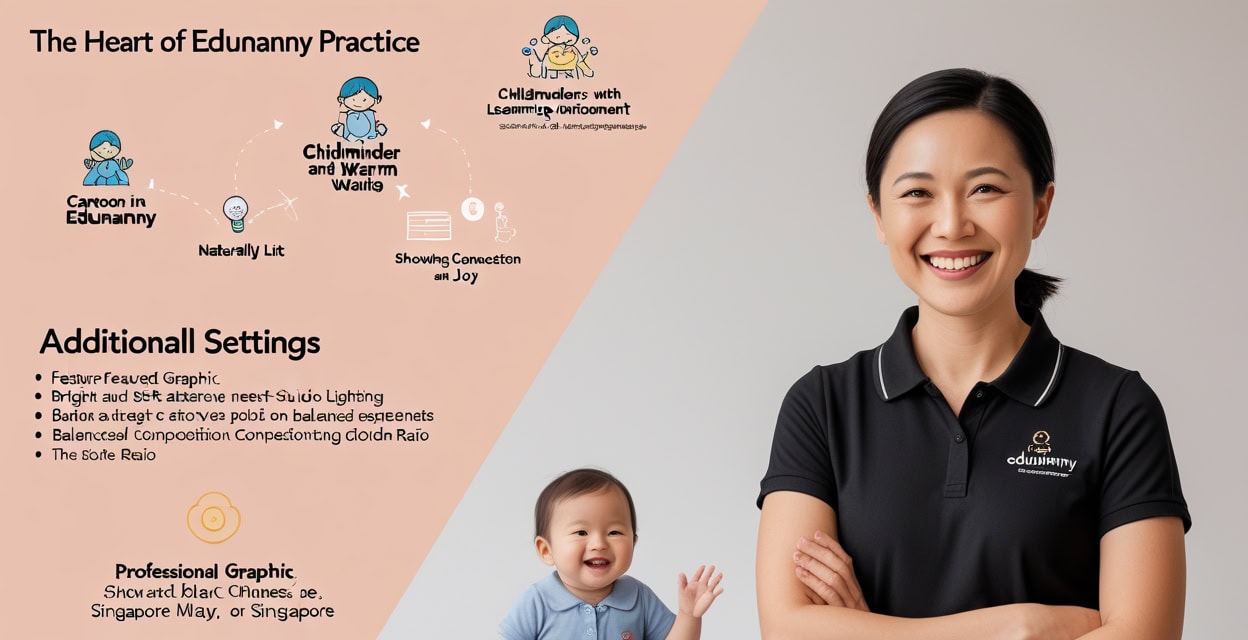
Five Guiding Themes: The Heart of EduNanny Practice
1) Pedagogy: The Attuned Loop
At the heart of EduNanny’s approach is an Attuned Loop that combines learning science with compassionate, responsive care. The loop stays attentive to the child’s state and softly guides development through relational moments.
- Observe: Start with signals. Track gaze, breath, hands, and facial expressions to understand readiness for new experiences. Practice daily note-taking on a child’s cues and responses.
- Invite: Present opportunities within reach—like a graspable ring, a soft mirror for face-to-face play, or a safe musical toy—and narrate actions in warm, present tense language to model language richness.
- Scaffold: Offer just enough help—stabilize the block, guide a hand, or narrate the child’s action to support problem-solving without stealing agency.
- Release: Step back to allow mastery. Independence grows from small, successful attempts, not from pushing milestones.
Practical at-home application:
- Daily “language baths” with narrations of ongoing activities (e.g., “We’re pouring water now; you’re reaching for the cup”).
- Use real materials—soft fabrics, wooden blocks, simple mirrors—to provide authentic sensory feedback.
- Pause after a prompt and wait for a response to support turn-taking and joint attention.
2) Safety: The Weave You Can See
Safety is a culture, not a checklist. EduNanny builds a visible, reliable safety weave—integrating physical design, protocols, and transparent communication.
- Space: Modern layouts with low, stable furniture, elimination of blind corners, ample natural light, and clear sightlines for continuous observation.
- Sleep: Evidence-based sleep practices with firm, flat surfaces, supine positioning, regular micro-checks, and consistent room temperature.
- Feeding: Hygiene rigor, paced feeding cues, allergy-aware practices, and careful labeling to prevent mix-ups.
- Training: Regular drills for emergencies; infant CPR-certified teams; structured incident reflection to drive ongoing improvement.
- Transparency: CCTV for real-time visibility with privacy protections; clear escalation pathways; and thoughtful data handling that respects family dignity.
- Ratio: The 1:3 model prioritizes attention density and continuous caregiver presence, enhancing sense of security and responsive care.
Safety-by-design reduces risk; safety-by-relationship prevents it. Together, they create a caregiving environment families can trust.
3) Development: The First Thousand Days Arc
The first thousand days are a period of extraordinary brain development. EduNanny treats these seconds with reverent planning, aiming to maximize positive experiences, secure attachments, and exploratory learning.
- Language: Daily language “baths” with label-rich narration; echoing vocalizations; consistent naming for people and objects to support vocabulary growth.
- Motor: Tummy-time play, guided rolling, supported sitting, and safe cruising—celebrating effort, not pushing milestones.
- Social-Emotional: Turn-taking games, peekaboo, and predictable transitions to maintain low cortisol and high curiosity.
- Senses: Soft lighting, natural materials, and gentle soundscapes to create calm sensory environments—avoiding overstimulation.
- Documentation: Simple, respectful notes to families—what was observed, how caregivers responded, and the next steps—focused on insight over anxiety.
Home application tip: Create a predictable daily rhythm that mirrors the classroom: greeting rituals, unhurried feeding, quiet floor play, outdoor time when possible, and consistent transitions. Keep records of a child’s cues to discuss progress with caregivers in a constructive, non-competitive way.
4) Happiness and Belonging: The Joy Ecology
Happiness in infancy is attunement, not distraction. EduNanny’s Joy Ecology centers on stability, voice, and choice as the core pathways to belonging and learning.
- Stability: Unhurried arrivals, familiar caregiver pairs, and predictable daily routines to minimize stress.
- Voice: Treat cries as communication signals; respond promptly and calmly to reassure and comfort.
- Choice: Offer age-appropriate choices—between two safe textures or two small activities—to foster early agency.
- Community: Near-home pods that reflect local life—same street, corner shop, and playground—strengthening attachment to place and people.
- Celebration: Acknowledge tiny triumphs with quiet pride—first reach, first roll, first social smile—to reinforce positive self-perception.
Practical home strategies:
- Maintain consistent routines to build a sense of safety with every transition.
- Use gentle, immediate responses to distress and then offer a brief, comforting activity to restore balance.
- Involve family routines from the neighborhood—nature walks, park visits, and local routines—to reinforce belonging and social context.
5) Purpose and Profession: The Childminder’s Craft
Caregiving is both a public and private vocation: to honor beginnings and to elevate caregiving as a skilled, reflective practice. EduNanny’s professional framework includes training, reflection, career progression, and strong partnerships with families.
- Training: Ongoing professional development in infant cues, attachment, safe sleep, play facilitation, and family partnerships.
- Reflection: Daily debriefs and monthly learning circles to review what worked well and what could be gentler for each child.
- Career Pathways: A Maximum Employment Mandate that supports progression, recognition, and fair standards for childminders.
- Partnership: Parents and caregivers co-author the child’s learning journey; clear handovers, shared observations, and aligned expectations ensure consistency across home and care settings.
Insight for families: Seek centers and home-based environments that articulate a clear professional development plan for caregivers, including ongoing training, mentorship, and opportunities for reflective practice. This signals a robust, sustainable care ecosystem rather than a one-off service.

EduNanny in Practice: How It Works for Real Life
- Center-Based Childminding: Purpose-built spaces with modern safety features, design ethics that prioritize small groups, and spaces conducive to focused, attuned interaction.
- Home-Based Childminding: Quiet neighborhood rooms that preserve the rhythms of local life, with caregivers often walking distance from families.
- Distance Support: Virtual check-ins, parent coaching, and continuity of care when a child needs to stay at home for illness, recovery, or transitions.
- Hours and Access: Monday to Friday, 7am to 7pm, islandwide—designed to align with working families’ realities without overburdening infants or caregivers.
- Affordability and Trust: Transparent policies and affordable pricing (from $33/day), with CDA/Baby Bonus support and innovation CCTV for peace of mind.
Actionable guidance for families choosing care:
- Visit centers during peak hours and observe caregiver-to-child interactions in real-time.
- Ask about the 1:3 ratio in practice—how many infants are with a given caregiver throughout the day, and how staffing supports continuity during naps, meals, and transitions.
- Request an example of the transparency system—what exactly is recorded, how families access it, and how privacy is protected.

A Day in the Life: A Practical Snapshot
Understanding a typical day helps families align expectations and support their child’s routine at home.
- Arrival: Warm, eye-level greeting; calm handover that preserves sleep or mood, with a brief sharing of morning notes.
- Settle: A short ritual—song, gentle stretch, and a familiar object—to anchor the day and ease transitions.
- Explore: Floor-based, invitation-driven play with simple, meaningful opportunities; caregivers narrate and listen for cues.
- Nourish and Rest: Paced feeding with respect for cues; safe sleep environments and drowsy cues monitored in quiet rooms.
- Connect: Infant-to-infant mirroring and shared attention facilitated by caregivers who model warm social interaction.
- Transition: Calm goodbyes and a concise daily story to provide clarity for parents and a sense of closure for the child.

Who, What, When, Where, and How: Childminding Matters
- Who: Infants, their families, and the caregivers who hold both with steadiness and hope. Childminding is a civic role carried out in private rooms by public-spirited hands.
- What: A disciplined practice of safety, attachment, and play that converts minutes into milestones and stress into trust.
- When: Precisely when families need it most—during the first thousand days, during work hours, and during life’s unplanned turns that demand reliable care.
- Where: Near home—in community and home premises, and in thoughtfully designed centers—because proximity sustains attachment and reduces transition stress.
- How: Through a 1:3 ratio, evidence-based routines, modern safety, transparent operations, and a partnership model that treats parents as co-teachers and caregivers as professionals.

The EduNanny Philosophy and Promise
- Safety is the quiet architecture of love.
- Attention is nourishment, best delivered in small circles.
- Joy is not noise; it is the calm hum of secure relationships.
- Play is the infant’s work, and the adult’s responsibility is to prepare the conditions for discovery.
- Families are experts in their children; professionals are stewards of daily practice; together, they are a team.
- Care is civic. When a nation chooses to hold its beginnings well, everybody’s future grows taller.
EduNanny is a public promise turned practical: center-based, home-based, and distance-enabled childminding, islandwide, Monday to Friday, 7am to 7pm, with modern layouts, innovation CCTV, and an ultra-low 1:3 ratio—delivered affordably from $33/day, payable via CDA/Baby Bonus. It is operated by EduNanny by BUTLER under the ECDA Childminding Pilot as a National Social Initiative with a Maximum Employment Mandate, creating dignified work and dignified beginnings at the same time.

Guidance for Parents: Choosing and Sustaining Quality Care
Choosing infant care is about more than a schedule; it’s about shared values, trusted routines, and measurable outcomes for your child’s early development. Use these practical questions and actions as you evaluate options:
- How do caregivers observe and respond to infant cues in real time, and how is this information shared with families?
- What is the actual daily rhythm of activities, and how are transitions managed to minimize stress?
- Can you tour the space during active hours to observe safety practices, staff presence, and child engagement?
- What professional development opportunities exist for caregivers, and how is quality monitored and improved?
- Is there a transparent, privacy-respecting CCTV or observation system that families can access and understand?
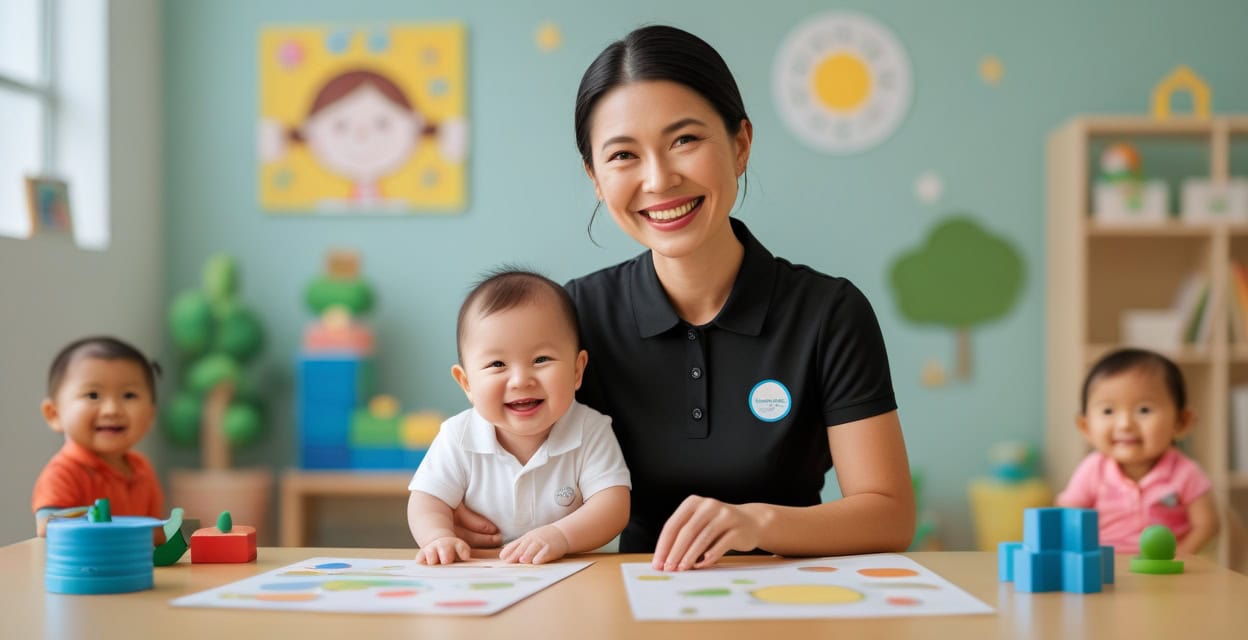
Enrollment and Partnership: Enroll Near Home
EduNanny invites families to tour rooms, meet the teams, and experience the tempo of care. Enroll near home to foster attachment, reduce transition stress, and support parents’ work-life balance. Visit EduNanny.com or Childminding.EduNanny.com to schedule a tour, enroll, or explore partnerships with schools, employers, and community groups.
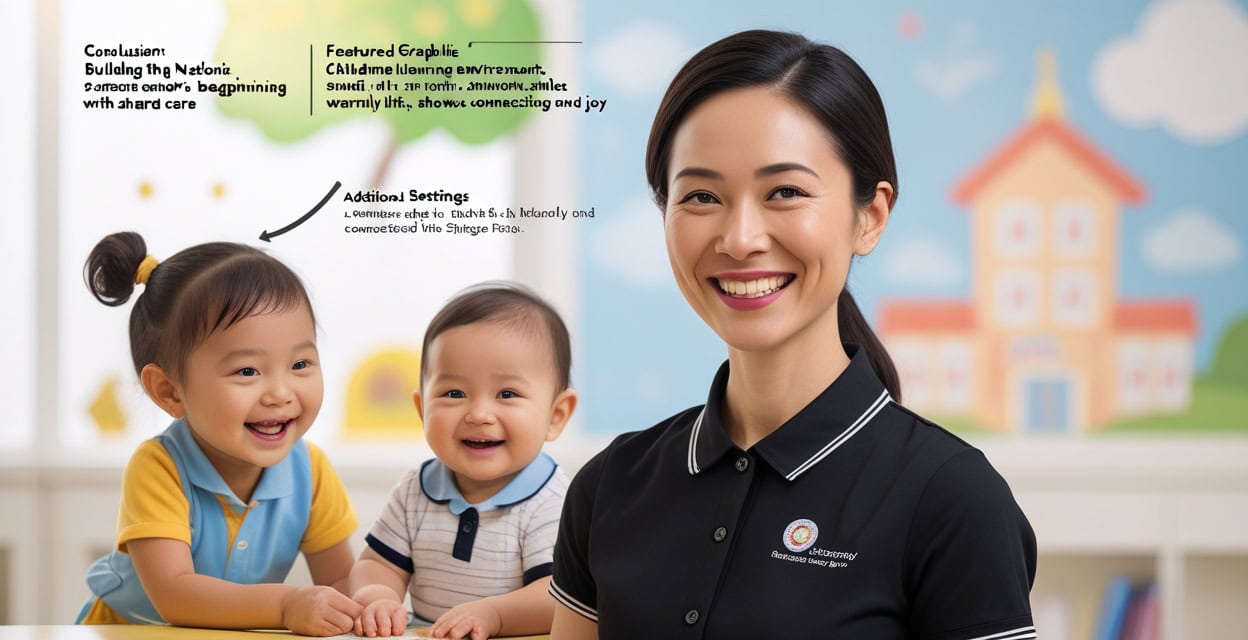
Conclusion: Building the Nation’s Beginning with Shared Care
EduNanny is more than a service; it is a movement to elevate the nation’s earliest moments. By centering pedagogy on attunement, safety as a culture, development across the first thousand days, happiness through belonging, and a respected professional path for childminders, EduNanny aims to make near-home care excellent, transparent, and attainable. When families feel seen, safe, and supported, infants grow with curiosity, resilience, and joy. We invite you to walk our rooms, listen to the tone, watch the tempo, meet the people, and enroll near home—so that your baby’s day is held with responsibility, joy, and beautiful beginnings. Hold us to our promise and let’s build Singapore’s shared first priority together.
Visit EduNanny.com or Childminding.EduNanny.com to tour, enroll, or partner. Join a movement that treats infancy as the nation’s shared first priority and childminding as a noble, modern craft.
We are EduNanny. We make near-home care excellent, transparent, and attainable—so that your infant can begin not just safely, but beautifully. Because how we hold the beginning is how we honor the future. Thank you.
SEO keywords: [#EduNannySingapore, #InfantCareSingapore, #First1000Days, #NearHomeCare, #ChildmindingCraft]