
A Gentle Beginning for Singapore Infants The EduNanny Near Home Path to Safe Joyful Learning

EduNanny Singapore: Beginning Well for Our Youngest Citizens
Thank you for inviting a thoughtful conversation about beginnings—the quiet minutes that shape a lifetime. This article translates the spirit of EduNanny, a public-spirited childminding movement by BUTLER, into a practical, educator’s guide for parents, caregivers, and communities in Singapore. Grounded in developmental science and the deep human instinct to protect and uplift, EduNanny exists to make infant care exceptional and accessible—center-based, home-based, and distance-supported—Monday through Friday, 7am to 7pm, islandwide. This is a practical blueprint for those who want to hold the beginning well: clear routines, joyful learning, and secure, near-care for every family.
Our promise is simple: put the infant’s world at the center, surround it with safety, relationship, and wise learning, and make it available near every family—at home, in community units, and in thoughtfully designed micro-spaces that feel as calm and clear as a good morning. The first years are foundational—the brain’s architecture, attachment patterns, and trust in the world are laid down minute by minute. When we invest in those minutes with intention, we build resilient children and a resilient society.
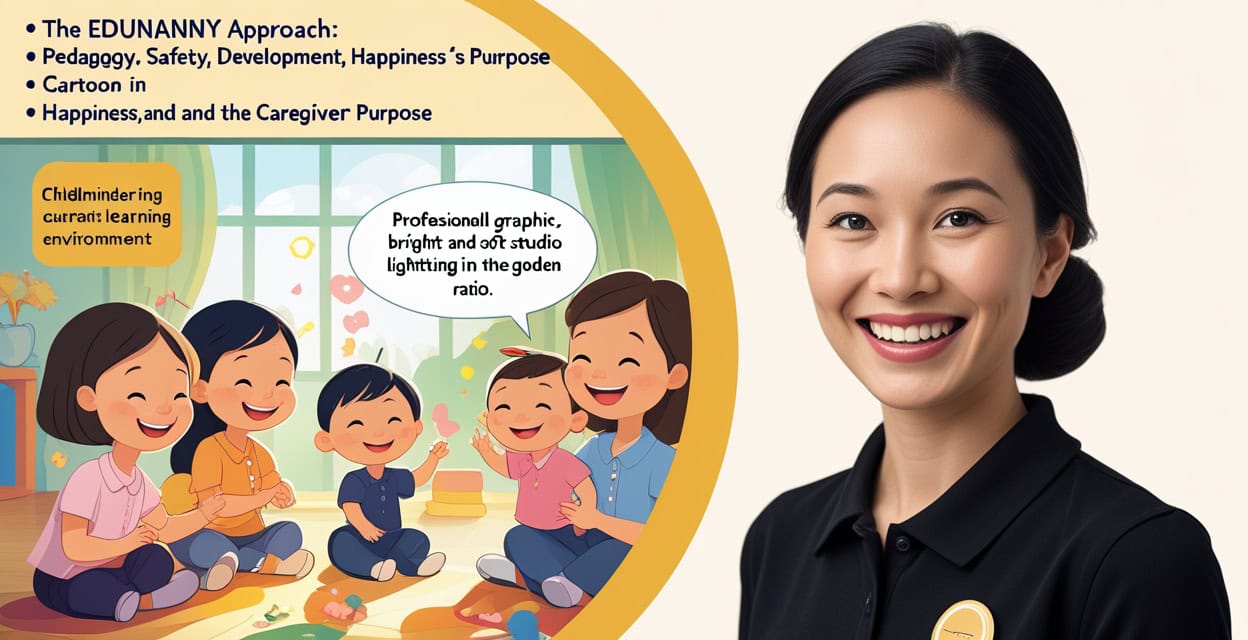
The EduNanny Approach: Pedagogy, Safety, Development, Happiness, and the Caregiver’s Purpose
EduNanny offers a comprehensive approach to infant care and childminding in Singapore. The model integrates expert pedagogy with practical, day-to-day routines, safety as a living architecture, development as observable growth, happiness as a measurable standard, and a caregiver’s purpose as a noble professional path. Below are five practical topics that guide daily practice, followed by how EduNanny delivers on these principles across different care models.
Topic 1: The Child’s-Horizon Practice—Pedagogy at the Infant’s Level
Infant pedagogy is not an event; it is a stance. We meet children at their horizon—close enough to be seen and heard, quiet enough to be trusted, curious enough to follow their lead. Here are actionable practices you can adopt at home or in care settings:
- See, Speak, Support: Observe stably, describe sensitively, and offer support that preserves the child’s agency. Practical example: during play, name what you see, then describe a possible next action and pause to invite a response. If a baby babbles, mirror the sound, then wait for a reply. This nurtures executive function and secure exploration.
- Micro-rituals: Turn every routine into a learning moment with consistent cues and language. Practical example: diapering or feeding times follow a predictable sequence with the same gestures and phrases. Narrate what comes next, pause for the infant’s reply, and honor their tempo. These small rituals reduce stress and invite participation.
- The Soft-Rhythm Curriculum: Design daily life around regulated arousal rather than over-scheduling activities. Practical tip: structure wake windows, sensory play, quiet integration, and sleep in steady rhythms—never rushed, never erratic. It’s like keeping time for a little musician who learns best with a calm rhythm.
- The One-Minute Lesson: In sixty seconds, seed trust, cognition, and language. Practical example: label a feeling, name a sound, mirror a gaze, and wait for a response. Turn that minute into a daily habit of listening that compounds into lasting learning.
Topic 2: The Safety Grid—Visible, Predictable Protection
Safety is a living architecture—one that a parent can feel and a caregiver can implement with confidence. It includes the physical environment, protocols, and ongoing training. Practical, house- and care-space-ready actions include:
- Rooms that Think: Create flat, firm sleep surfaces; remove pillows and loose items; secure nappy stations; keep liquid cleaners out of reach; never place hot beverages near infants. Arrange spaces to minimize surprises and enable easy supervision.
- One Sweep, Two Checks, Three Locks: Implement a simple safety rhythm:
- Sweep the floor and cot with eyes and hand before use.
- Check the child’s airway, position, and temperature during settling.
- Lock away cleaning agents, windows/doors, and digital access points after each session.
- Safe Sleep Standard: Back to sleep, face uncovered, fitted sheet only, temperature-controlled rooms, adult supervision at all times. If you need to elevate safety, discuss with your childminder about room setup and monitoring.
- Secure Visibility: If CCTV is used, ensure it’s encrypted, privacy-respecting, and purpose-driven. Transparency builds trust among families while protecting privacy.
- Health and Hygiene: Emphasize hand hygiene at transitions, create shoe-free zones for infants, establish toy sanitization cycles, and implement illness-exclusion rules to protect the group while supporting the individual child.
- Training and Drills: All carers obtain infant first aid and CPR, safe-sleep certification, and monthly drills (choking response, evacuation) to build muscle memory and confidence.
Topic 3: Development You Can See—Attunement, Movement, Language, Self-Control
Infants grow by trusting to grow. The focus is on attunement, movement, language, and early self-regulation. Practical pointers for parents and caregivers:
- Motor with Mastery: Prioritize free movement over screen time and devices. Give ample time for kicking, reaching, rolling, and crawling. Practical home activity: create a safe play space on the floor with varied textures, a low incline, and toys at different heights to encourage reaching and mobility.
- Language in Slow Motion: Use full sentences, warm tone, and clear pace. Label feelings and actions, expand on babbles, and read facial expressions as meaningfully as spoken words. Practical home activity: narrate your day in simple language as you interact with your child; pause to listen for responses.
- Serve-and-Return as Daily Bread: Treat every sound or glance as an opportunity for responsive interaction. The frequency of attuned exchanges drives attention and relationship-building. Practical tip: when your child vocalizes, name the emotion and respond with a matching sound within a few seconds.
- Beginnings of Self-Regulation: Co-regulation first, then gradual self-regulation. Use predictable routines, sensory balance, and caregiver calm to model soothing. Practical exercise: create a consistent bedtime routine that includes a calming activity, rhythmic lull, and a quiet environment without overstimulation.
- The Six Streams We Track: Attachment security, motor control, language and communication, sensory integration, emerging attention and memory, and social curiosity and empathy. Parents receive plain-language notes about growth across these streams and tips to extend learning at home.
Topic 4: The Joy Index—Happiness as a Measurable Standard
Joy supports learning and health. EduNanny treats happiness as both a state and a metric. Practical guidance for families:
- Indicators of Real Joy: Frequent eye-brightening, relaxed jaw and hands, easy transitions, playful vocalization, and spontaneous returns to the caregiver. Practical metric: track “shared delight minutes” per hour to gauge emotional climate and adjust routines as needed.
- Calm Is Contagious: Carers are selected for temperament, and training emphasizes calm tone, unhurried hands, and present attention. Practical home tip: adopt a calm voice even during routines that feel rushed; your child mirrors your pace and mood.
- Culture and Belonging: Integrate songs in family languages, rituals from home, and familiar scents. Practical approach: maintain a small set of comfort routines (lullabies, hand movements, or a special song) that connect home and care spaces.
- Parent Partnership: Daily micro-updates, weekly snapshots, and monthly conversations. Practical practice: set a regular time weekly to review progress, ask questions, and align on development goals and routines at home and in care.
Topic 5: The Caregiver’s Purpose—Guardians of Rhythm, Relationship, and Readiness
Childminders are relationship professionals who hold the day steady to enable a child to expand. The practitioner’s ethos includes three interwoven roles:
- Guardian of Rhythm: Predictable feeding, sleeping, and play arcs protect energy and mood. Practical tip: design a day’s arc with consistent wake windows and predictable transitions to minimize stress.
- Translator of Signals: Notice cues early—hunger, fatigue, overstimulation—and respond before distress escalates. Practical tip: memorize a child’s subtle signals (fidgeting, gaze shifts) and respond with a short, gentle sequence (change position, offer water, pause for eye contact).
- Bridge to the World: Introduce safe challenges, outdoor light, new textures, and measured meetings with new people. Practical tip: incorporate a weekly outdoor activity and a controlled introduction to a new texture or environment to build resilience and curiosity.
EduNanny also emphasizes practice that dignifies all parties. Narrate respectfully, pause to invite participation, align with family routines, and create professional pathways that recognize care as a skilled profession with opportunities for training, supervision, and advancement. The effect is not only better care for children but a stronger, more sustainable caregiving workforce.

How EduNanny Delivers—Models, Access, and Accountability
EduNanny provides multiple pathways to a shared standard of care, ensuring families can find options that fit their lives while maintaining consistent quality. Here’s how the model translates into everyday options:
- Centre-based childminding: Intimate, modern studios designed for floor-based learning, line-of-sight safety, and social learning in a controlled environment.
- Home-based childminding: Approved residences that meet our environmental blueprint and supervision standards, allowing care to feel like home while maintaining professional practices.
- Distance-supported care: For families who prefer care in their own space or are waitlisted, EduNanny provides caregiver coaching, virtual check-ins, in-person home visits, and safety audits to bring pedagogy to the doorstep.
- Hours and access: Monday to Friday, 7am–7pm, islandwide, to reduce travel strain and keep infants close to home.
- Ultra-low ratios: A 1:3 infant-to-carer ratio across models to protect attentiveness and reduce stress.
- Transparent pricing: Fees from $33/day with CDA/Baby Bonus accepted. Clear, published fees with no surprises.
- Technology with humanity: Encrypted CCTV, digital daily journals, and parent dashboards showing sleep, feeds, care moments, and developmental observations in an easy-to-read format.
- Monitoring and mentorship: Each carer is supported by a lead mentor, receives monthly supervision, and participates in continuous training circles focused on infant safety, respectful care, sensory balance, and inclusive practice.
- Quality assurance: Routine audits, incident reviews, and an open-door policy for parents. The Safety Grid remains a living system that is published and updated.

What This Means for Singapore
EduNanny’s model demonstrates that excellence and access can coexist. With near care, small ratios, and steady routines, infants flourish and parents experience reduced stress. Beyond the classroom, the pilot acts as social glue—creating dignified jobs in local neighborhoods, strengthening intergenerational bonds, and building a resilient childminding capacity that supports families during changing work landscapes.
- Excellence and access: Proximity, high-quality care, and predictable routines help children thrive and families feel confident.
- Employment as social glue: The Maximum Employment Mandate creates pathways for Singaporeans to enter and advance in the care profession, broadening the base of support for families.
- Family stability: Real-time visibility, dependable hours, and home-care collaboration enable parents to manage feeding, sleep, and settling with evidence-based calm.
- A common language of care: Shared routines and rituals create continuity between home and care, building trust for the child and clarity for parents.
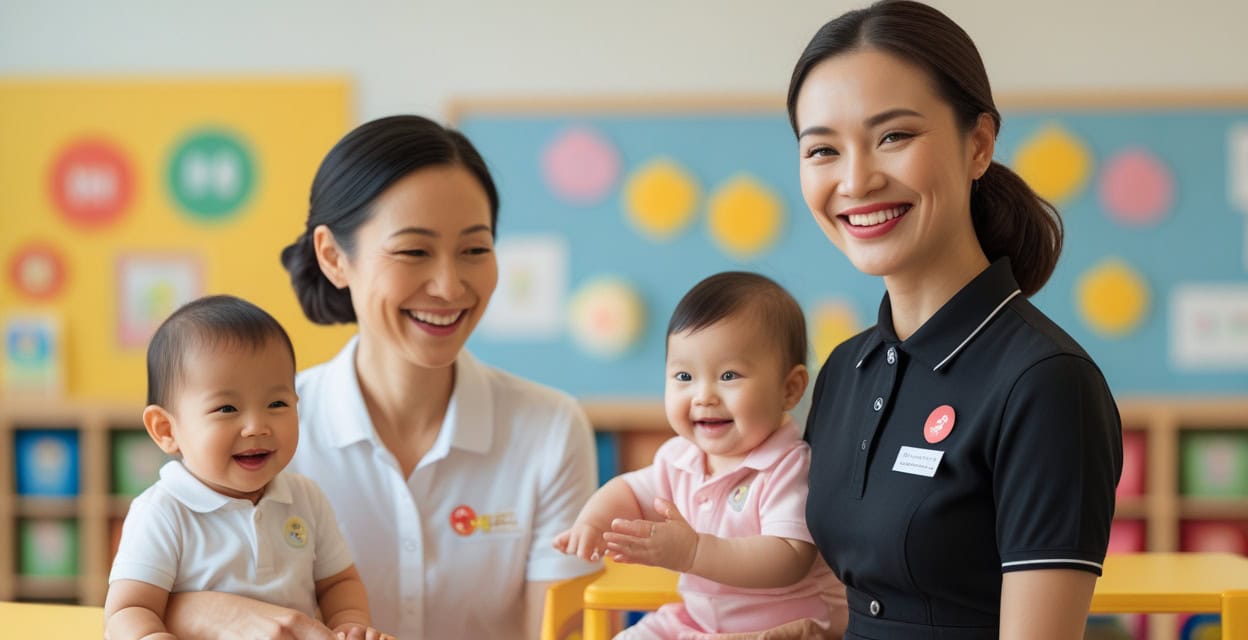
The Benefits in Plain View
- Excellence and quality backed by training, supervision, and audits.
- Centre-based, home-based, and distance-supported options to fit real family life.
- Convenience: Monday–Friday, 7am–7pm, islandwide Singapore.
- Affordability: from $33/day; CDA/Baby Bonus accepted.
- Safety by design: clear rooms, safe sleep, infant-first aid, secure innovation CCTV.
- Modern layouts: floor-friendly spaces, soft sightlines, daylight, quiet zones.
- Ultra-low ratio: 1:3 infant care as a non-negotiable standard.
- National Social Initiative: ECDA Childminding Pilot with a Maximum Employment Mandate.
- Simple next steps: EduNanny.com and Childminding.EduNanny.com.

Closing: Holding the Beginning Well
Who matters? Every infant from birth to age three—the core of who they will become. Every parent balancing love and work, seeking care that is wise and near. Every caregiver who wants to turn a calling into a profession. What matters? Protection you can see. Relationships you can feel. Learning you can describe. Joy you can measure. Care that treats every routine as curriculum and every minute as sacred. When matters? In the first thousand days—an era when brains lay down rhythms for attention, trust, and self-regulation that shape schooling, work, and citizenship. Where matters? In places that feel like home: community studios, approved residences, and your very own living room, all operating to a single humane standard. How matters? With a 1:3 promise, trained and mentored carers, careful rooms, clear routines, honest transparency, and partnership with families. With fair pricing, simple funding via CDA/Baby Bonus, and hours that respect your day.
EduNanny stands ready to help you hold the beginning well—so your child can move into the world with calm, confidence, and joy. If this vision resonates with your family, your block, or your heart for work that matters, come closer. Walk through a space. Meet a mentor. Ask the questions that keep you up at night and the ones that wake you with hope at dawn.
EduNanny by BUTLER is here to translate research into rituals, translate protection into serenity, and translate curiosity into lifelong learning. We aim to be the steady hands and the listening eyes that hold the beginning, so your child can step into the world with calm, confidence, and joy.
Thank you.

Next Steps and How to Engage
Explore EduNanny spaces, meet mentors, and ask about practical next steps to enroll or trial a space near you. Visit the EduNanny network for centre-based, home-based, or distance-supported options, and speak to a program coordinator who can tailor a plan that fits your family’s schedule, budget, and values. Remember, the early years are a partnership—between family and caregivers—that shapes the future you want for your child.
Note: The EduNanny model emphasizes safety, transparency, and family collaboration. Always consult with healthcare professionals regarding infant sleep practices and individual child needs.
[#keyword1, #keyword2, #keyword3, #keyword4, #keyword5]Ready to Experience Excellence?
Transform Your Family’s Journey
Discover Singapore’s leading infant care and childminding services. Expert guidance for your little one’s first thousand days.